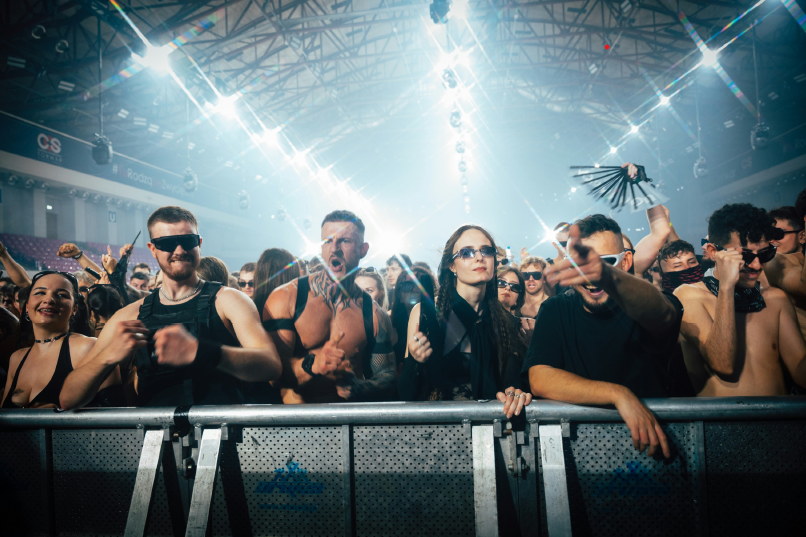
Credit : Unsplash / @Raw Visual Studio
Yesterday, some friends invited me to join them next weekend for a “Hard Techno” party taking place in Paris, called « Welcome Back Devil XXL ». As a big fan of electronic music, I immediately checked out the lineup, but none of the names really rang a bell. “I don’t know most of the artists, but Shlømo and Holy Priest will be there,” one of them told me. Two names that have been everywhere in recent years, headlining the biggest festivals in Europe.
This party, with its rather dark name suggesting that sensitive souls should refrain from attending, is nothing less than a huge rave promising nine hours of partying on 15,000 square meters in Paris Villepinte. The organizers announce that this edition “will mark the most ambitious chapter in the history of the event” and that we must prepare for “the biggest Hard Techno takeover in Paris.”
Hard Techno, then. The little sister of techno, distinguished by its very fast BPM, which can reach 180 or even more. It resonates at rave-style parties and festivals, where dancers lose themselves in frenzied kicks and spectacular light shows until the early hours of the morning. These events have become brands in their own right, with their own codes, attracting an everwider audience.
“I couldn’t listen to that in the morning on my way to work. But at a rave, it’s a different story,” assures another friend who will be there on Friday. How can such extreme music appeal to so many “non-initiates” like him?
As a big techno fan, I know more about its minimal and melodic form, as it emerged in the 80s and 90s, at intimate parties where the audience is carried away by progressive melodies, rather than by a huge show like those promised by Hard Techno events. So what is this new genre that has literally exploded since the end of the Covid-19 pandemic?
In a society where everything is accelerating, where sensationalism has become synonymous with visibility and success on social networks such as TikTok, Hard Techno is highly appealing. Has it become the mirror of a frantic and ultra-connected generation?
The emergence of Hard Techno, correlated with that of the social network TikTok
Hard Techno is defined by a raw and aggressive sound, powerful kicks, intense drops, and an almost violent energy. Its speed is one of its striking features: some tracks easily exceed 150 or even 180 BPM (Beat Per Minute).
Hard Techno’s popularity really exploded after the Covid-19 crisis, around 2021. This moment also coincided with the meteoric rise of TikTok, which in just a few years became the social network of choice for the younger generation. The principle of this network is based on very short, powerful, and visually striking videos. In a sense, Hard Techno has the perfect recipe for this type of content: fast, intense, spectacular.
It is therefore not surprising that when you open TikTok or Instagram, you regularly come across videos of DJs in front of wild crowds, under impressive light shows, sometimes surrounded by LED screens broadcasting real visual shows. These clips, designed to go viral, perfectly capture the “always more” aesthetic that appeals to online audiences.
Over time, these videos have become increasingly professional. DJs now hire professional videographers, who have become indispensable to their performances. The role of the artist has changed: it’s no longer just about getting the audience to dance, but also about producing content. The DJ has become a kind of double: a performer on stage and an influencer on social media.
The aim is no longer to deliver a coherent set, where the audience is hypnotized by the melodies, but rather to create the most impressive moment, the one that will get the most views. This is how the figure of the “DJ-influencer” was born. Among them are several French artists: I Hate Models, Shlømo, and Nico Moreno, who are now key figures on the European scene.
As online success fueled demand, more and more clubs began offering “Hard Techno” nights. Even venues that usually focused on more commercial music jumped on the bandwagon, attracted by the trend and an ever-growing audience. As a result, in just a few years, Hard Techno has risen to the top of the line-ups at Europe’s biggest festivals, becoming a global phenomenon.
The birth of a monster business, transforming DJs into big stars and redefining the codes of techno
Capitalizing on this success, the players in the scene gradually transformed Hard Techno into a real business, with its own codes and well-established marketing. The phenomenon mainly targets young people, who are the primary audience for this aesthetic that speaks directly to them: a strong community with its own distinctive signs, references, and an immediate sense of belonging.
Hard Techno parties almost all follow the same visual pattern: dark colors, titles evoking hell or darkness, red and black posters adorned with flames, blood, or demonic figures. This extreme imagery works perfectly for an audience in search of thrills and transcendence.
These codes are also reflected in the audience’s clothing style, which has become a veritable uniform: speed glasses, fans, leather harnesses, BDSM accessories, fishnet tights… While this may have seemed original at first, the phenomenon has become so widespread that it has become almost caricatural. Individuality is fading, and the idea of a free and diverse dance floor is giving way to a community with highly codified conventions, where everything ends up looking the same.
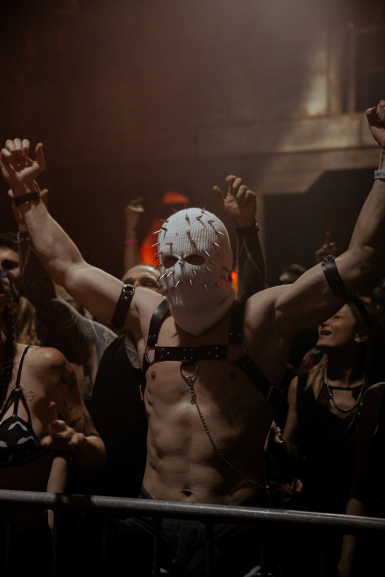
Credit : Unsplash / @ Raw Visual Studio
However, the techno movement was originally the complete opposite. Born in Detroit (USA) in the late 1980s, it was driven by Black and Queer artists who were seeking to create a free, inclusive, and egalitarian space. At these early gatherings, everyone was treated equally, regardless of gender, origin, or sexual orientation: the dancefloor was a place where differences encountered safely.
Today, this principle seems a distant memory. Some events on the new Hard Techno scene, for example, offer exorbitantly priced “Backstage Passes” (€125 for the Welcome Back Devil party next Friday), giving part of the audience the privilege of spending the evening behind the DJ.
This system establishes a real economic hierarchy and completely overturns the values of equality that are specific to techno culture.
Another major change is the “starification” of DJs. Originally, the DJs were just mediators, serving the dancefloor. They often remained hidden, almost invisible, letting the music speak for them. The energy was collective and authentic. Today, it’s the opposite: the DJ has become the center of attention, a true superstar. This evolution is largely due to the success of the Boiler Room concept, with its 360-degree staging where the audience surrounds the artist. People no longer come just to listen to a set; they come to see their favorite DJ and, above all, to record them. Phones are raised, videos are posted, and the real connection between people disappears behind screens. Authenticity gives way to a staged performance.
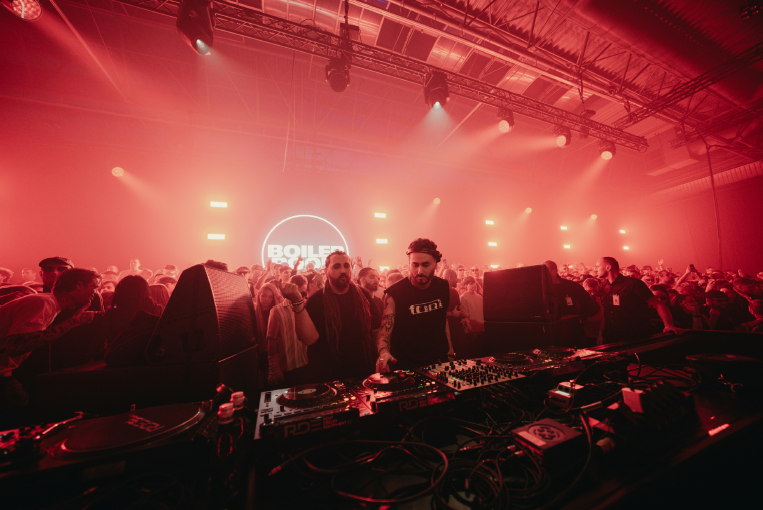
Credit : Unsplash / @ Raw Visual Studio
The “more is more” effect and its limits
In recent years, this phenomenon has only grown. Parties are getting bigger, lineups are getting busier, and shows are getting more spectacular. Collectives seem to be competing for the title of biggest party of the year.
Event names often feature the term “XXL” as a marketing strategy in itself—this is the case with Welcome Back Devil as well as the Raw collective. The larger the event, the more appealing it is to consumers.
However, this pursuit of grandeur has its limitations. When a DJ only plays for an hour, it is challenging for the audience to truly immerse themselves in their world. The experience is very different from a long, immersive set. What’s more, the emphasis is often on the stage design and the size of the venue, to the detriment of sound quality.
So, do spectators still come for the love of music? Or just to be able to say they attended the party of the year ?
DJs are playing dates at a frenetic pace, fees are skyrocketing, and with them ticket prices. This inflation is depriving part of the audience, even though techno was supposed to be popular and accessible music. Worse still, some DJs are playing two dates in two different countries on the same night, flying between the two. This is ecological nonsense and sets a very poor example for younger generations.
On social media, the competition keeps escalating: to grab attention, you need more and more powerful drops and fast kicks. As a result, the sound speeds up and distorts until it mutates into a new genre, which some now call “TikTok Techno.”
On Reddit, one user sums up today’s growing rejection: “Hard techno isn’t hated, it’s the horrible TikTok Techno (which is a bit of hardcore/hard techno + cheesy mashups) that’s hated.” The public is now starting to distinguish between authentic hard techno, which originally emerged underground, and this distorted, hyper-commercial version created to generate noise, both literally and figuratively. Everything is becoming bigger, faster, and more flashy. It’s a vertiginous race toward spectacle, far removed from the movement’s original spirit.
A general frustration with the lack of authenticity: a return to basics?
American DJ and producer DVS1 said in an interview with Xceed: “This hard, fast techno is the EDM of this generation. But they’re dressed in an underground way. Everyone thinks that it’s underground music, but it’s not. It’s EDM, It’s actually pop music, and it’s the gateway. I always said, “I don’t care that it exists. I just wish people would stop comparing it to techno, because it’s not.”
For him, this wave of Hard Techno or so called “Tik Tok Techno” is just yet another trend, the equivalent of EDM in the 2000s and 2010s, popularized at the time by David Guetta or Martin Garrix. It’s a phenomenon that will eventually run out of steam, like many others before it. The paradox, according to him, is that music that claims to be underground has now become a mass product. Many young people claim to be members of an “alternative” movement, when in reality they are consuming the pop music of their generation.
This increasingly widespread observation is creating a certain amount of frustration among techno fans, who are tired of these amalgams and the surrounding superficiality. “Give us back real techno. We’re fed up with TikTok techno, raised phones, and drops every 30 seconds” exclaims one spectator on Instagram.
In response to this lassitude, some key players on the French scene are seeking to return to their roots. Clubs such as Nexus (now called The Noct since its rebranding and reopening on October 3rd), the Parisian bastion of hard techno, are revamping themselves to welcome a more diverse audience and put music back at the center. Others such as Mia Mao club, which opened last January, have a “No Photo/No Video” policy, banning phones to preserve the authenticity of the dancefloor. The Raw collective, a pioneer of the movement, has also launched a format that is the opposite of its giant parties, called Raw XXS. No announced line-up, neither announced venue, an intimate atmosphere, mutual respect, and above all, music regaining its place as first and only; a real breath of fresh air these days.
In fine, Hard Techno, which was initially just one genre among many, has become a true cultural symbol in just a few years. It perfectly illustrates our era: fast-paced, excessive, constantly connected. It fascinates as much as it divides. Some see it as a rebirth of the party and collective momentum after years of lockdown, others as a total loss of authenticity, swallowed up by the logic of networks and spectacle.
What is certain is that Hard Techno says something about our generation: this constant search for intensity, speed, and visibility. We want to experience everything intensely, show everything, share everything. But by chasing the extreme, don’t we end up losing what was the very essence of electronic music: freedom, shared experience, and the ability to let go?
Perhaps this cycle is inevitable. Like every movement, Hard Techno will undoubtedly experience a decline, and other sounds will emerge. But the question remains: after this frenzy of “always more,” what will remain? A simple passing trend, or a generation that will have understood, through its excesses, the value of what is real?
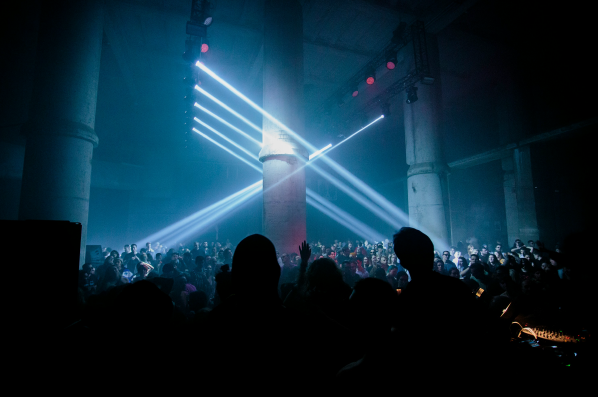
Credit : Unsplash / @ Aleksandr Popov
Sources :
- NightMag / Xceed. (2023). Interview with DVS1: “Technology is a gift and a curse”
https://xceed.me/blog/en/interview-dvs1/ - FeralClo (2024) « Qu’est ce que la Hard Techno ? A la découverte d’un genre
intense » https://www.feralclo.com/fr/blogs/news/what-is-hard-technoexploring-
the-intensegenre?
srsltid=AfmBOopjAZrNmwn5dvAJDqFASPjEcxM6mcazVriG9l47Tx-
DTXK9QBjO - Reddit (2024) « Pourquoi la Hard Techno est-elle tant détestée ? »
https://www.reddit.com/r/Techno/comments/1csrgy8/why_is_hard_techno_ha
ted_so_much/?tl=fr
Author : Victoire FARMINE
