Blood antiquities: The complicity of western museums in the Syrian conflict

When we think of war, we think about destruction. However, there is often a silent war against memory. The conflict that ravages Syria since 2011 has not only tragically displaced and killed millions, but has also erased a good part of Syrian’s historical heritage, that is to say the cradle of civilization. This allowed the existence of a network of looting and trafficking, transforming millennials of history into cash for terrorist organizations. What is worse, this trade requires a market. While the stealing takes place in the war zones of the Middle East, the destination for these blood antiquities is the very nice and polished galleries of Europe, the United States, and the Gulf. There is consequently a disturbing connection between armed conflict and the art market, allowing groups like Daesh to industrialize the pillage of numerous sites. Prestigious European institutions, through real negligence or voluntary blindness, became the financiers of terror.

The industrialization of pillage: an empire built on ruins

Between 2014 and 2017, the Islamic State (Daesh) consolidated control over parts of Syria and Iraq, a territory presenting at least 4500 archaeological sites. Among these were nine UNESCO World Heritage sites, where first ever signs of urbanization and writing were discovered. For the terrorist organization, looting those places represented a dual opportunity: destruction of polytheist symbols, and clandestine pillage for financial gain. Since the beginning of hostilities in 2011, over 320 archaeological sites have been irreparably wounded, looted, or obliterated. For instance, the ancient cities of Mari, 3rd millennium BC, and Ebla, renowned for their royal archives, have been bombed and destroyed. Other sites, Dura-Europos, often named the « Pompeii of the Desert » and the legendary greco-roman city of Palmyra have suffered complete erasure of the map. To categorize those action, Waleed Khaled al-A’sad, former director of Syrian antiquities uses the words « cultural genocide« . This shows that the very identity of a people is getting voluntarily and systematically deleted. Satellite images from late 2014 revealed the extent of the issue: the site of Mari was scarred by over 1300 excavation craters, by bulldozers and heavy machinery, destroying a lot of precious paintings that were almost 6000 years old…

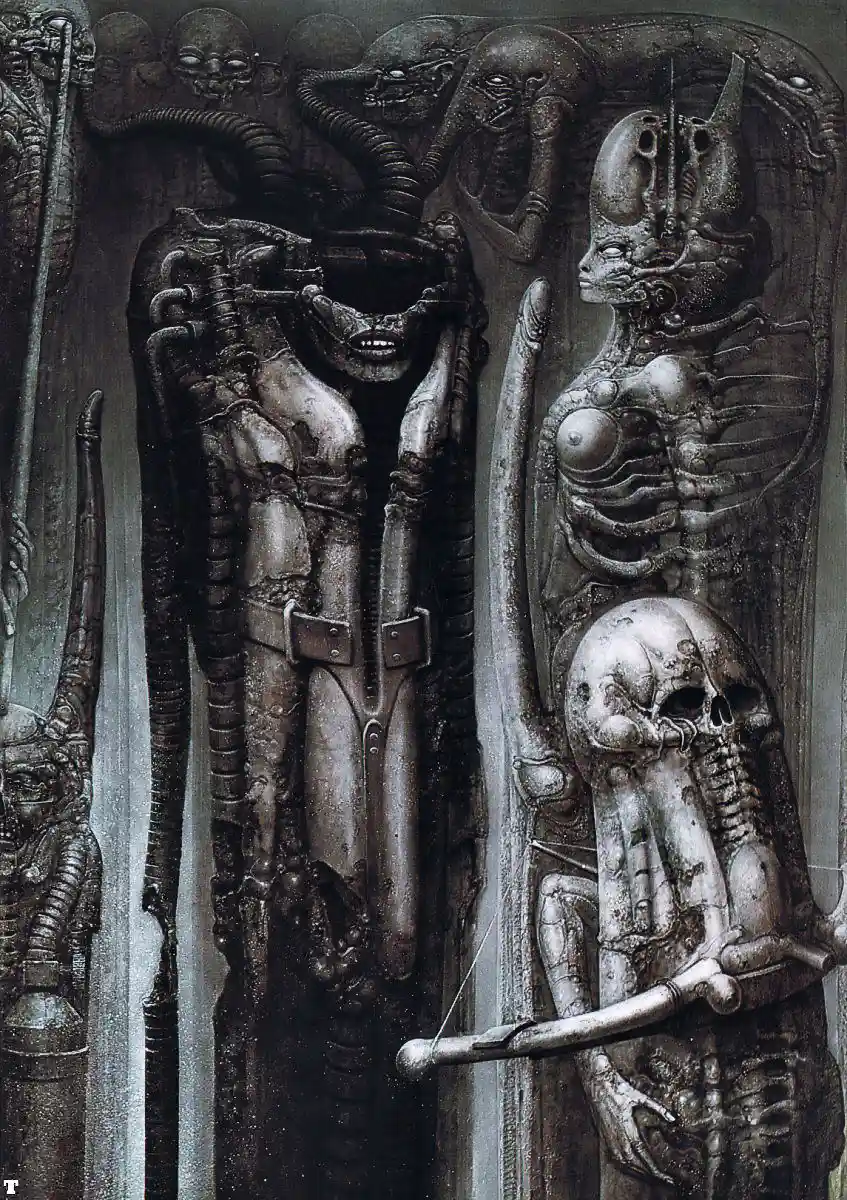
Investment of Zimri-Lîm, 1766 B.C., mural of Mari – now destroyed

The scariest part is how Daesh’s operations are highly hierarchized, in Diwans (departments). The terrorist organization established a « Diwan al-Rikaz », a department for natural resources, which controls the exploitation of oil, gas, and antiquities. On May 15th of 2015, a raid by the U.S. Special Forces on the site controlled by Abu Sayyaf, the financing chief of Daesh, showed intelligence that exposed how sophisticated the group’s administration is. Seized documents included receipts indicating that in just one province (Deir ez-Zor), the group had collected 265 000 $ in a tax called khums, perceived on local diggers. Following estimations, the total of trade in that province exceeded 1,3 million $.

The economics of terror: financing terrorism with artifacts

However, estimating the precise revenue generated by this illicit trade is very difficult due to the blurred nature of the black market: estimates vary significantly between intelligence agencies and international organizations. The high estimations made by the Russians asserted that Daesh generated up to 200 million $ annually from the antiquities trade. Then, in October 2015, Iraq and Interpol estimated around 100 million $ per year. However, French and American intelligence agencies offered more modest figures. The French Center for the Analysis of Terrorism estimated the 2015 revenue at approximately 30 million $, while the U.S. government estimated between 30 and 50 million $. Nevertheless, it does not matter the exact amount of money : what counts is the importance of this revenue in Daesh’s propaganda. Indeed, after being successfully raided by the UN, Daesh faced a big drop in oil revenue. In this context, antiquities became merely a vital « substitution resource » : history was sold to keep the machine running. For another example, artifacts stolen from Dura-Europos alone could be worth nearly 18 million $ on the art market. And if you think of  the thousands of archeological sites still available, the financial potential is crazy.

The supply chain: laundering history

The journey of a stolen artifact before it arrives at a gallery or a museum in Paris involves a complex process of laundering, in order to blur the illicit origin of the artefact and integrate it into the legal economy. The primary passage for these artifacts are the porous borders of Turkey and Lebanon. Once across the border, the objects enter the informal grey market. Since many of these items come from illegal excavations, they have never been photographed or documented by official archaeologists. This is the most important moment, because they get invisible to databases like Interpol’s Stolen Works of Art register. But the journey is not finished : to sell antiquity at a good price in Europe, it needs good provenance, which means a documented history of ownership. Traffickers and dealers easily forge these documents. Commonly, they claim that a Syrian artifact belongs to an old family collection dating back to the 1970s (before the 1970 UNESCO Convention which prohibits the import of unprovenanced cultural property). And on top of that, the market is flooded with faux: up to 80% of Syrian antiquities seized in Lebanon are actually forgeries or have forged documentation. All of this is because of the important demand of European galleries and collectors, which complicates the work of law.

Institutional complicity: The Louvre scandal

For years, museums maintained little to no concern, acting very detached from the question. However, recent scandals revealed that even the most prestigious institutions are not that clean. The most known scandal hit in May 2022 around Jean-Luc Martinez, the former president-director of the Louvre Museum (2013–2021). He was a famous expert appointed as France’s ambassador for international cooperation on heritage, and was suddenly charged with « complicity in organized fraud » and « money laundering » for the Louvre Abu Dhabi. Investigators suspect Martinez voluntarily closing his eyes on the strange provenance of several Egyptian artifacts acquired for millions of euros. The centerpiece of this scandal is a pink granite stele bearing the name of Pharaoh Tutankhamun. The investigation revealed an international network of scammers. The stele was sold to the Louvre by a Parisian expert, Christophe Kunicki. Kunicki was already suspected in a similar trial in the USA, for a golden sarcophagus of the priest Nedjemankh purchased by the MET for 3,5 million euros. However, another investigation proved that the sarcophagus had been looted from Egypt in 2011 during the Arab Spring and smuggled out with forged papers. The Met was forced to give it back to Egypt in 2019. The implication of such famous experts proves that the precautions taken by major museums are not sufficient. This is a disturbing question: was this only negligence, or was it a deliberate maneuver to secure prestigious acquisitions? Despite multiple efforts to cancel the trial, the Paris Cour d’appel confirmed the guilt of Martinez in February 2023.

The response: law enforcement and state hypocrisy

Different institutions try to face this crisis. France has mobilized its specialized unit, the OCBC (Central Office for the Fight against Traffic in Cultural Goods). Established in 1975, it has police officers with expertise in art history and criminal investigation. The OCBC has been crucial in those cases, for example with the arrest of five prominent Parisian antiquity dealers in June 2020. They are the ones currently investigating the theft from the Louvre in October 2025. What’s more, the French customs also do a big job, intercepting a lot of shipments. To raise public awareness, the Louvre held an exhibition in 2021 displaying statues from Libya and Syria, destined for the black market but intercepted at the border. However, the political response often balances between tactless statements and uncomfortable realities. In 2014, Philippe Lalliot, the French ambassador to UNESCO, stated, « Even when the dead are counted in the tens of thousands, we must be concerned with cultural cleansing« . The majority of museums today do not really take précautions regarding this scandal, because let’s face it : in Europe, we’d rather finance terrorism and death of thousands than missing on the opportunity to appropriate a beautiful sarcophagus.

The shadow of colonialism

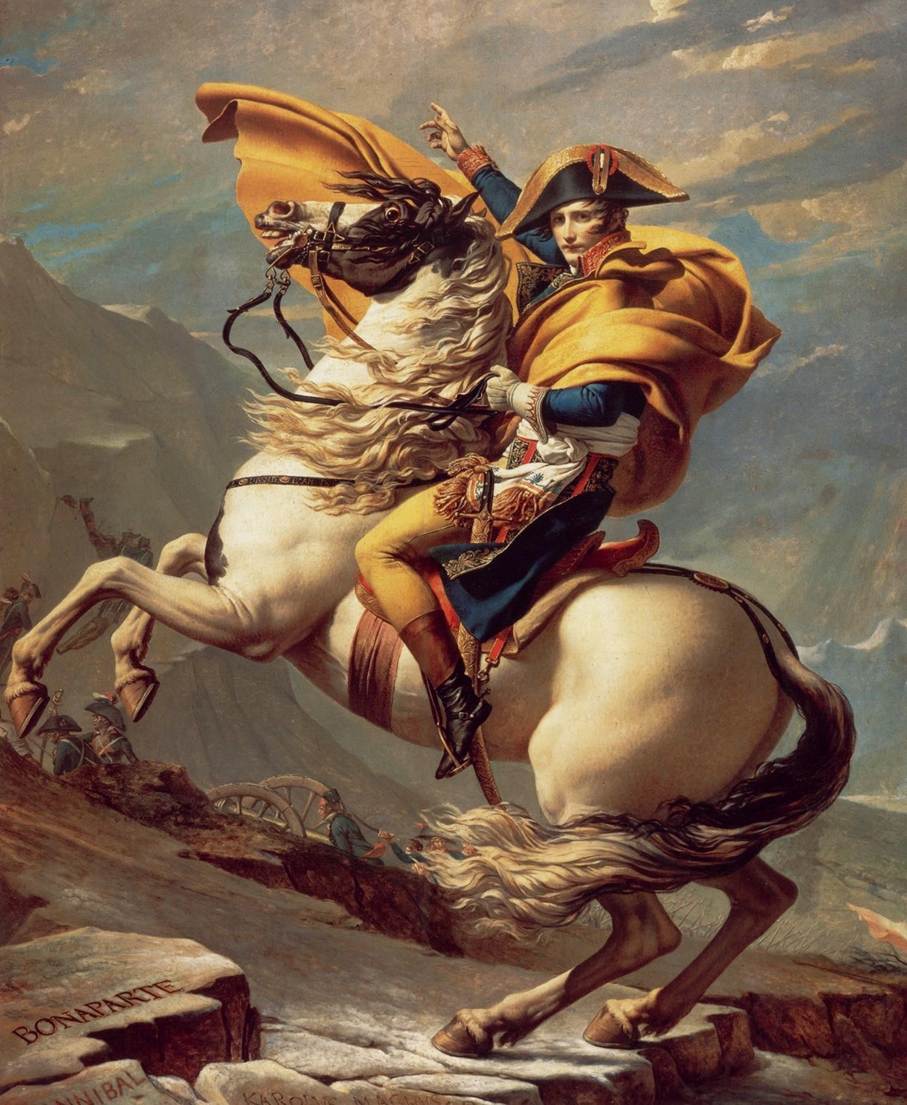
The real problem underlying here is the habit some museums took of stealing and taking ownership of their colonies’ patrimony. The Louvre’s department of oriental antiquities has over 150 000 objects, many of which were acquired during the colonial era. Under the French mandate over Syria and Lebanon (1923–1946), archaeological excavations were governed by the principle of « partage« : finds were divided between the country of origin and the excavating nation. This legal framework allowed thousands of objects from sites like Mari and Ras Shamra to enter French collections. It established a big European ownership over Middle Eastern heritage. Nowadays, the debate has finally shifted towards restitution. For instance, the return of the Mari tablets to Syria between 1996 and 2004 demonstrated that repatriation is possible, yet it remains an exception rather than a rule…

Towards a change ?

Terrifyingly, the connection between the “refined” world of European art galleries and the brutal war of Syria is real. The blood antiquities trade is not only a crime against property, but a mechanism that transforms human heritage into funding for terrorism. The scandals involving the Louvre and the Met demonstrate that the art market’s opacity is a systemic feature. It allows a form of laundering where the illegal origins of an object are erased by the reputation of a prestigious museum. As long as institutions prioritize possession over provenance, and as long as collectors view ancient artifacts as mere commodities, the pillaging of history will continue. Europe often positions itself as the guardian of universal culture. However, the evidence suggests that in its hunger for accumulation, it forgot that this heritage is no one’s property.

Author: Kenya Meziere

The Louvre heist: how 7 minutes shook the world of cultural heritage

Breaking news: the crash between the boldest thieves and one of the most famous museums

French police officers standing next to a furniture elevator used by robbers to enter the Louvre Museum on Quai Francois Mitterrand in Paris on October 19, 2025 © Dimitar Dilkoff / AFP

A shocking news story happened on Sunday morning, on the 19th of October. According to initial reports, two burglars wearing yellow reflective vests escaped with historic jewelries from the Louvre, one of the most frequently visited museums in the world and the most precious museum in France. They left using a common Parisian monte-meubles, a furniture lift on the outside of buildings, and two accomplices were waiting for them on scooters. The whole process took about seven minutes, which is even faster than a short coffee time. The stolen value are absolutely national and world treasures: eight pieces of priceless historic jewelry, including a necklace once belonged to Empress Eugénie, the wife of Napoleon III. The museum opened only 30 minutes and then closed in order to protect the crime scene,. Beside the big losses, people have to admit that the operation was audacious and even brazen, and the well-organized preparation by the thieves is undoubtable. According to news report, the burglars  entered through a window, destroyed two display cases in the gilded Galerie d’Apollon, and stole crown jewels. Seven minutes was the time needed for guards to arrive, but everything ended so quickly so they cannot stop this tragedy. The only good news is that no one got hurt. Clearly, this is big international news. French officials suspect that this was an organized event, possibly with help from collectors who know the true value and meaning of these objects.

Are the jewelries still the same when they are back?

The crown of Empress Eugénie, by Alexandre-Gabriel Lemonnier © 
Stéphane Maréchalle / Louvre Museum / Grand Palais-Rmn

The jewelries in the museum are not just common goods that can be sold and bought again. They represent history, memory, and cultural rights as part of human life. The Louvre has more visitors than any other museum in France, and one of the biggest numbers in the world. The biggest reason is that the collections in this museum are unique and cannot be replicated or simply estimated with money. All the historical circumstances around these pieces form their multidimensional value. As Malcolm Forbes once said, “Jewelry is the epitome of the emotions it represents – not just beauty, but memories.” Those necklaces, crowns, and other jewelries are containers for emotional memory for the French people, and their loss can lead to a breakage in the national memory. Some people may think that jewels are only materials; but value isn’t just in the materials themselves, it is also in the moments, the people, and the places where they were worn by historical figures.

Because these jewels are famous, they cannot be sold directly on the free market. It is highly likely that they would be disassembled and transferred, then sold out eventually in smaller segments. This is one of the most painful facts: after segmentation and alteration, even if some parts are recovered, the original authenticity and wholeness of the work cannot be fully restored. Jewelries also serve as part of cultural heritage. Such a theft brings humiliation not in a sensational way, but in the sense that it challenges the state’s duty to protect shared memory. Trying to steal national treasures is already a bold move, not to mention performing it in broad daylight. As the protector and steward of national treasures, the Louvre should have several guarding guidelines and more guardians in place that match the value of the collections. But there were blind spots for protection, and there were not enough personnel to respond in time. In January, there was reportedly a plan to improve security in the Louvre, but it did not get the chance to be carried out quickly enough. So a question appears: why did the French government and the Louvre know the problem but not respond to it immediately? Especially when the government provides strong public funding for this institution, the failure is a surprise for the public in France and abroad.

Walter Benjamin once wrote about the “aura” of an artwork – the unique existence of a work in time and space that we feel when we meet it in person. That “aura” was violently damaged when tools shattered the display cases and the jewels were removed. Even if the pieces are recovered, the jewelries can be segmented and altered in a very short time. After that process, even though we restore the objects materially, the authenticity built through centuries of protection and witness cannot be restored in the same way. We can remember another history: dated back to Chinese Qing Dynasty, there were invasions to China from other countries. Many jewelries and ancient treasures are also stolen and got robbed. Some still sit in museums abroad, sometimes with scars and cut traces on them. Some were returned, but many remain elsewhere. These losses showed a period of weakness and inaction in the old regime. This case in France brings a similar symbolic wound. The damage is not only to objects, but to public trust, to the confidence of citizens, and to the aura that connects people to their past.

The brightness of the jewelries and the darkness of the power

Large corsage bow of Empress Eugénie (brooch) ©
 Stéphane Maréchalle / Louvre Museum / Grand-Palais-Rmn

As John Ruskin argued, nations write their autobiographies through deeds, words, and art. When a necklace or a crown is stolen, a page is torn out of the material memory of the nation. Each stolen piece was a link to the era of Napoleon and the political theater and artistic patronage of that time. The Louvre and the wider society recognize these objects as cultural heritage and as pedagogical tools for civic identity. But the thieves and any potential buyer see them as signs of status and power. As Jean Baudrillard noted, when objects are cut from their historical context, they become hyperreal symbols – empty signs of prestige detached from their true stories. On August 21, 1911, Leonardo da Vinci’s Mona Lisa was stolen by the staff from the Louvre. That event changed how the public saw the painting and represented how art and power can mix outside the museum arena. This new incident again shows the tension between cultural meaning and the temptation of possession.

To understand why this theft resonates so widely, we should return to the gallery’s own history. The Galerie d’Apollon is not merely a room but a ritual space where France stages its political and artistic lineage. Built under Louis XIV and restored in the nineteenth century after a fire, it frames jewels as part of a story that moves from monarchy to empire to republic. In such a stage, jewels function like living documents: gold and gemstones that record the tastes of rulers, the skills of artisans, and the ambitions of a nation. Removing them erases not only a display but a thread of narrative: a way for citizens and visitors to approach and debate history inside public walls.

These operational patterns are tied to market realities. High-profile crown jewels and unique artifacts cannot circulate openly; images are widely available, catalogues exist, and provenance is checked. As a result, criminals often disassemble pieces – removing stones, melting settings, and selling parts one by one. That practice destroys the provenance and breaks the link between materials and their stories.  Auction houses and dealers now often do due diligence and consult such records. But private sales and informal networks are hard to monitor. There is still a gap between our moral agreement that heritage should be public, and the anonymity of certain markets where fragments can disappear.

What can we do to recover?

After a loss, communication matters: open briefings, community dialogues, and education about provenance and restitution can turn shock into civic engagement. For museum staff – conservators, curators, guards – the loss is personal. For citizens, an empty case symbolizes a broken connection. A thoughtful response must honor both the emotion and the responsibility that come with stewardship.

From a legal and diplomatic point of view, the aftermath of such a theft activates networks of cooperation. INTERPOL’s Stolen Works of Art database, alerts from customs, and cultural property units in police forces are designed to stop illicit flows. Legal tools for information sharing, and coordination between cultural ministries and museums, help provide documentation and images to identify parts if they appear.

Technology can help, but it must be used wisely. Microdot tagging can survive disassembly and help with attribution if parts are found. High-resolution 3D scanning and scientific analysis can create a digital fingerprint that identifies an original even after alteration. Public memory also needs care. The sudden absence of artifacts changes how communities see their past. School groups who might have stood in front of a Napoleonic necklace now see an empty vitrine. 

Accountability should be specific, not vague. Reviews after the incident should include clear timelines, responsible parties, and measurable outcomes: which upgrades, by when, with what training. Budget transparency – how funds for security were used and why delays happened – can restore trust. Boards and trustees should recognize security as part of their duty, not a side issue. Insurance can encourage better practices by rewarding drills, audits, and integration of technology. Governance is the architecture that turns today’s lessons into tomorrow’s routines.

Returning to theory helps us see the path ahead. Benjamin’s aura is not a mystical word; it is the felt presence of time, the sense that an object has traveled through lives and events to meet us now. To protect aura, we must protect the conditions of truthful, public encounter. 

Heritage survives not by being hidden away, but by being responsibly shared. That is the promise and the paradox of a great museum. It must expose treasures to the public gaze while shielding them from harm. If there is a lesson in this theft, it is that protection and participation must grow together. 

In the end, what disappeared were not only jewels, but points of connection: between past and present, between craft and ceremony, between private emotion and public meaning. The value is not measured in carats, but in memory – how objects anchor stories, how stories anchor identities, and how identities hold a shared future. Rebuilding will need resilient systems and resilient relationships: between institutions and citizens, between art and law, between beauty and responsibility. If that rebuilding succeeds, the empty space in the case will not be only a scar. It will be a reminder that vigilance is a form of care, that care is a form of justice, and that justice – like art – belongs to everyone.

Le Voyage en Hiver, much more than just a Christmas market!

Since last Saturday, the buildings of Nantes are shining, new sculptures have appeared in the streets and people are wandering from cottage to cottage with cups filled with mulled wineat Place Royale. It’s the beginning of the winter, and most importantly, the beginning of Le Voyage en Hiver (Winter’s journey)! In fact, this colourful and shiny event has come back for its fourth edition, and it will take place until the 4th of January.

But what is it? And what distinguishes it from a regular Christmas market and other Christmas decorations that you could find in any other city? To understand it, we have to take some steps back. Le Voyage en Hiver, in fact, is the winter version of the iconic Le Voyage à Nantes (A journey to Nantes). Le Voyage à Nantes is a huge itinerary made by the tourism office, that explores all the main touristic sites of Nantes and a lot of cultural and artistic places. The tourist can go through this journey by following a shining green line painted in the streets of the city. It is an unusual, funny and efficient way that the city of Nantes has found to indicate all the touristic, artistic and cultural places of Nantes. It is also a great way to promote some places and activities that are less known than the popular ones.

Therefore, Le Voyage en Hiver is the continuity of this exciting trip in Nantes, but it takes place during winter. Created in 2022 by the artistic director Jean Blaise, this is an itinerary through winter-related decorations, events, artworks, and more generally, Nantes heritage. It unites in a unique itinerary history music event, Nantes gastronomy, exhibitions, decorations, Christmas markets, retailers’ animation, children activities, animations at main touristic places like the Château des ducs de Bretagne, and a lot more.

The light decorations from “La nuit je vois” (At night I see) exhibition– Le Voyage en Hiver 2023 © Martin Argyroglo

As the director of Le Voyage à Nantes Sophie Lévy said, the purpose is to create a dialogue between Nantes heritage, history, and contemporary art. This journey is not just about Christmas; it is about exploring how Nantes lives in winter and celebrates it. People can explore that with big things like buildings or sculptures, but also with the smallest and unexpected ones, like gates, or yards. But besides celebrating the past and the traditions, the purpose of Le Voyage en Hiver is also to create new ways to celebrate and live winter, through the variety of its innovative, artistic, and sustainable animations.

Let’s take a deeper look on this magical journey.

The first main animation of Le Voyage en Hiver is the “La nuit je vois” (At night I see) exhibition. Created in 2022 by the artist Vincent Olinet and renewed every year; “La nuit je vois” is a light decorations itinerary running through the streets of the city. This exhibition is made of hundreds of lanterns and luminous statues, creating a magic, shining and colourful panorama of Nantes. You can see a harmony of cyan, yellow, and magenta colours during this period of the year. For the artist, “La nuit je vois” is a luminous portrait of Nantes. In fact, to create these lanterns and these sculptures, Vincent Olinet took inspiration from architectural and design elements of the city, like mouldings, brackets, or mascarons. This itinerary grows year by year and this winter, Vincent Olinet enlightened 66 streets with his decorations. Hence, this year, the artist added 185 “gates” that are currently decorating a lot of buildings fronts. For the aesthetic of these gates, he took inspiration from classical brackets, which are the pillars that sustain old balconies. The idea is to make the buildings look as if they wanted to hold each other’s, by creating them some sorts of arms. Some of the “La nuit je vois” sculptures have become iconic through these four years and keep being installed for every edition of Le Voyage en Hiver. In fact, the most known sculpture of this exhibition is the big deer lantern, which also became the symbol of Le Voyage en Hiver. This is why Vincent Olinet hopes that this exhibition could become a new tradition. He said in an interview that maybe for some children, this exhibition will be impactful and that maybe someday, when they will be older, Christmas will remind them of “La nuit je vois”.

The iconic deer from the “La nuit je vois” itinerary © Martin Argyroglo

The consoles from “La nuit je vois” – Le Voyage en Hiver 2025

Another animation that cannot be missed in Le Voyage en Hiver is the very popular Christmas market. Actually, this market is divided in two sites. The first is at Place du Commerce and the second one is at Place Royale. The market will take place until the 28th of December, and it is open every day from 11 AM to 9 PM. Nantes Christmas market is very popular even outside the city, as it is the biggest Christmas market of the West of France. It hosts more than 140 exhibitors, presenting handcrafts, Nantes gastronomy, local creations and Christmas gifts for everyone. This market promotes the tradition of celebrating Christmas with family and friends, in a convivial and joyful atmosphere, surrounded by red, golden and white decorations. For Carine Martin, president of the retailer’s association “Plein-Centre” (Inner-city), the market of Le Voyage en Hiver permits to reinforce the cultural and retailing identity of Nantes in a joyful and familiar way. For students, it is the perfect occasion to have a good time with friends, while discovering new handcrafts and enjoying foods, and to celebrate Christmas.

Near to the Christmas market, there is L’autre Marché (The Other Market). It will stay on the Esplanade Feydeau until the 23d of December. L’autre Marché is an ethical, sustainable and solidary market. It has been created by Les Ecossolies in 2009 and promote social and solidary local actors. Les Ecossolies is a Nantes association that sustains social and solidary businesses, and more specifically the local ones. The exhibitors of L’autre Marché work with sustainable behaviours, such as zero-waste, local agriculture, international solidarity, social innovation, and so on. This market also gives the opportunity to local entrepreneurs to promote their business and to finance their activities. Therefore, going to L’autre Marché means defending ethical, local and sustainable businesses. If you are looking for gifts that would have a positive impact on our society, then L’autre Marché is definitely the place for you. Furthermore, L’autre Marché gives an opportunity to discover new ways to celebrate Christmas, and especially more sustainable ones.

The Christmas animations – Place Graslin © Philippe Piron

But let’s get back to the streets and the structures of Nantes; and take a look at the work of Dominique Blais, called “À flot d’Airain” (In a Flow of Bronze). This work is a reflection about sounds and rivers, and it can be experienced in various places of the city. More specifically it is a work about the sound of the bells on the churches of Nantes. In fact, with “À flot d’Airain”, Dominique Blais adds movement to the sound of the churches bells and then transforms this sound in a breath that would cross all the city through the rivers. To achieve this complex mechanism, Dominique Blais has installed speakers on the bridges and the cranes that are near the churches. The speakers, in this way, amplificate the bells sounds, and the river, like a mirror, amplifies the sounds and propagate them. The purpose for the artist is to invite people to take a pause in their daily life, gather near the rivers or the churches and listen to the sounds of the city. Like Vincent Olinet, Dominique Blais wishes that this can become a ritual for Nantes families too.  If you want to enjoy these aquatic concerts, go to the following places: Place du Change, Douves du Château, Bras de la Madeleine, or the Quai Ceineray. The concerts are scheduled at 1:13 PM, 5:17 PM, or 6:18 PM. There, you will listen to the music of the Saint-Nicolas Basilica and the Sainte-Croix Church bells. You can also discover other Dominique Blais’ works at Place du Change, the Château des Ducs de Bretagne, the Bras de la Madeleine, the Quai Ceineray or the Lieu Unique.

Except these animations, the itinerary still has many sites to explore. For example, there is the Christmas decorations at the very well-known Passage Pommeraye. Other animations include the children fairgrounds at Place Graslin and Carré Feydeau, the “Petite Maman Noël” (Little Mother Christmas) statue at the Esplanade Feydeau, and Christmas exhibitions at the History Museum.

Various events are also going to take place until the end of Le Voyage en hiver. The most important ones are the Christmas and New year ‘s eve celebrations at Les Machines de l’Ile. You can also attend in the city the following Christmas concerts, every Saturday – except the 27th. The place of the concert changes every week, following this order: Place Félix-Fournier, Château des Ducs de Bretagne, Les Machines de l’Ile, Musée des Beaux-Arts.

To conclude, for me Le Voyage en Hiver is a way to include the magic of the Christmas and winter period in every aspect of our lives. For example, while people wander in the public space doing daily things, they are surrounded by the decorations and artworks of amazing exhibitions. There is also a community and convivial dimension in Le Voyage en Hiver. In fact, I feel like we are experiencing this journey altogether through the city. This makes me think that the people in Nantes and more specifically in the public space are probably part of the exhibition too, making it more dynamic and bringing more life to it.

Le Voyage en Hiver is another example of how Nantes keeps traditions and heritage alive while always encouraging innovation and creativity. Here, Le voyage en Hiver perfectly balances between the Christmas traditions of the Market, and innovations such as the sustainable activities of L’autre Marché, the inclusive “Petite Maman Noël” artwork and the renewal of traditional architecture with “La nuit je vois”. Finally, the city of Nantes is great at creating and renewing constantly these itineraries. These guide every kind of people through the discovery of cultural and artistic organizations. I feel like Nantes is a continuous journey that makes us discover new things.

Author and photographer: Lucia Pelos

Sources:

https://metropole.nantes.fr/tout-savoir-sur-le-voyage-en-hiver-2025-et-les-fetes-de-fin-d-annee

https://metropole.nantes.fr/les-sculptures-lumineuses-nantaises-vues-par-leur-createur

https://marche-de-noel-nantes.com

https://www.lesmachines-nantes.fr

Death of albums or death of our attention span?    

25, Super Trouper, Hit Me Hard and Soft, Igor or American Idiot, I could go on and on about my personal iconic albums. What about you? When was the last time you found yourself listening to a full-length album of an artist, with no break or song skipped? This may sound like an odd question to ask, perhaps a futility for the ones who enjoy music as it goes, or an abomination to consider for those who cherish each second of an album. Well, let me tell you that an album can represent much more than 10 songs compiled together in a collection. In this digital era, our lives have changed on many different levels, including our way of consuming music, maybe without us even realising it. From the 50s’ vinyls to Spotify, by way of the 90s’ cassette tapes and the 2000s’ CDs and MP3 players, in about a century people got introduced to various ways and media to listen to music, causing the perpetual evolution of a whole industry.

This article aims at showcasing how technological change has revolutionised not only the economy but also the philosophy behind the production and consumption of albums. Commercial tool or token of an artist’s sincerity, the album has shown through history its versatility as an art form. It has been remaining for about a decade, I believe, at a turning point in its existence, having its fate left in the hands of artists, publishers and audiences.

Technology at the service of the art

If we dive a bit deeper into the history of music albums, we realise that it is intertwined with the history of recording technology.

Vinyls in the 50s, cassettes in the 70s, CDs in the 80s and MP3 in the late 90s, all these evolutions were answers to specific needs and issues identified in the phonographic industry. LPs (long-playing vinyl records) were a format that could hold recordings as long as 52 minutes, or 26 minutes per side, at a speed of 33 1/3 rpm, perfect for music at home. This format introduced at the same time the design of illustrated album jackets, creating a whole identity and concept revolving around the album. Cassette tapes became a more practical option for listening to music on the go out of home, allowing people to control what they listened to and also to make their own mixtapes. CDs worked almost on the same basis as of the cassettes except that they were lighter, more compact (CD meaning Compact Disk), and they delivered a better sound for music, and permitted to have even more control on what you could listen to by skipping songs (tracks being separated one by one while before music was recorded on the same tapes). Each of these technology advances contributed to adding another missing piece to the puzzle it is to make the music listening experience always more qualitative. The impact of technological change in our ways of living, even in the most mundane aspect such as music consumption is no big news for us here.

But among all these ones, the real troublemakers were the streaming platforms. With first the arrival of Napster in 1999, allowing listeners to access and to share music through MP3 files as they wish, then followed by other, more conventionalised, platforms like iTunes, Soundcloud or Spotify in the 2000s, the music consumption model entered a turning point where the consumer was the one deciding what to listen to, when, and how.

Goodbye Yellow Brick, Elton John (1973)

A commercialised form of art

The music album in its “artistic” consideration as we may have right now originates in the 60s with the concept album. Artists like the Beach Boys, the Beatles or the Who popularised this format in the rock genre and its consideration of creating a whole narrative around the music, giving an opportunity to artists to showcase their personal identity in their art.

This model has thus been the norm for artists in many genres and several periods of time. Releasing albums throughout a career is also demonstrating their evolution and their journey as a person, where the album becomes the mirror echoing the artists’ lives. Albums become the symbols of an artist’s sincerity, the holders of a message.

Evolution of Billie Eilish’s albums, from left to right: ‘don’t smile at me’ (2017), ‘WHEN WE ALL FALL ASLEEP WHERE DO WE GO’ (2019), ‘Happier Than Ever’ (2021), ‘HIT ME HARD AND SOFT’ (2024)

And the art doesn’t stop at the music, but continues in all the forms of art surrounding it: music videos, visual concepts, album jackets…

We can for example take a quick look at the K-pop industry and how they pushed the idea further: groups release twice to three times a year EPs (Extended Plays) or albums that revolve around a specific concept, a visual identity or a specific theme that they will have to promote for a month on TV shows and on social media. And this is where the art meets business: while the original aim of concept albums was to emulate originality and creativity, here companies will search to study which concepts work, what subject is interesting to address or which kind of performance is appealing to the audiences.  

Evolution of the albums of the K-Pop group TWICE from 2017 to 2020

The line between aesthetics and marketing may be thin, but the goal stays the same for one releasing music: “how to convince audiences to stay focused on my music?”.

The constant content

At whatever time of the day, in the shower, when we’re cooking or on the way to work, our lives are now rhythmed by the sound of music surrounding us.

The dawn of the digital era, with Napster and the MP3 players for instance, opened the door to customised listening and fragmented consumption. Listeners are not passive consumers of the music released by artists that reaches them, rather they decide on what to listen to depending on their mood or their disposition to focus, or not, on the music they put on. Because, in fact, can we still talk about listening to music if we’re not actually listening, if all we need now is an underlying background sound? In early 2020, Deezer conducted a survey on 8,000 users, and 54% of respondents revealed listening to fewer albums than 5-10 years ago. This can be explained in many different ways.

One reason that I somehow find ironic is how the access to an infinity of choices of music to listen to leaves us with an incapacity to actually make a choice. Being overwhelmed by the amount of information we consume every day doesn’t allow us to be in a favourable mindset to digest a full-length album of 40 to 50 minutes.

Living in a higher-paced society as well has conditioned us to expect everything to come faster and faster towards us. We clearly see it with the example of social media and how our attention span has drastically decreased over time. Song skipping on Spotify signals almost the same as doom scrolling on Instagram: we are constantly unsatisfied by the content that is put right under our nose, so we keep scrolling until perhaps our reward system is fulfilled.

The Dark Side of the Moon, Pink Floyd (1973)

Discovery, Daft Punk (2001)

Nowadays, one of the greatest forces shaping the modern listener’s experience is the algorithm. A system designed to maximise users’ engagement, both punctually and on the long run, the listener becomes again the victim of the music providers and are not complete master of their music experience anymore. As a consequence for the albums, their long format doesn’t fit the model of virality and the performance based on short music extracts. The algorithm will prioritise the track that goes viral rather than the album that sells a narrative. Thus, the traditional role of the album as a complete journey is inefficient in the attention economy.

The clash: singles v. albums

Talking that much about the audience shall not make us forget the pillar without whom this discussion wouldn’t exist in the first place: the artists. It is indeed nowadays a dilemma for an artist to choose between releasing a single or an album. Commercial performance or artistic intention? Rather than having to choose between both options, why not take a look at why they are actually both interesting in their own ways?

For emerging artists, betting on a viral single to attract as much people as possible can be the classic route nowadays. Releasing multiple singles, a bit like conceptual albums in their first intent, is a good opening to discover an artist’s talent and the tip of their universe. Albums can be the first stones to build a promising career if commitment follows (from both artist and audience). The albums will then be the token of a shift from viral buzz to steadiness and unveiling a more personal identity. On the other hand, for established artists, the albums will be a demonstration of their growing career and their on-going commitment to their art. With steadier and more loyal communities, they can allow themselves to take the time to release the right album at the right time, this being even more appreciated by dedicated fans.

Far from the end

Even though this article didn’t start off in a very positive light, the goal was mainly to discuss an issue that may seem almost insignificant because we don’t always realise what we listen to exactly, and it is precisely because we don’t notice it that the discussion shall be open. Albums still have years of success to come, I believe, and many professionals, although they set warning, remain optimistic, if not too pessimistic on the matter.

The issue relies on the Audience – Artists – Distributors tryptic, and the correct equilibrium between the three is yet to be found. If a century ago the Artist – Distributor segment was at its peak with the physical sales as well as the radio format not much mentioned here, and now that the Distributor – Audience one is strengthening, then perhaps the Artist – Audience segment has yet to be solidified in order to achieve production and consumption models sustainable for each side.

Finding the balance between economic performance and artistic commitment still remains the life-long challenge of the artist.

Author: Amarine RANARISOA

From La Dolce Vita to La Grande Bellezza: Fifty Years of Italian Splendor and Melancholy

Italian cinema has always possessed a rare gift: the ability to turn life itself into a spectacle, and the spectacle into a meditation on life. From Il Sorpasso to , from La Dolce Vita to Cinema Paradiso, Malèna, and La Grande Bellezza, we travel through more than half a century of Italian history and yet, beyond time and style, we follow a single vanishing line: that of desire, beauty, and the emptiness that hides within them. Each film becomes a mirror held up to a nation constantly oscillating between grace and disillusionment, between sensual excess and existential void. In these works, beauty often serves as a bandage, a luminous facade concealing the wound of a lost innocence, a nostalgia for something that perhaps never truly existed.

 Il sorpasso (1962) — © Fair Film / Incei Film
8 ½ (Otto e mezzo) (1963) — © (« respective rights holders ») Federico Fellini / original production/distribution companies

The 1960s: Speed, Life, and Vertigo


In Il Sorpasso by Dino Risi (1962), Italy races down the open road of its economic miracle. Shot with a restless handheld camera and drenched in the harsh Mediterranean light, the film captures a country in motion: impatient, euphoric, and reckless. Vittorio Gassman’s charisma becomes a metaphor for the speed of the times: his laughter roars like an engine, his freedom feels intoxicating, and yet every acceleration hides a growing void. The editing mirrors that frenzy : sharp cuts, sudden shifts, a rhythm that refuses to settle, echoing a generation discovering both mobility and moral disorientation. Italy is learning how to live again, seduced by the car, the coastline, and consumerism. But in the rearview mirror, innocence is already fading.

A year later, Fellini explores a different kind of vertigo the dizziness of creation itself. In (1963), the camera no longer runs forward but circles inward, orbiting the mind of Guido, the director trapped in his own imagination. Fellini’s mastery of mise-en-scène turns confusion into art: the floating camera movements, the dissolving boundaries between dream and reality, the dazzling use of high-contrast black and white: all conjure a world both intimate and surreal.
The technical brilliance mirrors the film’s theme: cinema as both liberation and imprisonment. The optimism of postwar Italy, the so-called economic miracle, gives way to a crisis of meaning. The music swells, the spectacle continues, but the dance becomes circular. An eternal carnival masking an existential void.

La Dolce Vita (1960) — © Cineriz 

With La Dolce Vita (1960), Fellini had already captured the perfect image of this drift. Rome transformed into a dazzling stage where souls burn out beneath the glare of flashbulbs and the fever of endless nights. Marcello Mastroianni wanders through it all, immaculate and lost, suspended between faith, desire, and a profound boredom that no pleasure can erase.

Technically, Fellini invents a new cinematic language to express moral vertigo. His camera glides through crowded parties and silent dawns with dreamlike fluidity, refusing the stability of classical framing. The long takes evoke both freedom and entrapment, while the chiaroscuro lighting turns every nightclub and street corner into a confessional. The soundtrack half sacred, half profane blurs the boundary between ecstasy and melancholy.

More than a film, La Dolce Vita is a diagnosis of a civilization intoxicated by its own reflection. Italian cinema becomes a mirror for a country asking itself a haunting question: how can one still live, still believe, when everything seems possible and nothing truly matters?
Fellini’s Rome is both paradise and purgatory, a city where beauty and decay dance in the same frame: a vision that still defines the poetry and tragedy of modernity.

The 1980s–2000s: Memory and Melancholy  

Cinema Paradiso (1988) — © Cristaldi Film / Les Films Ariane / RAI 
Malèna (2000) — © Medusa Film / Miramax Films

When Cinema Paradiso was released in 1988, Italy had grown older. The fever of the postwar years had cooled, and Giuseppe Tornatore turned his camera toward the tenderness of what had been lost. His film is a love letter to a vanished world, a time when cinema bound together towns, generations, and hearts. Through Ennio Morricone’s soaring score and Tornatore’s warm, amber-lit images, memory becomes both comfort and wound.
Every frame breathes nostalgia: the flicker of the projector, the glow on children’s faces, the dust dancing in the beam of light. Tornatore crafts his mise-en-scène like a ritual of remembrance : long tracking shots that caress the past, crossfades that mimic the hazy flow of memory. Cinema Paradiso is not only a homage to childhood and the screen as a window onto the world, but also a farewell. Italian cinema, here, looks into the rearview mirror, aware that it has lost something simple and pure. The collective magic of watching and believing together, slowly disappearing.

Twelve years later, Tornatore returned to the realm of memory with Malèna (2000). Yet this time, the nostalgia darkens. The gaze of an adolescent boy becomes a cruel mirror reflecting a town’s hypocrisy and desire. Monica Bellucci embodies both the splendor and the curse of beauty, a woman revered and destroyed by the same eyes that worship her.
 Shot in soft, golden tones that contrast with the brutality of judgment, Tornatore’s direction exposes the moral fractures of rural Italy: cruelty disguised as propriety. The camera lingers on glances and silences, revealing a society haunted by its own repression, souls consumed by the residue of war and by the endless projection of their forbidden desires against their rigid moral codes.

Under the surface of its fable-like beauty, Malèna reveals the violence of a culture unable to love without condemning. Together, the two films trace the melancholy of a nation gazing backward, regretting not just its past, but its capacity for innocence.

The 2010s: Beauty as the Last Refuge

La Grande Bellezza (2013)  – ©  Indigo Film / Medusa Film (and associated companies)

With La Grande Bellezza (2013), Paolo Sorrentino picks up the Fellinian torch and carries it into the 21st century. Jep Gambardella, the aging writer and socialite, gazes at Rome from his terrace like a spectator of his own decadence. Elegant, ironic, and quietly broken. The palaces, the parties, the Roman light : everything brightens with unbearable beauty, and yet everything rings hollow.

Sorrentino turns excess into poetry. His camera glides through amazing banquets, empty churches, and nocturnal wanderings with choreographed grace, composing each frame as if it were a baroque painting come alive. The editing dances to the rhythm of silence and music, electronic beats fading into sacred choirs, capturing a world drunk on its own spectacle. Behind the luxury of surfaces lies a deep exhaustion: the lack of meaning in an age oversaturated with images.

Where Fellini once filmed the birth of modernity, Sorrentino films its aftermath. La Grande Bellezza becomes both homage and requiem. A symphony of melancholy expressed by celebration. Beauty remains, but only as a last refuge, a fragile shield against the void.

From La Dolce Vita to La Grande Bellezza, the circle closes: the party never truly ended, but no one believes in it anymore.

Written by Jules Malard

A concert for students that highlights the saxophone

On Wednesday 5 November, the Pays de la Loire National Orchestra (ONPL) gave its special student concert to mark the start of the season. The programme featured over an hour of classical music without an interval, exclusively for students who filled the concert hall at La Cité des Congrès, attracted by the chance to listen to these exceptional musicians for the very low price of 3€ per ticket. Each piece was accompanied by a detailed presentation, allowing even the most novice listener to understand the context in which the work was composed, what it is trying to convey, and how the composer conveys this message. The soloist also introduces us to her instruments, the alto and soprano saxophones, and explains how their inventor, the Belgian Adolphe Sax, conceived them at the end of the 19th century.

This year, the saxophone was in the spotlight with the participation of soloist Asya Fateyva, a young artist born in Crimea. She is very versatile as she can perform both original works for saxophone and arrangements of Baroque, Classical and Romantic compositions, and she showed it in the programme for this concert evening. Asya Fateyva opened the evening with a classical piece, the Concerto for Alto Saxophone and String Orchestra by Alexander Glazunov, a Russian composer from the late 19th century.

Alexandre Glazounov

Composed in 1934, Alexander Glazunov’s Concerto for Alto Saxophone and String Orchestra in E-flat major is a pretty unique piece. It was the last major work he wrote while living in exile in Paris, and he packed into its single fifteen-minute movement all the warmth, lyricism, and nostalgia of late Romantic music.

Glazunov takes on the saxophone with ease, turning it into a kind of lyrical singer with a smooth, slightly melancholic tone. The solo line flows naturally and feels almost vocal. It is a true mix of inspiration between his birth country and the one where he lives, Russian richness with French elegance, all supported by a bright string orchestra. The concerto moves continuously from one contrasting section to another: a dreamy opening melody, a livelier middle part, and a brilliant final coda where the saxophone shines one last time. With its refined harmony, the piece has become one of the gems of the saxophone repertoire.

Following this piece, it was the turn of the soprano saxophone, the higher-pitched little brother of the famous alto saxophone, to shine with the Fantasia for Soprano Saxophone by Heitor Villa-Lobos, a self-taught Brazilian composer from the early 20th century.

Heitor Villa-Lobos

Composed in 1948 for French saxophonist Marcel Mule, Brazilian composer Heitor Villa-Lobos’ Fantasia for Soprano Saxophone and Orchestra is a work at the crossroads of worlds — between European virtuosity and tropical flair. Villa-Lobos, a great ambassador of Brazilian culture, blends the influences of Bach, popular music from Rio and indigenous rhythms in a free and colourful style. In a single movement divided into three contrasting sections, the Fantasia highlights the chameleon-like character of the soprano saxophone: by turns singing, capricious, dazzling and dreamy. The instrument displays an ardent lyricism, supported by an orchestra that is both rhythmic and shimmering, where each phrase seems to breathe the warmth and freedom of Brazil.

After these two lesser-known orchestral works, the ONPL ended its concert with a more famous but equally magnificent piece: Robert Schumann’s Symphony No. 3, this time without saxophone.

Alto Saxophone

Symphony No. 3 in E flat major, ‘Rhenish’, composed by Robert Schumann in 1850, is a work inspired by the River Rhine and the love of Schumann for the Düsseldorf region, where the composer had just settled. Despite being known for deep and tortured compositions, Schumann wrote this piece as a love letter to this region, making the Symphony No. 3 lighter than most of his works. Unlike classical forms, it has five movements, which follow one another like the chapters of a symphonic poem. It starts with a triumphant overture, followed by a folk dance with rustic accents, a slow movement of great tenderness, a solemn episode evoking a ceremony in Cologne Cathedral, and a radiant finale. With its balance of orchestral power, intimate lyricism and spiritual fervour, the ‘Rhenish’ stands out as one of the finest achievements of German Romanticism.

Robert Schumann

The saxophone: a classical instrument?

The absence of the saxophone from the classical scene can mainly be explained by the late date of its creation by Belgian instrument maker Adolphe Sax in the 1840s. Indeed, the Romantic orchestral formation was already well established at that time, which explains the difficulty of integrating the saxophone into it, whereas it enjoyed some success in military bands.

However, the saxophone lends itself very well to classical use. It was created for this purpose to fill a gap in the orchestra’s sound palette. Sax observed that the brass (horns, trumpets, trombones, etc.) and woodwinds (flutes, clarinets, oboes, etc.) lacked a real connection between their timbres. Brass instruments are powerful but rigid, woodwinds expressive but less sonorous. He therefore imagined creating an instrument capable of uniting these opposing qualities: the flexibility of woodwind and the projection of brass. Despite its metallic appearance, the saxophone has a much softer sound than brass instruments due to its single reed, similar to that of the clarinet. However, with the exception of a few composers such as Bizet, Debussy, Ravel, Prokofiev and Glazunov, who were able to take advantage of its versatility, it is not used in this role as a classical orchestral instrument.

So even though the saxophone is a popular instrument, it is thanks to its contribution to jazz music and not for its unique contribution in classical pieces. It is under a totally different light that the ONPL decided to show it to us last night.

Promoting classical music in the region

For many years, the ONPL has been organising concerts for students in Nantes and Angers, in collaboration with student associations from various schools and universities in the cities.

These student concerts are part of a range of cultural activities carried out by the orchestra. Among the most notable initiatives, the ONPL has been playing music for patients at Nantes University Hospital since 2008, with nearly 50 concerts and performances at patients’ bedsides each season. For the past three years, the orchestra has also been playing in the Le Ranzay-La Halvêque neighbourhood in Nantes and Grand-Pigeon – Saint-Exupéry neighbourhoods in Angers, notably through musical breakfasts, exchanges with musicians, stage talks, creative workshops, musical moments for young children and chamber music concerts as part of its Orchestre dans la Cité project. The ONPL has also been playing in prisons in the region for nine years now, explaining that access to culture is essential for rehabilitation.

‘Music helps build bridges, broaden horizons and promote the reintegration of beneficiaries.’

Breaking away from cultural elitism

These actions demonstrate the desire of a representative of institutional culture such as the ONPL to open its doors and break away from the cultural elitism so often associated with the world of classical music.

By choosing to include pieces by less famous composers written for an instrument that is almost absent from the classical repertoire due to its late invention, the ONPL is once again demonstrating its desire to bring people together. When it comes to these pieces, everyone is on the same level, whether they are classical music lovers or complete novices. Everyone discovers and marvels at the sounds of the saxophone accompanied by the orchestra, and everyone appreciates the technical explanations, historical details and presentation of the composers.

Another indication that may seem trivial but says a lot about the ONPL’s attitude towards cultural elitism is their approach to applause between movements of the same piece. This gesture of applauding between two movements may seem insignificant, but it is a real tool of social distinction. That makes those who applaud appear to be novices, while those ‘in the know’ show the extent of their cultural capital through their silence. This tradition, like many traditions, is relatively recent, because in Bach and Mozart’s time, applause and shouting during concerts were commonplace, even encouraged by composers. The emergence of this tradition demonstrates the sacralisation and ritualistic dimension that has developed around classical music. This raises the question of whether concert halls, during classical concerts, are not transforming into giant spectacles where, instead of appreciating the music, people come to consume this ritualistic and perfectly codified atmosphere.

This rule, normally unspoken, was explained verbally by the concert presenter, breaking one of the most important tools of social distinction in the world of classical music and, at the same time, the sanctification of music in favour the real appreciation of its quality and its unifying strength.

To summarize

By continuing this annual tradition of student concerts, the ONPL reaffirms its progressive vision of classical art, focused on sharing and discovery. This concert shows the saxophone in a different light, bridging the gap between jazz and classical music. The musicians also open the door to everyone without exception by presenting the codes and customs that litter the world of classical music in an explicit and critical manner, without which this concert would be just another moment of social distinction.

If you would like to take advantage of this opportunity to open yourself up to this genre of music, which can seem — quite rightly in many cases — rather exclusive, you should know that the ONPL offers students last-minute tickets for 3€. But even several months in advance, the reduced rates for young people make concert tickets very attractive.

Personally, and based on the work of Walter Benjamin, a German philosopher from the Frankfurt school who worked a lot on the concept of art, I believe that the more novices attend these concerts, the more orchestras will open up to this new audience, and the more the codes will be broken. As the reactionary ritualistic dimension of classical music will be destroyed, its progressive dimension of exposure will grow, and classical music will take on its role as music, which is to bring people together. So do not hesitate, go and discover this wonderful art and participate in giving it the magnetizing strength it has the potential to have!

Author: Gabriel MAGET

Sources :

https://onpl.fr/la-saison/action-culturelle-saison

Programmation Concert Symphonique pour les étudiants ONPL

https://www.ouest-france.fr/pays-de-la-loire/angers-49000/si-vous-etes-etudiant-a-angers-voici-un-bon-plan-pour-ecouter-de-la-musique-classique-cette-semaine-326c4188-b8c9-11f0-9097-68e77b575996

https://fr.wikipedia.org/wiki/Applaudissement#Concerts_classiques

https://fr.wikipedia.org/wiki/Robert_Schumann

https://fr.wikipedia.org/wiki/Heitor_Villa-Lobos

https://fr.wikipedia.org/wiki/Alexandre_Glazounov

All pictures used are open source

A paradoxe of writing : it disappears when we can understand it, and only appears once we face an unknown one

Writing, when it works, disappears into reading. — paraphrasing Roland Barthes thesis in The Degree zero of writing, 1953. 

When faced with a stele covered in hieroglyphs, an ancient Chinese manuscript, or a Linear A tablet, something happens. Writing lies before us, familiar in its materiality : lines, strokes, columns, engravings, yet utterly foreign. We read shapes without reading meaning. It is in this suspended moment, between the legible and the illegible, that writing reveals its mystery: it ceases to be a simple instrument of communication and becomes an object of art, a pure sign, a calligraphy. Paradoxically, writing becomes calligraphy only when we no longer understand it, when it loses the very reason for its existence; only then does it reveal itself. 

This seemingly minor shift poses a profound question: how do we understand the changing status of writing depending on whether we comprehend it or not? And above all, what does writing become when the key to it is lost? This article explores that border between meaning and appearance, between code and art: navigating through the mystery of the sign, the great adventures of decipherment from Champollion to artificial intelligence, the contemporary extensions of this fascination, from cryptography to artificial intelligence and the Art of Sign.  

Writing and its shadow : semiology analysis of the duality of signs  

In everyday use, writing appears transparent i.e.we move through it without seeing it. It serves meaning and erases itself behind the message it conveys (c.f. Roland Barthes’ quote above). To read is to forget that one is reading. But once the key is lost, a kind of magic occurs: writing becomes visible again, pure image. We have all experienced this : facing the calligraphy of an unfamiliar language, we no longer see words but forms. Curves, thicknesses, contrasts of ink become visual composition. The beauty takes over from the intelligible. 

This paradox is illuminated by Roland Barthes’s semiology. Building on Saussure, Barthes recalls that every linguistic sign consists of two inseparable faces: 

  • the signifier (the sensory form: sounds, letters, strokes) 
  • the signified (the concept, the meaning the sign refers to). 

The link between the two is arbitrary: nothing in the sequence of letters t-r-e-e naturally evokes the object it denotes. Writing functions only because of a shared convention that unites them. 

Barthes extends this logic to all of culture (clothing, images, gestures, artworks) everything becomes potentially readable as a system of signs. In daily life, we no longer see writing; we read it. We pass instantly from signifier to signified, ignoring form. But before an unknown script, hieroglyphs before Champollion, Linear A, or Chinese oracle bones, that relationship breaks. 

When convention collapses, when faced with a dead language or unknown symbols, the link dissolves. The signifier detaches from the signified. The sign becomes pure drawing. Writing ceases to be language: it becomes image, aesthetic object, mystery; a calligraphy.  

In Mythologies (1957), Barthes shows that when sens is lost, a sign can become the sign of another sign : what he calls myth. For instance, Cleopatra in popular culture is no longer the historical queen (the first signified), but a symbol of another meaning: the fatal woman, exotic beauty, feminine power. This is exactly what happens with mysterious scripts: they cease to transmit a message and instead signify mystery itself, a visual myth of lost knowledge. They are not langage anymore but a symbol of langage. 

Barthes helps us understand that when the link between signifier and signified breaks, writing returns to the realm of image. It ceases to be an instrument of sense and becomes a symbolic and aesthetic object, a mystery to contemplate before it is a message to decipher. 

There are exceptions: in civilizations where writing is sacred, it can be both language and image. In ancient Egypt, the word hieroglyph (from hieros, “sacred,” and glyphē, “engraving”) already contains this duality. These signs were not meant for all: they were the language of the gods, reserved for priests and initiates. Writing was not a means but a rite. To write was to participate in divine creation. This sacred dimension arises precisely because the sign is incomprehensible to the many. Mystery protects, fascinates, elevates. The opacity of language becomes both power and art. 

The great enigmas of decipherment : from Champollion to AI intervention

The moment a mysterious sign recovers its meaning marks a triumph of reason, but also the end of enchantment: art becomes text. Three examples illustrate this transformation. 

When Champollion deciphered hieroglyphs in 1822 through the Rosetta Stone, he gave back its voice to ancient Egypt. The sacred figures, long seen as religious ornaments, suddenly revealed their linguistic nature. Image became speech. That shift was foundational; what had been mysterious art returned to language. And ancient Egypt could finally be understood, as hieroglyphs are engraved everywhere. 

The same happened with Linear B, deciphered in 1952 by Michael Ventris and John Chadwick. Long undeciphered, it turned out to be an early form of Mycenaean Greek. The mystery closed: beneath the signs were inventories, accounts, lists of oxen and offerings. Writing, once a calligraphy (beautiful engraving), fell back into the prose of administration. Its elder sibling, Linear A, however, remains silent. Discovered in Crete and used by the Minoan civilization, it remains undeciphered to this day. Here, writing remains pure art, visible yet unreadable. Each sign, each stroke, becomes a work of visual composition: an alphabet of mystery. 

Similarly, Maya script, long regarded as decorative, was reinterpreted in the 20th century as a complex logo-syllabic system. Decipherment transformed perception once again: from aesthetic motif to narrative text. Yet some inscriptions still resist. The ambiguity endures: art or language? image or word? Raising a question : can we completely understand a writing system and its meaning without knowing the culture that used it ?  

If some writings became enigmatic through oblivion, others were made so by design. A quick comeback on the invention of cryptography. 

As early as the 5th century BCE, the Spartans used the scytale, a simple yet ingenious military device. A strip of leather was wrapped around a rod of a precise diameter, the message written across it, then unrolled: the letters appeared meaningless. Only one with an identical rod could read the message. The first known method of transposition, the scytale already embodies the essence of cryptography, concealing meaning within form. 

Centuries later, Julius Caesar refined the art of secrecy with his famous substitution cipher: each letter replaced by another, typically shifted three places along the alphabet. Thus VENI becomes YHQL. Simple yet conceptually revolutionary, the visible text was no longer the message. Writing became a mask, a deliberate mystery. 

These two principles (transposition and substitution) would remain the twin pillars of cryptography until the 20th century. 

With Enigma, writing entered the mechanical era. Combining both methods, each keystroke turned a set of rotors, changing letter correspondences. Millions of possible combinations, all betrayed by the routine of signing messages “Heil Hitler.” Its decryption by Alan Turing and his team at Bletchley Park (famously dramatized in The Imitation Game, 2014) was both a mathematical triumph and a metaphor: the struggle between transparency and opacity, between the will to read and the will to conceal. 

Today the mystery persists, no longer in temples, but in data laboratories. Since the Spartans scytale, cryptography evolved and artificial intelligence has now entered the field of decipherment. Here are three examples.

Researchers such as Manoj and Perono Cacciafoco (2023) explore machine-learning approaches to identify correspondences between Linear A and Linear B. Neural networks compare sign frequencies, word structures, and phonetic analogies. The Melbourne Data Analytics Platform even trains deep learning models on Linear B to test hypotheses about Linear A. The results? Emerging patterns, possible links, but no definitive translation. AI does not explain; it proposes. It reveals form, not yet meaning.

In China, the Oracle Bone Script, more than 4,500 characters engraved on turtle shells and ox bones from the Shang dynasty, is the subject of joint research combining computer vision and generative modeling. Scholars (Guan et al., ACL 2024) use diffusion models to generate visual correspondences between these ancient symbols and modern characters. Of 4,500 signs, only about 1,600 are understood. AI classifies, compares, suggests, but the human eye still interprets. 

The same applies to Maya writing. Now about 80% deciphered, it continues to be studied through image datasets (Maya Glyphs Image Dataset). Vision algorithms (CNNs, transformers) learn to recognize and cluster variants of signs. AI assists the human gaze, accelerating analysis without replacing interpretation. 

In all these cases, artificial intelligence does not dissolve mystery, it maps it. It navigates the realm of the signifier (the visible form) without fully penetrating the signified (the meaning). It explores that liminal space where writing is no longer merely language but aesthetic structure.  

Our computers, phones, and daily communications are themselves saturated with secret writing. Every message, every bank transaction, every password depends on encryption. The mystery has simply changed scale: from clay tablets to quantum algorithms, humanity continues to write in order to conceal. Facing lines of code, most of us would see it as calligraphies, unable to understand to signified behind them. Ironically, AI, which key we do not possess, helps us deciffer writing we do not understand based on a writing we do not understand.Writing again becomes double: visible and invisible, text and code, communication and enigma. 

Amid this proliferation of coded systems, certain artists reclaim writing as pure form. Among the Lettrists, writing became abstraction. In Cy Twombly’s scribbles, traces recall fragments of lost language; in Xu Bing’s Book from the Sky, thousands of imaginary Chinese characters are invented, perfectly plausible, yet utterly meaningless. These works replay the paradox: they look like writing but say nothing. They remind us that before being a tool of communication, writing is a form: a trace, an energy, a presence. When meaning vanishes, the eye takes over. 

This article has sought to show that writing is never neutral. Transparent for some, opaque for others, it oscillates endlessly between tool and mystery, between language and art. When we understand it, it disappears; when we lose it, it reveals itself. 

From sacred hieroglyphs to World War II ciphers, from Cretan tablets to modern algorithms, writing persists through time as both instrument and enigma. Artificial intelligence today continues that quest, striving to pass from sign to sense, from visible to intelligible; while itself being made of coded language. 

Perhaps the true power of writing lies precisely in this duality: to be both message and mystery. It is in this interval, between signifier and signified, between form and meaning, that its beauty resides. Writing fascinates because it reminds us that understanding is not always seeing, and that sometimes, simply seeing is enough to inspire wonder. 

Author: Nine LETOURMY

Music streaming: innovation, cultural monitoring, and human-driven solutions

Digital Communities and the Birth of Streaming

At the end of the 1990s and the dawn of the 2000s, music became one of the first fields to experiment with digital culture. Whether on forums, sharing sites, or peer-to-peer (P2P) platforms, self-organized and self-regulated communities emerged: uploaders, curators, collectors, and enthusiasts. Even today, these communities persist, particularly in electronic music niches through open and collaborative platforms like Soulseek.
Sharing music evolved into a cultural act, recommending, cataloging, circulating music. Genres were being redefined via these new circuits (electronic underground, mashups, netlabels…). This embodied what Jonathan Zittrain described as the first web’s generativity: the power of the internet to generate unexpected uses through user freedom and contribution.
Such times brought with them dreams of a world without intermediaries, the utopia of an open, horizontal culture within reach: anyone could create, publish, or discover. Yet, beyond this emancipatory promise, another reality set in—an industry now saturated, where visibility is the new form of scarcity and “the winner takes all” has become the rule.

Napster revolutionised the music industry and was the first P2P music-sharing service of its kind. (Image source: r/Xennials on Reddit)

The idea of “free discovery” has turned into an endless stream: although anything is available, emerging artists struggle to be noticed. Today’s streaming models—built around retention, prediction, and automated recommendations—claim neutrality and openness, but are in fact highly opaque, as clearly shown in the book Spotify Teardown: Inside the Black Box of Streaming Music. Far from the original web’s open, interoperable spirit, these platforms now act as closed ecosystems, governed by proprietary logic: controlled access to data, inaccessible algorithms, and asymmetric value distribution.

And yet, as Pierre Bourdieu reminded us, the value of a work relies not only on its creator but also on those who make it exist—the mediators, facilitators, and cultural intermediaries. Contrary to what some technophile narratives predicted, these figures did not disappear; they simply transformed. Today, a new generation is reinventing how music circulates and is discovered: Groover, Deezer, Bandcamp, and Foreplai are returning meaning to listening and placing human engagement at the heart of platforms.

Let’s briefly revisit streaming’s rise and some striking figures, based on Pierre Le Baud’s recent study for Datagora. When CDs reached their peak in the late ‘90s, everything seemed possible, until the MP3 and piracy wave dealt a blow: within fifteen years, the music industry lost more than half its value. Free access became the norm, undermining scarcity, once the bedrock of the record economy. By 2014, the market hit bottom. Streaming then took over, starting a steady comeback: according to compiled data, streaming now accounts for nearly 70% of the world’s recorded music revenue. However, not everyone has benefited equally. Of a €9.99 subscription, €6.54 goes to platforms and labels, €1.99 to the State (VAT), €1 to songwriters… and only €0.46 to performing artists. Built on abundance, the economic model of streaming depends on fundamentally unequal distribution.
In France, rap dominates listening stats: 15-to 34-year-olds, overrepresented on platforms, shape the scene, while 20th-century music is left to scraps. Nearly 80% of streams are for titles released after 2010. But the most striking injustice is elsewhere: only 2.6 million tracks surpass 100,000 streams, while 93 million remain nearly invisible—with under ten plays. The promise of “equal access to distribution” has morphed into another winner-takes-all system. Streaming saved the industry, but not the artists.

Playlist Diversity and Algorithmic Discovery :

Confronted with overwhelming abundance, platforms found their countermeasure in algorithmic discovery. Every week, millions let Spotify or Deezer recommendations guide their ears, convinced the algorithms “know” them. Playlists like Discover Weekly have become taste-substitutes, acting as automated filters meant to steer our desires.

Currently, three main types of playlists coexist on streaming platforms:

  • Algorithmic playlists, such as “Discover Weekly,” “Release Radar,” or artist radios, generated automatically according to listening habits.
  • Collaborative playlists and those made by users, probably the best suited for curated content and true musical diversity.
  • Editorial playlists, created by each platform’s internal team, typically shaped by business logics and big major labels interests—seeking both visibility and monetization. Because majors negotiate the most favourable licensing terms with Spotify, they are structurally positioned to benefit the most from editorial playlist.

Spotify’s latest innovation is direct integration with ChatGPT. Now, you just ask: “Make me a playlist for a fireside evening of German love songs,” and the AI produces a personalized selection. The experience feels seamless, conversational, almost intimate.

However, this promise is misleading. Discovery should mean searching, comparing, allowing oneself to be surprised; here, it’s reduced to navigating within a predefined frame: click, listen, continue chatting. Conversational discovery induces not curiosity but apathy. Algorithms replicate our tastes more than they push them; they reinforce rather than unsettle our habits. As Jérémy Vachet observed, “digitalisation does not erase social or geographic hierarchies, it multiplies them and consolidates those already in place.” The algorithm discovers nothing—it sorts, ranks, and perpetuates the very inequalities it claims to overcome.

The Resurgence of Human Curation

The comeback of cultural intermediaries and ongoing positive innovation in the sector: Press officers, programmers, curators, independent labels, webradio staff or record store owners: so many cultural intermediaries once pegged for extinction by technology, now reinventing themselves at the heart of the system itself.
Groover, for instance, has built a model centered on human intermediation: connecting artists and media via a simple interface that foregrounds subjective musical taste. Groover guarantees every track sent to a professional receives at least one piece of feedback—and sometimes the start of a lasting partnership.

Deezer, for its part, introduced in 2025 an artist-centric model: a recalibrated algorithm designed to give better compensation to genuinely listened-to creators, limiting money siphoned off by “fake plays” or AI-generated tracks. In practical terms, a user’s subscription goes directly to the artists they actually listen to, unlike Spotify’s “pro-rata” system where all revenue goes into a common pot, largely favoring the already-dominant artists.

Over at SoundCloud, long considered a haven for emerging producers—the company announced it would stop taking commissions from premium users for distribution revenue: a rare move, following Deezer’s lead in an environment dominated by value extraction.

Emerging Revenue Models and Transparency

And already, a new crop of platforms is emerging. London startup Foreplai (set for 2025) is proposing a “pay-for-play” model: users add £10, and pay £0.04 per stream—half of which goes directly to artists and labels, making for remuneration up to twenty times higher than with traditional streaming. Foreplai’s ambition isn’t purely economic: it aims to make independent artists the true “influencers” of the platform, supported by a social system where fans follow and back their favorite creators. Discovery becomes a conscious, almost political act.

In an ocean of interchangeable tracks, value now lies not in quantity but in selection. Curating in the sence of choosing, editing, providing context, becomes paramount. Playlists emerge as a new kind of creative writing. In Berlin, Hör now monetizes the tracklists of its DJs: four euros a month for access. Musical knowledge itself becomes product; discovery is commodified. Groover understands this: getting into playlists is now both a career lever and a badge of legitimacy. In a saturated world, scarcity moves: it’s no longer about access, but about the ability to make meaning.
A possible path to better recognize the chain of value would be maybe to envisioning copyright or royalties shared between curators and producers, acknowledging the cultural contribution of selectors and transmitters.

Beyond the debate on fairness, the next frontier for streaming lies in transparency and ethics. As AI-generated music floods catalogs and “fake artists” populate playlists, the question is no longer only who gets paid, but who gets heard—and why. Several European initiatives are now calling for algorithmic accountability and metadata traceability: the ability to audit how songs are recommended and to ensure that human-made work is properly identified. Blockchain-based tools such as Resonate or Audius explore decentralized remuneration, where artists collectively own the platform. Others, like MusicBrainz or Utopia, aim to clean and standardize rights data to make royalty chains verifiable. These efforts point to a deeper shift: from a logic of extraction to one of transparency, trust, and shared governance. In this context, human curators are not nostalgic figures—they are ethical anchors, ensuring that technology remains a medium for culture, not the other way around.

Rethinking listening, from background noise to meaningful experience: automatic playlists have turned music into a mere sonic backdrop—fueling commutes, study sessions, and workouts, a continuous stream where attention dissolves. Daniel Ek’s famous line, “Our only competitor is silence,” captures this industrial vision of music as uninterrupted output. Yet precisely because listening has been flattened into ambient noise, a counter-movement is emerging: the revival of vinyl, artisan labels, independent collectives, and community radios. Listening is becoming a conscious act again. Choosing where and how to listen is also about choosing which model to support. The difference between Spotify, infused with AI, and Bandcamp, which pays artists directly, isn’t just economic, it’s deeply symbolic. Tools like Soundizz now let users transfer their playlists from one service to another: not a mere technical detail, but an act of cultural autonomy. We, as students, have the power to consume our treasured music more equitably, shaping a fairer musical ecosystem by choosing the right support. At a time when algorithms build our playlists and social media reduces each track to thirty seconds, our relationship to music has been radically transformed. We drift from song to song, stacking up “liked” tracks without truly listening.
And yet, another way persists, slower, quieter, more attentive.
It whispers in an audiophile café in Nantes, in a thirty-copy CD of baile funk brought back from Japan, in an improvised jam at a local bar. This discreet community resists the current, countering it with patience and presence. It reminds us that in a world saturated with sound, the simplest gesture remains the most beautiful—true listening.

Towards a More Human Future for Music

Music reveals our era’s paradox: hyper-connected and yet always craving humanity. Technology has multiplied the channels but not the meaning; democratized diffusion but not recognition. The vinyl revival for example, with its grain and imperfections, symbolizes the search for authenticity: a return to gesture, touch, substance.
Thus, intermediaries, curators, programmers, press agents, or passionate enthusiasts, regain centrality. They embody what algorithms cannot generate: intuition, surprise, encounter. The most promising platforms won’t be those automating discovery, but those reinventing it. Music isn’t just a flow; it is a relationship, a fragile link between creator, connector, and listener. In the end, everything is analog.
Behind every click, there is an ear. Behind every algorithm, a touch of humanity. Behind every sound, an original vibration, tapping into that fragile, essential bond that still makes us human.

Leopold, store manager at Yoyaku, presenting his staff pick of the week: Sonidos y Modulaciones de la Selva by Marco Shuttle. (Image source : Instagram / yoyakurecordstore)

Author : Samuel Kauffmann

How Brands Use TikTok and Instagram to Build Cultural Identity

I was scrolling through TikTok one night — just mindlessly switching from one short video to another — when a Gucci post suddenly stopped me. It wasn’t a typical luxury-brand ad: no polished studio light, no model’s perfect smile, just a quick, messy, almost spontaneous clip. But somehow, it felt intentional. That raw, unfiltered energy made me wonder — why would Gucci, a symbol of perfection and elegance, choose this kind of expression?

That moment made me realize something important: TikTok and Instagram are no longer just places for fun or self-expression. They’ve become powerful storytelling arenas where brands build personalities and shape cultural meanings. Some brands have mastered this narrative art — they plan their stories, spark conversations, and even create culture around themselves. By fully using the distinct language of each platform — from TikTok’s playful, viral rawness to Instagram’s refined visual storytelling — brands can form a more intimate bond with their audiences.

In this article, I’ll take three global brands — Gucci, Nike, and L’Oréal — as examples to explore how they adapt their social media presence to new marketing trends, construct brand ecosystems, and communicate cultural identity through their posts and videos.

From Ads to Stories: The Rise of Platform-Based Storytelling

Social media marketing has shifted from showing polished ads to telling stories that feel personal and human. Instead of simply displaying perfect visuals, brands now create content that matches the tone and rhythm of each platform. TikTok, for example, thrives on authenticity — short clips that look spontaneous but still carry meaning. Instagram, on the other hand, is more like a curated gallery, where visual harmony and storytelling aesthetics are everything.

This shift didn’t happen overnight. Brands realized that to connect with younger audiences, they had to live inside social media culture, not just advertise in it. Today’s branding isn’t a one-way broadcast anymore; it’s a dialogue, a space where stories are co-created with followers. Some brands even invite users to remix or reinterpret their campaigns, turning marketing into a shared experience.

As a result, selling products is no longer enough. Brands are selling a sense of belonging — a cultural identity that welcomes people into their world of values, aesthetics, and community.

Gucci: Fusing High Fashion with Digital Culture

Gucci has turned its marketing into something closer to cultural performance than traditional advertising. Each campaign feels like an event — immersive, experimental, and deeply aware of the platforms it lives on.

On Instagram, Gucci doesn’t just post products; it tells stories. The feed unfolds like a visual diary — part art exhibition, part fashion dreamscape. Campaign photos, surreal short films, and artist collaborations blend together to build a world that feels both luxurious and alive. Even the Stories section acts like a mini fashion film, mixing polls, behind-the-scenes moments, and teaser clips that make followers feel personally included in the creative process. Through Reels, Gucci captures Instagram’s fast rhythm with short, high-energy edits, showcasing new collections while keeping its poetic, offbeat tone. Every frame strengthens the brand’s cultural narrative — a modern mix of elegance, irony, and digital-era authenticity.

And that same spirit flows seamlessly onto TikTok, where Gucci reimagines what luxury looks like in an age of memes and viral trends. Once viewed as distant and exclusive, the brand now experiments with humor and community-driven creativity. The viral #GucciModelChallenge, started by a fan, invited people to create extravagant Gucci-style outfits from their own wardrobes. Rather than staying silent, Gucci embraced it — reposting fan videos and joining the trend itself. That move didn’t just earn over 230 million views; it showed a rare openness, making Gucci feel playful, self-aware, and surprisingly human.

Building on that success, Gucci launched its own TikTok-native campaigns, like #AccidentalInfluencer, filled with quick cuts, quirky dances, and ironic humor that perfectly fit the platform’s tone. By using trending sounds and spontaneous storytelling, Gucci made its content feel native to TikTok — yet still unmistakably Gucci. It’s not just adapting to digital culture; it’s helping define it.

Nike: Inspiring a Global Community Through Storytelling

Nike is not just a company that sells shoes, at least I don’t think so. Belief is often the core of what they sell. Over time, Nike’s voice on social media has gradually built a cultural circle that combines ambition and a sense of mission. Each post adds another brick to that circle, reminding people that the goal of sports is not only to win, but also about everything one feels in the process of trying and breaking limits. Nike’s stories don’t feel like advertisements — they express the willingness and courage to pursue something that seems distant, a belief that has built the community around Nike.

On Instagram, the ecosystem Nike creates feels more like a living museum than a product showcase. The page includes both panoramic shots of athletes in action and quiet, real moments — like failure and fatigue, or victory and celebration. Even a simple line like “Just Do It” placed on these images can strike a chord with people. Every element — the visuals, the captions — reflects Nike’s thought process: whether it’s short videos focusing on unknown athletes, IGTV clips digging into the stories behind individuals, or interactive stories showing close-up training sessions that let fans learn something. Together, these pieces form Nike’s portrait — persistence and action. This is the emotional core that people associate with the Nike brand.

The same rhythm extends to TikTok, though in a looser, more natural, and more casual way. On TikTok, Nike appears within people’s living spaces — in unfiltered, energetic, and sometimes chaotic scenes. Here, Nike launches challenges, encourages users to edit videos, or makes small calls to action — in short, inviting anyone, anywhere, to show what they can do. It all feels far from advertising, more like a lively group of people, a community chasing their goals together. When users post their own victories under Nike’s hashtags, the message shifts from “You can do it” to “We’re all doing it.”

One campaign captured this spirit perfectly: an experimental challenge called “Breaking2,” aimed at breaking the human limit of running a marathon in under two hours. Nike didn’t choose to wrap it up as a flashy ad; instead, it presented it as a global live event — every tweet, every data update, tied directly to the viewers’ heartbeat. People followed not because of brand promotion, but because they were genuinely moved by the human effort to push beyond limits. This is exactly the narrative Nike chose to tell. In the end, people could hardly tell whether they were cheering for the brand or for humanity’s breakthrough — and perhaps that is the purest idea Nike has always tried to express.

L’Oréal: Blending Beauty, Tech, and Community Narratives

For a company that’s over a century old, L’Oréal has managed to stay remarkably young — not by chasing trends, but by shaping them. The brand’s strength lies in how it turns beauty into a story of science, inclusion, and empowerment. On social media, L’Oréal doesn’t hide behind glossy perfection; it opens the lab doors and invites everyone in to see how beauty is made.

On TikTok, L’Oréal has reinvented itself as a pioneer of transparent storytelling. Its official group account skips traditional ads altogether and instead spotlights the science behind its products. The tone is casual and curious: quick cuts, catchy sounds, and cheerful explanations make even complex chemistry feel simple and fun. In these videos, employees appear not as corporate representatives but as creative makers, showing how innovation happens from the inside out. It’s a smart move — one that humanizes the brand and gives it the energy of a digital-native creator community.

That openness extends to L’Oréal’s collaborations with platform trends. A standout example was its partnership with the viral #TikTokMadeMeBuyIt movement. Recognizing that many of its products were already trending, the brand teamed up with 27 influencers across the Middle East for a 2024 campaign. Each creator received a customized box and complete creative freedom to film unboxing or tutorial-style videos. The result felt less like advertising and more like a collective discovery moment — generating a 9–10% engagement rate, nearly ten times higher than the industry average. It was both marketing and community-building, seamlessly merging L’Oréal into TikTok’s social-commerce culture.

Meanwhile, on Instagram, L’Oréal tells a complementary story — one centered on diversity and empowerment. True to its iconic slogan “Because you’re worth it,” the brand shares transformation stories of real people and highlights collaborations with influencers from different cultural backgrounds. Posts often pair minimalist visuals with strong messages about confidence, sustainability, or AI-driven innovation. Each one reinforces the idea that beauty isn’t about one standard — it’s about inclusion, technology, and self-expression. In doing so, L’Oréal positions itself not only as a beauty leader but as a curator of the future of beauty itself.

The New Playbook: Cultural Identity as a Marketing Strategy

The stories of Gucci, Nike, and L’Oréal all point to the same truth: in today’s world, the real currency of marketing is culture. And that currency is minted through stories — short videos, reels, posts — that make people feel, laugh, and participate. What once looked like advertising now feels like cultural creation. When content becomes entertaining, shareable, and full of personality, audiences no longer just consume a brand; they start to belong to it.

A decade ago, marketing meant consistency and control — crafting one perfect message and pushing it everywhere. Today, it’s about agility and connection. Brands interact in real time, join trends, and sometimes even start them. They act like social personalities, switching tones and aesthetics depending on where they speak. This isn’t just a strategy shift — it’s a creative revolution where marketing overlaps with art, storytelling, and community building.

Each of the three brands shows a different side of this transformation. Nike turns storytelling into belief — transforming fans into believers. Gucci plays with internet humor to keep luxury playful and alive. L’Oréal opens its lab doors, using transparency and science to make beauty feel human. Together, they illustrate how brand storytelling has evolved from broadcasting identity to creating cultural ecosystems.

For marketers and cultural creators alike, innovation today isn’t about chasing new tools — it’s about adopting a new mindset. The challenge is to build spaces where audiences want to take part, not just watch. Whether you’re a fashion house, a museum, or a startup, the rule is the same: speak to meaning, not just to market.

Ultimately, this shift shows that great storytelling isn’t a side act — it’s the stage itself. On platforms like TikTok and Instagram, the most successful brands are those that blend creativity with authenticity, influence with empathy. They don’t just reflect culture anymore; they co-author it. And in this endless scroll of content, the brands that keep winning are the ones whose stories people want to return to — one post, one reel, one TikTok at a time.

And maybe that’s where it all comes full circle — back to that night when I was scrolling aimlessly and stumbled upon Gucci’s video. It wasn’t an ad trying to sell me something; it was a glimpse into a world. That moment of surprise — of seeing creativity and culture collide — is exactly what modern storytelling aims for. The kind of story that doesn’t just catch your eye, but quietly changes the way you see a brand, and maybe even yourself.

Discover “Sous la pluie” — When Art Meets Rain in Nantes

“Sous la pluie. Peindre, vivre et rêver” — When Art Meets Rain in Nantes

I really like rain. When I was a child, I always enjoyed sitting in the classroom watching the raindrops fall on the leaves outside the window, often getting distracted during lessons. I loved sharing an umbrella with classmates to walk to the cafeteria on rainy days, and sitting with them in the garden pavilion while chatting and appreciating the rain together. That’s probably why I went to this exhibition.When I visited the Musée d’Arts de Nantes in October, it was raining outside. The sky was grey, the streets were wet, and the sound of raindrops followed me all the way to the museum’s entrance. It somehow felt like the perfect day to see an exhibition called “Sous la pluie. Peindre, vivre et rêver” — which means “Under the rain. To paint, to live, to dream.”

At first, I didn’t expect much from the exhibition. Rain seems so ordinary—it falls everywhere, almost every day. But as I walked through the misty rain, my mind wandered to the role of rain in Chinese culture and how beautifully it has been portrayed in our literature.In poetry, rain accompanied Su Shi as he chanted poems, walking through bamboo forests in straw sandals. And in Yu Guangzhong’s « Cold Rain, » it became a longing for homeland that lingered for fifty years.

When I was young, rain felt soft and persistent, often mixed with the disappointment of being kept indoors. Every July, Shanghai’s plum rain season would arrive—days of endless drizzle, moist air hanging over the city like a thin veil. A breeze would carry rain through the trees, leaves trembling gently as if swaying to time’s quiet footsteps. Year after year, I grew up slowly through Shanghai’s rainy seasons—until this moment, when my thoughts finally return to those memories.

But the exhibition made me realize that something as simple as rain can inspire deep emotions, beautiful artworks, and completely different interpretations. The artists in this show used rain not just as a subject but as a way to talk about life, memory, and human feelings.

Photo of Sous la pluie from the official website of the Musée d’Arts de Nantes

Discovering the Musée d’Arts de Nantes

The museum is located at 10 rue Georges-Clemenceau, right in the center of Nantes, France. From Audencia’s Atlantic Campus, the museum is easily accessible by public transportation. The journey takes approximately 25–30 minutes by tram. Take Line 2 to “Commerce,” then transfer to Line 1 and get off at “Duchesse Anne – Château des Ducs de Bretagne.” From there, it is a short 3-minute walk to the museum entrance.

At the Nantes Museum of Fine Arts, nine centuries of Western art history, from the Middle Ages to the present day, unfold and interact throughout its exhibition spaces. Its collections comprise over 14,000 works, nearly half of which are modern and contemporary art. Approximately 900 pieces are on display, and the arrangement of the collections is regularly redesigned to offer visitors a unique and ever-evolving experience. Come and discover masterpieces from around the world and internationally renowned artists at the museum!The museum is a place that blends architecture of the past with that of today to offer visitors a comprehensive journey, a unique perspective on nine centuries of visual arts . With three bold temporary exhibitions a year , visitors can discover other works of art from around the world.

Musée d’Arts de Nantes Ⓒ Chloe DESCAMPS

The Idea Behind the Exhibition

The Musée d’Arts de Nantes is known for mixing classical and modern art in creative ways. This exhibition fits perfectly into that tradition. Sous la pluie brings together paintings, photographs, and installations from the late 19th century to today. It includes famous names like Turner, Monet, and Caillebotte, as well as contemporary artists who use sound, video, and light to represent rain in new forms.

The exhibition is divided into several parts, each exploring a different perspective on rain. One section shows how artists study rain as a natural phenomenon — the movement of water, reflections, and light. Another focuses on city life in the rain, with people walking under umbrellas or reflections shining on wet streets. The last section invites visitors into a more poetic space, where rain becomes a dreamlike experience rather than a realistic scene.

What impressed me most was how the museum created a calm and immersive atmosphere. The rooms were dimly lit, and the air felt slightly cool, as if you could almost smell the rain. In some areas, the sound of falling water played softly in the background. It made me forget I was indoors; it felt like walking through the middle of a rainy afternoon.

What I Saw and Felt Inside

One of the first artworks that caught my attention was Turner’s Pont de Pirmil, Nantes (1830). The painting doesn’t show rain directly — there are no raindrops or umbrellas — but you can sense the humidity in the air. The bridge fades into fog, the colors blend together, and the whole scene feels peaceful but slightly melancholic. Turner painted what rain feels like, not what it looks like.

Later, I saw a photo series by Anne-Catherine Becker-Echivard that made many visitors smile. It showed small toy fish standing under tiny umbrellas. It looked funny at first, but after a while, I realized it was also a comment on how people try to protect themselves from nature, even when it’s harmless.
Another memorable piece was an installation by Laurent Grasso. The room was dark, and speakers around the space played recordings of rain from different countries: the heavy monsoon from India, the quiet drizzle from Normandy, and the stormy downpour from Brazil. Standing there, I closed my eyes and felt as if I had traveled through all these places in a few minutes. The artist showed that even though rain is everywhere, it never feels the same.

Visitors reacted differently to the sound. Some kids lay on the floor listening, while older visitors slowly walked through the room. It was a rare moment in a museum where everyone was quiet and focused. It felt like the exhibition was reminding us to slow down and pay attention to small things.

Another section displayed Caillebotte’s famous Rue de Paris, temps de pluie next to an abstract painting by a young artist from Nantes. Caillebotte’s work shows elegant Parisians walking with umbrellas on wet streets, while the new painting used only grey and blue shapes with no figures at all. The two works side by side made me think about how our relationship with rain has changed — from avoiding it to accepting it as part of the experience.

The Musée d’Arts de Nantes advertisement for the « Sous la pluie » exhibition Ⓒ Chloe DESCAMPS

Analysis: Why Rain Inspires Artists

So, why does rain appear in art so often? Maybe because it connects both nature and emotion. It can be peaceful or sad, cleansing or nostalgic. Artists use it to talk about how we experience time, memory, and change.

In the 19th century, painters like Turner and Caillebotte used rain to show the new modern world — cities growing, streets shining after storms, people hurrying under umbrellas. It was a symbol of change and movement.

Today, artists use rain differently. They see it as a way to express emotions, to talk about the environment, or to show how fragile human life is. The exhibition’s mix of old and new artworks makes it easy to see this evolution. From classical landscapes to sound installations, Sous la pluie shows how one simple theme can inspire so many interpretations.

What I also liked is how the exhibition doesn’t treat rain as something dramatic. It’s not a disaster or tragedy — it’s gentle and thoughtful. The French approach to art often values subtle emotions, and this show really reflects that. It reminded me of how rain in films or novels can represent calmness, reflection, or even hope.

The exhibition also connects to something more universal — our relationship with nature. The rain is so ordinary – whether I see it in my hometown or anywhere else, it’s always the same. We usually think of weather as background, but here it becomes the main character. The curators make you realize that weather is not just a scene we live in; it’s part of how we feel and remember our lives.

The entrance of the Nantes Museum of Art Ⓒ Chloe DESCAMPS

Reflection and Conclusion

At the end of the exhibition, there was a large video projection showing rain in slow motion. The droplets hit glass, fabric, and stone. The sound of each drop was so clear that it started to sound like a rhythm, almost like a heartbeat. Everyone in the room stood still. Some people closed their eyes, and others whispered softly. It was one of those moments when you forget where you are — when art and life suddenly feel the same.

For me, the message of Sous la pluie was simple but powerful: sometimes beauty is in small things we don’t notice. Rain is something ordinary, but when you stop and really look at it, it becomes meaningful. The exhibition reminded me that art can change the way we see everyday life — not by showing something new, but by helping us look again.

When I left the museum, it was still raining. The city of Nantes looked shiny and peaceful. The cobblestones reflected the streetlights, and people walked quietly under umbrellas. I didn’t open mine. I wanted to feel part of the scene I had just spent hours exploring. And through all those rainy years, I’ve become the person my younger self hoped to be. From Shanghai’s rain to France’s rain, I’ve learned that art and life are never separate. Art comes from life, and it helps us feel life more deeply.

The rain no longer felt annoying. It felt alive. I realized that the museum had changed the way I saw it — not as something that interrupts our day, but as something that belongs to it. Sous la pluie taught me that art doesn’t always need to be loud or complicated to be meaningful. Sometimes, it can be as quiet and steady as rain falling on the streets.