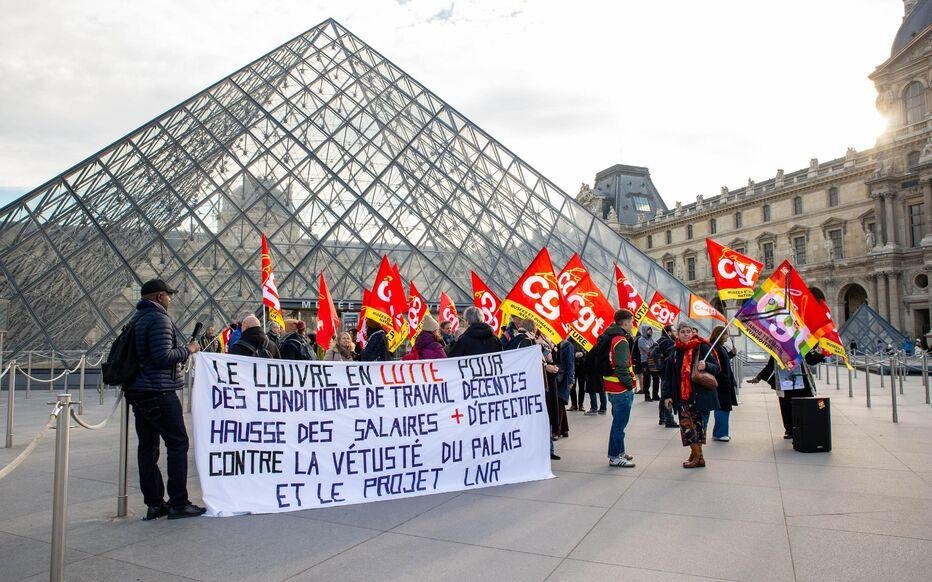
Strikers protesting for better work conditions, higher wages and more workers, and against the obsolescence of the building and the LNR Project (© LeParisien LP/Ahmed Benazzouz)
On Monday, February 16, an assembly of more than 200 employees of the Louvre Museum voted to go on strike, making it impossible to fully open the museum. Launched in mid-December, the strike movement at the Louvre has taken on an unprecedented scale over the past few weeks for France’s largest museum institution. On several occasions since December, the museum has been forced to close entirely to the public as a direct result of the mobilisation of a significant share of its workforce. On January 26, several hundred employees gathered in a general assembly at the auditorium voted to renew the strike notice initially filed on December 8 by an inter-union coalition bringing together CFDT, CGT and SUD Culture, marking a new phase in what has become a prolonged social conflict.
According to the trade unions, the mobilisation originated in a spontaneous movement by non-unionised staff members in June 2025, accompanied by the drafting of a list of grievances that, in their view, received no adequate response from management. The jewellery theft that occurred in October 2025 is described as a further shock to the institution’s social fabric, as it exposed long-standing shortcomings in security, investment priorities and staffing management. Since then, the inter-union group says it has been closely monitoring the conflict, consulting employees every week on whether to continue the strike. The participation of staff from the Denon wing — which houses the Mona Lisa — led to the museum’s complete closure on several occasions, an outcome union representative has described as historic.
The various union statements converge in portraying an institution facing deep structural difficulties. The unions denounce working conditions they consider increasingly degraded, an ageing building whose deterioration has led to repeated technical failures, and a chronic lack of staff. According to them, these constraints result in the daily closure of galleries beyond the forecasts of the guaranteed opening plan, hindered visitor circulation and limited access to the collections, to the point that a visit to the museum has been described as an “obstacle course” by the workers. Internally, staff report a steadily increasing workload, growing tensions in human resources management and contradictory directives that they say are incompatible with the calm exercise of a public service mission.
The social tensions unfolding at the Musée du Louvre also coincide with uncertainty surrounding one of the institution’s most ambitious transformation projects. Scheduled to meet on February 11, the jury of the international architecture competition for the “Louvre–Grande Colonnade” project — part of the broader Louvre–Nouvelle Renaissance plan — ultimately postponed its deliberations to an unspecified later date. Officially justified by the need for further analysis of the proposals, the delay comes amid a series of crises affecting the museum, including security failures, infrastructure damage and ongoing labour disputes. Announced in January 2025 by President Emmanuel Macron, the project aims to redesign the museum’s eastern wing to improve visitor flow and access to the Mona Lisa, with an estimated cost of more than one billion euros. While the museum’s management insists on the project’s strategic importance, trade unions — already mobilised against what they describe as deteriorating working conditions and fragile funding priorities — have openly opposed the redevelopment, arguing that it diverts attention and resources from more urgent issues related to safety, staffing and day-to-day operations. The postponement of the jury meeting has therefore been interpreted by union representatives as a signal of broader instability, reinforcing their criticism of governance choices at a time when the institution is already under strain.
At the heart of the demands are issues related to the institution’s governance, site safety and security, project and pricing policies, the creation of permanent civil service positions, the stabilisation of contract staff, salary increases and the overall improvement of working and visiting conditions. These demands are also part of a broader reflection on the museum’s economic model, a large share of whose budget now relies on its own revenues, fuelling, according to the unions, tensions between financial imperatives and staff working conditions.
Asked about the situation, Culture Minister Rachida Dati publicly acknowledged on January 13, during an interview on Europe 1, the existence of a “governance problem” at the head of the institution, while announcing forthcoming decisions without specifying their nature. Despite several rounds of negotiations with management and supervisory authorities, the unions believe that the responses provided so far remain insufficient. Staff members, who say they are deeply attached to the Louvre, now describe their mobilisation as a major warning about the future of the institution’s social and cultural model and, more broadly, that of France’s major public cultural institutions.
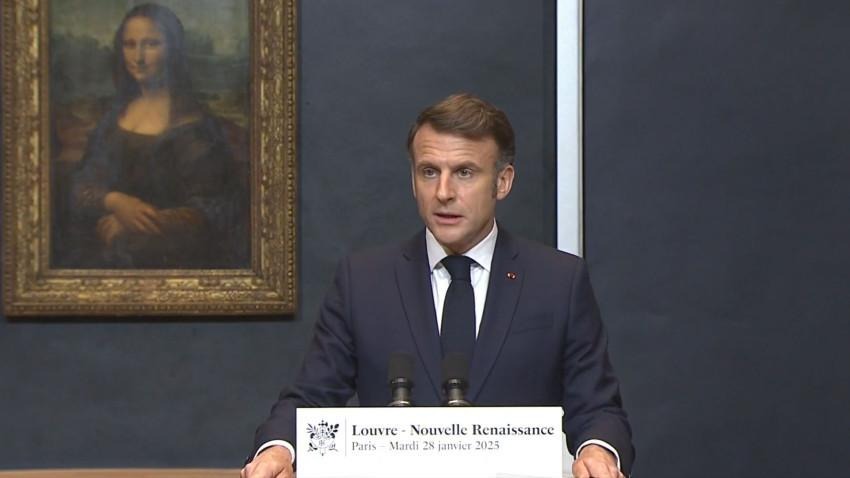
On Tuesday, January 28, 2025, Emmanuel Macron announced the future transformation of the Louvre Museum. ©Twitter/©Elysee
The state of public museums in France
Beyond the Louvre alone, the strike movement reflects a broader context of weakening across France’s public museums, which have been facing persistent structural pressure for several years. Staff point to rising workloads, increasingly tight schedules and enforced versatility, often within ageing buildings whose maintenance has been significantly delayed. Deteriorating infrastructure, regularly reported by employees, raises concerns about safety, the preservation of artworks and working conditions alike, while budgetary trade-offs increasingly favour self-generated revenues, high-profile events or profitability at the expense of day-to-day operations.
In this context, pricing policies, the growing number of exceptions and discounts, and pressure to increase visitor capacity are widely perceived by staff as contributing to the erosion of public service quality. These dynamics create a widening gap between the museums’ heritage and educational missions and the resources actually allocated to fulfil them. Added to this are recurring human resources issues: increased reliance on precarious contracts, limited career prospects, declining purchasing power and a widespread feeling of exclusion from strategic decision-making.
The demands set out in union statements — including the creation of permanent positions, salary increases, improved working conditions, recognition of staff expertise and clearer governance — echo a malaise shared across many public cultural institutions. Employees warn of the risk of a gradual erosion of the French museum model as an accessible public service grounded in professional expertise.
This situation can partly be explained by changes in the economic model of public museums, marked by growing dependence on own-source funding such as ticket sales, sponsorship, space rentals and blockbuster exhibitions, at a time when state and local authority funding is stagnating or declining. Under the supervision of the Ministry of Culture, many institutions are encouraged to boost revenues and attendance, resulting in intensified activity without corresponding increases in human or technical resources. For staff, this translates into mounting daily pressure: denser visitor flows, extended opening hours and increased reliance on evening, weekend and public holiday work, often seen as necessary to offset declining purchasing power.
Material working conditions remain another major point of tension. Much of France’s museum heritage is housed in historic buildings requiring heavy and continuous investment to maintain and upgrade. Staff regularly warn of technical failures, safety concerns and spaces ill-suited to mass tourism, all of which complicate their work. These issues affect visitors through partial gallery closures, restricted circulation and degraded visiting conditions, while also exposing staff to heightened risks and a growing sense of lost purpose.
Human resources challenges are equally central to the discontent expressed. The increasing use of contract staff, the multiplication of employment statuses and the precarisation of certain professions undermine service continuity and fuel feelings of inequality within teams. Employees denounce limited career progression, insufficient recognition of their skills and management practices perceived as increasingly top-down, leaving little room for dialogue or consultation. In this context, governance has become a key issue, with unions calling for staff to be more closely involved in strategic decisions shaping the future of museums.
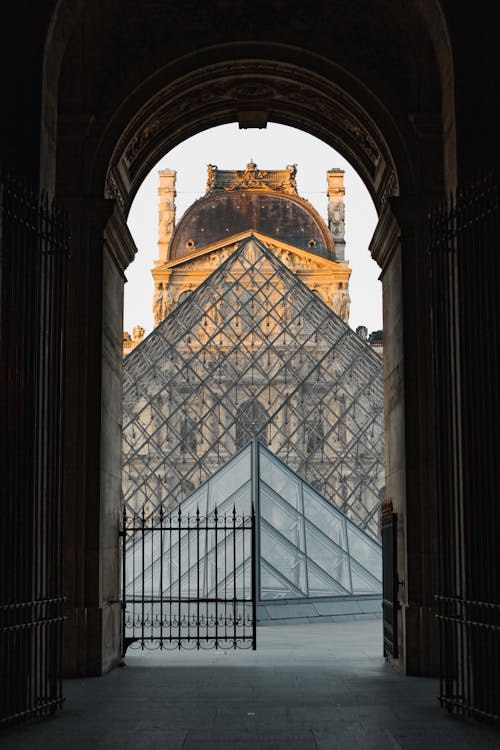
The Louvre Museum with its famous glass pyramid, built between 1985 and 1989 (image libre de droit)
What lies ahead?
The outcome of the conflict at the Louvre, as in other public museums, will largely depend on the ability of public authorities and institutional leadership to translate widely shared diagnoses into structural decisions. In the short term, targeted measures — temporary staff reinforcements, budgetary shifts in favour of safety and maintenance, and commitments on certain pay demands — could help ease tensions and restore more stable operations. However, without a long-term strategy, such measures risk falling short of addressing the depth of the problems identified.
In the medium term, the economic and social model of major public museums appears to be a central issue. The growing reliance on own revenues and mass attendance, often framed as unavoidable, could be reassessed in light of its impact on working conditions, conservation standards and the quality of visitor reception. A redefinition of priorities — refocusing on core public service missions, sustained investment in buildings and staff, and a better alignment between cultural ambitions and available resources — is one scenario frequently discussed by sector stakeholders.
Change may also require a renewal of governance practices. Recent social movements reveal strong expectations for greater recognition of staff expertise and for more meaningful social dialogue upstream of major strategic decisions. Closer staff involvement in shaping institutional choices could help rebuild trust and prevent recurring crises, while ensuring that stated objectives better reflect on-the-ground realities.
Finally, beyond the Louvre itself, these mobilisations may influence broader national cultural policy orientations. Under the authority of the Ministry of Culture, the State faces the challenge of clarifying its role and level of commitment in financing and regulating major heritage institutions. Without structural responses, social conflicts may multiply, turning such movements into lasting warning signals about the sustainability of the French cultural model. Conversely, a clear policy shift could open the way to a more balanced equilibrium between international prestige, accessibility and working conditions.
The debates raised by the strike at the Louvre Museum, and by similar movements in other institutions, go beyond the social dimension alone. They raise questions about the very future of cultural policy in France. As several observers point out, persistent underinvestment in public museums, combined with growing reliance on their own revenues, could gradually weaken their ability to fulfil their public service missions. In the long run, the preservation, study and transmission of cultural heritage could increasingly fall to private actors, foundations or institutions whose operations are shaped by profitability requirements, sponsorship strategies or audience-driven objectives.
Private museums and independent cultural initiatives undoubtedly contribute to enriching and diversifying the cultural landscape. However, their goals do not necessarily align with the long-term imperatives of conservation, research and universal access. Public museums have historically played a central role in preserving collections regardless of their immediate appeal, ensuring affordable access to knowledge and maintaining scholarly independence from commercial pressures. The concerns expressed by museum staff therefore resonate as a warning signal: that heritage management could gradually shift towards a market-driven logic.
Ultimately, the current mobilisations can also be read as a call to reaffirm public responsibility for cultural preservation at a time when the balance between public service and economic constraints appears more fragile than ever.
Written by Gabriel Maget
Sources:
CGT Etat : « Caisse de grève pour les agent·es du musée du Louvre (Intersyndicale Culture) »
Cfdt : « Les salariés du Louvre en grève pour leurs conditions de travail »
France info : « Nouvelle journée de grève au musée du Louvre, qui n’ouvre que partiellement »
Le Monde : « Grève au Louvre : nouvelle journée de mobilisation, le musée n’est que partiellement ouvert ce lundi »
Connaissance des arts : « Louvre : entre crises à répétition et polémiques, nouveau coup dur pour le musée et son grand projet de réaménagement à 1,15 milliard d’euros »
