From January 28 to February 1, the 22nd edition of the Longueur d’Ondes Festival, the “Festival of Radio and Listening,” took place in Brest. Since 2002, this event has been organized by four friends passionate about radio and sound expression: Laurent Le Gall, Aurore Troffigué, Laurent Venneuguès, and Hélène Vidaling. Over nearly five days, French-speaking radio professionals, journalists, authors, listeners, and radio enthusiasts of all kinds gathered at Brest’s national stage, Le Quartz, to participate in roundtables, conferences, workshops, and live-recorded broadcasts.
The program for this year’s edition revolved around three main themes: “Defending Public and Independent Media,” “In the Name of Feminist Struggles,” and “Cherishing Listening.” Every evening, between the festival’s intense days, attendees could also enjoy numerous shows and concerts organized alongside the festival, blending the auditory experience with broader cultural events.
But one might ask, why is a festival of such renown held in Brest? The answer lies in the city’s historical and ongoing relationship with radio. Brest is unanimously considered a “radio city,” thanks to its rich history and exceptional associative dynamics in the field of radio. Since the liberalization of the airwaves in 1981, several pioneering free radio stations emerged in the city, including Radio Neptune (1982) and Fréquence Mutine (1982). These stations established a model of local, alternative, and engaged radio. Alongside them, RCF Rivages (1992) and Radio U (2001) have contributed to a diverse radio landscape where associative stations collaborate rather than compete, united by a shared ethos: Brest.
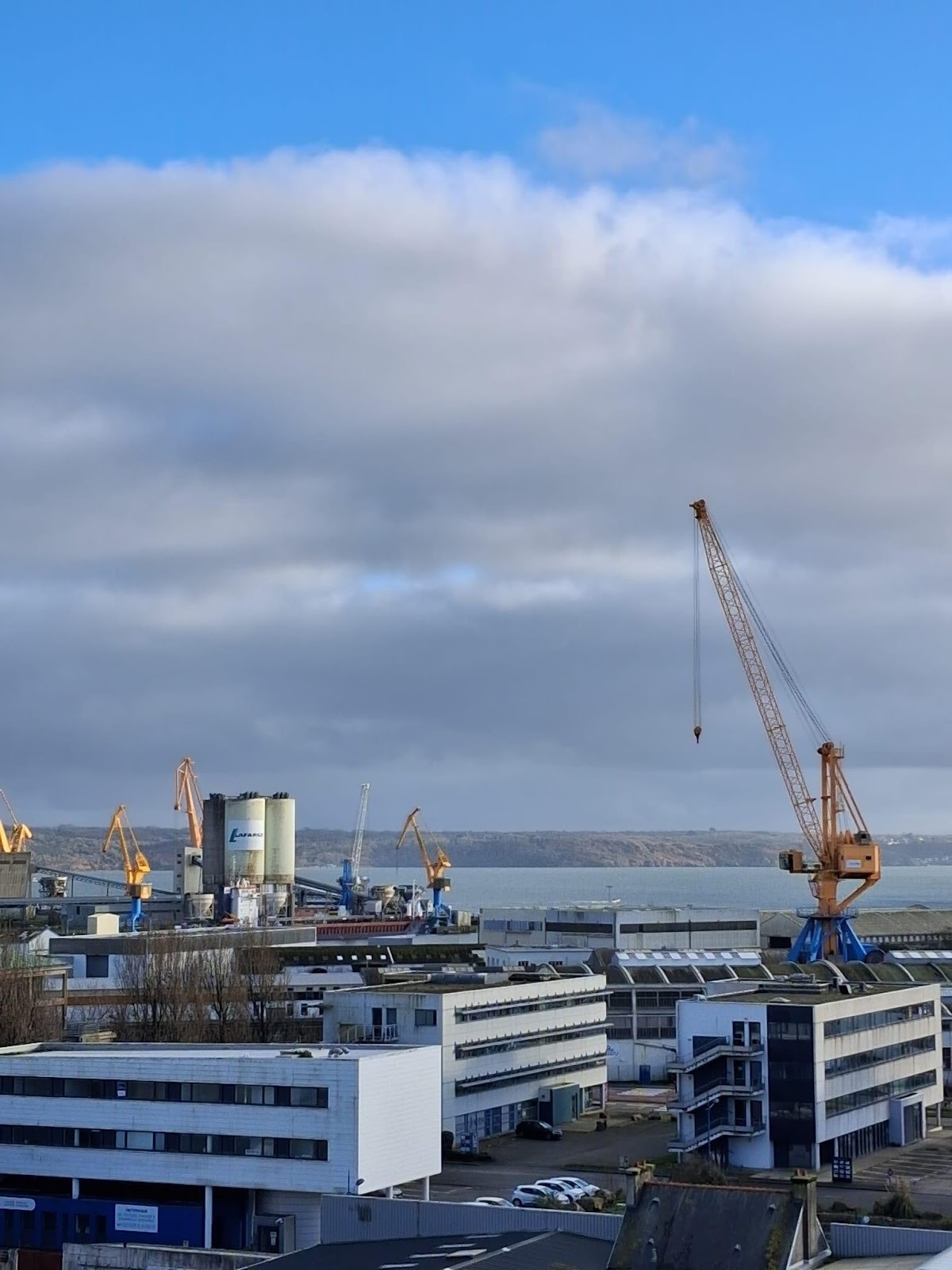
Picture of Brest during the Festival
The Key Role of Associative Radios in Sound Creation
Until 1970, the ORTF (Office de Radiodiffusion-Télévision Française) held a monopoly over all radio broadcasting in France. Following the social upheavals of 1968, a number of pirate radio stations, often popular and illegal, began spreading beyond Paris. These small, independent stations laid the groundwork for a new type of radio, one closer to its community, freer in content, and experimental in format.
In 1981, under the presidency of François Mitterrand, these stations were legalized, provided they adhered to certain requirements that offered protection for artistic creation. Today, there are approximately 600 associative radio stations in metropolitan France and 130 in overseas territories. They collectively attract around one million daily listeners, each tuning in for about an hour. By contrast, Radio France reaches seven million listeners for two hours of listening on average.
However, these associative radios are increasingly forced to fight to maintain editorial independence. Funding from the FSER (Fonds de Soutien à l’Expression Radiophonique) has been diminishing, placing vital local stations in jeopardy. Stations such as Radio Campus Paris, Radio Grenouille in Marseille, or Jet FM in Nantes, staffed by a few salaried employees and around a hundred volunteers, and financed 80% through public subsidies, risk disappearing if these reductions continue. Beyond their informational role, associative radios serve as critical training grounds for French radio professionals. Many current Radio France employees began their careers in these community-driven environments, learning the craft in a way large public broadcasters rarely allow.
Thus, associative radios are not only engines of local culture and artistic creation but also incubators of the next generation of media professionals, fostering innovation, experimentation, and diversity in a media landscape that often risks homogenization.
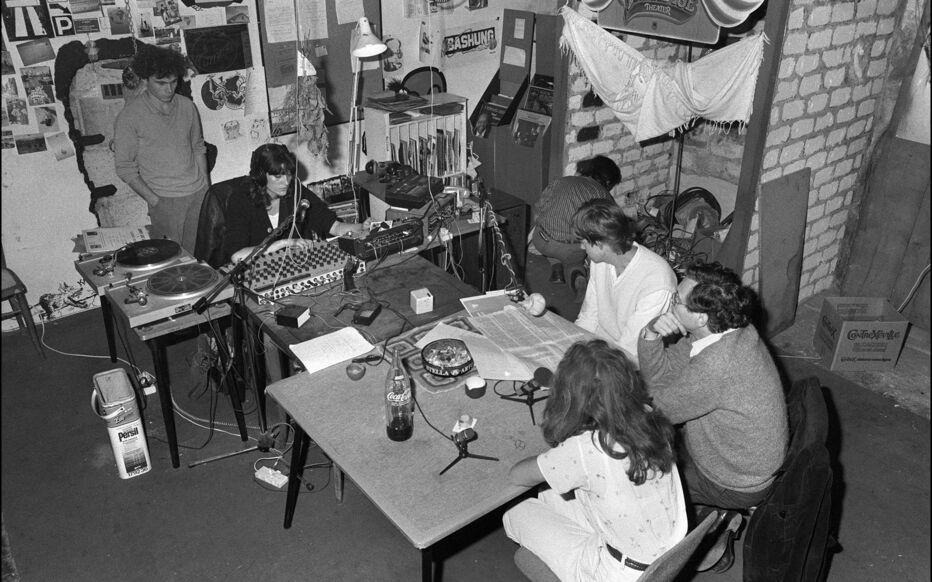
Picture of one of the first free radio stations
Copyright Issues for Podcast Creators
The festival also served as an important forum for discussing copyright challenges in the evolving podcast sector. As with the BIS (Biennales Internationales du Spectacle Vivant) in Nantes, the Longueur d’Ondes Festival highlighted the urgent need to adapt copyright law to new cultural formats, particularly independent podcasts.
Podcasting, a relatively recent and rapidly growing medium, now encompasses nearly 100,000 independent series and 100 million individual podcasts worldwide. These productions often explore topics overlooked by traditional radio, offering listeners a fresh and immersive experience. Yet the legal framework surrounding podcast creators remains minimal. Questions abound: should funding responsibilities fall under the CNM (Centre National de la Musique) or the CNC (Centre National du Cinéma et de l’image animée)? The ambiguity hampers both creators’ protections and opportunities for support.In response, representatives from the IGAC (Institut Général des Affaires Culturelles), the SCAM (Société Civile des Auteurs Multimédia), the PIA (Pôle Innovation Audiovisuelle), ARCOM, and Radio France convened in a roundtable titled “The Sound Work: The Overlooked Aspect of the Cultural Sector.” They recognized that the podcast industry remains the only cultural sector not systematically subsidized, aside from a few small grants. An agreement was nevertheless reached between Radio France and the PIA, aiming to promote independent PIA podcasts on the Radio France platform and ensure proper remuneration, contrasting with platforms such as Spotify or Deezer, which often undercompensate creators.
This dialogue marks the beginning of a larger legislative initiative. The goal is to create a sound creation ecosystem modeled on audiovisual frameworks, defining authors, co-authors, and regulations that protect creative rights and eventually integrate into the SMA (Services Media Audiovisuels) directive. By establishing clear protections for podcast creators, the industry moves closer to a sustainable and equitable model, legitimizing podcasts as a vital cultural and professional medium.
Podcasts as Political Influencers
The 22nd edition of the festival also explored the growing political influence of podcasts, particularly evident during the 2024 U.S. presidential elections. One conference featured a journalist specializing in American politics, who noted that many U.S. citizens no longer relied on traditional TV news channels like Fox News. Instead, they increasingly turned to podcasts, including shows hosted by Andrew Tate, which attracted up to twelve million listeners during the election period.
What astonished observers was the format itself: three hours of daily, unscripted content in which podcasters shared opinions “as they came to mind.” Unlike conventional media, these programs offered no structured debate or editorial counterpoints, creating what the journalist described as a “form of shouting broadcast,” unfiltered and often polarizing.
This shift toward podcasts correlates with a historical regulatory change. In 1987, the Reagan administration abolished the Fairness Doctrine, which had required U.S. broadcasters to provide balanced and diverse content on local and federal channels. Without this regulation, citizens increasingly sought alternative sources of information, with podcasts emerging as a primary vehicle for unmediated political discourse. The implications are profound, not only for the media industry but also for democratic engagement and information literacy, highlighting the capacity of audio media to shape public opinion in ways that traditional outlets increasingly cannot.
Challenges Facing Public Broadcasting
Finally, the festival addressed ongoing challenges to public broadcasting, notably the Cohen-Legrand affair, discussed in the presence of Thomas Legrand, a leading French journalist. Legrand replaced Laurence Bloch, former director of Radio France, who was absent due to her upcoming summons before the Parliamentary Inquiry Commission on public broadcasting neutrality.
Participants discussed the growing scrutiny over the cost and neutrality of public broadcasting, especially since the 2022 elimination of the public broadcasting license fee. Concerns were raised regarding the perceived pressure to maintain “neutrality,” with the commission urging broadcasters to appear politically impartial. Legrand emphasized that neutrality should not be a superficial display, but rather an opportunity to reflect the complexity and diversity of opinions so that every listener can identify with public service content. His remarks underscored that expressing opinions differs depending on the platform: as an editorialist for Libération, he exercises a different voice than when contributing to France Inter, illustrating the nuanced responsibilities of public media professionals.
A female participant also highlighted the ideological stakes in public broadcasting debates. Opposition to public service is increasingly used as a political tool, framed as an electoral argument rather than a financial or operational critique. This underscores how media policy debates can become entangled with broader ideological battles, reflecting shifts in public discourse, political strategy, and the very role of media in society.
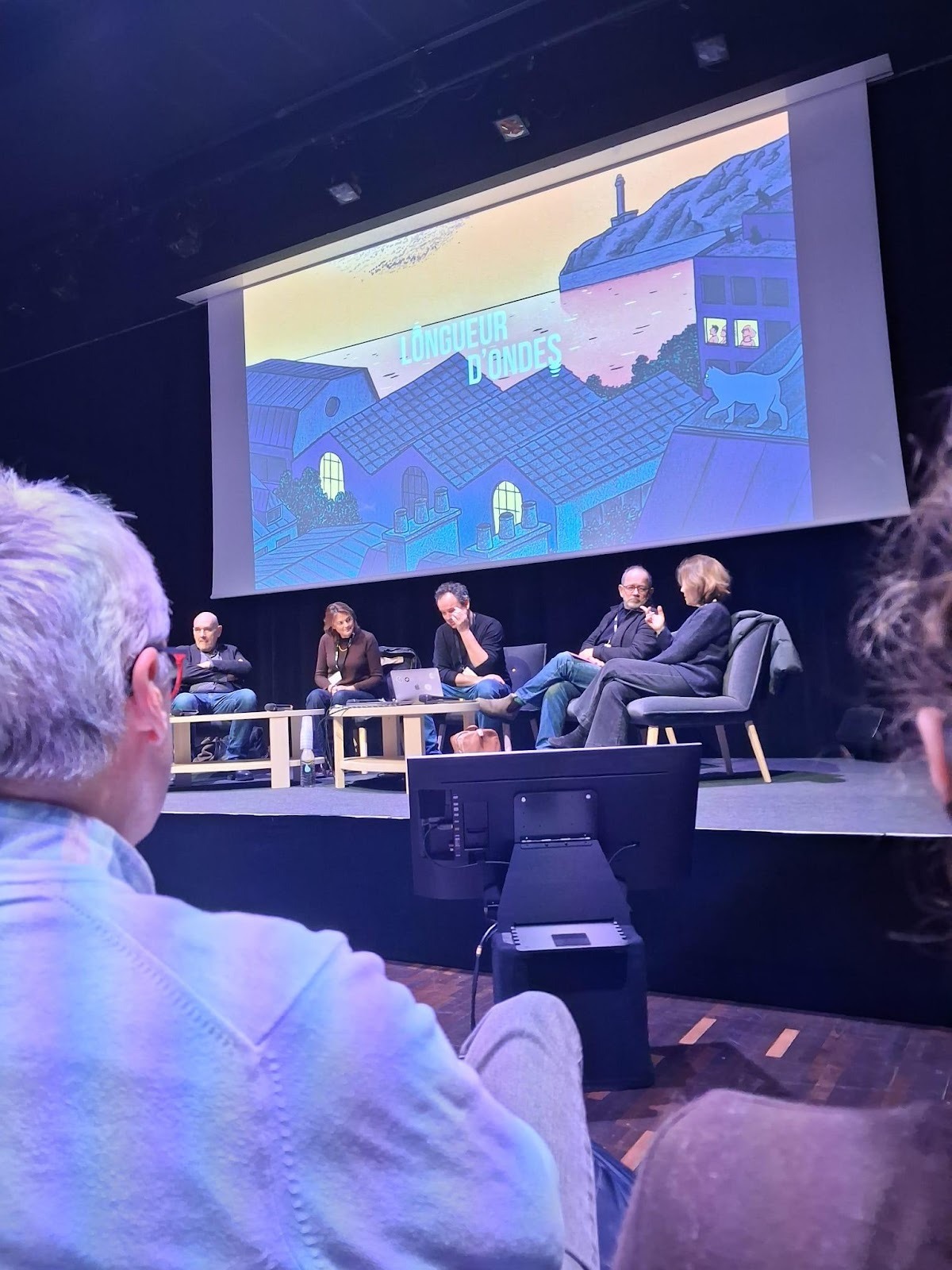
Picture of Jean Lebrun, Nathalie Sonnac and Thomas Legrand at the Conference about Challenges Facing Public Broadcasting.
Conclusion
The 22nd edition of the Longueur d’Ondes Festival has demonstrated the enduring importance of community-driven dialogue in the French-speaking radio landscape. By bringing together professionals, volunteers, listeners, and enthusiasts, the festival fostered critical reflection on pressing issues: the sustainability and independence of associative radios, the emerging legal and economic structures needed for podcasts, the transformative influence of audio media on political discourse, and the ideological pressures facing public broadcasting.
Beyond simply discussing problems, the festival highlighted solutions: collaborations between public broadcasters and independent podcast networks, legislative efforts to secure creators’ rights, and ongoing advocacy for funding and editorial independence. These conversations are vital, not only for the survival of diverse radio formats but also for nurturing a culture that values listening as much as speaking, creativity as much as consumption, and informed engagement as much as entertainment.
In addition, the festival underscored how media, in its many forms, shapes society, not only by delivering content but by defining how audiences experience, interpret, and interact with the world. From local associative radios to globally influential podcasts, sound media continues to be a conduit for knowledge, debate, and cultural expression. By providing a forum for collaboration, debate, and celebration, the Longueur d’Ondes Festival ensures that the art and craft of listening remain central in a rapidly changing media landscape.
Ultimately, the 22nd edition reaffirmed that radio and audio storytelling are more than just technologies, they are social practices, educational tools, and instruments of democracy. They foster connection, provide platforms for marginalized voices, and offer spaces for experimentation and reflection. As the festival concluded, participants left not only with new ideas and renewed energy but with a shared understanding of the stakes, responsibilities, and possibilities inherent in the world of sound. The conversations, debates, and collaborations sparked during those five days will continue to resonate, echoing far beyond Brest and shaping the future of radio and audio media for years to come.
Written by Judith Laithier
