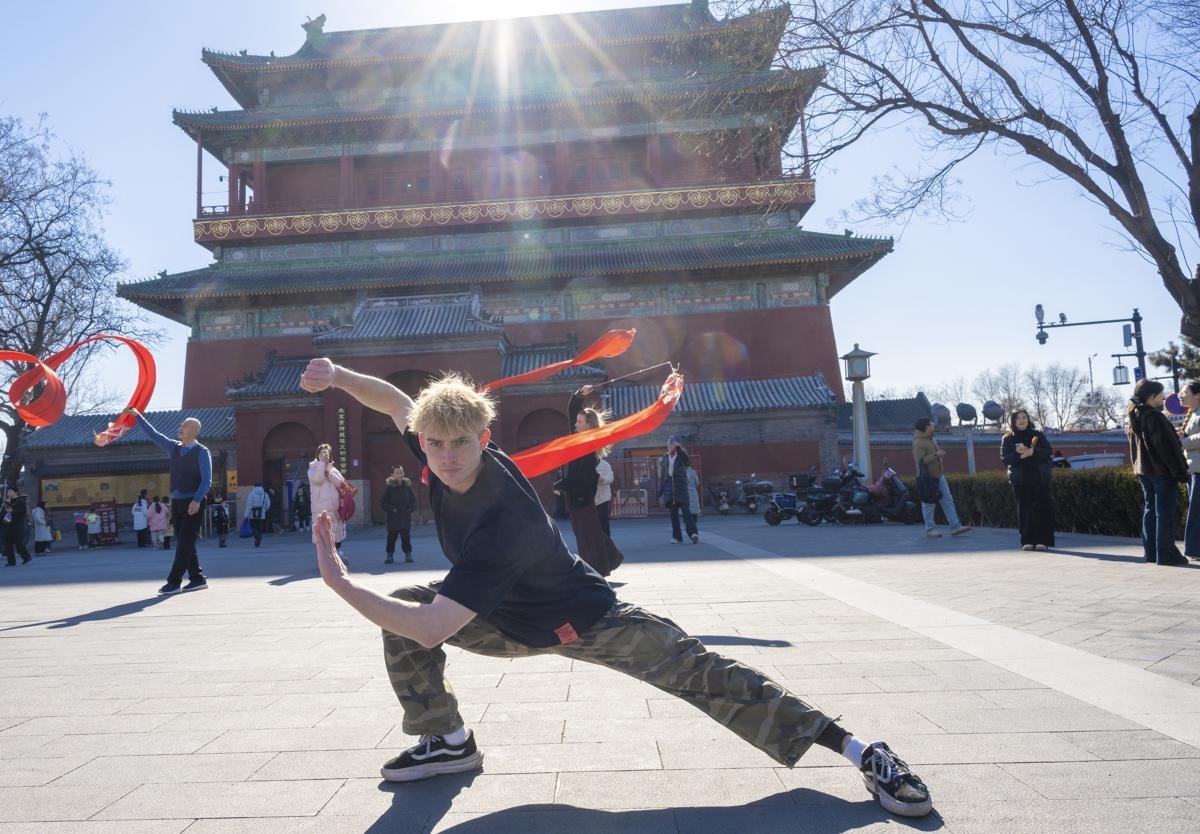
A British martial arts enthusiast demonstrates Chinese kung fu at the square in front of the Bell and Drum Towers in Beijing on Monday. From China Daily
In early 2026, if you open TikTok or Instagram, you’ll witness a peculiar sight: young blonde women boiling apple slices on camera, American youths at the gym swapping their smoothie cups for thermoses, and European influencers earnestly posting « Today’s Chinese wellness check-in » videos. Their captions are strikingly similar — « I’m becoming Chinese ».
The tipping point of this trend can be traced back to December 6, 2025. Sherry Zhu, a 22-year-old Chinese American girl, posted a 20-second video: « You don’t know me. I’m a Chinese American. Whoever you are, since you scrolled onto this video, you are Chinese now. Don’t resist. It’s your destiny. » This playful « diagnosis notice » unexpectedly ignited a global cultural movement. As of February 2026, the total views for the #BecomingChinese hashtag on TikTok has surpassed 500 million.
This article seeks to answer the questions: Why « China »? Why « now »? When young Westerners begin earnestly listing « Chinese lifestyle checklists » in their memos — a cup of warm water in the morning, wearing slippers indoors, soaking feet before bed, practicing Baduanjin — what cultural psychology and social shifts does this reflect?
The essence of the « #BecomingChinese » phenomenon is a fundamental transformation in the paradigm of folk cultural communication in the era of globalization: a shift from top-down « cultural export » to bottom-up « cultural resonance, » from grand narratives to tangible, everyday practices. It is both a response from Western Gen Z to their own societal anxieties and a vivid footnote to the « everyday life turn » of China’s soft power.
Tracing the Phenomenon: From « Chinese Baddie » to Global Imitation Wave
The New Generation of Chinese Americans as « Cultural Translators »
Sherry Zhu’s success is no accident. Born in New Jersey, she is a classic « third culture kid » — her father is from Pinghu, Zhejiang; her grandmother is from Shenyang; her mother grew up in Guizhou. Raised by her grandmother, she « particularly loves eating pickled cabbage. » This dual cultural background endows her with a unique translation ability.
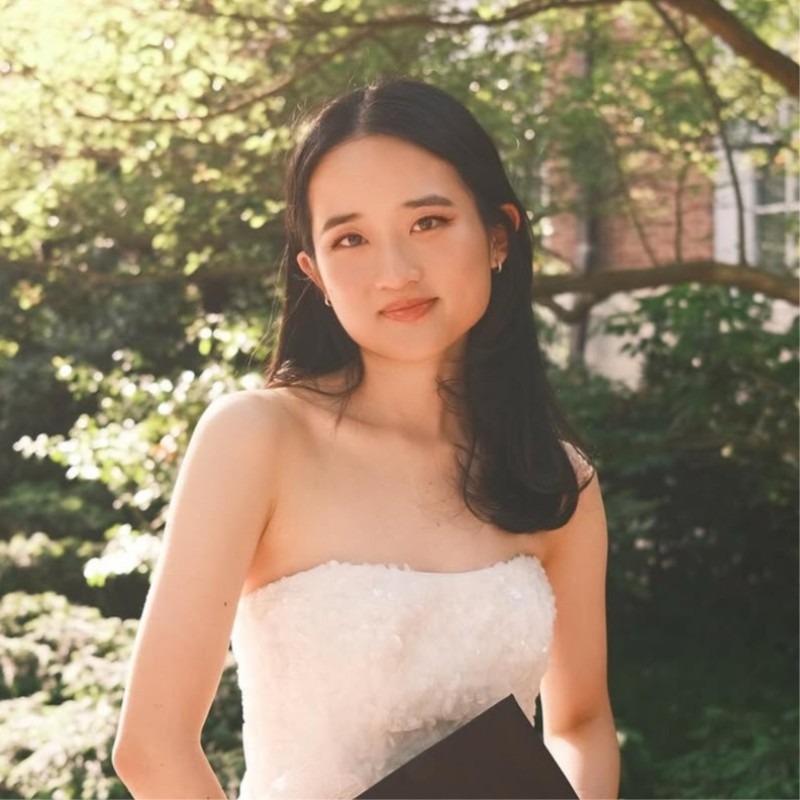
Photo of Sherry Zhu
Another key figure is blogger Emma Peng. With her phrase « My culture can be your culture, » she alleviated Western audiences’ moral anxiety about « cultural appropriation, » effectively issuing a « cultural passport. »
These young Chinese Americans act as « cultural translators. » They don’t rigidly explain concepts like « Qi » or « Yin-Yang » from traditional Chinese medicine. Instead, they package Chinese wellness concepts using terminology familiar to Western health circles, such as « detox, » « lower cortisol, » and « heal the gut. » This « conceptual translation » is key to successful cross-cultural communication — preserving the core experience while replacing the explanatory framework.
The Reshaping of Identity with « Chinese Baddie »
Sherry’s creation of the « Chinese Baddie » concept is worth analyzing. Originally carrying somewhat negative connotations, « baddie » has evolved in social media contexts to refer to someone confident, attractive, and unapologetically themselves. This concept dissolves the tension associated with learning about a foreign culture, transforming cultural identification into a confident, fashionable lifestyle attitude. Foreign netizens post videos of themselves boiling apple water with captions like « Striving to become a Chinese Baddie » , treating Sherry as their « Chinese cousin. »
Sherry Zhu has amassed millions of views by explaining the appeal of these everyday practices, according to The New York Times. She has also been written by Time Magazine, NBC News, Radio-Canada and The Times about her impactful “turning Chinese” social media content.
Decoding Through Communication Studies: Algorithms, Imitation, and « Decentralized » Cultural Flow
The « Compound Interest Effect » of Algorithms
From a communication studies perspective, the viral spread of this trend is inseparable from the underlying logic of social media platforms. Algorithms naturally favor content that is visually distinctive, easy to imitate, and has a low barrier to participation. A short video showcasing a « Chinese morning routine » — drinking hot water, cooking congee, wearing slippers — has a uniform format and easily learnable actions, readily inspiring viewers to think, « I’ll try that too. »
What follows is a wave of « note-taking » in the comments sections. Users are no longer just spectators; they become practitioners. They start discussing the ideal ratio for boiling apple water, debating the best brands of foot baths, and even sharing their physical sensations after practicing Baduanjin. This high-intensity interaction triggers social media algorithms, pushing related videos into broader traffic pools.
The « Memetic » Spread of Imitation
The phrase « Tomorrow you will become Chinese » possesses strong internet meme qualities. With a half-joking, half-commanding tone, it breaks through the typical cautiousness in cross-cultural communication. She doesn’t ask viewers to understand Chinese culture; she confidently predicts they will fall in love with this lifestyle. This confidence itself is a micro manifestation of growing cultural soft power.
Foreign netizens, as if preparing for an exam, list out « Becoming Chinese » checklists in their memos: a cup of warm water in the morning, remembering the date of Chinese New Year, must wear slippers indoors… More detailed versions even include whole Chinese wellness routines like practicing Baduanjin, sunbathing and walking, and soaking feet before bed.
From « Symbol Consumption » to « Embodied Experience »
Miao Xi, an international Chinese education expert based in Calgary, Canada, points out that the visualization and immediacy of platforms like TikTok transform mundane details of ordinary Chinese life — drinking hot water, wearing cotton slippers, soaking goji berries — into observable, imitable, and shareable global daily practices, breaking down spatial barriers in cultural dissemination. Short videos condense complex wellness philosophies into one apple, a kettle of hot water, a pair of plush slippers, and a few Baduanjin movements. Anyone interested can easily participate and submit their own « experience report. »
Cultural Psychology: Modernity Anxiety and the « Therapeutic Effect » of Eastern Wisdom
Reflections on Western Modernity
The fast-paced life fostered by industrial civilization has made insomnia, anxiety, and chronic diseases common global disturbance. People urgently need low-cost solutions for physical and mental well-being. The gentle nurturing of drinking hot water, the critical thinking of food therapy, and the self-discipline of regular routines found in Chinese lifestyles precisely meet this need.
Wired magazine analyzed that the trend of « becoming Chinese » is related to how « Made in China » has become an indispensable part of Western society, especially American life, over decades. More profoundly, it reflects Western modernity’s ethos of « conquering nature » and Eastern wisdom like « Heaven and humanity are one » .
« Usefulness » is Truth: Positivist Cultural Identity
Western audiences are not drawn to Chinese culture because it is « mysterious, » but because it « works. » The comments sections are filled with positivist feedback:
User Miriam stated: « Since giving up ice water and switching to warm water, my acid reflux has improved dramatically. This change is truly as precious as gold. »
Foreign girl Melody Aslan shared that after learning the fitness routines of Chinese grandmothers, her morning discomfort completely disappeared, giving her a fresh start to the day.
An American health blogger now champions « drink more hot water » as a life guide.
This utility-based dissemination is more enduring than aesthetics-based dissemination. A cup of hot water embodies the concept of « preventive treatment of disease » ; a bowl of warm congee carries the philosophy of « slowly nurturing body and mind. » This core value, resonating with universal human needs, allows Chinese daily practices to transcend cultural differences and become a shared choice for navigating modern dilemmas.
Controversy and Response: « Cultural Appropriation » or « Cultural Appreciation »?
Facing doubts, Sherry’s response was clear: « I don’t think it’s cultural appropriation. My content mainly revolves around Chinese food and daily habits, and habits belong to everyone. » She believes real cultural appropriation happens without understanding, « but in my comments section, many people are learning why Chinese people live this way. There’s understanding, there’s learning — it’s cultural appreciation. »
Social Context: Offline Extension from « China Travel » to « China Shopping »
Policy Dividends: Expanding Visa-Free « Friends Circle »
This online trend does not exist in isolation; it mirrors and reinforces the popularity of offline « China Travel » documentary videos, creating a mutually strengthening loop. As visa policies become more convenient, more and more foreign travelers are using their cameras to document their experiences in China.
On the first day of the Bingwu Year of the Horse, China implemented visa exemption policies for ordinary passport holders from Canada and the UK. To date, China’s unilateral visa-free « friends circle » has expanded to 50 countries. The National Immigration Administration predicts that during the 2026 Spring Festival holiday, the average daily number of travelers at national ports will exceed 2.05 million, a 14.1% increase year-on-year.
British tourist Joseph, benefiting from the visa exemption policy, said with a smile: « Enjoying the visa-free policy, learning to ‘Becoming Chinese,’ and celebrating the most authentic Spring Festival — I feel very satisfied. »
The Real China: Breaking Stereotypes
When American internet celebrity IShowSpeed livestreamed on Chinese streets, his experiences with mobile payments, seamless streaming on high-speed rail, and interactions with square-dancing grandmas garnered tens of millions of views. Algorithms push this immediacy and freshness of a « first-person perspective experience » globally, helping to somewhat reduce the initial gap in cross-cultural contact.
The comments sections under these videos often turn into squares of collective reflection, with « This is completely different from what Western media portrays » becoming a frequent exclamation. From « watching » to « experiencing » to « imitating, » a deepening cycle of emotion and action is formed.
The « China Shopping » Boom
According to Ministry of Commerce data, 13,000 tax-refund stores are well-stocked with various high-quality products. Foreign friends shopping in China can effectively enjoy an additional 10% discount. In January 2026, Beijing Capital Airport Customs processed 7,966 tax refund applications for travelers, totaling approximately 125 million yuan, a year-on-year increase of 469.81% and 43.68%, respectively.
Brazilian tourist Lira William said: « The shopping experience during my trip to China was fantastic! Digital products and Chinese ‘pop toys’ are novel and affordable. »
Conclusion: The « Everyday Life Turn » of Cultural Soft Power
When we peel back the surface of this vibrant imitation trend, we get in touch with a more profound global socio-psychological shift and a structural transformation in communicative power.
First, this is a fundamental transformation in the paradigm of cultural communication. A shift from showcasing awe-inspiring « miracles » to sharing relatable « daily life »; from exporting iconic « symbols » to offering referential « life solutions. » The gentle power of culture grows not only from the soil of economics and politics but is also deeply rooted in whether it can offer the world a tangible, practicable, and beautiful imagination of ordinary life that can be embraced.
Second, this is a victory for spontaneous people-to-people dialogue. This imitation game, originating on screens, has long surpassed the surface level of novelty and entertainment. It is the historic confluence of social media technology, the contemporary appeal of Chinese lifestyle values, and spontaneous cross-cultural dialogue in the era of globalization.
Third, this is a micro manifestation of cultural confidence. China has never imposed its lifestyle or culture on others. Instead, with an open and inclusive mindset, it presents itself objectively to foreign publics and engages in sincere interaction. Behind this attitude lies growing cultural confidence.
As Sherry Zhu said: « I’m still the same me. I think it’s less that my video went viral, and more that Chinese culture went viral. »
In the future, as « lifestyle diplomacy » deepens, we have reason to expect a more three-dimensional, warm, and harmonious image of China taking root in the hearts of people worldwide. This global dance that began with imitation may ultimately lead to a more profound exchange of values and dialogue among civilizations.
Written by Yajuan Liu
TikTok link: https://www.tiktok.com/@brandongonezshow/video/7595359203699526923
