Introduction : A System That Collects But Does Not Redistribute
“Copyright makes a living for those who make us dream.” – “Les droits d’auteur font vivre ceux qui nous font rêver.” This well-known slogan from SACEM is hard to dispute, at least in theory.
In electronic music, however, that promise is starting to break down. This article begins with a simple observation: current royalty collection systems are struggling to keep up with the reality of DJ sets. Behind the strobe lights, the line-ups, and the crowds dancing every weekend across Europe, millions of euros never reach the producers who created the music being played.
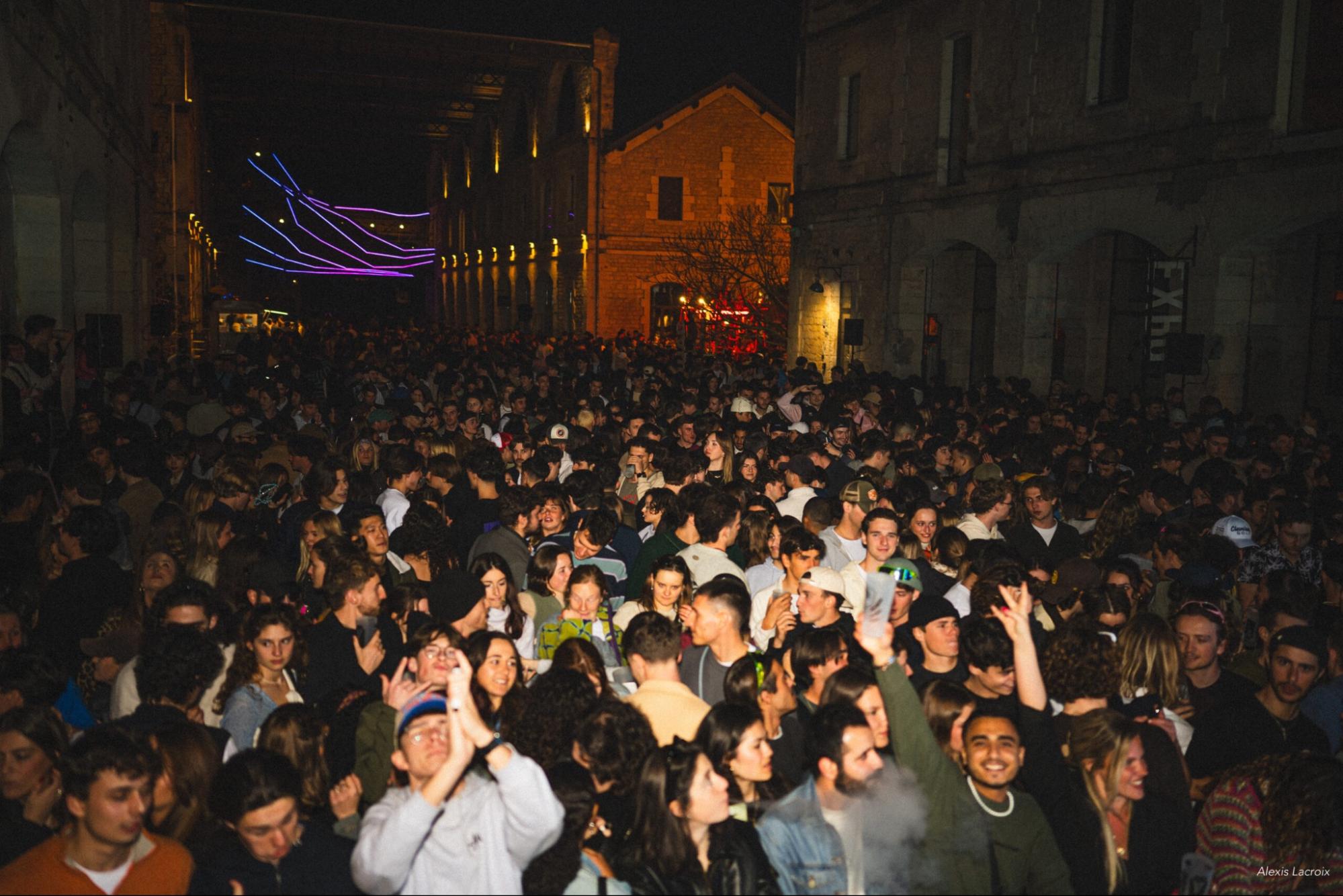
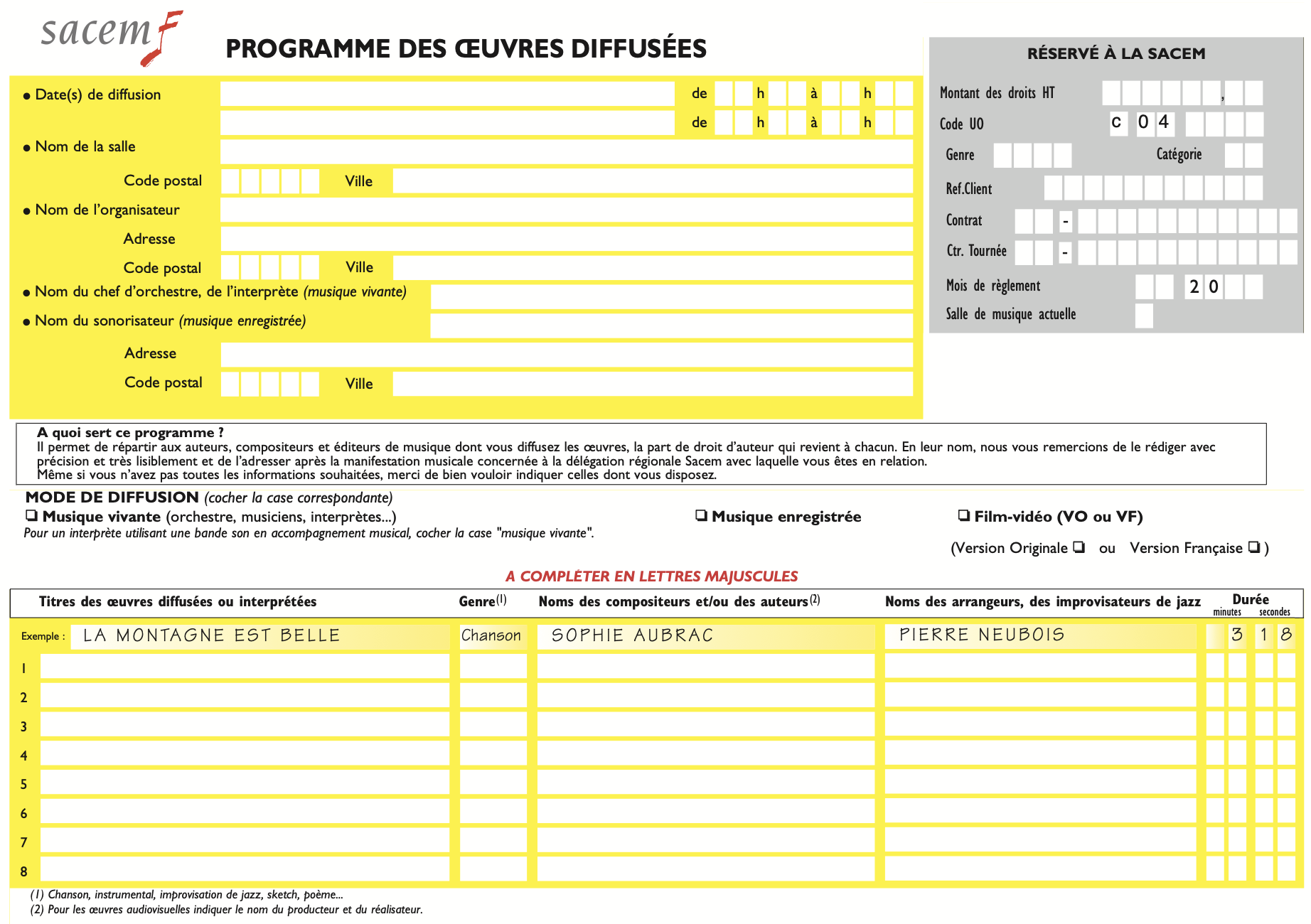
This reflection did not emerge from theory, but from the field. Three years ago, I worked in programming and event production at Darwin ecosystem in Bordeaux, organizing artists’ venues for open-air events and for the Climax Festival. One of my tasks was to complete SACEM’s “yellow forms”, meant to document the works performed so that composers could receive their royalties. Every week brought new DJ sets, and every week led to the same dead end. Payments were correctly made, but tracklists remained incomplete, when they existed at all. DJs often did not know the exact names of the tracks they played, sometimes not even the artists. In six months, I was not able to submit a single complete tracklist. The money was flowing into the system, fully aware that it would never reach its rightful recipients. Occasionally, I personally recognized tracks by French producers, but they never appeared in the declared SACEM repertoire.
What initially seemed like an operational issue quickly revealed itself as a structural one. According to the Fair Play initiative—Examining the Electronic Music Rights and Royalties Landscape—nearly two-thirds of electronic music performances in the UK do not generate properly attributed royalty payments. In other words, most tracks played in DJ sets are not accurately remunerated, even though clubs are paying. This represents a real financial burden for venues already operating on fragile margins. Attempts to compensate for this failure have emerged, such as Aslice, a platform founded by DVS1, encouraging DJs to voluntarily redistribute part of their fees to producers. But such initiatives remain fragile, as authors’ remuneration is not meant to rely on goodwill, but on a structured system. If it worked properly, DJ sets could represent a major source of income: in a mid-sized club, a track could generate €5 to €20 per play, multiplied across hundreds of performances each year. This is not a marginal issue it is structural.
From a Café Dispute to Live Music Regulation: The Birth of SACEM
To understand how such a gap emerged, it is worth recalling that SACEM itself was once a radical innovation. Its origins lie in a legal dispute in 1847, when Ernest Bourget, Paul Henrion and Victor Parizot refused to pay for their drinks in a Paris café (Le Café des Ambassadeurs) where their music was performed without compensation. They won their case, laying the foundation for one of the first copyright societies in the world, a system designed to ensure that creators are paid when their work is used.
Today, that system still collects substantial sums. In France, once production costs exceed €5,000, events move to a proportional model: 11% of ticket revenue and around 5.5% of food and beverage income are collected for copyright. While efficient in terms of collection, this framework raises questions about its adaptability, particularly given the complexity and arbitrariness of certain thresholds. The problem becomes even clearer when looking at distribution. According to Fair Play, only 28% of royalties paid by an average UK nightclub are correctly allocated, with more than £5.7 million misdirected each year. DJs can earn significant fees playing other people’s music, while producers often earn little—or nothing at all, sometimes without even knowing their tracks are being played. A track bought for €2 on Bandcamp could theoretically generate €10 to €20 each time it is played in a club, yet this value remains largely unrealized, especially for independent and underground artists.
Data, Technology and the Limits of the Current Model
At the core of the issue lies a lack of reliable data. When tracklists are missing, collecting societies rely on indirect methods : sampling, monitoring or radio-based extrapolation. These processes remain opaque, and according to Fair Play, up to 50% of such “analog distributions” are inaccurate, creating a structural distortion where underground scenes may end up subsidizing mainstream artists. The deeper issue is that most collective management systems were designed over a century ago, in a context where music was primarily performed live by artists playing their own compositions. Electronic music, built on circulation, curation and reinterpretation, fundamentally challenges this model.
All actors agree on one point: without tracklists, there is no accurate redistribution. Technological solutions exist—music recognition tools similar to Shazam can reach up to 90% accuracy—but fewer than 7% of venues are equipped with them, largely due to cost constraints. A simpler solution would be for DJs to properly declare their tracklists, which could achieve up to 95% accuracy, yet only a small minority do so. The reason is straightforward: DJs have little direct incentive, as they mostly play other artists’ music. As Josh Doherty notes, the issue is as much about habits and ethics as it is about system design.
This imbalance becomes even clearer when looking at detailed data from the report. Their analysis shows that only around 36% of electronic music performances actually result in the correct creator being paid. In a typical UK nightclub, this means that out of £20,000 in annual licence fees, barely £5,688 reaches the rightful artists, while over 50% of royalties are misallocated due to attribution gaps. Part of the issue also lies upstream. The report estimates that only 55% of creators are registered with PRS, meaning that nearly half of producers are not even in the system and cannot be paid, regardless of how accurate the tracking is. This creates a structural blind spot, where even perfect data would still fail to ensure fair remuneration.
The challenge, ultimately, is not to blame CMOs (Collective management organizations) such as SACEM, clubs or DJs, but to recognize a structural mismatch between an outdated framework and contemporary musical practices. At a time when most independent artists struggle to make a living, fixing this system is not a marginal adjustment, it is a necessary reform.
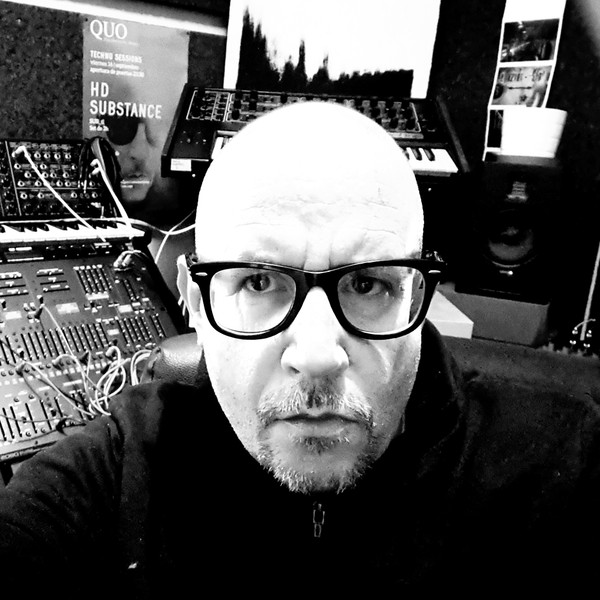
– HD Substance, DJ & Producer
From a Technical Failure to a Cultural Shift
At its core, the issue is not only technological, it is cultural.
Today, declaring tracklists is perceived as optional, tedious, and ultimately meaningless. DJs, who play up to 95% of other artists’ music, have little to no direct incentive to engage in the process. Clubs pay, collecting societies collect, but the chain breaks at the point where data should be generated. Without tracklists, there is no fair redistribution, only approximation.
This creates a structural paradox. Copyright is treated as a fixed cost by venues and promoters, often negotiated down in fragile economic conditions, while the artists whose music actually fills the dancefloor remain largely invisible in the redistribution process. Value circulates, but not in alignment with artistic reality.
If the system is to evolve, declaration cannot remain an obligation : it must become part of the culture of the scene itself.
This implies a shift in norms as much as in tools. Tracklist declaration could become a visible marker of professionalism and ethics: embedded in artist identities, promoted by festivals and labels, and integrated into platforms where DJs already exist. At the same time, the process must become frictionless, automated exports from DJ software, post-set declarations in a few clicks, and simple reminders could remove most practical barriers.
But beyond simplification, the key lies in reintroducing meaning and feedback into the system. DJs are not just performers: they are curators, shaping musical circulation in real time. They dig, select, test, and assemble narratives through sound. This work of excavation, of searching for unknown records, building sets, and taking risks is precisely what defines their cultural value. We expect the best DJs to surprise us, to play music we have never heard before. That expectation creates a subtle tension: the more unique and “hidden” the music, the more valuable the performance can feel for some people…Recognizing this role, even symbolically, through visibility or access to data on the impact of their sets, could begin to realign incentives.
In practice, many DJs already navigate this ambiguity. As Ben UFO suggests, there is a real tension between two values: the desire to help listeners discover and support the music, and the expectation from the public to hear hidden and forgotten tracks. This tension is even more paradoxical today, as a large share of electronic music producers now rely primarily on DJ gigs for their income, while recorded music generates limited revenue. In response, some artists deliberately withhold unreleased tracks or avoid publishing them altogether, using exclusivity as a way to create anticipation, making the live set the only place where certain sounds can be experienced.
This dynamic is deeply connected to a broader transformation: the way we discover music is changing at an unprecedented pace. On one side, access has never been easier—any track is theoretically one click away, surfaced instantly by algorithms. On the other, this ease of access tends to flatten the experience of discovery. Digging, spending hours searching, identifying a track, tracing its origins, and building a personal connection to it—requires time, intention, and effort. Yet it is precisely this process that has historically shaped musical cultures, scenes, and identities.
This is why the solution cannot be purely technical or administrative. It must acknowledge existing practices and values within DJ culture. Submitting tracklists for rights collection—whether through clubs, festivals, or even via podcasts and recorded mixes, should become standard, frictionless, and expected. Interestingly, technology is already moving in that direction: on platforms like YouTube, many tracks are automatically identified and credited. The infrastructure for recognition exists; what is missing is alignment between institutions, platforms, and cultural practices.
Platforms like HÖR Berlin illustrate this shift. By placing tracklists behind a subscription, they transform musical knowledge into a premium feature. While part of this revenue may be redistributed to performing artists, the producers of the tracks themselves remain largely excluded from this value chain.
In this model, what is monetized is no longer the music, but access to information about it. This creates a paradox: transparency is needed to ensure fair remuneration, yet it increasingly becomes a commodity. The risk is clear—rather than fixing the broken system of rights distribution, we are building a parallel economy around opacity.
The question, then, is no longer only how to fix a broken system, but how to redesign the behaviors that sustain it. DJs build culture. The challenge is to ensure that this culture circulates fairly without erasing the very dynamics of discovery, opacity, and curation that make it meaningful in the first place.
A Radical Hypothesis: Rewiring Value in Electronic Music
Before imagining alternative models, one priority stands out: reopening dialogue between collecting societies and the electronic music ecosystem.
Today, much of the tension comes from a lack of mutual understanding. Clubs often perceive copyright as a fixed cost disconnected from their reality, while collecting societies struggle to adapt their frameworks to practices they do not fully grasp. Initiatives such as the discussions led by Technopol with SACEM show that this dialogue is not only possible, but necessary. Creating shared spaces—between institutions, venues, promoters and DJs—is a first step toward rebuilding trust and aligning incentives.
Yet dialogue alone may not be enough.
Beyond incremental improvements, a more radical hypothesis emerges: what if the electronic music scene could partially reorganize its own system of redistribution?
Imagine a parallel model, built on the actual reality of DJ sets. After each performance, DJs declare their tracklists through a simple, intuitive interface—integrated directly into their existing workflow and connected to the databases of Collective Management Organizations (CMOs). Based on established copyright rates, a portion of the event’s revenue is then transparently redistributed to the producers whose tracks were played. (For reference, these rates are approximately 11% of ticket sales and 5.5% of food and beverage revenue.)
In this system, DJs would not only act as performers, but as active contributors to value distribution—acknowledged as curators, and potentially receiving a small share for this role. Producers, in turn, would gain visibility and remuneration based on real usage, including those from underground scenes who are currently excluded from traditional systems.
Such a model could also create a dynamic of inclusion: when a track is not registered, the DJ becomes the link, encouraging the artist to join the ecosystem. Step by step, the network expands, not through top-down enforcement, but through practice.
This vision is not about replacing existing collecting societies overnight, but about extending them, through more agile, transparent, and practice-based layers. In many ways, this echoes the very origins of copyright itself. In 1847, composers refused to accept a system that failed to recognize the value of their work. Today, the context has changed, but the question remains the same.
Electronic music has always been a space of innovation, built on circulation, reinterpretation, and collective intelligence. The challenge now is to apply that same creativity to the way value circulates within it.
Written by Samuel
