In May 2023, I attended the Cannes Film Festival for the first time, thanks to a “cinéphile” accreditation that I obtained through Audencia’s film association Les Hallucinés. We were a group of ten students heading to one of the most famous cultural events in the world, and everything looked exactly like I had imagined. Red carpets, evening dresses, high heels, Hollywood stars, journalists, photographers, glitter everywhere, it honestly felt like stepping into another world. I was completely amazed.
Of course, watching celebrities wasn’t my only activity. I also broke my personal record: 15 films in five days. Seeing world premieres in the same room as critics, professionals and other film lovers is a feeling I will never forget. I returned in 2024 for the 77th edition, once again with my cinephile accreditation and ready for another intense week of screenings.
But everything changed in 2025. That year, I didn’t go to Cannes as a spectator, I went as an intern for a film distribution company. And suddenly, I discovered a completely different version of the festival. One that most people never see. I experienced the fast-paced world of the Marché du Film, the endless networking, the pressure to sell as many films as possible, to buy the most promising ones, and the reality of thirty meetings a day from 9 a.m. to 7 p.m., followed by more work once the day was “officially” over.
Only the evenings offered a moment to breathe, and that’s when the glamour of Cannes came back: VIP invitations to premieres, parties organised by distributors, events in villas, private beach parties, even yachts. The contrast was surprising, almost surreal.
This mix of glamour and intense business made me want to write about the real nature of A-list film festivals such as Cannes, Berlin or Venice. Beyond the image and the glitter, what actually happens behind the scenes?
What do these festivals really represent for the film industry?
The Festival as a Cultural Showcase… and Also a Brand
Yet behind the spectacular and glamour façade of each festival lies something essential: the artistic mission of showcasing cinema. Category A festivals (Cannes, Venice, Berlin and TIFF) all share this goal, but each expresses it differently. Their awards reflect distinct artistic visions. At Cannes, the Palme d’Or is one of the highest distinctions in the film world. Winning it often guarantees an international career, long-term critical recognition, and sometimes even a place in film history. Cannes tends to highlight strong artistic statements, bold cinematic voices, and films linked to major contemporary auteurs.
The Venice Film Festival, with its Golden Lion, values narrative audacity and formal innovation. It is prestigious but also recognized for spotting unique, sometimes more experimental works. There is often a desire to push the limits of cinematic language.
Berlin stands out for its political and social orientation. The Golden Bear frequently goes to committed films that explore contemporary issues such as migration, minorities, inequality, or geopolitical tensions. Berlin positions itself as a meeting point between cinema and public debate, a place of reflection rather than spectacle.
Beyond the main awards, the richness of these festivals also lies in their many sections. At Cannes alone, audiences navigate between the Official Competition, Un Certain Regard, the Directors’ Fortnight, Critics’ Week, Cannes Classics, and the ACID programs. For cinephiles, it’s an endless playground: first features, restored films, independent cinema, and major international productions all coexist under one roof. This diversity allows many forms of global cinema to be seen and to gain exceptional visibility. Media-wise, each festival cultivates its own image. Cannes, by far the most publicized, leans into glamour. Its red carpet ritual is known worldwide and fuels social networks every year. Venice, more discreet but elegant, attracts those drawn to Italian charm and the refined atmosphere of the Lido. Berlin is less shiny but more oriented toward public access and sociopolitical engagement.
Over time, major festivals haven’t just become cultural events; they have turned into international brands : Cannes illustrates this perfectly : the golden palm, appears everywhere during the festival, on posters, tote bags, beach towels, T-shirts, and in official boutiques along the Croisette. This visual omnipresence strengthens a recognizable identity. Buying a Cannes tote bag is like bringing home a souvenir from the Louvre or a concert: it’s a symbol, a cultural marker.
Berlin has built a more engaged and accessible image, especially through its mascot, the bear, which appears on colourful, instantly recognizable posters. Venice, with its winged lion and Italian elegance, cultivates a more artistic, sophisticated, almost literary image.
These identities are deliberate: Cannes bets on absolute prestige; Berlin on diversity and engagement; Venice on artistic refinement.

The Golden Lion, the top award of the Venice Film Festival, for which socially and politically engaged filmmakers are once again competing this year. (© Alberto PIZZOLI/AFP)

The Golden Bear award for Best Film, pictured during a news conference after the awards ceremony at the 61st Berlinale International Film Festival in Berlin February, 2011. @REUTERS/Tobias Schwarz

Golden Palm 2024. ©Patrick Csajko
Brand strategies reinforce this positioning: partnerships, sponsors, hospitality programmes, and digital content. They don’t just finance events, they help shape the festival’s narrative. Today, festivals are no longer just places where films are screened. They are cultural and economic ecosystems that produce symbolic and commercial value.
Behind the Scenes: The Festival as an Industrial Machine
Discovering the Cannes Marché du Film from the inside completely changed how I saw the festival. Far from the cameras, the Palais des Festivals becomes a gigantic maze of stands on several floors. Production companies, international sales agents, distributors, VFX studios, and AI start-ups all cross paths there. Unlike the glamorous screenings, this space has nothing spectacular. You see tired professionals doing 25 or 30 meetings a day. Sellers present their catalogues; buyers compare, negotiate, and take notes. Market screenings help distributors evaluate films before acquiring rights.
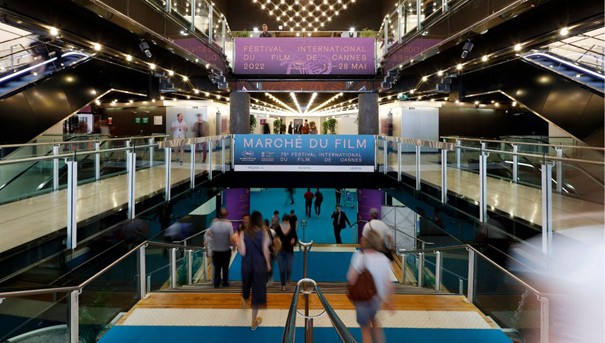
Marché du film 2022, Cannes @ Loïc Thébaud
Berlin, Venice (to a lesser degree), and Toronto also have markets, but Cannes is by far the largest in the world. Many of the films that will later be released in cinemas or on streaming platforms are negotiated there.
Each actor plays a specific role: producers pitch projects, international sales agents sell territorial rights, and distributors buy films for release in their own countries. For instance, a French distribution company can also act as a sales agent abroad, offering a film to Spanish, Japanese, or American buyers. This parallel world is essential to the economic life of cinema. Without these markets, most films would never reach an audience.
Major festivals have become economic epicenters where international sales, pre-sales, co-production agreements, consulting deals, derivative rights, and even technological partnerships are negotiated. Cannes is a place where a film idea can find a co-producer, where a finished film can secure twenty foreign distributors, and where platforms like Netflix can spot their next hit.
Festivals aren’t just business spaces; they’re also places for networking and reputation-building.
Different accreditations (press, buyers, sellers, producers, students…) reflect the diversity of participants. Conferences, panels, masterclasses, and professional cocktails structure the days. People talk marketing, strategy, and communication, all within an environment where the festival’s prestige becomes a tool of influence.
Networking is central. Being present, being seen, being recognized sometimes matters as much as signing a deal. Festivals are spaces where reputations are shaped and professional relationships grow.
Festivals as Strategic Actors in the Global Film Market A film screened at Cannes, Berlin, or Venice doesn’t have the same trajectory as one released without a festival premiere. Festivals generate buzz, attract press, allow critics to position films, and help secure additional sales. Sirat by Oliver Laxe made headlines not just because it won a secondary prize, but because it was one of the most talked-about films of the festival. It created a huge buzz thanks to its extremely experimental approach. Many viewers described it as something they had never seen before, a film that takes risks, breaks narrative expectations, and constantly pushes the audience out of their comfort zone. It’s bold, disorienting, sometimes even shocking, and the fact that a work this unconventional was awarded at Cannes contributed even more to its visibility and impact. Yet it was the film that generated the most attention, far more than the official winner, Un simple accident by Jafar Panahi.
This is the power of festivals: they create narratives around films.
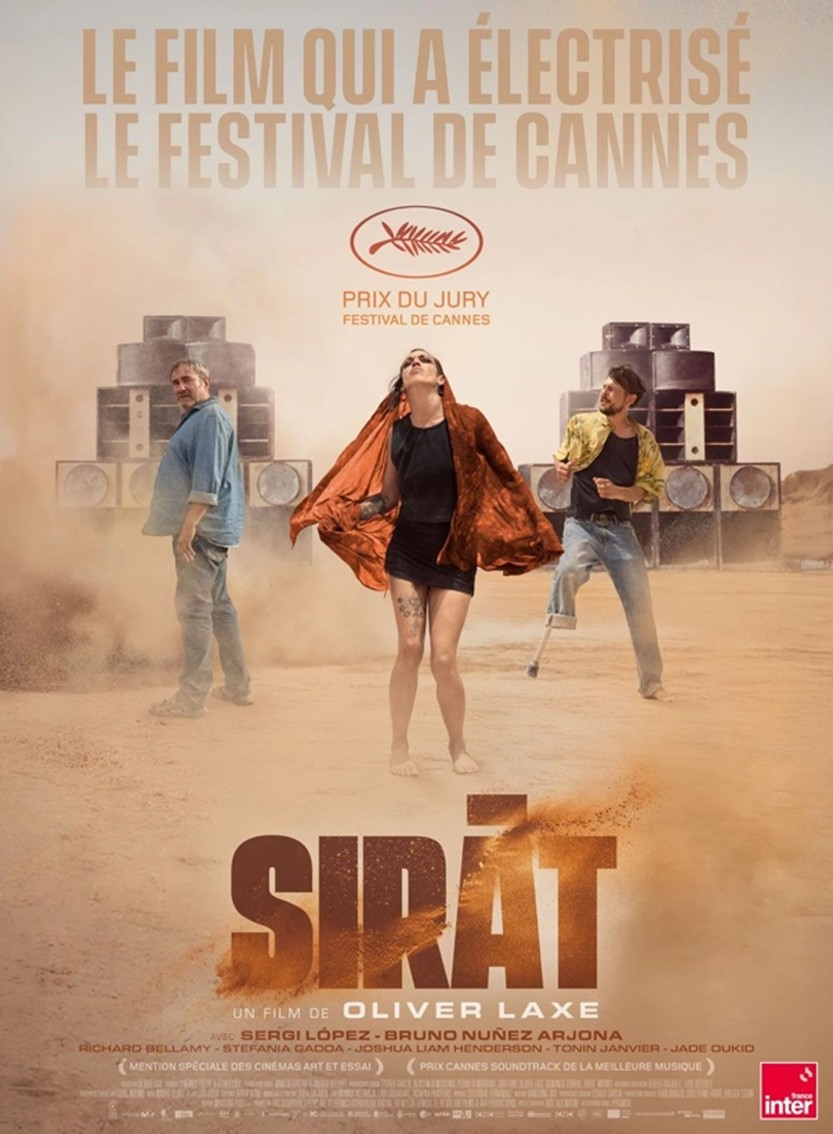
SIRAT, Oliver Laxe @ El Deseo/ Uri Films / 4 a 4 productions / Filmes Da Ermida / Los Desertores Films

A Simple Accident, Jafar Panahi @ Jafar Panahi Production / Les Films Pelléas / Bidibul Productions / Pio & Co / Arte France Cinema
There is also the idea of the “festival circuit”: some films travel from festival to festival, building an international career through selections and awards. This is a strategic path, crucial for their global distribution. Festivals remain key places for experimentation. Sections like Cannes XR or Venice Immersive show that the future of cinema also involves virtual reality and immersive technologies. Green practices are slowly emerging, even if progress is still needed. Streaming platforms (Netflix, Prime Video, MUBI) are now deeply embedded in film markets. Marketing strategies are shifting too: a simple “Official Selection” label on a poster can increase a film’s visibility.
Finally, moving from the role of an amazed spectator to that of a beginner professional taught me something essential: cinema is never just an art. It is also an industry, an economy, and an international network. Category A festivals reflect this dual nature perfectly. They are places where the magic of cinema meets the realities of the market. They feed the dream, the red carpet, premieres, prestige, but they are also spaces of intense work, strategic stakes, and decisive negotiations. Today, when I see a red-carpet walk on TV, I no longer look only at the dresses or the photographers. I think about everything happening behind the scenes: meetings in the Palais, tightly scheduled appointments, discreet negotiations that will determine where and how films will be seen around the world. Cannes, Berlin, Venice, and Toronto are not just cultural showcases. They are key players in the global film market, hybrid spaces where dream and industry coexist. And maybe this duality is what makes them so fascinating.
Author: Ana SOTOMAYOR
