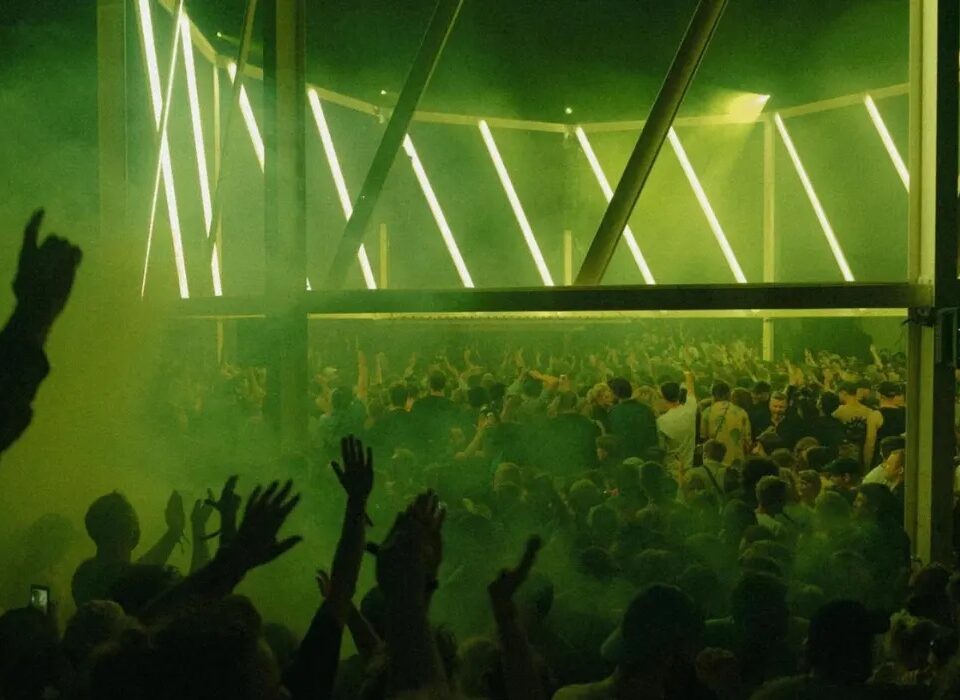
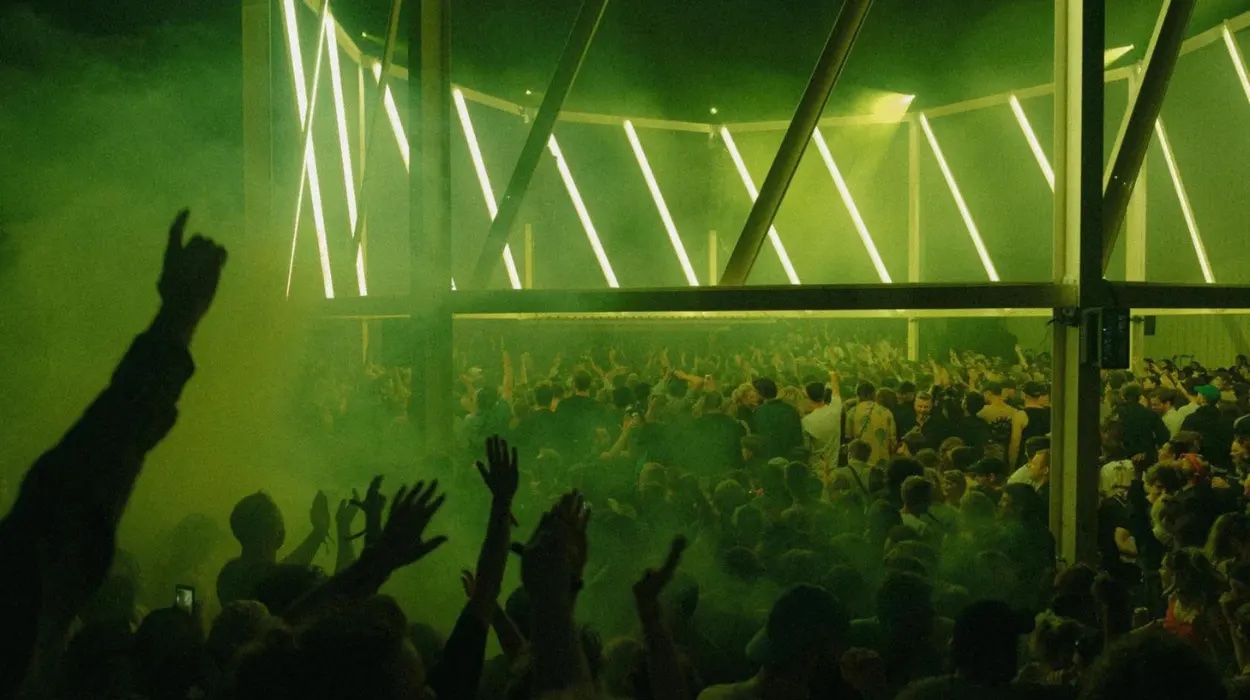
Picture Credit: Horst Arts & Music Festival
Electronic music has become one of the most influential cultural movements of our time. From massive festivals like Tomorrowland to small underground free parties, it brings together people from every background to share sound, energy, and freedom. But behind the lights, the bass, and the celebration, one question is becoming increasingly urgent: can this culture be sustainable?
The electronic scene covers very different realities. Large commercial events operate like full-scale entertainment industries, with sponsors, logistics, and huge energy demands. At the other end of the spectrum, independent collectives and free parties follow a DIY philosophy, often with limited means but stronger community values. Their approaches to environmental responsibility vary widely—and so do their possibilities for action.
As sustainability becomes a central topic in the cultural sector, the electronic world is starting to rethink its impact. Some actors experiment with green innovation, others focus on reducing waste or localizing their events. Together, they show that the question is not only about reducing carbon emissions but about reimagining how we experience music and community in a changing world.
Many realities : the complex ecosystem of electronic music
To speak of “the electronic scene” is to simplify a very fragmented world. On one end of the spectrum stand the giants: Tomorrowland in Belgium, Ultra in Miami or Creamfields in the UK massive productions with hundreds of thousands of visitors and budgets that rival those of major sporting events. These festivals rely on private sponsors, complex logistics, and staggering energy consumption. The average large European festival produces around 2.3 kg of waste per person per day and emits between 250 and 500 tons of CO₂ across a single weekend, according to the European Green Festival Report.
Behind the visual spectacle – laser shows, pyrotechnics and LED stages – the ecological footprint is enormous. Transport alone represents 60 to 80% of total emissions, as audiences fly in from around the world. While some festivals like Tomorrowland now offer “Global Journey” train packages to reduce air travel, such initiatives remain marginal compared to the scale of the event. At the opposite end free parties and independent collectives function with completely different values. These events are self-organized, often on borrowed land or in temporary urban spaces. They rely on volunteer labor, borrowed materials and local networks rather than corporate sponsors. In environmental terms, their impact is small – but not systematically sustainable. Lack of access to recycling, electricity and waste management can sometimes turn into logistical challenges. Yet these gatherings remain essential as spaces of autonomy where those ecological values are lived and not « branded ».
Between these poles lies a wide middle ground: small and mid-sized clubs, city festivals and community events that give to the European electronic culture its identity. In Nantes, the club Macadam has built a reputation not only for its adventurous programming but also for its community-driven ethics/values (care for the neighborhood, noise control and responsible energy use). In Brussels Horst Arts & Music Festival transforms a former military site into a temporary village mixing art, architecture and sound, while reusing materials from previous editions and promoting local transport. In Lyon, Nuits Sonores collaborates with the city’s transit system to encourage public transport, limits disposable materials and tries to implement low-energy lighting setups.
This diversity makes clear that there is no single model for a “green rave.” What counts as sustainability depends on context : namely the financial capacity, local regulations and cultural values. A self organized free party in the woods and a city festival like Nuits Sonores face completely different constraints. Understanding sustainability in electronic culture means accepting this plurality of realities.
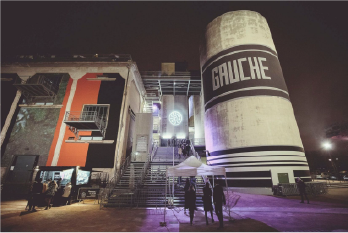
Picture Credit: Le Sucre Club (Lyon)
Green innovation across contrasting worlds
If sustainability is now a popular expression in the cultural sector, the electronic scene is learning to translate it into action with important results. Some festivals adopt ambitious green programs ; others use it as a marketing tool. Between sincere commitment and greenwashing, the « dancefloor » becomes kind of a laboratory for testing what ecological responsibility can mean in practice.
Big events like Horst and DGTL (in Amsterdam) are often presented as pioneers of sustainable festival design. DGTL aims to become the world’s first fully circular festival : it recycles 100% of its waste, bans single-use plastic and powers stages with biofuel generators. In 2022, it claimed to have achieved “climate neutrality” by offsetting 241 tons of CO₂ through verified local projects. Similarly, Nuits Sonores reduces energy consumption and collaborates with local suppliers, setting this way an example for urban festivals.
Yet the contradiction remains. These large events still depend on mass tourism and consumption : air travel, hotel stays, food trucks and branded merchandise. Sustainability initiatives, while real, exist within an industrial model that promotes growth and expansion. Critics question whether such festivals can ever be truly “green” without rethinking the logic of scale itself.
Some, like Tomorrowland, have begun investing in solar energy and water recycling, but the festival still gathers 400,000 people annually – a number inherently contradictory with sustainability goals. Here, ecological measures often serve as symbolic gestures, meant to reassure sponsors and audiences rather than transform the model.
Smaller clubs and independent collectives, meanwhile, often pursue ecological responsibility in quieter and more practical ways. At Macadam in Nantes, sustainability means moderation : energy-efficient sound systems, reduced lighting, bike-friendly access. In Belgium, Abrupt Festival and Horst emphasize short supply chains and local engagement, using art installations built from reclaimed materials. In Berlin, collectives such as About Blank and ://about party experiment with permaculture gardens, recycling workshops, and collaborations with green NGOs.
These efforts rarely appear in glossy sustainability reports. They stem instead from shared values such as solidarity and respect for the environment. Their approach is less about offsetting carbon and more about creating community resilience. Yet financial limitations remain a major barrier : renewable energy setups and proper waste management are expensive, and small venues often lack institutional support.
Despite their fragility, these independent initiatives represent the most authentic expression of sustainable culture in electronic music, because they connect ecology with social values rather than treating it as a marketing advantage.
The contrast between the mega-festival model and the local & independent scene highlights the paradox: the events that most need sustainability are those least capable of achieving it. Large festivals can afford technical solutions but struggle to reduce their scale. Small collectives embody low-impact ideals but lack the means to measure or formalize their efforts. Yet these two worlds are not completely opposed and could even be seen as complementary. Big festivals can develop new technologies and influence behavior on a massive scale / while smaller ones preserve authenticity and demonstrate what community-based sustainability can look like. The challenge could lie in building bridges between them ?
Challenges and perspectives of a sustainable scene
For all the progress made, sustainability in electronic music still faces deep structural barriers. Large festivals depend on international tourism and sponsorship. Smaller collectives lack stable funding and infrastructure. Many venues rent spaces that don’t allow long-term ecological investments.
Beyond logistics we could consider that there is also a cultural tension. And thus because the spirit of electronic music has always been about freedom, spontaneity (and sometimes excess) – values that can seem incompatible with moderation or regulation. Meanwhile not all actors make an effort. Some commercial « mega-events » continue to prioritize spectacle and profit, producing mountains of waste and consuming enormous amounts of energy. Others engage in symbolic greenwashing : planting a few trees while flying in dozens of headliners by private jet. The disparity between those who innovate and those who ignore the issue remains striking.
The most promising path forward lies in collaboration. Partnerships between cities, festivals and collectives could help share resources and share best practices. Amsterdam’s Green Deal for Circular Festivals (which unites 20 major European events including DGTL and Roskilde for example) shows how collective frameworks can push the whole sector toward measurable goals.
Technology also offers new tools : digital ticketing systems that calculate carbon footprints, energy monitoring apps or transport solutions that encourage train travel. Public institutions can play a key role by offering grants and expertise to smaller clubs experimenting with sustainable practices.
Sustainability in electronic music is not just about reducing emissions – it’s really about redefining what celebration means in the 21st century. The dancefloor can be more than a space of escape ; it can be a space of awareness, where joy and responsibility coexist. The electronic scene as a laboratory for change
Electronic music is one of the most powerful cultural forces today, capable of uniting millions under the same rhythm. Yet it is also a fragmented world, from the mainstages of Tomorrowland to the fields of free parties. Sustainability in this context cannot follow a single model. What works for DGTL or Horst will never be the same for a collective in Nantes or a warehouse rave in Berlin. The diversity of the scene is both its challenge and its strength. It forces us to accept that there is no one solution, only a diversity of approaches influenced by local realities. The future of « green raving » will depend on cooperation : between institutions and collectives, between artists and audiences, between ideals and practical limits.
If the culture that once revolutionized nightlife can now reinvent the way we think about sustainability, then perhaps the electronic scene can do more than just make us dance and perhaps help us imagine new ways of living together on a fragile planet.
Sources :
- European Green Festival Report. (2022). Environmental Impact of Festivals in Europe.
https://yourope.org/know-how/agf-report-new-insight-into-festival-carbon-footprint - Green Deal Circular Festivals. (2023). European Commission Report.
https://circulareconomy.europa.eu/platform/en/good-practices/green-deal-circular-festivalsstriving-
circular-and-climate-neutral-festival-industry - DGTL Circular Report. (2023). DGTL Amsterdam Official Sustainability Report.
https://dgtl-festival.com/en/sustainability-resources - Nuits Sonores. (2024). Our Commitments to Sustainability.
https://nuits-sonores.com/en/nuits-sonores-durables-et-solidaire - Horst Arts & Music Festival. (2024). Festival Sustainability Overview.
https://www.horstartsandmusic.com - The Ransom Note. (2024). Horst 2025: Leading the Way for Sustainable Festivals.
https://www.theransomnote.com/music/reviews/horst-2025-leading-the-way-for-newsustainable-
independent-festivals - We Are Europe. (2023). Club Stories: Macadam, Nantes.
https://weare-europe.eu/stories/macadam-nantes - Resident Advisor. (2019). What can dance music do about the climate crisis?
https://fr.ra.co/features/3476
Author : Louise DOYEN
