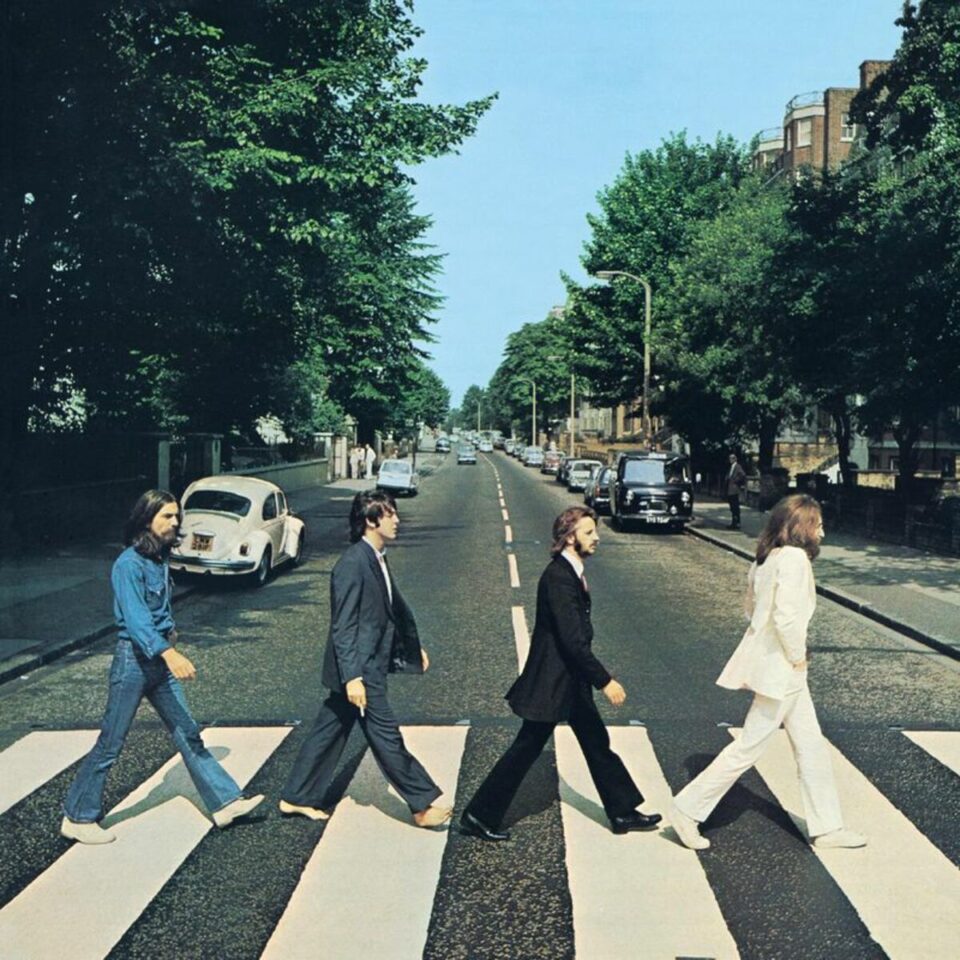
25, Super Trouper, Hit Me Hard and Soft, Igor or American Idiot, I could go on and on about my personal iconic albums. What about you? When was the last time you found yourself listening to a full-length album of an artist, with no break or song skipped? This may sound like an odd question to ask, perhaps a futility for the ones who enjoy music as it goes, or an abomination to consider for those who cherish each second of an album. Well, let me tell you that an album can represent much more than 10 songs compiled together in a collection. In this digital era, our lives have changed on many different levels, including our way of consuming music, maybe without us even realising it. From the 50s’ vinyls to Spotify, by way of the 90s’ cassette tapes and the 2000s’ CDs and MP3 players, in about a century people got introduced to various ways and media to listen to music, causing the perpetual evolution of a whole industry.
This article aims at showcasing how technological change has revolutionised not only the economy but also the philosophy behind the production and consumption of albums. Commercial tool or token of an artist’s sincerity, the album has shown through history its versatility as an art form. It has been remaining for about a decade, I believe, at a turning point in its existence, having its fate left in the hands of artists, publishers and audiences.
Technology at the service of the art
If we dive a bit deeper into the history of music albums, we realise that it is intertwined with the history of recording technology.
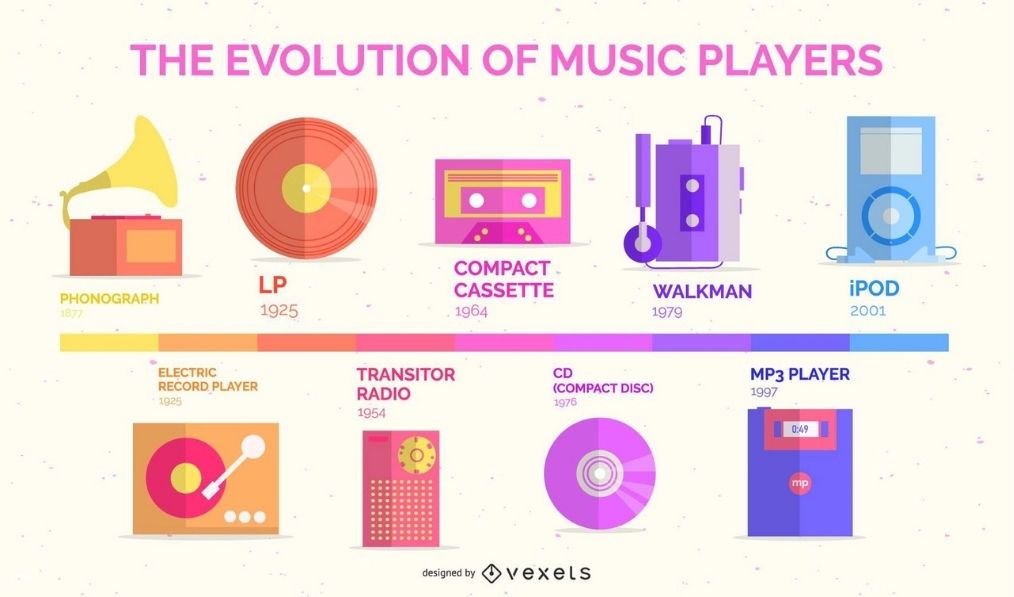
Vinyls in the 50s, cassettes in the 70s, CDs in the 80s and MP3 in the late 90s, all these evolutions were answers to specific needs and issues identified in the phonographic industry. LPs (long-playing vinyl records) were a format that could hold recordings as long as 52 minutes, or 26 minutes per side, at a speed of 33 1/3 rpm, perfect for music at home. This format introduced at the same time the design of illustrated album jackets, creating a whole identity and concept revolving around the album. Cassette tapes became a more practical option for listening to music on the go out of home, allowing people to control what they listened to and also to make their own mixtapes. CDs worked almost on the same basis as of the cassettes except that they were lighter, more compact (CD meaning Compact Disk), and they delivered a better sound for music, and permitted to have even more control on what you could listen to by skipping songs (tracks being separated one by one while before music was recorded on the same tapes). Each of these technology advances contributed to adding another missing piece to the puzzle it is to make the music listening experience always more qualitative. The impact of technological change in our ways of living, even in the most mundane aspect such as music consumption is no big news for us here.
But among all these ones, the real troublemakers were the streaming platforms. With first the arrival of Napster in 1999, allowing listeners to access and to share music through MP3 files as they wish, then followed by other, more conventionalised, platforms like iTunes, Soundcloud or Spotify in the 2000s, the music consumption model entered a turning point where the consumer was the one deciding what to listen to, when, and how.
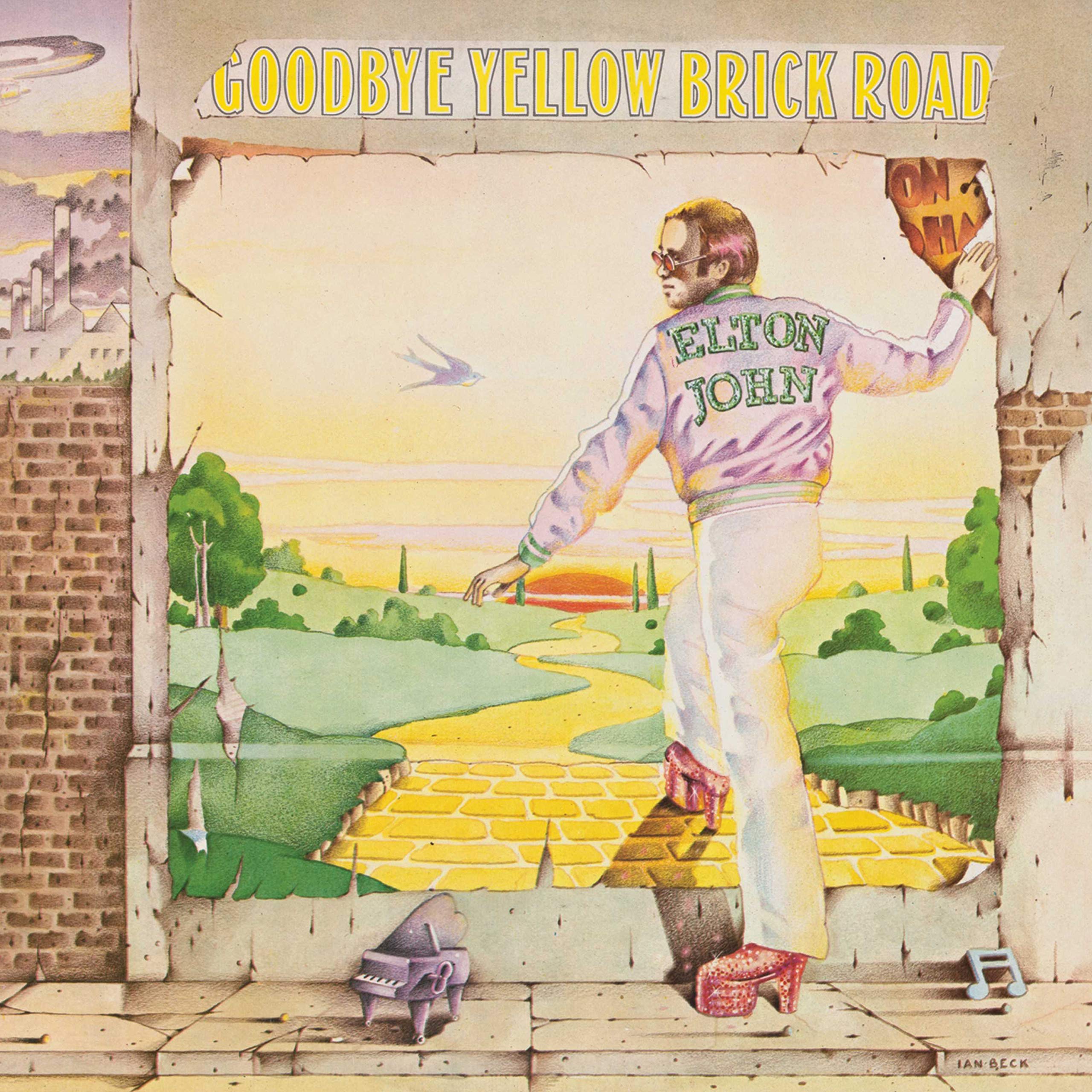
Goodbye Yellow Brick, Elton John (1973)
A commercialised form of art
The music album in its “artistic” consideration as we may have right now originates in the 60s with the concept album. Artists like the Beach Boys, the Beatles or the Who popularised this format in the rock genre and its consideration of creating a whole narrative around the music, giving an opportunity to artists to showcase their personal identity in their art.
This model has thus been the norm for artists in many genres and several periods of time. Releasing albums throughout a career is also demonstrating their evolution and their journey as a person, where the album becomes the mirror echoing the artists’ lives. Albums become the symbols of an artist’s sincerity, the holders of a message.

Evolution of Billie Eilish’s albums, from left to right: ‘don’t smile at me’ (2017), ‘WHEN WE ALL FALL ASLEEP WHERE DO WE GO’ (2019), ‘Happier Than Ever’ (2021), ‘HIT ME HARD AND SOFT’ (2024)
And the art doesn’t stop at the music, but continues in all the forms of art surrounding it: music videos, visual concepts, album jackets…
We can for example take a quick look at the K-pop industry and how they pushed the idea further: groups release twice to three times a year EPs (Extended Plays) or albums that revolve around a specific concept, a visual identity or a specific theme that they will have to promote for a month on TV shows and on social media. And this is where the art meets business: while the original aim of concept albums was to emulate originality and creativity, here companies will search to study which concepts work, what subject is interesting to address or which kind of performance is appealing to the audiences.
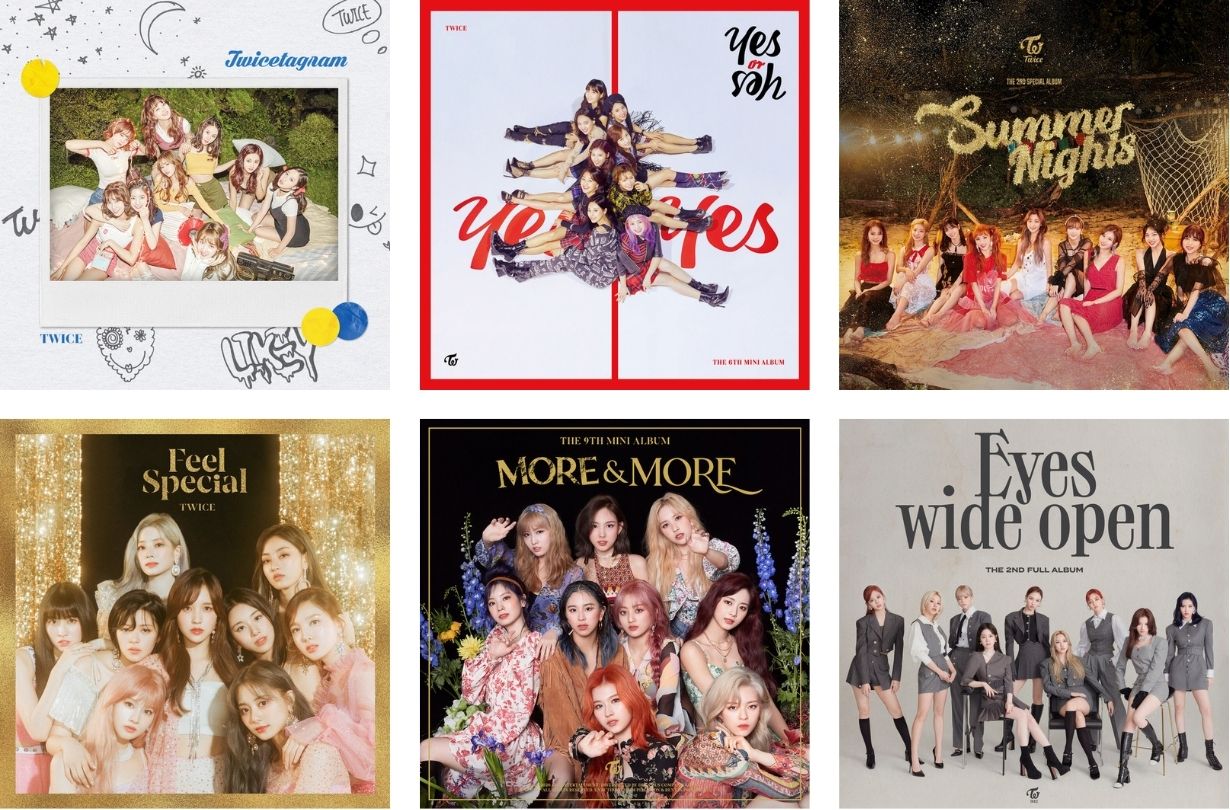
Evolution of the albums of the K-Pop group TWICE from 2017 to 2020
The line between aesthetics and marketing may be thin, but the goal stays the same for one releasing music: “how to convince audiences to stay focused on my music?”.
The constant content
At whatever time of the day, in the shower, when we’re cooking or on the way to work, our lives are now rhythmed by the sound of music surrounding us.
The dawn of the digital era, with Napster and the MP3 players for instance, opened the door to customised listening and fragmented consumption. Listeners are not passive consumers of the music released by artists that reaches them, rather they decide on what to listen to depending on their mood or their disposition to focus, or not, on the music they put on. Because, in fact, can we still talk about listening to music if we’re not actually listening, if all we need now is an underlying background sound? In early 2020, Deezer conducted a survey on 8,000 users, and 54% of respondents revealed listening to fewer albums than 5-10 years ago. This can be explained in many different ways.
One reason that I somehow find ironic is how the access to an infinity of choices of music to listen to leaves us with an incapacity to actually make a choice. Being overwhelmed by the amount of information we consume every day doesn’t allow us to be in a favourable mindset to digest a full-length album of 40 to 50 minutes.
Living in a higher-paced society as well has conditioned us to expect everything to come faster and faster towards us. We clearly see it with the example of social media and how our attention span has drastically decreased over time. Song skipping on Spotify signals almost the same as doom scrolling on Instagram: we are constantly unsatisfied by the content that is put right under our nose, so we keep scrolling until perhaps our reward system is fulfilled.
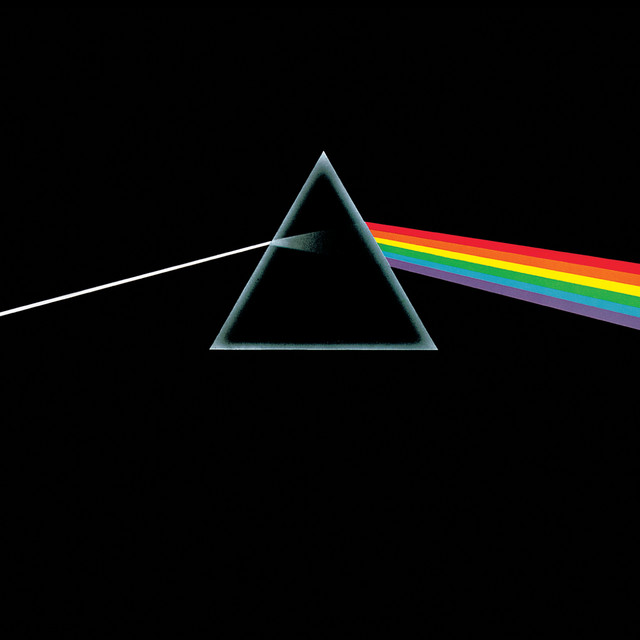
The Dark Side of the Moon, Pink Floyd (1973)
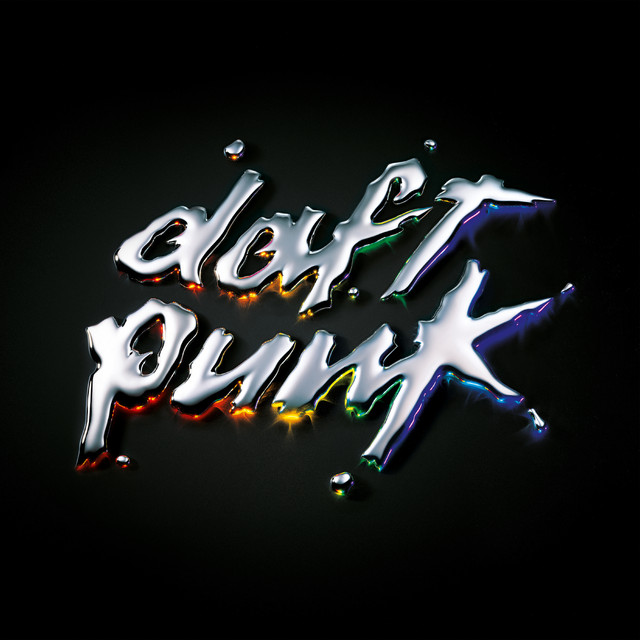
Discovery, Daft Punk (2001)
Nowadays, one of the greatest forces shaping the modern listener’s experience is the algorithm. A system designed to maximise users’ engagement, both punctually and on the long run, the listener becomes again the victim of the music providers and are not complete master of their music experience anymore. As a consequence for the albums, their long format doesn’t fit the model of virality and the performance based on short music extracts. The algorithm will prioritise the track that goes viral rather than the album that sells a narrative. Thus, the traditional role of the album as a complete journey is inefficient in the attention economy.
The clash: singles v. albums
Talking that much about the audience shall not make us forget the pillar without whom this discussion wouldn’t exist in the first place: the artists. It is indeed nowadays a dilemma for an artist to choose between releasing a single or an album. Commercial performance or artistic intention? Rather than having to choose between both options, why not take a look at why they are actually both interesting in their own ways?
For emerging artists, betting on a viral single to attract as much people as possible can be the classic route nowadays. Releasing multiple singles, a bit like conceptual albums in their first intent, is a good opening to discover an artist’s talent and the tip of their universe. Albums can be the first stones to build a promising career if commitment follows (from both artist and audience). The albums will then be the token of a shift from viral buzz to steadiness and unveiling a more personal identity. On the other hand, for established artists, the albums will be a demonstration of their growing career and their on-going commitment to their art. With steadier and more loyal communities, they can allow themselves to take the time to release the right album at the right time, this being even more appreciated by dedicated fans.

Far from the end
Even though this article didn’t start off in a very positive light, the goal was mainly to discuss an issue that may seem almost insignificant because we don’t always realise what we listen to exactly, and it is precisely because we don’t notice it that the discussion shall be open. Albums still have years of success to come, I believe, and many professionals, although they set warning, remain optimistic, if not too pessimistic on the matter.
The issue relies on the Audience – Artists – Distributors tryptic, and the correct equilibrium between the three is yet to be found. If a century ago the Artist – Distributor segment was at its peak with the physical sales as well as the radio format not much mentioned here, and now that the Distributor – Audience one is strengthening, then perhaps the Artist – Audience segment has yet to be solidified in order to achieve production and consumption models sustainable for each side.
Finding the balance between economic performance and artistic commitment still remains the life-long challenge of the artist.
Author: Amarine RANARISOA
