“Sous la pluie. Peindre, vivre et rêver” — When Art Meets Rain in Nantes
I really like rain. When I was a child, I always enjoyed sitting in the classroom watching the raindrops fall on the leaves outside the window, often getting distracted during lessons. I loved sharing an umbrella with classmates to walk to the cafeteria on rainy days, and sitting with them in the garden pavilion while chatting and appreciating the rain together. That’s probably why I went to this exhibition.When I visited the Musée d’Arts de Nantes in October, it was raining outside. The sky was grey, the streets were wet, and the sound of raindrops followed me all the way to the museum’s entrance. It somehow felt like the perfect day to see an exhibition called “Sous la pluie. Peindre, vivre et rêver” — which means “Under the rain. To paint, to live, to dream.”
At first, I didn’t expect much from the exhibition. Rain seems so ordinary—it falls everywhere, almost every day. But as I walked through the misty rain, my mind wandered to the role of rain in Chinese culture and how beautifully it has been portrayed in our literature.In poetry, rain accompanied Su Shi as he chanted poems, walking through bamboo forests in straw sandals. And in Yu Guangzhong’s « Cold Rain, » it became a longing for homeland that lingered for fifty years.
When I was young, rain felt soft and persistent, often mixed with the disappointment of being kept indoors. Every July, Shanghai’s plum rain season would arrive—days of endless drizzle, moist air hanging over the city like a thin veil. A breeze would carry rain through the trees, leaves trembling gently as if swaying to time’s quiet footsteps. Year after year, I grew up slowly through Shanghai’s rainy seasons—until this moment, when my thoughts finally return to those memories.
But the exhibition made me realize that something as simple as rain can inspire deep emotions, beautiful artworks, and completely different interpretations. The artists in this show used rain not just as a subject but as a way to talk about life, memory, and human feelings.
Discovering the Musée d’Arts de Nantes
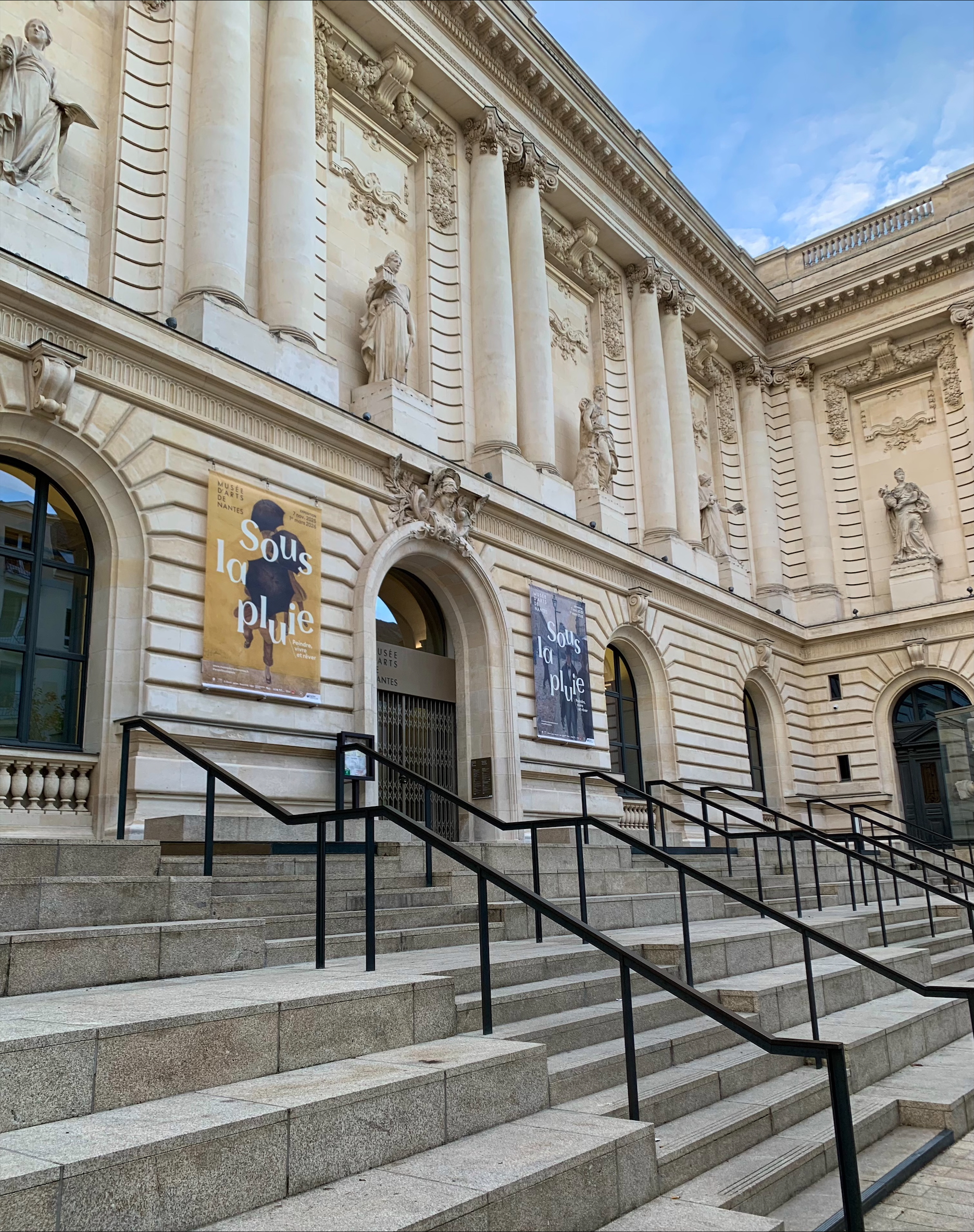
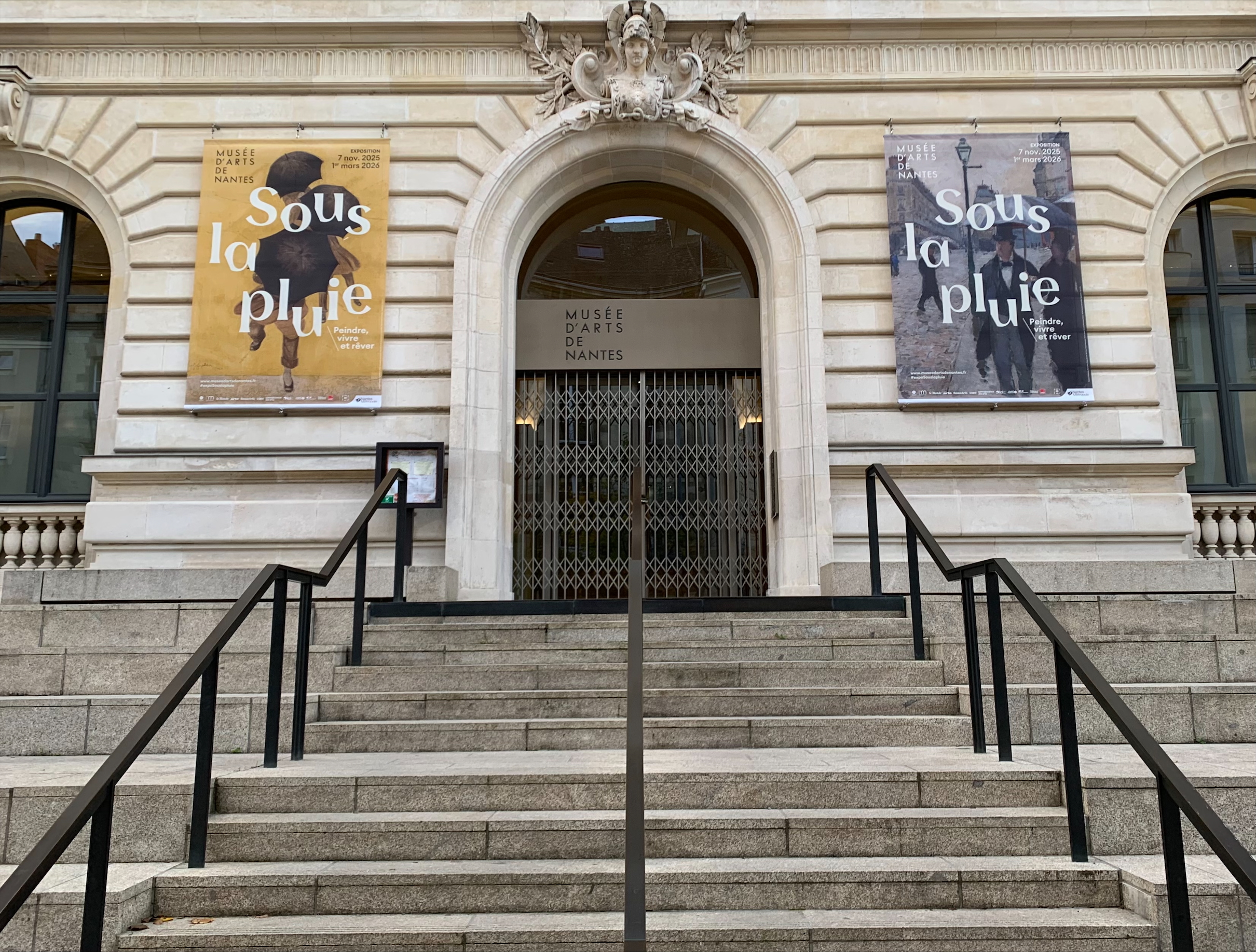
The museum is located at 10 rue Georges-Clemenceau, right in the center of Nantes, France. From Audencia’s Atlantic Campus, the museum is easily accessible by public transportation. The journey takes approximately 25–30 minutes by tram. Take Line 2 to “Commerce,” then transfer to Line 1 and get off at “Duchesse Anne – Château des Ducs de Bretagne.” From there, it is a short 3-minute walk to the museum entrance.
At the Nantes Museum of Fine Arts, nine centuries of Western art history, from the Middle Ages to the present day, unfold and interact throughout its exhibition spaces. Its collections comprise over 14,000 works, nearly half of which are modern and contemporary art. Approximately 900 pieces are on display, and the arrangement of the collections is regularly redesigned to offer visitors a unique and ever-evolving experience. Come and discover masterpieces from around the world and internationally renowned artists at the museum!The museum is a place that blends architecture of the past with that of today to offer visitors a comprehensive journey, a unique perspective on nine centuries of visual arts . With three bold temporary exhibitions a year , visitors can discover other works of art from around the world.
The Idea Behind the Exhibition
The Musée d’Arts de Nantes is known for mixing classical and modern art in creative ways. This exhibition fits perfectly into that tradition. Sous la pluie brings together paintings, photographs, and installations from the late 19th century to today. It includes famous names like Turner, Monet, and Caillebotte, as well as contemporary artists who use sound, video, and light to represent rain in new forms.
The exhibition is divided into several parts, each exploring a different perspective on rain. One section shows how artists study rain as a natural phenomenon — the movement of water, reflections, and light. Another focuses on city life in the rain, with people walking under umbrellas or reflections shining on wet streets. The last section invites visitors into a more poetic space, where rain becomes a dreamlike experience rather than a realistic scene.
What impressed me most was how the museum created a calm and immersive atmosphere. The rooms were dimly lit, and the air felt slightly cool, as if you could almost smell the rain. In some areas, the sound of falling water played softly in the background. It made me forget I was indoors; it felt like walking through the middle of a rainy afternoon.
What I Saw and Felt Inside
One of the first artworks that caught my attention was Turner’s Pont de Pirmil, Nantes (1830). The painting doesn’t show rain directly — there are no raindrops or umbrellas — but you can sense the humidity in the air. The bridge fades into fog, the colors blend together, and the whole scene feels peaceful but slightly melancholic. Turner painted what rain feels like, not what it looks like.
Later, I saw a photo series by Anne-Catherine Becker-Echivard that made many visitors smile. It showed small toy fish standing under tiny umbrellas. It looked funny at first, but after a while, I realized it was also a comment on how people try to protect themselves from nature, even when it’s harmless.
Another memorable piece was an installation by Laurent Grasso. The room was dark, and speakers around the space played recordings of rain from different countries: the heavy monsoon from India, the quiet drizzle from Normandy, and the stormy downpour from Brazil. Standing there, I closed my eyes and felt as if I had traveled through all these places in a few minutes. The artist showed that even though rain is everywhere, it never feels the same.
Visitors reacted differently to the sound. Some kids lay on the floor listening, while older visitors slowly walked through the room. It was a rare moment in a museum where everyone was quiet and focused. It felt like the exhibition was reminding us to slow down and pay attention to small things.
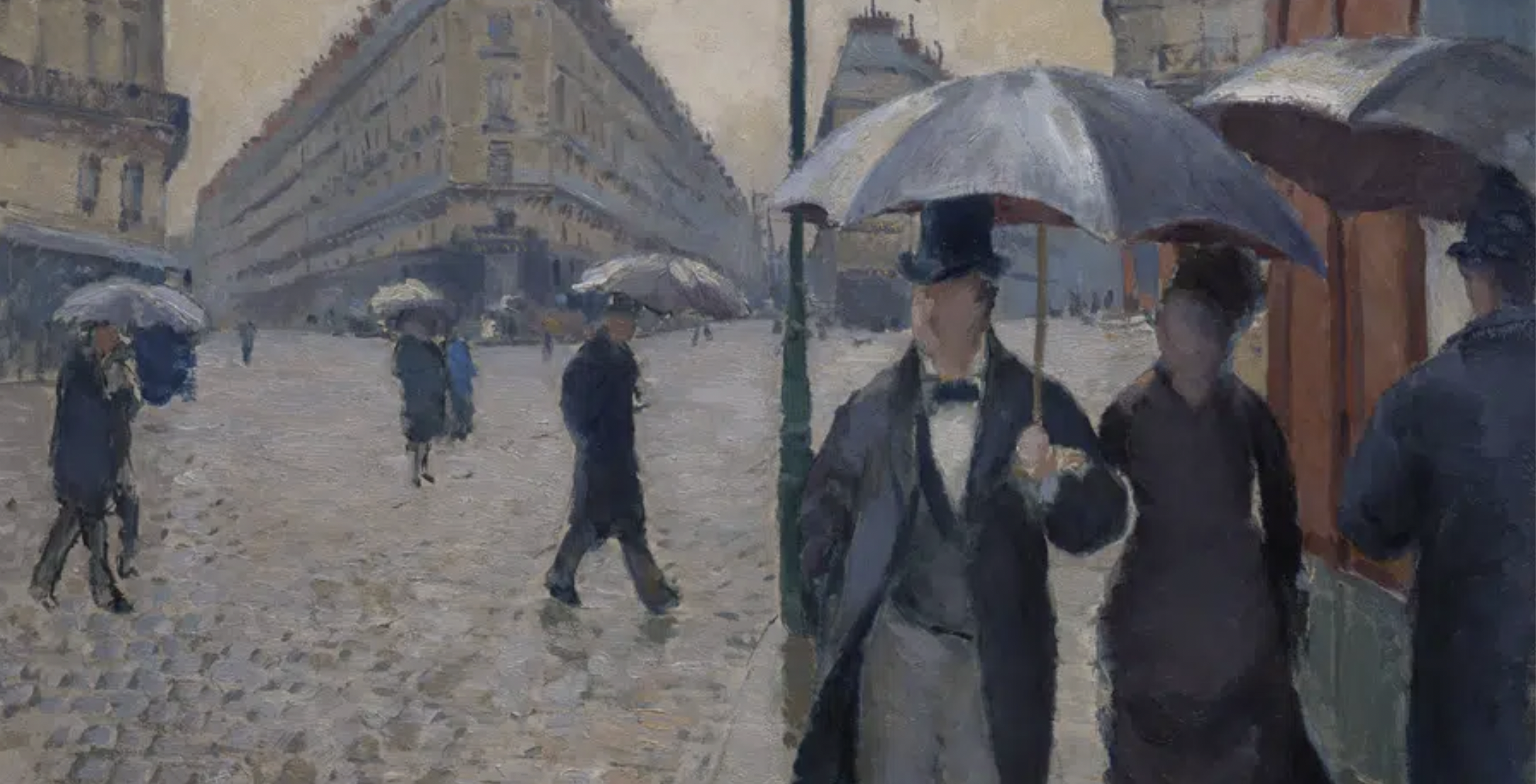
Another section displayed Caillebotte’s famous Rue de Paris, temps de pluie next to an abstract painting by a young artist from Nantes. Caillebotte’s work shows elegant Parisians walking with umbrellas on wet streets, while the new painting used only grey and blue shapes with no figures at all. The two works side by side made me think about how our relationship with rain has changed — from avoiding it to accepting it as part of the experience.
Analysis: Why Rain Inspires Artists
So, why does rain appear in art so often? Maybe because it connects both nature and emotion. It can be peaceful or sad, cleansing or nostalgic. Artists use it to talk about how we experience time, memory, and change.
In the 19th century, painters like Turner and Caillebotte used rain to show the new modern world — cities growing, streets shining after storms, people hurrying under umbrellas. It was a symbol of change and movement.
Today, artists use rain differently. They see it as a way to express emotions, to talk about the environment, or to show how fragile human life is. The exhibition’s mix of old and new artworks makes it easy to see this evolution. From classical landscapes to sound installations, Sous la pluie shows how one simple theme can inspire so many interpretations.
What I also liked is how the exhibition doesn’t treat rain as something dramatic. It’s not a disaster or tragedy — it’s gentle and thoughtful. The French approach to art often values subtle emotions, and this show really reflects that. It reminded me of how rain in films or novels can represent calmness, reflection, or even hope.
The exhibition also connects to something more universal — our relationship with nature. The rain is so ordinary – whether I see it in my hometown or anywhere else, it’s always the same. We usually think of weather as background, but here it becomes the main character. The curators make you realize that weather is not just a scene we live in; it’s part of how we feel and remember our lives.
Reflection and Conclusion
At the end of the exhibition, there was a large video projection showing rain in slow motion. The droplets hit glass, fabric, and stone. The sound of each drop was so clear that it started to sound like a rhythm, almost like a heartbeat. Everyone in the room stood still. Some people closed their eyes, and others whispered softly. It was one of those moments when you forget where you are — when art and life suddenly feel the same.
For me, the message of Sous la pluie was simple but powerful: sometimes beauty is in small things we don’t notice. Rain is something ordinary, but when you stop and really look at it, it becomes meaningful. The exhibition reminded me that art can change the way we see everyday life — not by showing something new, but by helping us look again.
When I left the museum, it was still raining. The city of Nantes looked shiny and peaceful. The cobblestones reflected the streetlights, and people walked quietly under umbrellas. I didn’t open mine. I wanted to feel part of the scene I had just spent hours exploring. And through all those rainy years, I’ve become the person my younger self hoped to be. From Shanghai’s rain to France’s rain, I’ve learned that art and life are never separate. Art comes from life, and it helps us feel life more deeply.
The rain no longer felt annoying. It felt alive. I realized that the museum had changed the way I saw it — not as something that interrupts our day, but as something that belongs to it. Sous la pluie taught me that art doesn’t always need to be loud or complicated to be meaningful. Sometimes, it can be as quiet and steady as rain falling on the streets.
