For centuries, Europe lived surrounded by visible gods. They had bodies, faces, stories, tempers, desires, and a profoundly human dimension. They inhabited the walls of houses, public squares, temples, and frescoes. Then, gradually, this familiarity with the divine faded. Not through an immediate iconoclastic upheaval, but through a slow shift in which images more than texts carried the trace of a deep transformation: the passage from a polytheistic world to a monotheistic one.
The history of European painting can be read as the silent narrative of this transformation. It tells how the sacred moved from body to sign, from presence to absence, from multiplicity to unity. Above all, it reveals how the image, far from being abolished, had to learn to express differently what it could no longer show directly. Painting thus became a fragile, sometimes contradictory space, where the balance is negotiated between what can be seen, what must be believed, and what can be shown.
The Age of Visible Gods
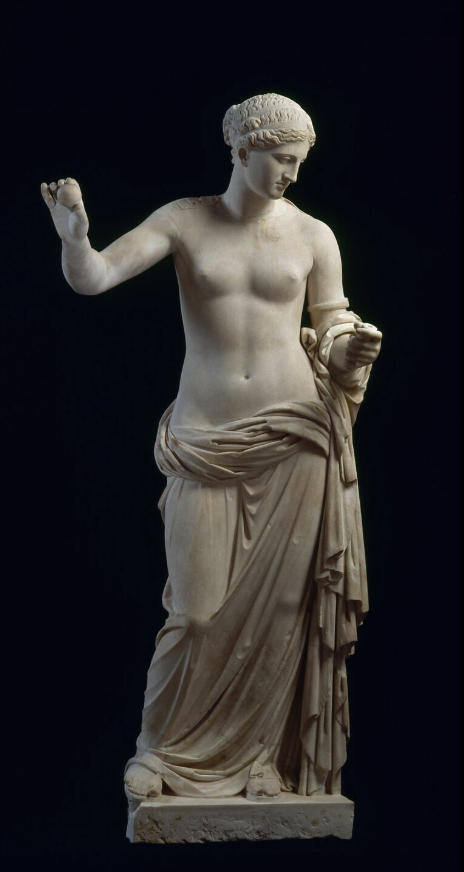
Vénus d’Arles, Inconnu (Sculpture antique romaine, Ier siècle av. J.-C., probablement d’après un original grec de Praxitèle) Musée du Louvre, Paris, Domaine Public
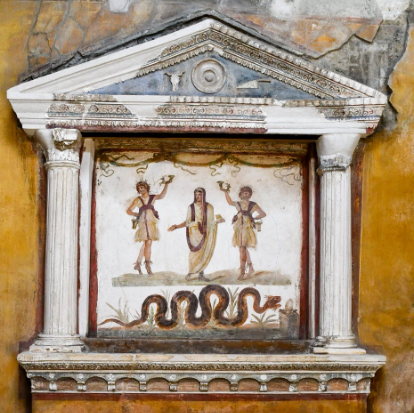
« Le Lararium de la Maison des Vettii« , Inconnu (Artiste romain, Ier siècle après J.-C.), Parc Archéologique de Pompéi, Domaine Public
In Greek and Roman antiquity, the relationship to the divine was above all visual. The gods were not abstract entities: they were recognizable, embodied, almost familiar. They shared the world of humans and reflected what we ourselves are our passions, our excesses, our desires. Painting and sculpture were not theological problems; they were cultural certainties, natural extensions of myth.
Figures such as Apollo, Aphrodite, or Zeus were not abstract symbols, but identifiable presences endowed with narratives, attributes, and specific functions. The image made it possible to recognize the god, to invoke them, and sometimes even to contain them symbolically. Mythological frescoes, far from being merely decorative, participated in a daily relationship with the sacred.
In Pompeii, the walls reveal a striking intimacy between humans and divinities. Gods appear in atriums, painted gardens, bedrooms, kitchens. They are not confined to temples; they coexist with domestic life. This proximity reflects a worldview in which the sacred is never radically separated from the profane.
Formally, this vision translates into a celebration of the body. The divine body is measured, balanced, ideal. It embodies a cosmic order as much as an aesthetic ideal. To represent a god is to affirm that the world is intelligible, that the divine accepts a human form. Here, to see is to believe.
The Emergence of the Invisible God
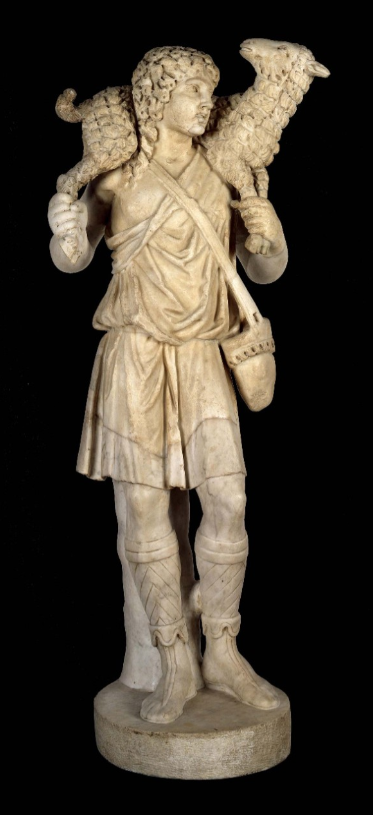
« Le Bon Pasteur« , Sculpteur Paléochrétien Inconnu (IVe siècle), Musée Pio Cristiano, Domaine Public
With the rise of Christianity, something fractures in the visual certainty inherited from Antiquity. This is not an immediate rupture, nor a brutal destruction of earlier images, but a long period of disturbance, doubt, and profound re-evaluation of the gaze. Where ancient gods offered themselves freely to sight, the Christian God introduces a radical distance. He is not one being among others: He is unique, absolute, transcendent. He cannot be circumscribed by form or enclosed within an image without the risk of betrayal.
This theological novelty gives rise to what might be called a foundational crisis of the image in European culture. For the first time, seeing becomes a problem. Looking can become a fault. The image once a site of the sacred’s presence suddenly becomes ambiguous.
Christianity inherits an ancient suspicion toward figurative representation, rooted in the biblical prohibition of idols. “You shall not make for yourself a graven image”: this commandment weighs heavily on the early centuries of Christianity. The issue is not merely to avoid certain images, but to rethink their legitimacy altogether. The image becomes a dangerous, unstable territory, poised between permission and prohibition. It can divert faith, fix the invisible, replace God with His appearance. It can become an object of worship in itself precisely what Christianity seeks to prevent.
In this context, painting is no longer an obvious or decorative act. It becomes an act laden with spiritual responsibility, almost a risk. Every form, every figure, every iconographic choice implies a theological position. The artist or more often the anonymous artisan no longer invents freely; they search, hesitate, and proceed with caution.
The earliest Christian images bear witness to this profound hesitation. They often seem to speak in a whisper. In the Roman catacombs, Christ is rarely represented directly. When He does appear, it is not as a glorious god or an idealized body, but through indirect, metaphorical, almost effaced forms. The Good Shepherd borrowed from rural imagery and late antiquity suggests a presence without fixing it. The fish, the vine, the anchor function as discreet signs, intelligible only to the initiated.
This symbolic language is not merely an aesthetic choice; it is a strategy for the survival of the image. It allows a message to be transmitted, teaching to occur, a community to be formed, while respecting divine transcendence. The image becomes allusive, fragmentary, deliberately incomplete. It does not show Christ; it allows Him to be inferred.
This period is therefore marked by an almost insoluble tension. On the one hand, Christianity needs images in order to spread, to teach a largely illiterate population, to render visible a history founded on incarnation. On the other hand, it must prevent these images from becoming idols. It must show without showing, represent without fixing, make the divine perceptible without betraying it.
This contradiction lies at the heart of the Christian image crisis. The image ceases to be a site of direct incarnation of the sacred and becomes a space of translation, subject to constant vigilance. It is never fully legitimate, never entirely rejected. It exists conditionally watched over by dogma, tolerated more than embraced.
Yet it is precisely in this fragility that the Christian image finds its strength. By renouncing full visibility, it gains new depth. It no longer offers God to sight; it opens a space for reflection, interpretation, and faith. This crisis is therefore not a negative episode in the history of European art, but a foundational moment. It forces the image to rethink itself, to become charged with meaning, to exist as a site of tension between the visible and the invisible.
From this initial hesitation, from this slow search for a possible effigy, the Byzantine icon and later all Western Christian imagery will emerge. Before becoming a stable form, the image of Christ was first an open question.
The Icon: Seeing Without Seeing
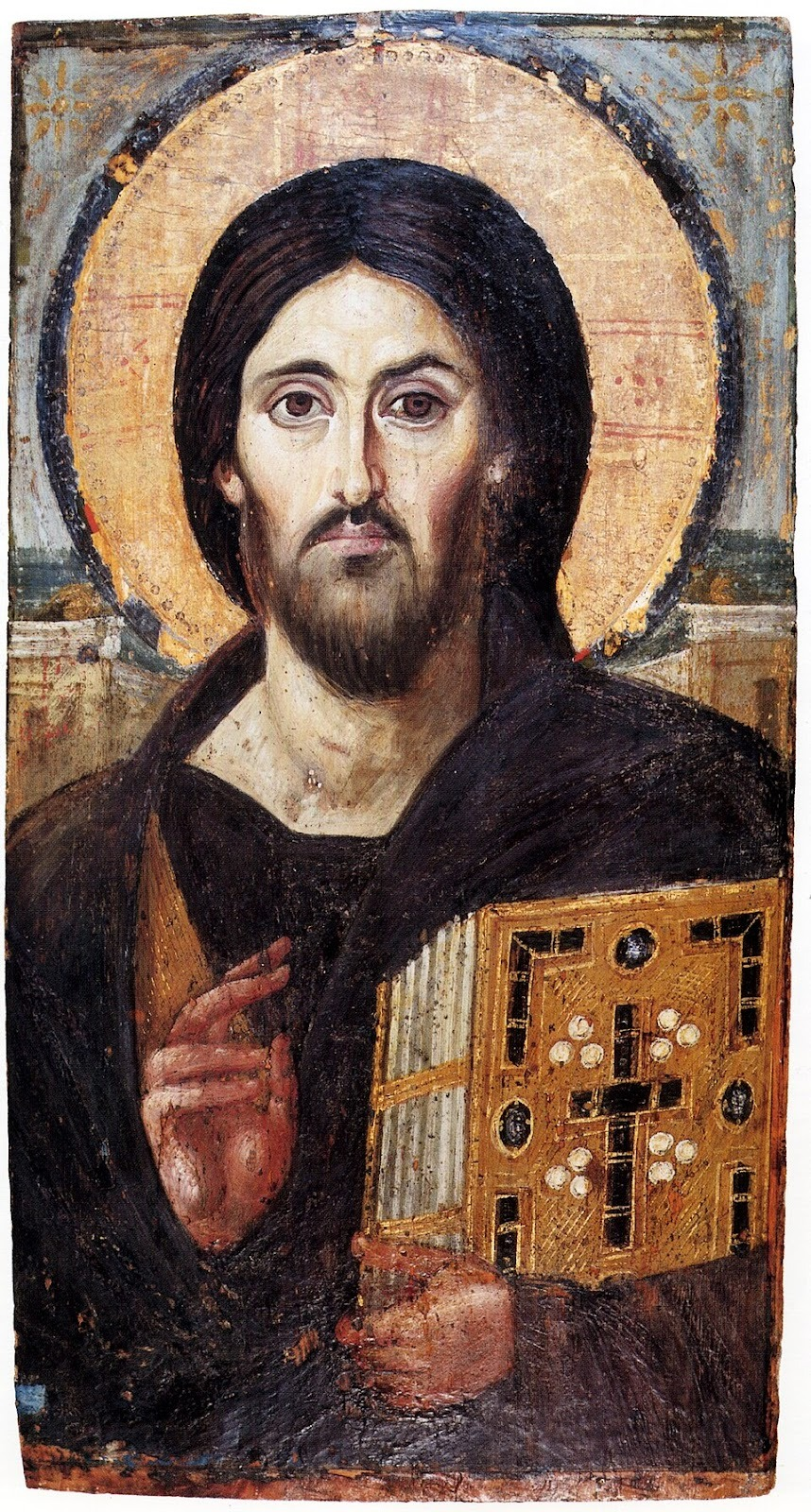
“Le Christ Pantocrator du Sinaï”, Anonyme (Style encauste, VIe siècle), Icône du Sinaï – Monastère Sainte-Catherine, Domaine Public
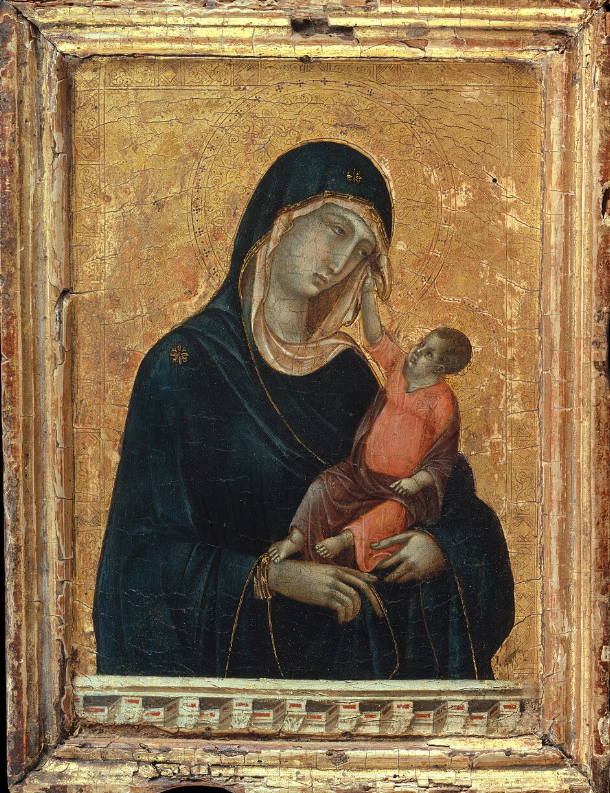
“Vierge à l’Enfant” (dite Madone Stoclet), Duccio di Buoninsegna, The Metropolitan Museum of Art (Met), New York, Domaine Public / OASC
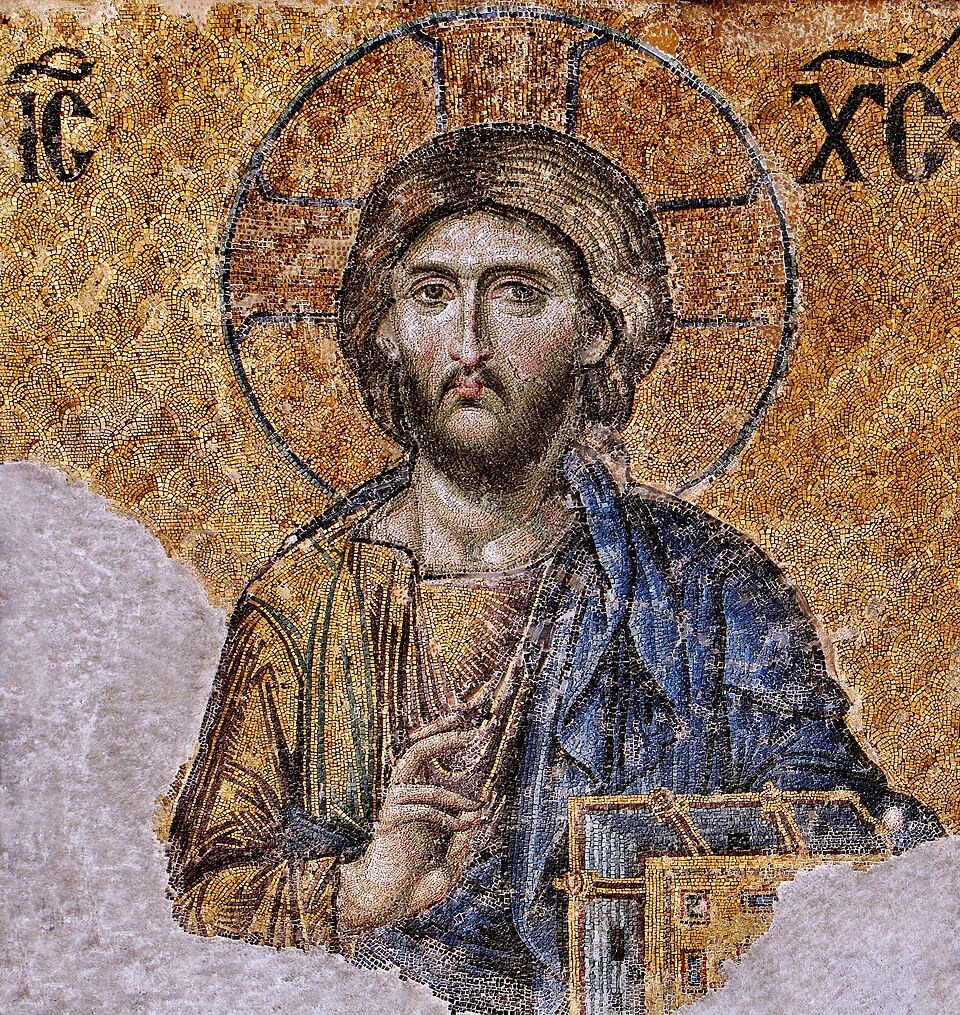
“Le Christ” (Détail de la Mosaïque de la Déisis), Mosaïste Byzantin Anonyme (XIIIe siècle), Hagia Sophia – Sainte-Sophie, Istanbul, Domaine Public
It is in the Byzantine world that this tension between visibility and prohibition finds its most stable and enduring form and also its most decisive one for the history of European art: the icon. Far from definitively resolving the problem of divine representation, the icon organizes it, channels it, and above all makes it transmissible. It accepts the image, but at the cost of a radical transformation of its function, status, and language.
The Byzantine period is crucial because it establishes the first coherent system of representing Christ in European history. Before it, Christian imagery hesitated, circumvented, suggested. With the icon, Christ acquires a stable, reproducible, immediately recognizable face. This face no longer stems from the artist’s free invention; it follows precise canons, transmitted, repeated, almost immutable. For the first time, Europe possesses a standardized image of the divine.
Christ Pantocrator is not a narrative or emotional figure. He tells no story, performs no action. He asserts Himself. His frontal face, fixed gaze, and near-abstract immobility create a radical distance from the viewer. There is no realistic décor, no landscape, no horizon. The gold background abolishes illusionistic depth: there is neither heaven nor earth, only eternity. Christ is not situated within the world; He stands above it.
This choice is not aesthetic in the modern sense it is theological. The icon does not seek to move or seduce. It rejects pathos and direct identification. Where ancient art glorified bodily beauty, Byzantine art sacralizes fixity, frontality, and repetition. Christ’s face becomes a surface for spiritual projection, not an object of sensual fascination.
This discipline of the gaze is essential. The icon does not represent God as He is, which would be impossible but as He can be contemplated and understood without being possessed. It establishes an asymmetrical relationship: it is not the viewer who masters the image, but the image that sustains and returns the gaze. To look at an icon is not to consume an image; it is to accept being looked at in return.
This new visual regime durably grounds Christian iconography. Even when medieval and later Renaissance Western art distances itself from Byzantine style, Christ’s face remains deeply marked by this legacy: persistent frontality, meaningful gaze, spiritual function of the image. Even the Renaissance, despite its naturalism, never fully erases this Byzantine matrix.
Thus, the icon is not a frozen episode in art history; it is a visual infrastructure, a foundation upon which all European Christian imagery is built. It allows the image to survive prohibition, to remain at the heart of worship without becoming an idol, and above all to anchor Christ’s figure permanently in collective memory.
Christian imagery therefore does not disappear; it changes regime. It ceases to be a direct incarnation and becomes a codified mediation. It becomes at once a pedagogical, liturgical, and theological tool. It does not show the divine; it points toward it, tracing a narrow path between the visible and the invisible, between the necessity of the image and the danger of its power.
The Return of the Body: The Renaissance as Compromise
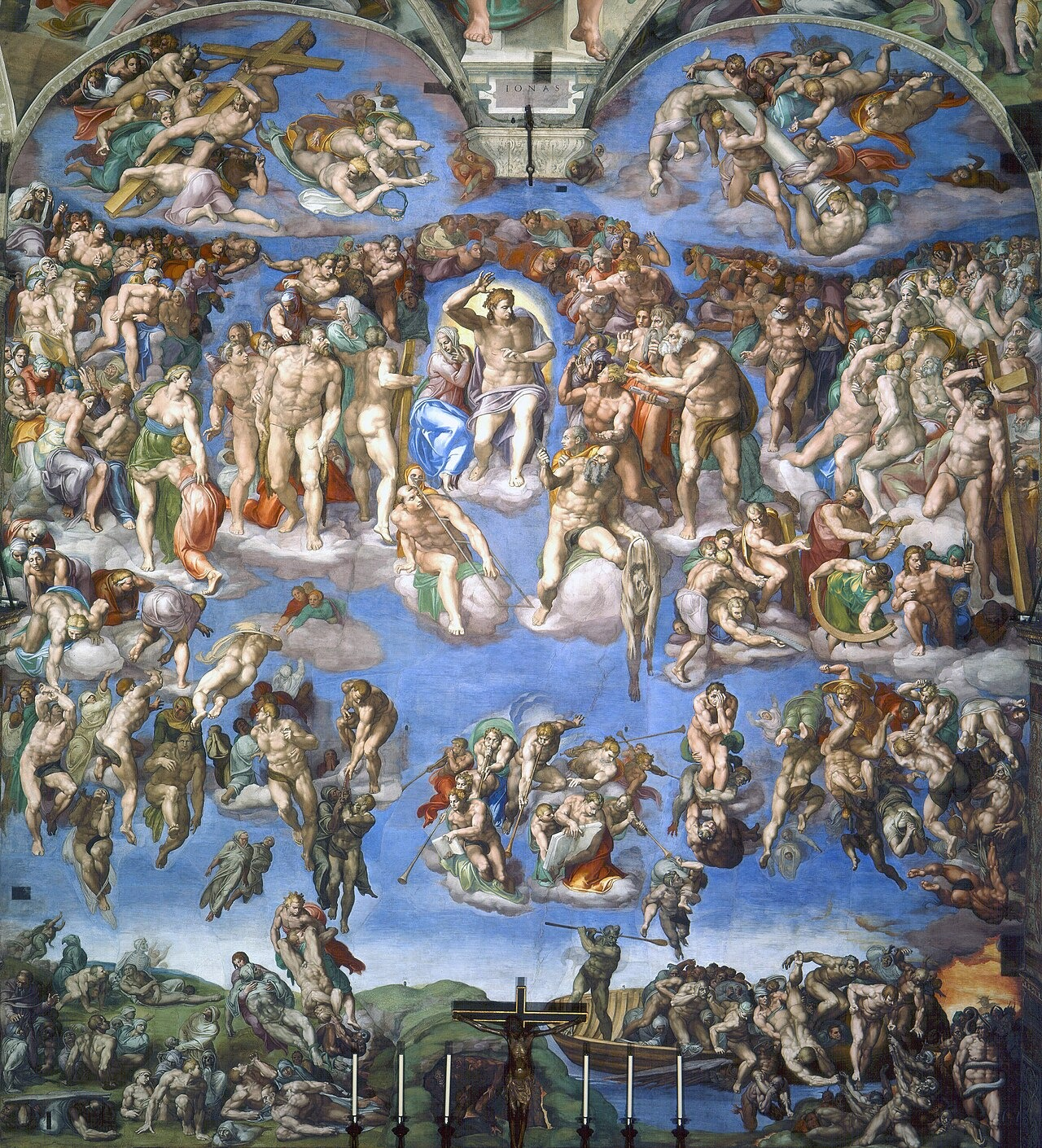
“Le Jugement Dernier”, Michel-Ange, Chapelle Sixtine – Musées du Vatican, Domaine Public
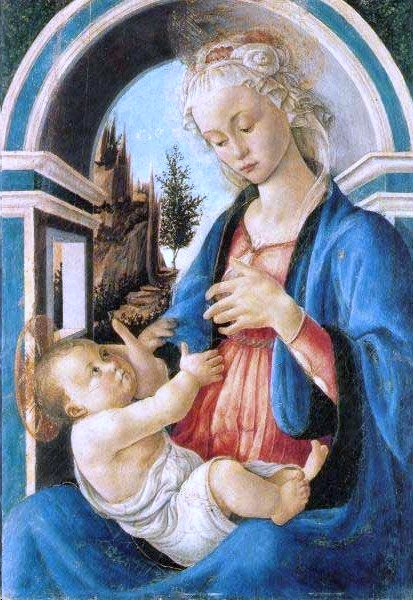
“Vierge à l’Enfant” (ou La Madone Campana), Sandro Botticelli, Musée du Petit Palais (Avignon), Domaine Public
The Renaissance marks a subtle turning point. By rediscovering antiquity, Europe reactivates an ancient visual language based on the body, perspective, and harmony. This return does not occur against Christianity, but within it.
With Michelangelo, the body becomes central once more. Christ regains a physical power reminiscent of ancient heroes. Muscles, torsions, expansive gestures reintroduce a pagan energy within a Christian theological framework.
The Virgin Mary also transforms. She becomes mother, protector, a figure of embodied tenderness. Her representations sometimes borrow from ancient mother-goddess archetypes, without ever explicitly claiming them. Monotheism thus reinvests archaic forms in order to make the sacred once again perceptible.
The Renaissance does not abolish Christian distance; it negotiates it. It accepts that the body can once again become a language of the divine, provided it serves a spiritual purpose.
A Pagan Memory Beneath the Christian Surface
What this long history reveals is that the transition from polytheism to monotheism was never a visual tabula rasa. Forms survive, shift, transform. The image preserves what theology rejects.
Even when religious discourse becomes iconophobic, painting continues to work through the memory of ancient gods. It absorbs their gestures, proportions, and narratives, redistributing them through new figures.
Thus, the history of European painting is not merely that of a change in belief. It is the story of a displacement of the sacred, of a constant effort to make visible what must no longer be shown.
What the Image Still Tells Us Today
When we observe these works, one thing becomes clear: the image never ceases to be a field of tension between faith, power, and the desire to see. Monotheism did not suppress the need for images; it made that need more complex, more ambiguous, more symbolically charged.
Perhaps this is why European art has never stopped dialoguing with the sacred, even when it moves away from it. Behind every Christ, every Virgin, every icon, the faint silhouettes of ancient gods persist.
Painting, in this sense, is less a mirror of faith than a site of cultural memory. It remembers what texts forget. It tells us that gods never disappear entirely, they simply change their faces.
Written by Paul Saoud
