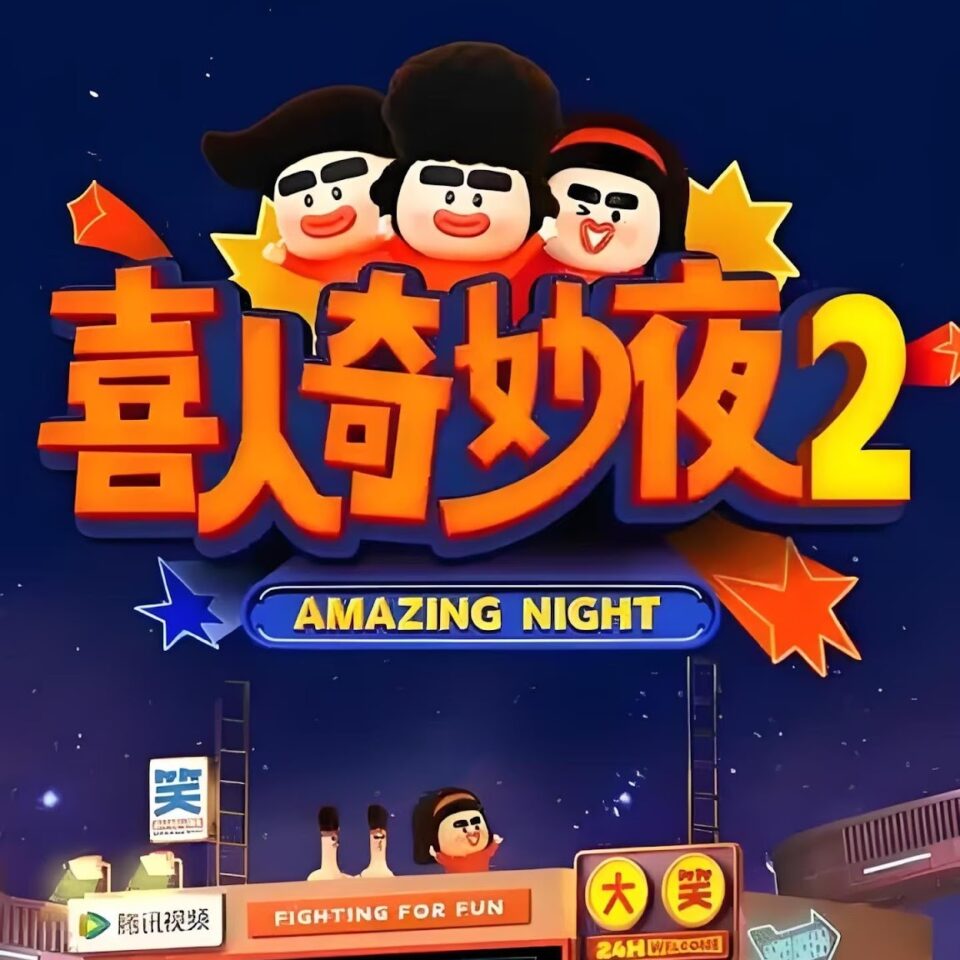
In this era dominated by big data recommendations and fragmented information, finding a carefree and unrestrained bout of laughter seems extremely easy, yet it is also incredibly precious. The punchlines are mass-produced, and jokes are quickly forgotten. Amidst the noisy wave of entertainment, have we ever felt a sense of emptiness at a moment when laughter ceased? Against this backdrop, a Chinese online comedy variety show called « Amazing Night 2 » has unexpectedly entered the public’s view with a weighty presence. It is not a traditional star competition or topic hype; instead, a group of actors and screenwriters from « Single Independent Comedy » and other production houses, using sketch comedy as the main form, engage in collective creation under a limited theme. Here, comedy is no longer a simple pastime floating above life; instead, it is a delicate scalpel sinking into the texture of life. It has dissected the shared yet silent « invisible pain points » of our era – those about workplace alienation, social performance, generational gaps, and identity anxiety, which are difficult to express but understood tacitly by all.
Workplace Internal Competition and « Mental Strain »
The core theme of the work « The Mansion with a Strong Wind » is that bad people are frightened by other bad people. This is a haunted mansion where three « parasites » who live off the food and resources of others are regarded as ghosts by the owner. So, a master and his master’s teacher are invited to drive out the ghosts. The so-called owner is also a parasite. Until the end, the real owner returns home.
This mansion is like a miniature society or workplace. Everyone inside is « rolling » for their own interests: the parasites want to move into the mansion, the family members have their own anxieties, and the master uses a materialistic approach to « transform » Wang. They are all competing for resources and living space in their own ways. The family and various things inside the mansion are actually the projection of his inner anxiety and inner demons. He is trapped in this mansion, just like we sometimes get trapped by the pressure of work and life and cannot extricate ourselves. And the last sentence from the master, « Wang, you shouldn’t keep going like this, » can be regarded as a call to break free from « internal competition » and find oneself.
The term « internal competition » is no longer merely about intense competition; it is more like a « gyroscopic vicious cycle ». The more you strive, the more others strive as well, but ultimately, everyone’s gains do not increase; instead, they all fall into an endless cycle of depletion. Just like the « parasites » in « The Mansion with a Strong Wind » who resort to any means to survive, they seem to be striving to make money, but in fact, they are mutually vying in a dead end with no way out, ending up in a miserable situation. This is the most suffocating aspect of internal competition. You cannot easily give up because once you quit, you will be labeled as a « loser » and face huge pressure from society and family. This pressure makes everyone feel like being tied to a spinning top, unable to let go and having to spin faster and faster. The definition of success in society has become narrower and narrower, as if only « upward mobility » counts. This leads everyone to be confined to the same race track, lacking personalized choice space and blindly following the trend, constantly comparing and constantly feeling anxious.
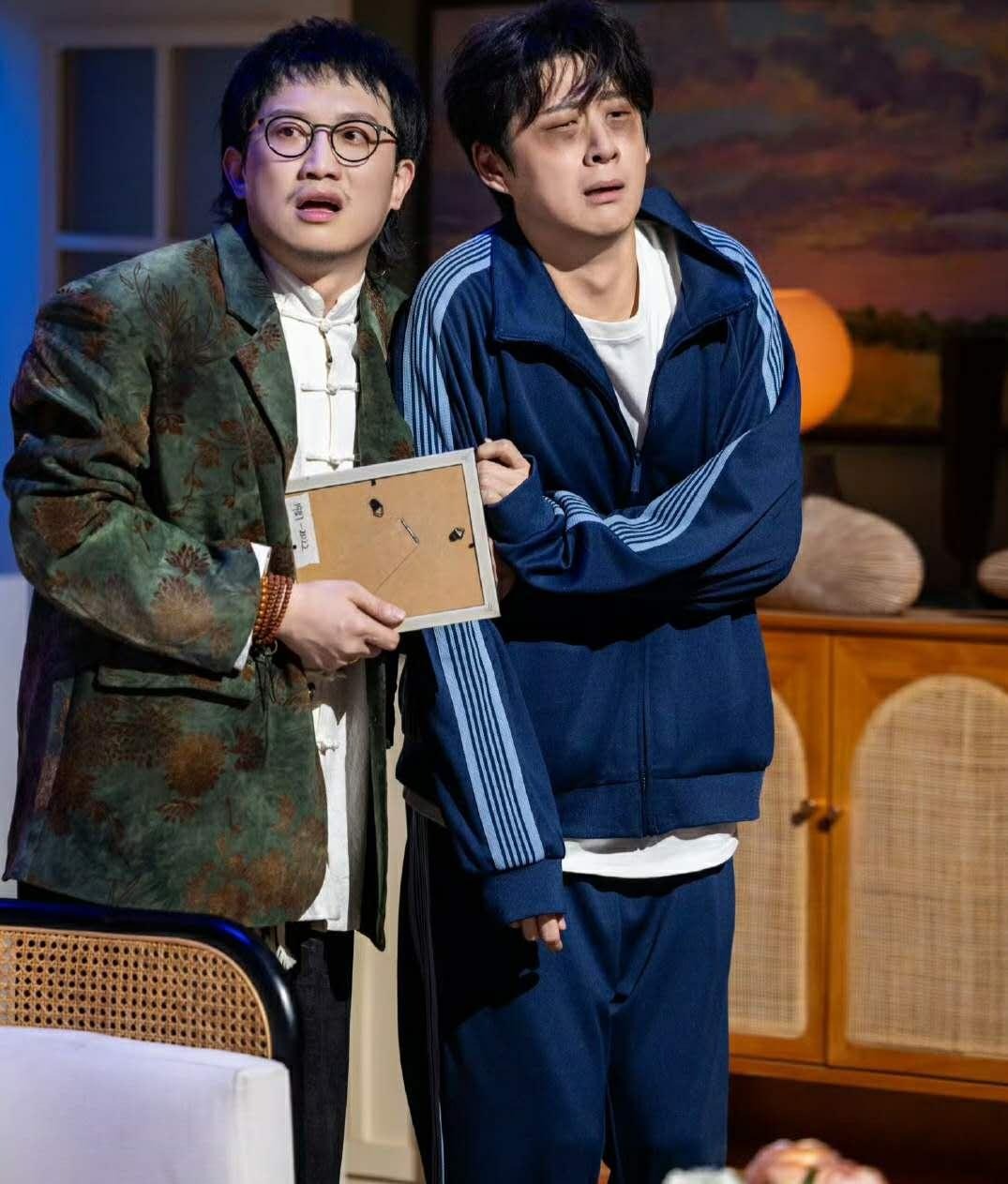
« Amazing Night 2 » performance work « The Mansion with a Strong Wind » still image. From left to right in the picture are the actors: Jixu WANG, Jiye LIXIN. Jointly produced by Tencent Video and Mi Wei Media
The Dilemma of Idealists
« The Old Police vs. the Enemy » is actually a story about an inner struggle between « idealism and compromise », and how a police officer maintains his original principles in a black-and-white world. The story is set in Hong Kong in the 1980s, where the police force colluded with the underworld and corruption was rampant. When Detective Li and his partner Zhang Cheng were investigating the corruption case of the bureau chief, they found themselves in a huge moral dilemma. After Li was promoted to the position of captain, he seemed to start compromising with corruption, going against his partner Zhang Cheng’s righteous stance. Their relationship became tense.
The plot keeps reversing. First, it reveals that the heroic police officer who was hospitalized with serious injuries (played by Yang Zuofu) is actually the bigger villain. He colluded with the underworld to « gain more power to change everything ». Then, a bigger twist comes – partner Zhang Cheng actually died two years ago. All his words and deeds were the embodiment of Li’s inner conscience, a fierce struggle between Li and his own inner « compromise » and « desire ».
After going through a series of struggles, Li finally chose to uphold justice and personally shot dead Captain Wang, fulfilling the unfinished wish of his deceased partner. At the end, Li salutes « Zhang Cheng » in front of the mirror, symbolizing that he finally made a firm choice, keeping his original principles eternal.
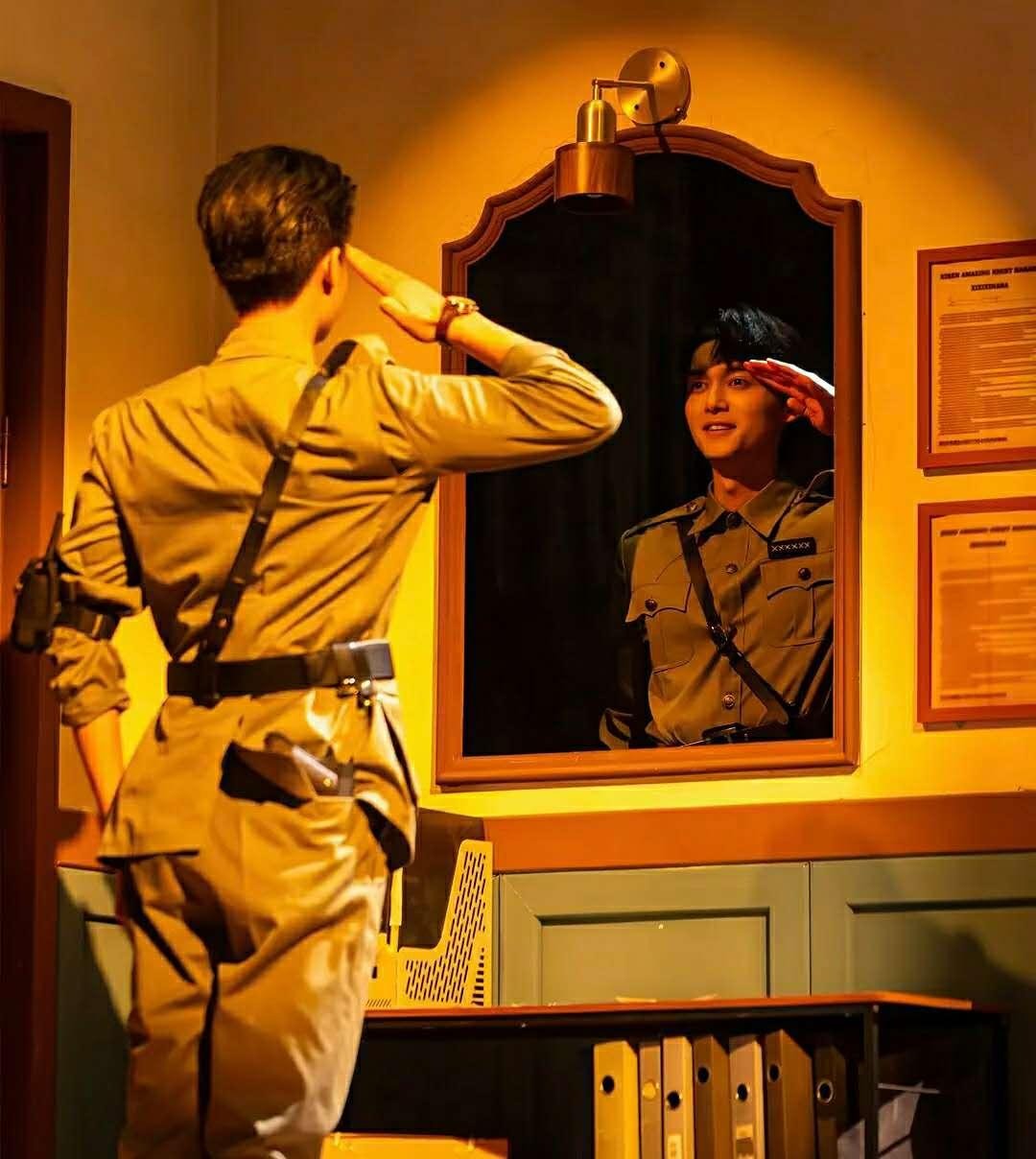
« Amazing Night 2 » performance piece « The Old Police vs. the Enemy » still image. From left to right in the picture are the actors: Cheng ZHANG, Songran LEI, Jointly produced by Tencent Video and Mi Wei Media
This story does not have a simple dichotomy of « good guys » and « bad guys ». It presents a more complex social reality:
The grey areas of the system: In the play, the chief, Captain Wang, even the gangsters, may all have their own calculations and helplessness. The chief colludes with the gangsters to maintain the survival of the police station, and Captain Wang’s « black eating black » is also for the power struggle. This reflects that in the real society, good and evil are not black and white; often, the people involved are making « suboptimal choices ».
The disappearance and rebirth of « old police »: The « old » in the story refers to a kind of uncompromising and reckless police spirit that is fading away. We miss « old police » not because of poverty, but because of that purity that was not contaminated by the mundane world. At the end of the story, Lei Zi chooses to inherit Zhang Cheng’s will and becomes that « old police », which means after recognizing the complexity of the world, still choosing to hold on to that part of one’s inner self.
The police character in the play who advocated for whistleblowing and ultimately sacrificed himself represents the « unbreakable » and uncorrupted original intention in our hearts. His sacrifice has forever captured the « passion » and « honesty » at that youthful moment, becoming the embodiment of conscience in the hearts of those who are still alive. The living police: The protagonist Lei’s pain is precisely the portrayal of the lives of most of us. He had to struggle between ideals and survival, his heart filled with exhaustion and struggle. This huge gap between « spiritual wealth » and « realistic poverty » made countless viewers feel deeply empathetic. The reason why the story is tear-jerking is that it awakens our nostalgia for « the old times ». What we remember is not the poverty of the past, but that pure state of mind that has not been consumed or weighed in terms of gains and losses.
Why is « comedy » an excellent medium for reflection?
The reason why comedy can become the sharpest and most acceptable surgical tool for dissecting the « invisible pain points » of society lies in the fact that it creates a psychological safe distance. When heavy and real social issues – such as « The Mansion with a Strong Wind » – where « internal competition » and « mental tension » consume meaning, the audience can view those anxieties that might directly trigger defense mechanisms in reality from a safe position as an observer or appreciator.
This « safe distance » effect enables comedy to go beyond mere satire and becomes a gentle form of social dialogue and a collective psychological stress reliever. It allows us to replace sighs with laughter and dissolve loneliness through resonance. Just as in « The Old Police vs. the Enemy », we don’t have to personally confront the rigidity of the system, but through the characters’ predicaments and struggles, we can release the sense of powerlessness accumulated in similar situations within ourselves. Comedy publicizes personal pain points and lightens heavy topics, enabling us to accept a profound understanding of our own situation at the moments when our psychological defenses are weakest and when we can laugh.
The Value and Limitations of Reflection
The profound comedic reflection practiced in « Amazing Night 2 » holds the primary value of achieving a crucial « collective affirmation ». When there is a burst of heartfelt and prolonged laughter in the theater for a certain work, it is not merely an expression of appreciation for the performance; it is also an unspoken cry: « It’s not just me who feels this way! » This sense of affirmation, in an atomized society, counters loneliness and dispels the self-doubt of « Is it only me who is abnormal? « , and has fundamental psychological healing significance.
Secondly, it provides a healthy channel for emotional release. By observing the exaggerated and extreme responses (or breakdowns) of the characters in the works in similar predicaments, the accumulated anxiety, anger and helplessness of the audience can be symbolically released. This is a low-cost and harmless social psychological safety valve.
However, this kind of comedic reflection also has its inherent boundaries and limitations. On one hand, in order to achieve comedic effect and wide dissemination, the presentation of issues must undergo simplification, exaggeration, and typification, which may blur the more complex structural causes behind social problems. On the other hand, the instantaneous catharsis and resonance brought by laughter, if not leading to deeper individual reflection or public discussion, may also slide towards the shallow and simplistic « storytelling » of pain, thereby gradually undermining the motivation to change the current situation. Excellent comedy is like a precise mirror, clearly reflecting our « pain points », but how to heal these pain points still requires each person looking into the mirror and the entire society to, after the laughter subsides, take the courage to face the truth directly and the wisdom to take action.
This is precisely the most valuable lesson that « Amazing Night 2 » has imparted to us: The highest form of comedy is not merely an art that makes people laugh, but also an invitation for the audience to gaze together, in the midst of laughter, at the complex and real reflection of the era in which we exist.
Written by Guanrong Zhang
