Breaking news: the crash between the boldest thieves and one of the most famous museums
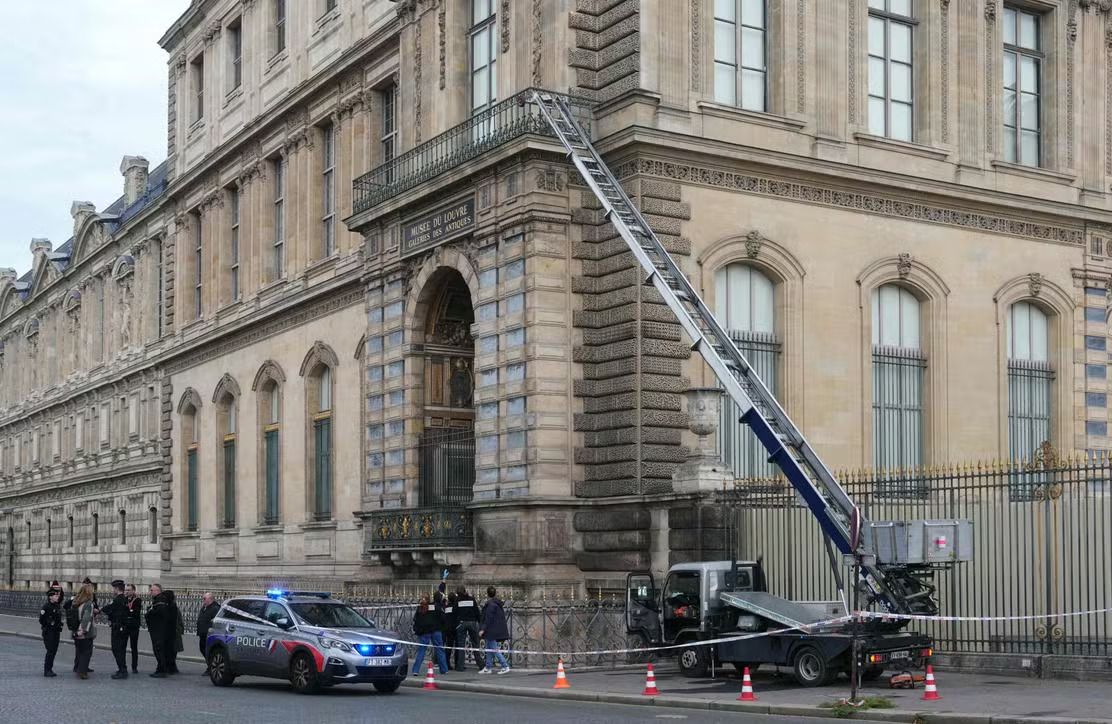
A shocking news story happened on Sunday morning, on the 19th of October. According to initial reports, two burglars wearing yellow reflective vests escaped with historic jewelries from the Louvre, one of the most frequently visited museums in the world and the most precious museum in France. They left using a common Parisian monte-meubles, a furniture lift on the outside of buildings, and two accomplices were waiting for them on scooters. The whole process took about seven minutes, which is even faster than a short coffee time. The stolen value are absolutely national and world treasures: eight pieces of priceless historic jewelry, including a necklace once belonged to Empress Eugénie, the wife of Napoleon III. The museum opened only 30 minutes and then closed in order to protect the crime scene,. Beside the big losses, people have to admit that the operation was audacious and even brazen, and the well-organized preparation by the thieves is undoubtable. According to news report, the burglars entered through a window, destroyed two display cases in the gilded Galerie d’Apollon, and stole crown jewels. Seven minutes was the time needed for guards to arrive, but everything ended so quickly so they cannot stop this tragedy. The only good news is that no one got hurt. Clearly, this is big international news. French officials suspect that this was an organized event, possibly with help from collectors who know the true value and meaning of these objects.
Are the jewelries still the same when they are back?
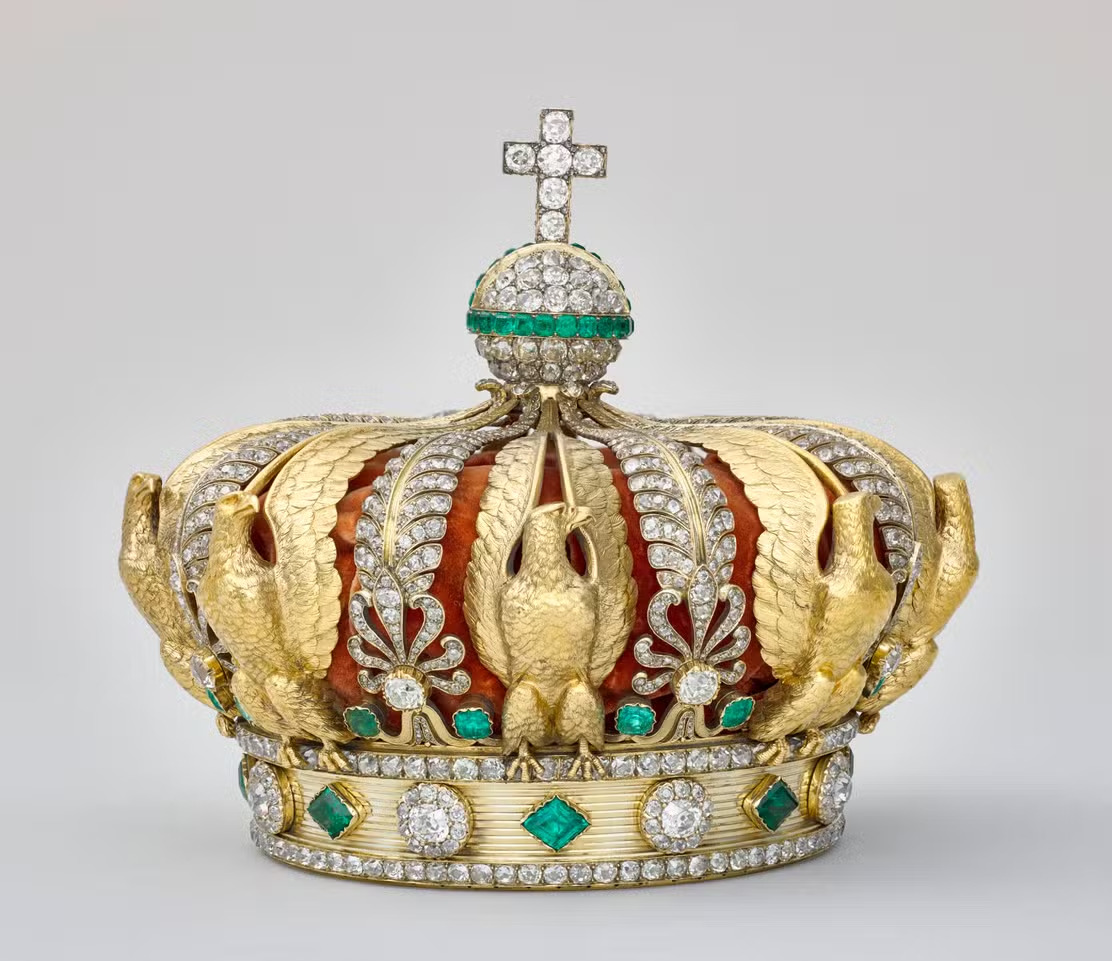
Stéphane Maréchalle / Louvre Museum / Grand Palais-Rmn
The jewelries in the museum are not just common goods that can be sold and bought again. They represent history, memory, and cultural rights as part of human life. The Louvre has more visitors than any other museum in France, and one of the biggest numbers in the world. The biggest reason is that the collections in this museum are unique and cannot be replicated or simply estimated with money. All the historical circumstances around these pieces form their multidimensional value. As Malcolm Forbes once said, “Jewelry is the epitome of the emotions it represents – not just beauty, but memories.” Those necklaces, crowns, and other jewelries are containers for emotional memory for the French people, and their loss can lead to a breakage in the national memory. Some people may think that jewels are only materials; but value isn’t just in the materials themselves, it is also in the moments, the people, and the places where they were worn by historical figures.
Because these jewels are famous, they cannot be sold directly on the free market. It is highly likely that they would be disassembled and transferred, then sold out eventually in smaller segments. This is one of the most painful facts: after segmentation and alteration, even if some parts are recovered, the original authenticity and wholeness of the work cannot be fully restored. Jewelries also serve as part of cultural heritage. Such a theft brings humiliation not in a sensational way, but in the sense that it challenges the state’s duty to protect shared memory. Trying to steal national treasures is already a bold move, not to mention performing it in broad daylight. As the protector and steward of national treasures, the Louvre should have several guarding guidelines and more guardians in place that match the value of the collections. But there were blind spots for protection, and there were not enough personnel to respond in time. In January, there was reportedly a plan to improve security in the Louvre, but it did not get the chance to be carried out quickly enough. So a question appears: why did the French government and the Louvre know the problem but not respond to it immediately? Especially when the government provides strong public funding for this institution, the failure is a surprise for the public in France and abroad.
Walter Benjamin once wrote about the “aura” of an artwork – the unique existence of a work in time and space that we feel when we meet it in person. That “aura” was violently damaged when tools shattered the display cases and the jewels were removed. Even if the pieces are recovered, the jewelries can be segmented and altered in a very short time. After that process, even though we restore the objects materially, the authenticity built through centuries of protection and witness cannot be restored in the same way. We can remember another history: dated back to Chinese Qing Dynasty, there were invasions to China from other countries. Many jewelries and ancient treasures are also stolen and got robbed. Some still sit in museums abroad, sometimes with scars and cut traces on them. Some were returned, but many remain elsewhere. These losses showed a period of weakness and inaction in the old regime. This case in France brings a similar symbolic wound. The damage is not only to objects, but to public trust, to the confidence of citizens, and to the aura that connects people to their past.
The brightness of the jewelries and the darkness of the power
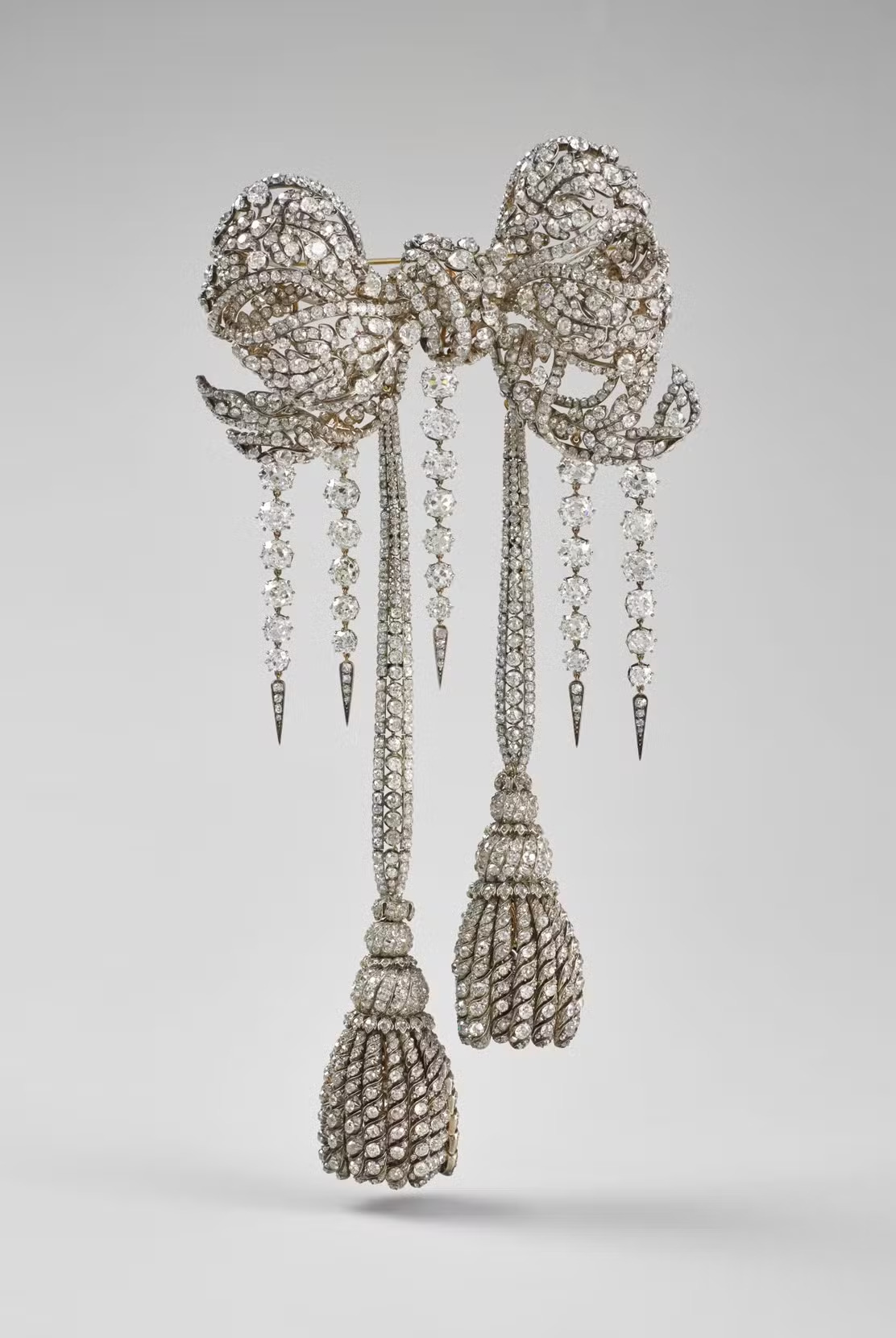
Stéphane Maréchalle / Louvre Museum / Grand-Palais-Rmn
As John Ruskin argued, nations write their autobiographies through deeds, words, and art. When a necklace or a crown is stolen, a page is torn out of the material memory of the nation. Each stolen piece was a link to the era of Napoleon and the political theater and artistic patronage of that time. The Louvre and the wider society recognize these objects as cultural heritage and as pedagogical tools for civic identity. But the thieves and any potential buyer see them as signs of status and power. As Jean Baudrillard noted, when objects are cut from their historical context, they become hyperreal symbols – empty signs of prestige detached from their true stories. On August 21, 1911, Leonardo da Vinci’s Mona Lisa was stolen by the staff from the Louvre. That event changed how the public saw the painting and represented how art and power can mix outside the museum arena. This new incident again shows the tension between cultural meaning and the temptation of possession.
To understand why this theft resonates so widely, we should return to the gallery’s own history. The Galerie d’Apollon is not merely a room but a ritual space where France stages its political and artistic lineage. Built under Louis XIV and restored in the nineteenth century after a fire, it frames jewels as part of a story that moves from monarchy to empire to republic. In such a stage, jewels function like living documents: gold and gemstones that record the tastes of rulers, the skills of artisans, and the ambitions of a nation. Removing them erases not only a display but a thread of narrative: a way for citizens and visitors to approach and debate history inside public walls.
These operational patterns are tied to market realities. High-profile crown jewels and unique artifacts cannot circulate openly; images are widely available, catalogues exist, and provenance is checked. As a result, criminals often disassemble pieces – removing stones, melting settings, and selling parts one by one. That practice destroys the provenance and breaks the link between materials and their stories. Auction houses and dealers now often do due diligence and consult such records. But private sales and informal networks are hard to monitor. There is still a gap between our moral agreement that heritage should be public, and the anonymity of certain markets where fragments can disappear.
What can we do to recover?
After a loss, communication matters: open briefings, community dialogues, and education about provenance and restitution can turn shock into civic engagement. For museum staff – conservators, curators, guards – the loss is personal. For citizens, an empty case symbolizes a broken connection. A thoughtful response must honor both the emotion and the responsibility that come with stewardship.
From a legal and diplomatic point of view, the aftermath of such a theft activates networks of cooperation. INTERPOL’s Stolen Works of Art database, alerts from customs, and cultural property units in police forces are designed to stop illicit flows. Legal tools for information sharing, and coordination between cultural ministries and museums, help provide documentation and images to identify parts if they appear.
Technology can help, but it must be used wisely. Microdot tagging can survive disassembly and help with attribution if parts are found. High-resolution 3D scanning and scientific analysis can create a digital fingerprint that identifies an original even after alteration. Public memory also needs care. The sudden absence of artifacts changes how communities see their past. School groups who might have stood in front of a Napoleonic necklace now see an empty vitrine.
Accountability should be specific, not vague. Reviews after the incident should include clear timelines, responsible parties, and measurable outcomes: which upgrades, by when, with what training. Budget transparency – how funds for security were used and why delays happened – can restore trust. Boards and trustees should recognize security as part of their duty, not a side issue. Insurance can encourage better practices by rewarding drills, audits, and integration of technology. Governance is the architecture that turns today’s lessons into tomorrow’s routines.
Returning to theory helps us see the path ahead. Benjamin’s aura is not a mystical word; it is the felt presence of time, the sense that an object has traveled through lives and events to meet us now. To protect aura, we must protect the conditions of truthful, public encounter.
Heritage survives not by being hidden away, but by being responsibly shared. That is the promise and the paradox of a great museum. It must expose treasures to the public gaze while shielding them from harm. If there is a lesson in this theft, it is that protection and participation must grow together.
In the end, what disappeared were not only jewels, but points of connection: between past and present, between craft and ceremony, between private emotion and public meaning. The value is not measured in carats, but in memory – how objects anchor stories, how stories anchor identities, and how identities hold a shared future. Rebuilding will need resilient systems and resilient relationships: between institutions and citizens, between art and law, between beauty and responsibility. If that rebuilding succeeds, the empty space in the case will not be only a scar. It will be a reminder that vigilance is a form of care, that care is a form of justice, and that justice – like art – belongs to everyone.
Written by Yajchuan Liu
