Digital Communities and the Birth of Streaming
At the end of the 1990s and the dawn of the 2000s, music became one of the first fields to experiment with digital culture. Whether on forums, sharing sites, or peer-to-peer (P2P) platforms, self-organized and self-regulated communities emerged: uploaders, curators, collectors, and enthusiasts. Even today, these communities persist, particularly in electronic music niches through open and collaborative platforms like Soulseek.
Sharing music evolved into a cultural act, recommending, cataloging, circulating music. Genres were being redefined via these new circuits (electronic underground, mashups, netlabels…). This embodied what Jonathan Zittrain described as the first web’s generativity: the power of the internet to generate unexpected uses through user freedom and contribution.
Such times brought with them dreams of a world without intermediaries, the utopia of an open, horizontal culture within reach: anyone could create, publish, or discover. Yet, beyond this emancipatory promise, another reality set in—an industry now saturated, where visibility is the new form of scarcity and “the winner takes all” has become the rule.
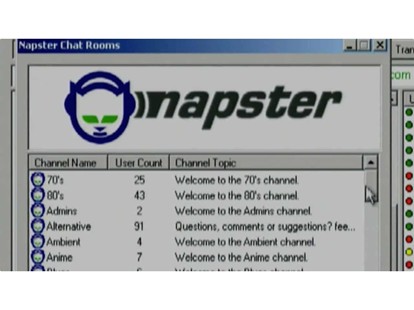
Napster revolutionised the music industry and was the first P2P music-sharing service of its kind. (Image source: r/Xennials on Reddit)
The idea of “free discovery” has turned into an endless stream: although anything is available, emerging artists struggle to be noticed. Today’s streaming models—built around retention, prediction, and automated recommendations—claim neutrality and openness, but are in fact highly opaque, as clearly shown in the book Spotify Teardown: Inside the Black Box of Streaming Music. Far from the original web’s open, interoperable spirit, these platforms now act as closed ecosystems, governed by proprietary logic: controlled access to data, inaccessible algorithms, and asymmetric value distribution.
And yet, as Pierre Bourdieu reminded us, the value of a work relies not only on its creator but also on those who make it exist—the mediators, facilitators, and cultural intermediaries. Contrary to what some technophile narratives predicted, these figures did not disappear; they simply transformed. Today, a new generation is reinventing how music circulates and is discovered: Groover, Deezer, Bandcamp, and Foreplai are returning meaning to listening and placing human engagement at the heart of platforms.
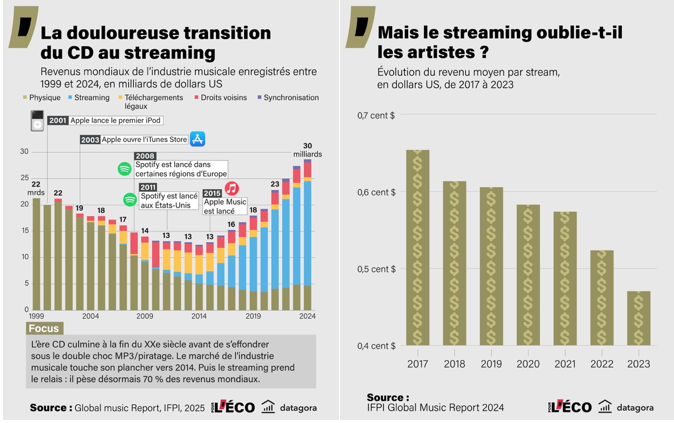
Let’s briefly revisit streaming’s rise and some striking figures, based on Pierre Le Baud’s recent study for Datagora. When CDs reached their peak in the late ‘90s, everything seemed possible, until the MP3 and piracy wave dealt a blow: within fifteen years, the music industry lost more than half its value. Free access became the norm, undermining scarcity, once the bedrock of the record economy. By 2014, the market hit bottom. Streaming then took over, starting a steady comeback: according to compiled data, streaming now accounts for nearly 70% of the world’s recorded music revenue. However, not everyone has benefited equally. Of a €9.99 subscription, €6.54 goes to platforms and labels, €1.99 to the State (VAT), €1 to songwriters… and only €0.46 to performing artists. Built on abundance, the economic model of streaming depends on fundamentally unequal distribution.
In France, rap dominates listening stats: 15-to 34-year-olds, overrepresented on platforms, shape the scene, while 20th-century music is left to scraps. Nearly 80% of streams are for titles released after 2010. But the most striking injustice is elsewhere: only 2.6 million tracks surpass 100,000 streams, while 93 million remain nearly invisible—with under ten plays. The promise of “equal access to distribution” has morphed into another winner-takes-all system. Streaming saved the industry, but not the artists.
Playlist Diversity and Algorithmic Discovery :
Confronted with overwhelming abundance, platforms found their countermeasure in algorithmic discovery. Every week, millions let Spotify or Deezer recommendations guide their ears, convinced the algorithms “know” them. Playlists like Discover Weekly have become taste-substitutes, acting as automated filters meant to steer our desires.
Currently, three main types of playlists coexist on streaming platforms:
- Algorithmic playlists, such as “Discover Weekly,” “Release Radar,” or artist radios, generated automatically according to listening habits.
- Collaborative playlists and those made by users, probably the best suited for curated content and true musical diversity.
- Editorial playlists, created by each platform’s internal team, typically shaped by business logics and big major labels interests—seeking both visibility and monetization. Because majors negotiate the most favourable licensing terms with Spotify, they are structurally positioned to benefit the most from editorial playlist.
Spotify’s latest innovation is direct integration with ChatGPT. Now, you just ask: “Make me a playlist for a fireside evening of German love songs,” and the AI produces a personalized selection. The experience feels seamless, conversational, almost intimate.
However, this promise is misleading. Discovery should mean searching, comparing, allowing oneself to be surprised; here, it’s reduced to navigating within a predefined frame: click, listen, continue chatting. Conversational discovery induces not curiosity but apathy. Algorithms replicate our tastes more than they push them; they reinforce rather than unsettle our habits. As Jérémy Vachet observed, “digitalisation does not erase social or geographic hierarchies, it multiplies them and consolidates those already in place.” The algorithm discovers nothing—it sorts, ranks, and perpetuates the very inequalities it claims to overcome.
The Resurgence of Human Curation
The comeback of cultural intermediaries and ongoing positive innovation in the sector: Press officers, programmers, curators, independent labels, webradio staff or record store owners: so many cultural intermediaries once pegged for extinction by technology, now reinventing themselves at the heart of the system itself.
Groover, for instance, has built a model centered on human intermediation: connecting artists and media via a simple interface that foregrounds subjective musical taste. Groover guarantees every track sent to a professional receives at least one piece of feedback—and sometimes the start of a lasting partnership.
Deezer, for its part, introduced in 2025 an artist-centric model: a recalibrated algorithm designed to give better compensation to genuinely listened-to creators, limiting money siphoned off by “fake plays” or AI-generated tracks. In practical terms, a user’s subscription goes directly to the artists they actually listen to, unlike Spotify’s “pro-rata” system where all revenue goes into a common pot, largely favoring the already-dominant artists.
Over at SoundCloud, long considered a haven for emerging producers—the company announced it would stop taking commissions from premium users for distribution revenue: a rare move, following Deezer’s lead in an environment dominated by value extraction.
Emerging Revenue Models and Transparency
And already, a new crop of platforms is emerging. London startup Foreplai (set for 2025) is proposing a “pay-for-play” model: users add £10, and pay £0.04 per stream—half of which goes directly to artists and labels, making for remuneration up to twenty times higher than with traditional streaming. Foreplai’s ambition isn’t purely economic: it aims to make independent artists the true “influencers” of the platform, supported by a social system where fans follow and back their favorite creators. Discovery becomes a conscious, almost political act.
In an ocean of interchangeable tracks, value now lies not in quantity but in selection. Curating in the sence of choosing, editing, providing context, becomes paramount. Playlists emerge as a new kind of creative writing. In Berlin, Hör now monetizes the tracklists of its DJs: four euros a month for access. Musical knowledge itself becomes product; discovery is commodified. Groover understands this: getting into playlists is now both a career lever and a badge of legitimacy. In a saturated world, scarcity moves: it’s no longer about access, but about the ability to make meaning.
A possible path to better recognize the chain of value would be maybe to envisioning copyright or royalties shared between curators and producers, acknowledging the cultural contribution of selectors and transmitters.
Beyond the debate on fairness, the next frontier for streaming lies in transparency and ethics. As AI-generated music floods catalogs and “fake artists” populate playlists, the question is no longer only who gets paid, but who gets heard—and why. Several European initiatives are now calling for algorithmic accountability and metadata traceability: the ability to audit how songs are recommended and to ensure that human-made work is properly identified. Blockchain-based tools such as Resonate or Audius explore decentralized remuneration, where artists collectively own the platform. Others, like MusicBrainz or Utopia, aim to clean and standardize rights data to make royalty chains verifiable. These efforts point to a deeper shift: from a logic of extraction to one of transparency, trust, and shared governance. In this context, human curators are not nostalgic figures—they are ethical anchors, ensuring that technology remains a medium for culture, not the other way around.
Rethinking listening, from background noise to meaningful experience: automatic playlists have turned music into a mere sonic backdrop—fueling commutes, study sessions, and workouts, a continuous stream where attention dissolves. Daniel Ek’s famous line, “Our only competitor is silence,” captures this industrial vision of music as uninterrupted output. Yet precisely because listening has been flattened into ambient noise, a counter-movement is emerging: the revival of vinyl, artisan labels, independent collectives, and community radios. Listening is becoming a conscious act again. Choosing where and how to listen is also about choosing which model to support. The difference between Spotify, infused with AI, and Bandcamp, which pays artists directly, isn’t just economic, it’s deeply symbolic. Tools like Soundizz now let users transfer their playlists from one service to another: not a mere technical detail, but an act of cultural autonomy. We, as students, have the power to consume our treasured music more equitably, shaping a fairer musical ecosystem by choosing the right support. At a time when algorithms build our playlists and social media reduces each track to thirty seconds, our relationship to music has been radically transformed. We drift from song to song, stacking up “liked” tracks without truly listening.
And yet, another way persists, slower, quieter, more attentive.
It whispers in an audiophile café in Nantes, in a thirty-copy CD of baile funk brought back from Japan, in an improvised jam at a local bar. This discreet community resists the current, countering it with patience and presence. It reminds us that in a world saturated with sound, the simplest gesture remains the most beautiful—true listening.
Towards a More Human Future for Music
Music reveals our era’s paradox: hyper-connected and yet always craving humanity. Technology has multiplied the channels but not the meaning; democratized diffusion but not recognition. The vinyl revival for example, with its grain and imperfections, symbolizes the search for authenticity: a return to gesture, touch, substance.
Thus, intermediaries, curators, programmers, press agents, or passionate enthusiasts, regain centrality. They embody what algorithms cannot generate: intuition, surprise, encounter. The most promising platforms won’t be those automating discovery, but those reinventing it. Music isn’t just a flow; it is a relationship, a fragile link between creator, connector, and listener. In the end, everything is analog.
Behind every click, there is an ear. Behind every algorithm, a touch of humanity. Behind every sound, an original vibration, tapping into that fragile, essential bond that still makes us human.
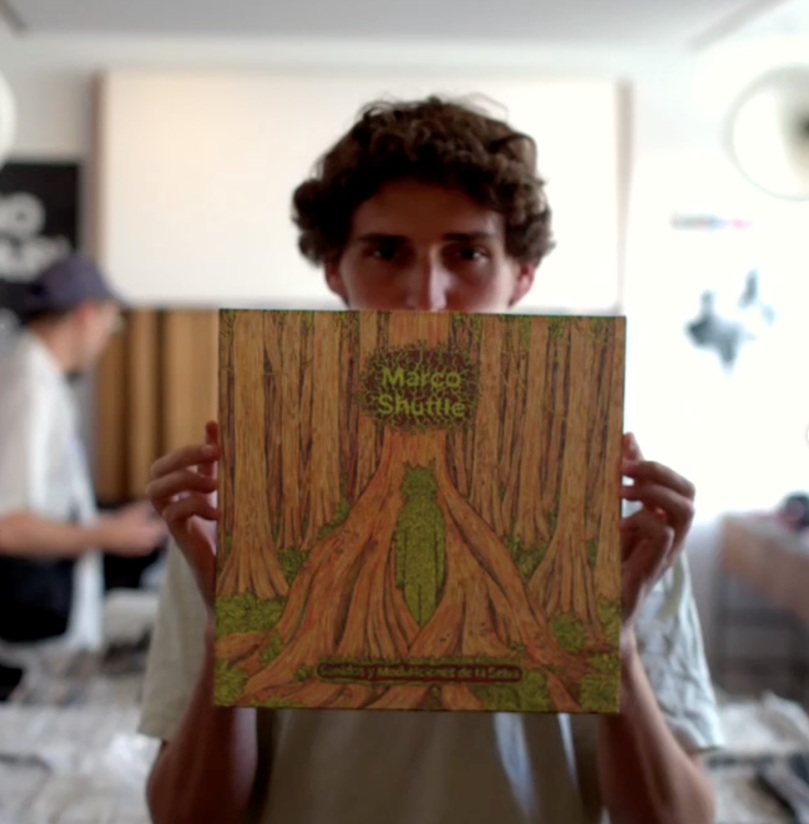
Leopold, store manager at Yoyaku, presenting his staff pick of the week: Sonidos y Modulaciones de la Selva by Marco Shuttle. (Image source : Instagram / yoyakurecordstore)
Author : Samuel Kauffmann
