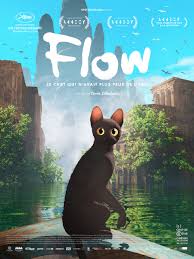
In March 2025, French-Latvian animation movie Flow managed the impossible: with a team of under twenty animators and in partnership with Paris-based Sacrebleu Studios, made up of less than ten employees, Gints Zimbalodis won the Academy Award for Best Animated Film. This achievement is all the more impressive considering the harsh competition it faced, having to stand its ground against behemoths of the industry such as Inside Out 2 (Disney/Pixar), The Wild Robot (DreamWorks) and Wallace and Gromit: Vengeance Most Fowl (Aardman Animations), whose respective budgets and marketing campaigns exceeded Flow’s by several orders of magnitude. But this win was not just a personal one for Zimbalodis and Ron Dyers, Flow’s French producer ; it was a collective one for the French animation industry which, after ten nominations in the category since its creation in 2003, finally brought home the golden statuette. Vindication at last on the international scene for France’s underdog audiovisual industry! Although, for many observers, it was just a question of time until one of the Hexagons’ many hyper-talented and fiercely independent animation studios finally snatched the highly coveted prize, symbol of global recognition beyond specialized festivals, and forced the usual suspects to make space at the table of international references of the animation industry.
Let us then analyse one of France’s most prized audiovisual possessions: its animation industry.
France and animation, a story that dates back to cinema’s very beginning
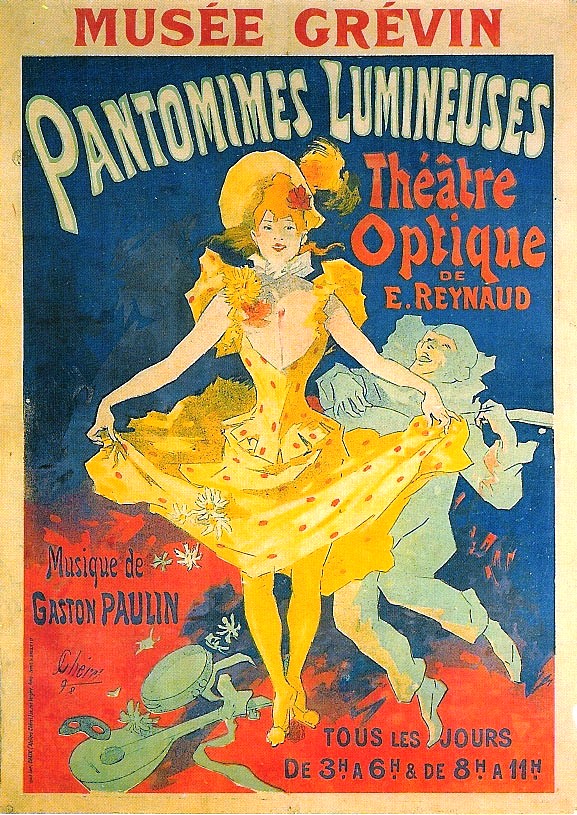
The history of animation films in France dates back all the way to 1892, when Emile Reynaud hand-painted Pauvre Pierrot, the first ever animation movie – before even the invention of the Cinématographe. Reynaud’s Optical Theater was the result of more than 15 years of development and experimentation, and ended up drawing in a massive crowd of over half a million spectators over the decade. However, refusing to adapt his work to the emerging cinema technology, Reynaud saw the success of his shows start dwindling, leading him to become increasingly depressed and eventually destroy most of his work in a bout of despair, making the memory of his groundbreaking work fade in the History books.
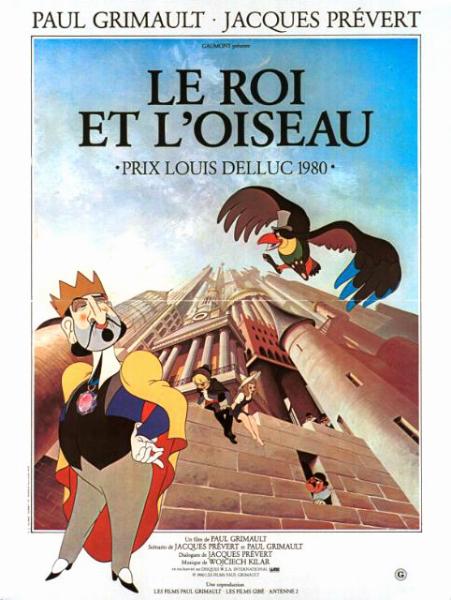
Later on and throughout the 20th century, Paul Grimault is credited with becoming France’s first well-acknowledged animation director, producing many shorts, as well as the groundbreaking The King and the Mockingbird (Le Roi et l’Oiseau), in collaboration with famed poet and screenwriter Jacques Prévert. The film took over 30 years to produce, involved over 150 technicians and cost hundreds of millions of French francs to make. Eventually, despite many rough patches – both financial and human – its final version attracted over 1.7 million spectators in theatres and became an instant classic, cited as inspiration by Studio Ghibli founders Miyazaki and Takahata. At the time, this was the first significant animated movie made by a French studio that was met with such commercial success, as, until that point, virtually only Disney existed in the animation niche. This was groundbreaking, as the goal of Grimault and Prévert was to offer a story that offered rich philosophical reflection to an audience not just made of children but also grown-ups, and make moviegoers understand that animation works were not just mindless kid entertainment but rather just as much real films as live action ones.
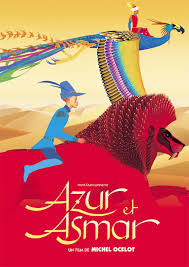
In 1973, René Laloux directed Fantastic Planet (La Planète Sauvage), another groundbreaking work that would go on to win the genre’s first ever prize in the Compétition at Cannes. In the 1990s, director Michel Ocelot would revolutionize the genre again with his stunning work that deeply marked an entire generation of children – and their parents alike. His Kirikou movies, Princes and Princesses, Azur and Asmar, were seminal works that inspired filmmakers globally and, perhaps most importantly, showed investors that animation could be financially worthwhile. Alongside Ocelot’s work, films like Les Triplettes de Belleville and Persepolis garnered both critical and commercial success in France and abroad in the early 2000s, and cemented French animators’ place on the global movie scene as innovative disruptors characterized by remarkable technicity and artistry.
A rich national academic web…
Along with those original arthouse movies, France also developed a more commercial – but praised nonetheless – animation industry that relies heavily on beloved comics IP, such as the many Astérix & Obélix, Lucky Luke or Tintin films and series that have flourished through the decades and continue to be resounding successes, as Alain Chabat’s recent Astérix & Obélix : The Big Fight (Le Combat des Chefs) highlighted. The miniseries premiered on Netflix to rave reviews from French and international audiences alike, praising it for both its plot and the quality of its animation. Indeed, French-trained animators are renowned for their training, honed in some of the most prestigious animating schools in the world, such as Les Gobelins in Paris whose students regularly go on to work for some of the biggest actors of the industry in France or abroad. Beyond Les Gobelins, the Atelier de Sèvres, LISAA, ESMA, Nantes’ Ecole Pivaut and many others train artists in State-recognized curricula all over the country, turning their students into seasoned animators able to work skillfully on all sorts of projects. These schools are organized through the National Network of Animation Schools (RECA), which aims to link together institutions that offer training whose quality is deemed indisputable across the industry, in order to provide information and opportunities to students of the craft. This network is sponsored by public and private actors of the industry, who champion the training of new experts and wish for the industry to maintain its demanding standards in the work it puts out.

… that expands into powerhouses studios
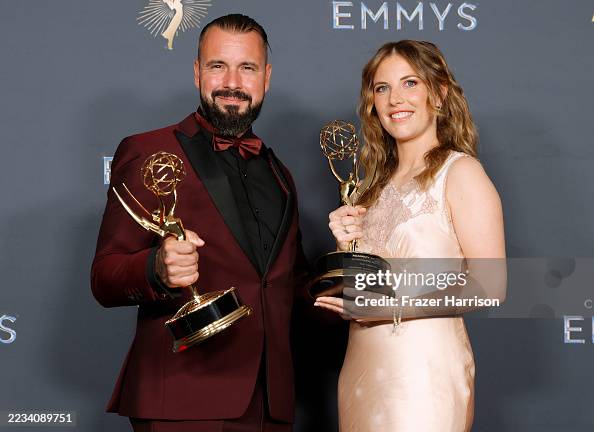
With hundreds of new graduates entering the job market every year, France has witnessed a concomitant boom in animation studios, with more than 200 active ones in the country – they were only 78 twenty years ago – that work not only on movies, but also on TV shows, music videos, advertisement, etc. Recently, Fortiche Studios was universally applauded for its work on Arcane, developed by Riot Games, where its characteristic style of animation which treats individual frames like canvases to hand-paint, earned lead studio animators Faustine Dumontier and Bruno Couchinho an Emmy Award each for Outstanding Achievement in their field. Not long after the first season of Arcane came out and stole away the breath of both audiences and industry actors, Netflix released Blue Eye Samouraï, another French-animated epic that was met with resounding success and cemented even more, if that was even possible, the special place French studios take up in the industry, especially in the eyes of international global audiences.
Acknowledgement by industry leaders keeps on increasing
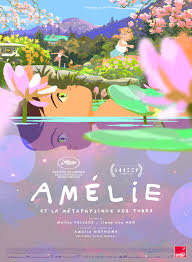
This momentum is bound to keep going, too, since more and more prestigious film festivals have started including animation films within the full spectrum of their official selection instead of sorting them out into a specific category. The Cannes film festival hosted 15 animation films across categories during its 2025 edition, whereas during the 20th century only 3 movies were ever selected at all. Out of those 15 movies, about half of them were French-made, showcasing the special attention French animation filmmakers are receiving from their peers in the most prestigious institutions. The Annecy Film Festival is commonly acknowledged as the most significant animation film festival worldwide, and attracted in 2025 over 135 000 visitors and 18 000 badgeholders, coming from 118 countries. Over the years, the attendance of the festival has steadily risen, and major studio representatives have started taking residence year after year in the festival’s film market.
Financial aid is ever increasing, from both national and international sources
Thanks to the ever increasing visibility of French animation on the global scene, international collaboration has become a pillar of the industry, accounting for about 25% of the average animation movie’s financing plan. This dynamic translates into heightened international sales, with other countries distributing more and more French animation films that reach an ever greater audience, generating dozens of millions of dollars of revenue and establishing France as the third biggest world animation films exporter after the US and Japan. Between 2011 and 2020, French animation movies generated two-thirds of their ticket sales abroad ; those numbers are unheard of for French live-action movies. Similarly, France ranks as the fourth country receiving the most orders for animated series worldwide, with 38 new requests for programs being passed in 2024 by platforms all over the world.
This growth of interest in animated works means an increase of subsidies allocated by public structures such as the CNC, the National Center for Cinema and the animated image. This key structure for moving-images industries collects money through the Special Tax on the Audiovisual, which consists in retaining a fraction of revenue collected on every movie ticket sold in France, to inject back into the industry through many different programs and subsidies. As the animation sector grows, it calls for more financial aid to support its evolution and ever growing ambitions, which public institutions must follow up with in order to properly foster national film production. As such, between 2015 and 2024, public aid in animation filmmaking has reached an impressive 20% of the average movie’s financing plan, not quite to the level of the rest of the movie industry (25%), but still significant considering the newness of the industry compared to the rest of French cinema.
Despite this success, the global crisis looms
However, over the last two years, a major crisis has overcome the animation industry worldwide, and France hasn’t been immune to it. Although the national industry has managed to keep its head above the water better than other countries, the Covid crisis has had dire social and economic consequences, especially in North America. Since the American industry is a significant driver of program demand due to its many streaming platforms and diffusors, the weakening of these players’ orders is felt worldwide. The French Ministry of Culture has announced its wish to better support the industry and reinforce public aid to the sector through renewed subsidies programs, but the question remains to see if that will be enough to counterbalance the weight of the American withdrawal.
Moreover, the rise of AI technologies is a worrying new element that directly threatens every facet of an already weakened industry. Seven leading professional organisations of the animation field (the SACD, the Société des Réalisateurs de Film, the Guilde Française des Scénaristes, etc.) published a communiqué in late September calling for public and private institutions, as well as moviegoers, to take a stand against the use of generative AI in animation moviemaking. This follows the announcement that UK-based Vertigo studio will produce a movie entirely generated by AI, despite the turmoil the advent of this new technology has brought upon the industry. Anxieties regarding issues of environmental protection, intellectual property and the precarization of already hazardous jobs have caused professionals to raise concerns that this crisis is an industry defining one ; so far, the future of animation is looking quite bleak.

Written by Valentine Gauthier Richard
Sources:
