Starmania, Notre Dame de Paris, Le Roi Soleil, Roméo et Juliette and soon Mozart, l’opéra rock and? For several years now, the great musicals that have marked generations in France and internationally have been returning to the French stage.
Throughout the press, the 2025 season was presented as particularly rich for musicals in the capital. Shows multiplied on the bill, to the point that some journalists evoked the possibility of Paris rivaling Broadway. Seeing so many musicals on stage has generated great enthusiasm within the French cultural landscape. And as someone who has been passionate about French musicals since childhood, I too welcome this increased visibility. Yet a certain sense of reserve remains: why are we witnessing the revival of major landmarks of French musicals from the 2000s?
Presenting this phenomenon as something new would mean ignoring the very history of French musicals. This movement is, in fact, not new: Notre Dame de Paris (2005, 2016, 2023, 2025…), Roméo et Juliette (2010), Starmania (1988, 1992, 2022), La Révolution française (2024), or Les Dix Commandements (2024)… In the same way, French adaptations coming from the West End or Broadway, such as Mamma Mia! (Mogador, Palais des Sports, Casino de Paris, Seine Musicale…), among many others, have been staged successively on Parisian stages. Moreover, some musicals have never truly left the stage, continuing their trajectory and international life, particularly in Asia. Shows such as Mozart, l’opéra rock, Roméo et Juliette, Le Rouge et le Noir, or more recently Molière, le spectacle musical, continue to be performed and adapted.
What raises questions today is therefore not the principle of return or revival itself, but rather their concentration and succession. Indeed, the return of Le Roi Soleil, followed by the announcement of that of Mozart, l’opéra rock, gives the impression of a movement that is accelerating. In a landscape where the production of musicals still relies on an oligopoly, limited number of producers and structures, this raises further questions.
Should this necessarily be seen as a problem? These revivals allow these productions to live beyond their initial creation, to reach new audiences and new stagings. Without them, an entire generation, including myself, would never have been able to discover Starmania on stage.
A broader question therefore arises: within this dynamic of revivals, how much room is left for the emergence of new works in the French musicals model?
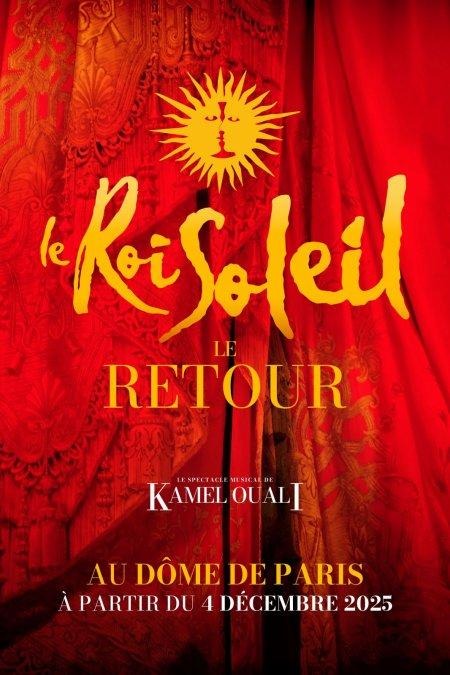
© 2026 Le Roi Soleil • Décibels Productions
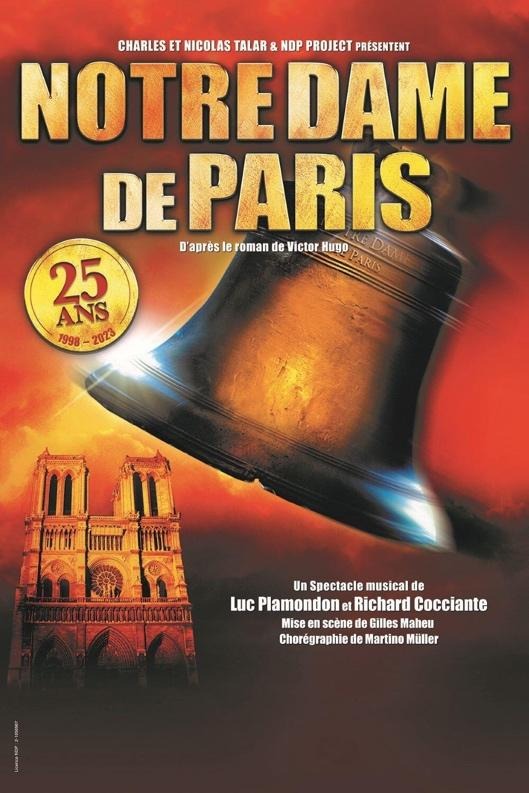
Notre-Dame de Paris, official poster of the show of Luc Plamondon et Richard Cocciante (© NDP Project)
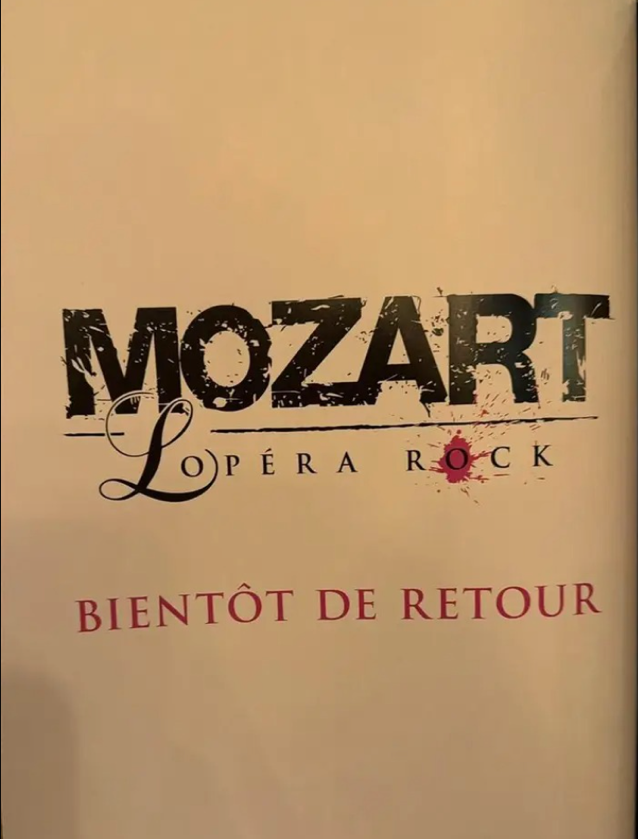
Image credit: visual taken from the program of Le Roi Soleil evoking the return of Mozart, l’Opéra Rock, shared by Marine Level on social media.
To better understand this phenomenon, it is necessary to look back at the role musicals played in France in the 2000s. Indeed, if musicals may appear today as a genre that is sometimes poorly regarded or even dismissed in France, this has not always been the case. It is enough to recall the early 2000s, when musicals were major successes driven by hit songs. Many of these productions are now regarded as emblematic works of French culture and heritage.
These emblematic productions are described by the researcher and specialist in French musical theatre, Bernard Jeannot Guérin, as forms of industrial production, belonging to an era of “producer-led shows” (“spectacles de producteurs”). This era corresponds to a moment in which the genre stabilized around a star system, the creation of hit songs, and a production logic closely tied to the record industry. Musicals from this period were not conceived solely as stage performances, but as global projects. It involved stakes that go beyond theatrical performance alone and carried the expectations of a wide range of stakeholders (Bernard Jeannot Guérin, 2019).
“Belle”, “Les Rois du Monde”, “L’Assassymphonie”, “L’Envie d’aimer”… These songs are not merely derived from musicals. They became genuine hits, circulating widely on radio and television independently of the shows from which they originated.
To give a few figures, “Les Rois du Monde” from the musical Roméo et Juliette remained number one for 17 weeks and stayed in the Top 100 for 39 weeks, selling 1.500.000 copies in France. These hits have become embedded in French popular culture to the point that one could know the songs without knowing the musical.
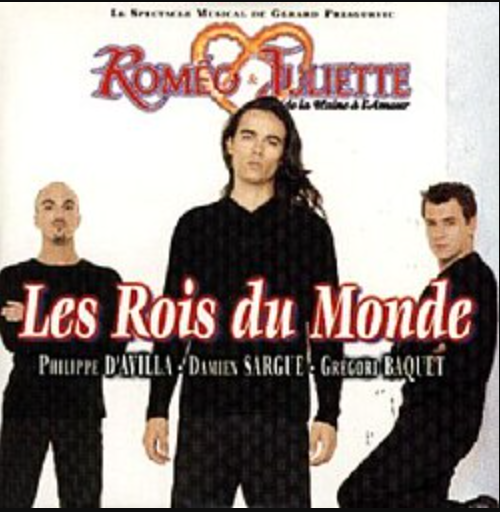
Image credit: « Les Rois du Monde », single from the musical Roméo et Juliette (© Dove Attia / Gérard Presgurvic)
These successes of the 2000s undoubtedly explain why these musicals are returning today. But beyond nostalgia, what does this wave of revivals actually produce? The current success of these revivals is undeniable. Enthusiasm is visible both in theaters and on social media. The reception of Le Roi Soleil and the announcement of Roméo et Juliette testify the shared excitement surrounding these returns.
The aim here is not to judge whether these returns are good or bad, but to understand what they concretely generate within the landscape of French musical theatre.
On the one hand, within this movement, the main concern is not so much the commercial nature of musical theatre, but the way it is expressed today. Musicals are designed to reach a wide audience and fill venues. This is also the very purpose of live performance: to be heard, seen, and shared. Historically, strategies such as hit songs or the star system, have supported the circulation and sales that characterized the industrial era of French musical theatre. Producers can hardly be blamed for seeking to fill theatres and ensure the success of their production through this revival strategy.
The issue rather lies in the growing dominance of a logic of risk management, which seems to be imposed at the expense of creation and innovation. This shift occurs in a context of crisis affecting the sector and, more broadly, the economy. The repeated recourse to revivals is not specific to musical theatre. It fits into a broader logic and is particularly characteristic of cinema. Cultural production is marked by a high degree of uncertainty: no one can predict success in advance, and each work is a gamble. Faced with this structural risk, cultural industries have developed risk-management strategies, which in cinema take the form of franchises, remakes, sequels, and reboots. The idea is to limit the economic uncertainty inherent in cultural production.
When transposed to the field of musical theatre, this can also be understood as a form of security for audiences. By already knowing these shows, audiences have a clearer sense of what to expect and therefore take fewer risks in their choices of cultural outings. This occurs in a context where musicals are costly and inflation weighs on household spending, particularly on cultural experiences.
This convergence of expectations nevertheless raises a central question: will French musicals become part of a model in which the pursuit of economic guarantees comes at the expense of creation? This is where my main frustration lies. I want to walk into a theatre and be surprised by an original story, discover new songs, and rediscover that sense of amazement in front of a new show. Of course, it would be illusory to claim that creation has disappeared: new shows are still being produced, but what concerns me more is the growing tendency for revivals establishing themselves as the norm.
On the other hand, it would be reductive to claim that all revivals produce exactly the same effects. Some, on the contrary, manage to offer genuine artistic reinterpretations. To cite just one: Starmania in Thomas Jolly’s version is undoubtedly the strongest counterexample to my previous argument. Far from a simple reconstruction, the staging succeeds in proposing a true artistic re-reading, through adaptation and a new stage direction that firmly anchors the work in the present. Conversely, other revivals leave a far more mixed impression. When productions seek to reproduce almost identically the original shows that were once immense successes, comparison with the original becomes inevitable. This often results in more modest sets, simplified costumes, reduced casts, and an excessive reliance on screens.
These elements can sometimes give the impression of a trade-off between financial deficits and artistic deficits.
These revivals are not necessarily problematic in themselves. Bringing a show back to the stage also makes it possible to pass it on to new generations. It also allows audiences who did not experience it at the time of its creation the opportunity to encounter major works. Moreover, revivals may appear controversial mainly to French audiences, for whom they have not traditionally been the norm.
If we look at Broadway or the West End, the revival of a show constitutes a norm, a structural practice of musical theatre. For example, during the 2024-2025 Broadway season, of the 43 new productions that opened, 10 were revivals (5 musicals and 5 plays), representing nearly a quarter of all new openings. Similar proportions can also be observed in the previous season. This regular presence of revivals in theatre programs is far from marginal and instead forms part of the normal production cycle. This can be illustrated by West Side Story, which has been revived on Broadway multiple times between 1957 and 2020.
In London, the practice of revivals is also part of the standard functioning of the West End. Several landmark musicals have been performed without interruption for decades: Les Misérables since 1985, The Phantom of the Opera since 1986, and Mamma Mia! since 1999. At the same time, musicals such as Oklahoma!, Gypsy, or Sweeney Todd are regularly revived. Revival here reflects less a deficit of creation than a repertoire-based logic, in which works circulate and evolve in meaning over time.
The difference may lie less in the practices themselves than in how they are perceived. Whereas revivals are seen elsewhere as a legitimate form of continuity, in France they remain associated with the idea of a lack of renewal. Indeed, audiences have gradually become accustomed to a dynamic of creation driven by emblematic producers such as Dove Attia, helping to establish the idea of a constant renewal of the genre.
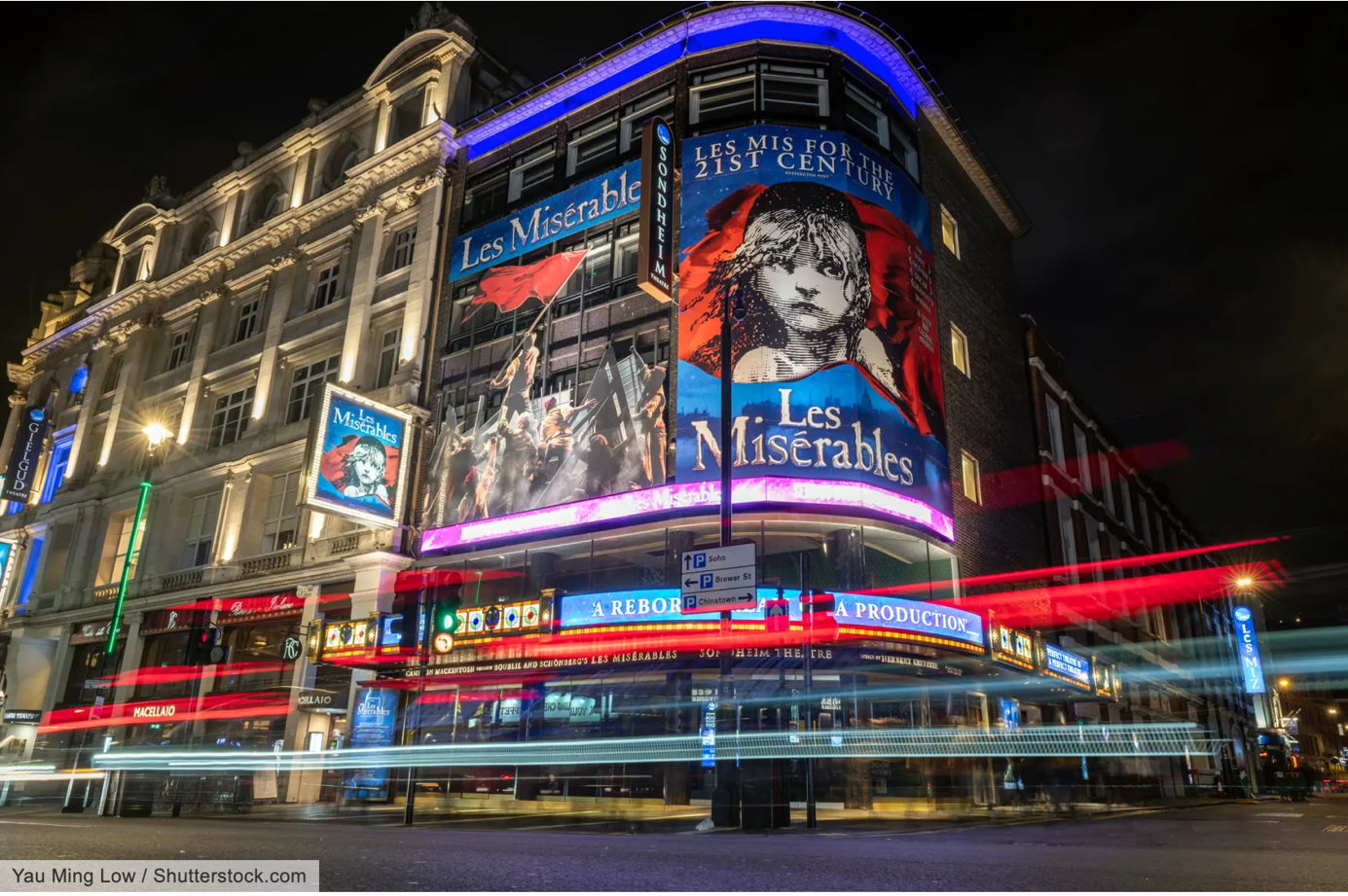
Image credit: Les Misérables at the West End, London – Yau Ming Low / Shutterstock
In order to conclude, it is worth mentioning that nostalgia does not necessarily imply a return to the exact same form. Indeed, it can also become a point of support for inventing new forms and renewing the audience’s relationship with musical theatre. Some projects fit precisely within this logic, using classic French musicals not as an end in themselves, but as a medium for creation.
This is notably the case with Starmusical, a musical built from classic French musicals and featuring artists from these iconic productions reprising their roles. It constitutes a genuine mise en abyme in which both the narrative and the staging question the very history of the genre. Le spectacle des comédies musicales is another format that draws on classic French musicals, but takes the form of a concert, once again led by major figures of musical theatre. The aim is to keep this music alive and to maintain a connection with this audience.
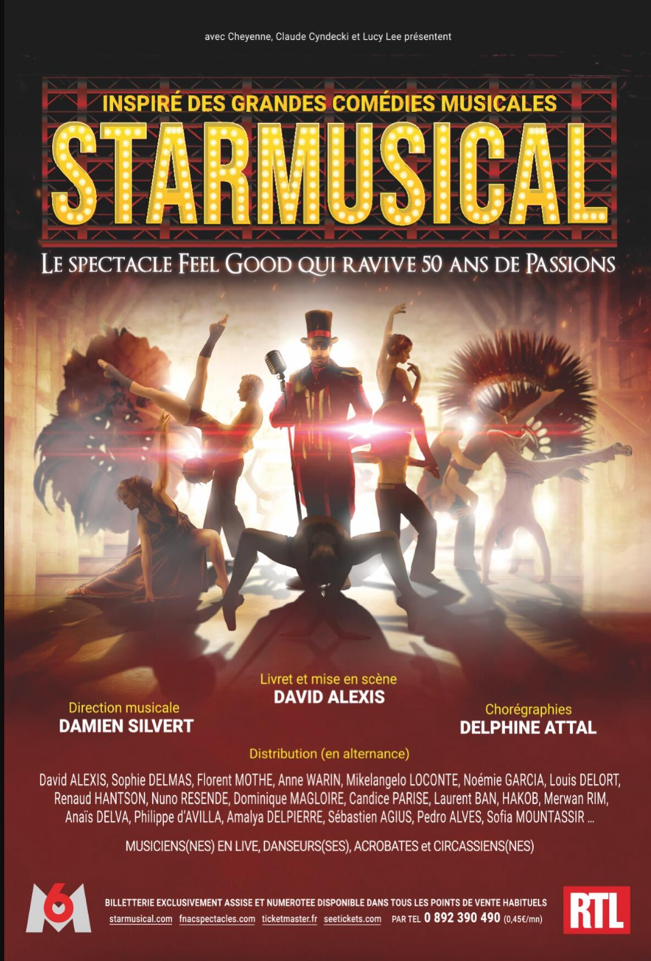
Image credit: Official poster of Starmusical, promotional visual for the show (© Starmusical)
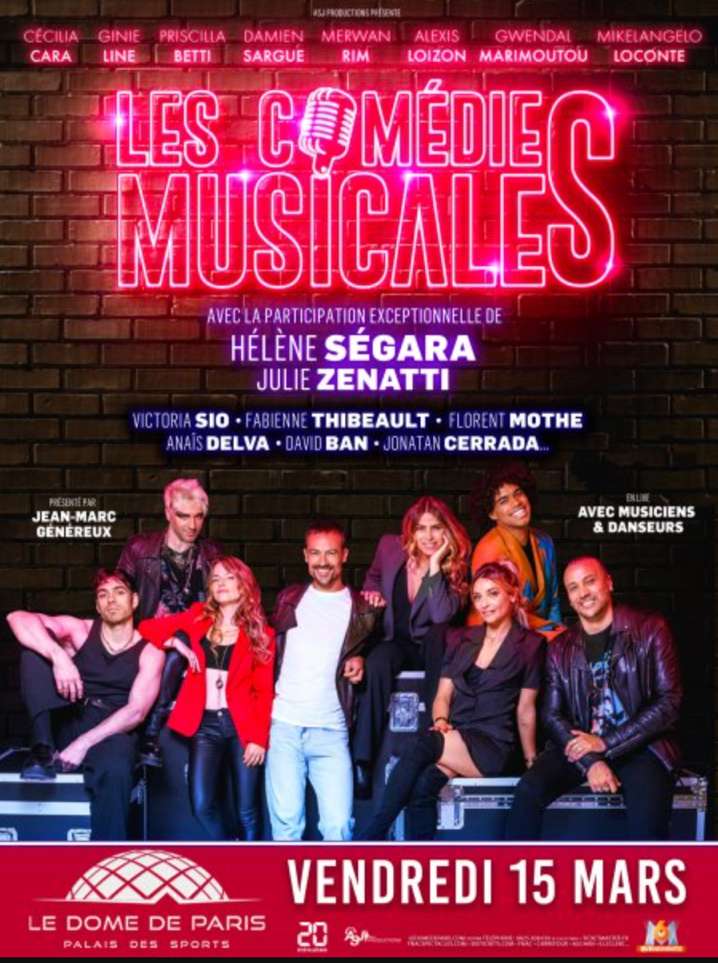
Image credit: Official poster of the show Les Comédies Musicales (© Les Comédies Musicales)
One question remains open: can nostalgia still function as a creative driving force, or does it now signal the limits of a model in search of renewal?
Written by Caroline Jabre
SOURCES:
- https://www.radiofrance.fr/franceinter/podcasts/le-mag-de-la-vie-culturelle/le-mag-de-la-vie-culturelle-du-lundi-01-decembre-2025-2547831
- https://fr.wikipedia.org/wiki/Les_Rois_du_monde
- https://lesmusicales.hypotheses.org/author/lesmusicales
- https://lesmusicales.hypotheses.org/504
- https://www.ibdb.com/broadway-show/the-lion-king-5421
- https://www.broadwayleague.com/press/press-releases/broadways-2024-2025-season-wraps-with-147-million-attendances-and-grosses-of-189-billion/
