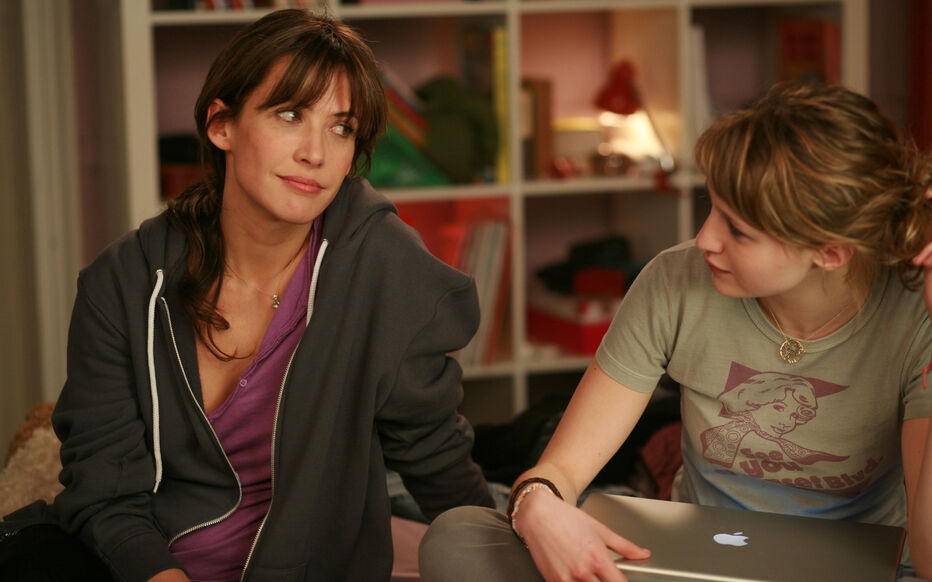
Sixteen years after the release of LOL (Laughing Out Loud), Lisa Azuelos and the small family at the heart of the film return to the big screen with LOL 2.0. From the very first notes of Little Sister by Jean-Philippe Verdin, the cult track that opened the original film and reappears in the sequel, nostalgia instantly settles in. The music alone is enough to reconnect generations of viewers to the tender and romantic universe that made LOL so memorable.
Released in 2009, LOL followed the daily life of a teenage girl navigating her first heartbreaks, fragile friendships and a complicated relationship with her mother. These intimate and often clumsy moments resonated with an entire generation, turning the film into a nostalgic refuge, a soft and reassuring space many still return to when life feels overwhelming, especially during long winter months when time seems to slow down.
Rewatching LOL today also means recognizing what it revealed about its era. The adolescence it portrays is largely white, heterosexual and socially privileged, presented as a universal experience. Sixteen years later, LOL 2.0 revisits this world with the intention of updating it, offering a more contemporary view of youth while preserving the emotional foundations that made the original film so beloved.
It was therefore with both curiosity and genuine warmth that I attended the preview screening of LOL 2.0, ready to see how this sequel reflects the evolution of a generation, while holding on to what still matters most: family, connection, and the comforting feeling of coming home to a familiar story.
LOL (2009): A gentle portrait of adolescence
At its core, LOL is not just a teenage romance but a family film. The relationship between Lola and her mother Anne, played by Sophie Marceau, gives the story its emotional depth. Misunderstandings, arguments and reconciliations unfold with sincerity, capturing the difficulty of communicating across generations.
The film’s strength lies in its simplicity. It does not seek to shock or provoke, but to reflect the emotional intensity of growing up. For many viewers, this honesty is what turned LOL into a cult film. It offered a vision of adolescence that felt safe, familiar and deeply comforting.
Yet this softness also came with limits. The film rarely steps outside its social bubble and avoids addressing broader issues of diversity or inequality. Still, its emotional truth explains why it has remained so present in collective memory.
A more inclusive gaze, still within the same world
With LOL 2.0, Lisa Azuelos clearly attempts to respond to the evolution of social norms. The sequel introduces more diverse characters and reflects greater awareness of contemporary issues surrounding identity and self-expression. Gender roles feel slightly less rigid, and the film acknowledges the complexity of modern teenage life.
However, this evolution remains measured. The story continues to unfold within a very comfortable social environment, where material security is never questioned. LOL 2.0 does not radically break with the universe of the original film; instead, it gently adjusts it.
Rather than a reinvention, the sequel feels like a continuation shaped by time. It mirrors a generation that has grown older, while observing a younger one trying to find its place in a world that has become more demanding and more visible.
Screens everywhere, but life happens elsewhere
One of the most striking differences between LOL and LOL 2.0 is the presence of technology. In the sequel, smartphones and social networks are everywhere. Messages, video calls and screen inserts visually represent how connected life has become, especially for younger generations.
The idea is relevant. LOL 2.0 captures how social media shapes relationships and self-image, and how personal moments are constantly filtered through screens. At times, however, this visual insistence feels a little forced, as if the film is trying hard to prove that it belongs to the present moment, to look modern and “watchable”.
Yet the film’s most powerful scenes are never digital. They unfold in real life, away from screens. When Théo, played by Victor Belmondo, tells his mother Anne that he is going to become a father: the scene is simple and quiet, and its emotional strength comes precisely from that simplicity.
The same is true of the SMS exchanges signed “K LIN”, a tender reminder of the first film. These messages symbolize the fragile but enduring bond between mother and daughter, a bond that ultimately leads to moments of reconciliation, where words give way to embraces.In the end, LOL 2.0 reminds us that technology may frame our lives, but it does not define what truly matters.
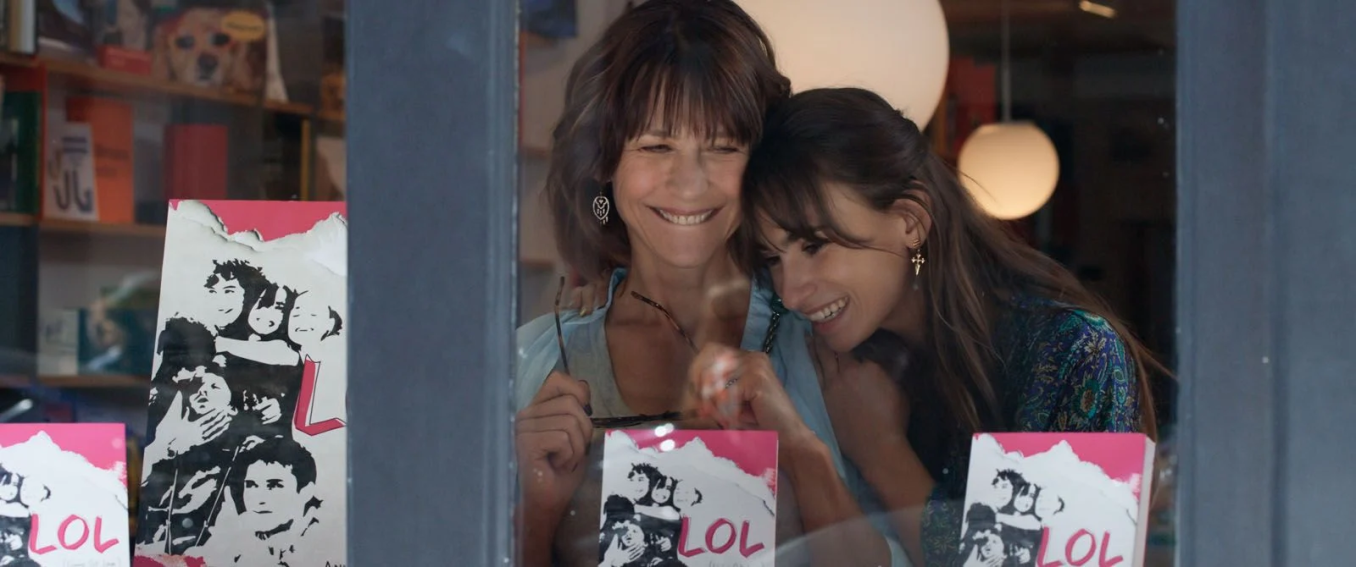
Family as an anchor
At the heart of LOL 2.0 is Louise, played by Thaïs Alessandrin, the younger sister of Lola and the film’s main character. After a painful breakup and a professional failure, Louise finds herself lost and disconnected.
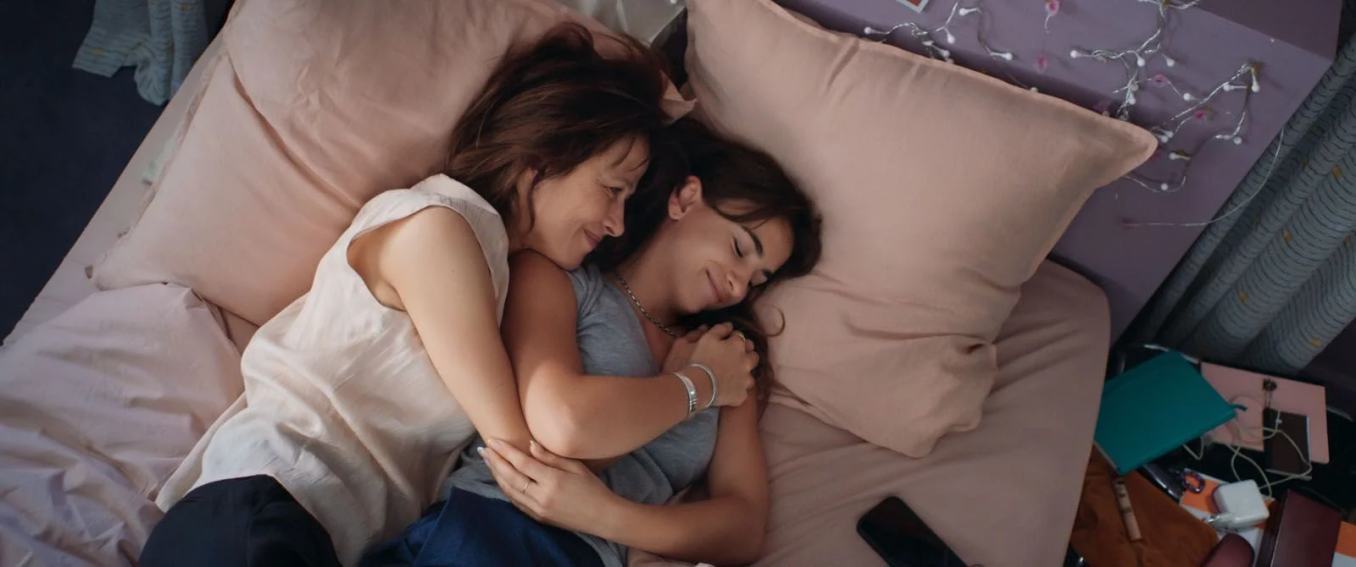
What allows her to regain balance is not success, performance or visibility, but family. Through imperfect conversations, moments of support and shared vulnerability, Louise slowly finds her way back to herself. The film suggests that while the world may move faster and expectations may grow heavier, family remains a place where one can pause, fall and start again.This idea echoes one of the film’s most meaningful lines: “It’s not time that passes; it’s us who pass.” Rather than lamenting change, LOL 2.0 invites viewers to accept it with tenderness.
Why films like LOL still matter
LOL and LOL 2.0 are not films that aim to challenge cinema or society. They are deliberately softened, sometimes idealized, and emotionally accessible. But this is precisely their value.
In a cultural landscape often driven by urgency, irony and constant critique, films like these offer something different. They preserve a form of innocence, a space where emotions are taken seriously and comfort is not seen as a weakness. They allow viewers to reconnect with their inner child and to remember that vulnerability can be a source of strength.
Ultimately, these films remind us that not all stories need to be radical to be meaningful. Some simply need to make us feel understood. And sometimes, that is more than enough.
Sources
Wikipedia. LOL (film).
https://fr.wikipedia.org/wiki/LOL_(film)
Cosmopolitan France (2024). 16 ans après sa sortie, le film culte LOL va avoir droit à une suite.
https://www.cosmopolitan.fr/16-ans-apres-sa-sortie-le-film-culte-lol-avec-sophie-marceau-va-avoir-droit-a-une-suite-et-on-a-une-date-de-sortie,2131666.asp
Première (2024). Sophie Marceau a dit oui: LOL 2 est annoncé par Lisa Azuelos.
https://www.premiere.fr/cinema/news-cinema/sophie-marceau-a-dit-oui-lol-2-annonce-par-lisa-azuelos
L’Éclaireur Fnac (2024). LOL est-il toujours aussi culte 17 ans après?
https://leclaireur.fnac.com/article/cp69897-sexualite-jeunesse-doree-et-parentalite-lol-est-il-toujours-aussi-culte-17-ans-apres/
