In the modern world, social media no longer merely connects people: it shapes public debate.
In the context of Gaza, long kept at a distance from major international newsrooms, these platforms have played a key role. A video goes viral, a photograph circulates, a testimony moves people—and suddenly, the world is watching.
But in times of war, this phenomenon goes far beyond simple opinion exchange. Images are no longer just content: they become evidence. Traces. An attempt to capture history where words sometimes fall short. But social media is not the only driver of change, art is too.
So what can art really do in the face of war?
Cinema: Feeling Rather Than Seeing
Cinema has long played a powerful role in shaping how societies perceive war. It does not simply reflect reality; it interprets, dramatizes, and often influences public opinion. In the context of modern conflicts such as Gaza, cinema becomes not only a storytelling medium but also a political and emotional force that can deeply impact both international understanding and individual mentalities.
First, cinema has the ability to humanize war. News reports often present conflicts through statistics, brief footage, and political discourse, which can create emotional distance. Films, on the other hand, focus on individual lives. They tell stories of families, children, soldiers, and civilians, allowing audiences to connect emotionally. In the case of Gaza, where the conflict is complex and ongoing, cinematic representations can highlight the daily realities of people living under constant tension. By showing personal struggles, fear, loss, and resilience, cinema transforms abstract geopolitical issues into human experiences that viewers can empathize with.
Moreover, cinema can influence how a war is remembered and understood globally. The perspective adopted by filmmakers—whether Palestinian, Israeli, or international—shapes the narrative. This is crucial in a conflict like Gaza, where information is often contested and politicized. Films can either reinforce dominant narratives or challenge them by presenting alternative viewpoints. For example, a film focusing on civilian suffering in Gaza might shift audience perceptions by emphasizing humanitarian concerns over political arguments. In this way, cinema becomes a tool that can question biases and encourage critical thinking.
However, cinema can also simplify or distort reality. Because films are designed to engage audiences, they often rely on dramatic storytelling, clear protagonists, and emotional intensity. This can lead to oversimplification of complex conflicts. In the case of Gaza, where historical, religious, and political dimensions are deeply intertwined, reducing the situation to a binary narrative of “good versus evil” can reinforce stereotypes and misunderstandings. Therefore, while cinema has the power to inform, it also carries the risk of misrepresentation.
Another important impact of cinema is its role in shaping collective memory and long-term mentalities. The images and stories presented on screen can remain in people’s minds for years, influencing how future generations understand a conflict. For viewers who have never experienced war directly, films may become their primary reference point. This is particularly significant for Gaza, as ongoing media coverage combined with cinematic portrayals can create a lasting emotional imprint. These representations can foster empathy and solidarity, but they can also contribute to polarization depending on how the story is told.
Cinema also plays a role in activism and awareness. Documentaries and independent films about Gaza often aim to shed light on underreported aspects of the conflict. They can mobilize audiences, inspire discussions, and even influence public opinion and policy debates. In a globalized world, where social media and streaming platforms allow films to reach wide audiences, the impact of cinema is stronger than ever. A single film can spark international conversations and bring attention to humanitarian issues that might otherwise be overlooked.
Finally, cinema affects individual mentalities by shaping emotional responses. Watching a film about war can evoke empathy, anger, sadness, or even a desire for justice. These emotional reactions can influence how people think about conflict, peace, and human rights. In the context of Gaza, where images of destruction and suffering are already widespread, cinematic storytelling can deepen emotional engagement and encourage viewers to reflect on their own values and beliefs.
In conclusion, cinema has a profound impact on how wars are perceived and understood. In the case of Gaza, it serves as both a window into lived experiences and a powerful force that shapes global narratives and individual mentalities. While it has the potential to foster empathy and awareness, it must also be approached critically, as its influence can both enlighten and mislead.
Take the example of Hind Rajab. Her voice, recorded shortly before her death, became a tragic symbol. One does not hear just a testimony—but fear, innocence, raw humanity.
In a cinema hall, this type of narrative changes everything. The viewer can no longer « scroll. » They are forced to stay, to listen, to feel. Where social media can numb emotion through repetition, cinema imposes silence.

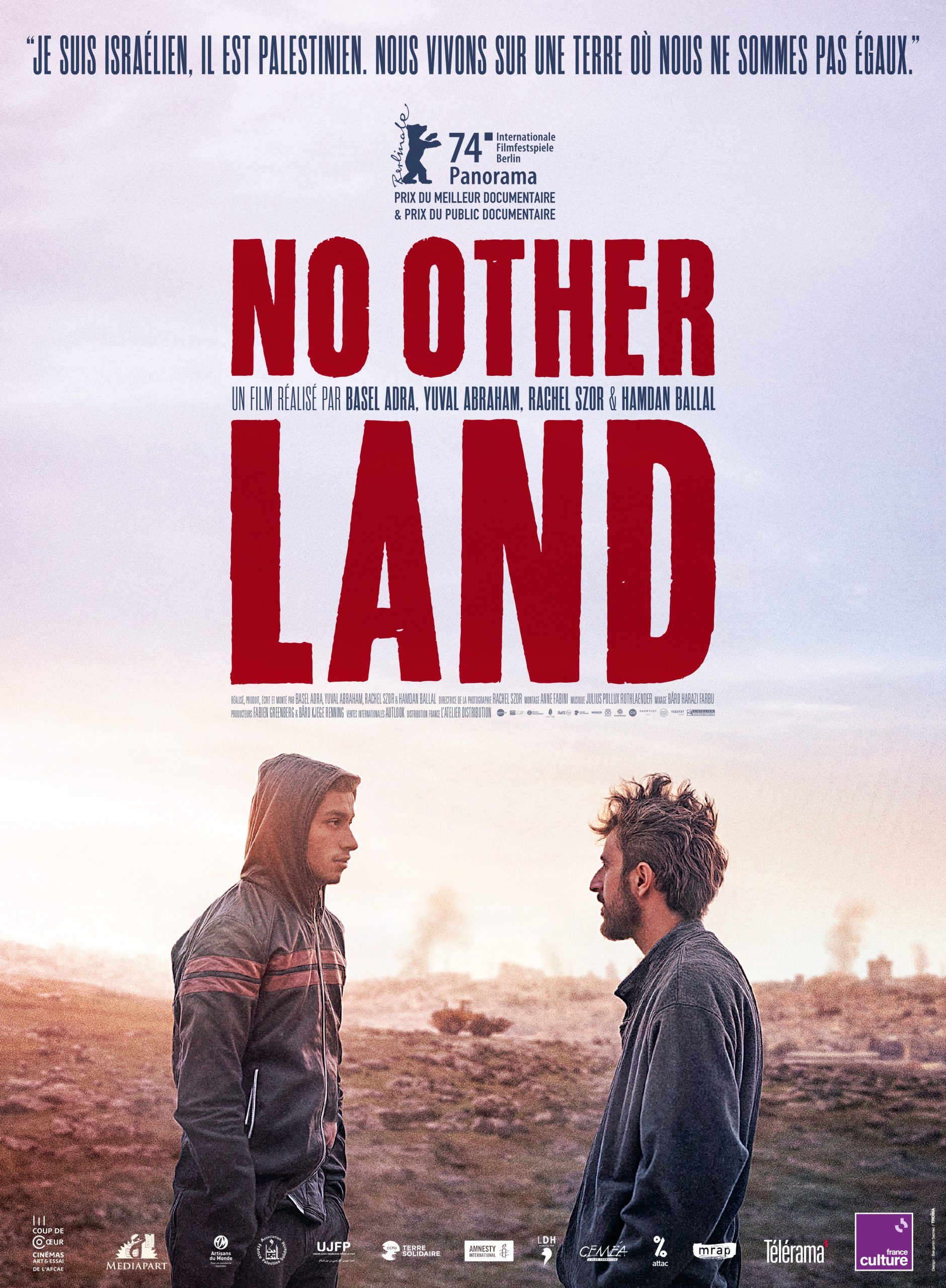
Another illustration: No Other Land.
This documentary follows Palestinians in the West Bank facing evictions and the destruction of their homes. But it does more than show violence. It tells a story. It lingers. It follows lives.
We discover everyday gestures, forms of quiet resistance, moments of dignity amid chaos. It is not fiction, but an immersion into reality. The viewer no longer watches a conflict—they enter a world.
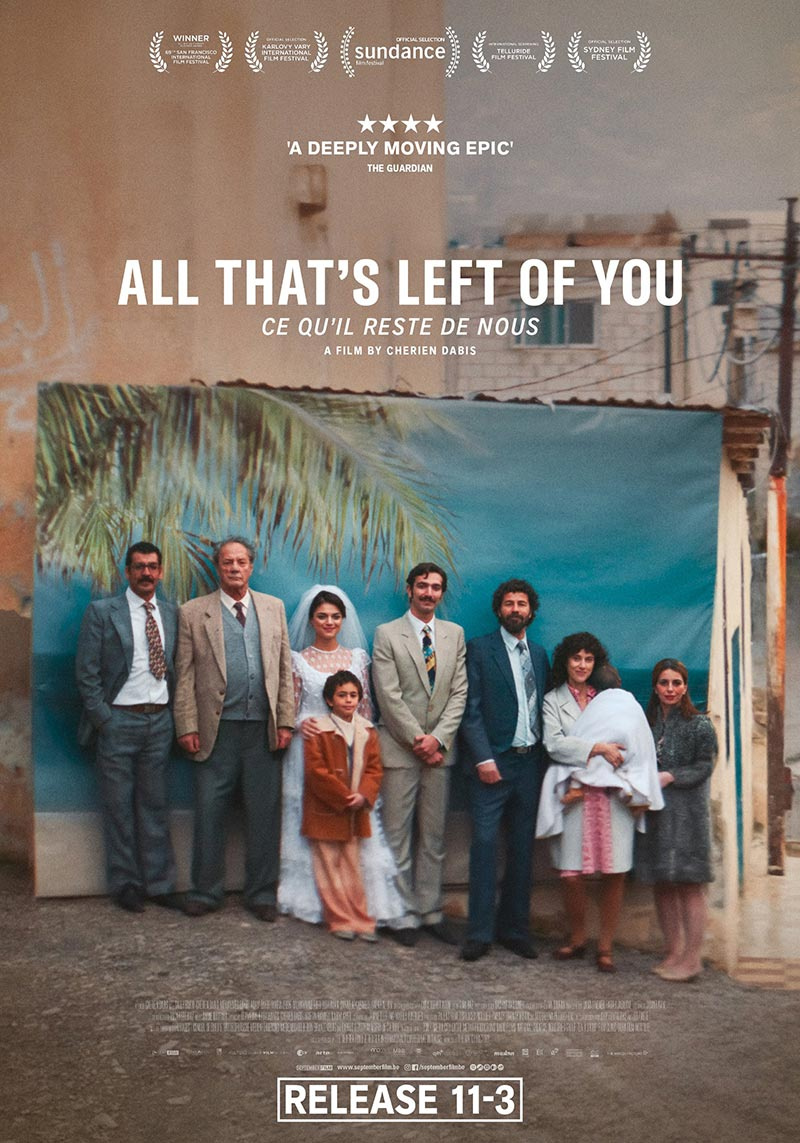
Another striking example: All That’s Left for You, directed by Cherien Dabis.
Here, the film takes a different path. More intimate. Quieter. Through characters confronted with exile, memory, and identity, it explores what war leaves behind: absences, invisible fractures, lives to rebuild. No dramatic exaggeration. No shock images.
Just looks, silences, suspended moments—and a deeper truth: conflicts do not only destroy places, they transform individuals. The viewer no longer just understands. They feel.
Other works like Gaza Surf Club or 5 Broken Cameras continue this approach. They show another reality: that of resilience. Lives that continue, despite everything. Cinema thus becomes a bridge between worlds that never meet.
Photography: Capturing the Moment, Marking History
Cinema is not the only medium that raises awareness. War photography captures the raw instant. Figures like Robert Capa or James Nachtwey have shown how a single image can transcend time and leave a lasting impression. In Gaza today, photojournalists like Mohammed Ballas, Mustafa Hassona, and Abed Rahim Khatib document daily life: the ruins, the displacements, the faces.
Their work circulates both in the media and on social networks. Raw. Direct. Unfiltered.
Photography thus becomes an act of resistance. A memory under construction.
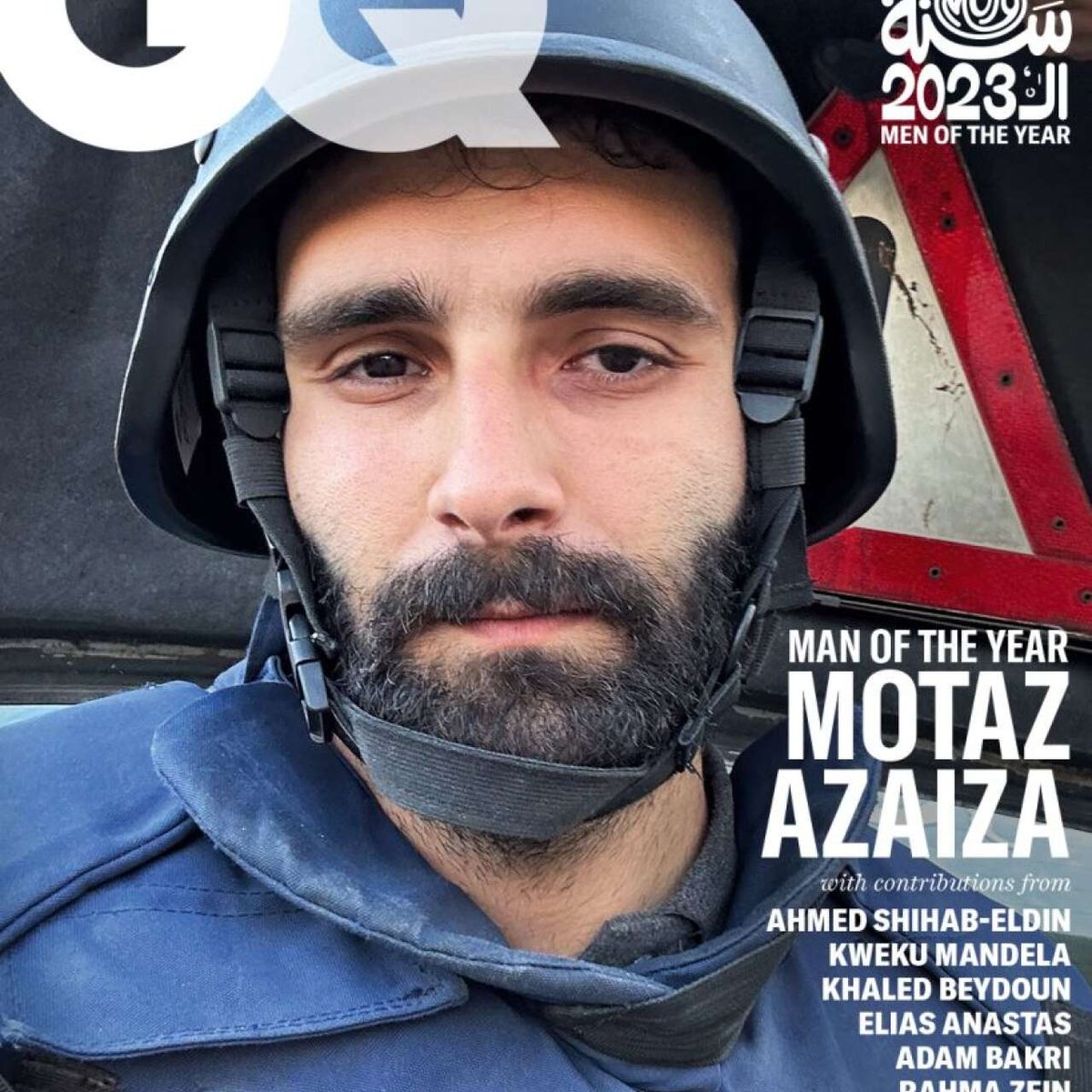
The case of Motaz Azaiza is particularly revealing.
Before 2023, he was little known. Then, within a few weeks, his images traveled the world.
What strikes is not just what he shows—but how he shows it. No staging. No distance. Just reality.
His photograph Seeing Her Through My Camera, showing a young girl under the rubble, left a global impact. A single image, and everything becomes tangible: horror, innocence, vulnerability. Today, he testifies internationally. But his wish remains the same: to show Gaza differently. To show life, not just destruction.
Why do these images move us so deeply?
When faced with certain images or testimonies, the reaction is immediate: discomfort, emotion, sometimes even shock. But why? Why do some scenes leave a lasting mark while others slide past us without a trace? The answer lies largely in a simple mechanism: identification.
When a face appears, when a voice is heard, the conflict ceases to be abstract. It becomes human. We no longer talk about thousands of victims, but about a single person we can relate to. The emotion comes not just from what is told, but from how it is experienced and perceived.
The human brain is indeed poorly attuned to large numbers. A statistic, however tragic, remains difficult to grasp emotionally. In contrast, a gaze, a silence, an expression—these elements directly activate our empathy. Seeing a child, hearing a ragged breath, observing a gesture of fear or tenderness: these are signals that reconnect us with our own humanity.
Proximity also matters. Even if the conflict is geographically distant, images create an immediate connection. They erase distance. A screen becomes a window. And suddenly, what seemed far away becomes almost intimate.
But this emotional power has a downside. When exposed to strong images repeatedly, the viewer can develop fatigue or even detachment. Emotion, overstimulated, can sometimes dull. This is the paradox of our time: never have we been so exposed to the world’s suffering, and yet it sometimes becomes difficult to feel it fully.
This is where the role of cinema and art becomes crucial. By slowing down the gaze, providing context, and building a narrative, they allow us to move beyond immediate reaction to a deeper understanding. Where a single image can shock or vanish, a story endures.
Thus, it is not only the images that move us—but the way they allow us to recognize ourselves in others.
Concrete Impact: Can Art Really Change Anything?
In the face of large-scale conflicts, a question often arises: what is the practical use of art? Can it truly have an impact, or does it only provoke a fleeting emotion?
At first glance, the answer seems obvious. A film does not stop a war. A photograph does not rebuild a city. A work of art does not directly save lives. Yet, reducing art to its immediate inefficiency misses its true power. Its impact lies elsewhere. More diffuse, slower—but profoundly real.
Art acts first on consciousness. By revealing ignored or invisible realities, it helps bring issues into the public sphere. A documentary, an image, or a testimony can transform a distant situation into a collective concern. They draw attention, spark discussions, and sometimes even influence how media or institutions engage with a conflict.
This awakening can then translate into concrete action. Awareness can lead to mobilizations, donations to humanitarian organizations, or increased pressure on political decision-makers. Art does not directly cause these changes, but it is often the starting point.
However, this impact remains fragile. Emotion does not guarantee engagement. One can be deeply moved… and then move on. In a world saturated with information, even the strongest images can dissolve into the flow.
This is the ambiguity: art has the power to leave a mark, but not always to transform things permanently.
Conclusion: Creating to Remember
Art does not stop bombs. But it prevents erasure. Photography documents. Video testifies. Cinema provides context.
In a world saturated with images, these artistic forms give meaning. They transform the moment into memory. They compel us to see, to understand, to feel. To bear witness is already to resist.
And through every image, every film, every story, art becomes a bulwark against indifference—a way of preserving, despite everything, the humanity of those living at the heart of conflict.
Written by Lucas
