As public funding becomes increasingly constrained, cultural institutions are exploring new ways to finance their missions.
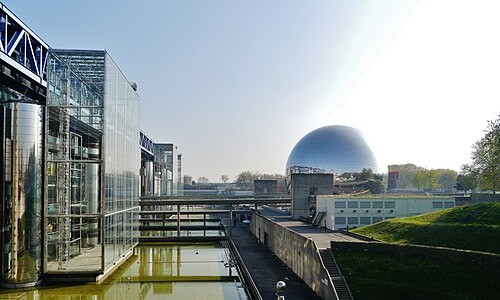
Facade of the Cité des Sciences et de l’Industrie and the Géode in Paris
One fact is clear: no “musée de France” is currently profitable, with the exception of the Musée Rodin, which is the only one to be entirely self-financed, without government subsidies. The vast majority of museums therefore remain dependent on government support, even as the economic environment becomes increasingly constrained. In July 2026, artists and cultural sector professionals notably called, through a petition, for at least 1% of the State budget to be allocated to culture. Faced with the risk of declining public subsidies, museums are therefore seeking to gradually increase their financial independence, particularly by developing own-source revenues.
Own-source revenues refer to all income generated by an institution’s activities or directly collected by the institution itself. However, not all museums have the same capacity to generate such revenues. The Louvre and the Musée d’Orsay, for example, generate around 60% of their budgets through own-source revenues, while the Grand Palais approaches 80%. More broadly, within the cultural sector, some institutions go even further: the Château de Chambord, for instance, reaches an own-source revenue ratio of 105%. By contrast, own-source revenues account for less than 30% of the budget of the Cité des sciences et de l’industrie. This difference has very concrete implications for the cost borne by the public sector: each visitor to the Cité costs the public sector approximately €50, compared with only €8 for a visitor to the Musée d’Orsay. These differences therefore raise a central question: how can museums develop their own-source revenues while preserving their cultural mission and ensuring public accessibility?
The Cité des sciences et de l’industrie and a Financial Model Under Pressure
What, then, about the Cité des sciences et de l’industrie? A report published by the French Court of Auditors in July 2026 paints a concerning picture of the financial situation of Universcience, the public institution that brings together the Cité des sciences et de l’industrie and the Palais de la découverte. Between 2018 and 2024, its net result fell from +€4.1 million to -€20.1 million. This deterioration can be explained by a double effect: a 7.1% decline in revenue, notably due to lower visitor numbers during the COVID-19 pandemic and the closure of the Palais de la découverte, combined with a 10.4% increase in expenditure. The Court of Auditors also highlights the need to reassess certain activities and make better use of some of the institution’s spaces, while Universcience must simultaneously finance the renovation of the Cité and the ambitious renovation project for the Palais de la découverte, estimated at more than €50 million.
In this context, two main levers are available: reducing expenditure or increasing revenue. However, while cost-cutting measures can quickly become a source of industrial relations tensions in an institution that has been established for several decades, developing own-source revenues offers an alternative lever. The question is therefore which revenues should be developed. Examples from other cultural institutions show that there is no single model: some have focused on corporate. sponsorship, while others have developed commercial activities, their venues, their brand or the monetisation of their content.
What If Businesses Became True Partners to Museums?
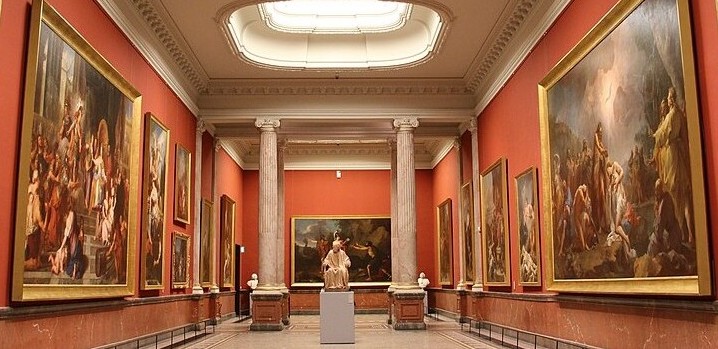
Museum Fabre in Montpellier
The Musée Fabre provides an interesting example of a structured corporate sponsorship model. Established in 2008, its corporate foundation now brings together around thirty regional companies from a range of sectors. Companies commit for three years, contributing €10,000 per year, thereby providing the museum with stable financial support over several years.
These contributions notably help to enrich the museum’s collections: more than 70 works have been acquired for over €3 million in 15 years. To make this commitment attractive to sponsors, the Foundation offers benefits representing up to 25% of the donation amount, including invitations to private events and the possibility of private-hire access to museum spaces.
The value of this scheme therefore extends beyond its cultural dimension: the Foundation also serves as a networking platform where companies can exchange ideas about their activities, business and finance while benefiting from the museum’s privileged setting. Its independence also allows the Foundation to organise three to four events each year according to sponsors’ expectations and to foster the development of a genuine professional network.
The Louvre, meanwhile, has taken a longer-term approach to fundraising. In 2007, it established the first museum endowment fund in France, inspired by Anglo-Saxon endowment funds. The objective is no longer to directly finance a specific project, but rather to build an endowment capable of generating sustainable income over time.
The endowment’s capital is invested and generates financial returns, which are then used to support the museum. According to the French Ministry of Culture, by the end of 2024 the fund held approximately €380 million in assets, with a cumulative performance of 116% since 2011, and had contributed €24 million to the Louvre in 2024.
These two examples show that corporate philanthropy and sponsorship can take different forms: from long-term partnerships with companies to a financial strategy designed to generate sustainable resources.
Ticketing, Retail, Venues: How Far Can Revenue Diversification Go?
Sponsorship is only one lever among many. Some institutions have chosen to diversify their revenue streams by making greater use of their venues, commercial activities and brand.
The Grand Palais generates nearly 80% of its budget through own-source revenues, thanks to a diversification strategy combining ticket sales, venue hire and private events, corporate sponsorship, brand partnerships and the sale of cultural products. It notably has its own publishing house, allowing it to keep this commercial activity in-house rather than outsourcing it, and therefore to retain the revenue it generates when effectively managed. This is particularly relevant at a time when sponsorship strategies are becoming increasingly costly.
The Château de Chambord, meanwhile, reaches 105% in own-source revenues, through a structured revenue-development strategy: a dedicated management team, a five-year economic plan, international audience development, digitalisation and an increase in average visitor spend.
Ticketing accounts for 70% of its own-source revenues, complemented by retail, parking, bicycle rental and catering. Some of these activities are managed directly by Chambord, including two of the site’s restaurants. The institution is also developing its brand through licensing agreements and partnerships.
However, this strategy is also based on a realistic approach: Chambord has, for example, chosen not to manage its online retail operations directly, due to a lack of sufficient in-house expertise. The objective is therefore not to bring every activity in-house, but to determine, for each one, what the institution can realistically manage effectively. These examples therefore raise an essential question: which revenue streams are genuinely suited to the Cité’ model?
What Should the Cité of Tomorrow Look Like? Insights from Emmanuel Ory (Interview from October 2026)

« Space Mission » exhibition at the Cité des Sciences et de l’Industrie
These examples show that cultural institutions have several options when it comes to developing own-source revenues. But what about the Cité des sciences et de l’industrie?
Emmanuel Ory, Deputy Director of Audience Development and Communications at the Cité des sciences et de l’industrie, considers the development of own-source revenues to be “a major issue for the future Cité” , particularly in the context of its renovation. However, the objective should not be reduced to simply “generating revenue” . Rather, it is about building a more diversified economic model by making greater use of the Cité’s assets, whether its spaces, exhibitions, content, brand or expertise.
The renovation therefore represents an opportunity to “rethink certain spaces, how they are used, visitor journeys and the commercial offer” , while incorporating the development of own-source revenues from the very outset of the future institution’s design. Ultimately, the objective is not simply to “generate more turnover”, but to develop activities that genuinely create value for the institution and “improve the net contribution of each activity”. This requires the ability to measure the profitability of each space in relation to visitor numbers and its commercial potential.
For Emmanuel Ory, the most realistic approach is first to optimise existing resources and develop new revenue streams, according to the Cité’s actual capabilities. There is limited potential for increasing ticket revenue, particularly because of the “acceptable psychological price for visitors and the institution’s accessibility mission.”
The challenge is therefore more about increasing average revenue per visitor and making better use of the institution’s spaces, particularly through private-hire arrangements and concessions. Emmanuel Ory sees particular potential, however, in touring and replicating exhibitions and content. These formats make it possible to showcase the Cité’s productions beyond its own premises, generate new revenue and increase its visibility and reach.
The Court of Auditors also highlights the potential of corporate sponsorship, comparing the Cité with European science institutions rather than with organisations such as the Louvre, donations and external sources accounts for only 4% of Universcience’s resources, compared with 28% at the Science Museum in London and 41% at the Copernicus Science Centre in Warsaw. This demonstrates significant room for development in this area, as well as the potential to engage companies around scientific and industrial themes.
Beyond these more traditional revenue streams, however, the Cité has another asset: its “intangible capital,” as Emmanuel Ory points out. Its scientific and cultural expertise, its ability to design exhibitions and develop interpretation and educational programmes, as well as its educational engineering and project management capabilities, represent valuable forms of expertise that could be further developed and offered to other institutions, local authorities and educational stakeholders.
Emmanuel Ory also stresses the potential of “the brand: “Cité des sciences et de l’industrie” brand is an asset that could be further developed while respecting its positioning and missions.” Partnerships, licensing agreements, merchandise and collaborations could therefore help monetise its reputation, content and expertise while strengthening its visibility and reach.
The issue is therefore not to replicate the models of the Louvre, Chambord or the Grand Palais, but to identify, for the Cité, which activities can genuinely create more value than they cost.
Developing Revenue, But at What Cost?
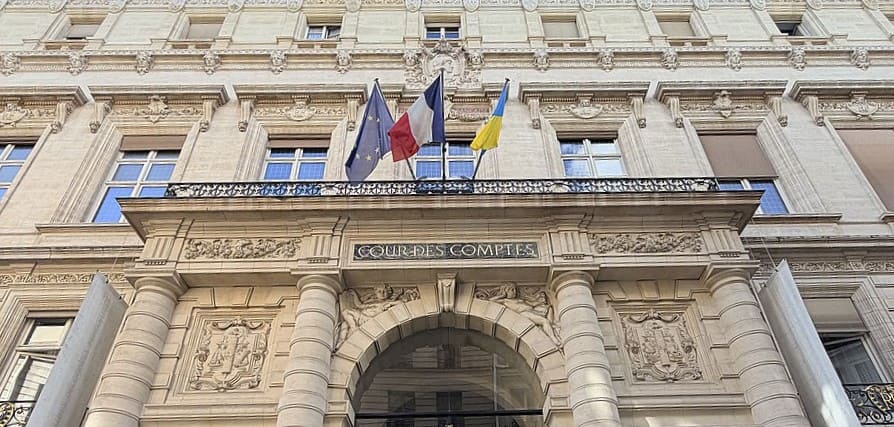
Facade of the Court of Accounts in Paris
Although developing own-source revenues appears to be an important lever, it cannot be considered independently from expenditure. Cost reduction is not necessarily the preferred solution: in an institution that has been established for several decades, such measures can quickly become a source of industrial relations tensions.
The Cité des sciences et de l’industrie is already facing costly labour relations challenges, notably characterised by a significant number of trade union delegation hours and a high absenteeism rate, as highlighted by the Court of Auditors.
The report also calls on Universcience to consider refocusing its activities and reassessing some of its secondary offerings. The library, which costs €4.9 million per year, as well as the aquarium, the Cité de la santé, the Cité des métiers and the Fab Lab, are all questioned by the Court of Auditors, which considers that some of these activities “move away from the museum’s original mission” and that a “strategic reassessment of the secondary offer is” necessary.
The issue is therefore not necessarily to reduce expenditure across the board, but rather to question the relevance and contribution of each activity to the institution’s overall project. An activity may have genuine cultural or social value while still requiring consideration of its cost, operating model or place within the Cité’s future model.
Own-source revenues should therefore not be viewed as a simple race to increase turnover. Their development instead requires strategic choices: which activities should be maintained? Which should be developed? Which should be outsourced? And, above all, which can genuinely strengthen the institution’s overall project?
The examples of the Musée Fabre, the Louvre, the Grand Palais and Chambord demonstrate the many possibilities available to cultural institutions seeking to diversify their revenues: structuring corporate sponsorship, establishing an endowment fund, developing commercial activities, leveraging their brand, or making better use of their spaces and content. Yet none of these strategies can simply be transferred from one institution to another.
For the Cité des sciences et de l’industrie, the renovation represents an opportunity to rethink its economic model by incorporating this reflection from the very outset of the future institution’s design. Its potential appears to lie less in a significant increase in ticket prices than in its ability to make better use of its spaces, content, exhibitions and brand, and above all of the expertise it has developed over the years.
Ultimately, developing own-source revenues does not mean seeking to make museums profitable at all costs. Rather, it can help them reduce their dependence on public funding and give them greater room for manoeuvre to finance their missions. The challenge is ultimately to strike a balance between financial independence, consistency with the cultural mission and public accessibility. For the Cité, the question may therefore not simply be how to generate more revenue, but rather to determine which activities can create sufficient value to contribute to building the economic model of the Cité of tomorrow.
Loanne Fournel
Webography
Cour des comptes. (2026). Public institution of the Palais de la découverte and the Cité des sciences et de l’industrie (Universcience).
https://www.ccomptes.fr/sites/default/files/2026-07/20260707-S2026-0662-Universcience.pdf
Universcience. (2025). 2025 Activity Report.
Musée Fabre. (n.d.). Musée Fabre Corporate Foundation.
https://www.museefabre.fr/fondation-dentreprise-du-musee-fabre
French Ministry of Culture. (n.d.). Endowment Funds: A Practical Guide.
https://www.culture.gouv.fr/thematiques/mecenat/guide-fonds-de-dotation-en-pratique
