Since the mid-2020’s, the traditional political banners in street protests are surrounded by the drawing of a skull wearing a straw hat. This is the Jolly Roger – the ensign flown by a pirate ship – of Monkey D. Luffy, protagonist of Eiichiro Oda’s manga One Piece.
What began in 1997 as a serialized manga has quietly evolved into one of the strongest visual symbols of global youth culture. For Generation Z, One Piece is no longer just a nostalgic artifact of serial animation; it has been integrated as an iconic framework for resistance and anti-liberalism struggle.
Eiichiro Oda’s social satire
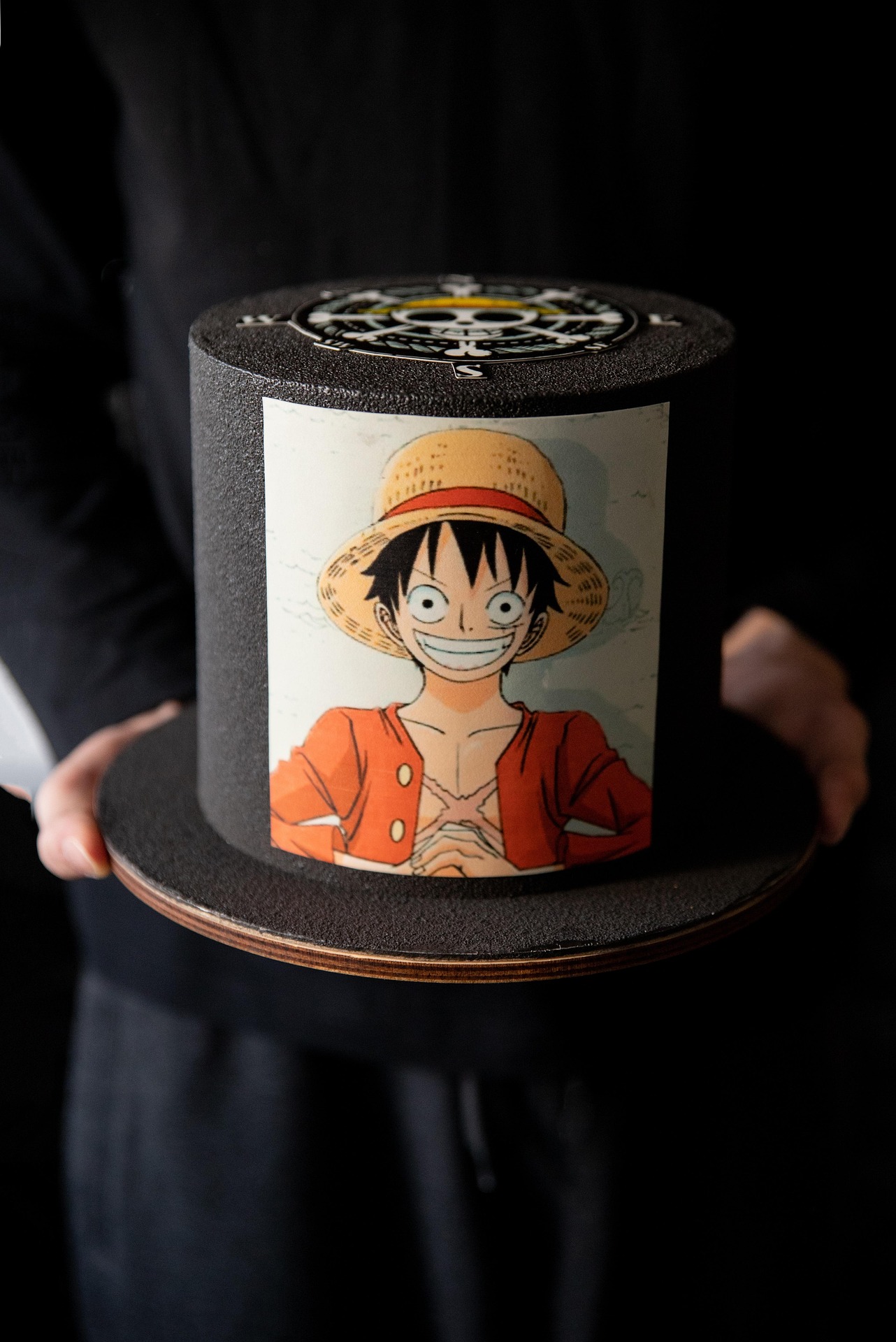
/©Toei Animation / Eiichiro Oda
In the manga, Oda takes great care to satirise authoritarianism through an imaginary world. His iconography is heavily inspired by classical political satire and caricature.
First, the ‘Celestial Dragons’: these characters – visually and fundamentally depicted as the noble class – live above the clouds, draped in white suits, separated from the common world by barriers… They are descendants of the founders of the authoritarian World Government; they own slaves and a lot of privileges; they have their own army that crushes any opposition…
This is an instantly readable metaphor for socio-economic apartheid that appeals new opponents to some real regimes: this is precisely what Gen Z in Nepal criticises about ‘nepo-kids’. And this is precisely what Oda wanted to stress. His Celestial Dragons are indeed directly inspired from the hierarchy implemented by the caste system of the Edo period (1600-1867).
Furthermore, the institutions of state power – such as Marineford – are meant to appear invincible, drawn with imposing symmetric, operating according to their own rules, imposing themselves on anyone who stands in their way, even though they bear the sign ‘JUSTICE’ on their back – reminiscent of a Ministry of Peace waging war in Orwell’s work?
Phedra Derycke, in his book One Piece: leçons de pouvoir (2023), highlights that if One Piece meets such a success with politicized people, it is because the author drew inspiration in many different cultures (e.g., the islands landscapes inspired by real countries) and included plenty of references that allow us all to see ourselves in it and feel connected to it.
The Straw Hat as modern folk art
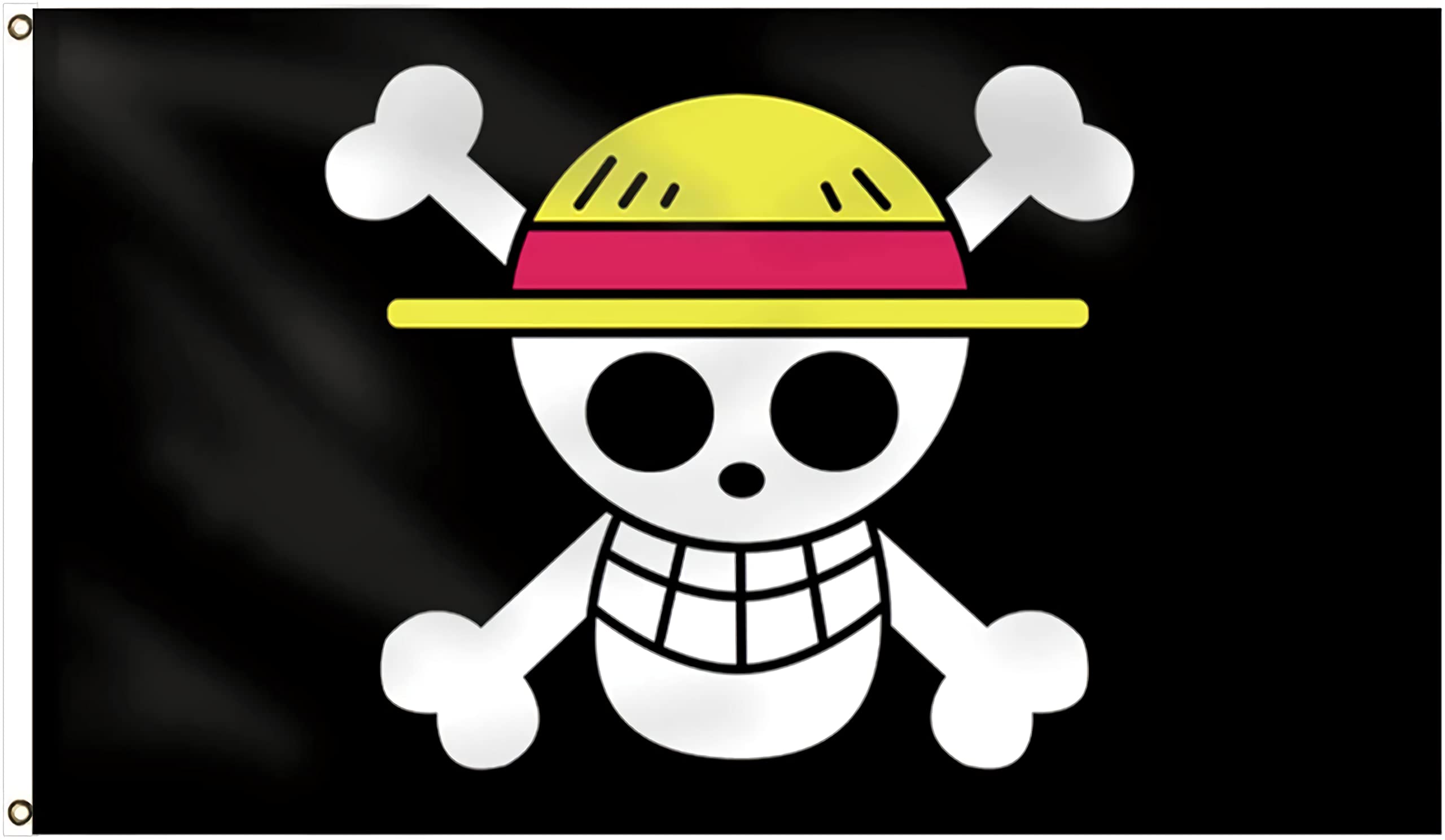
©Jolly Roger, officiel de l’équipage de Chapeau de paille ( Straw Hat Pirates).
In such situations of use, a symbol’s power lies in its scalability and reproducibility. The Straw Hat Jolly Roger stands as high-impact graphic design for different reasons:
- Easy to reproduce: as the symbol comes from an originally drawn work, the minimalist shapes and high contrast make it easy to reproduce and instantly recognizable, even if it is spray-painted.
- Global application: because the symbol is detached from real-world nations, religions or traditional political parties, it operates as a ‘neutral’ signage which can gather everyone no matter where they come from. An activist in France and a student demonstrator in Thailand can use the same flag to express a shared visual anti-ethos without needing a shared verbal language.
- Subversion of the ‘pirate’ motif: historically, pirates represented lawlessness and terror. Oda – and subsequently Gen Z – reclaims the pirate motif as an aesthetic of liberation, defining a pirate not as a criminal but as a freeman who exists outside the control of an oppressive system.
Elisabeth Soulié, an anthropologist who wrote La Génération Z aux rayons X (2020), underlines the “emotional” nature of such “unicity” in this symbol: in a new world paved with technology and social medias, young people come together around a shared imagination that transcends foreign borders. She reminds us that they can mobilise both online and on the streets, thereby increasing their impact.
The Hero who refuses to rule
“I don’t want to conquer anything. I just think the person with the most freedom in this ocean is the Pirate King” (Monkey D. Luffy). Unlike classical heroes who are often saviours or ideological dogmatists, Luffy’s interventions are localized and humanistic. He fights against tyrants not to rule instead of them but to go on himself, and to leave behind him a self-governing community where people can eat and live freely. One example amongst others: in the Arabasta Arc, Luffy sets out to free the people who are dying because of the drought orchestrated by Crocodile – a privateer in the government’s pay, as this injustice fills him with outrage.
The resistance to imposed authority, whether by the Malagasy, the Nepalese or others, finds its counterpart in Oda’s work in a scene etched into the memories of an entire generation: when Luffy breaks the law by striking one of the Celestial Dragons to prevent him from harming innocent people. This scene epitomises the spirit of rebellion.
This reflects a fundamental shift in Gen Z’s cultural art consumption. Young audiences gravitate toward stories centred on mutual aid, decentralized networks and immediate human dignity.
Pop Culture as the new political canvas
We are witnessing a moment where the boundary between mass media and folk activism has completely dissolved. When street protesters adopt anime iconography, they’re engaging in a form of participatory culture. Commercial media becomes therefore a material for political commentary. They use pop culture as a weapon against oppression and are helped a lot by the universality of the symbols they use, which can be reused by the whole planet.
One Piece provides a language for a whole generation facing existential questions, monopolized wealth and digital surveillance. Painting Luffy’s straw hat onto banners and city walls is a new way to consume – more in consciousness and less in entertainment.
The reappropriation of commercial iconography in contemporary social movements marks a fundamental shift in the semiotics of political resistance. Activists convert fiction into an operational visual grammar. Pop culture provides a pre-existing emotional vocabulary; participants do not need any formal political training to understand what flying the Jolly Roger of Luffy signifies, no more than to understand what wearing a red cloak and white bonnet – from the adaptation in TV series of The Handmaid’s Tale – means for women rights struggle throughout the world. Important point: this new way of protesting democratizes participation to civil opposition in the field of politics.
written by Eloise