From beauty to emotion: how art has changed its face
Art history is often seen as a succession of aesthetic movements. However, if we examine this evolution of art from a sociological and economic perspective, we realise that it represents a genuine transformation of its very function within society. Once the benchmark of beauty and an instrument of sublimation, art has gradually broken free from classical representation to explore the realms of the sensory, the conceptual and the intimate.
From the cult of beauty to institutional commissions
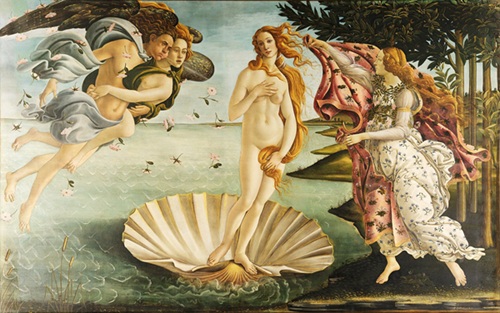
For centuries, the value of a work of art was measured by its ability to achieve the ideal of beauty. Whether in Greek sculpture or the great Renaissance altarpieces, the primary aim was to uplift the viewer’s soul through magnificence, technical mastery and the harmony of forms.
Within the political economy of culture, this period corresponded to a commissioned art, shaped by those in power (the Church, the monarchy, and later the rising bourgeoisie). The artist was then a highly skilled craftsman whose work met precise criteria of social and aesthetic validation. The viewer was, above all, a passive contemplator faced with a universally accepted ideal.
The turning point of modernity: challenging the senses and the intellect
Over the centuries, and particularly with industrialisation and the emergence of modern societies, this paradigm has been shattered. The advent of photography freed painting from its mere function of mimetic representation. Artists no longer needed to faithfully reproduce reality; they chose to reinterpret it through the prism of the senses and the mind.
Thus, art shifted towards a radical subjectivity:
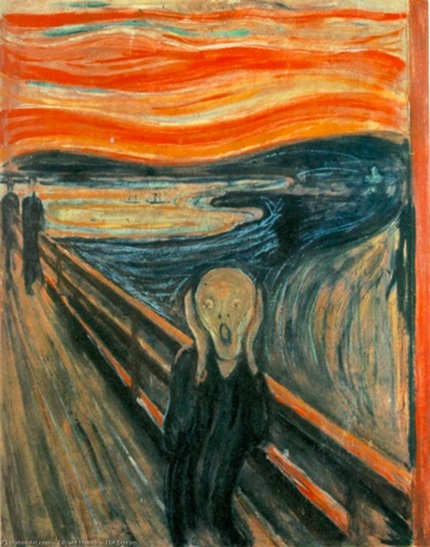
• The expression of the invisible: Works such as Edvard Munch’s *The Scream* no longer sought to be ‘beautiful’; instead, they gave tangible form to auditory and psychological anguish, appealing to the viewer’s sense of hearing and sensory empathy.
• The intellect and the concept: With the avant-garde movements of the 20th century, the art object became a vehicle for ideas, inviting the public to reflect on the world rather than simply admire technical skill.
To explore this transition in audiences and forms of cultural mediation in greater depth, you can read our article on the challenges facing contemporary cultural mediation.
What impact does this have on today’s viewer?
Today, this shift from an art of ‘visual sublimation’ to an art of ‘sensory and intellectual experience’ is profoundly transforming our relationship with artworks. Museum visitors are no longer there merely to contemplate the frozen beauty of a masterpiece, but to undergo a subjective, and at times disorienting, experience that resonates with their own perceptions.
This shift poses new challenges for cultural institutions and players in the art market, who are torn between the need to democratise access to artworks and the need to maintain a critical stance in the face of art that has become highly conceptual.