I was scrolling through TikTok one night — just mindlessly switching from one short video to another — when a Gucci post suddenly stopped me. It wasn’t a typical luxury-brand ad: no polished studio light, no model’s perfect smile, just a quick, messy, almost spontaneous clip. But somehow, it felt intentional. That raw, unfiltered energy made me wonder — why would Gucci, a symbol of perfection and elegance, choose this kind of expression?
That moment made me realize something important: TikTok and Instagram are no longer just places for fun or self-expression. They’ve become powerful storytelling arenas where brands build personalities and shape cultural meanings. Some brands have mastered this narrative art — they plan their stories, spark conversations, and even create culture around themselves. By fully using the distinct language of each platform — from TikTok’s playful, viral rawness to Instagram’s refined visual storytelling — brands can form a more intimate bond with their audiences.
In this article, I’ll take three global brands — Gucci, Nike, and L’Oréal — as examples to explore how they adapt their social media presence to new marketing trends, construct brand ecosystems, and communicate cultural identity through their posts and videos.
From Ads to Stories: The Rise of Platform-Based Storytelling
Social media marketing has shifted from showing polished ads to telling stories that feel personal and human. Instead of simply displaying perfect visuals, brands now create content that matches the tone and rhythm of each platform. TikTok, for example, thrives on authenticity — short clips that look spontaneous but still carry meaning. Instagram, on the other hand, is more like a curated gallery, where visual harmony and storytelling aesthetics are everything.
This shift didn’t happen overnight. Brands realized that to connect with younger audiences, they had to live inside social media culture, not just advertise in it. Today’s branding isn’t a one-way broadcast anymore; it’s a dialogue, a space where stories are co-created with followers. Some brands even invite users to remix or reinterpret their campaigns, turning marketing into a shared experience.
As a result, selling products is no longer enough. Brands are selling a sense of belonging — a cultural identity that welcomes people into their world of values, aesthetics, and community.
Gucci: Fusing High Fashion with Digital Culture
Gucci has turned its marketing into something closer to cultural performance than traditional advertising. Each campaign feels like an event — immersive, experimental, and deeply aware of the platforms it lives on.
On Instagram, Gucci doesn’t just post products; it tells stories. The feed unfolds like a visual diary — part art exhibition, part fashion dreamscape. Campaign photos, surreal short films, and artist collaborations blend together to build a world that feels both luxurious and alive. Even the Stories section acts like a mini fashion film, mixing polls, behind-the-scenes moments, and teaser clips that make followers feel personally included in the creative process. Through Reels, Gucci captures Instagram’s fast rhythm with short, high-energy edits, showcasing new collections while keeping its poetic, offbeat tone. Every frame strengthens the brand’s cultural narrative — a modern mix of elegance, irony, and digital-era authenticity.
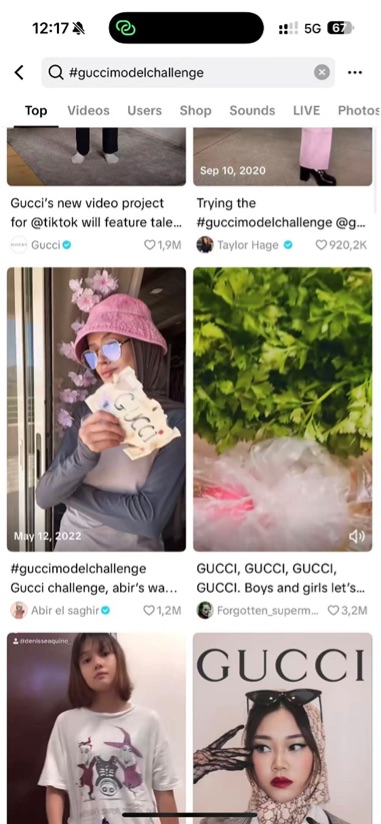
And that same spirit flows seamlessly onto TikTok, where Gucci reimagines what luxury looks like in an age of memes and viral trends. Once viewed as distant and exclusive, the brand now experiments with humor and community-driven creativity. The viral #GucciModelChallenge, started by a fan, invited people to create extravagant Gucci-style outfits from their own wardrobes. Rather than staying silent, Gucci embraced it — reposting fan videos and joining the trend itself. That move didn’t just earn over 230 million views; it showed a rare openness, making Gucci feel playful, self-aware, and surprisingly human.
Building on that success, Gucci launched its own TikTok-native campaigns, like #AccidentalInfluencer, filled with quick cuts, quirky dances, and ironic humor that perfectly fit the platform’s tone. By using trending sounds and spontaneous storytelling, Gucci made its content feel native to TikTok — yet still unmistakably Gucci. It’s not just adapting to digital culture; it’s helping define it.
Nike: Inspiring a Global Community Through Storytelling
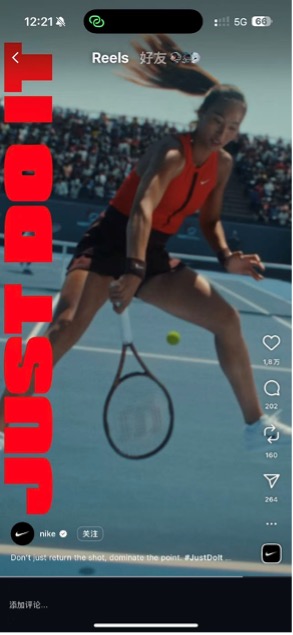
Nike is not just a company that sells shoes, at least I don’t think so. Belief is often the core of what they sell. Over time, Nike’s voice on social media has gradually built a cultural circle that combines ambition and a sense of mission. Each post adds another brick to that circle, reminding people that the goal of sports is not only to win, but also about everything one feels in the process of trying and breaking limits. Nike’s stories don’t feel like advertisements — they express the willingness and courage to pursue something that seems distant, a belief that has built the community around Nike.
On Instagram, the ecosystem Nike creates feels more like a living museum than a product showcase. The page includes both panoramic shots of athletes in action and quiet, real moments — like failure and fatigue, or victory and celebration. Even a simple line like “Just Do It” placed on these images can strike a chord with people. Every element — the visuals, the captions — reflects Nike’s thought process: whether it’s short videos focusing on unknown athletes, IGTV clips digging into the stories behind individuals, or interactive stories showing close-up training sessions that let fans learn something. Together, these pieces form Nike’s portrait — persistence and action. This is the emotional core that people associate with the Nike brand.
The same rhythm extends to TikTok, though in a looser, more natural, and more casual way. On TikTok, Nike appears within people’s living spaces — in unfiltered, energetic, and sometimes chaotic scenes. Here, Nike launches challenges, encourages users to edit videos, or makes small calls to action — in short, inviting anyone, anywhere, to show what they can do. It all feels far from advertising, more like a lively group of people, a community chasing their goals together. When users post their own victories under Nike’s hashtags, the message shifts from “You can do it” to “We’re all doing it.”
One campaign captured this spirit perfectly: an experimental challenge called “Breaking2,” aimed at breaking the human limit of running a marathon in under two hours. Nike didn’t choose to wrap it up as a flashy ad; instead, it presented it as a global live event — every tweet, every data update, tied directly to the viewers’ heartbeat. People followed not because of brand promotion, but because they were genuinely moved by the human effort to push beyond limits. This is exactly the narrative Nike chose to tell. In the end, people could hardly tell whether they were cheering for the brand or for humanity’s breakthrough — and perhaps that is the purest idea Nike has always tried to express.
L’Oréal: Blending Beauty, Tech, and Community Narratives
For a company that’s over a century old, L’Oréal has managed to stay remarkably young — not by chasing trends, but by shaping them. The brand’s strength lies in how it turns beauty into a story of science, inclusion, and empowerment. On social media, L’Oréal doesn’t hide behind glossy perfection; it opens the lab doors and invites everyone in to see how beauty is made.
On TikTok, L’Oréal has reinvented itself as a pioneer of transparent storytelling. Its official group account skips traditional ads altogether and instead spotlights the science behind its products. The tone is casual and curious: quick cuts, catchy sounds, and cheerful explanations make even complex chemistry feel simple and fun. In these videos, employees appear not as corporate representatives but as creative makers, showing how innovation happens from the inside out. It’s a smart move — one that humanizes the brand and gives it the energy of a digital-native creator community.
That openness extends to L’Oréal’s collaborations with platform trends. A standout example was its partnership with the viral #TikTokMadeMeBuyIt movement. Recognizing that many of its products were already trending, the brand teamed up with 27 influencers across the Middle East for a 2024 campaign. Each creator received a customized box and complete creative freedom to film unboxing or tutorial-style videos. The result felt less like advertising and more like a collective discovery moment — generating a 9–10% engagement rate, nearly ten times higher than the industry average. It was both marketing and community-building, seamlessly merging L’Oréal into TikTok’s social-commerce culture.
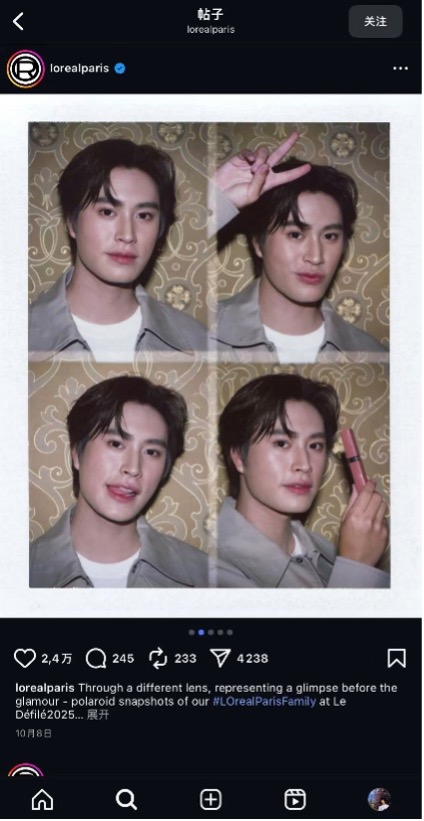
Meanwhile, on Instagram, L’Oréal tells a complementary story — one centered on diversity and empowerment. True to its iconic slogan “Because you’re worth it,” the brand shares transformation stories of real people and highlights collaborations with influencers from different cultural backgrounds. Posts often pair minimalist visuals with strong messages about confidence, sustainability, or AI-driven innovation. Each one reinforces the idea that beauty isn’t about one standard — it’s about inclusion, technology, and self-expression. In doing so, L’Oréal positions itself not only as a beauty leader but as a curator of the future of beauty itself.
The New Playbook: Cultural Identity as a Marketing Strategy
The stories of Gucci, Nike, and L’Oréal all point to the same truth: in today’s world, the real currency of marketing is culture. And that currency is minted through stories — short videos, reels, posts — that make people feel, laugh, and participate. What once looked like advertising now feels like cultural creation. When content becomes entertaining, shareable, and full of personality, audiences no longer just consume a brand; they start to belong to it.
A decade ago, marketing meant consistency and control — crafting one perfect message and pushing it everywhere. Today, it’s about agility and connection. Brands interact in real time, join trends, and sometimes even start them. They act like social personalities, switching tones and aesthetics depending on where they speak. This isn’t just a strategy shift — it’s a creative revolution where marketing overlaps with art, storytelling, and community building.
Each of the three brands shows a different side of this transformation. Nike turns storytelling into belief — transforming fans into believers. Gucci plays with internet humor to keep luxury playful and alive. L’Oréal opens its lab doors, using transparency and science to make beauty feel human. Together, they illustrate how brand storytelling has evolved from broadcasting identity to creating cultural ecosystems.
For marketers and cultural creators alike, innovation today isn’t about chasing new tools — it’s about adopting a new mindset. The challenge is to build spaces where audiences want to take part, not just watch. Whether you’re a fashion house, a museum, or a startup, the rule is the same: speak to meaning, not just to market.
Ultimately, this shift shows that great storytelling isn’t a side act — it’s the stage itself. On platforms like TikTok and Instagram, the most successful brands are those that blend creativity with authenticity, influence with empathy. They don’t just reflect culture anymore; they co-author it. And in this endless scroll of content, the brands that keep winning are the ones whose stories people want to return to — one post, one reel, one TikTok at a time.
And maybe that’s where it all comes full circle — back to that night when I was scrolling aimlessly and stumbled upon Gucci’s video. It wasn’t an ad trying to sell me something; it was a glimpse into a world. That moment of surprise — of seeing creativity and culture collide — is exactly what modern storytelling aims for. The kind of story that doesn’t just catch your eye, but quietly changes the way you see a brand, and maybe even yourself.
