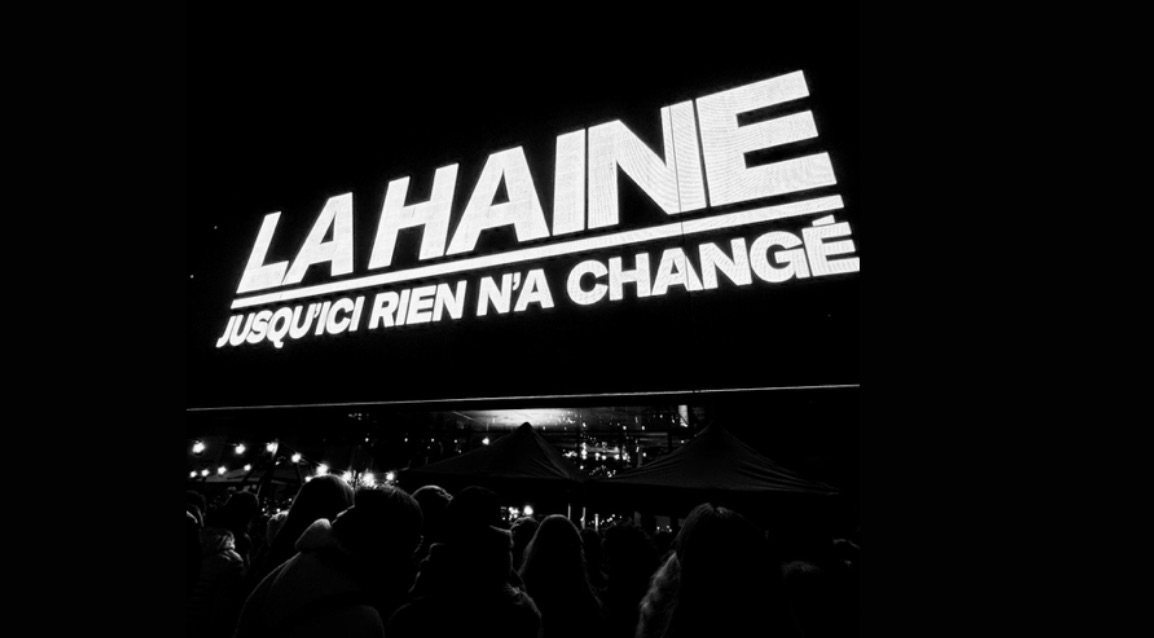
Everyone knows La Haine, Mathieu Kassovitz’s emblematic movie released in 1995, which has become a work of art at the heart of French cultural heritage and the cult reference of French urban culture.
The film follows a day in the life of three young men from the suburbs the day after riots, inspired by a real event: the death of Makomé M’Bowolé in 1993, killed by a police officer while in custody. Kassovitz wanted to show on screen what most French people did not see or refused to see: life in the suburbs, the anger following police blunders, and ordinary violence. Upon its release, La Haine was an immense success: millions of admissions and numerous awards, accompanied by a strong resonance beyond France’s borders: the United Kingdom, the United States, and even Japan. Thirty years later, the film continues to be present in the collective imagination, a shared point of reference.
Bringing together La Haine and the genre of the musical appears, at first glance, as a paradoxical gamble. It means bringing together Kassovitz’s raw black and white movie with Demy’s multitude of choreographed colors. Indeed, the musical genre is spontaneously associated with a completely different imaginary world: we think of Broadway, a form of naivety, optimism, a perpetual fiction where everything is resolved through music.
Unsurprisingly, the announcement of this project first provoked distrust and incomprehension. One of the show’s songs even raises the question with irony: “How can you sing la vie en rose when you see it in black and white?” (“How can you sing life through rose-colored glasses when you see it in black and white?”).
What was criticized was not so much the fact of adapting a film into a musical on stage, which is very common: The Lion King, Ghost, Anastasia, Flashdance, or Les Demoiselles de Rochefort to cite a more French example, the reverse is also true: Les Misérables, Chicago, West Side Story, or more recently Wicked.
But what was criticized is that La Haine, which deals with themes rarely associated with this format: riots, police blunders, social fracture, the relationship between the suburbs and the State, should be adapted as a musical. Indeed, we are far from the pastel romanticism of musical by Jacques Demy and Michel Legrand and their quest for love through music.
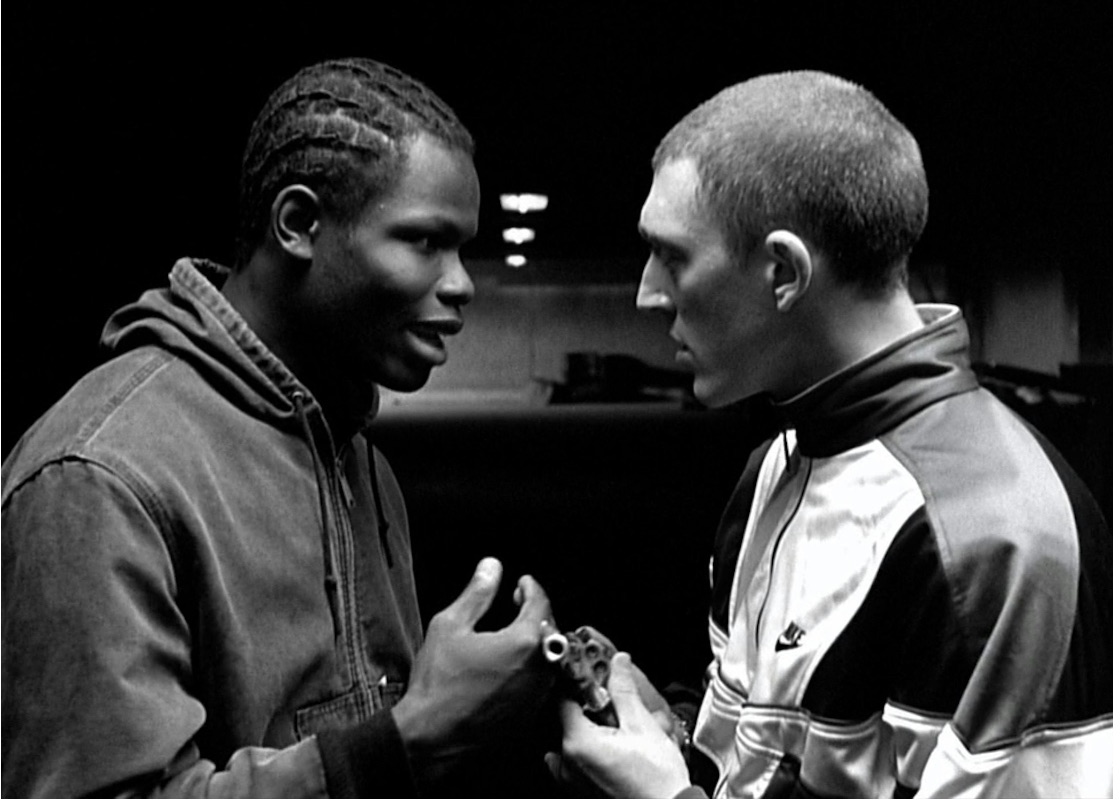
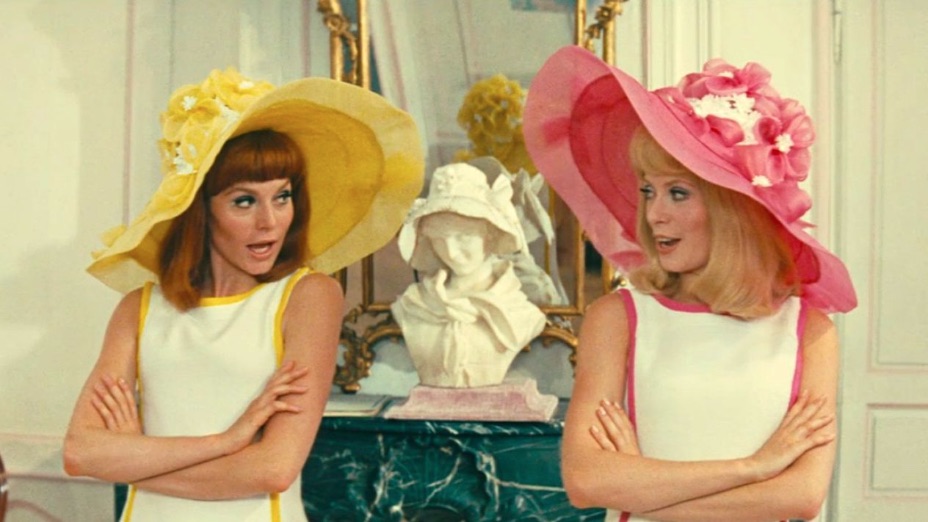
However, to reduce the musical genre to a light or naive genre is to miss what it has always been. Before filming Les Demoiselles de Rochefort, Demy had made Les Parapluies de Cherbourg, a reflection of a post-war generation facing the disillusionment of the world, the musical addresses the Algerian war, social conditions, and family expectations.
More broadly, the musical genre has always been a political medium, because it addresses and stages major societal issues, as shown by three examples we can develop: West Side Story, Starmania, and Hamilton.
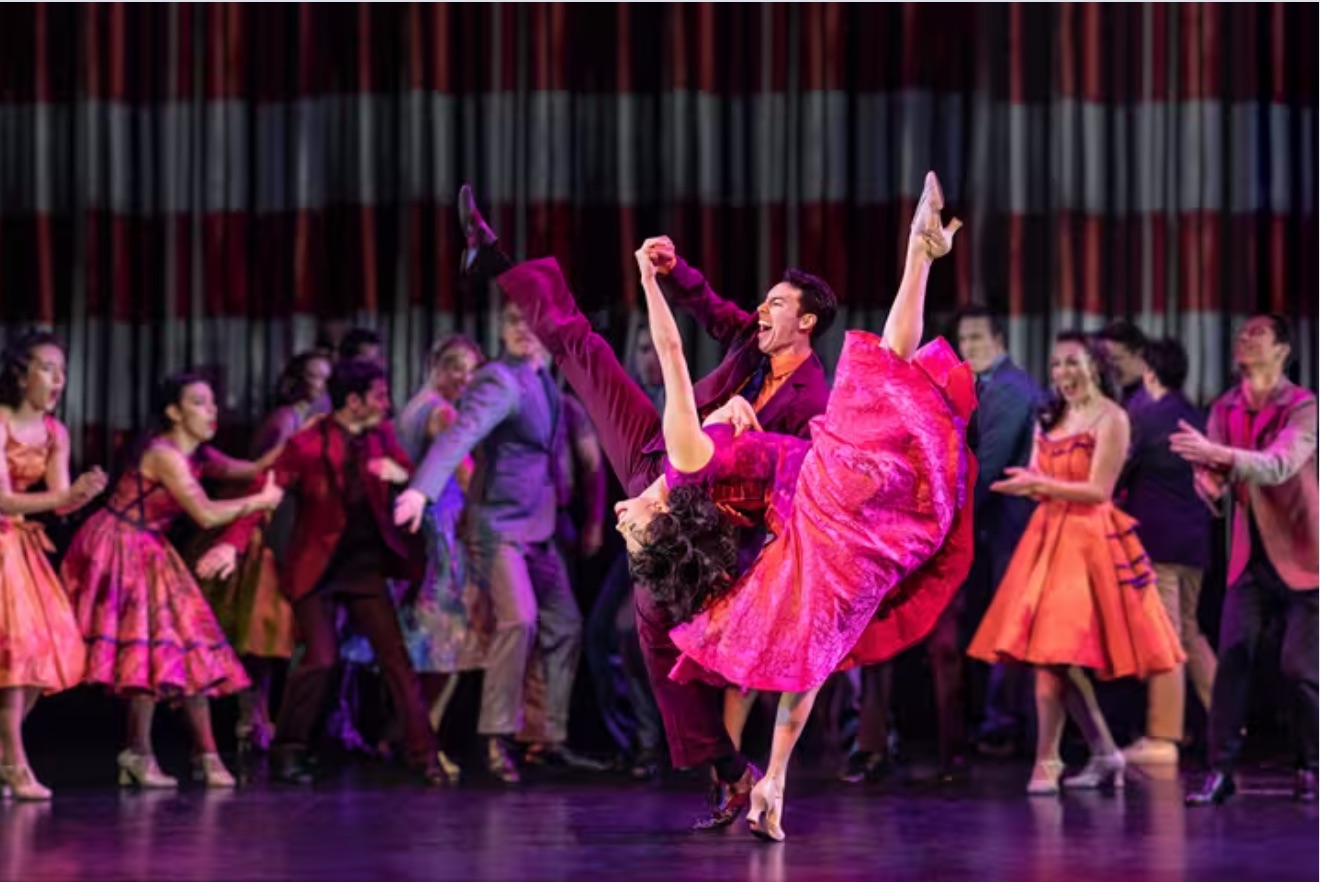
West Side Story is one of the most famous musicals of the 20th century and deals with subjects deeper than a simple love story. Created on Broadway in 1957, then adapted for cinema in 1961 and again in 2021, it reinvents Romeo and Juliet in New York. Two rival gangs fight for territory: the Jets, white Americans of European immigrant descent (Polish, Italian, Irish), and the Sharks, Puerto Rican immigrants who recently arrived. In the middle of this racial and social tension, an impossible love is born between Tony and Maria.
West Side Story portrays a fractured America: one of inequality, racism, urban segregation, and issues of integration. The show is rooted in the reality of the 1950s, marked by rising street violence and gang wars, particularly in the Upper West Side neighborhood. Indeed, the creators of the musical were inspired by real-life events reported by the press, exactly as Kassovitz was when creating the film La Haine. Both works of art explore the same mechanics of ordinary hatred: the kind born from rejection, exclusion, and the feeling of injustice.
Starmania, for its part, is above all known for its legendary songs that everyone knows without necessarily realizing they come from a musical: “Le Blues du Businessman,” “SOS d’un terrien en détresse,” “Le Monde est stone,” or “Quand on arrive en ville.” But behind these songs lies a much darker work, created in the late 1970s by Michel Berger and Luc Plamondon. The show was born in a context of social disillusionment, political crisis, and a rise in terrorism.
It takes place in a futuristic city, Monopolis, “capital of the reunified West,” following the fate of eight characters. In this ultra-urbanized society, the rich live in towers while the poor live underground. Three forces face off against the backdrop of a presidential election: Zéro Janvier, an authoritarian billionaire living in a golden tower, the Gourou Marabout, a utopian environmentalist advocating a return to nature and moral freedom, and les Étoiles Noires, a revolutionary group. Starmania depicts a society falling apart, marked by loneliness, the quest for fame, and disillusionment. It addresses the themes that marked the end of the 1970s: violence, anxiety, existential emptiness, ecological crisis, social inequality, the rise of post-fascism, economic supremacy, political demagogy, work servitude, mental health, and media excess. In 2022, the revival directed by Thomas Jolly at the Seine Musicale confirmed just how powerfully Starmania still reflects our times.
Finally, Hamilton is an American musical created in 2015 by Lin-Manuel Miranda, inspired by the biography of Alexander Hamilton, an orphan from the Caribbean who became one of the Founding Fathers of the United States. It tells the story of the American Revolution and the birth of the Constitution. Created at the end of Obama’s presidency, at the dawn of the Trump era, Hamilton is much more than a Broadway success: it is a political statement. Lin-Manuel Miranda sums up his project himself in an interview with The Atlantic: “This is a story about America then, told by America now”.
The show breaks with Broadway’s codes, long dominated by white faces, by casting African-American, Latino, and Asian actors in the historical roles of Washington, Jefferson, or Hamilton. Hamilton also brings rap and hip-hop into the musical, a genre until then reserved for pop, jazz, and classical singing. Throughout the show, collective memory is reimagined: “Immigrants, we get the job done!” the characters proudly proclaim, reminding us that immigrants built the United States. Hamilton is political both in content and in form: a work that subverts the codes of musical theatre. The parallel with La Haine is obvious: the same desire to give a voice to those who are not seen, the same way of reclaiming dominant codes to tell the history.
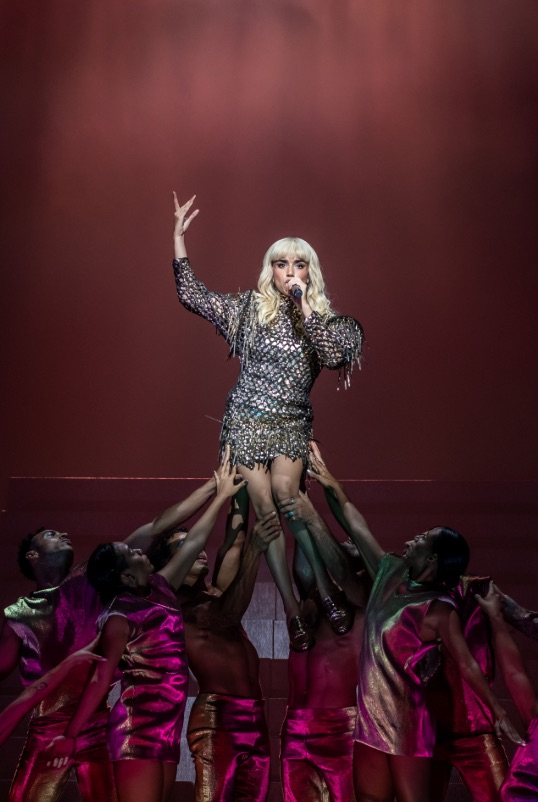
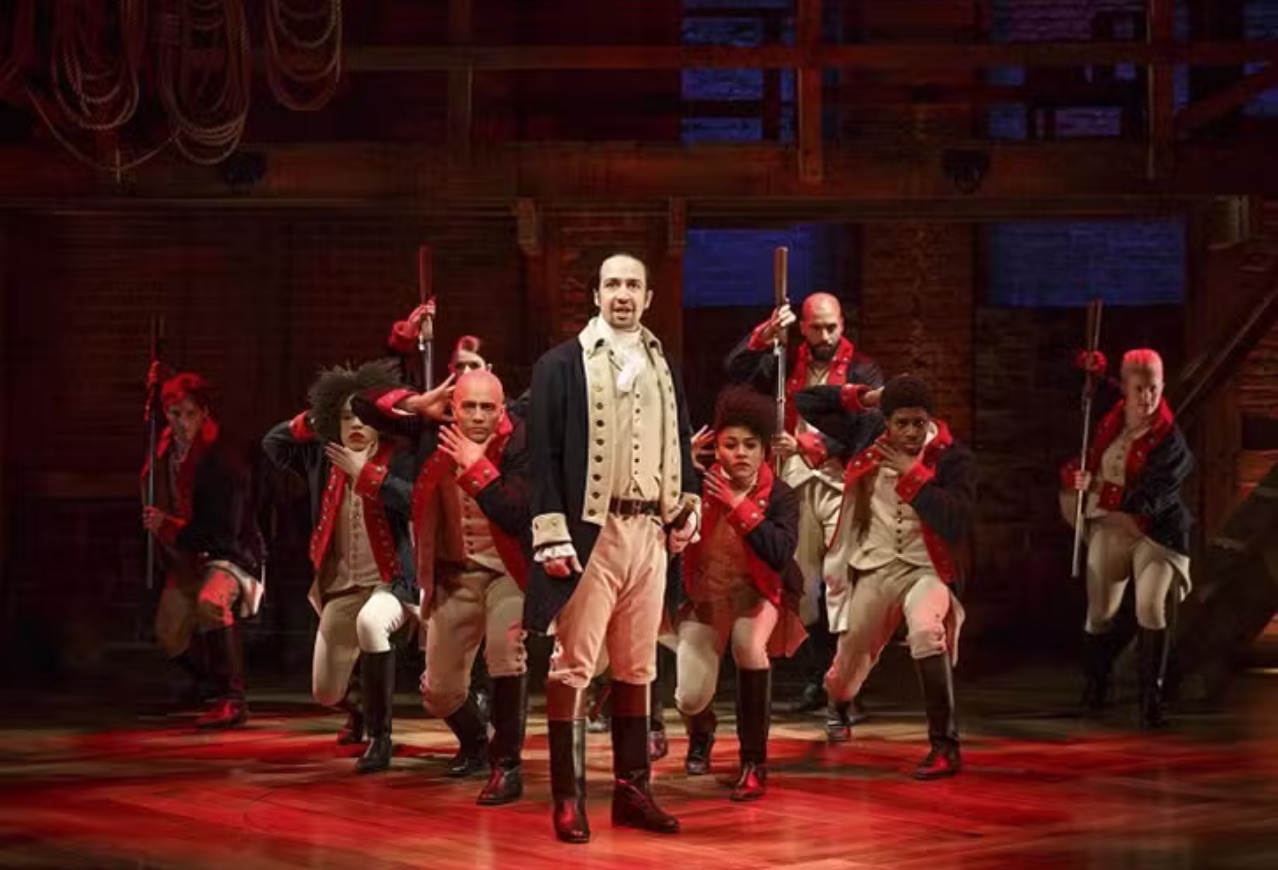
After everything that’s been said, we might think that the musical La Haine fits into the continuity of a genre long political and brings nothing new to the landscape of musical. And yet, that is not quite the case: what makes the project unique is the fact of representing a French suburb on stage and the way the codes of cinema and musical theatre are intertwined: an immersive musical, conceived as an extension of the film.
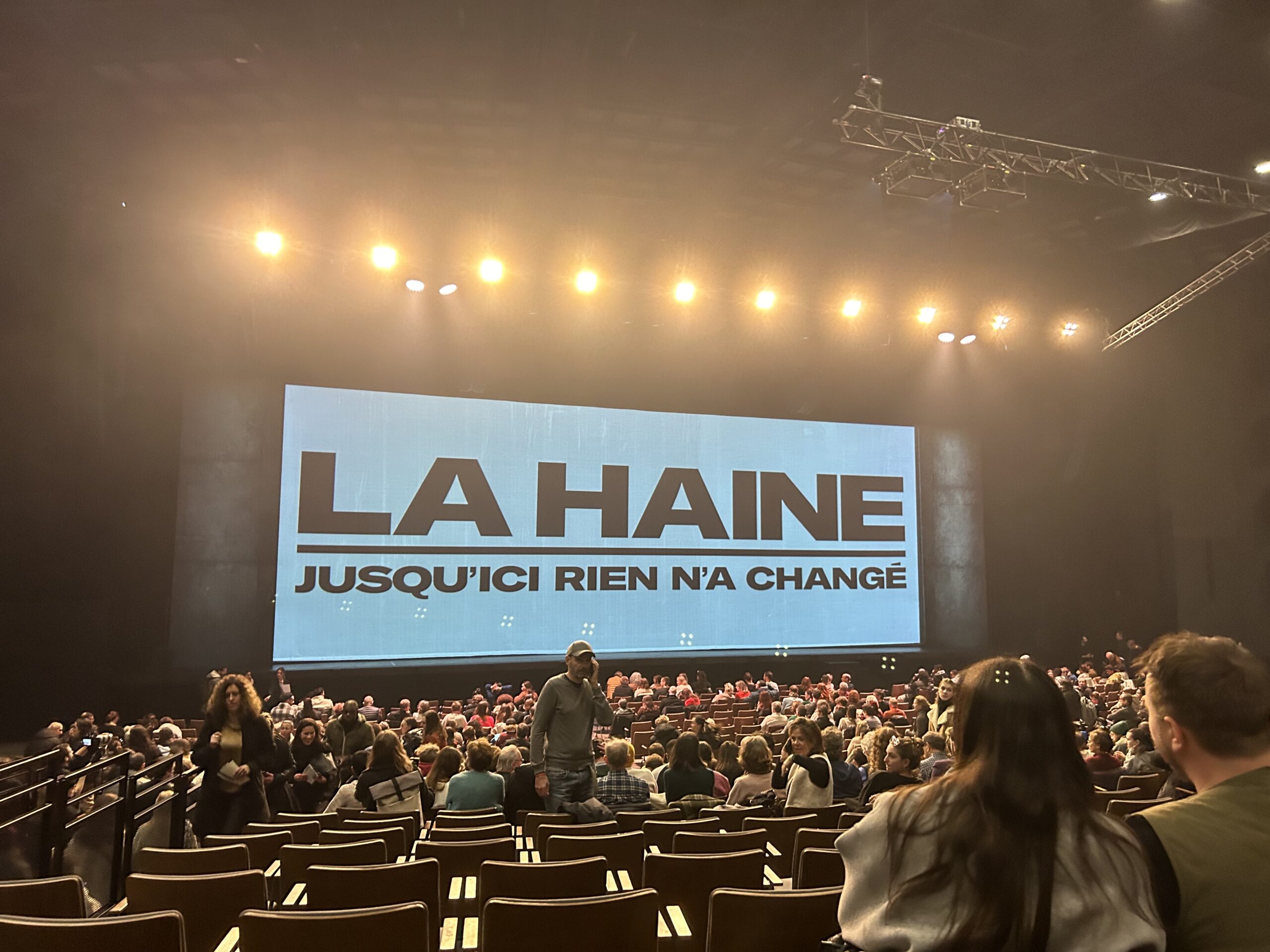
What makes La Haine as a unique musical is the choice of subject: showing the French suburb on stage. While West Side Story evoked the ethnic tensions of another era (the 1950s) and another country (the United States), and Starmania presented a dystopia, La Haine is a testimony and speaks of a contemporary French reality, the audience is directly concerned and not a distant spectator. The project resonates all the more with current events as its announcement coincided with the death of Nahel (June 2023), bringing the issue of police violence back to the center of public debate. Thirty years after the movie, the sentence “jusqu’ici tout va bien” (“so far, so good”) takes on a bitter resonance: “jusqu’ici rien n’a changé” (“so far, nothing has changed”) the show’s subtitle.
Furthermore, as mentioned, adapting a film into a musical is nothing unusual. But here, the approach is different: it is not about making the movie forgotten but about reactivating it differently, reviving it on stage by transposing the language of movie to the theatre stage. The musical claims the dual identity of film and show through the vision of filmmaker Mathieu Kassovitz and theatre director Serge Denoncourt. The spectator is not facing a static stage but becomes the camera: the sets move, images shift around him, thanks to an unprecedented stage device: an LED wall, digital frescoes, turntables, and treadmills to recreate the sense of movement at the heart of the movie, the city of Chanteloup-les-Vignes is reborn through 3D projections.
Finally, what truly distinguishes La Haine is the way it revisits the codes of the genre. While dance is often used decoratively in traditional productions, here it tells a story: confrontations become choreographies, clashes become danced dialogues, and tensions are expressed through movement. Hip-hop, breakdance, and urban dance replace the uniform bodies of traditional ballet, as explained by Emilie Capel and Yaman Okur, the musical’s choreographers. It is also through music that the show breaks conventions. La Haine draws on urban music, rap, hip-hop, and their legacies. The compositions are signed both by emblematic figures (such as Oxmo Puccino, Mathieu Chedid or Médine) and by the new generation (coming from Netflix’s show Nouvelle École). The idea, as explained by Proof, the show’s musical director, is to trace a sound journey of sound from 1995 to 2024: each piece conceived as an extension of the film, a way for the characters to speak differently. Youssoupha with Proof, for example, composed a song that plays on sound symmetry: the same track, listened to one way, expresses the voice of the brother; listened to the other, that of the policeman.
The riot scene is the perfect example of this originality. It is a choreographed riot scene that expresses the power of the musical genre. Inspired by different sources: Prokofiev, Le Chant des partisans, and JR’s frescoes, on stage the frozen dancers blend into a video projection filmed beforehand: a living fresco where tear gas, flashes of light, flames, and motionless bodies intertwine. For three suspended minutes: the music rises, the voices resonate, and the audience finds itself immersed in a moving image, between art and reality: then the riot begins, taking the form of a choreography.
The best way to form an opinion is to go see it, the show returns to the Seine Musicale starting November 7, 2025.
Author: Caroline Jabre
Sources:
- Meeting with Proof, Émilie Capel, Yaman Okur and Farid Benlagha Le Hazif at La Seine Musicale during the open days on September 21, 2025.
- La Haine: La scène est à nous, documentary directed by Anthony Igoulen and Adrien Benoliel (Canal+).
