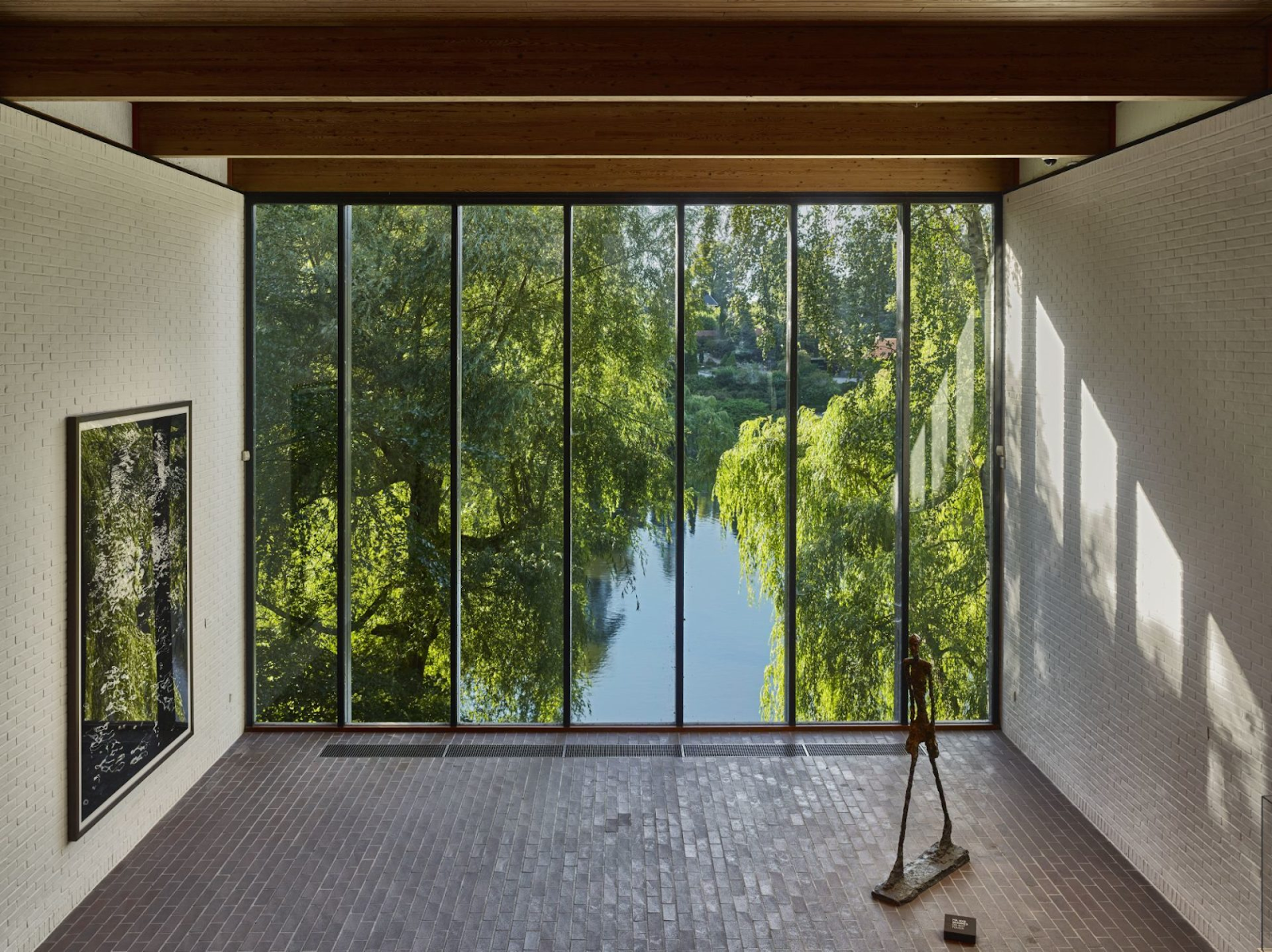
Most museums are built as containers for art – imposing structures that protect and display collections but often feel detached from daily life. The Louisiana Museum of Modern Art in Humlebæk, Denmark, took a different path. Since its founding in 1958, it has blurred the boundaries between art, architecture, and nature, creating an experience that visitors inhabit rather than simply observe.
Louisiana’s director Poul Erik Tøjner explains that an important part of its purpose “is to create community between people across space and time.” This seamless integration is why Louisiana is not only internationally admired but also a case study in how museums can shape their identity through visitor experience.
How Louisiana moved beyond the monumental museum model
Traditional “monumental museums”, like the Louvre in Paris or the British Museum in London, were designed as temples of culture. Their scale and monumentality signal authority but can leave visitors feeling like passive observers.
Founded in 1958 by Knud W. Jensen, Louisiana represents a decisive break from this model. Jensen, a businessman and publisher, believed that art should be part of everyday life. Before opening Louisiana, he co-founded the association Art at the Workplace, which lent artworks to offices so people could live with art during their working hours. His vision for the museum was similar: informal, accessible, and designed for people to enjoy art as part of daily experience.
The museum’s early years were shaped by this philosophy. From 1959 onward, Louisiana expanded beyond Danish art and became a hub for international modern and contemporary culture. Painting, sculpture, design, music, theatre, dance, literature, and film all found a place in the museum but what makes Louisiana distinctive is the way these art forms are presented in dialogue with light, architecture, and nature. From the beginning, Louisiana was conceived not as a static collection but as a living cultural environment that always offers visitors something new. Where a shift in light, a change in season, or even a different perspective can completely alter how a work is seen and experienced, so no visit ever feels the same.
Architecture at Louisiana: guiding visitors through art and nature
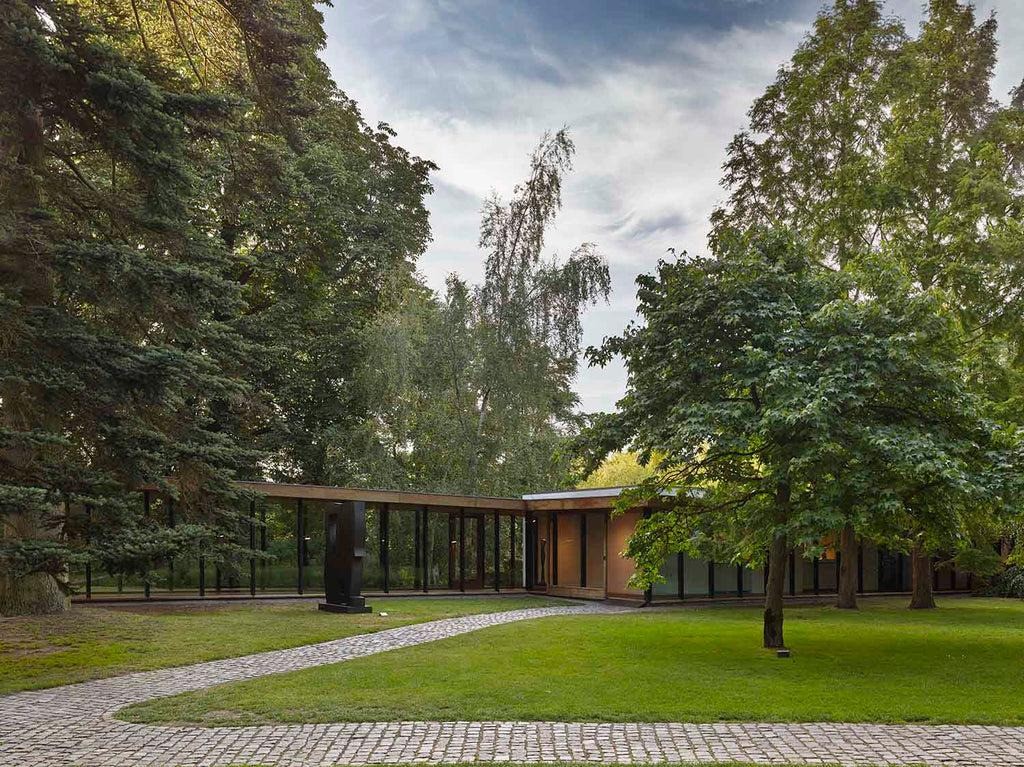
To bring this vision to life, architects Jørgen Bo and Vilhelm Wohlert created a design that rejected vertical monumentality in favour of horizontal flow. Starting from a converted villa, they extended the museum outward through a series of pavilions and glass corridors that meander across the park. The design borrows from Scandinavian simplicity, American organic modernism, and Japanese minimalism, creating a structure that feels both modest and deeply intentional.
The result is an articulated complex where every section offers a new surprise. Some spaces open dramatically onto the sea, others are narrow and intimate. Floors, ceilings, and walls are kept deliberately simple — red tiles, laminated wood, white plaster — so that light, space, and art remain the focus. The architecture leads visitors gently, framing not only artworks but also the horizon, the gardens, and the sea outdoors.
This continuity matters: visitors are not just guided through a sequence of exhibitions, but through an experience where art, nature, and architecture organically overlap.
The Louisiana Café: an extension of the museum
Unlike many museums where cafés are tucked away as conveniences, in Louisiana the café and restaurant are integrated into the overall design and experience. Positioned with panoramic views of the water and the Sculpture Park, they feel like a natural continuation of the galleries. The layout makes the café part of the visitor flow: after moving through corridors and exhibitions, guests arrive at a social space that still carries the museum’s atmosphere.
For many visitors, the café is one of the most memorable parts of Louisiana. It transforms the museum into a meeting place where art becomes social. Where people can talk, reflect, and share experiences. This is not incidental.
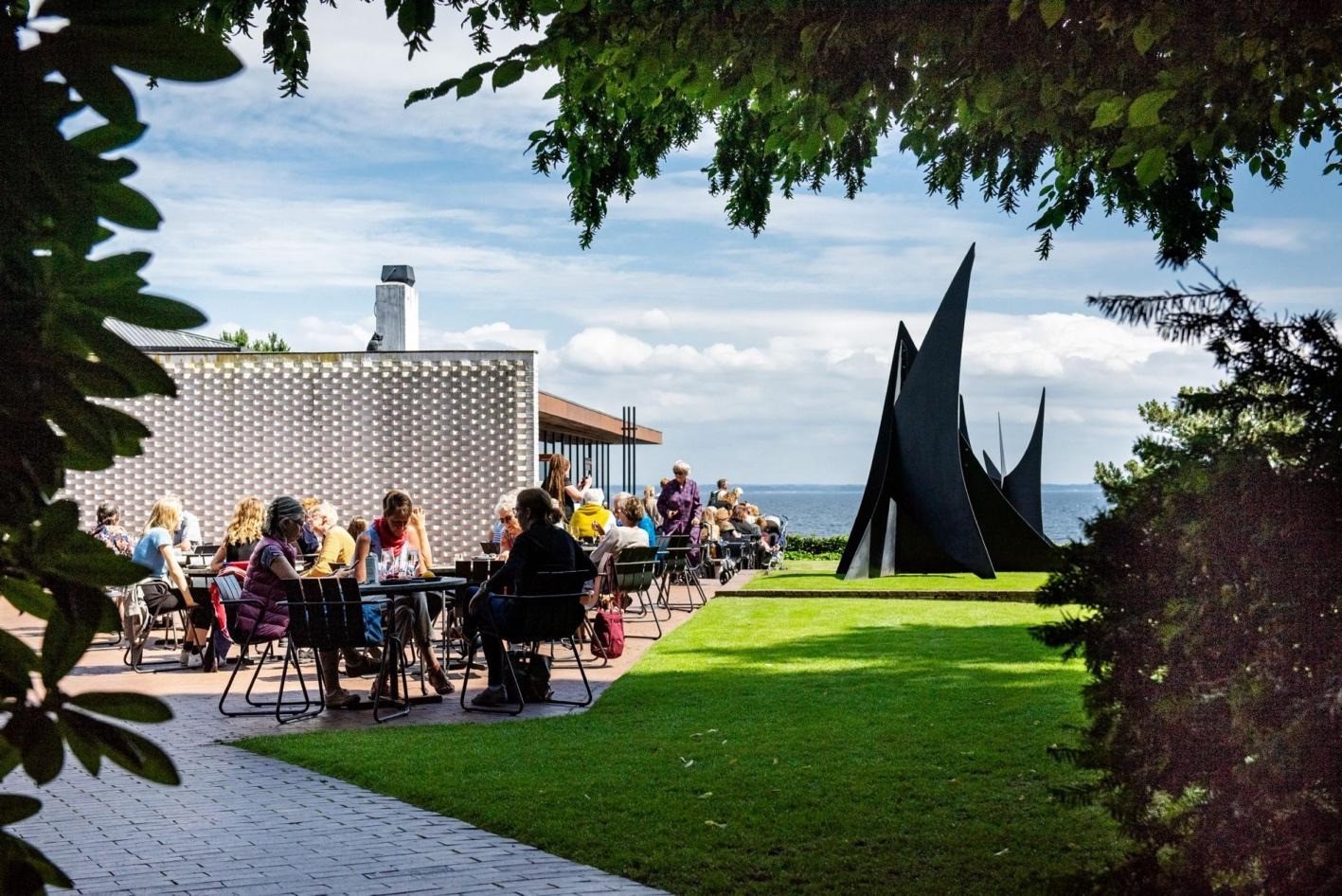
By designing it into the rhythm of the museum, Louisiana strengthens its identity as a place to spend time, not just to look at art. Encouraging longer visits, deeper connections, and stronger memories.
A living brand: How Louisiana shapes museum identity
Over its 67 years, Louisiana has built a brand rooted in authenticity. Its posters are recognized internationally, its café is as iconic as its exhibitions, and its architecture has become a case study globally. By positioning itself as a museum to be inhabited rather than visited, Louisiana demonstrates that cultural institutions can build competitive advantage by focusing on the experience it offers to its visitors. An experience that is never static, shifting with the seasons and transforming with every change in light.
A quiet strategy for the future of museums
Louisiana’s quiet radicalism lies in its refusal to separate art from life, man from nature. It integrates architecture, landscape, art, and light into a seamless experience.
In a time when cultural budgets are under strain, Louisiana offers an important lesson: museums that design themselves around the visitor experience, and shape their identity through authentic engagement, can build lasting relevance and resilience. Louisiana has proved that a museum is not just a building or a collection – it is an experience, and that experiences are great assets under shrinking culture.
If you ever find yourself in Copenhagen, make the short trip to Humlebæk. Visit Louisiana not just to see the current exhibition, but to experience how a museum can become a landscape to walk in, a café to talk in, and a space to inhabit. It’s the kind of place you carry with you long after you leave – proof that museums can still surprise us, still matter, and still feel alive
Written by Lodovica Casarini
Sources:
https://www.soundoflife.com/blogs/places/louisiana-museum-modern-art
https://www.laidbacktrip.com/posts/visit-louisiana-museum-of-modern-art-denmark
