Hey! Before this article begins, let me ask you a question. Imagine you are scrolling through short videos when suddenly an option appears on the screen. The platform asks you to choose one of two videos to watch.
The two videos present the same theme (the game Valorant).
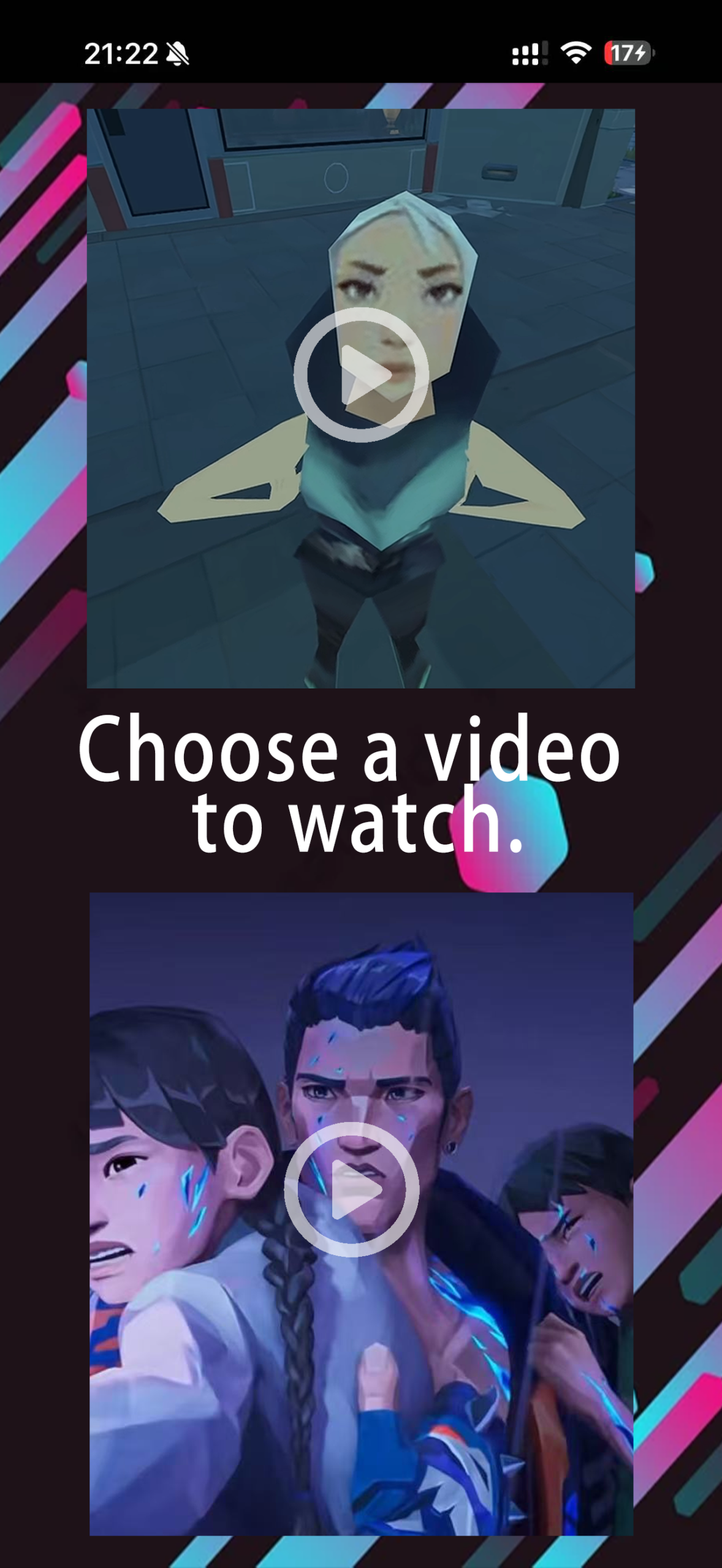
Which one would you choose?
I asked several people around me, and I received answers from several of them without any hesitation: the one below.
After all, we have been trained since childhood with this kind of aesthetic logic — polish means effort and professionalism, and naturally it also means that it deserves to be seen more.
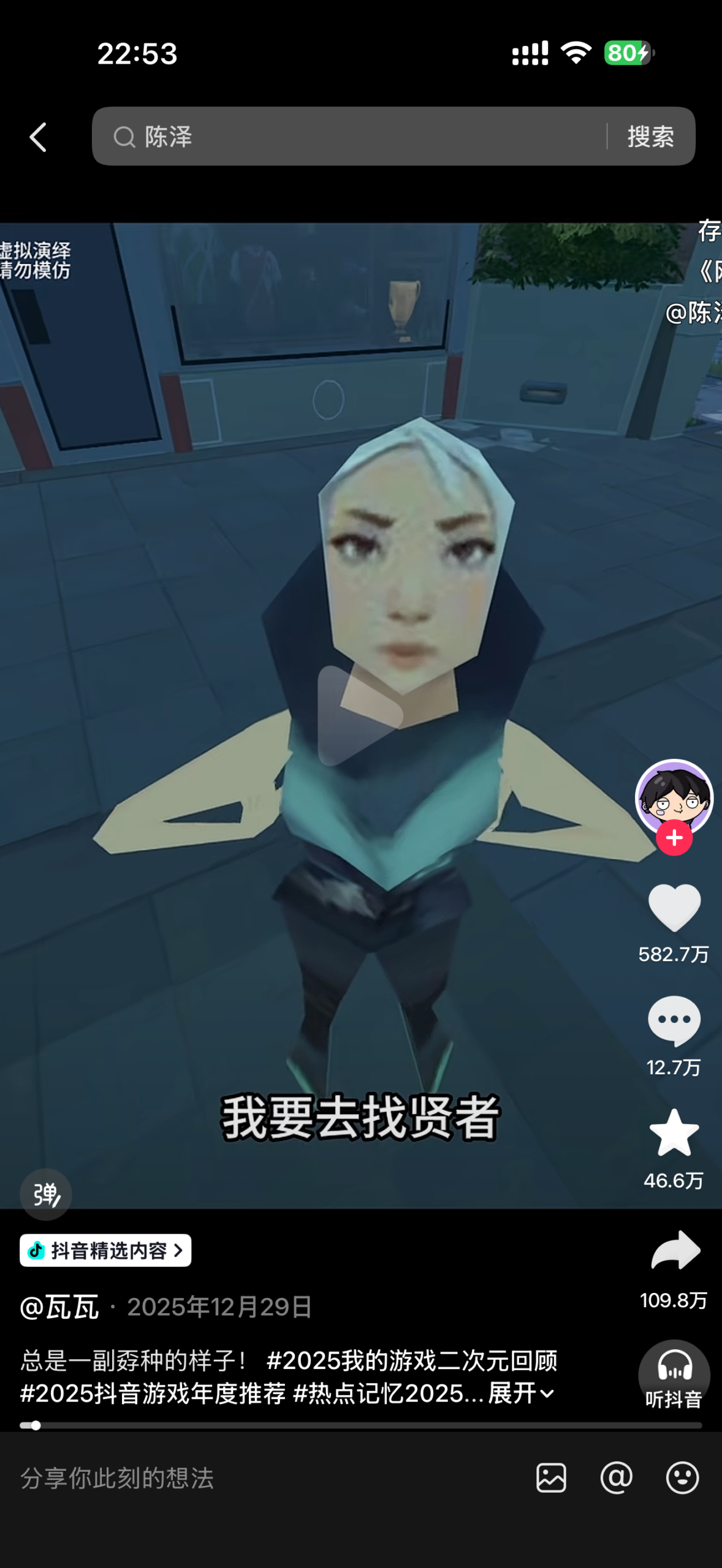

However, the data reflected by the platform shows the exact opposite. The video on the left, as a rough secondary creation, received nearly six million likes, while the polished CG on the right, which invested a large amount of personnel, money, and time, only received nearly eight hundred thousand likes.
A similar phenomenon that is more widely known can be seen in the two accounts zachking and khaby00. One is full of creativity and technique, with every work being an edited piece that looks like a work of art; the other simply shows silent reactions to certain videos, and the production cost of each video may not exceed a few dozen dollars.
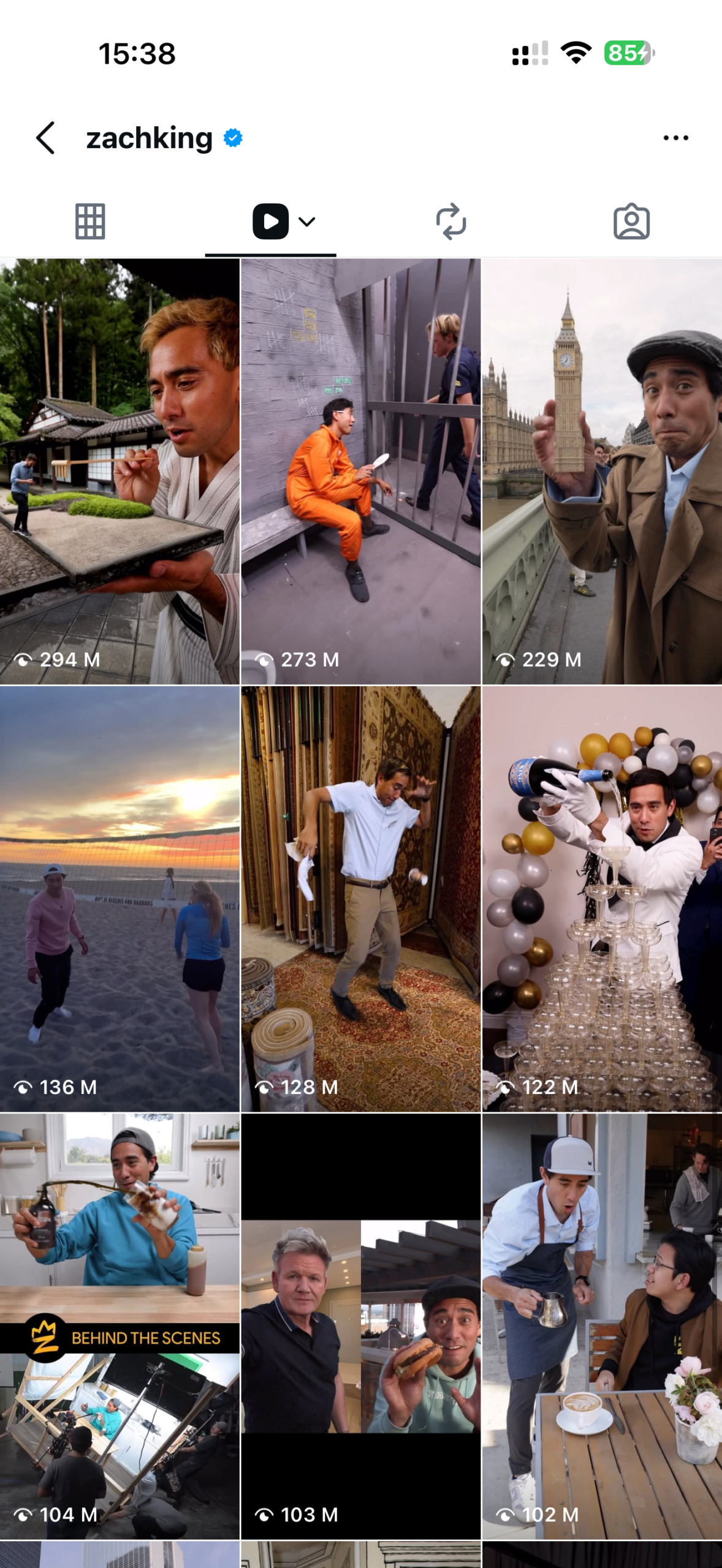
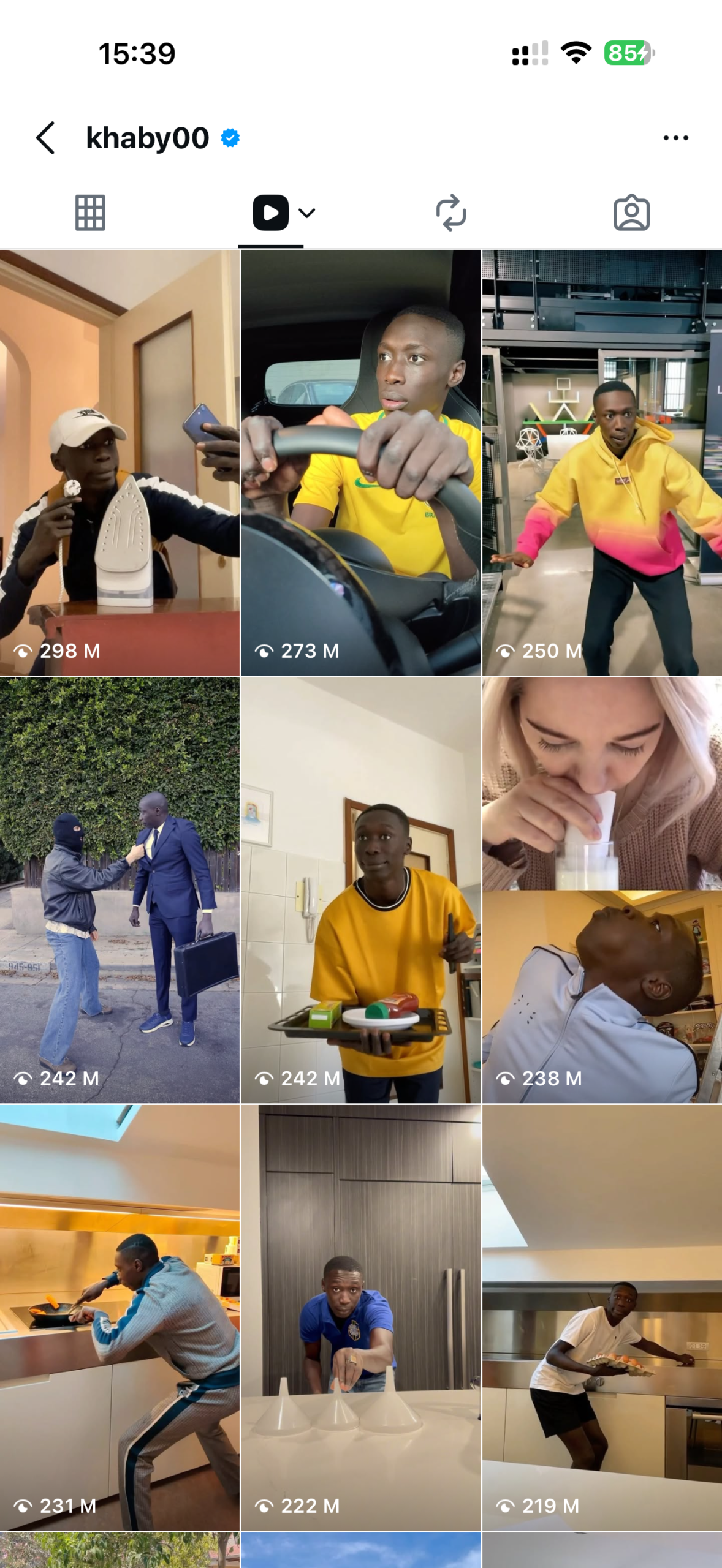
(Although the first three viral videos of the two accounts gained roughly similar view counts, starting from the fourth most viewed video, the gap in view counts between the two accounts begins to appear, and the further down the ranking, the larger the gap becomes.)
This made me think of videos whose creative materials are extremely simple and highly homogeneous:
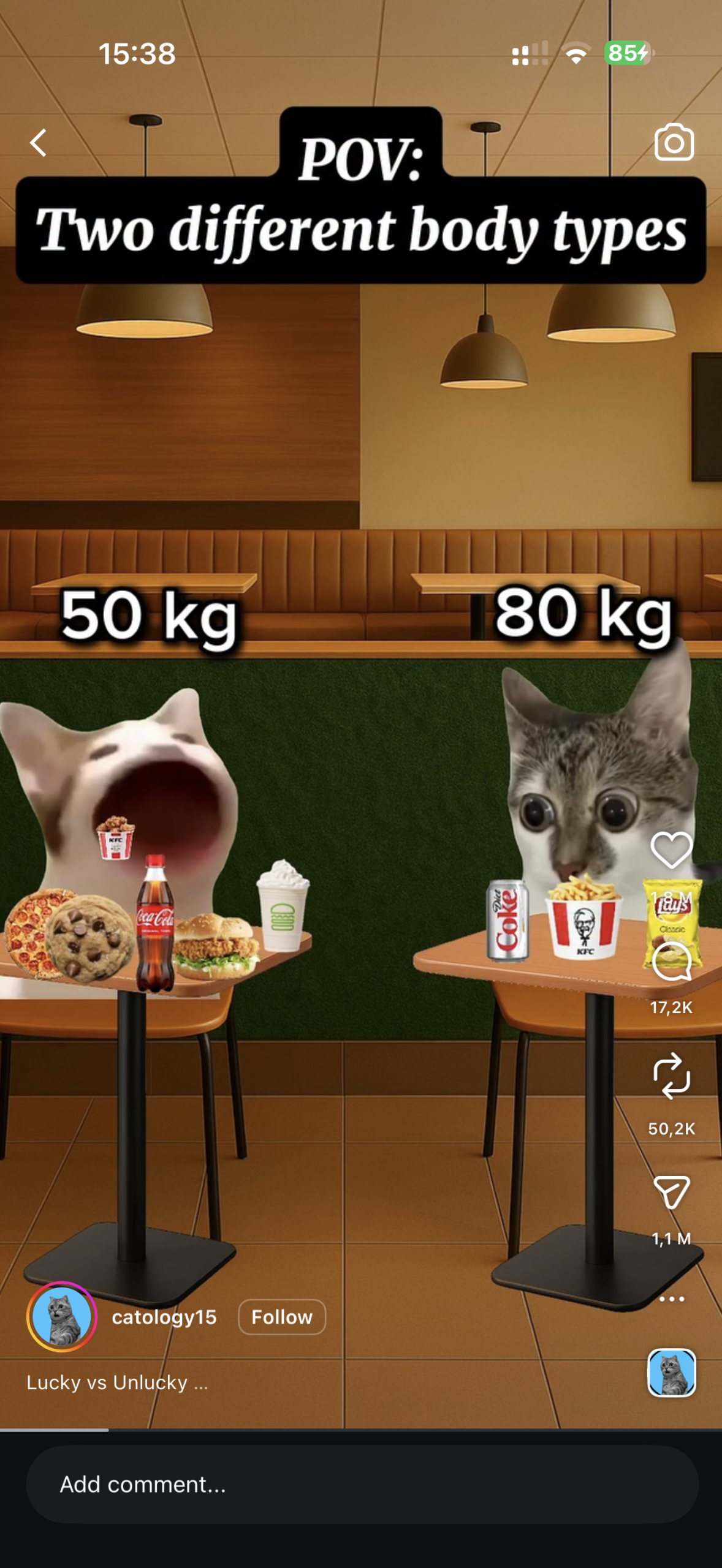
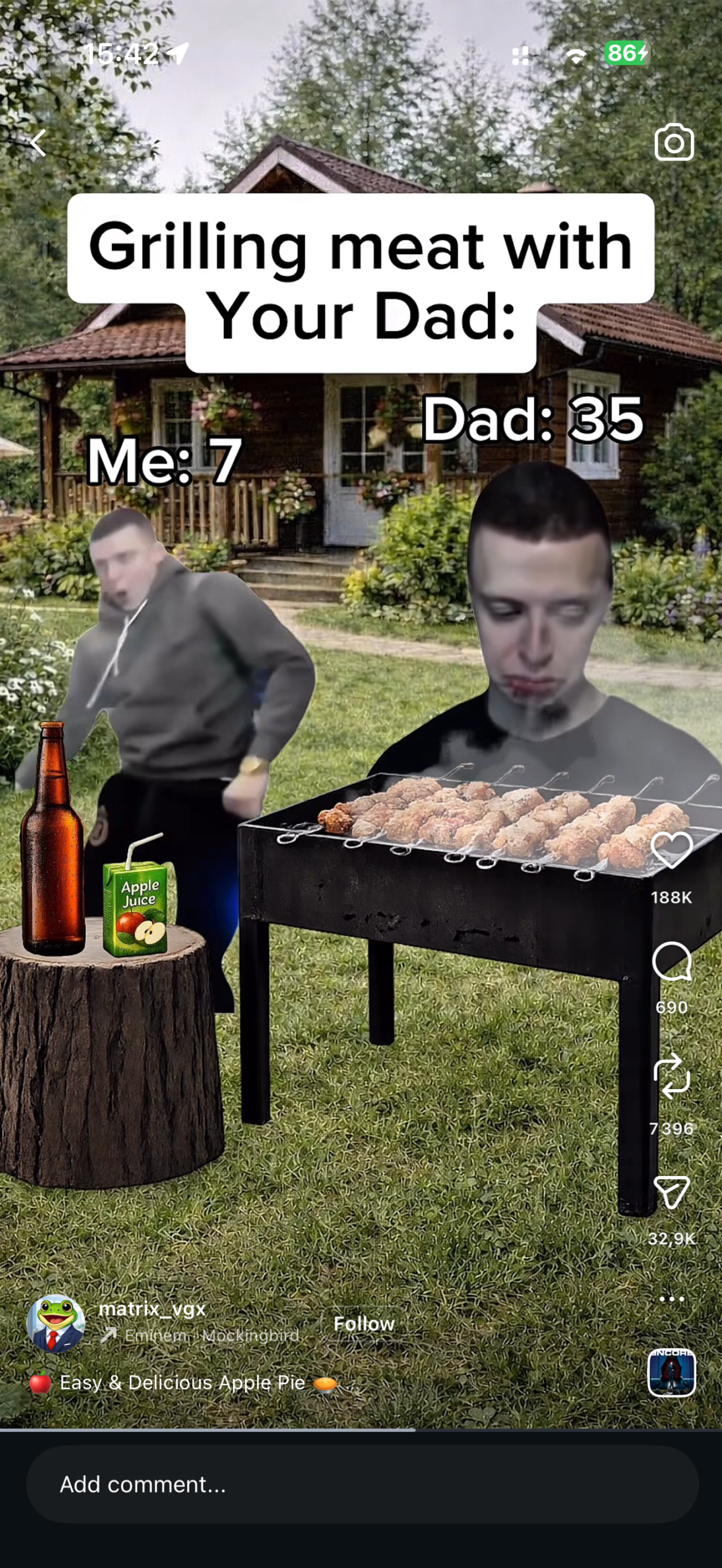
Content that uses mellstory and various cat memes as vehicles of expression. These also receive very high view counts and interaction data on short-video platforms.
Perhaps you have also noticed this phenomenon: a rough model, a simple meme voiceover, a video that appears to have almost no editing and no technical complexity, can outperform those works that were carefully crafted over several days, weeks, or even months in terms of circulation data.
Why?
In an era where tools are becoming increasingly powerful and the threshold for production is getting lower and lower, the once scarce “polish” is now easier to produce and consume. Why do low-cost productions instead become more likely to go viral?
1. From Perfection to Participation
In the era of traditional media, the spread of content almost completely depended on the quality of production. Television advertisements required professional teams to film them, and movies required complex post-production. Even early creators on YouTube gradually formed a set of “polished” content standards: clear visuals, professional presentation, and video pacing that aligned with human viewing habits. In that era, production cost was almost deliberately equated with the ability to spread.
However, short-video platforms changed all of this. The core logic of TikTok and Instagram Reels, besides “watching,” also includes another layer — participation. Users are no longer just spectators sitting on the couch; they are also potential creators, imitators, and secondary distributors. In other words, whether a video succeeds no longer depends solely on whether it is polished. It is also given another switch: can others imitate it?
If a video requires complex lighting, advanced techniques, and expensive equipment, then most people are kept outside the walls of creation. But if a video only requires a simple expression, an exaggerated action, a repeated line, and a few easily available stickers, then most people are given the possibility to create. What best fits this logic are memes. They provide a template and give everyone the ability to create.
The logic of creation and dissemination of internet memes is not the same as traditional creation. In traditional art, originality is regarded as the highest value. But in meme culture, copying and adaptation instead occupy the core mechanism. What characteristics does a successful meme have? It is simple — one action, one expression, one character is enough to form a meme. It is flexible — different users can add their own text and situations to the same template, creating a completely new work.
It even encourages roughness. Excessively polished production actually reduces the spreadability of a meme, because the audience’s sense of participation is stripped away by the meticulously crafted polish. That is why many viral videos look as if they were casually filmed. This roughness is not a flaw. On the contrary, it constitutes a cultural signal — it tells the audience: you can do it too.—
2. The Beauty of Imperfection
If we observe the popular content on TikTok, we will find an aesthetic taste that is different from the polished style on Instagram. Especially in the early days of Instagram, the platform was almost dominated by a unified visual style: clean, symmetrical, bright, and refined. These kinds of content reflected people’s longing for an ideal life — I hope to become like this.
TikTok, however, moved in another direction. Here, the most popular videos often have a sense of being “unfinished.” The camera may shake slightly, the lighting may not be perfect, the sound may not be clear, and the editing may appear somewhat clumsy. Yet these imperfections make the content appear more real.
Lo-fi aesthetics — this is how the phenomenon is described in digital culture. Its lack of polish is less a sign of technical inability and more a deliberate stylistic choice. Just as early punk music intentionally kept a rough recording quality, many short-video creators also actively reject overly polished audiovisual language.
In the spread of content on social media, authenticity and accessibility appear to be more important than perfection.
3. 平台的算法
Of course, as works that exist on platforms, the platform’s recommendation mechanism cannot be ignored. The recommendation systems of short-video platforms mainly rely on three indicators: watch time, engagement rate, and secondary sharing rate. A polished video may leave a strong impression, but it does not necessarily generate a large amount of interaction. In contrast, rough and easily replicable content often stimulates a stronger desire for participation. Viewers comment, imitate, remix, and share. Sometimes they even form cultural communities based on this type of content.
As a result, these videos are recommended to more and more people. Under this mechanism, the spread of content is no longer determined by production cost, but by social energy. A simple joke, an absurd character, or a surprising moment often triggers collective resonance more easily than a complex narrative.
This leads to an interesting cultural paradox. In the real world, we often believe that effort should be rewarded. But on the internet, effort sometimes becomes invisible. A creator may spend dozens of hours producing a polished video, only to be overshadowed by a piece of content that appears to have almost no trace of production. This is not because audiences do not appreciate effort, but because internet culture operates according to a different logic.
On these platforms, what people are often looking for is not the most polished or perfect work, but the moments that are easiest to understand, easiest to share, and most capable of generating resonance.
In fact, this shift can also be described as a democratization of creation. In the past, only people with professional equipment and technical skills could produce content that was “worthy of being seen.” Today, an ordinary user with just a smartphone and an interesting idea may create something that influences people around the world.
This transformation has not eliminated polished production. Films, documentaries, and high-quality videos still have their own ecological niches and cannot be replaced. But on short-video platforms, the center of culture has shifted.
From quality to participation.
From perfection to authenticity.
From professionalism to creation.
4. The Shaping and Influence of the Environment
In such an environment, we may be witnessing the formation of a new cultural logic. In the past, people were accustomed to directly associating high-quality content with production quality. However, on short-video platforms, the evaluation criteria have changed. Simple, easy-to-understand, and easy-to-use content has gained the upper hand. The sense of closeness and resonance that these contents give to the audience — the feeling of “maybe I could do this too” — has become the winning card. In contrast, polished content appears more like a closed product: audiences can appreciate it, but it is difficult for them to participate in it.
This may also explain why many seemingly “low-cost” pieces of content actually have stronger vitality. When the threshold for creation is greatly lowered, the focus of the internet is no longer only on displaying finished works, but on stimulating more people’s resonance and desire to express themselves. The simpler the content is, the more easily it can become a shared resource; the more open the form is, the more easily it can be reinterpreted in different contexts. As a result, a short video of only a few seconds may be adapted and reused by countless people, while those polished works that require a great deal of effort to complete may quickly be submerged by new content in the endless flow of information.
Because of the emergence of the internet, the way cultural production happens has become more collective. When creation no longer belongs only to a small group of professionals but becomes a mass activity, our understanding of “high-quality content” naturally begins to change as well. So when rough, simple, and even somewhat clumsy forms of expression increasingly occupy the mainstream, are we witnessing the popularization of creativity, or are we gradually losing our patience for complexity and refinement? Perhaps, in today’s era, this is exactly a question worth thinking deeply about.
Written Yangyang
Sources :
Instagram Accounts:
Zach King — https://www.instagram.com/zachking
Khaby Lame — https://www.instagram.com/khaby00
Instagram Reels
Douyin account:
Wawa — https://v.douyin.com/aZLE663fhmg/
Wuweiqiyue — https://v.douyin.com/Jra6_ejIlJs/
TikTok. “How TikTok Recommends Content.” TikTok Support. — https://support.tiktok.com/en/using-tiktok/exploring-videos/how-tiktok-recommends-content
Shifman, Limor. Memes in Digital Culture. MIT Press, 2014.
Jenkins, Henry. Convergence Culture: Where Old and New Media Collide. New York University Press, 2006.
