As Emerald Fennell is currently adapting Wuthering Heights for the big screen, it feels like the perfect moment to turn our attention to another major classic of English literature that continues to fascinate readers and filmmakers alike: Pride and Prejudice by Jane Austen. First published in 1813, the novel has never truly left popular culture. More than two centuries later, it is still read, discussed, quoted, and endlessly adapted, proving its exceptional longevity. What makes Pride and Prejudice so timeless is not only its romantic plot, but also its sharp social observations, its subtle humour, and its memorable characters. Jane Austen’s writing combines irony and emotion, allowing readers to enjoy the love story while also reflecting on the society it portrays. Elizabeth Bennet and Mr Darcy have become iconic figures, representing misunderstandings, personal growth, and the slow evolution from prejudice to love. Their relationship is not based on immediate attraction, but on learning, self-reflection, and mutual respect.
Over the years, many adaptations have tried to bring this story to life, each reflecting the cultural context of its time and the expectations of its audience. Some aim for strict fidelity to the original text, while others choose to modernise the story or reinterpret its themes. This article focuses on three major adaptations that show how flexible and relevant Austen’s work remains: the BBC miniseries from 1995 starring Colin Firth, the 2005 film directed by Joe Wright with Keira Knightley, and finally the modern reinterpretation Bridget Jones’s Diary, which openly plays with Austen’s characters and themes while setting the story in contemporary London.
Jane Austen and the Adaptation Phenomenon
Jane Austen is one of the most adapted authors in English literature, both in film and television. Her novels are relatively short, strongly character-driven, and full of dialogue, which makes them particularly suitable for screen adaptations. The limited number of locations and the importance of social interactions also make her stories easy to translate visually, whether in period dramas or modern settings.
Moreover, the themes Austen explores (marriage, class, money, reputation, and social expectations) are still relevant today, even if the social structures have evolved. While the economic dependence of women has changed since the nineteenth century, social pressure around relationships, success, and personal image still exists in different forms. Pride and Prejudice is especially popular because it combines romance with irony and social critique. It does not simply tell a love story, but also criticises the rigid class system of early nineteenth-century England. Through Elizabeth Bennet’s point of view, Austen questions social hierarchies and gender roles, while never becoming moralising or heavy-handed. Elizabeth’s intelligence, independence, and refusal to marry without love feel surprisingly modern, which explains why audiences continue to identify with her. Adaptations allow each generation to rediscover the novel in a new way. They also reveal what each era values in the story: historical accuracy, emotional intensity, visual beauty, or contemporary relevance. The contrast between these approaches is particularly visible when comparing the 1995 BBC series and the 2005 film adaptation.
The 1995 BBC Series: Faithfulness and Cultural Impact
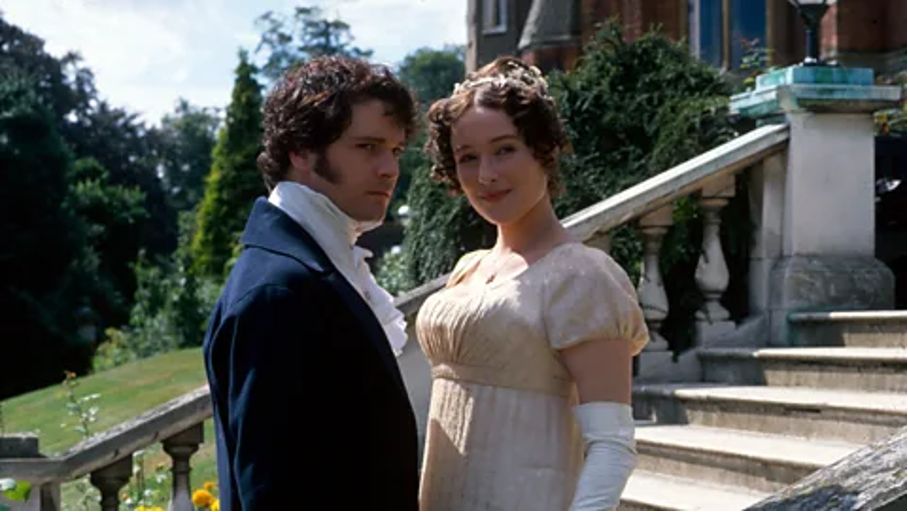
The BBC adaptation of Pride and Prejudice, released in 1995, is often considered the definitive screen version of the novel. Directed by Simon Langton and written by Andrew Davies, the series consists of six episodes, which allows it to follow the book very closely. Most scenes, dialogues, and narrative developments are taken directly from Austen’s text, sometimes even using entire passages of dialogue. This format gives the story time to breathe. Secondary characters such as Charlotte Lucas, Lydia Bennet, or Mr Collins are fully developed, which helps viewers understand the social stakes of marriage and reputation at the time. The slow evolution of Elizabeth and Darcy’s relationship feels natural and convincing, as misunderstandings and emotional changes are given enough space to unfold. The pacing reflects the rhythm of the novel, making the series particularly appreciated by readers who value fidelity to the source material. One of the most important elements of this adaptation is Colin Firth’s portrayal of Mr Darcy. His performance played a major role in redefining the character in popular culture. Darcy is shown as reserved, socially awkward, and emotionally restrained, but also deeply sensitive and principled. This interpretation humanises the character and makes his emotional growth more visible. The famous lake scene, in which Darcy unexpectedly emerges from the water in a wet white shirt, became iconic and contributed greatly to the series’ popularity. While not present in the novel, the scene visually expresses Darcy’s vulnerability and emotional confusion, showing how even faithful adaptations sometimes add new elements to enhance storytelling. Beyond its romantic appeal, the BBC series also presents a detailed reconstruction of Regency England. Costumes, locations, and social manners are carefully depicted, reinforcing a strong feeling of authenticity. This attention to historical detail aligns with the BBC’s long tradition of literary adaptations and reflects a certain cultural prestige associated with classic literature. Even today, the 1995 series remains a reference point. Many later adaptations are inevitably compared to it, especially when it comes to the character of Mr Darcy.
The 2005 Film: A More Emotional and Cinematic Approach
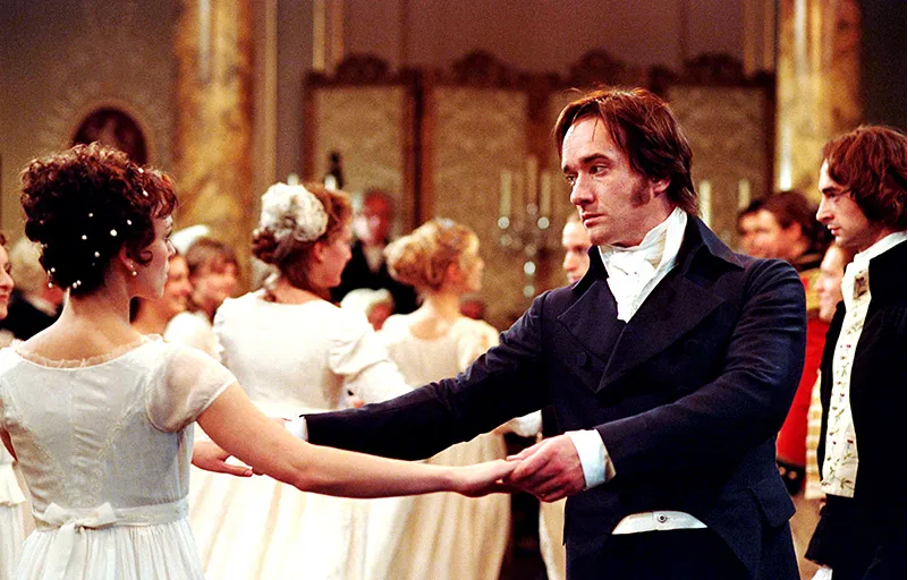
In contrast, Joe Wright’s 2005 adaptation of Pride and Prejudice takes a very different approach. Starring Keira Knightley as Elizabeth Bennet and Matthew Macfadyen as Mr Darcy, the film is shorter, more visual, and more emotionally intense than the BBC series. Due to its limited runtime, the film cannot include all the details of the novel. Some secondary characters are less developed, and certain plot elements are simplified or omitted. However, this is compensated by a strong cinematic style that focuses on atmosphere and emotion rather than narrative precision. Wright uses natural lighting, long tracking shots, and expressive landscapes to create an immersive and almost intimate viewing experience. The Bennet family home is shown as noisy and chaotic, highlighting their lower social position, while grand estates such as Pemberley are filmed with a sense of openness and freedom rather than strict formality. Keira Knightley’s Elizabeth is more openly emotional and physically expressive than in previous versions. Her performance emphasises Elizabeth’s youth, energy, and vulnerability, making her feel closer to a contemporary heroine. Similarly, Matthew Macfadyen’s Darcy is more introverted and socially uncomfortable, which makes him less traditionally confident but perhaps more relatable to a modern audience. One of the most striking aspects of the film is its focus on physical and emotional tension. Scenes such as Darcy’s first proposal in the rain or the final declaration at dawn are not found in the novel but have become memorable moments for viewers. These additions highlight how adaptations can reinterpret a story rather than simply reproduce it, prioritising emotional impact over textual accuracy. The 2005 film was particularly successful with younger audiences and helped reintroduce Pride and Prejudice to a new generation. It shows how a classic text can be reshaped to fit contemporary cinematic expectations while still respecting its original spirit.
Bridget Jones’s Diary: A Modern and Playful Adaptation
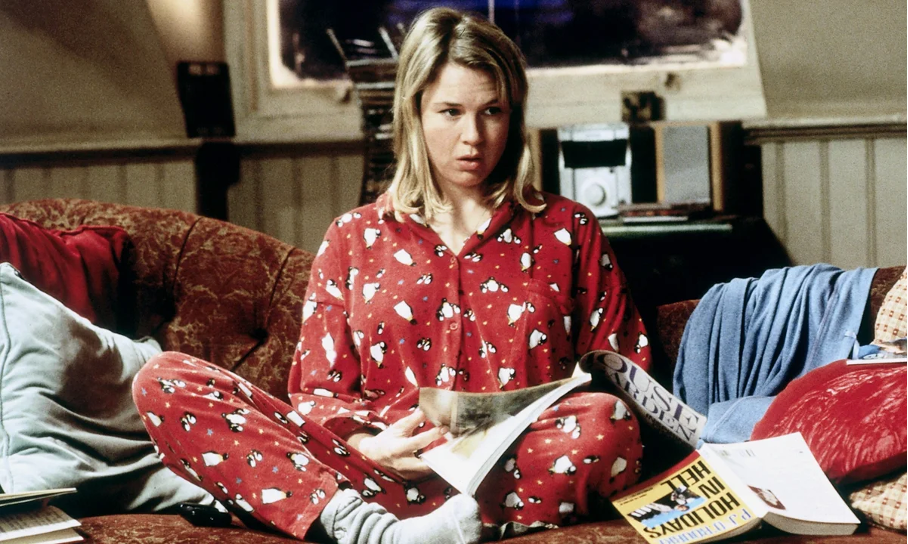
Perhaps one of the most interesting adaptations of Pride and Prejudice is also the least obvious. Published in 1996 and adapted into a film in 2001, Bridget Jones’s Diary by Helen Fielding is a modern reinterpretation of Austen’s novel. Set in late twentieth-century London, the story follows Bridget Jones, a single woman in her thirties navigating love, work, friendship, and social pressure. The parallels with Pride and Prejudice are clear: Bridget is a modern Elizabeth Bennet, Daniel Cleaver resembles George Wickham, and Mark Darcy is, of course, Mr Darcy, played once again by Colin Firth. This casting choice is not accidental. It creates a direct intertextual link between the BBC series and Bridget Jones’s Diary, rewarding viewers who are familiar with Austen’s work. The character of Mark Darcy is initially perceived as cold, distant, and socially awkward, but gradually reveals himself to be kind, loyal, and emotionally sincere, echoing Austen’s original character arc. What makes Bridget Jones’s Diary particularly interesting is its tone. The story is humorous, self-aware, and openly feminist in a contemporary sense. While Austen subtly criticised social expectations placed on women, Bridget Jones addresses these pressures more directly, especially regarding body image, career success, and romantic fulfilment. This adaptation demonstrates how Pride and Prejudice can be translated into a completely different cultural context without losing its core themes. It proves that Austen’s insights into love, misunderstanding, and self-perception remain relevant, even in a world of dating apps, office politics, and modern media.
Why Pride and Prejudice Still Matters Today
The enduring popularity of Pride and Prejudice and its adaptations raises an important question: why does this story continue to resonate so strongly with audiences? One reason is that its central conflict is deeply human. Pride and prejudice are not limited to a specific time period; they are universal traits that still shape relationships today. Moreover, the story offers a form of romantic narrative that is based on personal growth rather than instant attraction. Both Elizabeth and Darcy must confront their own flaws, biases, and misconceptions before they can truly be together. This idea of emotional development feels particularly meaningful in a modern context where relationships are often portrayed as fast, superficial, and disposable. From a cultural management perspective, Pride and Prejudice also illustrates how classic works can be continuously rebranded and reintroduced to new audiences. Each adaptation adds economic and cultural value to the original text, reinforcing its place in the literary canon while keeping it accessible and relevant.
From the faithful BBC series to the visually striking 2005 film and the playful modern adaptation Bridget Jones’s Diary, Pride and Prejudice has proven its ability to evolve with time. Each adaptation reflects the era in which it was created, offering a new interpretation of Jane Austen’s work while preserving its essential themes. As contemporary filmmakers continue to revisit classic literature, Austen’s novel remains a perfect example of how stories can transcend their original context. Pride and Prejudice is not just a period romance; it is a living cultural object, constantly reshaped by the society that engages with it. For readers and viewers alike, this ongoing reinvention may be the greatest achievement of Jane Austen’s legacy.
Written by Anna