I. Introduction
Every summer, the ancient city of Arles becomes the international epicenter of photography. Founded in 1970 by Lucien Clergue, Michel Tournier, and Jean-Maurice Rouquette, the Rencontres take over various venues throughout the city.
Balancing exhibitions by the most prestigious photographers with the discovery of emerging artists, the festival aims to provide the general public with access to the « Image. » However, it also serves as a witness to shifts in how images are processed, new usages, and the integration of emerging technologies.
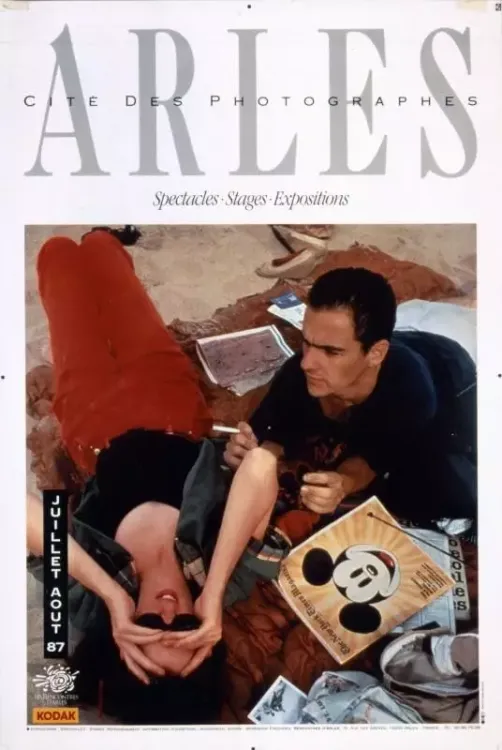
The festival’s evolution has been marked by several key milestones. In 1987, a partnership with Kodak introduced a diversity of contemporary photography through moving images, large formats, and various printing supports (canvas, plexiglass, etc.). This period also marked a departure from classic black-and-white artistic photography toward a greater emphasis on color works. In 2019, the festival celebrated its 50th anniversary, and by 2023, an agreement with the municipality allowed it to occupy a dozen exhibition sites, such as the Espace Van Gogh and the Cryptoportiques.
Regarding its economic model, the Rencontres stands apart from other summer festivals: co-productions and self-financing (at 58%) are its major levers. Public subsidies account for only 27%, a stark contrast to the Festival d’Avignon, for example, which counts only 38% in own-source revenue. Another specificity is its list of high-profile financial partners such as Kering, Louis Roederer, and the BMW Group, alongside numerous institutions. Today, the festival is no longer just a summer event but has acquired the status of a player in « cultural permanence » through the acquisition of year-round venues.In 2026, under the title « Worlds to Reread » (Des mondes à relire), the festival engages in an almost archaeological process: using photography to « reread the complexity of the world through side roads. »
II. The Legacy of 2025: Photography as an Act of Resistance
The year 2025 had already introduced the notion of rereading dominant narratives through the prism of identity, memory, and representation. Under the theme « Unruly Images » (Images Indociles), the festival took on a radically political dimension. The focus on Brazil and indigenous struggles left a lasting impression, positioned as a bulwark against cultural invisibilization.
These « dominant narratives » are rooted in rising nationalism, a surge in nihilism, and increased global warming. The festival sought to respond through a celebration of revolt and insubordination, spanning from Australia to Brazil, via North America and the Caribbean.
Credit : Love Actually (2003) – Movie Poster © Film production company
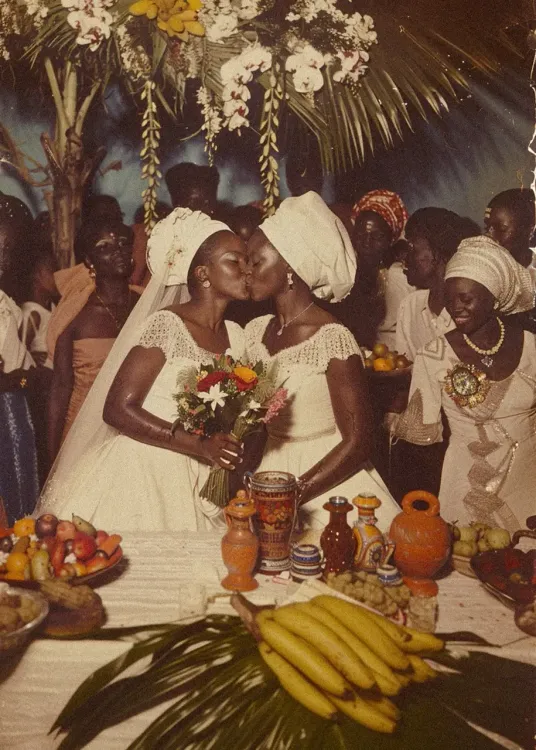
Several exhibitions were dedicated to Brazil, including « To Ancestral Futures, » which questioned colonial heritage and the struggles of Afro-Brazilian, Indigenous, and LGBT communities. A second exhibition celebrated modernist photography, featuring works by Claudia Andujar for her efforts with the Yanomami people. Feminism was also at the forefront in 2025 within the « Family Histories » section, notably featuring Camille Lévêque and Diana Markosian. Markosian’s series Santa Barbara (Le Découpage) revealed themes of fatherly absence, mystery, and the notion of lost time.
« Unruly Images » was a success; the festival’s professional week welcomed 23,000 spectators, a 15% increase in one year. The choice to blend arts, incorporating acrobats, literature, and journalism with guests like Édouard Louis and Wajdi Mouawad, gave the festival newfound depth and legitimacy.
This « unruliness » acted as a catharsis, paving the way for 2026. While 2025 showcased those who struggle, 2026 focuses on the « decolonization of the gaze. » It analyzes the mechanisms, via archives and textbooks, that erased those struggles. The objective of the new edition is to establish a visual archaeology to relearn how to view hegemonic narratives.
III. 2026: The Archaeology of the Gaze and « Worlds to Reread »
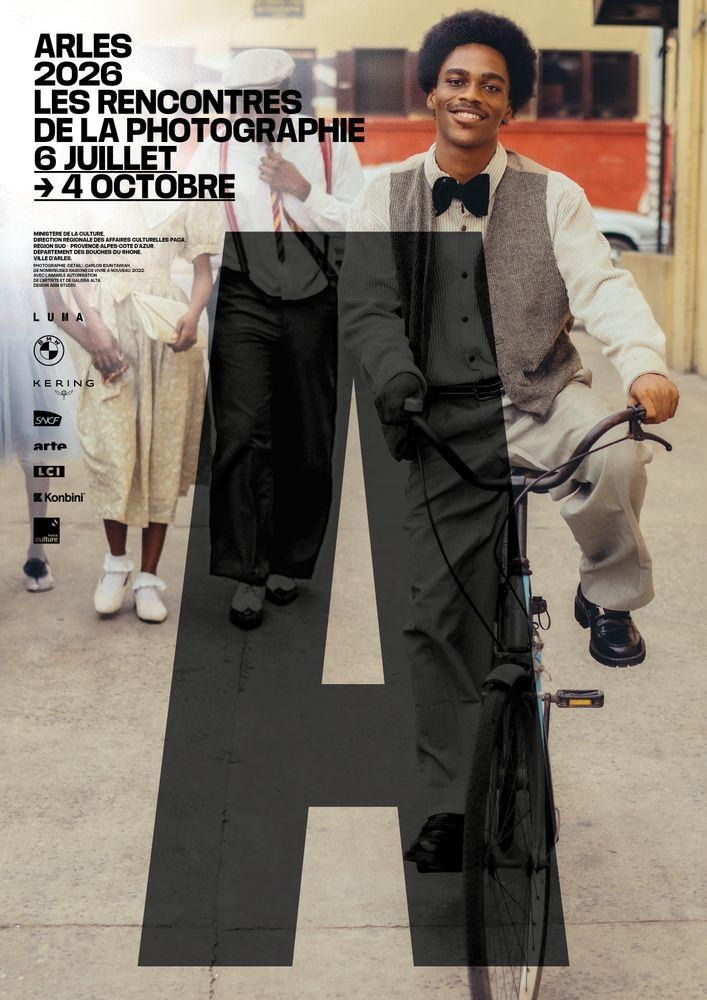
The central thread of this year rests on a powerful idea: our family albums, colonial archives, and image banks are not neutral. They tell a story written by the victors or the dominant classes. This 57th edition anchors itself in various territories, particularly the African continent and the Mediterranean.
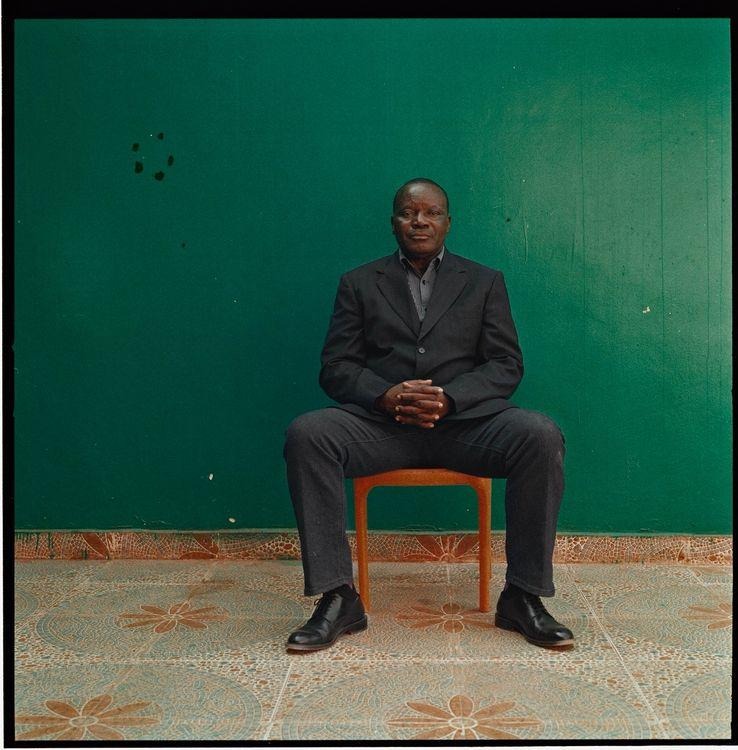
The colonial dimension is paramount for this edition. The flagship exhibition dedicated to Paul Strand (1890–1976) and James Barnor in Ghana perfectly illustrates this intent. By revisiting shots from the late 1950s, the festival does more than offer a simple retrospective; it confronts these images with contemporary Ghanaian photographers to analyze how the Western eye constructed a specific mythology of Africa.
Credit : Love Actually (2003) – Movie Poster © Film production company
The emphasis on Africa and the Mediterranean is not merely a thematic trend; it is a response to the urgent need to decenter the gaze. For decades, Arles was a bastion of European humanist or American documentary photography. By inviting figures like James Barnor or the heirs of the Maison Khadda studio, the festival operates as a form of « cultural diplomacy. » It recognizes that photographic modernity is not an Western monopoly.
This 57th edition explores what theorists call « post-colonial visuality. » How did a Ghanaian photographer in the 60s appropriate portrait codes to assert a nascent national identity? How does today’s Algerian youth use family archives to fill the silences of official history? By asking these questions, the Rencontres d’Arles moves beyond aesthetics to become a geopolitical forum. Photography is treated as a « counter-archive », a peaceful weapon used to contest reductive narratives and restore visual sovereignty to territories long left in the blind spot of major news agencies. Here, photography becomes a tool for reparation, breathing new life and historical sovereignty into the intimate and the private.Another vital focus is the living world: the « Animal Model » exhibition takes on scientific, poetic, and documentary dimensions. Flora is also honored through artists like Michel Poivert and his Flower Power project, which occupies the Summer Garden with five other artists. This prism of the living world raises major questions regarding the rights of non-humans and the sensitivity of the living. This « archaeological » approach to nature seeks to deconstruct the public’s perception of the boundary between the human and the non-human.µ
IV. Scenography at the Service of the 57th Edition
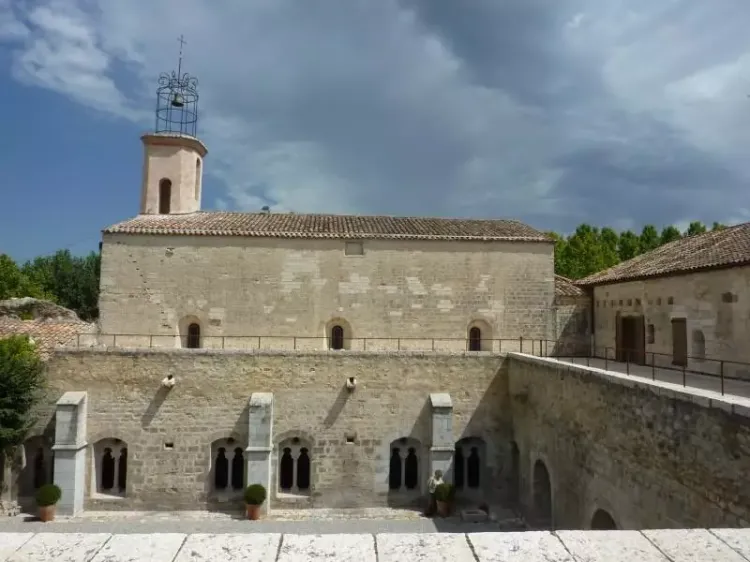
The densification of the festival is played out not only in the choice of works but in the intelligence of their spatial arrangement. In Arles, the city itself becomes a curatorial material. Exhibiting in the underground Cryptoportiques or the Church of the Frères Prêcheurs imposes physical constraints that transform how images are received. In 2026, the scenography leans toward an « ecology of attention. » Facing digital saturation, the festival proposes paths that force a slowdown: dimmed lighting, immersive yet low-tech installations, and a predominant role for silence.
This scenographic approach responds to a desire to move from the « consumption » of images to a « communion » with the works. One no longer skims an exhibition; one inhabits it. By reusing structures from previous years, Arles does more than practice a circular economy; it creates a physical memory of the sites. Regular visitors recognize the pedestals, partitions, and pathways, creating a reassuring familiarity in a constantly mutating visual world. This material permanence becomes the bedrock upon which the ephemeral nature of photography rests.
Credit : Love Actually (2003) – Movie Poster © Film production company
V. The Rencontres d’Arles: Between Prestige and Paradoxes
The unique economic model of the Rencontres, which relies heavily on self-generated income and co-productions rather than public subsidies, raises questions about the role of culture within local territories.
Arles is currently the stage for a spectacular urban transformation. The patronage of the LUMA Foundation, embodied by Frank Gehry’s tower, has propelled the city into a new economic dimension. This foundation acts as a « starchitect » force: its international reach is a tourist windfall that sustains the city year-round. Conversely, this phenomenon has led to skyrocketing real estate prices and a sense of exclusion for many locals. The festival must navigate the tension between being an elite intellectual event and remaining anchored in its home territory.
The second inevitable question for 2026 is that of AI. Facing the proliferation of synthetic images, the Rencontres has chosen materiality. The festival acts as the « guardian of the real, » prioritizing silver gelatin prints, the grain of paper, and historical evidence. For a photography festival, AI is a civilizational challenge: how can we maintain trust in the image when it can be generated by an algorithm?Finally, the Rencontres are tightening their protocols regarding the festival’s carbon footprint year after year. While the art world is often criticized for its ecological impact (flying artworks, air-conditioning venues), the Arlesian festival is implementing new levers to reduce its impact. The first is circular scenography, reusing almost all supports from one year to the next. The second is the encouragement of « slow tourism, » promoting long stays over express round-trips.
Conclusion: Photography as Political and Social Language
After vividly demonstrating it during the 2025 edition focused on revolt and the visibility of minorities, the Rencontres d’Arles promises for 2026 a form of photography that transcends fine art to reread the world and history. It proves that photography is a way to help us see better, showing us that our vision is always partial and incomplete.
In a century saturated by immediacy, Arles offers a rare luxury: the time for analysis. The 2026 edition is a life-sized lesson in semiology for the public: to look at an image is always, in a way, an act upon the world.
