A Legendary Door Reopens
I decided to write about Studio 54 after watching the recent documentary Love to Love You, Donna Summer (2023) by Roger Ross Williams and Brooklyn Sudano.
It reminded me that disco was never just a musical genre: it was a social movement, a way of being.
And this year, the mirror ball spins again: Valentino Beauty will reopen Studio 54 for one night during New York Fashion Week 2025 (Mixmag, 2024). Forty-three years after its closure, the club that once defined the 1970s returns as a luxury brand experience.
But beyond nostalgia, this revival raises questions. What did disco really mean to America then? And in a world obsessed with documentation and self-image, could a place like Studio 54 even exist today?
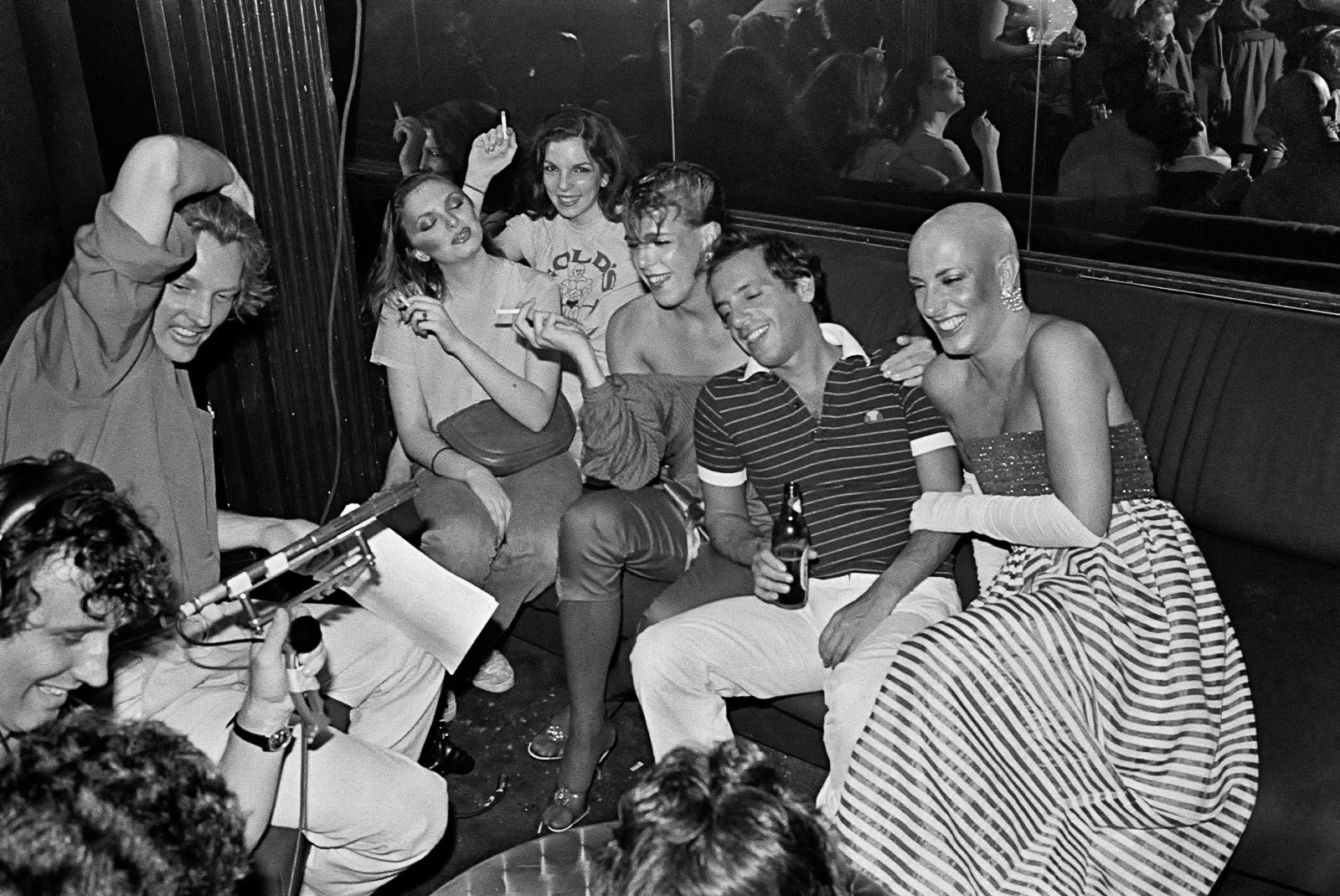
Studio 54 and the Disco Era
When Studio 54 opened in 1977, New York City was broke, dangerous, and dazzling. Inside a converted CBS television studio on West 54th Street, founders Steve Rubell and Ian Schrager created a new universe – equal parts stage and sanctuary. The door policy was ruthless: celebrities, drag queens, Wall Street brokers, and unknown dreamers mingled under a sea of strobe lights.
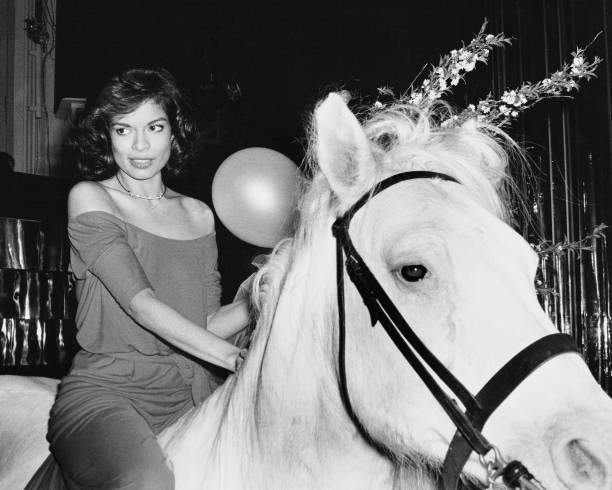
The club became a living artwork. There were horses parading across the dance floor, snowstorms made of confetti, moon installations that winked at the crowd. Bianca Jagger famously arrived on horseback wearing white satin, instantly entering pop-culture mythology (PBS American Experience, 2019).
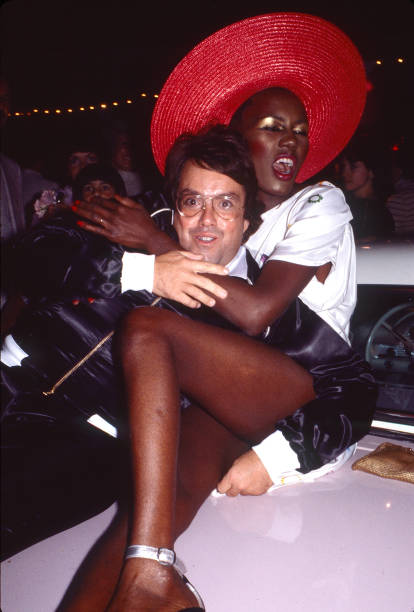
Yet behind the velvet rope, Studio 54 carried the rhythm of something deeper. Disco had been born in Black, Latinx and queer communities in underground clubs like the Loft and Paradise Garage. It was a rhythm of liberation, a celebration of bodies long excluded from mainstream stages. Studio 54 simply amplified it, turning subculture into spectacle.
Studio 54 was more than a nightclub; it was a laboratory of identity, where the beat itself became permission to exist.
Parallel Lights: Paris Is Burning
Yet while Studio 54 translated queer and Black creativity into mainstream stardom, other communities built their own stages. A few blocks and a decade away, Paris Is Burning (Jennie Livingston, 1990) captured the underground ballroom scene where Black and Latinx queer people competed in “categories” – performing the glamour and status denied to them elsewhere. Both spaces celebrated transformation, but with opposite economies: Studio 54 traded on access and fame, while the drag balls of Paris Is Burning invented glamour from the margins.
Watching those ballroom dancers “walk” executive or model categories feels like a reply to the velvet rope of Studio 54 – a way of saying if you won’t let us in, we’ll build our own club. The same city, the same yearning for light, but radically different routes to visibility.
The Social Pulse of the 1970s
To understand disco’s power, we need to picture its world. America in the late 1970s was emerging from Vietnam and Watergate; feminism and gay liberation were reshaping public life. The dance floor became a kind of refuge, a temporary utopia where politics dissolved under strobes and sweat.
As historian Tim Lawrence notes, disco was “a collective experience of self-transformation.” Underneath the glitter was a social message: joy can be political.
For queer communities, disco offered a freedom rarely found elsewhere. It was both rebellion and therapy, a sonic space where difference turned into rhythm.
Studio 54 translated that radical energy into mainstream glamour. Its decadence fascinated America – a mix of money, desire, and inclusivity that mirrored the country’s contradictions. Much like the drag balls later captured in Paris Is Burning, it was about performing who you could be, if only for one night.
Excess, Glamour and Collapse
Every myth needs its fall. Studio 54’s success was as outrageous as its parties. Rubell once bragged that the club made $7 million in its first year (Britannica, 2023). But by 1979, the fantasy cracked: the founders were arrested for tax evasion, and the dream of endless freedom met the reality of capitalism.
At the same time, the “Disco Demolition Night” in Chicago (1979) revealed the cultural backlash. What began as a radio stunt to destroy disco records turned into a riot charged with racism and homophobia. The message was clear: not everyone wanted liberation on the dance floor.
Yet disco never died. It morphed into house, pop, and electronic music; its pulse survived through artists like Madonna, Daft Punk, and Beyoncé. The mirror ball simply kept turning in new forms.
From Underground to Heritage
Fast-forward to 2025, and disco’s ghosts dance again. When Valentino Beauty chose to reopen Studio 54 for Fashion Week, it wasn’t just a party, it was a statement. Brands now trade on nostalgia; they monetize cultural memory.
But nostalgia can be double-edged. The original club was about anonymity and experimentation, not curated selfies. Today’s luxury version risks domesticating what was once wild.
Still, disco’s Black and queer roots are finally being recognized. In the past few years, Beyoncé’s Renaissance (2022), Dua Lipa’s Future Nostalgia (2020), and countless fashion collections have re-embraced that heritage. The Valentino event might be commodified, but it also reminds the mainstream where disco came from and who built it.
Freedom in the Age of Surveillance
The question I keep returning to is simple: Could Studio 54 exist today?
Our nights are now lived under the glow of phone screens. Every dance, every kiss, every fall becomes content. The sense of danger, of losing control, has been replaced by performance for the algorithm.
Studio 54 thrived on mystery. You didn’t film it; you lived it. That intimacy is what made it sacred. Today, nightlife is more inclusive, safer, and often more political but perhaps less spontaneous. Freedom is filtered; privacy is a luxury.
The ballroom culture that Paris Is Burning immortalized hasn’t vanished either; it has evolved through shows like Pose and the global vogueing scene. What began as an act of defiance is now part of pop culture, just as disco’s beat echoes in today’s hits. Both remind us that freedom on the dance floor is never guaranteed. It must be reinvented, again and again, by those brave enough to perform it.
And yet, the need for spaces of collective euphoria hasn’t vanished. You can still find them in Brooklyn warehouses, queer bars, summer festivals, or even in Nantes in clubs like Macadam, where phones stay in pockets and strangers dance like it’s 1977. Maybe that’s the true legacy of disco: the constant search for moments that feel unrecorded but unforgettable.
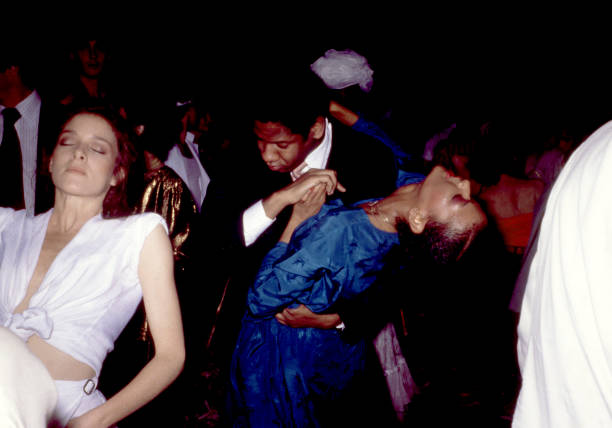
Why Studio 54 Still Matters
Studio 54’s myth endures because it speaks to a universal desire: to be everything, if only for one night. It was a place where art, hedonism, and identity collapsed into pure rhythm.
For cultural-management students like us, it’s also a reminder that culture is cyclical. Every generation rediscovers freedom, packages it, and sells it back. The dance floor teaches us that creation and consumption are never fully separate; they spin together like light on a mirror ball.
Personally, what draws me to that world isn’t just the glamour, it’s the courage. People danced as if no one was watching, because for once, no one was. In a world obsessed with visibility, that kind of invisibility feels radical.
The Light Still Spins
Forty-three years after its closure, Studio 54 still captures the imagination because it was more than a club. It was a manifesto. A belief that joy, diversity, and excess could rewrite social order.
As the doors reopen for one glittering night in 2025, perhaps the lesson isn’t nostalgia but renewal. Every era needs its dance floor, its soundtrack of freedom. The forms change (from vinyl to streaming, from drag balls to TikTok) but the impulse remains.
From Studio 54’s velvet rope to the community halls of Paris Is Burning, New York has always danced between exclusion and creation, proving that when culture closes its doors, art finds another entrance.
In the end, the mirror ball keeps turning, reflecting who we were, and who we still dream of becoming.
Written by Aliona Ousviatsev
Sources:
- Mixmag (2024). “Studio 54 to reopen for the first time in 43 years for Valentino Beauty NYFW party.” https://mixmag.net/read/studio-54-reopen-first-time-43-years-september-valentino-news
- PBS American Experience (2019). “A Glimpse of the Glamorous World of Studio 54.” https://www.pbs.org/wgbh/americanexperience/features/war-disco-glimpse-glamorous-world-studio-54/
- Britannica (2023). “Studio 54.” https://www.britannica.com/topic/Studio-54
- Love to Love You, Donna Summer (2023), documentary by Roger Ross Williams & Brooklyn Sudano, HBO.
- Tim Lawrence (2003). Love Saves the Day: A History of American Dance Music Culture, 1970–1979. Duke University Press.
- Paris Is Burning (1990), documentary by Jennie Livingston.
- Studio 54 (2018), documentary by Matt Tyrnauer : https://www.youtube.com/watch?v=qP3sCLLZ4gI
