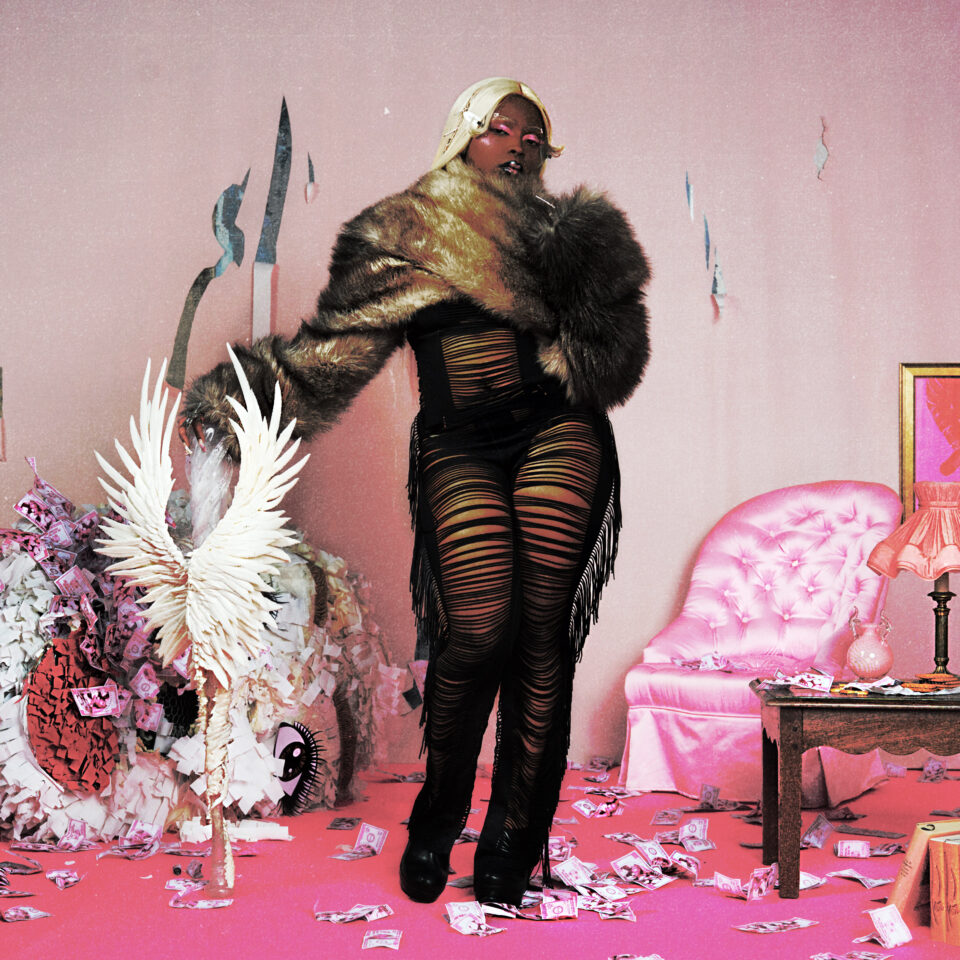
Tuesday, March 17, and Wednesday, March 18, 2026: the Zénith de Nantes is set to shake. The impact is too massive, the fire too bright. The walls, inevitably, will be pushed.At just 22 years old, Theodora is taking the stage for one of the first dates of her debut Zénith tour. This tour will be a milestone in the same way that Theodora herself is currently impacting the French-speaking music industry by her presence. To find a true artist driven by a true will for the expansion of ideas and art is rare in the 2020s. Yet, against the odds of a standardized market, it is working.
The end of the aseptized pop star.
Theodora is not the “storytelling” singer-songwriter France has been conditioned to consume for decades. While she has never spoken bluntly about, she seems to be conscious of her OVNI status in the French market where the dominant mold for female artists is often encouraged by major labels seeking safe investments and where everything mainly revolves around ultra-relatability of the audience. This would be the aseptized pop stars: figures designed to be neutral, pleasing, and emotionally legible. The marketing strategy for these artists usually follows a script: 1) literal narratives in their songs, designed like diary entries, leaving zero room for interpretation ; 2) the non-threatening persona curated to be the ideal friend ; 3) a radio-friendly production without harsh, distorted or aggressive musical texture.
We can have in mind some Star Academy candidates, often cited as examples of this formatted rise. But the issue goes deeper than the TV shows. It’s an economic philosophy. According to SNEP (Syndicat National de l’Édition Phonographique) data, the “Variété Française” and “Pop” segments still rely heavily on physical sales from older demographics who prefer cleanness and narrative clarity. Labels often push artists into this pleasing corner because it minimizes financial risk. They want lyrics that are inclusive in the most neutral, almost corporate sense of the word.
Theodora, however, is the antithesis of this neutrality.
A nomad heritage.
What do we know about her? Lili Théodora Mbangayo Mujinga is born in Lucerne (Switzerland) in a family of Congolese immigrants working in the medical field. In her early years, she moved a lot: Greece (she used to speak fluent Greek), Congo, La Réunion, Bordeaux, Brittany, Seine-et-Marne and lastly Seine-Saint-Denis. Her big brother, producer known as Jeez Suave, is her composer and manager.
This multi-cultural background places her in a lineage of some global pop architects. Think of M.I.A. (moving from Sri Lanka, India and the UK), Freddie Mercury (born in Zanzibar, then moved to India, before landing in London) or even Manu Chao (born in France, travelled a lot in his youth from Spain, Senegal and Latin America) … artists who didn’t fit into a single box because their very existence was an intersection of cultures and who became spearhead of musical movements. In a country like France, which often struggles with its own plural identity, Theodora represents this very-human fluidity.
However, taking such a stance as a Black woman in the French music industry can be tough, and we must acknowledge the hostile environment she has navigated in. Maybe the judo she practiced in her early years helped her to fight.
Art is a combat sport.
The French industry has a documented history of “misogynoire”: a word coined by the Afro-American feminist Moya Bailey in her essay “Ils ne parlent pas de moi” (2010) that describes the specific intersection of racism and sexism. We’ve seen it in the disproportionate vitriol directed at Aya Nakamura during the 2024 Olympics discourse, the constant policing of Yseult’s body and tone, or the barriers faced by artists like Ebony in the Star Academy (whose production company even filed a complaint for, alongside with SOS Racisme). Statistics from the Centre National de la Musique (CNM) and various industry watchdogs consistently show that while Black women dominate the “urban” charts, they are frequently excluded more prestigious categories, the rotation on mainstream pop radio, luxury brand partnerships, or headline slots at festivals.
For a long time, the French pop star archetype was white, fragile, and melancholic. When a Black woman entered that space, she was expected to be either the diva or urban (or both). Theodora bypassed both. She is reclaiming the alternative space, while this has been a space historically guarded by white indie-rock gatekeepers.
From TikTok to the grand piano.
Her ascent started with the “BBL” era, inspired by the surgical procedure, but here it’s the state of mind which is transformed. Following her early EPs Neptune (2021) and the UK garage-influenced “Lili aux paradis artificiels” (2023), “Kongolese sous BBL”, released in September 2024, was not her first song, but her first success. It was fresh, it was cheeky, playful, with a slightly mischievous energy. She used TikTok and Instagram as PR tools to convey a digital stage for her personality, blending high-fashion aesthetics with a very real sense of humor.
Then came the pivot: the acoustic version of “Ils me rient tous au nez” performed during the HyperFestival at the Maison de la Radio (January 2025). Invited by Chilly Gonzales for his “Rap de Chambre” project, she reinterpreted her repertoire with a grand piano. This was the moment everyone stopped looking at her as the viral sensation and started looking at her as a Vocalist with a capital V. Stripped of the club production, her voice revealed a vulnerability that echoed the greats, a touch of Lana Del Rey’s cinematic sorrow mixed with the rhythmics of a jazz singer.
This led us to the “Mega BBL” era (reedition released in May 30, 2025). Its stats are huge: millions of streams (54,000 equivalent sales), gold certifications achieved in less than a month (June 12, 2025), and a clear dominance on the charts. The project expanded her universe with collaborations ranging from the street-king Jul to the melodic Luidji. But more importantly, she did this without losing her weirdness: receiving the award for Female Revelation of the Year at Les Flammes ceremony on May 14, 2025, she says “this award is for all the little black girls who are weirdos”. Maybe being weird is how you can be avant-garde. She proved that around the “Fashion Designa” aesthetic: hyper-conceptual, almost alien, and still have the whole of France singing along. By 2026, her legitimacy was cemented by multiple victories at the Victoires de la Musique and her new role as a judge on Netflix’s Nouvelle École (Season 5).
A cultural curator.
Theodora’s music is a no-man’s-land of genres. She blends Baile Funk, Jersey Club, and Afro-beat with the dark textures of Cold Wave. It’s music for the club, but also music for the bedroom. Perfect to fit in every situation us youngsters live through.
And her marketing around her music is clearly part of her art direction. Whether it’s the Fashion Designa music video or her tour posters, there is a commitment to a high art aesthetic that we usually only see from the big stars like Beyoncé or FKA Twigs. She understands that in the age of the image, the pop star must be a visual icon.
[image: Theodora-fashion-designa // legend: Image from the “Fashion Designa” music video.]
Perhaps her most impressive trait is how she uses her platform. Theodora does collaborate with big names for clout, but not only. She pulls up artists from the underground, people from genres that are often ignored or deemed “not mainstream enough”. One can think of her invite to Brazy to sing on “Mon Bébé” (20 million streams on Spotify). Brazy is a Nigerian, exploring her own genre (“Afro-Sexy Afro Future”), performing worldwide but quite unknown in France. She’s entered the French market thanks to Theodora, along other artists discovered by her featuring: BB Trickz, ThisizLondon, Brazy, Meryl, HollyG or Len Lucci. By doing this, she acts as a cultural curator, expanding the boundaries of what pop can actually sound like. She is creating an ecosystem around her, and that is how artists build the bases for a long career…
A symbol of resistance.
A last explanation of her success lies in the global context; the dark political times we live in. As the shadows of exclusion, fascism, and social division grow longer across the Western world (and particularly in France), the role of the artist changes. We don’t just need entertainers anymore: we need symbols of resistance! Theodora is that symbol. She is a woman of the Left, not necessarily through slogans (though she is vocal), but through her very existence and the way she occupies space. As a bisexual Black female artist, she represents a France that is plural, queer, brilliant, and moving forward.
She reminds me of Josephine Baker. Not just because of the Parisian icon status, but because of the defiance she faces. Baker used her body and her art to fight the fascism of her time, proving that beauty and rhythm could be forms of sabotage against hate. Theodora does the same for 2026. In a world that wants to close borders and minds, her music is an open door. She paves the way for other Black female artists and for a whole generation of listeners who feel like they don’t fit into the narrow definitions of identity being pushed by the headlines.
Theodora is a chance for us. She is a reminder that the future doesn’t have to be grey and monolithic. It can be loud, it can be bass-heavy, and it can be beautifully, radically human.
Sexy Music 4 Life.
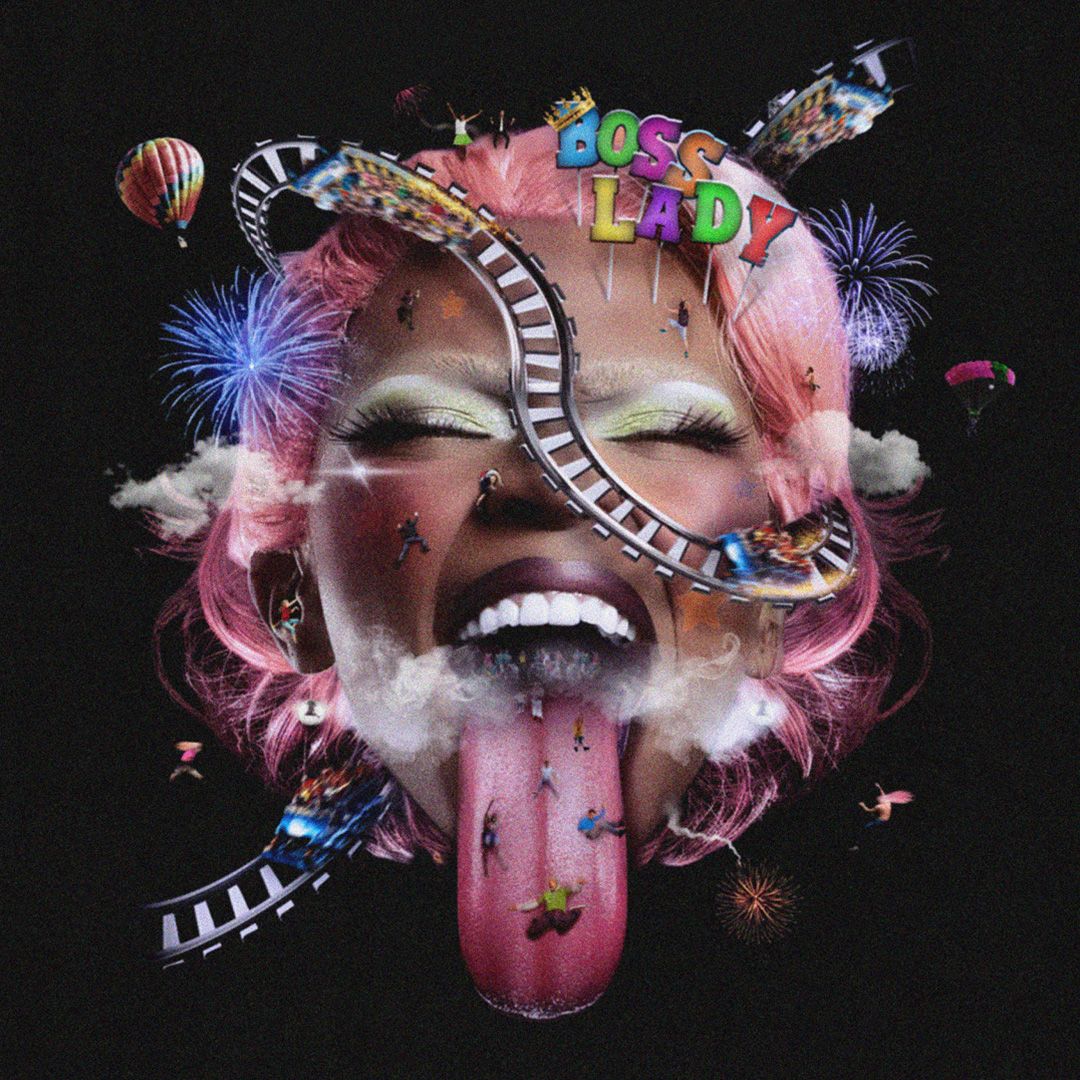
As we stand on the precipice of this new tour, the question is: what’s next? On Friday 13 March, she released “Miss KITOKO”, first single for her new era “Sexy Music 4 Life”. I bet on a sound that is even more expansive, perhaps leaning further into the experimental electronics she teased during her festival run last summer. The Zénith tour is the final test. Transitioning from the intimacy of clubs and young people’s bedrooms or the controlled chaos of a 45-minute festival set to a two-hour arena show requires a level of stamina and stardom that few possess…
When the first notes hit the Zénith de Nantes on Tuesday, it won’t just be the floor trembling. It will be the sound of an old world cracking, and a new one, Theodora’s world, taking its place.
