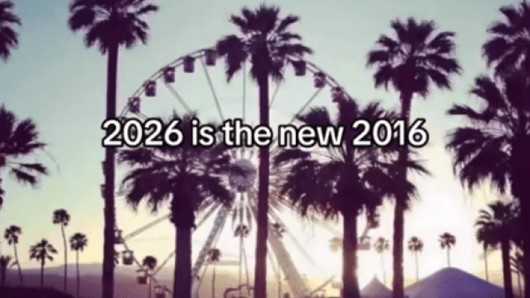
Stranger Things is on TV in millions of homes, Taylor Swift and Zara Larsson are at the height of their fame, Instagram and its stories are more popular than ever… No, I’m not describing 2016, but rather the beginning of 2026. This feeling of collective déjà vu, shared on social media and in the press, illustrates a deep need to hold on to familiar cultural references, back to a time perceived as more simple and carefree.
Indeed, 2026 seems to be a year marked by nostalgia, and this collective desire to revive memories from ten years ago now has a name: #2026isthenew2016. On TikTok, more than 55 million videos have already been created around this trend, while on streaming platforms, playlists referencing the year 2016 are experiencing a spectacular rise in popularity. This phenomenon, which at first glance might seem inconsequential, actually reveals a deep need to look back to a past that is perceived as more reassuring, in an increasingly unstable global context characterized by a series of crises that undermine the sense of collective security. From this point, it is worth asking: how can what appears to be a simple trend have a lasting influence on global cultural offerings? And above all, is this surge of nostalgia a way of reviving happy memories, or a form of denial in the face of the uncertainties of the contemporary world, where individuals seek to protect themselves psychologically by idealizing what they have already experienced?
Why has 2016 left such a mark on people’s minds?
To understand the scale of this nostalgia, it is necessary to recall the context in which 2016 took place. The 2010s were caught between two major crises, namely the economic crisis of 2008 and the health crisis of 2020, which makes 2016 seem like a relatively stable interlude in an already fragile world. This impression of relative stability, although illusory, reinforces the idea nowadays that 2016 represents a kind of lost equilibrium. In France, this year has come after a particularly challenging period marked by the attacks of 2015, which largely explains the collective need for cheerfulness and distraction. This desire to escape from an anxiogenic daily life was manifested in particular through the aesthetics of social networks, where Snapchat filters, Instagram boomerangs, ultra-saturated colours, and playful content dominated, giving the illusion of a simpler and happier world, almost disconnected from political and social realities.
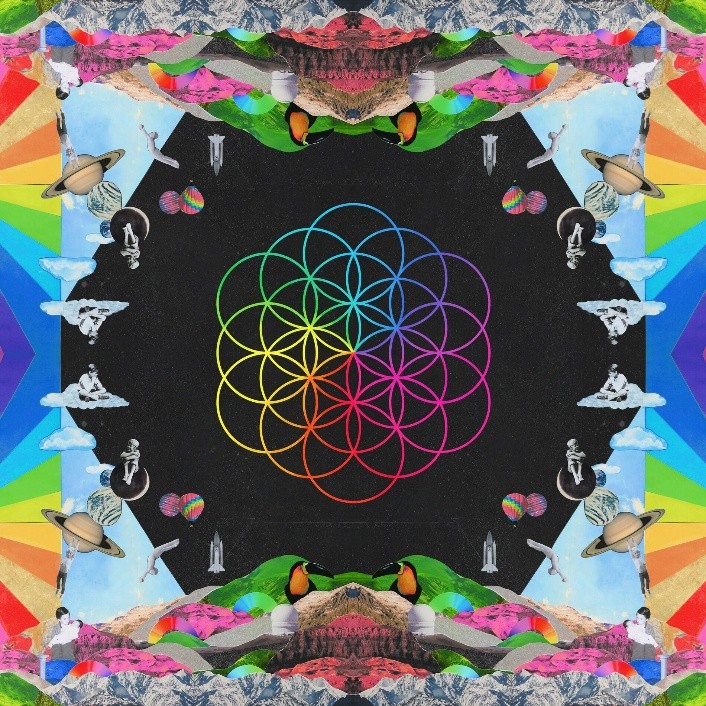
This aesthetic has also found its way into music, where artists such as Twenty One Pilots, The Chainsmokers, and Justin Timberlake have dominated the charts with danceable, accessible, and refreshingly light pop music, designed as a soundtrack to an era of carefree living. The band Coldplay perfectly embodied this visual and emotional trend with the extremely colourful cover of Hymn for the Weekend, which was at the top of the charts back then, and strikingly illustrated this collective desire to celebrate joy, partying and letting go.
In the collective imaginary, 2016 was also associated with numerous cultural phenomena: the global success of Pokémon Go, the massive emergence of filters on Snapchat, the first season of Stranger Things, the Euro 2016 football tournament in France, and the creation of TikTok. All these elements contributed to the image of a particularly entertaining and memorable year, which has now become a true generational milestone.
Nostalgia as an emotional escape from an anxiogenic present
If 2016 is back in trend today, it is because this colourful and light-hearted aesthetic acts as a real emotional escape in a world that is considered stressful, marked by armed conflicts, the climate crisis, political instability, and the rapid development of artificial intelligence, which fuels many concerns about the future. On current social media platforms, the search for high performance and perfection has gradually replaced the spontaneity of the early days. Algorithms are shaping increasingly uniform profiles, whereas dull colours and smooth, minimalist content give the impression of a loss of creativity and authenticity. Faced with this standardization, many internet users are taking the counter-approach by deliberately adopting an exaggerated aesthetic, bordering on kitsch, reminiscent in style of 2016.
Zara Larsson is a particularly telling example. Her song Symphony (2017) is currently enjoying a revival thanks to a trend featuring bright colours and extravagant designs as a way of escaping from what is perceived as a gloomy everyday life.
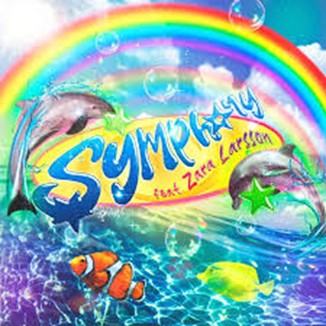
In the same vein, Lush Life (2015) has gone viral once again and now plays a central role in her concerts, both in terms of stage design and costumes that embody a sense of letting go. The lyrics also fit perfectly with this fantasy mindset:
“I live my day as if it was the last
Live my day as if there was no past
Doin’ it all night all summer
Doin’ it the way I wanna”
Nostalgia as a marketing strategy: when the past becomes a product
Another important dimension of this nostalgia lies in its marketing impact, because this return to 2016 is no longer limited to a simple emotional expression, but is now part of a genuine strategy to capture attention. In a context where internet users say they are saturated with content that is too polished, too promotional, or generated by artificial intelligence, references to 2016 appear more authentic, more spontaneous, and more human. The cultural elements associated with this period such as retro filters, viral challenges, iconic music or simple formats are now being reused and adapted to produce engaging content that circulates widely on social media and generates strong interactions. The platforms themselves are participating in this dynamic by promoting these types of posts in their recommendation systems, which increases user time spent and engagement, while also boosting the trend’s visibility. Brands quickly saw this virality as an opportunity and began to exploit this aesthetic and these references to connect emotionally with their audience.
This phenomenon is not without consequences for marketing: several companies have already chosen to capitalize directly on nostalgia by launching products or campaigns inspired by this period. The Panera Bread restaurant chain, for example, offered a special “2016” menu featuring dishes that were popular at the time, in order to attract consumers by playing on their memories of a past that is perceived as simpler and more comforting. Similarly, many brands are now reintroducing visual and audio codes specific to 2016—whether filters, jingles, or playlists—because they resonate strongly with online communities and trigger an immediate emotional response. Thus, the use of the past is no longer limited to individual nostalgia: it has become a strategic tool for capturing the attention of an audience seeking experiences that are perceived as more sincere, less scripted, and less dominated by algorithmic logic.

When the trend serves a selective, idealized narrative of the past
However, while this idealization of 2016 may seem harmless, it is actually based on a deeply selective memory, which tends to erase the darker aspects of this period and retain only what can reassure us today. In psychology, this mechanism has been studied by Constantine Sedikides, who explains that nostalgia helps maintain a sense of identity continuity and emotional security when the present is perceived as unstable (Sedikides et al., 2008). In other words, nostalgia does not accurately reflect the past, but offers a softened version of it, reconstructed based on the emotional needs of the present.
Thus, when internet users refer to 2016 as a happier and more worry-free time, they are not so much describing historical reality as the comforting image they have reconstructed of it : this embellished memory contradicts the political and social context of the time. The year 2016 was marked by numerous terrorist attacks, notably in Brussels, Orlando, and Nice, which deeply traumatized populations and created a lasting climate of fear. Added to this were major political upsets, such as the Brexit and the election of Donald Trump, which initiated an era of polarization that is even more visible today. Furthermore, this idealized vision obscures certain social realities, particularly for women. Before the #MeToo movement, sexual violence remained largely taboo, sexism in the workplace was even more unpunished, and cyberbullying was rarely taken seriously. In this sense, idealizing 2016 amounts to rewriting the past in a gentler, more reassuring form, at the risk of masking injustices and turning nostalgia into a refuge rather than a tool for critical reflection.
Not a Simple Trend, but a Cultural Pattern.
The return of 2016 aesthetics in 2026 may be part of a larger phenomenon: culture seems to move in cycles rather than in a straight line. Throughout history, fashion, music, and art have often revived past decades. The 1980s came back in the 2000s, the 1990s returned in the 2010s, and now the 2010s are being recycled in the 2020s. This suggests that when society feels unstable, it naturally looks backward instead of forward. Today, this cycle is accelerated by social media and algorithms. Platforms promote what already works, which encourages repetition instead of innovation. Trends are recycled faster than ever, creating the feeling that “nothing new” is being invented, only remixed. This may explain why young generations feel emotionally connected to years they did not even live through: the past is constantly reshaped and sold as something new. Rather than seeing this nostalgia only as a sign of denial, it can also be understood as a creative engine. Artists, brands, and users do not simply copy the past: they reinterpret it, mix it with modern codes, and give it new meanings. The real challenge for contemporary culture is therefore not to escape into yesterday, but to use memory as a starting point to imagine new and original forms for the future.
Written by Noam Zachayus