In 2022, Elon Musk spent $44 billion to acquire Twitter. For some, it was nothing more than a high-profile business transaction. For others, it was a warning sign. A single billionaire had acquired one of the world’s most influential communication platforms and gained the ability to reshape its rules, its algorithms and, inevitably, part of the public opinion.
In 2022, Elon Musk bought the social media Twitter for 44 billion dollars and later renamed it X
In Europe, such concentrations of power are generally viewed with greater suspicion. Competition authorities regularly intervene when mergers threaten to distort markets, reduce competition or create excessive dominance, even in the cultural sector.
In 2022, the planned merger between TF1 and M6 was ultimately abandoned after competition authorities raised concerns that the combined group would dominate the French television advertising market. A few years earlier, the European Commission blocked the merger between Alstom and Siemens Mobility, arguing that the operation would significantly reduce competition in railway signalling and very high-speed trains. In both cases, the reasoning was similar: creating a « national » or « European » champion may sound attractive politically, but not if it comes at the expense of competition, innovation and consumer choice.
Whether one agrees with that decision or not is almost beside the point. What matters is the principle it illustrates. In France, there are still sectors in which public authorities are willing to say: no, bigger is not always better. No, not every acquisition should be approved simply because the buyer has the money. No, market concentration is not automatically a sign of progress.
The principle is straightforward: an economy functions best when power is distributed among multiple actors rather than concentrated in a handful of corporations. Economists have long shown that oligopolies and monopolies tend to produce outcomes that are harmful for consumers and society as a whole. With fewer competitors, dominant firms face less pressure to lower prices, improve quality or innovate. Consumers often end up paying more for fewer choices. Workers typically see their bargaining power decline as employers become larger and more concentrated. Over time, economic concentration also translates into political influence, as the largest corporations gain greater ability to shape regulation, lobbying efforts and public debate.
The United States has increasingly moved in the opposite direction and turned into what some might consider an oligarchy on many levels. Over the past several decades, mergers and acquisitions have created ever-larger conglomerates across technology, finance, agriculture, telecommunications and media. Wealth has concentrated at extraordinary levels. The fortunes of billionaires such as Elon Musk, Jeff Bezos and other members of the American ultra-rich have multiplied while economic power has become increasingly centralized.
The proposed merger between Paramount and Warner Bros. Discovery is not the most important example of that phenomenon. It does not directly affect healthcare, housing or food prices. But it may be one of the clearest.
Because if regulators are prepared to allow this degree of concentration even in culture, in arts, then what exactly is the limit?
Founded in 1912, Paramount is one of the oldest and most influential companies in the history of entertainment. Through more than a century of filmmaking, the studio built an extraordinary catalogue including The Godfather, Top Gun, Mission: Impossible and Star Trek. Over time, Paramount expanded far beyond movies. Its parent company, Paramount Global, came to control major television assets such as CBS, Nickelodeon, MTV and Comedy Central, as well as the streaming service Paramount+.
Yet despite its cultural importance, Paramount entered the streaming era in a weakened position. The transition away from traditional television damaged revenues throughout the media industry, while enormous investments were required to compete with Netflix, Disney and Amazon. Under mounting pressure, controlling shareholder Shari Redstone sought strategic alternatives, eventually agreeing to a deal with Skydance Media, the production company founded by David Ellison. The transaction was announced in July 2024 and ultimately transferredcontrol of Paramount from the Redstone family to companies controlled by the Ellison family.
The Ellisons are not ordinary investors. David Ellison’s father, Larry Ellison, founded Oracle and is among the wealthiest individuals in the world. Through Skydance and the Paramount deal, the family moved from producing movies to controlling one of Hollywood’s historic giants.
Officially, the objective was to give Paramount the scale necessary to survive in an increasingly competitive market. But barely had the Paramount acquisition been completed before an even more ambitious project emerged in David Ellison’s head.
In February 2026, Paramount Skydance Corporation announced an agreement to acquire Warner Bros. Discovery in a transaction valued at approximately $110 billion. The announcement came as a shock because not only was it unexpected, but the amount of the buyout is bigger than the GDP of dozens of countries, and it is large enough to place an unprecedented share of Hollywood’s creative output under a single corporate roof. It would be one of the largest media transactions ever attempted and would create one of the most powerful entertainment conglomerates in modern history.
Founded in 1912, Paramount Pictures is one of Hollywood’s oldest studios. Its acquisition by the Ellison-controlled Skydance marked the beginning of an ambitious strategy to build a larger media empire.
So, the popular backlash began immediately and critics were fierce. In response, the rationale offered by executives is familiar. The entertainment landscape is changing. Streaming is expensive. Competition is fierce. Larger companies are supposedly better positioned to compete against Netflix, Amazon and other technology giants. Paramount argues that the combination would strengthen investment in content, enhance its streaming business and create a stronger global competitor.
The problem with that argument is that it has become the standard justification for virtually every merger in modern corporate America. Companies claim they must grow bigger because other companies are already big. Billionaires claim they need more assets because other billionaires have more assets. Conglomerates argue they need more power because they fear competitors with power.
The result is a permanent cycle of concentration in which nobody ever seems large enough.
As of September 2026, the merger has not been completed yet and remains entangled in legal and antitrust challenges, with its fate still uncertain. But if approved, the merged company would unite an astonishing collection of media properties under a single corporate umbrella. Paramount Pictures and Warner Bros. Pictures. CBS and CNN. HBO and Paramount+. Nickelodeon, MTV, Comedy Central and Discovery. It would control some of the most valuable intellectual properties in entertainment, including Harry Potter, Game of Thrones, DC Comics, Mission: Impossible, Top Gun, Star Trek and SpongeBob SquarePants.
But the true significance of the merger lies not in the number of brands or franchises it would control, but in the amount of power it would concentrate. A corporation of this size would enjoy considerable lobbying influence in Washington, giving it greater ability to shape regulations, defend its interests and influence political decision-making. Within the entertainment industry, its leverage would be even greater. It would gain extraordinary power over what projects get financed, which stories reach audiences, which distribution channels survive and what kinds of careers are rewarded.
Moreover, actors, writers, directors and producers would increasingly find themselves dependent on the decisions of a shrinking number of executives. Thus, in April 2026, more than 1,000 actors, filmmakers and industry professionals signed an open letter opposing the merger. Public signatories included Jane Fonda, Joaquin Phoenix and Mark Ruffalo. Their warning was clear: fewer competitors would mean fewer opportunities for creators, increased pressure on jobs throughout the industry and reduced choice for audiences.
The opposition extended beyond celebrity activism. The Writers Guild of America became one of the deal’s most vocal opponents, ultimately filing a lawsuit seeking to block the transaction. According to the guild, the combined company would become the largest buyer of original film and television programming in the United States, giving it enormous leverage over writers’ employment opportunities, compensation and working conditions. Their concerns are not merely theoretical. Hollywood has already lived through repeated waves of consolidation. Again and again, executives promised growth. Again and again, workers experienced layoffs, restructuring and cancelled projects. The Writers Guild and other opponents argue that previous mergers often resulted in fewer productions rather than more, despite the optimistic forecasts presented before approval.
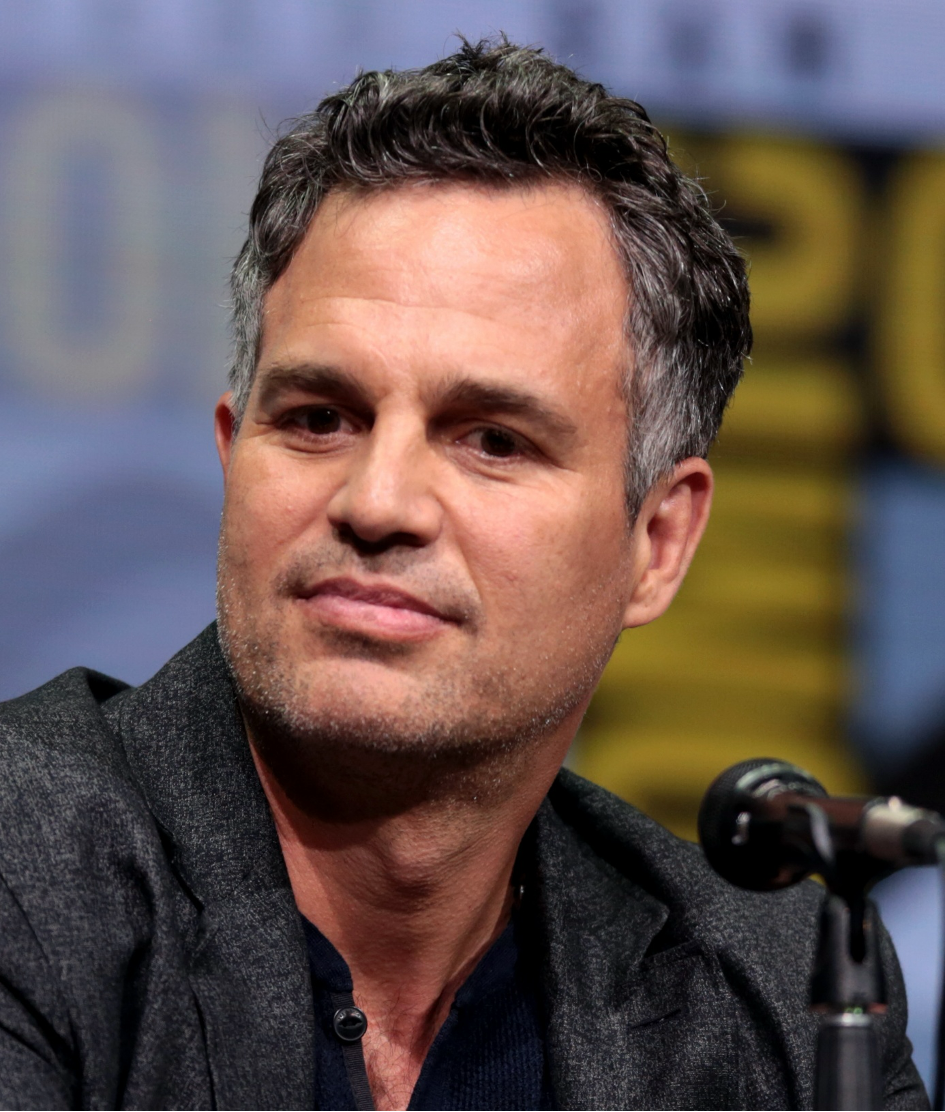
Mark Ruffalo was among more than 1,000 industry professionals who publicly opposed the Paramount-Warner merger in April 2026.
The danger is not necessarily the abuse of such power, but its existence in the first place. When too much of an industry’s creative output is controlled by a single player, entire trends can be encouraged or discouraged, independent studios can be squeezed out, and economic considerations inevitably take precedence over artistic ones. History shows that large conglomerates do not exist to protect culture or preserve creative diversity; they exist to maximize shareholder value. If closing theaters, reducing production, cancelling projects or prioritizing only the safest franchises becomes the most profitable strategy, investors will expect management to pursue it.
This is where the debate stops being about entertainment and becomes political. Not political in the partisan sense. Political in the sense that it concerns the distribution of power in society. Culture is not a trivial sector. Movies, television series, documentaries and news organizations influence how societies understand themselves. They shape narratives, identitiesand public conversations. A company that controls HBO, CNN, CBS, Paramount Pictures, Warner Bros., Nickelodeon and an extraordinary portfolio of globally recognized franchises does not simply sell entertainment : It influences culture itself.
Even if such power is exercised responsibly, the concentration remains remarkable. And if we accept the argument that ever-larger corporations are always necessary, where does it end?
When one billionaire can purchase a social media network, another can purchase a major newspaper, and media conglomerates can absorb one another into increasingly massive entities, the question is no longer whether economic concentration exists. The question is how much concentration a democracy can tolerate before competition becomes an illusion.
That is why the Paramount-Warner merger matters even in a symbolic way. Not because it is the biggest transaction in American corporate history. Not because movies and television are as essential as healthcare or housing.
But because it reveals, through the lens of culture, a broader trend that extends far beyond Hollywood. An economic system that continually rewards concentration will inevitably produce more concentration. More wealth flowing upward. More industries controlled by fewer actors. More influence in fewer hands. More decisions affecting millions of people taken by an increasingly small group of individuals.
Hollywood may be where this battle is currently being fought. But the question at its heart concerns the entire economy. At what point do we decide that bigger is not better?
At what point do we decide that competition matters more than consolidation?
Isn’t it ironic ? America was once the nation that took on Rockefeller and dismantled the Standard Oil in the name of fair competition. Today, faced with ever-larger concentrations of wealth and power, it increasingly behaves as if the lessons of the Sherman Antitrust Act have been forgotten. What was once considered a threat to the public interest is now routinely presented as progress.
But most importantly and perhaps that is the deeper question raised by this merger : At what point do we stop talking about valuations, synergies and market shares, and start talkingagain about movies, art and meaning, the very things that the people working in this industry are passionate about ?

Critics of the merger argue that increasingly consolidated media giants may prioritize profitability over the long-term health of the cinema ecosystem.
The noise raised by this merger prevents us from questioning the fact that culture is now being treated as just another industry among others, expected to generate ever-greater profits, grow ever larger and produce ever faster. Yet, one could argue that the essence of art and creation is the exact antithesis of this rationale.
In the end, franchises can be bought. Studios can be bought. Art itself cannot. Audiences know that, and they are the sole judges of the quality of the end products. Perhaps the multi-billion-dollar companies better not forget that when growing this much while cutting costs at maximum, or else they could end up disappointed in the return on investment in the future.
Article written by Vincent Audrain Bonneau
