The museums, between procedees, tools and places of power, who gets to tell History ?
Are museums really just places of culture?
When you think of museums, what comes to your mind? Most of the time, we generally imagine a place dedicated to preserving and transmitting culture. Whatever the nature of the objects on display, everything seems designed to present visitors with a heritage that existed before them. The museum can therefore appear to be a neutral place, whose sole purpose is to preserve and exhibit heritage.
Yet, as soon as we look at how museums are established, who visits them, and the narratives they produce, this idea of neutrality begins to fade. Even before a visitor walks through the doors, a series of choices has already been made: Which objects should be preserved? Which should be displayed? How should they be classified? What story should be told about them? The history of museums is closely intertwined with that of states, empires, economic elites and the societies they claim to represent.
In Distinction: A Social Critique of the Judgement of Taste (L’Amour de l’art, 1966), Pierre Bourdieu and Alain Darbel show that access to European museums is strongly linked to social background and level of education. Although museums are theoretically open to everyone, patterns of attendance reveal significant disparities. Higher social groups are heavily overrepresented, while working-class visitors account for a much smaller share of museum audiences. The museum is therefore not simply a place where culture is preserved. It is also a social institution, shaped by the society around it and participating in the construction of collective representations.
The question is therefore not simply what museums preserve, but who has the power to decide what deserves to be preserved, how it should be presented, and what visitors are invited to remember.
At the beginning, collecting is already a form of choosing
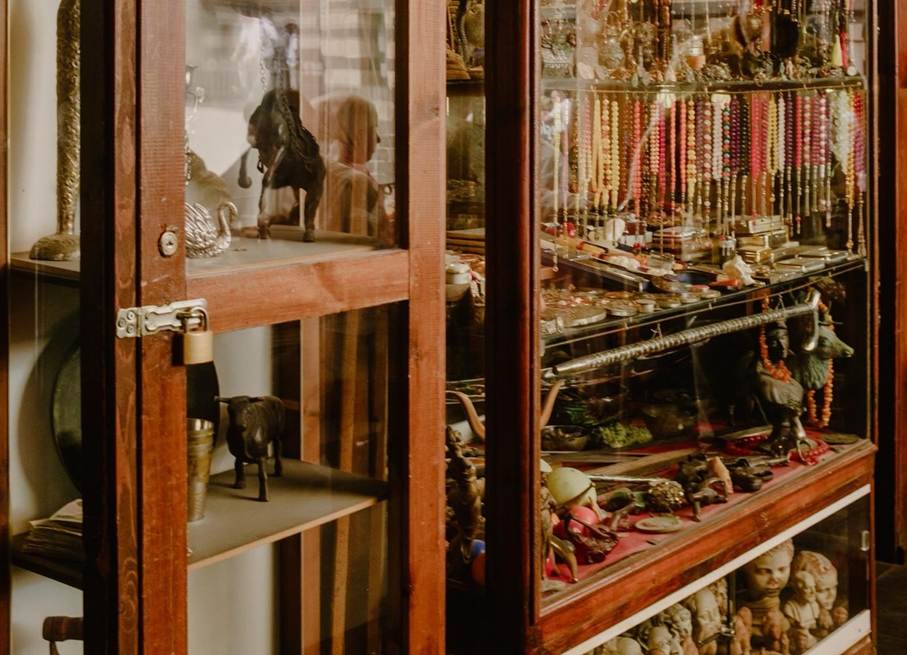
Long before modern public museums, European cabinets of curiosities in the 16th and 17th centuries are seen as their ancestors. They brought together objects classified asNaturalia,Artificialia,ScientificaorExotica. By selecting, classifying and ranking objects according to the knowledge and representation of their time, they were already making a political act by choosing what deserved to be preserved, valued or considered curious.
The classification “Exotica”, referring to objects seen as rare, curious or unusual because they came from foreign lands, is perhaps one of the clearest examples of this. Through exploration, trade and political expansion, objects were brought back to Europe and placed within European systems of knowledge. Collecting therefore did not simply mean gathering objects. It also meant producing a particular vision of the world.
This process, by which something is removed from its natural or cultural environment and enters the “museum field”, is defined as “muséalisation” by André Desvallées and François Mairesse inKey Concepts of Museology. Once an object is removed from its original context and placed in a museum, its meaning changes. A tool, a ritual object or an everyday object becomes something to be preserved, documented, studied and interpreted. The museum therefore does not only conserve an object. It also gives it a new status and a new meaning.
This can be seen clearly in the collection of Hans Sloane, a British physician and naturalist who worked in Jamaica. He assembled a vast collection of natural and artificial objects. Yet his ability to collect was deeply connected to the colonial and slave economy of Jamaica. Sloane worked as a doctor on plantations worked by enslaved people, and later married the heiress to Jamaican sugar plantations whose profits contributed substantially to his ability to collect. His collections later became a major foundation of what would become the British Museum. The museum itself now acknowledges these links between Sloane’s collecting, slavery and empire.
The British Museum therefore carries, within its collections, the memory of systems of slavery, colonisation and domination. Founded in 1753 and opened to the public in 1759, it presents itself as an institution devoted to universal knowledge. Yet the objects that entered its collections were acquired within very specific historical, economic and political contexts. Even the idea of “universal knowledge” was therefore constructed from a particular point of view.
The Benin Bronzes are another example. Thousands of objects from the Kingdom of Benin were looted following the British attack on Benin City in 1897 and subsequently dispersed among European collections. In 2025, the Netherlands returned 119 Benin objects to Nigeria, including 113 objects from the Dutch State Collection and six from the municipality of Rotterdam. The Dutch government explicitly recognised that the objects had been looted and should not have ended up in the Netherlands.
The question of restitution therefore goes beyond material ownership. It involves the memory of domination, the right to tell the story of one’s own heritage, and the possibility for affected societies to regain control over their history.
And this raises an important question: if museums inherited objects through unequal systems of power, can they really be separated from the political history of those objects?
From royal palace to national museum: when art places are intimately linked to political power
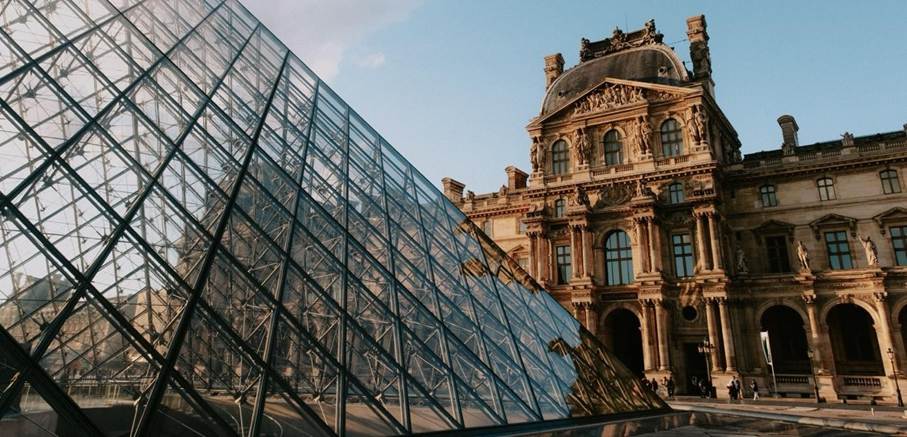
Major European museums also developed within contexts of political power. One striking example of the intertwined relationship between museums and political power is the Louvre. Initially a fortress built under Philip II Augustus around 1190, it became a royal residence in 1364. After the French Revolution, it was dedicated to the arts in 1791 before opening as theMuséum central des Artsin 1793. Over the course of several centuries, a powerful political place became one of the most important art museums belonging to the nation.
Under Napoleon, the relationship between political power and the museum became even more visible. French military conquests were accompanied by the seizure of artworks and artefacts, which enriched French collections. Art itself also contributed to staging French power through official portraits and representations of military victories.
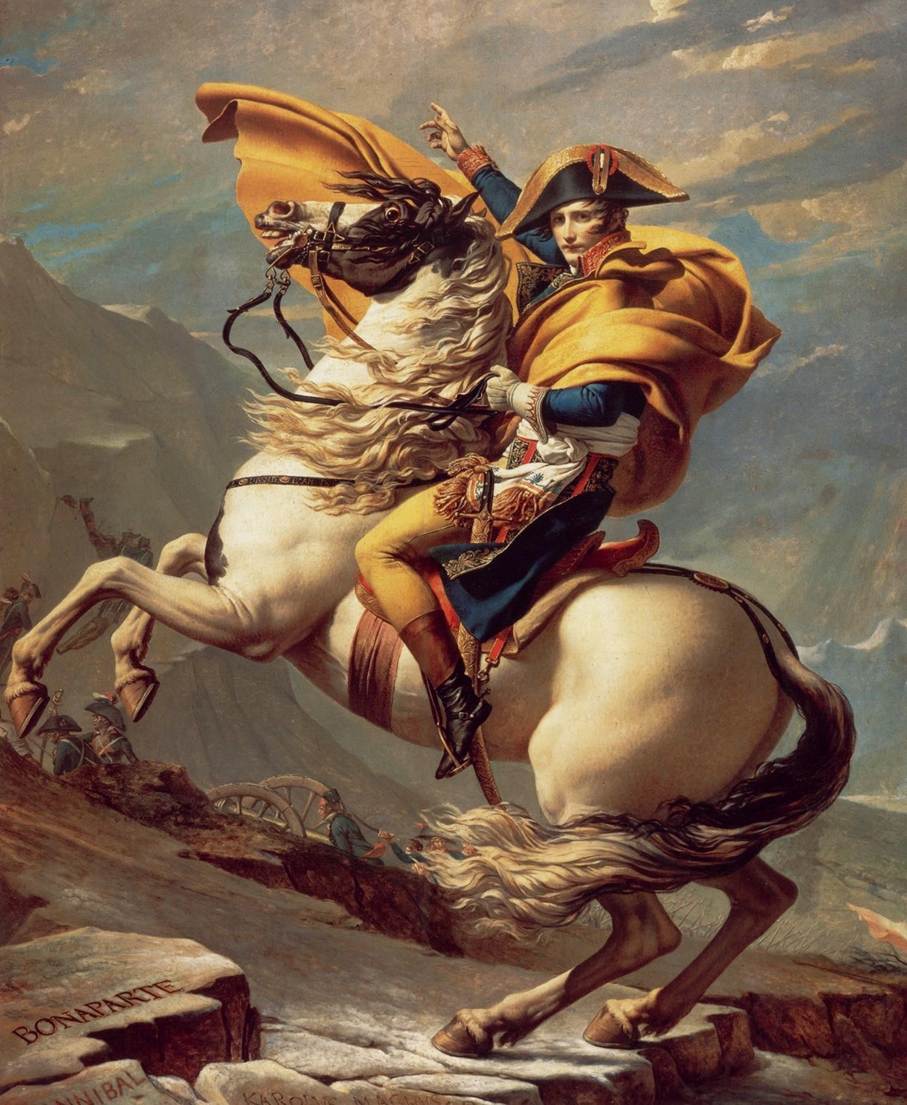
Don’t the « Bonaparte franchissant le Grand–Saint–Bernard » by Jacques-Louis David seem a little too epic? Isn’t Napoleon taller than he was in reality? Don’t the light, the size of the canvas and the position of his body emphasise his power?
In art history, art had long been used as a tool to show power. The museum therefore became more than a place where art was preserved. It could also become a place where the power of a nation was displayed and made visible.
The modern museum thus developed alongside the rise of nation-states. But political power does not only influence what enters the museum. Once objects have entered, another form of power appears: the power to decide how visitors will look at them.
Exhibiting means organising the way we look
The political dimension of museums does not stop with the formation of their collections. It continues in the exhibition itself.
According to the International Council of Museums’ 2022 definition, museums have a range of missions, including research, collecting, conservation, interpretation, exhibition, education and knowledge-sharing.
The word “interpretation” here is central. An exhibition never simply consists of placing objects in a room. It selects, gives titles, brings certain objects together and separates others, classifies and contextualises them. A label provides a date and an origin, a display case creates a hierarchy, a chronology imposes a sequence, and exhibition design creates an atmosphere.
When you visit an exhibition, don’t you better understand its history by following the path and reading the labels? The way objects are organised helps us understand what we are looking at and how we are supposed to connect the different elements together. As Jean Davallon analysed it, the exhibition is also a communication system: objects are organised and connected in order to produce meaning rather than simply explaining them individually.
This is also what Tony Bennett describes through the concept of the “exhibitionary complex” in The Birth of the Museum(1995). Modern museums organise the visitor’s gaze by suggesting what to look at, how to look at it and, more broadly, how to behave within the museum.
The visitor therefore does not enter an empty space and create the meaning of the exhibition alone. A whole system has already been organised before them. And this question also concerns those who are not represented.
In 1989, the Guerrilla Girls denounced the limited presence of women artists at the Metropolitan Museum of Art through their poster Do Women Have to Be Naked to Get into the Met Museum? The figures they highlighted showed that women artists represented less than 4% of artists in the Modern Art sections, while 76% of the nudes depicted women. The poster made visible a contradiction within the museum: women could be extensively represented as subjects, while remaining largely absent as creators.
The selection of artworks therefore also produces absences.
Not exhibiting certain artists, communities, historical periods or interpretations is itself part of constructing a narrative. What is absent can be just as important as what is present.
This is why the museum is not simply a place that reflects history. It participates in deciding which parts of history become visible.
Museums also teach citizens who they are supposed to be
This power becomes even more important when museums participate in the construction of collective and national identities.
In the United States, this educational function accompanied the creation of museums from an early stage.
In 1786, Charles Willson Peale opened the Peale Museum in Philadelphia. Conceived as a commercial enterprise, it also aimed to transmit knowledge about nature, territory and the resources of the young Republic, making it a tool for educating citizens. Farmers, merchants and artisans could learn to observe and understand their environment.
At the end of the 19th century, museums also played a role in integrating immigrant populations. In a country where many newcomers did not speak English, collections and exhibitions could communicate American history, geography and values through images and objects. The museum did not simply tell the story of national identity. It also helped construct a population that shared that identity by showing them the values supposed to be associated with it.
After the American Civil War, this function expanded considerably. Between 1876 and 1926, the number of museums in the United States increased from around 233 to nearly 2,500. Museums therefore became a genuine cultural infrastructure for nation-building. The importance of museums in building national identity is still an ongoing question, as we can see with the Smithsonian and the Trump administration.
The Smithsonian was created by Congress in 1846 from the bequest of James Smithson, with the mission of “increasing and diffusing knowledge”. It now brings together museums, libraries, research centres and the National Zoo. Telling American history through these institutions necessarily means defining what belongs to the history of the nation.
In 2026, as the United States marks the 250th anniversary of its independence, the institution presents itself as having a national role and as preserving the “stories of the nation.”
Since 2025, Donald Trump and his administration has been accusing the Smithsonian of anti-white biases and overemphasizing on narratives that portray American and Western values as inherently harmful and oppressive. Mr Trump see it as « degrading shared American values ». His administration has also went threw 12 exhibitions before coming back with a list of requested changes to certain exhibitions and programmes because being seen as problematic. The name of the web page « Restoring Truth and Sanity to American History » shows how exhibitions and narratives shared by such an influancial institution is crucial for shaping the cultural identity. Historians and civil rights advocates have challenged this approach, arguing that it risks reducing the complexity of certain historical narratives.
The controversy itself shows how important museum narratives can become. If exhibitions were simply neutral descriptions of the past, why would political authorities seek to intervene in the way they are written, displayed or interpreted?
The narrative produced by a national museum can therefore become a direct issue for political power. But this also reveals another possibility: museums can be used not only to impose a narrative, but also by societies that want to regain control over their own history.
From Latin America to Africa: when museums help to (re)construct national history
The relationship between museums and nation-building also emerged across Latin America following independence.
During the 1820s, many newly independent states created museums devoted to natural history, archaeology, ethnography or history. These institutions helped map territories, identify natural resources, define Indigenous heritage and construct a national historical consciousness.
In Mexico, a national museum was created in 1825 and was explicitly regarded by the first minister, Lucas Alamán, as a tool for public education. In Peru, the national museum founded in 1822 contributed to the construction and strengthening of national identity. In Brazil, the Museu Nacional, founded as early as 1818, initially focused in particular on science and natural resources before being moved, after the fall of the monarchy, into a former imperial palace.
In each of these cases, the museum helped give material form to a territory and establish its heritage.
A museum can therefore be used to shape citizens, but it can also show people where they come from. This is particularly important for countries that have experienced colonisation, where museums can become spaces for taking back control over cultural identity and historical narratives.
In Africa, this function developed within a very different history. Many museums were created during the colonial period to study territories, populations and resources, within systems of knowledge linked to colonial administration. Ethnographic collections were often organised according to categories developed through colonial knowledge systems, sometimes reducing complex societies to fixed ethnic or geographical classifications. After independence, museums therefore faced a complex challenge: how could institutions inherited from colonial rule be transformed into places capable of telling national histories and reflecting local perspectives?
In 1991, Alpha Oumar Konaré argued in particular that African countries should be able to develop forms of conservation and transmission rooted more deeply in their own realities rather than simply reproducing Western models.
In Benin, this reflection is now closely connected to restitution policies. The official request made to France in 2016, the political agreement of 2018 and the French law of 2020 paving the way for certain restitutions placed the ownership of collections at the centre of the debate, but also the conditions under which heritage should be preserved, displayed and transmitted.
Restitution does not simply mean returning an object to a museum. It raises a number of questions: should it be returned to a state, a museum, a community or descendants?
What should happen to objects whose original function was ritual?
The museum thus becomes a place where memory, identity and cultural sovereignty are negotiated.
And again, the same question appears: who has the right to tell the story?
When money enters the museum
The power running through museums is not only political. It is also economic.
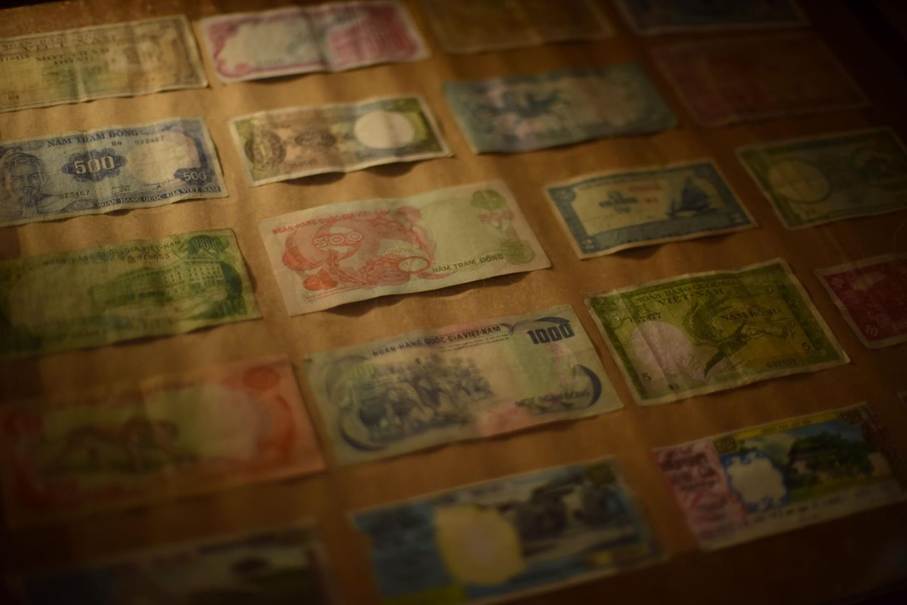
The American model has historically relied much more heavily on private funding than the French model. The Museum of Fine Arts in Boston, for example, developed through substantial private support. Major industrial, financial and commercial fortunes contributed to the creation and development of American museums.
J. Pierpont Morgan bought entire collections, influenced the art market and supported several institutions, while Isabella Stewart Gardner built her collection according to an extremely precise personal vision, even imposing rules in her will designed to preserve the arrangement she had created.
Both exercised a form of cultural influence.
Philanthropy can therefore become another way of exercising cultural power: those who finance, collect or donate can help determine what will be preserved and transmitted. Today, this economic dimension also extends to the way institutions operate. Museums seek to attract visitors, increase tourist attendance, build a recognisable brand and organise exhibitions capable of generating significant media attention.
The museum therefore also becomes a cultural, tourist and symbolic product.
This does not necessarily mean that every museum is directly controlled by its funders.
Rather, it reminds us that the museum is part of an economic system as well as a
cultural one. The question of who has the power to decide therefore also includes the question of who has the resources to influence those decisions.
A cultural institution, but also a battlefield
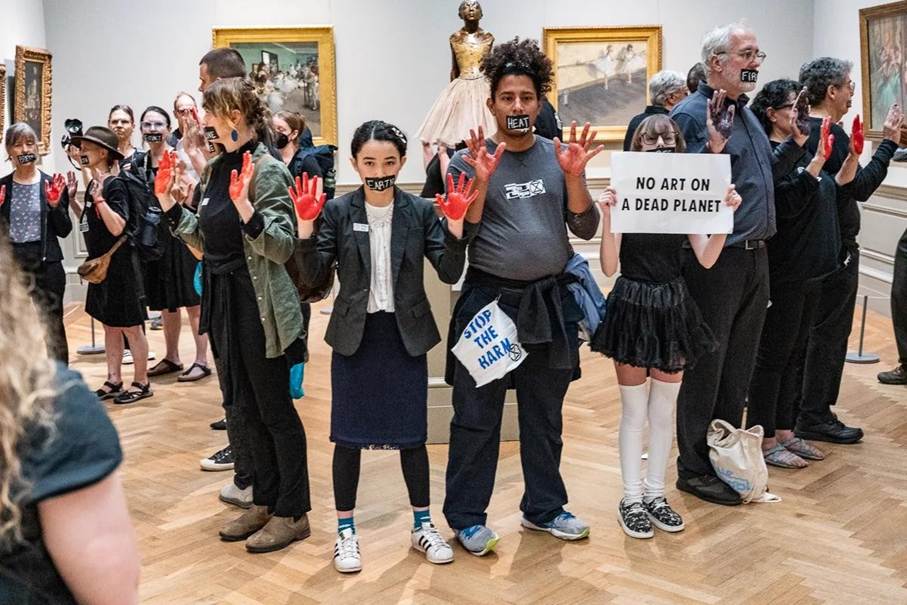
This concentration of different forms of power helps explain the regular criticism and activism directed at museums. According to Françoise Vergès, the museum can be understood as an “ideological, political and economic battlefield”.
In 1968, Marcel Broodthaers created Musée d’Art Moderne, Département des Aigles, a fictional institution that reproduced the codes of the museum in order to expose its mechanisms of power and question its ability to define what deserves to be called art and heritage.
More recent movements, such as the Guerrilla Girls and P.A.I.N.’s campaigns concerning museum funding, have also shifted the focus of protest towards issues of representation, collecting and patronage.
In Hungary, the controversy surrounding the World Press Photo exhibition at the National Museum in 2023 took on a direct political dimension. Five photographs, including images of an LGBTQ+ community in the Philippines, were targeted under Hungary’s “child protection” legislation. Although the exhibition was already restricted to visitors over the age of 18, the government considered the museum’s measures insufficient, and the museum’s director, László L. Simon, was subsequently dismissed.
The question of what can be shown in a museum therefore becomes connected to the question of which values should govern public space.
The museum is no longer simply the place where objects are preserved. It becomes a place where society argues about what should be remembered, how it should be represented, and who has the right to decide.
The museum is not neutral: it is situated
From the cabinet of curiosities to the national museum, from private collections to restitution, from exhibition labels to political intervention, the same logic runs throughout this history.
Objects do not become heritage by themselves. They become heritage because a society decides to select them, preserve them, assign value to them and pass them on. Visitors are not an abstract public either: their access to museums is shaped by social and cultural conditions.
And an exhibition is never simply an accumulation of objects. It constructs a route, a hierarchy, a vocabulary and a narrative.
The museum is therefore both a product of power relations and a place where those relations can be reproduced, discussed or challenged.
The question, then, may not be whether a museum can ever be completely neutral. Its history, collections, funding and exhibition choices inevitably situate it within a society.
But recognising this political dimension does not necessarily mean seeing museums only as instruments of domination. If museums have the power to construct narratives, they also have the power to question the narratives they inherited.
Some institutions are increasingly using this power to bring forgotten artists back into the story, to reconsider genres that have historically been marginalised, and to make visible people who were absent from traditional art histories.
The question of women artists offers a particularly revealing example. The Museo del Prado has developed a long–term project called The Female Perspective, bringing together research, exhibitions, guided tours and other initiatives dedicated to women as artists, patrons, collectors and subjects. Its online project currently identifies 107 objects by women artists in its collections, including works by Artemisia Gentileschi, Sofonisba Anguissola and Lucia Anguissola.
The Prado has also dedicated exhibitions to artists who had received comparatively little attention. In 2016, for example, it presented an exhibition devoted to Clara Peeters, its first exhibition dedicated to a female painter.
Tate has taken a similar approach. Its 2024 exhibition Now You See Us: Women Artists in Britain 1520–1920 brought together artists from the Tudor period to the First World War, showing that women had not simply been occasional or amateur participants in British art history. They were professional artists who exhibited, sold their work and developed careers despite restrictions on their access to artistic training and institutions. These initiatives do not erase the inequalities that shaped the history of museums and art history. They do, however, demonstrate something important: the power of the museum is not necessarily fixed.
If museums have historically participated in deciding who was visible and who was forgotten, they can also participate in changing that balance.
The museum can therefore be understood not only as a place where society decides what is worth remembering, but also as a place where society can question what it has forgotten.
Its political power is not necessarily something to eliminate. It is something to make visible, question and, perhaps, use differently.
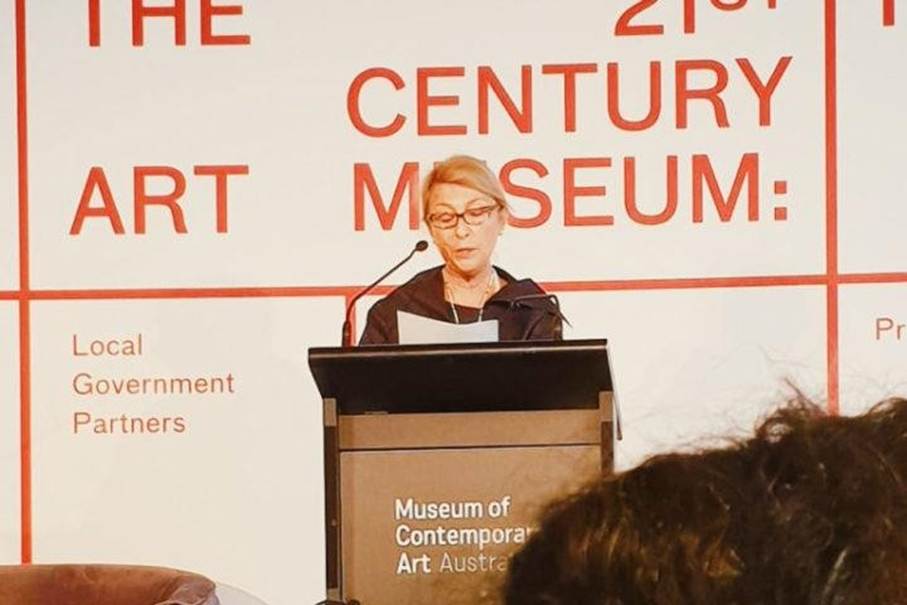
If museums have the power to construct a narrative, they also have the power to revise it. As said Suay Aksoy, former President of ICOM, put it in her opening speech at a CIMAM conference in 2019: “Museums do not need to be neutral; they need to be independent.”
Writtent by Teeva Antivackis
