Nantes and Royal de Luxe: The Elephant in the Brume

Nantes has an elephant memory, and it is time to tell it. This article is not only the tale of a giant mechanical creature wandering through the mist of a once-industrial city, but also of how entrepreneurship and innovation, mixed with a cultural strategy, can reshape a city’s identity. 

Nantes at a crossroads

In the aftermath of the trauma of deindustrialization, symbolized by the closing of the shipyard in 1987, Nantes stood at a crossroads. When it could have fallen into decline, the city chose to bet on culture to power its reinvention. This gamble turned Nantes into a renowned urban laboratory, where the boundaries between street art, engineering, and city branding blurred in an original way.

At the core of the city, as at the core of its rebirth, Nantes gives a central place to the symbol of the post-industrial transformation of the Île de Nantes: the Grand Éléphant. This huge mechanical creature, 12 meters high and able to carry forty-five people on its back, is the main attraction of Les Machines de l’Île (and therefore of Nantes). It parades daily on the old construction site, offering dozens of visitors a glimpse of Jules Verne’s universe. The Grand Éléphant is the symbol of a city that has “clearly put imagination into office.”

Les Machines de l’Île were inaugurated with the Grand Éléphant in 2007, in an old naval hangar on the island. Since then, it has been a marvellous place of creativity and fine engineering. The founders of Les Machines, François Delarozière and Pierre Oréfice, drew on the interest of Nantes (its administration, but also the locals) to build up the entire concept. Both founders found inspiration in an earlier creative project they had worked on: Royal de Luxe, a street theatre company that took cultural policies in Nantes to another level. 
Poster of the Machines de l’Île inauguration in 2007; taken on Royal de Luxe’s website

The arrival of Royal de Luxe

Royal de Luxe is a street theatre troupe founded in 1979 by Jean-Luc Courcoult in Aix-en-Provence. For a decade, the company remained committed to performing close to its audience, with poetic performances in the street. It arrived in Nantes in 1989 at the invitation of former mayor Jean-Marc Ayrault, while the troupe was looking for a new city to settle in after feeling sidelined and rejected in Toulouse. Nantes, then considered “all grey” and “asleep for ages,” chose this company to be its spearhead of change. Royal de Luxe had already been known for many shows in France and abroad, blending the city it performed in with a dreamy imaginary world. But it became more famous with its gigantic puppets, inspired by the imagination of its founders and by French stories from Rabelais or Jules Verne. These puppets are part of a long-term project called La Saga des Géants (“the Giants’ Saga”), which began in 1993 in Le Havre.

In May 2005, the company unveiled a 11-meters high “time-travel” elephant. On this magnificent machine one could find the Indian sultan and his suite as the sultan was looking for the Little Giant (la Petite Géante) through the city. In this fantastical scenario, the pachyderm came from 1905 India just the meet the Giant. This first giant elephant comes from one episode of their Giants’ Saga. Nantes organized Jules Vernes’ centennial anniversary in 2005. As Jules Verne was born here and is the most famous “Nantais” in the world. 

This event was planned in the style of Jean-Luc Courcoult, meaning that it was surrounded by mystery. The precise location and times were only communicated to the tens of thousands of spectators on the day of the visit. The event also generated major traffic disruptions in the city, as circulation and parking were exceptionally blocked across a large zone from the cathedral to Place Graslin—on top of the traffic chaos already caused by the arrival of the Elephant the previous night.

This Elephant was truly the first of its kind to walk across the city. And this spectacle marked not only a technical feat but also a symbolic moment: the convergence of artistic imagination and public strategy.

The Sultan’s Elephant in front of the Cathedral of Nantes in 2005

At an individual level, Jean-Luc Courcoult had collaborators to pilot Royal de Luxe shows; François Delarozière and Pierre Oréfice, founders of Les Machines de l’Île, were once among them. Pierre Oréfice was administrator of Royal de Luxe between 1995 and 1998. As for François Delarozière, he designed numerous creations, including the Sultan’s Elephant. They were also the ones who ordered the construction of its twin, known today as the Grand Éléphant de Nantes.

The diverging paths

There was a divergence in philosophies within the team, even if they shared common roots. This led to a separation between Royal de Luxe and Les Machines de l’Île that began in 1999 and became blatant after the inauguration of the latter in 2007, when Jean-Luc Courcoult emphasized the distinction between the two artistic companies in a letter to the people of Nantes. In it, the stage director insisted on the difference between his “popular theatre,” whose goal is to “make people dream,” and Les Machines’ “amusement park.” This statement was unfair to the intentions of François Delarozière, who also sought to create “poetic moments” for a mass audience.

The thing is: while the Grand Éléphant parades every day on the Île de Nantes, bringing joy to thousands of tourists (and locals alike!), its ancestor, the Sultan’s Elephant, now hides in a hangar in the north of Nantes. The latter will not see daylight again, as his master Jean-Luc Courcoult decided. This hidden elephant symbolizes the disagreement over the nature of public art and the institutionalisation of Nantes’ culture. In the 2010s, Jean Blaise, then managing A Journey to Nantes (Le Voyage à Nantes), wished to reconcile the two companies: “Why not have a new common show?” he suggested. Jean Blaise sadly passed away last year, and the reconciliation between Royal de Luxe and Les Machines never happened. In fact, Les Machines have led for more than ten years a full and successful live spectacle branch in Toulouse, where the company partially relocated in 2011. Gigantic mechanical structures representing tales and extraordinary worlds have regular performances here and there across the globe. This project, quite similar to Royal de Luxe’s, could not be financed by the city of Nantes, which was focused on the older theatre company. At that time, Nantes’ city council was facing harsh criticism about the cost and purpose of Royal de Luxe. It was then decided that Les Machines de l’Île would focus solely on urban planning, with the Herons’ Tree (L’Arbre aux Hérons) in sight.

Indeed, the organization of the company’s gigantic events comes with a price. And debates were intense about their profitability.

The huge support from the city council for Royal de Luxe has been justified since its settlement in Nantes by the emotional and social impact of its shows. Jean-Louis Jossic, deputy for culture between 1989 and 2014, underlined that Royal de Luxe creates events that gather “the notary’s daughter and the Batignolles worker, side by side watching the spectacle.” The crowds are always immense: after another successful show in 2011, an exceptional one in 2014 called Le Mur de Planck drew 300,000 people on the first day alone, with an estimated 1 million over the three days. “Every social layer, every condition, all ages” are represented in the crowd. It brings “emotion to the city,” Jean-Louis Jossic said.

But concretely, between 2009 and 2013, the city council invested 5.8 million euros in the company, in addition to the 2 million euros spent solely on the show Le Mur de Planck. It is hard to determine whether these investments were ultimately profitable for the city, and the council was subject to criticism from opponents.

The Little Giant walking by the Castle in 2011

Besides, the Chambre régionale des comptes (the chamber in charge of auditing public financial expenses) pointed out in 2014 a “monopoly situation in the street art sector” of Royal de Luxe in Nantes. The city was accused of prioritizing the organization of “one massive and rare event” to the detriment of “smaller, more regular shows.” An opposition list to the mayor’s, called CultureS, regretted that Royal de Luxe, Le Lieu Unique, and the Grand Éléphant (of Les Machines) were the “sole forefronts of a cultural policy only interested in its image.” The municipality, however, defended its choice, arguing that it preferred to support Royal de Luxe as a professional company rather than having to issue calls for projects. 

The changing role of Royal de Luxe

While Royal de Luxe was one of Jean-Marc Ayrault’s biggest prides in Nantes, his successor Johanna Rolland, elected in 2014 and reelected in 2020, has been quieter. Rather than aiming for global reach, she emphasizes the local anchoring that culture can create. This is one reason why Delarozière’s Herons’ Tree was abandoned in 2022 (justified by its high cost). It is also one reason why Nantes did not see a single Giant between 2014 and 2023, while the street arts troupe multiplied its international shows during that period (notably in Liverpool in the UK, Santiago in Chile, Guadalajara in Mexico, and Perth in Australia). In total, the Saga des Géants was seen by 24 million spectators all over the world. It eventually returned to Nantes with another show nine years later, in 2023. But Royal de Luxe had actually never left the city: they transformed their presence from rare but massive events to a smaller, daily presence in Bellevue, a “sensitive” district of Nantes. Still supported by the city council, the project launched in 2018 aimed to improve living conditions through creativity, bringing poetry and art in diverse ways (interactive sculptures and performances). The final event of this project, called Grand Bellevue, brought 400,000 people into the streets to witness a three-day race between two Giant dogs.

Xolo the dog, already there here in the show in 2011, came back in 2023

Today, Royal de Luxe still performs in the streets, with human-sized pieces. Less about gigantism, more about poetry, the company has sought to preserve that spirit in all of its creations.

Find more about the company on their website: https://royal-de-luxe.com

In the meantime, Les Machines in Toulouse expanded their spectacle branch and regularly perform abroad (China, Belgium, and beyond). Last year, their show in the city attracted more than 1.2 million spectators in three days. The Halles des Machines, where the giants are housed, have become one of the main tourist attractions in the “rose city” and a source of pride for the city council that chose to welcome them.

Get lost on their website to see their strengths: https://www.halledelamachine.fr.

The importance of two elephants

That Les Machines now thrive elsewhere only highlights how far the original vision has travelled, and how Nantes has been able to shape its strong identity. What Nantes shows is that a successful cultural strategy doesn’t require consensus. It held together contrasting approaches: one built on ephemerality and artistic genius (Courcoult’s), the other on engineered wonder and repeatable experience (Delarozière’s and Oréfice’s). Two elephants, walking side by side – one in the shadow of its legacy.

For more information about Royal de Luxe, watch this documentary directed by Jean-Michel Carré: https://www.youtube.com/watch?v=xWEZ4Mp9w7Q (2018).

Author and photographer: Josselin Cosperec

The story of the free party movement, caught between freedom and repression

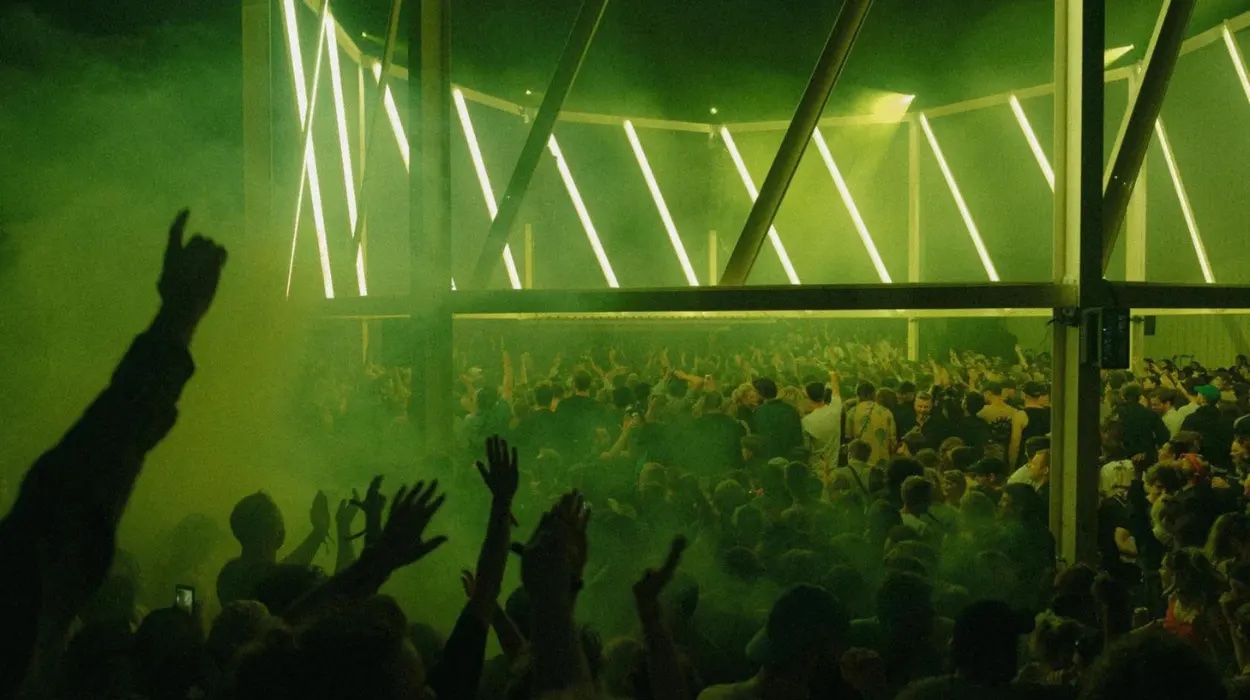
© capitaine tawa

“We gather our forces. Then we surround them, and afterwards we strike.”
These words, spoken on September 2 by the resigning Interior Minister Bruno Retailleau, targeted a free party that had been taking place for two days on land devastated just weeks earlier by wildfires, near the village of Coustouge in the Aude region. A striking phrase that illustrates the severity with which the State intends to repress these parties, labeled as “sauvages”, as well as the controversies that are surrounding this underground world.

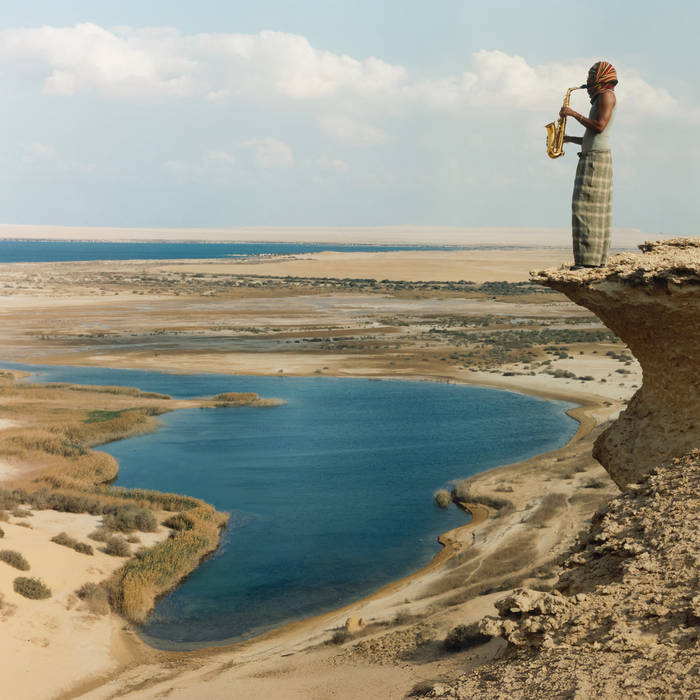
Yet it is difficult to ignore that, for tens of thousands of people in France, these parties are not mere disturbances but a genuine culture: the “free party” or “teuf”. The recent release of the film Sirat, which opens with a free party scene in the Moroccan desert, gives an opposite vision of this way of partying : a world where human connections and mutual support are strong, and where music and dance take center stage.

Caught between police repression, media stigmatization and cultural self-affirmation, the free party remains a contested phenomenon. Is it primarily a space of drug trafficking and nuisance, or is it a real alternative culture? To answer this, let’s explore the movement’s history, trace its evolution, its values and its codes, and finally examine the current issues and the repression that have accompanied it since its origins, and why it is perceived as problematic by a part of society.

The story of a culture of free and anti-system parties

First of all, to define what these “wild” parties called free parties are, we need to retrace their history and what has led to the current situation

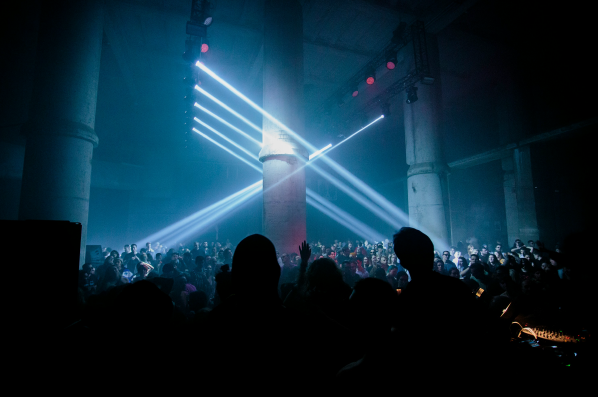
Free parties trace their roots back to the British rave culture of the 1980s, born when house music and acid house were imported from the United States. In the UK at that time, a new way of partying emerged around these styles of music: dancing all night to hypnotic beats in alternative spaces such as warehouses and underground clubs, often facilitated by the use of drugs like ecstasy.

The British government, however, saw these gatherings as a threat. In 1994 it passed the Criminal Justice and Public Order Act, a law that explicitly targeted events built around “repetitive beats.”, strictly supervising the legal scene and criminalizing the illegal and spontaneous parties. Gradually, the scene radicalized in response to such restrictions, and the parties took on an increasingly political and illegal dimension.

Collectives like Spiral Tribe began organizing clandestine raves marked by a strong Do It Yourself and anti-system philosophy: autonomous organization, squatting venues for a single night, no ticket sales, and information spread only by word of mouth, or using private phone lines to get the location. The principles and foundations of the free party movement were born.

After the crackdown in England, Spiral Tribe and other crews left for the continent, mainly coming to France. In 1993, they organized the first teknival, a gathering of sound systems lasting several days. The movement grew enormously, with free parties multiplying and the emergence of numerous sound systems, notably Heretik, OQP, etc. But as in England, the public authorities in France sought to crack down on the movement as soon as it arrived, even though they had already been at war with “rave parties”, the legal equivalent of free parties, for several years. In the 2000s, French law (notably the Mariani Law of 2002) regulated techno gatherings: mandatory declaration for more than 250 people, seizure of equipment, police checks and even repression. However, the free party movement gradually spread throughout Europe, with teknivals still taking place in Eastern European countries such as the Czech Republic, Romania, etc.

The free party: the quintessence of counterculture?

Having traced the history of the movement, it is interesting to focus on what has grown out of it: the values that define it, and that make it not only a distinct culture but also a space of innovation and artistic freedom. To fully understand the free party, it must be approached simultaneously through its artistic, social, and political dimensions.

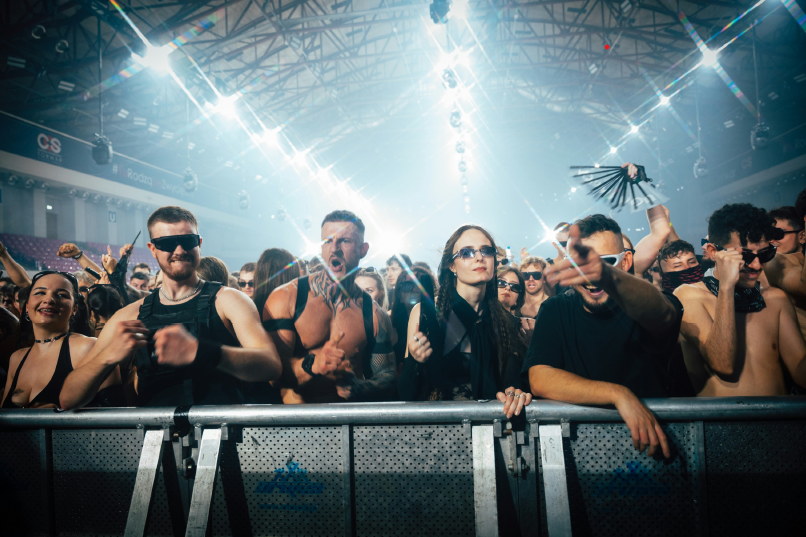
First and foremost, it is a musical phenomenon, since these gatherings are places of celebration and dance where “Tekno” was born. In free parties, the music is either mixed or created live: repetitive, darker, and more distorted than what plays in mainstream clubs, breaking away from more commercial forms of techno. The sound is also pushed much louder than in licensed venues, with the explicit aim of drawing dancers into a state of collective trance, sometimes facilitated by the use of drugs.

At the same time, it’s in free parties that numerous musical styles were born, and that later were taken up by the mainstream stage, such as tribe, hardtek, frenchcore, mentalcore, acidcore and more. These events have contributed to renewing the legal electronic scene, offering a first stage for many emerging artists who were able to experiment and perform at the beginning of their careers thanks to this underground setting.

For instance :

The social and political dimension has been central to free parties since their very beginning. They were born as an act of resistance against the authorities’ attempts to shut down techno music, and from the desire to create a non-commercial form of celebration: open to everyone, free of charge, and liberated from capitalist codes. The term “free” reflects both this libertarian ethos and the refusal of commercial and institutional constraints such as nightclubs, official festivals, or ticketing systems. Contrary to what we might think while hearing the name “free” party, these gatherings are not free but based on a donation system at the entrance, allowing visitors to choose the amount of money they give.

Free parties are also tied to the idea of reclaiming public or natural spaces such as warehouses, fields, industrial wastelands, abandoned quarries, and bringing them back to life, if only for a night or a few days. Within these spaces, free parties are like temporary micro-societies built on solidarity and mutual aid, where food, water, and blankets are freely shared. The film Sirat offers an interesting glimpse into these values, accompanying travelers across the deserts of Morocco, from one free party to another.

Yet, precisely because of these values of defiance and the potential disturbances they cause, free parties are deeply unpopular with part of public opinion and with authorities, for several reasons:

Firstly, one of the main issues for public opinion is noise pollution. The amplified music of the sound systems is extremely loud, not limited by any legal decibel measures, and even if organizers often try to find places far from residential areas, they can still disturb the population especially during multi-day events.

The second main point is illegal occupation. In western countries, property ownership is a very important value among people, thus illegally taking over private property is widely frowned upon.. Moreover, as repression has intensified in recent years, organizers’ options for venues have narrowed, pushing them at times to use farmland or even protected natural areas. Such choices are controversial not only outside the movement but also within it. The issue resurfaced recently when a free party was held on land ravaged by wildfires just weeks earlier, sparking heated debate even among ravers themselves, and leading the interior minister to pronounce these words we saw earlier.

Finally a big concern of public authority would be drug use: although very common in festivals and even in certain professional circles, drug consumption at free parties is frequently highlighted by authorities as the main justification for sometimes violent crackdowns. Indeed in those parties, drug trafficking is not limited in any way, sometimes leading to dangerous situations and even deaths happening at some big events.

Beyond these critiques, the persistent political and media hostility toward the movement raises broader questions. Could the anti-capitalist, anti-system spirit of these gatherings itself be a main reason behind the repression? In an increasingly authoritarian world grappling with crisis, the very act of challenging the capitalist machine through collective celebration seems to provoke growing unease for western authorities and politics.

© capitaine tawa

Free parties today

The free party movement is still alive today, though it faces an increasing repression. In 2019, Steve Maia Caniço drowned in the Loire River in Nantes during the Fête de la Musique, after police used batons and stun grenades to stop a sound system on the riverbank. In June 2021, a free party in Redon commemorating Steve’s death was met with a militarized police raid: explosive grenades were launched in the middle of the night into a field, a young man lost his hand, and gendarmes were filmed smashing speakers with sledgehammers and axes. Bruno Retailleau’s September 2 remarks thus fit into a broader pattern of violent repression that, in my view, is disproportionate to the potential disturbances these events may cause, and also is denying any cultural dimension.

At the same time, the media generally portray these events in a very negative light, focusing on fines issued or on neighbors annoyed by the noise. Rarely are the artistic performances, the decoration work, the self-management involved, or even the testimonies of the partygoers themselves highlighted.

Authorities are recently trying to copy the Italian model, where in recent years organizers have faced prison sentences and where police violence against ravers has been legitimized. Participants of free parties also face fines around 150 euros for only attending the gatherings. But what solutions remain possible, caught between an uncompromising government and a movement that refuses to stop dancing?

At one point, the idea of providing land for organizers (such as abandoned military zones) was put on the table. But the proposal was quickly abandoned, dismissed by successive governments as an admission of failure in their policy of repression. On the other side, many actors within the free party scene are resistant to the idea of legalization, suspicious of public authorities. At its core, the movement is also defined by its contestatory spirit, drawing meaning precisely from illegality and its anti-system stance. The culture of the free party is difficult to reconcile with legal frameworks.

Still, under mounting repression, some sound systems are experimenting with legal formats that attempt to preserve the values and codes of free parties, while making concessions to survive (examples of the Invaders festival or the Agora festival in Brittany). Every year, a demonstration occurs in the main cities of France called Manifestive, to protest against the increasing violence the movement faces. 

This article, I hope, will give you a more nuanced vision of the events that led to the words pronounced by Bruno Retailleau, who summarizes these events as a gathering of punks and offenders. From the first teknivals of the 1990s to today’s sound systems, the free party has remained a symbol of freedom, solidarity, and resistance. It continues to represent a youth that rejects imposed frameworks and seeks another way to experience celebration and culture. Yet, under growing repression and media stigmatization, the future of this movement remains uncertain. But free party activities keep claiming “you can’ stop a people who are dancing”.

Written by Sebastien Bertignac

Bibliography :

Amnesty International. (2021). Redon : « freeparty » de la repression. Analyse d’Amnesty International sur l’usage de la force contre le Teknival de Redon (France) les 18 et 19 juin 2021. Repéré à https://amnestyfr.cdn.prismic.io/amnestyfr/93099a3a-e27e-41fa-afdd-e96ed9ace9d9_AI-Rapport-Redon-13092021.pdf?fbclid=PAQ0xDSwNIbQNleHRuA2FlbQIxMAABpx5bu0QWsjrqAtkmWpAcooSZQU87n_c24dJig6ZMgzqE6mJ3xTzDpQAYksdV_aem_32msGJvkSdKfBME1lgW7rg

Dofeza, W. (2025, 31 mars). Free Party : Les teufeurs se mobilisent contre la répression des fêtes libres. Mixmag France. Repéré à https://mixmag.fr/read/free-party-les-teufeurs-se-mobilisent-contre-la-repression-des-fetes-libres-news

Erauw, L. (2025, 24 juillet). Les rave parties sont illégales en Italie depuis 2022. Mixmag France. Repéré à https://mixmag.fr/read/les-rave-parties-sont-illegales-en-italie-depuis-2022-news

Queudrus, S. (2002). La free-party:Le corps sous influence, ambiance, lieux et scansions. Ethnologie française, 32(3), 521-527. https://doi.org/10.3917/ethn.023.0521

Regnault, F. (2023, 11 août). Il y a 30 ans, le premier teknival avait lieu près de Beauvais. Oise Hebdo. Repéré à https://www.oisehebdo.fr/2023/08/11/il-y-a-30-ans-le-premier-teknival-avait-lieu-pres-de-beauvais/

Hazbin Hotel and Helluva Boss: The Most Human of Hells

Vivienne Medrano and Hazbin Hotel Still Dia Dipasupil/Getty Images; © Courtesy of Prime Video
From The Hollywood Reporter Hazbin Hotel Creator Vivienne Medrano on A24’s First Animated Series

Introduction: What is the Hellaverse?

At first glance, Hazbin Hotel and Helluva Boss seem to be nothing more than irreverent animated series with catchy music and colourful characters. HOWEVER, to limit oneself to their deliberately provocative tone would be to miss out on a universe of unexpected richness, where every laugh hides a wound, where absurdity and satire actually serve as a springboard to explore our fears, our flaws and our most human desires.

Created by Vivienne Medrano, also known by the pseudonym VivziePop, these series stand out for their unique journey in the world of modern animation. Hazbin Hotel was launched on 28 October 2019 on YouTube, with a pilot episode self-produced by the creator and largely supported by crowdfunding via the Patreon platform. It is the only episode that exists in the space of four years, and yet VivziePop has made a lasting impression, the audience is already hooked, and 92 million views in 2019 mark the birth of a universe in its own right: the Hellaverse. Today, the series is currently streaming on Prime Video after being spotted by A24 and animated in partnership with Bento Box Entertainment. Its first season of eight episodes has been available since 2024, and a second season is scheduled for October 2025.

But Hellaverse also includes Helluva Boss, the ‘little sister’ series, which arrived with panache on the web a month after Hazbin Hotel, on 25 November 2019. Its story takes place in the same universe but with different characters and plots: the completion of a world under construction that crystallises the public’s enthusiasm and imagination. This series remains faithful to YouTube and SpindleHorse Toons, the studio founded by Vivienne Medrano, with two seasons already online and a third in the works.

Both series began as independent projects on YouTube, supported by a dynamic online community, before conquering the world of international animation. However, reducing these universes to their purely technical aspects would be to overlook the essential: behind the dark humour, incisive dialogue and musical performances, these series profoundly question human nature through an allegory of Hell. They explore the contrasts between cartoon aesthetics and serious themes such as loneliness, depression, redemption, abuse, and the quest for love and recognition, in order to highlight the complexity of characters who, beneath their grotesque exteriors, touch on universal wounds.

Welcome to the Hellaverse, the universe of VivziePop, in which the series Hazbin Hotel and Helluva Boss, each in their own way and with their own characters, question the codes of animation, the place of independence in the face of major studios, but also and above all our intimate relationship with vulnerability, forgiveness and self-construction.

Universe and themes

a)     Hazbin Hotel

We find ourselves plunged into the first circle of Hell, the Pride Circle, where all sinners are sent once they die. On a tall tower in the centre of the infernal city, a clock marks the end of a countdown: the day of extermination has come. An army of angels descends from the heavens to the bowels of the earth, all-powerful, to ‘reduce’ the number of sinful souls living in the Pride Circle, a final solution that takes place once a year to appease Heaven’s fear of a potential infernal revolution. The day ends, the angels return to the Silver City, and the corpses of thousands of Sinners litter the streets – the clock’s countdown displays 365, the number of days until the next attack.

Witnessing this massacre, Charlie, the princess of Hell and daughter of Lucifer, mourns the tragedy that has befallen her people, condemned to see them fill up and be exterminated every year. Deeply gentle and loving, she cannot bear to see souls suffer, even if they are the souls of hateful and evil people who deserve Hell. This time, Charlie Morningstar is determined to take action! She decides to create a hotel to rehabilitate damned mortal souls. Can a soul condemned to eternal Hell ever deserve Paradise? No one knows, but Charlie wants to believe it, and give herself the means to try and succeed. Accompanied by her girlfriend Vaggie, radio demon Alastor, bartender Husk, and residents Angel Dust and Sir Pentious, the princess of Hell will do everything she can to believe in redemption by offering a second chance to idle souls at her Happy Hotel (renamed Hazbin Hotel by her powerful and cynical patron Alastor). A touching utopia within a violent system, where exclusion and the law of the strongest reign supreme.

b)     Helluva Boss

Another series, another story, same universe. While Hazbin Hotel deals with human souls confined to the first circle of Hell (Pride Circle) and Paradise, Helluva Boss develops a whole narrative about life in Hell. We discover its seven circles, each representing the Deadly Sin that rules it, with its inhabitants, the ‘Hellborn demons’ born in Hell (Imps, Succubi, etc.).

Vignette vidéo YouTube Helluva Boss PILOT – Blitzo – © VivziePop
https://wallpapers.com/images/hd/helluva-boss-character-blitzo-i22bmncy447xyvuz.jpg 

We follow the adventures of the imp Blitzo (the O is silent), boss of a company of demon hitmen, his employees Moxxie and Millie (probably the only functional heterosexual couple in the Hellaverse) and his adopted daughter Loona, a Hellhound. Their company, I.M.P. (Immediate Murder Professionals), is based in the Pride Circle, seeking out human souls who want to see someone from the living world die, whether out of revenge, grief, or other less than benevolent reasons. You pay, I.M.P takes care of the killing. To do this, Blitzo must obviously go to Earth, which is forbidden to Hellborn demons. However, he manages to get around this rule thanks to his intimate relationship with the Goetic prince Stolas. He then manages to get his hands on a magic grimoire that allows him to travel to Earth to carry out his missions.

Over the course of the two existing seasons, several storylines and developments have emerged. While initially focusing on trashy and outrageous adventures, where bloody killings are mixed with gags and perverse dialogue, the series’ themes are much more dense and profound. It depicts dysfunctional families: Blitzo and his adopted daughter Loona; Stolas with his divorce and the distance that has grown between him and his daughter Octavia. It deals with profound loneliness, depression, the search for love and recognition, but also emotional and drug dependence, and identity crises. The comic and vulgar aspects of the series are the salt and pepper of a narrative gem that surprises us as much with the explosiveness of its characters as with the depth of its messages, which touch us all equally.

Hazbin Hotel and Helluva Boss are two series that take us on a journey through tears of laughter and sobs of existence, with exceptional sensitivity, liveliness and humanity.

The characters are more complex than they appear

We find ourselves in Hell, where demons rule every corner of this realm and the souls of sinners live out their new lives of damnation amid the violence of the cities of the first circle. And yet, we are far from the Dantean characters of the Divine Comedy. Sinners and Hellborn demons alike, all of VivziePop’s characters have a depth of character, a depth of soul if you will, that makes them truly human. They have their flaws, their ‘many’ faults, but also a very human sensitivity.

In Hazbin Hotel, Charlie Morningstar is a young idealistic woman, very naive but undoubtedly sincere and fair. She embodies the symbol of an alternative vision of Hell, where hope and kindness are still possible. This stems from her childhood, raised with much love by her parents Lilith and Lucifer. However, she saw her father sink into a deep depression and withdraw into himself after his fall from Heaven. She therefore grew up without really knowing him, idealising this father figure who was driven only by sadness. We also learn that her mother left several years ago, which greatly affected the young princess. All of this has made Charlie a very tender and empathetic person to the extreme, devoted to others and her people, while nurturing a lack of confidence that she seeks to fill through the validation of others. Her girlfriend Vaggie, a woman with a stronger character and sincere love for her, currently offers her the comfort and armour she needs to face the world and realise her ideals.

Some characters are written with such depth that they strike a chord with viewers. Without giving too much away and spoiling the experience for our readers, let’s mention a few other protagonists: Angel Dust, Blitzo and Stolas.

Angel Dust is the first resident of the Hazbin Hotel. He is a Sinner who arrived in Hell in the form of a pink humanoid spider and became the archetype of the exuberant, overly sexualised character who hides a history of trauma, exploitation and addiction. In this new hellish life, he becomes a major actor and celebrity in the porn industry. Colourful, mannered and always very confident, he hides behind his haughty smile his anxiety attacks and anger caused by his contractual submission to his boss, who abuses his body and mind on a daily basis. He takes refuge in alcohol and drugs, and it is by finding friends like Charlie and Husk that he glimpses a way to escape this life that has become a living hell.

On the other hand, in Helluva Boss, emotional and dramatic tensions are equally prominent. Although Blitzo is the main character in the series, his relationship with the Goetic prince Stolas becomes a recurring theme, and even central to the plot’s development. Blitzo is a trashy and vulgar clown on the surface, born into a poor family in a circus in Hell, sold as a child by his father, and responsible for the accident that caused his mother’s death and his best friend’s disability. He has built himself up on a strong sense of abandonment, guilt and fear of rejection, desperately seeking affection while being unable to form healthy and stable relationships. Stolas, on the other hand, is part of the demonic aristocracy. He never really knew parental love, and as a child his only friend was Blitzo, whom he met at the circus and with whom he fell in love. Forced to marry an aristocrat in order to produce an heir, his marriage turns into a disaster, with a tyrannical wife and a desperate daughter. He is an ambiguous figure, both comical and pathetic, but who shows a strong inner loneliness, despite his power and responsibility. Sex and antidepressants are his only means of escape and of continuing this existence, maintaining a “normal” family pattern and feigning a semblance of stability in order to protect his daughter as best he can, as she is what he cherishes the most in his life.

Reception and cultural impact

The reception of Hazbin Hotel and Helluva Boss goes far beyond the simple broadcasting of a series: these works have become true cultural phenomena. Born from an independent initiative and driven by digital technology, they have won over a huge community of fans thanks to this atypical model. As a reminder, Hazbin Hotel went viral despite the presence of a single pilot for several years! The truth is that, as soon as they appeared, these works brought together an extremely active global community, which expresses itself through a wealth of creations: detailed fan art, musical covers, cosplay, online analysis and debates. The meetings between VivziePop and the dubbing team with the public are also great moments of sharing and enthusiasm. This excitement testifies to the evocative power of the universe created by VivziePop, capable of inspiring creative extensions far beyond the screen to become a collective space of imagination and shared emotions.

Music plays a central role in this success, forming the backbone of the aesthetic of both series. It is not merely accompaniment, but rather theatrical scenes set to song, capable of leaving a lasting impression on viewers. Between burlesque irony (Hell’s Greatest Dad ; 2 Minutes Notice) and tragic lyricism (More Than Anything ; All 2 U), each piece gives the characters an extra dimension, strengthening their connection with the audience. This is undoubtedly one of the reasons why these series stand out from traditional adult animation: they manage to combine musical spectacle, corrosive humour and raw emotion.

This appeal also lies in the diversity of audiences they attract. Some viewers come for the visual extravagance and provocative humour, but many stay and become long-term fans thanks to the psychological and emotional depth that gradually reveals itself behind the gags and violence.

Finally, one of the great victories of VivziePop and his team is to have brought to the forefront an unapologetic, authentic and central LGBTQ+ representation: complex queer characters who escape stereotypes and find their place in plots where their identity is not reduced to a decorative role, but becomes a narrative driver. Let’s be realistic, almost all of the main and secondary characters escape the heteronormative spectrum, and this gives the work a great freshness. Without a doubt, these series have served and continue to serve as a model for many queer people who can finally allow themselves to dream and identify with fictional characters they feel close to, through their adventures, trials and tribulations, and loves.

Beyond adult entertainment

Beyond the laughter, blood and provocation, Hazbin Hotel and Helluva Boss tell deeply human stories. They highlight universal themes: loneliness, the quest for love, redemption, the search for meaning in a chaotic world. Hazbin Hotel asks a direct question: is change possible, even for the ‘worst’ individuals? Helluva Boss, for its part, explores the intimate wounds and contradictions of characters trapped in violent social structures such as social status, relationships, and family. These stories are also a critique of our own societies, a grotesque and disturbing mirror of our power relations and inequalities.

However, the significance of VivziePop’s work goes beyond its message. These series also reflect an evolution in the cultural sector: independent animation can compete with major industrial productions, offer bold artistic forms and appeal to a global audience. Hellaverse is living proof that it is possible to create outside the confines of industry giants (such as Disney, DreamWorks and Netflix) and still achieve international recognition. In this sense, Hazbin Hotel and Helluva Boss are not just entertainment: they embody a new way of thinking about and producing adult animation, combining inventiveness, sincerity, inclusivity and emotional power.

That’s why I wholeheartedly RECOMMEND these two series. Autumn is approaching, spirits are out and about, so why not treat yourself to a little road trip to Hell? Get ready, Hazbin Hotel is returning to Prime Video for a breathtaking season 2 on 29 October 2025, just in time for Halloween!! 🎃

Useful links:
Hazbin Hotel Pilot : https://youtu.be/Zlmswo0S0e0?si=QqHqTqylUDgGMGNb
Helluva Boss Pilot: HELLUVA BOSS (PILOT)
VivziePop’s YouTube channel: https://www.youtube.com/@SpindleHorse

Written by Enzo Cavezza

The Unmeasurable Heart of the Museum – Counting More Than Just Visitors

The spreadsheet on my desk declared the previous quarter a success: visitor numbers were up, acquisition targets were met. But late one night, alone in the Jianghai Museum under the soft glow of the exhibition lights, that success felt curiously hollow. I was preparing for a « Museum Night » event, and the silence around me wasn’t empty—it was thick with potential. Staring at a newly restored porcelain vase, a question seized me: how do we measure this? Not the vase itself, but the stillness, the anticipation, the connection a visitor might feel hours later.

My role at Jianghai Museum placed me at the center of this tension. I wasn’t just theorizing about performance management; I was deep in the trenches of it, grappling daily with two powerful frameworks: Key Performance Indicators (KPIs) and the Balanced Scorecard (BSC).

Think of KPIs as the museum’s pulse—specific, quantifiable metrics that track vital signs like visitor numbers and new acquisitions. They tell you what you’re achieving. The BSC, in contrast, provides the strategic story. It’s a broader lens that examines the museum through four interconnected perspectives—Public Values, Public Service, Internal Processes, and Learning & Growth—forcing you to ask not just « What are we doing? » but « How do all these efforts weave together to create public values? »

=For my work at Jianghai Museum, personally I defined ‘Public Value’ not as financial return or visitor volume, but as the institution’s fundamental, often intangible, benefit to society. It manifests in three core dimensions: social cohesion (fostering a sense of community through shared cultural experiences), cultural identity (helping the public understand the relationship between history and themselves), and inspiration & education (igniting curiosity and critical thinking). In short, it measures a museum’s contribution to building a more knowledgeable, connected, and culturally confident society.

This definition became my compass. It challenged me to look beyond numbers and to figure out ways of recognizing the impacts of my work, particularly those shifts in public engagement that unfold over years, not just fiscal reports..

I can still remember those long meetings debating KPIs. « If we aim for four major exhibitions a year, what does ‘major’ really mean? » we’d ask. We built detailed metrics for everything, from new acquisitions to school visits. Later, as we struggled with the limitations of these numbers—they could count tours, but not the spark of understanding in a visitor’s eyes—our team began exploring the BSC. We started asking even harder questions: « How do we know if we’re genuinely creating public value? »

The shift in questioning was uncomfortable but vital. It forced us to look beyond our comfort zone of spreadsheets and into the messy realm of human experience. We began to see that our true impact wasn’t just in the number of educational sessions held, but in the quality of questions visitors asked afterwards. It wasn’t about the percentage increase in traffic, but about whether someone spent thirty minutes diving deep into a collection, truly connecting with a piece of history. This wasn’t merely a change in tools; it was a change in mindset, from managing outputs to stewarding outcomes. We were learning to value the story behind the statistic.

This firsthand experience from counting artifacts to understanding the public value of museums is what I want to share.

To understand this story, you need to know its main character: the Jianghai Museum itself. It’s not just any institution; it’s a national second-grade museum, a fixture among China’s Top 100 Thematic Museums, and a AAA-level tourist attraction where modern architecture frames exhibitions on the culture of rivers and oceans. Located in Jiangsu Province, a region defined by its waterways, the museum’s mission is both a tribute to local heritage and a statement about ecological and cultural connections. This unique blend of local identity and broader purpose is what made its performance management so critical—and so challenging. We weren’t just protecting a collection; we were creating public values.

There’s no denying the power of a clear target. For a museum like Jianghai, a goal like « acquire 3,948 items in three years » provides incredible focus and a clear finish line. The discipline pays off; the pride we felt when we surpassed that target was real. Similarly, the KPI for « four thematic exhibitions annually » pushed us to be both disciplined and creative, resulting in acclaimed shows like « Light of Jianghai, » which explored the transformation of rivers and seas over two millennia.

But the anxiety creeps in when you realise what the numbers leave out.

You can proudly report 1,450 guided tours, but that figure says nothing about the satisfaction of the participants. Were we just counting, or were we actually connecting? This relentless focus on the measurable can quietly steer resources away from public values which matter deeply but can’t be captured in an annual report—like foundational research or long-term staff development.

The true soul of Jianghai Museum, however, was never in the spreadsheets, or single perspectives from KPI. It lived in the programs we designed to bridge the gap between numbers and meaning, lived in the public values it’s created.

Let’s take our « Director’s Reception Day » as an example to illustrate this point. It is a totally free event, developed monthly on the first Tuesday. A handful of visitors would join the director for tea in his office at that day. What began as a formal overview of our goals would turn into a free-flowing conversation. The real magic happened backstage—in the conservation lab, where visitors might watch a restorer carefully working on a centuries-old porcelain piece. I recall one visitor turning to me, awe-struck, and whispering, « I had no idea this level of care existed. It feels like a sacred duty. » That moment of shared understanding—that sense of collective responsibility—was worth more than a thousand data points. This was our live attempt to embody the « Public Service » perspective of the BSC, building trust one conversation at a time, and thus to create public values.

Then there was « Museum Night. » We threw the doors open until midnight, completely transforming the atmosphere. I vividly remember one themed « The Sound of History, » where the galleries resonated with traditional music. Visitors became active participants, trying out replica instruments, laughing, and deep in conversation with our curators. Of course, the cleanup afterward was a nightmare, but seeing the galleries so alive made it all worth it. Sure, the event boosted our visitor numbers, a KPI, to catch the people who’d never set foot in a museum during normal hours. But its real success was the public values it created. We became a vibrant hub, not just a static archive. There was a distinct magic in seeing guests return to an exhibit they’d rushed by earlier, now able to engage deeply without the daytime crowds. That’s the « Public Service » and « Internal Process » perspectives the BSC describes—something you feel in the air, not find in a spreadsheet.

Let me share another detail that particularly resonated with me. When we were implementing the KPI for « monthly public activities, » the pressure was intense—we had to meet quantitative targets while avoiding superficiality. In response, Our team came up with a « Cultural Relic Restoration Experience Day, » allowing visitors to try their hand at simple ceramic reconstruction. I’ll never forget when I watched a mother and her daughter spend a full hour completely absorbed in reconstructing a replica pottery jar, naturally discussing the importance of preserving history. That hour taught me more about engagement than any report ever could. It was a lesson in the power of creating the conditions for genuine connection, where learning emerges not from instruction, but from shared discovery. In that moment, it became clear: the most profound public value emerges from genuine, hands-on engagement and the quiet wonder of intergenerational learning.

Beyond these scheduled events, the most telling signs of success were often the spontaneous ones. I’d notice a group of students who had visited for a school tour returning on the weekend with their families, the children eagerly acting as guides. Or I’d overhear conversations in the cafe where visitors were discussing an artifact they’d just seen. These unscripted moments—these threads of connection being woven completely outside of our programs—were perhaps the ultimate evidence that we were creating a space that mattered to people. They were metrics of the heart, impossible to plan for but invaluable when they occurred.

Some of the most telling indicators revealed themselves not during grand events, but on quiet Tuesday afternoons. I’d sometimes see a retiree spending an entire hour with a single display, taking notes carefully, or a young artist sketching in a corner, finding inspiration in ancient forms. These solitary, deeply personal engagements were a quiet testament to the museum’s role as a sanctuary for thought and creativity. They reminded us that public value isn’t always about collective experiences; it’s also about providing the space for individual discovery.

So, what’s the takeaway from Jianghai’s experience? It’s not about discarding KPIs. They provide the essential skeleton of a strategy. But that skeleton needs the flesh, blood, and soul of a human-centred framework like the BSC.

The future, I believe, lies in weaving the two together. It starts with a clear, compelling map—a « strategy map » that shows the connective tissue: how training our staff (Learning & Growth), leads to more engaging exhibitions (Internal Processes), which in turn creates memorable visit experiences (Public Service), and ultimately, a stronger, more culturally vibrant community (Public Value).

Traditional BSC

Museum BSC

Then, we need wiser indicators. Let’s keep track of annual visitors, but also track whether they come back. Let’s measure new acquisitions, but also measure the strengthening of local cultural identity.

The real work of museums, from where I stand, is to create these profound, lasting values. It demands the courage to value what’s hard to measure and the wisdom to treat numbers as a guide, not a gospel. A museum’s success is not a line on a graph. It’s in the quiet hum of a gallery after dark, thick with inspirations and echoing with the laughter of a visitor. That is the metric that matters most.

Author : Haoyu BAI

Transitional urban planning in Nantes

Le Lieu Unique is now one of the most striking cultural venues in the city of Nantes. It is one of the faces of the capital of the Pays de la Loire region and clearly demonstrates Nantes’ ability to use its real estate heritage to develop its cultural activity. Le Lieu Unique was formerly the LU biscuit factory. It is still possible to visit the old factories today. When the factory moved, the city council decided to keep the building, located in the city center, and turn it into a cultural venue. Today, Le Lieu Unique hosts exhibitions, concerts, live shows, conferences, and has a bar and restaurant. It is one of the best-known examples of successful transitional urban planning in France.

            Transitional urban planning can be defined as the use of vacant space (offices, housing, vacant lots, etc.) during an intermediate phase before a construction or an urban planning phase. These vacant spaces are now mostly occupied by cultural actors (who do not have a lot of resources), or sometimes by companies for offices. It is rare for transitional urban planning to provide housing for people, as it is often very complicated to create decent living spaces in empty buildings. Transitional urban planning is no longer so transitional, as some transitional spaces have become such important cultural venues that they are being preserved in the next development project. This is the case with Le Lieu Unique, but also with other venues such as the La Station Gare des Mines nightclub (Porte de Paris), which was due to be demolished to make way for housing but will now be preserved due to its cultural significance.

History of transitional urban planning in Nantes:

Nantes was one of the first cities to develop a genuine transitional urban planning policy in the 1990s, notably with the Allumés festival. This festival was created at a time when Nantes was undergoing deindustrialization. Factories in the city center (LU) and on the Île de Nantes were closing one after the other. The city was losing its identity and dynamism. The former Socialist Party mayor, Jean Marc Ayrault, decided to focus the city’s policy on culture. It was in this context that the Allumés festival was created. Between 1990 and 1995, the city hosted artists from six cities for six days and six nights: Barcelona (1990), Saint Petersburg (1991), Buenos Aires (1992), Naples (1993), Cairo (1994), and Havana (1995). The festival took place in all the city’s unusual venues, particularly the disused LU factories and the eastern part of the Île de Nantes. The festival was a huge success. It was followed by numerous concerts and rave parties in these same abandoned factories. This festival was a national example of the use of vacant buildings for large-scale cultural projects. Since the 1990s, numerous cases of transitional cultural urban planning have developed in Nantes and throughout France.

Allumés festival, Nantes 1992

Nantes has continued to be a pioneer in terms of cultural activity in transitional spaces. One example is Transfert, a huge cultural venue bringing together all kinds of artistic and cultural practices. This cultural venue was in Rezé on the wasteland that was once home to the city’s old slaughterhouses. This venue existed from 2018 to 2022 and set the pace for Nantes’ cultural and nightlife scene for five years. Transfert was created by the Pick up Production association, which organizes numerous cultural events in Nantes, such as the Hip Opsession festival, the Ateliers de Chanzy, and other events. The aim of Transfert was to create a dialogue between the city’s artists and residents in a place of urban and cultural experimentation.

Transfert, Rezé 2022

Transitional urban planning has become increasingly important in recent years, particularly due to rising real estate prices and cuts in cultural funding. Associations and cooperatives in cities are finding it increasingly difficult to find premises and spaces to express themselves. However, these cultural practices are essential to sustaining the social and solidarity economy in Nantes, which accounts for 16% of jobs in the city. The city of Nantes therefore provides several transitional spaces prior to final development projects. These projects help to counter the financialization of real estate in urban areas, increase the intensity of use of these spaces, and create activity for residents. Transitional urban planning is integrated into the urban planning strategies of all major cities in France. 

Transitional urban planning today :

Transitional urban planning projects now take many forms in Nantes. There are numerous examples in coworking, such as Solilab on the Île de Nantes, which brings together more than 140 start-ups in a former factory on the island of Nantes, the digital canteen, Open-Lande, also on the Île de Nantes in former offices, Le Grand Bain near the university hospital, which was the city’s former public baths, and Gueule de Bois, a former factory converted into a workspace for carpenters in Bouguenais. 

The city also has many places dedicated to welcoming artists: Bonus (in a former school in Saint Félix and on the Île de Nantes), L’atelier de la Ville en bois (a small office converted into an artist’s residence), Pol’n (an office and apartment converted into an artist’s residence and exhibition space). Art studios have completely disappeared from the city center in traditional real estate. These art studios are therefore essential because they allow artists to work in the city center and develop their artistic network despite the continuous rise in rents. 

There are also numerous multidisciplinary cultural venues that would not exist without transitional urban planning and the city council’s support for cultural creation, such as Le Trempo and Le Stéréolux, renowned music venues perfectly located in the heart of the Île de Nantes. Another example is the Blockhaus, an underground exhibition and concert venue located 50 meters from the elephant in an unusual reinforced concrete structure that look like a bunker. 

New projects are developed every year, such as the former Nantes École des Beaux Arts in Bouffay, which is currently being taken over by the Yes We Camp association (well known in transitional urban planning in Paris and Marseille). This association is working with citizens to co-develop a social, cultural, and solidarity program in this former school dating from the early 20th century. 

Transitional urban planning can also have a very significant political dimension, capable of changing the face of a city. The current debate surrounding Nantes University Hospital is a perfect example of this. The university hospital building is a huge concrete structure the size of an entire neighbourhood, located five minutes from the city center. However, a new hospital is being built on the Île de Nantes to replace the existing one, which is too old and too small for the number of inhabitants. The city is therefore considering what to do with the old hospital. Should the old university hospital be demolished to build new housing for the city in the heart of the center, thus creating a new neighbourhood, or should the existing building be kept and its use transformed? The city is not necessarily in Favor of demolishing the site for environmental reasons. Many architects and urban planners are therefore considering how to adapt the building. The Nantes University Hospital project therefore seems to be the ideal place to develop transitional urban planning projects that were previously unimaginable. The role of artistic and cultural associations and collectives will be essential in the reuse of this building.

Transitional urban planning nevertheless raises many ethical and political questions. Although this practice appears to be a means of combating rising real estate prices, developing the cultural, social, and solidarity economy, and providing a place for culture and art in the city center, transitional urban planning has also become a financial means for multi-property owners to increase the value of their assets. The latter seek out artistic and cultural associations to occupy their spaces in order to avoid squatters, increase the value of these vacant lots, and ultimately gentrify downtown areas. Transitional urban planning is therefore sometimes a real estate strategy that complements traditional real estate, enriching owners centers, and increasing rents.

Transitional urban planning is also highly controversial in France because it contributes to the gentrification of areas. Abandoned sites that have been repurposed for cultural use are often located on the outskirts of cities, in poor neighborhoods with aging industries. However, with the rise in real estate prices, these neighborhoods are increasingly sought after by the more affluent classes who want more space at a better price than in the city center. Transitional cultural spaces often cater to this more bourgeois population with cutting-edge cultural programming and high-quality consumption at high prices. The historic residents of these neighborhoods are therefore often left on the margins of these transitional projects, which has attracted criticism. This criticism can be seen in particular in the Parisian suburb of Pantin with “La Cité Fertile” (the largest cultural third place in Paris, located on a waste land). This venue is located in a poor, mixed-income neighbourhoods of Pantin, but prices at La Cité Fertile are very high and the clientele is mostly affluent Parisians. Long-time residents of the neighbourhood have therefore strongly criticized La Cité Fertile, accusing it of gentrifying the neighbourhood.

Transitional urban planning is also a way for cities to avoid actually addressing the structural problems of culture in France. Cities support the arts community by providing them with venues for a limited period of time while reducing their culture budgets, sometimes in their own interest as this also increases the property value of various sites belonging to the city council or the local authority. 

Author and photographer: Kamil ALLET

San Luigi dei Francesi – a dialogue between cultures

Located between the Pantheon and Piazza Navona, the Church of San Luigi dei Francesi (Saint Louis des Français) is one of Rome’s most significant French landmarks. It was built as the national church of France in Rome and this is immediately obvious, simply by looking at its façade, decorated with French monarchs and saints. It is inside, however, that it is possible to find the real treasure of this church. The Contarelli Chapel houses three paintings by Caravaggio, works that influenced the representation of sacred themes and secured his reputation as a revolutionary figure in art history. Moreover, in front of the Chapel, in the right nave, there are the tombs of French artists and patrons who came to Rome in order to study and work at the local French Academy.  

I visited the church for the first time this summer, when I was attending a French preparatory course at the Centre Saint-Louis located next to it. Unfortunately, I don’t remember much from the course but I have a vivid memory of the moment when I entered it. The noise of the cars vanished immediately, replaced by a religious silence, sometimes interrupted by tour guides or by visitor’s reactions to the beauty before them. 

The foundation of San Luigi dei Francesi dates back to 1518, when Cardinal Giulio de’ Medici, later Pope Clement VII, commissioned its construction to Jean de Chenevières. However, after the Sack of Rome in 1527, the construction stopped and the church was only completed in 1589 under the guidance of Giacomo della Porta and Domenico Fontana. The church was intended as a national sanctuary for the French community in Rome, a space where French pilgrims, diplomats, and residents could gather for worship.  

As mentioned above, the façade, in classical late-Renaissance style, reflects this French identity. Among the famous figures of French history represented there are: Charlemagne, King Saint Louis (Louis IX), Saint Clotilde, and Queen Jeanne de Valois.  

Inside, the plan follows a typical layout of Roman churches of the period, with three naves flanked by side chapels. Several French patrons contributed to decorating these chapels, commissioning works of art that reflect both religious devotion and national presence in Rome. Nowadays, the church remains under the responsibility of the Pious Establishments of France in Rome and Loreto, maintaining its function as the French national church. 

In my experience, as soon as I entered, my expectations were so high that I just wanted to go straight to the famous chapel. Even the soft light from the windows seemed to guide me to it. But the church in its integrity is a gem very difficult to describe. The path that leads to the famous paintings is rich in marvellous pieces of art that are as capable as the chapel at hypnotising the visitor. For people like me who want to read every plaque before moving to the next painting or statue, the visit can take a really long time. I recommend admiring the canvases last, in order to just increase the wait and the consecutive reaction. Even the position of the chapel, located at the end of the left nave, encourages the visitor to appreciate it as the last element of his or her visit. 

This space was dedicated to Saint Matthew and founded by Cardinal Matthieu Cointerel (Contarelli when translated in Italian). After his death in 1585, the commission to decorate the Chapel was entrusted to Michelangelo Merisi da Caravaggio, a rising but controversial figure in Rome’s art world at the time.  Between 1599 and 1602 Caravaggio produced three canvases that remain among his most famous works: The Calling of Saint Matthew, The Martyrdom of Saint Matthew, and The Inspiration of Saint Matthew. This was considered his first major public commission and established him as a master of a radically new style. This was considered his first major public commission and established him as a master of a radically new style. Beyond San Luigi dei Francesi, other Roman churches also preserve Caravaggio’s masterpieces, such as the Church of Sant’Agostino with the Madonna of the Pilgrims, or Santa Maria del Popolo, where his Conversion of Saint Paul and Crucifixion of Saint Peter still hang in their original chapels. These places remind us that Rome itself can be seen as a vast open-air museum, where art of immeasurable value is freely accessible. These churches don’t require a ticket to enter, and I think that few other cities in the world allow such an immediate encounter with masterpieces of this kind.  

On the left wall of the chapel, it is possible to admire the first painting that Caravaggio made, The Calling of Saint Matthew. It depicts the moment when Christ calls the tax collector Levi, who will become the apostle Matthew, to redeem him and invite him to join the apostles. Caravaggio decided to set the scene not in a biblical setting but in what looks like a tavern, filled with ordinary men dressed in contemporary clothing. A shaft of light cuts across the composition, illuminating Matthew’s surprised face as he gestures toward himself in disbelief. The famous chiaroscuro effect is here used magnificently and it turns the scene into a dramatic encounter between the sacred and the everyday.   

This is by far my favourite painting of the three. I think that the setting is what I appreciate the most. The choice of representing such important moments in an everyday context is what really distinguishes Caravaggio. The way he painted saints, kings, prostitutes and every character as part of the same real, lively world, one which his contemporaries could recognise in Rome. In fact, Caravaggio has always preferred to use as models people from the poorest layers of society (peasants, shoemakers, workers) in order to give to his masterpieces a more realistic and authentic touch. 

On the opposite wall, The Martyrdom of Saint Matthew presents the final moments of the life of the Saint, when he was murdered by the soldiers of the wicked king of Ethiopia. He is attacked while celebrating Mass, struck down in a violent and chaotic moment. The executioner dominates the canvas, ready to strike with his sword at the saint, while an angel descends from above. The composition is dense and tumultuous, reflecting the brutality of the event. Once again, light plays a decisive role, highlighting the drama and guiding the viewer’s eye. 

The last canvas made by Caravaggio is The Inspiration of Saint Matthew located above the altar of the chapel. The artist made a first version of this subject, known as Saint Matthew and the Angel, that was rejected for being too unconventional and that was unfortunately destroyed during WWII.  In the final version here located, Matthew sits at a desk, pen in hand, while an angel gently guides him while he’s writing the Gospel. The Saint appears humble and his pose is uncertain: he leans his arm against the table and his left leg is on a stool in an unstable balance, highlighting his uncertainty about what he’s writing.  

In these three paintings Caravaggio rejected the idealized forms of Renaissance tradition, opting instead for realism, ordinary models, and intense contrasts of light and shadow. These works, that shocked his contemporaries, propelled him to fame and secured further important projects in Rome. 

San Luigi dei Francesi also serves as a place of memory. As mentioned above, over the centuries, many French artists, writers, and patrons connected with the French Academy in Rome were buried here. Their tombs testify to the deep ties between France and the Eternal City. They are located in the right nave, and among those commemorated are figures such as Cardinal de Bernis, a diplomat and patron of the arts, and Pauline de Beaumont, a writer and friend of Chateaubriand. 

But not all the tombs are located here. In fact, scattered throughout the church, there are other tombs dedicated to French soldiers that, on several occasions during the centuries, fought in Rome. For example, there is a tomb dedicated to the French soldiers that fought during the short life of the Roman Republic, between 1849 and 1850.  

I always find these monuments fascinating to analyse in depth. Seeing a real testament to the people who lived or fought for this city makes me feel more connected to the roots of the history of the place where I live. Looking at their tombs, I wondered if they too had once walked through the streets of Rome: what it was like at the time, how the landmarks were experienced, what living there meant to them, and whether they missed their homeland. This reminds me that this church is both a gallery of masterpieces and a memorial to cultural exchange. In a way, it reflects what I, like many other exchange students, am experiencing at Audencia and in Nantes: we are suddenly immersed in a new country, sometimes with our thoughts still at home, while at the same time engaging with this new culture and learning through encounters with people from all over the world. 

San Luigi dei Francesi is a remarkable example of how art, history, and identity converge in a single space. Visiting the church today is therefore more than an encounter with beautiful paintings. It is an immersion into a centuries-old dialogue between France and Italy, faith and art, memory and creativity. 

Author and photographer: Fulco ANZALONE

Le Printemps de Bourges Crédit Mutuel: une 47ème édition dédiée au RAP et à l’émergence

Le Printemps de Bourges Crédit Mutuel 2023 a déclaré la saison des festivals de musiques actuelles ouverte en mettant la barre haute en termes de création et de programmation. Du mardi 18 au dimanche 23 avril, nous avons pu retrouver des artistes de renom comme Juliette Armanet, Benjamin Biolay, Lomepal, -M- au Chapiteau du W, des artistes programmés dans beaucoup de festivals cet été,  Pierre de Maere, Biga Ranx*, Adé, Kalika mais aussi 6 créations orchestrées par Florent Marchet, Léonie Pernet, Thomas De Pourquery, l’ancienne inouïe Silly Boy Blue, Oxmo Puccino et La Maison Tellier.

L’affiche de l’édition 2023

L’émergence, un fer de lance pour le Printemps

Fondé en 1977 à Bourges, le Printemps  a toujours souhaité mettre en avant les artistes émergent.es en créant au fur et à mesure des années un réseau chargé d’un tremplin d’artistes. Le Réseau Printemps s’appuie aujourd’hui sur le travail d’exploration et de repérage local des professionnel.les associé.es commencé dans leurs régions et s’occupe de ce qu’on appelle depuis 2012: Les Inouïs du Printemps de Bourges.

Après un processus de présélection sur écoutes, d’auditions régionales puis nationales, 34 projets ont été choisis pour suivre un Stage de Structuration Professionnelle et se produire sur les scènes du 22 lors du Festival. Parmi eux, les projets Aghiad, Demain rapides et Briques argent ont d’ailleurs été récompensés respectivement par les prix du Public, le prix du Jury et le Prix du Printemps de Bourges Crédit Mutuel. 

Place au Rap, c’est de la frappe !

En 2022, 30 des 50 titres les plus écoutés en France en 2022 étaient des morceaux de rap, le Printemps de Bourges Crédit Mutuel a décidé de mettre en lumière  ce genre que le milieu musical français a mis du temps à considérer et à légitimer.

Oxmo Puccino a ouvert le bal à la scène nationale de Bourges en proposant, le jeudi 21 avril,  une création originale nommée “DÉSIR(S)”. Il a fait appel aux anciens inouïs  BB Jacques et  Eesah Yasuke ainsi qu’aux artistes Benjamin Epps, Jäde et Jok’Air pour explorer et dialoguer ensemble sur  les différentes formes de désirs.

Le festival a proposé ensuite une soirée dédiée au Rap au sein du Chapiteau du W en programmant à nouveau B.B Jacques, l’ambitieuse Doria, Hamza, Tiakola, Gazo, Lorenzo pour clôturer la soirée avec Vladimir Cauchemar.

Pour aller plus loin, l’exposition retraçant l’Histoire du Rap, « Rap ! Un scratch, un beat » a été accueillie dans le Hall de la Maison de la Culture de Bourges. Créée en collaboration avec la documentation de Radio France, elle affiche des pochettes d’albums, unes de presse et objets symboliques comme le disque d’or de Mc Solaar.

L’affiche de l’exposition « Rap ! Un scratch, un beat »

Les professionnel.les de l’industrie musicale au rendez vous comme le reste des festivaliers

Le Printemps représente le premier grand rendez vous des professionnel.les de la musique de l’année, qui continuent de venir chaque année pour les concerts, les showcases et les rencontres avec les artistes.

Si la plupart des festivals ont rencontré cette année des problèmes financiers face à l’augmentation des prix de l’énergie mais aussi des cachets des artistes, plusieurs ont été contraints de répercuter cela sur le tarif du billet. Le Printemps de Bourges est heureux de ne pas avoir touché à ses tarifs alors que « Pour faire le même festival, cette année, nous comptons environ 10 à 12 % d’augmentation des coûts. L’énergie et les matières premières sont nettement plus chères. » déclare Boris Vedel, directeur général du festival du Printemps de Bourges depuis 2015, dans un entretien avec le HuffPost.

L’atout du festival est sûrement qu’il rayonne dans la ville entière en proposant une offre culturelle en accès libre: Le Printemps dans la ville. On retrouve ainsi la scène de dijing Riffx sur la place Séraucourt, le village Demain le Printemps au pied de la Cathédrale dédié aux familles et à l’environnement ou encore les nombreux concerts programmés dans les bars de la ville.

Alix Playoust

Liens utiles:
Festival Le Printemps de Bourges Crédit Mutuel (printemps-bourges.com)

Printemps de Bourges : découvrez en vidéo l’exposition rap à la Maison de la Culture – Bourges (18000) (leberry.fr)

Maison de la Culture de Bourges – Hors les murs depuis 2011, la maisondelaculture de Bourges, scène nationale, poursuit sa programmation spectacle vivant et cinéma dans différents lieux de la ville (auditorium, théâtre Jacques Cœur, etc) en attendant l’achèvement d’un nouveau bâtiment, place Séraucourt. (mcbourges.com)


Sources:

Livre de COLLING Daniel, MAGNIER Philippe. Le Printemps de Bourges : scènes, rues et coulisses. Paris : Editions du Garde-Temps. 2002.

Le Printemps de Bourges retrouve ses marques (lemonde.fr)

Printemps de Bourges 2023 : disque d’or de MC Solaar, manuscrit de NTM… le rap expose sa grande Histoire à la Maison de la Culture (francetvinfo.fr)

Cannes 2023 : Crasse et paillettes

On y est ! 

En ce moment a lieu le 76ème festival de Cannes. Le 31 mars dernier, le premier film de la sélection a été annoncé, Killers of The Flower Moon, drame policier de 3h26 porté par un duo légendaire : Leonardo DiCaprio et Robert de Niro, et réalisé par le grand Martin Scorsese.

Avec ceci, une impressionnante sélection officielle a été révélée en amont, donc comme tout bon cinéphile qui se respecte, on a déjà envie d’y être.

Entre retour de grands cinéastes, polémiques naissantes et menaces de black out, cette édition risque d’être mouvementée, ce qui nous promet une année riche en émotions.

Affiche du film Killers of The Flower Moon de Martin Scorsese, 2023. Source : https://www.allocine.fr/

Ruben Östlund, l’insider outsider

Le 28 février dernier, le nom du président du jury de cette 76ème édition a été révélé. 

C’est le réalisateur suédois Ruben Östlund qui aura l’honneur d’élire la Palme d’Or 2023 : c’est un des 9 double palmé au festival de Cannes avec The Square en 2017 et Sans Filtre l’année dernière mais aussi lauréat d’un prix du jury en 2014 dans la sélection Un Certain Regard pour Snow Therapy, le tout avec seulement 6 longs-métrages à son actif. Pas mal.

Le maître du cinéma suédois contemporain vient donc succéder à Vincent Lindon et a déclaré suite à sa nomination : « Nul autre lieu dans le monde ne suscite un tel désir de cinéma lorsque le rideau se lève sur un film en compétition. »

Ruben Östlund récompensé de la Palme d’or pour son film Sans filtre, lors de la 75ᵉ cérémonie du Festival de Cannes, 2022. Photo : PATRICIA DE MELO MOREIRA / AFP. Source : https://www.lemonde.fr/

Quelles sont les oeuvres qui susciteront notre désir de cinéma ?

Voyons donc ce qu’il y a au menu de cette 76ème édition. Commençons par le plus croustillant : les long-métrages en compétition, ceux qui concourent pour la palme tant convoitée.

Tout d’abord, on se réjouira du grand retour de Ken Loach, habitué de la Croisette, 4 ans après son dernier film Sorry We Missed You. 

A 86 ans, le britannique double palmé revient en compétition avec The Old Oak, drame social se déroulant au nord-est du Royaume-Uni, dans une localité marquée par la chômage dû à la fermeture de la mine de charbon. Le pub local « The Old Oak » va accueillir des réfugiés syriens, ce qui va diviser la population. 

L’engagé Ken Loach avait d’ailleurs récemment apporté son soutien aux grévistes français, qualifiant ces moments de mobilisation de « galvanisants ». Il a aussi déclaré que ce long-métrage sera probablement son dernier film de fiction : réussira-t-il l’exploit d’être le premier cinéaste à remporter trois palmes d’or ? 

Dans la catégorie « grand retour », on aura le plaisir de voir L’Été Dernier, le nouveau film de Catherine Breillat 10 ans après son dernier long-métrage. Ce drame porte sur une histoire d’amour interdite entre une avocate et son beau-fils de 17 ans interprétés par Léa Drucker et Samuel Kircher. Elle semble s’être accordée avec l’américain Jonathan Glazer, de retour avec un drame se déroulant durant la seconde guerre mondiale, The Zone of Interest, 10 ans aussi après son dernier film, le fascinant Under The Skin.

On aura du très beau monde sur la Croisette, on peut déjà citer le casting gargantuesque du nouveau Wes Anderson, Asteroid City, avec, accrochez-vous bien : Scarlett Johansson, Margot Robbie, Tom Hanks, Bryan Cranston, Tilda Swinton, Edward Norton, Adrian Brody, Steve Carrell, Willem Dafoe, Jeff Goldblum et plus encore, rien que ça.

Extrait image de la bande annonce officielle du film Asteroid City de Wes Anderson, 2023. Source : https://www.youtube.com/

Natalie Portman et Julianne Moore seront également de la partie, un duo qui nous laisse rêveurs, dans le nouveau film de Todd Haynes, May December.

On pourra aussi compter sur la présence du double oscarisé Sean Penn dans Black Flies de Jean-Stéphane Sauvaire, notre Juliette Binoche nationale dans La Passion de Dodin Bouffant de Trần Anh Hùng ou encore le charismatique Jude Law dans Firebrand de Karim Aïnouz.

On se régale d’autant plus en réalisant que tout ce gratin de stars est seulement constitué des films en compétition. 

Effectivement, en zieutant les autres catégories et les films hors compétition, on se demande comment les commerçants de Beverly Hills feront pour éviter la banqueroute durant la période du festival.

On s’est tous réjouis de l’annonce de la sélection du nouveau film de Martin Scorsese, qui n’était pas revenu sur la Croisette depuis 1986 avec After Hours mais aussi du retour de notre aventurier préféré avec Indiana Jones et le Cadran de la Destinée, dernier volet de la saga homonyme mondialement connue. Au casting : l’habituel Harrison Ford, Phoebe Waller-Bridges, Mads Mikkelsen, Antonio Banderas.

On aura aussi le plaisir de voir Pedro Almodovar revenir avec le court-métrage Strange Way of Life, western romantique entre Pedro Pascal et Ethan Hawke.

Que demande le peuple ?

Derrière les strass et les paillettes, on aperçoit cependant quelques zones d’ombre et des polémiques naissantes autour de cette prochaine édition.

Le 76ème festival de Cannes entre déjà dans l’histoire. Avec 7 réalisatrices, c’est le record de représentation des femmes en compétition dans l’histoire du festival. Cependant, c’est un triste record car on reste encore très loin de la parité demandée par le collectif 50/50. 

Ce même collectif a également dénoncé la présence du film Le Retour de Catherine Corsini, annoncé dans la programmation initiale, puis retiré, puis réintégré.

En effet, ce film a été pointé du doigt après des suspicions d’agressions sexuelles sur mineur lors du tournage. 

Le collectif 50/50 considère que la réintégration du film dans la sélection est « un signal dévastateur envoyé aux victimes de violences sexistes et sexuelles. C’est aussi une manière de renforcer les connivences qui règnent dans notre industrie, et qui empêchent la libération apaisée de la parole sur ce sujet crucial. ».

Le fait que le film ait une telle exposition a suscité beaucoup de réactions, notamment sur les réseaux sociaux avec le producteur Marc Missionnier qui a lancé l’hashtag #BoycottCannes. 

Publication de Marc Missionnier sur Tweeter en réponse à la présence du film Le Retour de Catherine Corsini dans la programmation du festival de Cannes, 2023. Source : https://twitter.com/marcmissonnier/

Johnny reste

Le 5 avril dernier était annoncé Jeanne du Barry, le nouveau long-métrage de Maïwenn en ouverture du 76ème festival de Cannes avec… Johnny Depp.

Ce film marque le grand retour de Johnny Depp à l’écran après plus d’un an de démêlés judiciaires avec son ex-compagne Amber Heard. 

De plus, seulement trois jours après l’officialisation de la sélection de nouveau long-métrage de Maïwenn, il a été révélé que le journaliste Edwy Plenel a porté plainte en mars contre la réalisatrice française pour violences, cette dernière lui aurait tiré les cheveux avec violence et craché au visage dans un restaurant parisien fin février.

Le choix de Jeanne du Barry en tant que film d’ouverture du plus grand festival de cinéma au monde a donc suscité énormément de réactions, notamment sur les réseaux sociaux où de nombreux internautes ont exprimé leur mécontentement à la suite de l’annonce.

Les jours pesant

Autre colère, qui doit ravir notre cher Ken Loach, c’est la menace de plonger le festival de Cannes dans le noir lancée par la CGT la semaine dernière.

C’est en guise de réponse aux 100 jours « d’apaisement et d’action » mentionnés par Emmanuel Macron au cours de sa dernière allocution que les syndicats de la Fédération nationale Mines Energies CGT a déclaré son intention de se faire entendre et elle aurait « techniquement les moyens » de plonger le festival dans le noir. Pour le moment, aucune réaction ni par le festival de Cannes ni par son délégué général, Thierry Frémeaux n’a été constatée. 

Entre ombre et lumière, on se questionne sur la façon dont va se dérouler ce 76ème festival de Cannes. 

Ce qui est sûr, c’est qu’on a déjà du bon spectacle. Il n’y a plus qu’à espérer qu’on ait du bon cinéma.

Affiche officielle de la 76e édition du festival de Cannes, 2023. Source : https://www.lefigaro.fr/

Antoine Madon

Lunatic, ou le groupe le plus ambivalent du rap français.

Lunatic (adj, nom) : Celui ou celle qui est influencé(e) par la lune, qui a l’humeur changeante, déconcertante.

Nous connaissons tous Booba, mais les moins passionnés de rap français d’entre nous ne connaissent probablement pas son début de carrière avec A.L.I. au sein d’un duo qui a marqué l’histoire de cette discipline : Lunatic.

Commençons par le commencement, selon certains, B2o et A.L.I respectivement originaires de Boulogne-Billancourt et d’Issy-les-Moulineaux, se seraient rencontrés en 1994. D’abord membres du collectif La Cliqua, les deux compères s’affilient ensuite à Beat de Boul’, au sein duquel, avec Zoxea à la baguette, ils réaliseront leur premier album, Sortis de l’ombre en 1995, qui ne sera malheureusement jamais exploité. À la même période, le duo que forme Lunatic fait ses premières apparitions sur les mixtapes de DJ Cut Killer (La première K7 freestyle de rap français, Les Lunatic). À la suite de différends avec Beat de Boul’, Lunatic rejoint alors un autre collectif : Le Time Bomb, composé notamment d’Oxmo Puccino, Pit Baccardi et des X-men, qui produiront ensemble une quantité hallucinante de freestyles d’anthologie …

Booba et Ali, photographie de 2019. Source : https://intrld.com/

Booba-Ali, 2 alter égos

C’est en 1996 avec Le crime paie (paru sur la compilation Hostile Hip-Hop volume 1) que le groupe connaît son premier succès qui commence à dépasser les frontières de l’underground : la magie opère sur ce morceau. Les deux MCs y dépeignent leur réalité, de manière pesante, presque angoissante, à l’aide d’un rap imagé et cru (« Tu me connais, j’suis assez bestial pour de la monnaie »). Le duo fait déjà preuve d’une forte complémentarité, grâce à de nombreux passes-passes et des phases comme « Des 2 Lunatic, tu veux en test 1 ? Si tu en tues 1, protège ton dos…il en reste 1 ! ». C’est alors les prémices de ce qu’on entendra plus tard sur Les vrais savent (en 1997 sur la compilation L 432), où Booba rappait déjà « A.L.I. mon double ou moi le sien » ce à quoi A.L.I. répondra « Booba mon double ou moi l’sien » sur HLM 3, extrait de Mauvais Œil, le seul et unique album du groupe paru à ce jour…

Mauvais Œil ou l’art du contraste et de la nuance, voire du paradoxe…

La force du duo réside dans sa capacité à installer une atmosphère lourde, brute et oppressante sur leurs morceaux, notamment grâce aux prods singulières de Marc Jouanneaux (Animalsons), Geraldo, Cris Prolific ou encore Frédéric Dudouet. Mais en dépit de ce côté brutal et imposant, là où Lunatic fait la différence, c’est que le duo manie à merveille la comparaison, l’image, la nuance et le paradoxe, comme s’il avait compris que l’Homme est un être changeant (lunatique donc), qui se contredit lui-même, tant dans ses choix que dans son comportement, tous deux parfois déroutants. Sur fond de dénonciation de la condition des jeunes de quartiers dits « difficiles » et de rage envers le fonctionnement du monde qui les entoure (la colonisation, les inégalités…). Booba et A.L.I. arrivent à mettre des mots sur un pan indéniable de la condition humaine : l’ambivalence. Dans Les vrais savent Booba rappait « Dans le mauvais il y a du bon aussi » …

Album double vinyle de Mauvais Œil, édition limitée du label français 45 Scientific. Source : https://shop45scientific.com/

Dans l’Intro de Mauvais Œil, dès les premières mesures, A.L.I. déclame « Lunatic, ainsi est la vie, chaos et harmonie ». La deuxième track de l’album, Pas l’temps pour les regrets, aborde, comme son nom l’indique le fait qu’ils ne reviennent pas sur ce qui a été fait dans la mesure où leur humeur est changeante, comme s’ils étaient influencés par la lune, ce qui les empêcherais de contrôler totalement leurs actes, mais dans un élan de lucidité, ils savent reconnaître leur part de responsabilité (« Les erreurs n’appartiennent qu’à nous-mêmes ») et en avertissent leurs semblables (A.L.I. : « À nous les fautes, quand les pulsions l’emportent sur la réflexion, te privent de contrôle, primitive réaction, préviens les autres »).

Sur L’effort de paix (feat Sir Doum’s), Booba débute le morceau par « J’suis venu en paix, pour faire la guerre aux bâtards », plutôt contradictoire n’est-ce pas ? Plus tard A.L.I. surenchérit par « La vie est ainsi, pour que la paix s’apprécie, faut passer par les combats la sueur et la pression », comme pour rappeler qu’il n’y de paix sans guerre, donc que la paix n’est rien si elle n’est pas mise en opposition, en contraste, avec son opposé : la guerre. Dans la même veine Civilisé (sans doute mon morceau préféré de tous les temps) appelle à l’accalmie tout en se voulant par moments violents : « On est les plus divisés du monde, c’est pour mes gars, civilisés ou non, mes troupes sont mobilisées, j’vire dans l’rouge mais j’dois rester civilisé ». C’est encore une fois un effort de paix que l’homme doit faire, même quand il se laisse emporter. Cet art du paradoxe se ressent également dans l’approche de la morale des deux produits du 92. En effet, il semble qu’ils soient tiraillés entre le bien et le mal, diptyque représentant le combat perpétuel qui a lieu en chaque être humain : A.L.I. rappait alors « Guerrier en paix avec moi-même » sur Le son qui met la pression, ou, étant lui-même rappeur, « Tu veux rapper pour quoi et pour qui ? La gloire, le cash, le sexe tout c’qui s’en suit ? Pour ça tu donnerais ta vie, hein ? » sur HLM 3 pendant que Booba scandait sur Si tu kiffes pas… « J’aime les ‘tasses mais j’veux pas dire à mes gosses que, elles aiment les grosses voitures et les grosses queues » …

Lunatic, une séparation inexorable…

Cependant, lorsque l’on écoute attentivement Mauvais Œil (Al 3ayn en arabe), on constate que la complémentarité entre A.L.I. (Africain Lié à L’Islam) et Booba va plus loin que le simple art de la rime, et que le contraste, au-delà de leur musique, caractérise la différence profonde entre les deux MCs, notamment en termes religieux. En effet, tout au long de l’album, Booba multiplie les rimes provocatrices (cependant moins blasphématoires que ce qu’il pourra faire par la suite), là où Ali se veut plus pieu et porteur d’un message, celui de l’Islam, mais plus largement celui de la religion dans son sens le plus global. C’est d’ailleurs cette différence qui fait également la force du duo. Quand Booba nous dit « Fais ton chemin bien, qu’tu choisisses le mauvais ou le droit », sur Avertisseurs, « Suicide à la hyia, trop faya pour aller prier » sur Pas l’temps pour les regrets ou encore « À fond dans l’autre sens de la droiture » sur Civilisé, les textes d’A.L.I. sont bourrés de multiples références et rappels religieux ainsi que d’incitations à l’élévation spirituelle. Il dit, entre autres « À chacun son langage propre, rares se comprennent, preuve de la malédiction descendue sur Babel. Chacun pour soi dans l’éphémère et l’Éternel pour tous ceux qui ont foi en sa bénédiction » toujours sur Avertisseurs et « J’aime la foi, celle qui nous maintient debout. Et qu’on garde à ses côtés pendant le sommeil comme une épouse » sur Si tu kiffes pas…

C’est donc cette divergence, une fatalité glaçante et nihiliste côté Booba, une lucidité teintée d’espoir et de repentance côté Ali, qui mènera sans doute à leur séparation, le rap d’A.L.I. se voulant sans doute plus en accord avec les valeurs de la religion, là où celui de Booba prendra par la suite une direction plus divertissante et donc plus sujette à la vanité.

Pablo Picasso, La Guerre et la Paix, 1952, huile sur isorel d’environ 120 m2, chapelle de Vallauris. Source : https://musees-nationaux-alpesmaritimes.fr/. La disposition spatiale exprime la dualité entre le mal et le bien, dans toute leur ambivalence que matérialise le duo Booba-Ali. Le panneau central, Les Quatre parties du monde, a été installé en 1959, juste avant l’inauguration officielle.

Ainsi, la musique de Lunatic est bel et bien on ne peut plus humaine, dans le sens où elle est le produit de deux hommes et rappeurs extrêmement complémentaires, reflétant chacun à leur manière les paradoxes humains, mais qui finiront inexorablement par entrer en désaccord dans leur vision de la musique. Lunatic a, selon moi, marqué l’histoire, car ils ont été ceux qui ont pu saisir et retranscrire au mieux le mystère de l’Homme : son ambivalence, son Lunatisme…

Etienne Rouault

En quoi l’East Side Gallery est-elle un symbole de l’Histoire de Berlin ?

East Side Gallery, Mühlenstraße, Friedrichshain. Photo prise à l’occasion des 25 ans de la chute du Mur de Berlin : © Gerhard Westrich. Source : https://www.geo.de/

L’East Side Gallery: un lieu culturel engagé et chargé d’histoire

L’East Side Gallery est la partie du mur de Berlin qui a été la mieux conservée. Elle mesure 1,3 km de long et est recouverte de fresques dessinées par des artistes peu après la chute du mur de Berlin. Elle est classée monument historique et est aujourd’hui l’une des plus grandes galeries en plein air du monde.

L’East Side Gallery se trouve dans le quartier berlinois de Friedrichshain. En janvier 1990, 118 artistes de 21 pays se sont réunis ensemble pour peindre cette partie du mur qui était restée intacte. Elle a été officiellement inaugurée en tant que galerie d’art en plein air le 28 septembre 1990. Les thèmes choisis par les artistes étaient bien sûr la division et la réunification de l’Allemagne. Mais les peintures montrent aussi l’espoir d’un renouveau, le souhait d’un monde meilleur, l’euphorie de la chute du mur, le changement. Un an plus tard, la galerie a obtenu le statut de « monument protégé ».

Aujourd’hui, la partie la mieux conservée de l’East Side Gallery se trouve près de la gare Ostbahnof, où les fresques ont été rénovées. Malheureusement, les œuvres subissent les mauvais traitements du temps et surtout des nouveaux graffitis viennent aujourd’hui recouvrir certaines oeuvres et les font disparaître. Il y a donc de nouveaux projets de rénovation, et les fondateurs de la galerie ont également créé une association afin de récolter des fonds et de protéger les œuvres.

Berlyn de Gerhard Lahr, 1989, East Side Gallery. Cette œuvre a été endommagée par les nombreux graffitis. Photo : © djunaphotos. Source : https://berlinpoche.de/

Un lieu historique qui rappelle les années sombres de la Guerre froide et du mur de Berlin

L’East Side Gallery est avant tout un lieu historique, un rappel des années sombres de la guerre froide et de l’Histoire particulière de Berlin. Elle est en tout premier lieu un souvenir du mur de Berlin lui même, qui se tenait là avant elle. Ce lieu, cette galerie, avant d’être une oeuvre d’art, était ce mur qui divisait Berlin en deux parties que tout opposait. A la fin de la Seconde Guerre mondiale en 1945, l’Allemagne est en effet divisée en quatre zones d’occupation : une zone soviétique, une zone britannique, une zone américaine et une zone française. La ville de Berlin, située au cœur de la zone d’occupation soviétique, est alors également divisée en quatre parties.

En 1949, la République fédérale d’Allemagne (RFA) est créée, comprenant les zones américaine, britannique et française. Peu après, l’Union soviétique créé la République démocratique d’Allemagne (RDA), officialisant ainsi la division de Berlin en deux entités distinctes.
C’est à cette époque que les Allemands de l’Est commencent à émigrer massivement vers l’Ouest. Leurs raisons sont politiques, idéologiques, économiques… Le respect des libertés individuelles, de meilleurs salaires, une croissance plus forte, une abondance de biens que l’on ne trouvait pas à l’Est, …; ce sont les raisons principales à l’époque pour décider de quitter l’Allemagne de l’Est. C’est donc pour empêcher l’exode massif vers l’Ouest que le mur de Berlin est créé dans la nuit du 12 au 13 août 1961. Le mur de Berlin, souvent qualifié de « mur de la honte » par les Allemands de l’Ouest en réaction à l’appellation officielle du gouvernement est-allemand qui était « le mur de protection antifasciste », devient rapidement le symbole de la division de l’Allemagne et du monde. C’est un symbole concret de la guerre froide, mais aussi un symbole pour les victimes de cette guerre.

La construction du mur de Berlin dans la nuit du 12 au 13 août 1961. Photo : © dpa/picture alliance. Source : https://www.dw.com/

Une matérialisation forte de l’opposition entre deux modèles économiques et géopolitiques

La construction du mur est une réaction à l’effondrement économique de la RDA. Comme les autres pays du bloc de l’Est, le SED ( le parti socialiste unifié) met en place à cette époque une économie planifiée. Mais le plan septennal (1959-1965) est un échec dès le début, la production industrielle augmentant moins vite que prévu et la collectivisation des terres agricoles entraînant une baisse de la production et une pénurie alimentaire. 63 000 Berlinois de l’Est perdent leur emploi à l’Ouest, 10 000 Berlinois de l’Ouest perdent leur emploi à Berlin-Est, et ce sont aussi des milliers de familles qui seront séparées pendant plus de 20 ans.

Les deux parties de Berlin, à l’image des « deux Allemagne » vont en effet connaître un tout autre développement. Alors que Berlin-Ouest se modernise, Berlin-Est perd sa dynamique. Un fossé politique, économique et culturel entre l’Est et l’Ouest se creuse et se propage de plus en plus, mais également sur le plan culinaire et architectural. L’Est en particulier, prend, sous le pas communiste, un retard économique qu’il mettra des années à rattraper.

Aujourd’hui, la galerie comme symbole de la réunification de l’Allemagne…

La chute du mur a été favorisée par l’ouverture des frontières entre l’Autriche et la Hongrie en mai 1989. En effet, de plus en plus d’Allemands se rendent en Hongrie afin d’avoir un asile en République fédérale d’Allemagne. Cela conduit à de grandes manifestations à Leipzig et dans d’autres grandes villes de la RDA qu’on appellera les « Montagsdemonstrationen ». Des milliers d’Allemands de l’Est manifestent pour avoir plus de liberté et entamer un changement.

Le 9 novembre 1989, le gouvernement de la RDA déclare que le passage vers l’Ouest est autorisé. Le même jour, des milliers de personnes se rassemblent aux points de contrôle, comme Checkpoint Charlie, pour passer de l’autre côté et personne ne peut les arrêter. Le lendemain, les premières fissures voient le jour dans le mur. Après cette libération, familles et amis ont pu se retrouver 28 ans après. 329 jours après la chute du Mur, la réunification des deux États allemands est achevée le 3 octobre 1990 : La RDA rejoint la République fédérale d’Allemagne.

Rassemblement près d’une partie du mur de Berlin détruite après la décision de la République démocratique allemande (RDA) d’ouvrir les frontières entre Berlin-Est et Berlin-Ouest vers novembre 1989 à Berlin. Photo : ©Getty – Carol Guzy /The Washington Post / Contributeur. Source : https://www.radiofrance.fr/

… et un symbole de la liberté d’expression et une invitation au devoir de mémoire

Les artistes montrent par leurs œuvres et leur engagement que le désir de liberté est plus fort que les mesures coercitives et la violence. Avec plus d’une centaine de peintures, ils ont exprimé dans leur travail leur joie au moment de la chute du Mur, mais aussi leurs espoirs, leurs doutes, leurs questionnements, leurs craintes et leurs rêves de paix, de liberté et de démocratie.

L’East Side Gallery permet à chacun de se remémorer cette période, et ce devoir de mémoire est aussi une manière de faire en sorte qu’une telle division ne puisse plus jamais se reproduire. Elle devient un monument vivant et un témoignage de cette période si particulière de l’Histoire de l’Allemagne mais aussi du monde. Surtout, la galerie permet à chacun de se rappeler que le changement est toujours possible.

L’East Side Gallery est donc un symbole vivant de l’histoire de Berlin, car elle témoigne de l’histoire sombre de Berlin après la Seconde Guerre mondiale. L’East Side Gallery permet à chacun de se remémorer la guerre froide, comment des milliers de personnes ont perdu leur liberté, comment ils ont espéré un nouveau monde, un nouveau modèle et un nouveau système et comment ils ont exprimé leur euphorie après la chute du mur. Avant tout, ce lieu culturel qui attire aujourd’hui de nombreux visiteurs est un symbole de la réunification, du vivre ensemble, du lien fraternel, et est un symbole du présent et des décisions qui sont prises toujours encore aujourd’hui pour que l’Allemagne et le monde ne puissent plus jamais être séparés.

Test the Best (Trabant) de Birgit Kinder, 1989, East Side Gallery. La Trabant, la voiture populaire d’Allemagne de l’Est, transperce le Mur de Berlin et rappelle les nombreux Allemands de l’Est qui ont tenté de fuir à l’Ouest. Photo : © djunaphotos. Source : https://berlinpoche.de/

Sophie Nille