These last weeks, the luxury industry has found itself at the heart of a scandal. Several houses, including Dior or Valentino, which proudly display their artisanal excellence with the label “Made in Italy”, have been accused of having outsourced a part of their production in clandestine workshops, with workers paid only a few euros per hour for working conditions hard to even picture. This scandal reveals a more troubled side of the industry, here at the social level, but shadowy areas persist in other domains. This is notably the case of culture, a space that luxury tends to occupy more and more.
Contemporary art is known for entertaining, astonishing and subverting. But what happens when it is held by an industry weighing tens of billions of euros ?
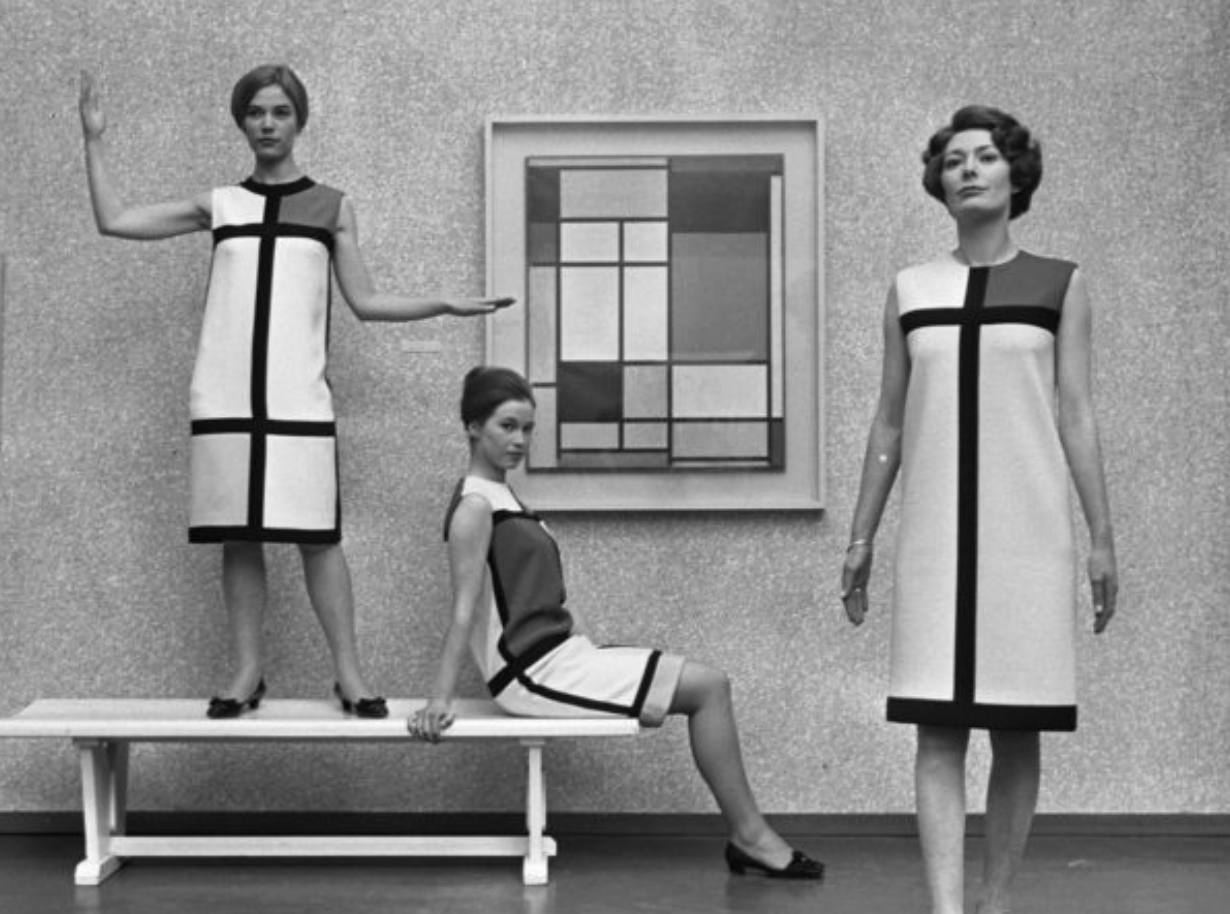
When Yves Saint Laurent, in 1965, transposed the geometric lines and colour blocks of Piet Mondrian onto cocktail dresses that have today become iconic, he created an indestructible link between haute couture and culture. This gesture became a manifesto celebrating art through homage, at a moment when luxury was seeking its legitimacy in artistic creation.
“Not only is fashion the faithful mirror of an era, but it is one of the most direct plastic expressions of human culture”
Piet Mondrian
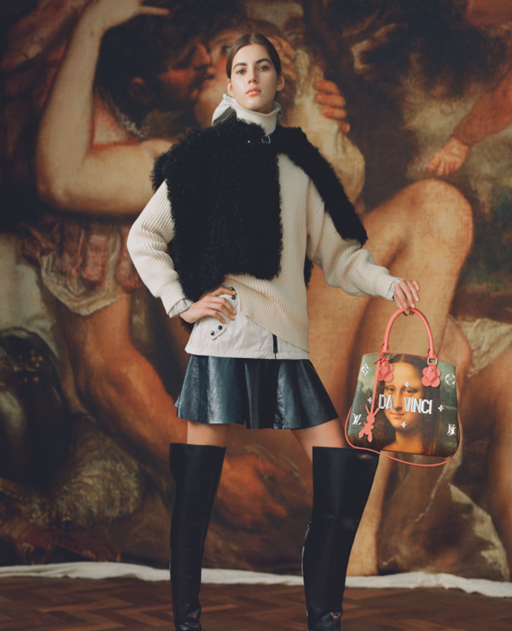
In 2025, the nature of the synergy between the two has profoundly changed, and it is no longer really a question of homage. The large luxury conglomerates like LVMH and Kering have succeeded in rendering porous the border between their industry and culture, their power eclipsing that of public institutions. If they are still patrons, their role in artistic production has become just as important. We are witnessing a shift toward what is called Artketing, where it is no longer a matter of disinterested support, assuming we could ever truly call it that, but of a strategy of commercial valorisation. Art confers upon brands a new legitimacy through a new emotional and timeless dimension (let us think of the collaboration between Jeff Koons and Louis Vuitton, transforming masterpieces into motifs for handbags sold at exorbitant prices). We have arrived at a moment where the synergy between the art world and luxury goes beyond simple collaborations between artists and fashion houses for capsule collections. This synergy begins to deploy itself across the whole cultural territory with the restructuring of major events. Indeed, luxury products no longer merely integrate art, but appropriate the platforms in order to benefit from them as well.
From patronage to Artketing: the strategic transformation of luxury
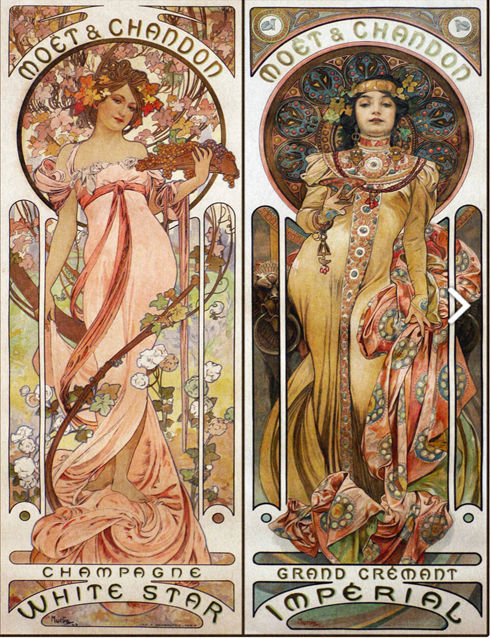
Let us linger a bit on the history of this shift. If collaboration between art and luxury is not recent, its nature has undergone a major upheaval these last decades. Art has always been a source of inspiration and, as early as the end of the 19th century, brands used artists for their advertisements as a factor of differentiation. One can notably think of Alphonse Mucha, a major artist of Art Nouveau, a precursor who knew how to combine Fine Arts with a more utilitarian function. It is from this collaboration between this artist and Moët and Chandon that were born legendary advertising posters.
This collaboration then evolved toward a more structured support with the emergence of major private foundations. In France, the inauguration of the Fondation Cartier in 1984 laid the foundations of a new order: luxury positioned itself as an institutional patron, actively supporting contemporary creations. This initiative pushed their legitimacy beyond simple collaborations by conferring upon brands a new symbolic dimension. To give an order of magnitude of the importance of private financing: in 2024, corporate patronage represented 3.8 billion euros, with 28% allocated to culture, that is to say a total of 1.1 billion. When one compares this to the French State budget of 4.6 billion in 2024, companies represent nearly 25% of public financing, which is enormous when compared to other sectors where private funds do not exceed 5%.
The drift toward what is called “Artketing” is sudden and occurs in France at the beginning of the 20th century. This method is a marketing strategy that consists in integrating contemporary art as a differentiating strategic tool, by offering an almost holistic cultural experience to the buyer. It is the adoption of the Aillagon Law in 2003, by offering major tax advantages, that allowed major houses to rationalise their approach. Little by little, they began integrating art into their value chain to maintain their desirability.
©public domain
©Darto Catellani
An ecosystem of intersecting interests
Nowadays, and especially in business school, we speak a lot of experiential marketing. And that, luxury houses have well understood by transforming the cultural space into an immersive stage. One of the most spectacular examples is the Fondation Louis Vuitton, with an iconic architecture signed by Frank Gehry who is none other than the one responsible for the Guggenheim Museum. Louis Vuitton illustrates well the fusion between the two ecosystems with what one might almost call a strategic masterstroke. The company opened this year LV Dream, illustrating the innovative concept of the “store-museum.” One can find there a free exhibition, presented by the house as a “cultural destination”, which retraces among other things its collaborations with artists. The visitor finds himself immersed in an experience praising an authentic savoir-faire and heritage that culminates, as one might guess, in commercial spaces such as the concept-store and café. The brand plays on a logic of patrimonialisation by trying to benefit from the aura of artistic works, reinforcing its attractiveness. On the other side, the visitor is naturally oriented toward consumption, but which is presented as a simple prolongation of the cultural experience.
This phenomenon also extends to temporary partnerships, in “co-branding” initiatives profitable to brands as well as cultural institutions. I am thinking notably of this year’s exhibition “Christian Dior: Dreamed Gardens” at SCAD Fash in Lacoste, in the south of France. Each party benefits from the radiance of the other by becoming a point of contact for visitors, whether locals coming for the museum or internationals interested in the house.
The integration of luxury is not, however, limited to the stagings seen above. It integrates the very process of innovation and creation through patronage, allowing integration into the aesthetics of haute couture. The Chanel Culture Fund, launched in 2021, illustrates well this mutation. It offers major grants (100,000 euros) and a mentorship system to creators from all over the world who redefine their disciplines, allowing them to ensure artistic monitoring; and it forges partnerships with major cultural institutions to co-create innovative programmes. The houses are thus able to realise exclusive commissions conferring upon them the status of avant-gardists.
Case Study: Louis Vuitton and Paris+ by Art Basel 2025
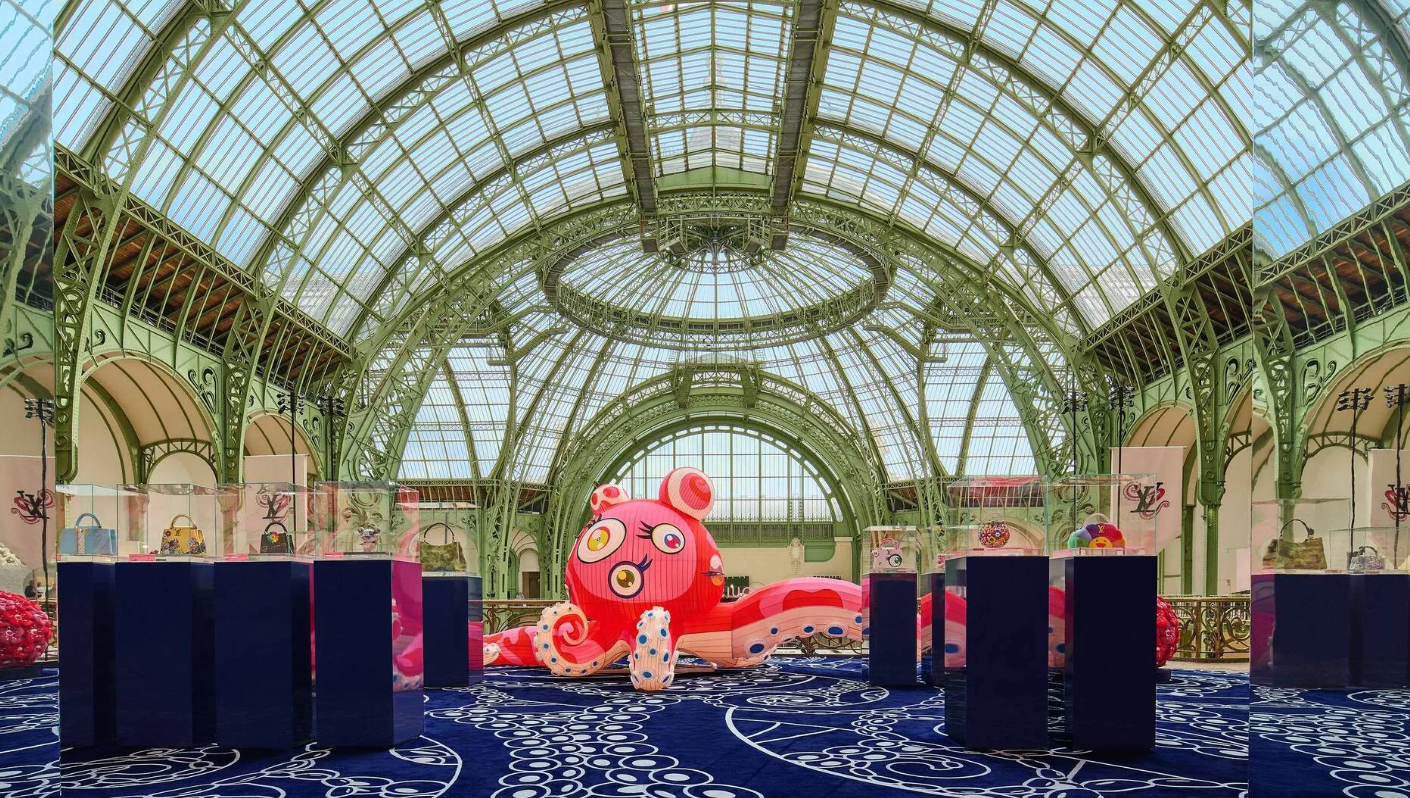
One of the largest and most recent examples of this dynamic is of course Art Basel in Paris, this immense fair that took place from October 24 to 26 at the Grand Palais, in an almost enchanting setting. The 2025 edition, with its numerous partnerships, is the most striking demonstration of the way in which luxury conglomerates now orchestrate the artistic ecosystem.
In the case of Art Basel, this “annexation” was made possible by the granting of the FIAC (International Contemporary Art Fair), which belonged to the French State, to MCH Group, a private company owning Art Basel. Public funding, traditional and symbolic in France, gave way to a more competitive financial model with a strong network of collectors. And thus the door opened for luxury players, allowing them to become major actors in a world-renowned fair.
If this year we had the opportunity to see numerous houses such as Miu Miu or Guerlain, it is Louis Vuitton that seems to win the gold medal in terms of artistic presence. Up to now, nothing surprising: the brand is known for its foundation and its patronage policy. But this year, the brand goes clearly beyond by seeking to shape the cultural landscape itself. LVMH invested the entire city with the “Hors-les-Murs” programme, which transforms emblematic places of Paris like Place Vendôme into temporary artistic spaces. The approach cannot be inscribed in a simple policy of democratisation and mediation. LVMH symbolically takes possession of the territory and places its brand image upon it.
Murakami at the heart of Paris+ 2025
One of the artists at the centre of attention this year is Takashi Murakami, faithful collaborator of Louis Vuitton since 2003. He delivered a large installation representing a giant inflatable octopus, colourful as the artist usually does. The work accompanies the seventh edition of the Artycapucines, a project launched in 2019 where artists reinterpret the Capucines bag. For 2025, Murakami presents eleven new models, between psychedelic and Japanese aesthetics. The major luxury house no longer contents itself with being a patron, but imagines a kind of artistic narrative that defines trends. No one can deny that Murakami possesses his own identity, just as no one can deny that he must respond to commercial expectations. This then raises the essential question of the extent of the artist’s freedom when he becomes the image of a brand, as Takashi Murakami can be.
The paradox: between democratisation and elitisation
We are therefore witnessing a true strategy of annexation of art, bordering on instrumentalisation by the luxury industry. But this raises a major paradox because if the financing allows a democratisation of access to culture, the control of culture returns to an elite.
The massive support of luxury in large exhibitions or its massive presence in events like Paris+ by Art Basel attracts without any doubt new young publics, as shown by the growing number of visitors to this latter event, reaching more than 70,000 this year. By investing massively in contemporary art, luxury also contributes to expanding resources and funding more ambitious works, for a cultural industry whose added value reaches 47.1 billion euros according to the Ministry of Culture.
In parallel, this democratisation is accompanied by an elitisation of cultural control. Two spaces stand out: the one visible to all, accessible; and the inaccessible, which are private salons, VIP areas, etc.—all this for a wealthy clientele. Luxury redraws the boundaries of access to art and above all hierarchises publics, going against the intentions announced by André Malraux in the 1950s. But this paradox is explained by the very nature of the luxury industry, which rests on exclusivity. It annexes art, but by imposing its codes, making art both a public space and a space of distinction.
We are thus left with this kind of two-headed Janus, where the synergy between the two milieus can be beneficial or destructive. How can we guarantee artistic independence in a context where private financing conditions the form? More importantly: can culture remain a common good when private actors are in command?
Written by Léana Seguin
Bibliography :
- Admical & Artcena. (2024). Le baromètre du mécénat d’entreprise en France – Premiers chiffres. https://www.artcena.fr/sites/default/files/medias/premiers-chiffres-admical-barometre-mecenat-entreprise-france-2024.pdf
- Bekkers, R., & Wiepking, P. (2014). A literature review of empirical studies of philanthropy: Eight mechanisms that drive charitable giving. Journal of Consumer Psychology. https://www.sciencedirect.com/science/article/abs/pii/S0022435914000037
- Fournier A. (2025), “Quand les marques de luxe s’emparent des codes du musée pour valoriser leurs produits : l’utilisation de l’approche muséale dans la collaboration entre Louis Vuitton et Yayoi Kusama”, Culture & Musées, 45, 132-154.
- Lanteri C. (2012). Art et luxe : du mécénat à l’artketing [Mémoire], Université Paul Cézanne, Aix Marseille III. https://fr.slideshare.net/slideshow/mmoire-de-fin-dtudes-art-et-luxe-du-mcnat-lartketing/14485988
- Chanel. (n.d.). Chanel Culture Fund. https://www.chanel.com/fr/chanel-culture-fund/
- Louis Vuitton. (n.d.). LV Dream. https://fr.louisvuitton.com/fra-fr/magazine/articles/lv-dream#the-store
- Ministère de la Culture. (2023, 11 décembre). 20 ans de la loi Aillagon : la mutation du paysage français du mécénat. https://www.culture.gouv.fr/actualites/20-ans-de-la-loi-aillagon-la-mutation-du-paysage-francais-du-mecenat
- McKinsey & Company. (2024, 11 novembre). The State of Fashion 2025: Challenges at every turn (rapport). https://www.mckinsey.com/industries/retail/our-insights/state-of-fashion
- Musée Yves Saint Laurent Paris. (n.d.). La révolution Mondrian. https://museeyslparis.com/chroniques/la-revolution-mondrian
- Telos. (n.d.). Mécénat : la beauté du geste et la douceur de ses coûts. https://www.telos-eu.com/fr/economie/mecenat-la-beaute-du-geste-et-la-douceur-de-ses-co.html
- Yves Hanania, I. Musnik, & P. Gaillochet. (2019). Le luxe demain : Les nouvelles règles du jeu. Dunod.