Directed by Greta Gerwig, the movie Barbie (2023) resonated around the world, achieving both critical and commercial success and grossing over $1 billion worldwide. Reimagining the popular doll toy – which has long been criticized for perpetuating unattainable beauty standards – the movie’s true appeal lies in its widespread discussion of gender, identity, and societal expectations of the individual.
In the context that popular culture and media play an important role in reflecting and reshaping social values, especially when addressing issues of gender, Barbie has been praised for how it successfully represents and challenges these dynamics through both hegemonic and counter-hegemonic lenses. Over the past three years, the movie has continuously sparked discussions about social norms and power structures, showing that its message remains meaningful.

Barbie (2023)’ s official poster
The Invisible Rules: What is Gender Hegemony?
The concept of hegemony was first introduced by Antonio Gramsci in the early 20th century. According to Gramsci, this concept describes the domination of ideology, values, and cultural norms by one group over another. This domination is maintained not through force but through consensus by the majority, where these values are gradually standardized and accepted by the majority of society over time. Hegemony shapes what people believe is “natural” or “common sense” and is therefore a powerful tool for maintaining social control. Within this framework, gender hegemony has historically reinforced traditional patriarchal roles and expectations, dictating rigid norms about what it means to be a man or a woman, therefore shaping what men and women “should” do.
Parallel to the concept of hegemony is the concept of stereotypes, understood as simplified and often self-perceived representations of groups or individuals based on their gender, race, or other characteristics. The formulation of stereotypes is seen as part of the process of maintaining hegemonic norms by reducing people to fixed roles and similar personality traits. For example, stereotypes that men are strong, rational, and unemotional, and women are nurturing, passive, and emotional, support the binary framework that underpins gender hegemony. These stereotypes are especially emphasized in the media and cultural products, where their frequency of repetition makes them normal and thus natural.
For instance, mainstream films and advertisements often portray men as figures of authority, leadership, and control, emphasizing their dominance in professional and societal roles. In contrast, women are frequently depicted in more passive and subordinate positions, often reduced to objects of beauty meant to attract attention or confined to roles associated with caregiving and nurturing. This long-standing framework makes it challenging to question or dismantle these roles, as they are deeply embedded in both cultural narratives and individual identities.
Barbie Land vs. The Real World: A Tale of Two Ideologies
Barbie emphasizes how gender functions as a problem where hegemony is revealed in all its forms, shaping social norms and maintaining power structures. To this end, the creators placed the movie in two contrasting worlds: Barbie Land, a matriarchal dream world where Barbies dominate every aspect of life; the other half is the real world like our own, ruled by patriarchal norms that systematically exclude women from important positions. Through these two parallel contexts, the movie intentionally reflects on the negatives of hegemonic gender structures and then points to a counter-hegemonic vision that prioritizes empowerment and inclusion.
Specifically, in Barbie Land, we can clearly notice female dominance through visual and symbolic elements. First, Barbie Land appears with a pink-filled port (which represents femininity in traditional views), indicating the dominance of women in this unreal world . In Barbie Land, Barbies hold all positions of power, from presidents to scientists, while Kens are disadvantaged and their value is only determined or measured based on their relationship with Barbies. This reversal of traditional gender roles reflects the movie’s hegemonic mechanisms. In other words, the dominance of one group can be naturalized and reinforced through culturally symbolic narratives and products. This element demonstrates how social hierarchies rely on both visual cues and social structures to normalize power imbalances, regardless of which group is in control. This exaggeration of the matriarchal utopia serves as a critique of how dominance, even when reversed, continues to marginalize one gender, thereby limiting individual development. Additionally, stereotypes are key to maintaining this dynamic in Barbie Land because they highlight the rigidity and harm of such simplified roles, regardless of the gender they target.
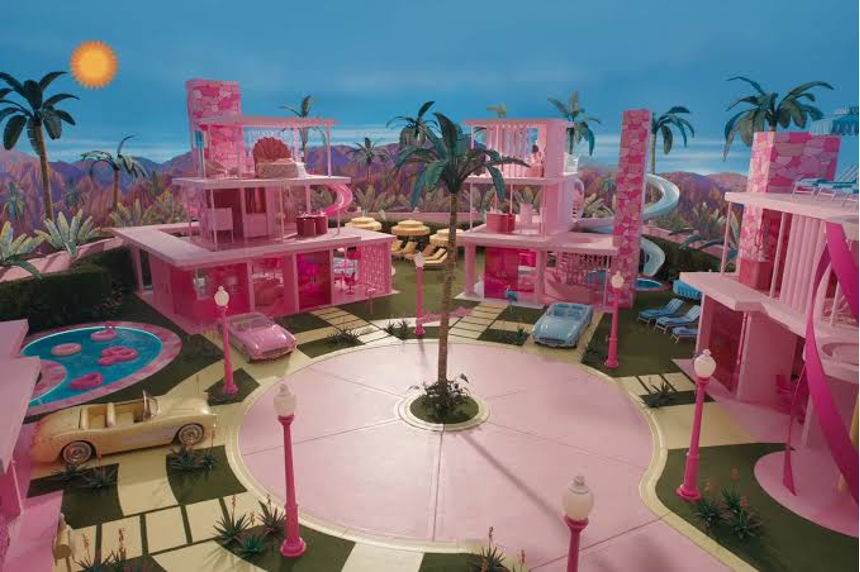
Iconic interior for matriarchy in Barbie Land
In contrast, the real world exposes the deeply ingrained patriarchal structures that govern societal norms. Through some specific scenes, Barbie critiques how language, behaviors, and institutions sustain male dominance. Barbie’s experiences of objectification and dismissal in the real world highlight how societal norms privilege men while marginalizing women. For example, Barbie encounters sexist practices, such as being belittled in professional settings or being criticized for her appearance. Meanwhile, Ken’s exposure to patriarchal ideals demonstrates how the norms of this ideology are maintained through cultural representations that glorify male power, specifically economic power and physical strength.
By deliberately allowing these two opposing worlds to appear side by side, alternating with each other, the movie demonstrates how gender hegemony can emerge in different contexts, profoundly influencing the shaping of both individual identity and social structures.
Deconstructing Stereotypes: How “Barbie” Functions as a Counter-Hegemonic Text
While it is clear that while Barbie reflects the pervasive nature of gender domination, it also functions as a counter-hegemonic text. The movie actively challenges and subverts traditional norms.
Specifically, through a variety of elements such as narration, visual direction, and dialogue, the movie critiques patriarchal ideologies and promotes a deeper understanding of gender. In fact, Barbie is traditionally seen as an embodiment of an unattainable feminine symbol. However, in this movie, Barbies actually appear as a symbol of diversity and empowerment. This is evident in the movie’s inclusion of Barbie dolls of different races, body types, and occupations, which goes against the stereotype of original Barbie dolls as being white, blonde, and having a standard body (which is considered bland and unrealistic). The inclusion of Barbies of different races positions Barbie as a counter-hegemonic work, encouraging audiences to step outside of narrow gender norms and embrace inclusivity. By doing so, the movie not only critiques existing stereotypes, but also expands the window on what women can aspire to be. They can move beyond mere appearances or traditional roles to express strong identities and capabilities.
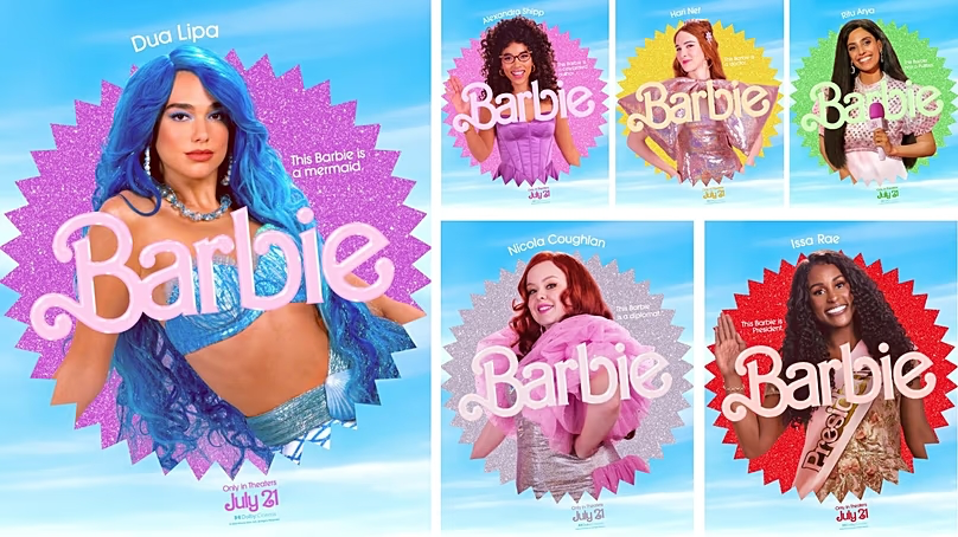
Barbies come in a variety of body shapes and skin tones in Barbie Land
In addition to the main character Barbie, the psychological development of the character Ken also contributes to emphasizing the movie’s counter-hegemonic stance. Initially exposed to patriarchal ideals, Ken’s exaggerated expression of masculinity is portrayed in the movie in a satirical way, exposing its somewhat ridiculous image. Ken’s transformation throughout the movie is understood as a criticism of toxic masculinity, thereby affirming that rigid gender norms are not only harmful to women but also negatively affect men. This satirical criticism is subtly expressed through visual symbols, specifically in the scene showing Ken’s “Mojo Dojo Casa House”. “Mojo Dojo Casa House” appears as a hyper-masculine space decorated with leather, horses, and other objects that symbolize patriarchal power. By exaggerating these elements, the movie reveals the nonsense and absurdity of such ideologies, encouraging audiences to question their rationality.
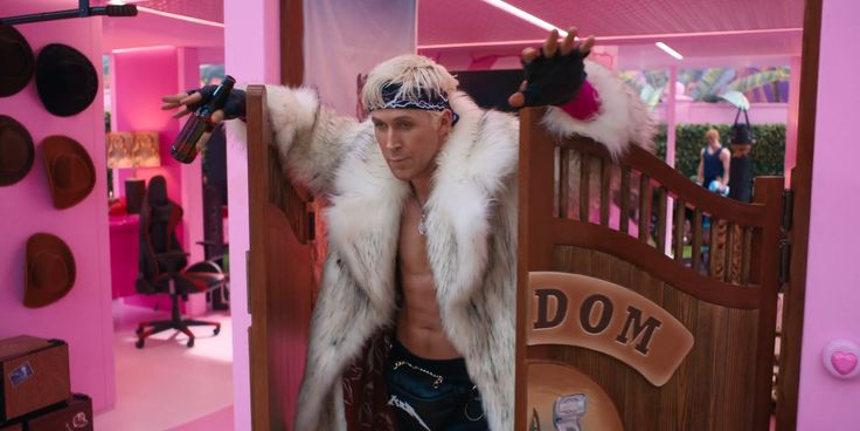
Ken’ s Mojo Dojo Casa House in Barbie Land
Besides, analyzing the visual symbolisms applied to the prominent scenes will further clarify the anti-hegemonic messages and stance of the filmmakers. An extremely famous scene of Barbie is when Barbie chooses to give up her high heels (an object that is always associated with this doll model) to go barefoot at the end of the movie. This scene left a special mark on the audience, suggesting to them and Barbie’s self-liberation to escape the constraints of traditional femininity. Following that, Barbie’s decision to leave Barbie Land to become a human also reflects her rejection of a perfect life that is only a dream. Moreover, that decisive action also shows her desire to break the rules that she always adheres to, affirming her initiative and personality.

Barbie (2023)’ s iconic bare feet scene
By revealing the characters’ personalities and gradually revealing each of their life experiences, Barbienormalizes diversity and challenges the long-standing dominance of a single standard, emphasizing that finally it’s time for things to change.
Popular Culture as a Catalyst for Change
While Barbie is mainly a playful, humorous entertainment, it is also criticized for the very ideals it purports to embody. It is this duality that makes the movie a perfect illustrative example in how a mass media product can engage with both hegemonic and counter-hegemonic ideologies.
Released during a time of significant social change, including the rise of feminist movements like #MeToo andBody Positivity – the movie’s emergence was both a reflection of and a driving force for cultural shifts. By reimagining a popular toy with a satirical yet empathetic approach, Barbie successfully sparked widespread conversations about gender equality, identity, and diversity, making complex issues accessible to all generations.
Ultimately, Barbie (2023) stands as a powerful example of how cinema can actively challenge and critique societal norms. Through its narrative, dialogue, and clear counter-hegemonic stance, the movie does more than just reflect contemporary culture as it actively participates in reshaping it. And as a global phenomenon, it highlights the transformative potential of popular culture to dismantle outdated stereotypes, construct new social values, and offer a vision of a more equitable future.
Written by Nhung Ngo
