The dark imagination of a Swiss artist
When the film Alien by Ridley Scott came out in 1979, people came across a kind of creature entirely new to them. The creature’s long skull, mechanical look, skeletal structure and unpleasant biological features established a completely new conception of the science-fiction monster.
The Swiss artist H.R. Giger was behind this creature, and his biomechanical art had already examined the combination of human bodies, machines and organic shapes. Giger’s contribution to Alien therefore went beyond that of designing a monster; he introduced an artistic universe which had a deep impact on the film’s visual identity.
What role did H.R. Giger’s biomechanical style play in changing the way the creature was designed for Alien and in redefining science-fiction horror ?
Before creating Alien: the birth of Giger’s biomechanical universe
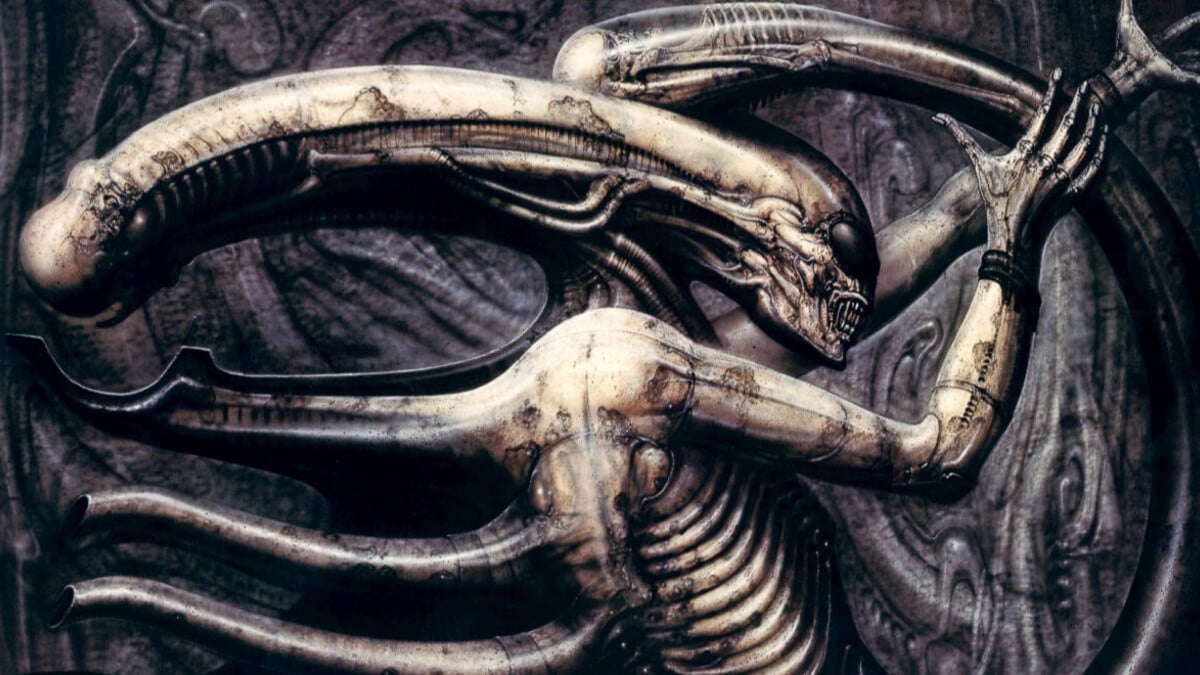
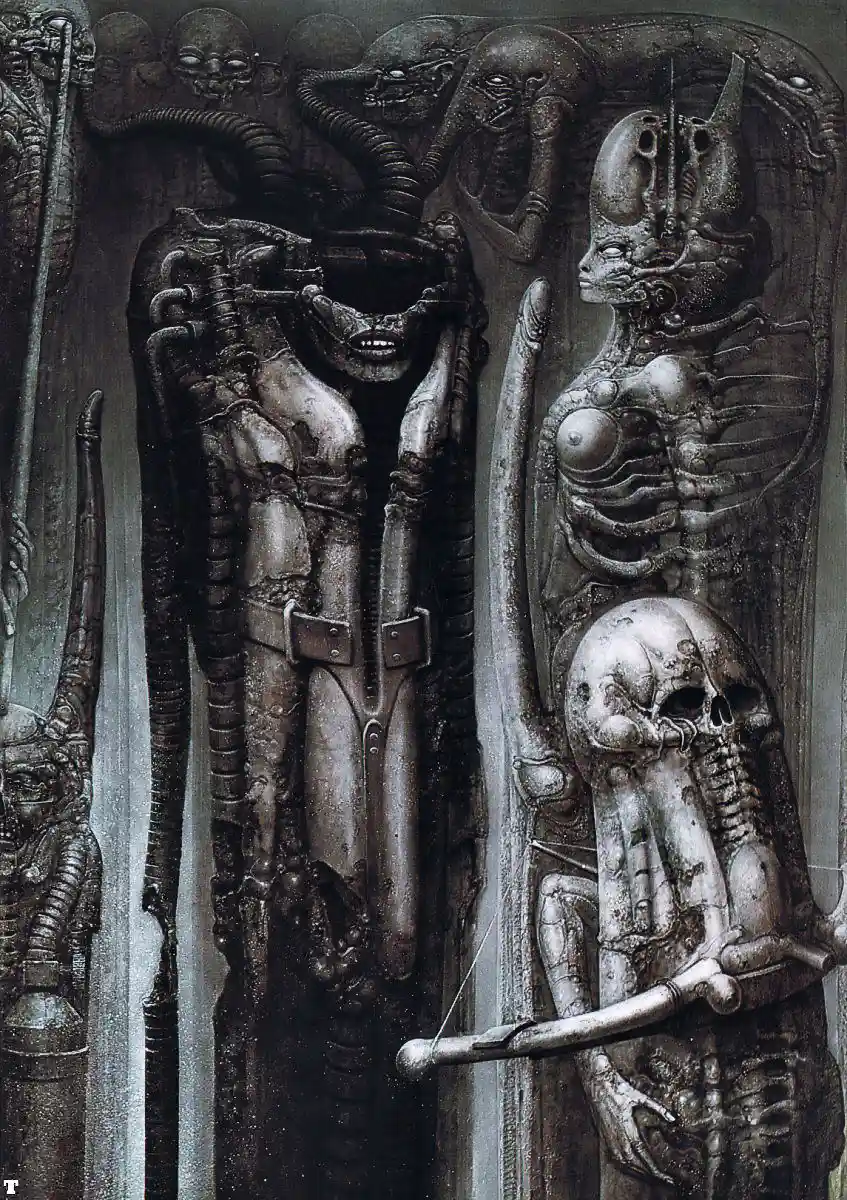
H.R. Giger developed a distinctive visual language well before the film Alien was made. His paintings merged human anatomy with machines, pipes, bones and industrial structures; the strange figures thus created were neither entirely organic nor entirely mechanical. Giger spoke of a world in which the distinction between living organisms and technology appeared to vanish.
A major contribution to the development of this universe was the Necronomicon, a book containing Giger’s artwork which was published in the 1970s. It was when filmmaker Ridley Scott came to see Giger’s work that the imagery from the Necronomicon became especially important.
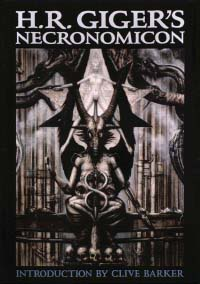
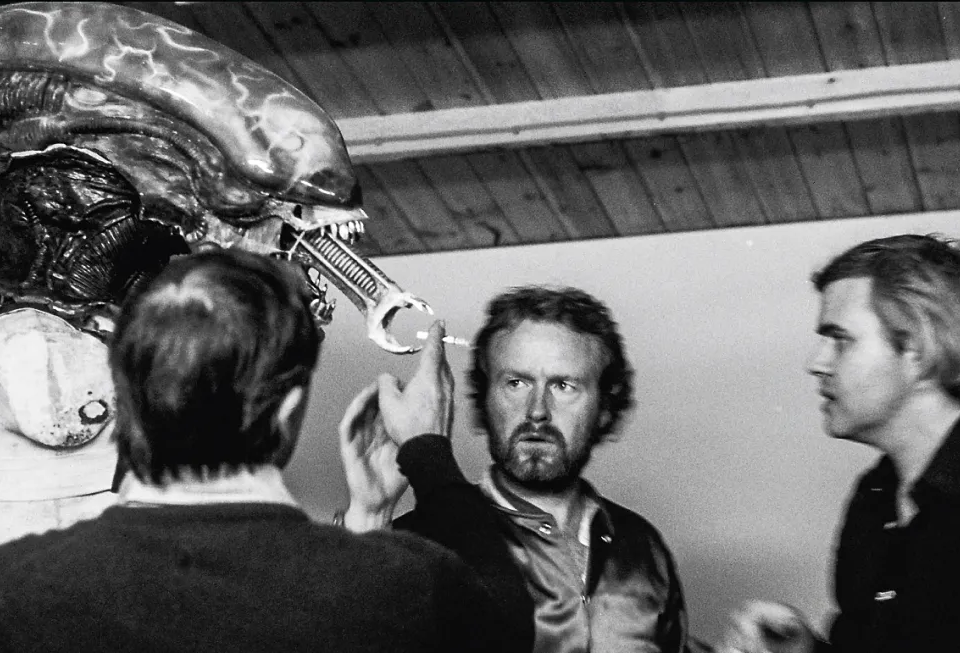
As shown in the materials taken from the H.R. Giger archive, Scott was fascinated by Giger’s sketches and believed that there was a possibility of using his biomechanical creatures in Alien; a model for the Alien was in fact created on the basis of Giger’s biomechanoid imagery.The creature from Alien was therefore not a thing entirely invented; it was in fact the cinematic extension of an artistic language which Giger had already developed.
From the Necronomicon to the Alien
It is essential to understand Giger’s contribution in relation to Necronomicon and Alien. Instead of coming up with a typical science-fiction monster, Giger came up with something that is hard to classify. The Alien is at the same time biological and mechanical, beautiful and frightening, human and entirely unfamiliar. The monster does not fit the usual picture of one; its long head, dark exoskeleton, and skeletal body go against the traditional notion of a monster. It has no obvious face, no typical expression, and no reassuringly human anatomy. The lack of familiarity makes the creature especially disturbing. There is also a strange relationship between the creature and its surroundings, since the walls, corridors and the interiors of the spacecraft have the same biomechanical features as the Alien itself. What results is that the monster doesn’t just exist in the world of Alien. It appears to be part of it.
A monster with no human face
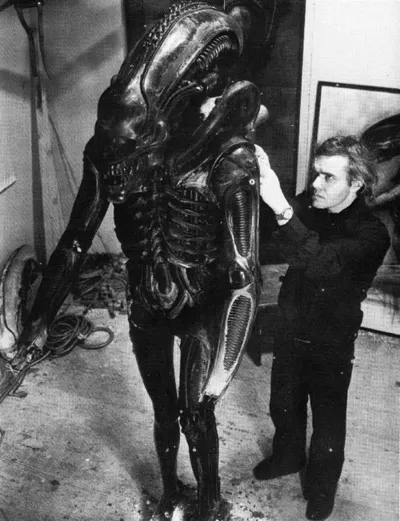
A very notable feature of the Alien’s design is the fact that it has no ordinary human face.
Normally, traditional movie monsters express their emotions through their facial features, but Giger’s Alien is the one that does the opposite. The skull, which is elongated, suggests a sense of intelligence even though it shows us nothing about what the creature is thinking. Since its dark surface takes in light instead of reflecting it, the creature is hard to read visually.
This results in a strange kind of horror since the audience finds it difficult to understand the creature. Ambiguity is therefore used by Giger as a means of creating fear. The Alien is not frightening just due to its aggression; it is frightening because the structure of its body indicates that it obeys biological rules which humans cannot understand.
The Human Body Becomes Part of the Horror
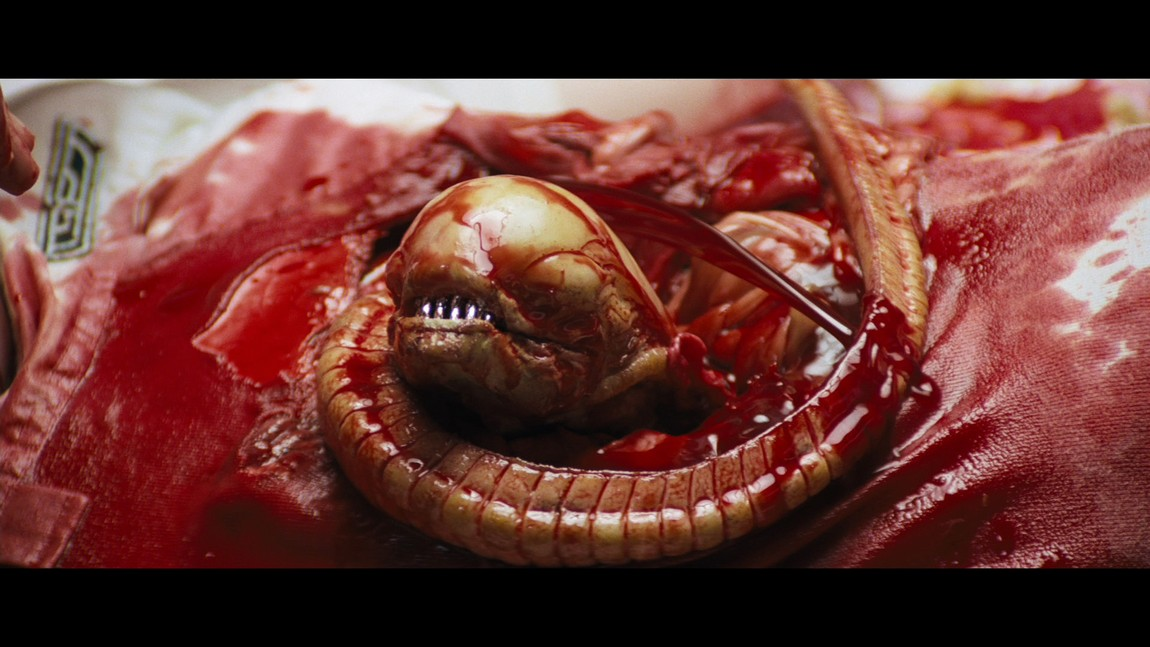
Gigers work becomes more disturbing when looking at the relationship between the Alien and the human body. His biomechanical aesthetic constantly mixes artificial forms. In Alien this approach becomes part of the films horror. The creature does not look like a machine pretending to be alive, it looks like an organism that has evolved in a completely different direction.
This idea is particularly visible, in the Aliens lifecycle. The creature emerges from the body during the famous chestburster scene transforming reproduction itself into a source of horror. The scene connects two elements that Giger repeatedly explored in his art: sexuality and death. The human body is no longer presented as something protected and familiar. It becomes vulnerable, penetrable and transformable.
Ridley Scott and H.R. Giger: When Cinema Meets Fine Art
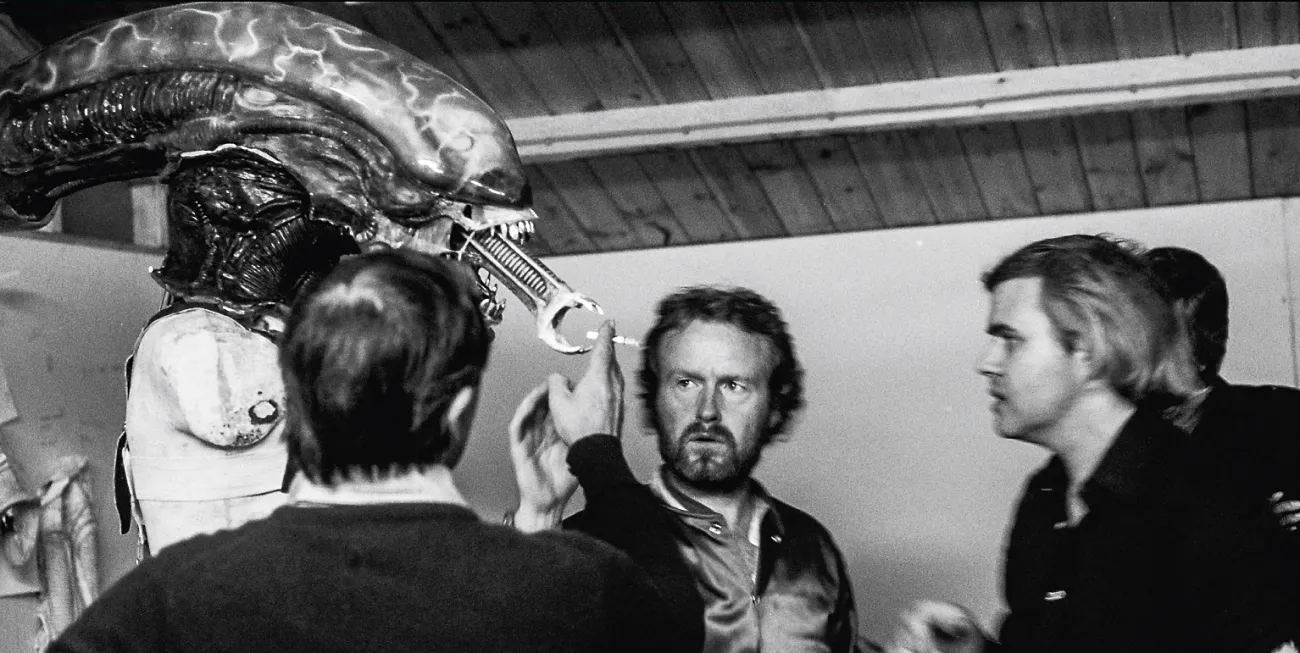
The partnership between Ridley Scott and H.R. Giger is very interesting because it brought an artistic style into popular movies. Ridley Scott did not just use H.R. Gigers art as a picture. H.R. Gigers style affected how the creature looked and how the place around it looked. His way of working helped create the dark, metal and mixed with living things look that makes Alien special.
The H.R. Giger collection says the Alien model is a type of his biomechanoids showing how the movies creature came directly from his art. This teamwork made the line between art and everyday entertainment not so clear. A style made through paintings and sketches became a movie world seen by people.
H.R. Gigers work on Alien was not a small artistic effort. It got attention from the movie business. At the Academy Awards Alien won the Oscar for Visual Effects. H.R. Giger was officially listed as one of the people who got the award along, with Carlo Rambaldi, Brian Johnson, Nick Allder and Denys Ayling. This award is important because it shows how H.R. Gigers different artistic ideas worked in movies.
His work showed that science fiction horror could use ideas from dreams, modern art and new designs of just using old Hollywood ways of making monsters.
The Legacy of Giger’s Alien
The influence of Gigers Alien goes further than just the first movie. His style that mixes biology with machines became connected with science-fiction horror and kept on affecting artists, movie makers and people who design things. Giger kept working in the movie industry after Alien, including some projects linked to Poltergeist II, Alien 3 and Species. His collection also shows ideas for science-fiction films.
His artistic world eventually became something you can experience of just looking at. The H.R. Giger Museum Bar, in Gruyères, Switzerland for example was built using the biomechanical style that is connected with his Alien settings and creatures. The ceiling, the walls the floors, the furniture and all the details were made by Giger.
The influence of Alien therefore became part of the world that surrounds Gigers artistic legacy.
Conclusion : When Art Becomes Horror
H.R. Gigers work on Alien changed more than the look of a movie monster. Giger transformed a creature into a concept. Giger mixed organic shapes with machines, sex, death and factory images. The result looked like a creature that did not fit known categories. The success of Alien demonstrated the power of this approach. A visual language originally developed through paintings such, as Necronomicon could become one of the recognizable aesthetics in science‑fiction cinema.
Gigers Alien remains disturbing because Gigers Alien challenges one of our basic assumptions: that we understand what a living body should look like. Gigers greatest achievement was perhaps not creating a monster but creating a form of life that humans could not fully understand.
Written by Thibault
Sources :
https://fr.wikipedia.org/wiki/Hans_Ruedi_Giger
https://www.radiofrance.fr/franceculture/comment-giger-a-imagine-le-xenomorphe-du-film-alien-3540027
https://www.ina.fr/ina-eclaire-actu/video/pa00001323766/alien
https://fribourg.ch/fr/la-gruyere/musees/hr-giger-museum
https://www.sciencesetavenir.fr/decouvrir/tele-cinema/h-r-giger-createur-d-alien-est-mort_36697
https://www.beauxarts.com/expos/h-r-giger-lanatomie-de-la-terreur