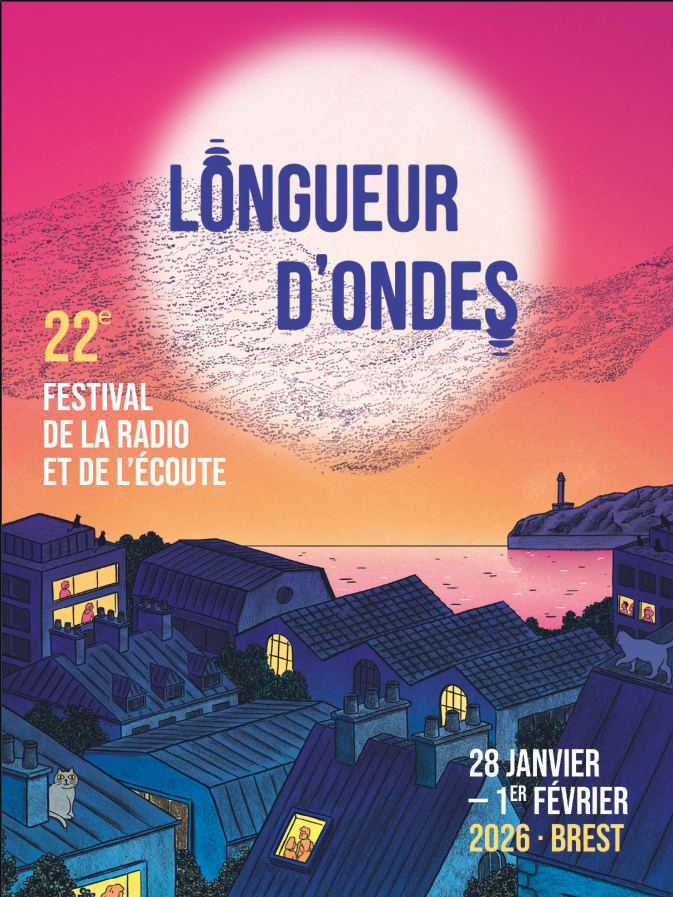
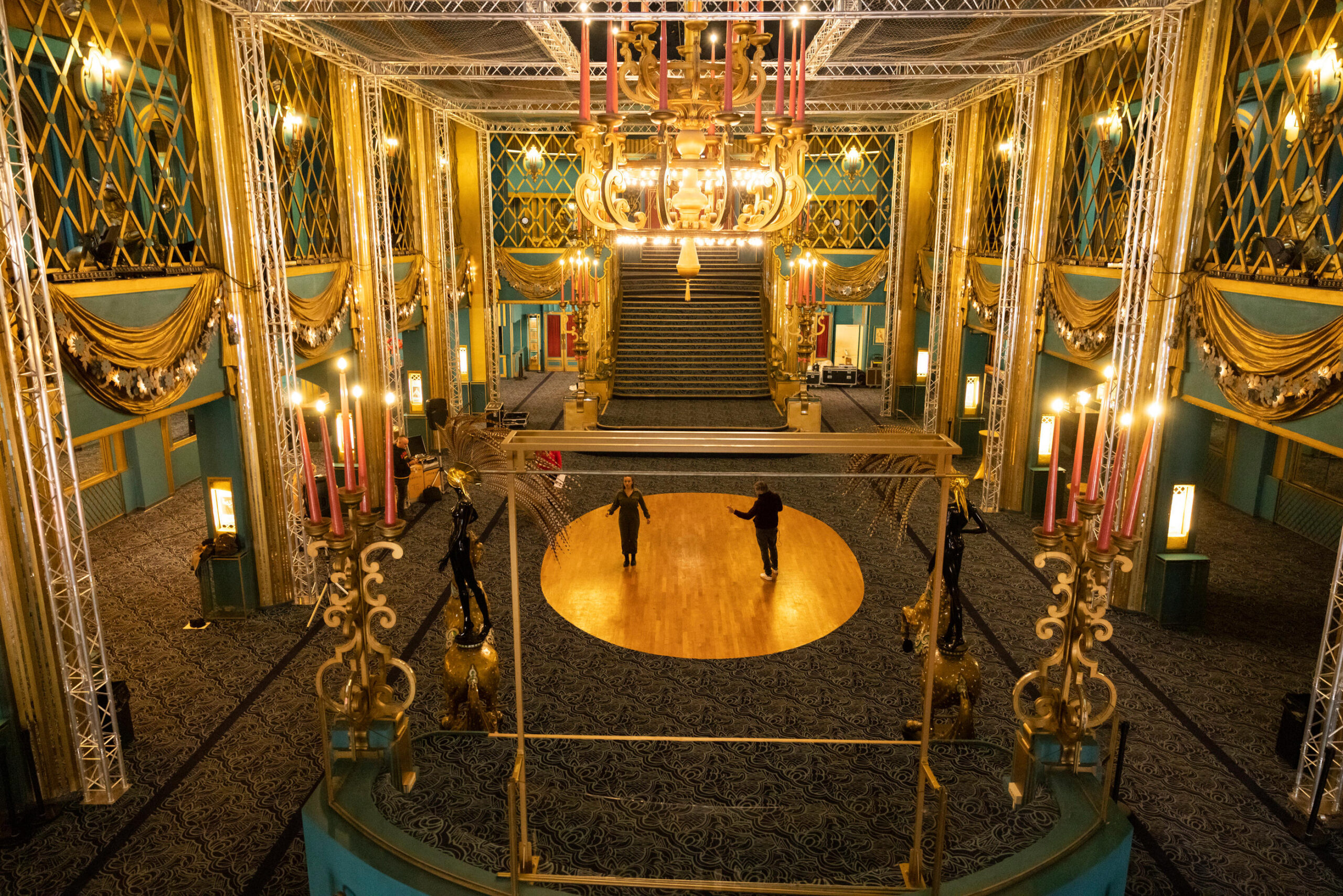
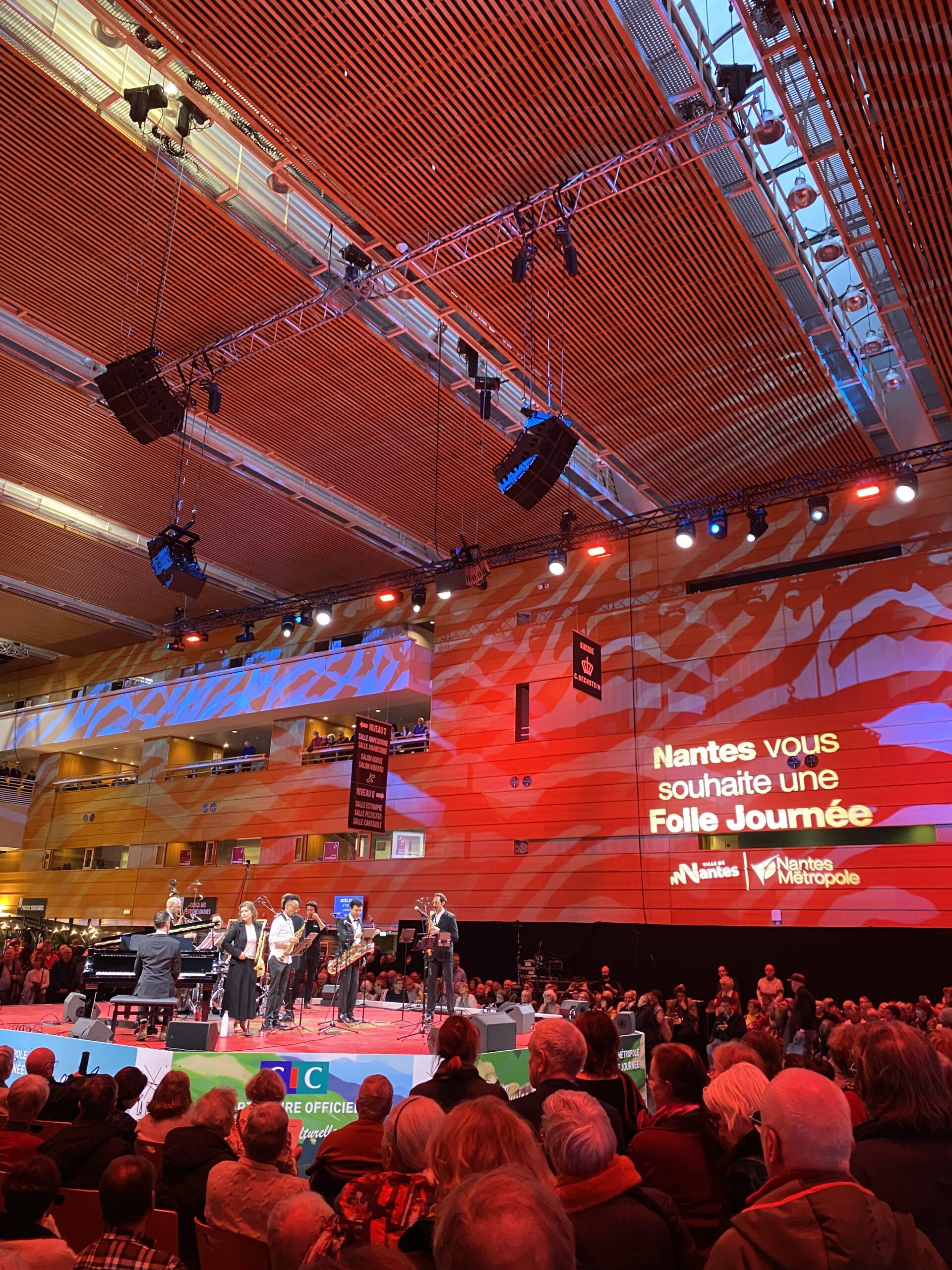
From January 28 to February 1, the 22nd edition of the Longueur d’Ondes Festival, the “Festival of Radio and Listening,” took place in Brest. Since 2002, this event has been organized by four friends passionate about radio and sound expression: Laurent Le Gall, Aurore Troffigué, Laurent Venneuguès, and Hélène Vidaling. Over nearly five days, French-speaking radio professionals, journalists, authors, listeners, and radio enthusiasts of all kinds gathered at Brest’s national stage, Le Quartz, to participate in roundtables, conferences, workshops, and live-recorded broadcasts.
The program for this year’s edition revolved around three main themes: “Defending Public and Independent Media,” “In the Name of Feminist Struggles,” and “Cherishing Listening.” Every evening, between the festival’s intense days, attendees could also enjoy numerous shows and concerts organized alongside the festival, blending the auditory experience with broader cultural events.
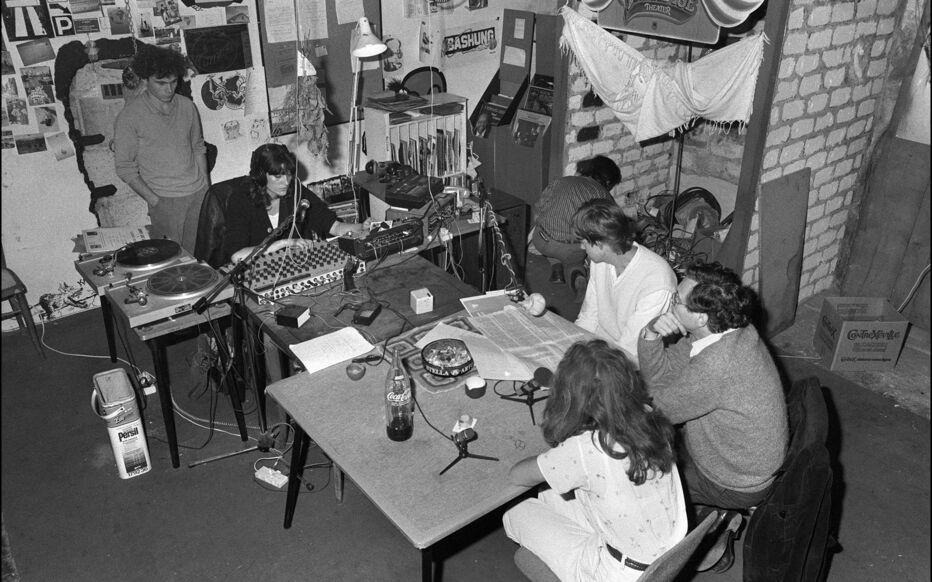
But one might ask, why is a festival of such renown held in Brest? The answer lies in the city’s historical and ongoing relationship with radio. Brest is unanimously considered a “radio city,” thanks to its rich history and exceptional associative dynamics in the field of radio. Since the liberalization of the airwaves in 1981, several pioneering free radio stations emerged in the city, including Radio Neptune (1982) and Fréquence Mutine (1982). These stations established a model of local, alternative, and engaged radio. Alongside them, RCF Rivages (1992) and Radio U (2001) have contributed to a diverse radio landscape where associative stations collaborate rather than compete, united by a shared ethos: Brest.
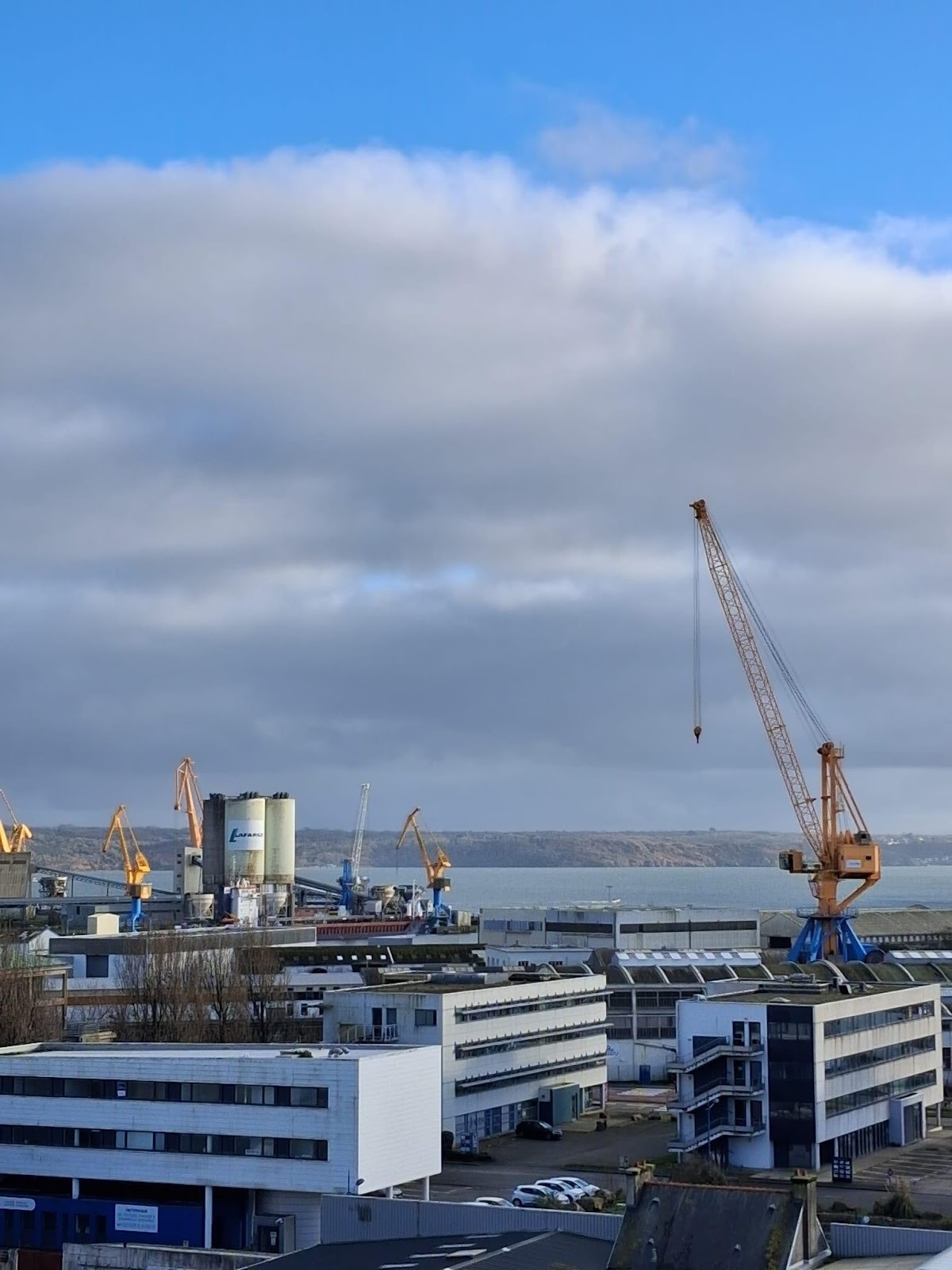
Picture of Brest during the Festival
The Key Role of Associative Radios in Sound Creation
Until 1970, the ORTF (Office de Radiodiffusion-Télévision Française) held a monopoly over all radio broadcasting in France. Following the social upheavals of 1968, a number of pirate radio stations, often popular and illegal, began spreading beyond Paris. These small, independent stations laid the groundwork for a new type of radio, one closer to its community, freer in content, and experimental in format.
In 1981, under the presidency of François Mitterrand, these stations were legalized, provided they adhered to certain requirements that offered protection for artistic creation. Today, there are approximately 600 associative radio stations in metropolitan France and 130 in overseas territories. They collectively attract around one million daily listeners, each tuning in for about an hour. By contrast, Radio France reaches seven million listeners for two hours of listening on average.
However, these associative radios are increasingly forced to fight to maintain editorial independence. Funding from the FSER (Fonds de Soutien à l’Expression Radiophonique) has been diminishing, placing vital local stations in jeopardy. Stations such as Radio Campus Paris, Radio Grenouille in Marseille, or Jet FM in Nantes, staffed by a few salaried employees and around a hundred volunteers, and financed 80% through public subsidies, risk disappearing if these reductions continue. Beyond their informational role, associative radios serve as critical training grounds for French radio professionals. Many current Radio France employees began their careers in these community-driven environments, learning the craft in a way large public broadcasters rarely allow.
Thus, associative radios are not only engines of local culture and artistic creation but also incubators of the next generation of media professionals, fostering innovation, experimentation, and diversity in a media landscape that often risks homogenization.
Picture of one of the first free radio stations
Copyright Issues for Podcast Creators
The festival also served as an important forum for discussing copyright challenges in the evolving podcast sector. As with the BIS (Biennales Internationales du Spectacle Vivant) in Nantes, the Longueur d’Ondes Festival highlighted the urgent need to adapt copyright law to new cultural formats, particularly independent podcasts.
Podcasting, a relatively recent and rapidly growing medium, now encompasses nearly 100,000 independent series and 100 million individual podcasts worldwide. These productions often explore topics overlooked by traditional radio, offering listeners a fresh and immersive experience. Yet the legal framework surrounding podcast creators remains minimal. Questions abound: should funding responsibilities fall under the CNM (Centre National de la Musique) or the CNC (Centre National du Cinéma et de l’image animée)? The ambiguity hampers both creators’ protections and opportunities for support.In response, representatives from the IGAC (Institut Général des Affaires Culturelles), the SCAM (Société Civile des Auteurs Multimédia), the PIA (Pôle Innovation Audiovisuelle), ARCOM, and Radio France convened in a roundtable titled “The Sound Work: The Overlooked Aspect of the Cultural Sector.” They recognized that the podcast industry remains the only cultural sector not systematically subsidized, aside from a few small grants. An agreement was nevertheless reached between Radio France and the PIA, aiming to promote independent PIA podcasts on the Radio France platform and ensure proper remuneration, contrasting with platforms such as Spotify or Deezer, which often undercompensate creators.
This dialogue marks the beginning of a larger legislative initiative. The goal is to create a sound creation ecosystem modeled on audiovisual frameworks, defining authors, co-authors, and regulations that protect creative rights and eventually integrate into the SMA (Services Media Audiovisuels) directive. By establishing clear protections for podcast creators, the industry moves closer to a sustainable and equitable model, legitimizing podcasts as a vital cultural and professional medium.
Podcasts as Political Influencers
The 22nd edition of the festival also explored the growing political influence of podcasts, particularly evident during the 2024 U.S. presidential elections. One conference featured a journalist specializing in American politics, who noted that many U.S. citizens no longer relied on traditional TV news channels like Fox News. Instead, they increasingly turned to podcasts, including shows hosted by Andrew Tate, which attracted up to twelve million listeners during the election period.
What astonished observers was the format itself: three hours of daily, unscripted content in which podcasters shared opinions “as they came to mind.” Unlike conventional media, these programs offered no structured debate or editorial counterpoints, creating what the journalist described as a “form of shouting broadcast,” unfiltered and often polarizing.
This shift toward podcasts correlates with a historical regulatory change. In 1987, the Reagan administration abolished the Fairness Doctrine, which had required U.S. broadcasters to provide balanced and diverse content on local and federal channels. Without this regulation, citizens increasingly sought alternative sources of information, with podcasts emerging as a primary vehicle for unmediated political discourse. The implications are profound, not only for the media industry but also for democratic engagement and information literacy, highlighting the capacity of audio media to shape public opinion in ways that traditional outlets increasingly cannot.
Challenges Facing Public Broadcasting
Finally, the festival addressed ongoing challenges to public broadcasting, notably the Cohen-Legrand affair, discussed in the presence of Thomas Legrand, a leading French journalist. Legrand replaced Laurence Bloch, former director of Radio France, who was absent due to her upcoming summons before the Parliamentary Inquiry Commission on public broadcasting neutrality.
Participants discussed the growing scrutiny over the cost and neutrality of public broadcasting, especially since the 2022 elimination of the public broadcasting license fee. Concerns were raised regarding the perceived pressure to maintain “neutrality,” with the commission urging broadcasters to appear politically impartial. Legrand emphasized that neutrality should not be a superficial display, but rather an opportunity to reflect the complexity and diversity of opinions so that every listener can identify with public service content. His remarks underscored that expressing opinions differs depending on the platform: as an editorialist for Libération, he exercises a different voice than when contributing to France Inter, illustrating the nuanced responsibilities of public media professionals.
A female participant also highlighted the ideological stakes in public broadcasting debates. Opposition to public service is increasingly used as a political tool, framed as an electoral argument rather than a financial or operational critique. This underscores how media policy debates can become entangled with broader ideological battles, reflecting shifts in public discourse, political strategy, and the very role of media in society.
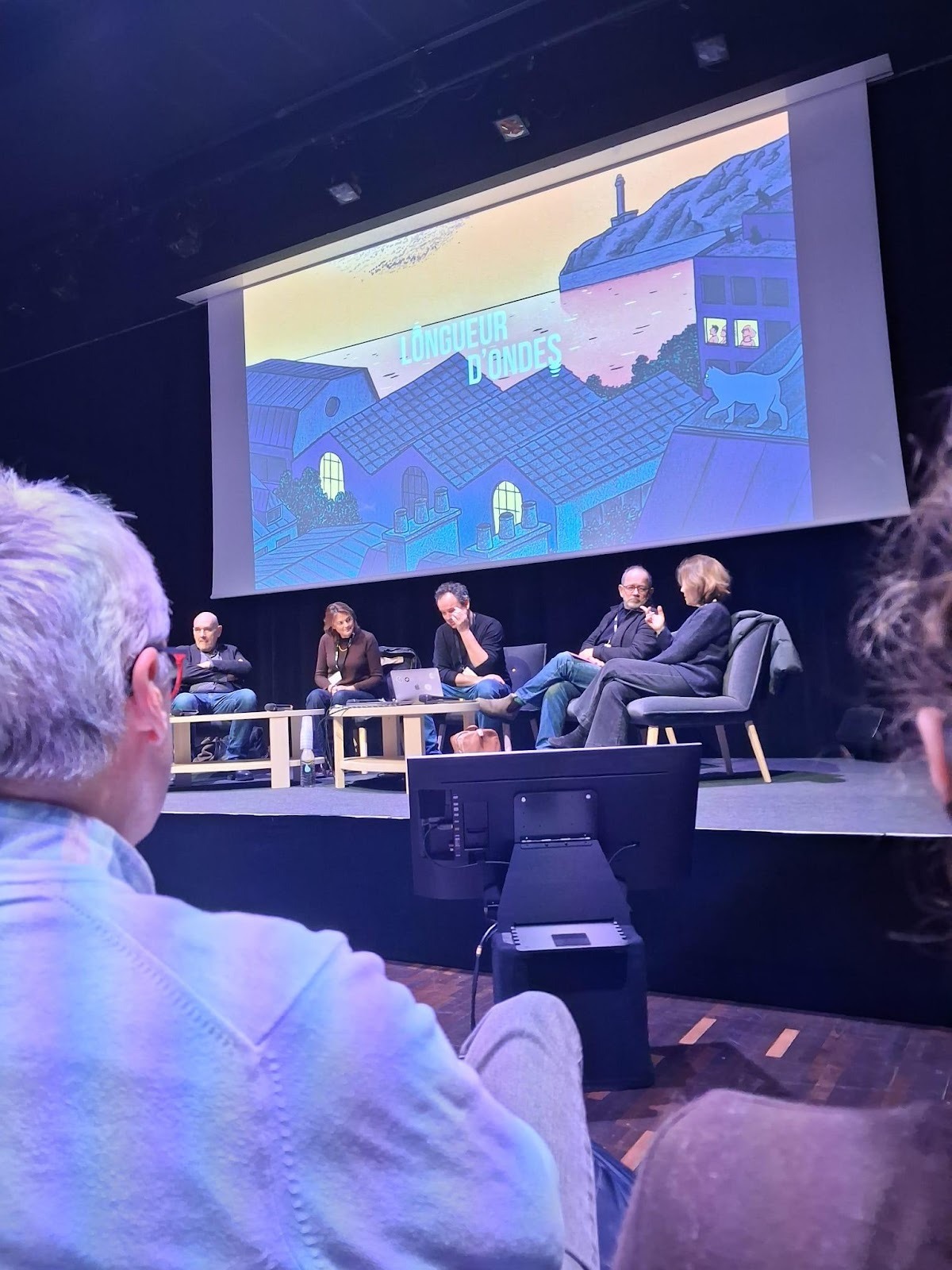
Picture of Jean Lebrun, Nathalie Sonnac and Thomas Legrand at the Conference about Challenges Facing Public Broadcasting.
Conclusion
The 22nd edition of the Longueur d’Ondes Festival has demonstrated the enduring importance of community-driven dialogue in the French-speaking radio landscape. By bringing together professionals, volunteers, listeners, and enthusiasts, the festival fostered critical reflection on pressing issues: the sustainability and independence of associative radios, the emerging legal and economic structures needed for podcasts, the transformative influence of audio media on political discourse, and the ideological pressures facing public broadcasting.
Beyond simply discussing problems, the festival highlighted solutions: collaborations between public broadcasters and independent podcast networks, legislative efforts to secure creators’ rights, and ongoing advocacy for funding and editorial independence. These conversations are vital, not only for the survival of diverse radio formats but also for nurturing a culture that values listening as much as speaking, creativity as much as consumption, and informed engagement as much as entertainment.
In addition, the festival underscored how media, in its many forms, shapes society, not only by delivering content but by defining how audiences experience, interpret, and interact with the world. From local associative radios to globally influential podcasts, sound media continues to be a conduit for knowledge, debate, and cultural expression. By providing a forum for collaboration, debate, and celebration, the Longueur d’Ondes Festival ensures that the art and craft of listening remain central in a rapidly changing media landscape.
Ultimately, the 22nd edition reaffirmed that radio and audio storytelling are more than just technologies, they are social practices, educational tools, and instruments of democracy. They foster connection, provide platforms for marginalized voices, and offer spaces for experimentation and reflection. As the festival concluded, participants left not only with new ideas and renewed energy but with a shared understanding of the stakes, responsibilities, and possibilities inherent in the world of sound. The conversations, debates, and collaborations sparked during those five days will continue to resonate, echoing far beyond Brest and shaping the future of radio and audio media for years to come.
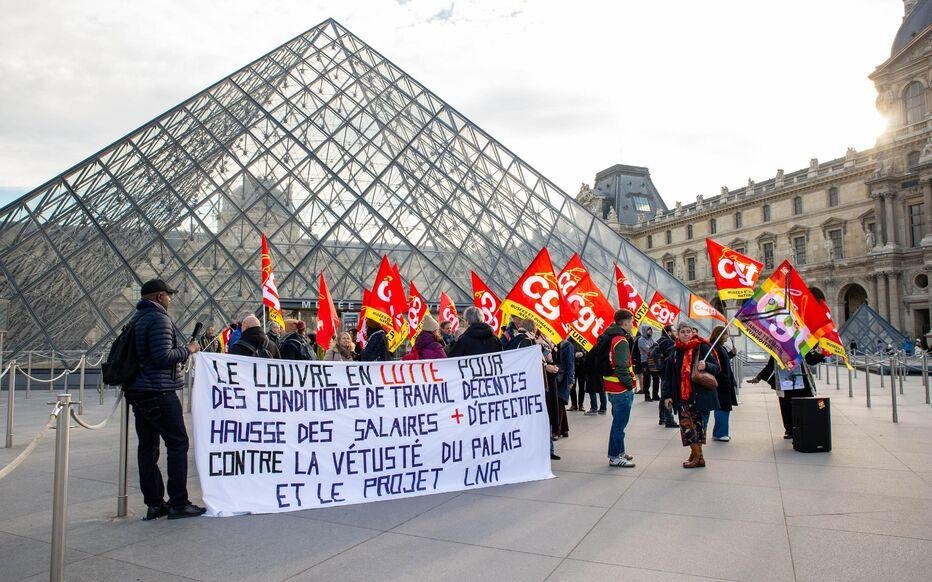
On Monday, February 16, an assembly of more than 200 employees of the Louvre Museum voted to go on strike, making it impossible to fully open the museum. Launched in mid-December, the strike movement at the Louvre has taken on an unprecedented scale over the past few weeks for France’s largest museum institution. On several occasions since December, the museum has been forced to close entirely to the public as a direct result of the mobilisation of a significant share of its workforce. On January 26, several hundred employees gathered in a general assembly at the auditorium voted to renew the strike notice initially filed on December 8 by an inter-union coalition bringing together CFDT, CGT and SUD Culture, marking a new phase in what has become a prolonged social conflict.
According to the trade unions, the mobilisation originated in a spontaneous movement by non-unionised staff members in June 2025, accompanied by the drafting of a list of grievances that, in their view, received no adequate response from management. The jewellery theft that occurred in October 2025 is described as a further shock to the institution’s social fabric, as it exposed long-standing shortcomings in security, investment priorities and staffing management. Since then, the inter-union group says it has been closely monitoring the conflict, consulting employees every week on whether to continue the strike. The participation of staff from the Denon wing — which houses the Mona Lisa — led to the museum’s complete closure on several occasions, an outcome union representative has described as historic.
The various union statements converge in portraying an institution facing deep structural difficulties. The unions denounce working conditions they consider increasingly degraded, an ageing building whose deterioration has led to repeated technical failures, and a chronic lack of staff. According to them, these constraints result in the daily closure of galleries beyond the forecasts of the guaranteed opening plan, hindered visitor circulation and limited access to the collections, to the point that a visit to the museum has been described as an “obstacle course” by the workers. Internally, staff report a steadily increasing workload, growing tensions in human resources management and contradictory directives that they say are incompatible with the calm exercise of a public service mission.
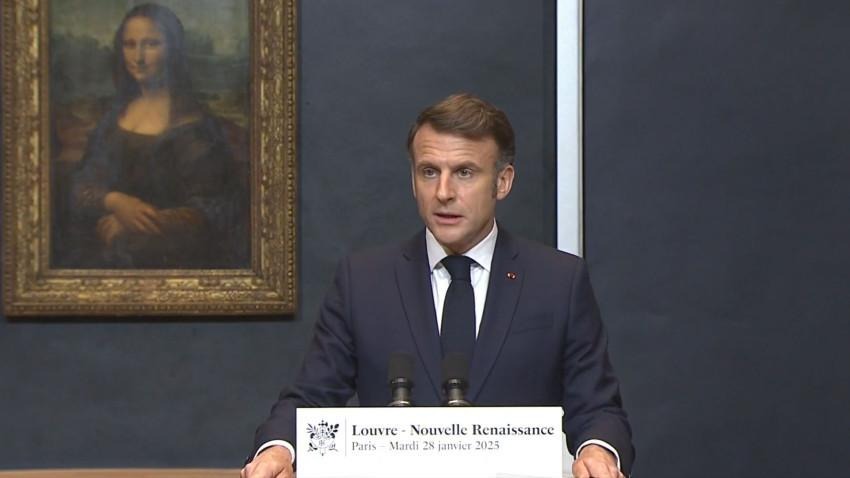
The social tensions unfolding at the Musée du Louvre also coincide with uncertainty surrounding one of the institution’s most ambitious transformation projects. Scheduled to meet on February 11, the jury of the international architecture competition for the “Louvre–Grande Colonnade” project — part of the broader Louvre–Nouvelle Renaissance plan — ultimately postponed its deliberations to an unspecified later date. Officially justified by the need for further analysis of the proposals, the delay comes amid a series of crises affecting the museum, including security failures, infrastructure damage and ongoing labour disputes. Announced in January 2025 by President Emmanuel Macron, the project aims to redesign the museum’s eastern wing to improve visitor flow and access to the Mona Lisa, with an estimated cost of more than one billion euros. While the museum’s management insists on the project’s strategic importance, trade unions — already mobilised against what they describe as deteriorating working conditions and fragile funding priorities — have openly opposed the redevelopment, arguing that it diverts attention and resources from more urgent issues related to safety, staffing and day-to-day operations. The postponement of the jury meeting has therefore been interpreted by union representatives as a signal of broader instability, reinforcing their criticism of governance choices at a time when the institution is already under strain.
At the heart of the demands are issues related to the institution’s governance, site safety and security, project and pricing policies, the creation of permanent civil service positions, the stabilisation of contract staff, salary increases and the overall improvement of working and visiting conditions. These demands are also part of a broader reflection on the museum’s economic model, a large share of whose budget now relies on its own revenues, fuelling, according to the unions, tensions between financial imperatives and staff working conditions.
Asked about the situation, Culture Minister Rachida Dati publicly acknowledged on January 13, during an interview on Europe 1, the existence of a “governance problem” at the head of the institution, while announcing forthcoming decisions without specifying their nature. Despite several rounds of negotiations with management and supervisory authorities, the unions believe that the responses provided so far remain insufficient. Staff members, who say they are deeply attached to the Louvre, now describe their mobilisation as a major warning about the future of the institution’s social and cultural model and, more broadly, that of France’s major public cultural institutions.
Beyond the Louvre alone, the strike movement reflects a broader context of weakening across France’s public museums, which have been facing persistent structural pressure for several years. Staff point to rising workloads, increasingly tight schedules and enforced versatility, often within ageing buildings whose maintenance has been significantly delayed. Deteriorating infrastructure, regularly reported by employees, raises concerns about safety, the preservation of artworks and working conditions alike, while budgetary trade-offs increasingly favour self-generated revenues, high-profile events or profitability at the expense of day-to-day operations.
In this context, pricing policies, the growing number of exceptions and discounts, and pressure to increase visitor capacity are widely perceived by staff as contributing to the erosion of public service quality. These dynamics create a widening gap between the museums’ heritage and educational missions and the resources actually allocated to fulfil them. Added to this are recurring human resources issues: increased reliance on precarious contracts, limited career prospects, declining purchasing power and a widespread feeling of exclusion from strategic decision-making.
The demands set out in union statements — including the creation of permanent positions, salary increases, improved working conditions, recognition of staff expertise and clearer governance — echo a malaise shared across many public cultural institutions. Employees warn of the risk of a gradual erosion of the French museum model as an accessible public service grounded in professional expertise.
This situation can partly be explained by changes in the economic model of public museums, marked by growing dependence on own-source funding such as ticket sales, sponsorship, space rentals and blockbuster exhibitions, at a time when state and local authority funding is stagnating or declining. Under the supervision of the Ministry of Culture, many institutions are encouraged to boost revenues and attendance, resulting in intensified activity without corresponding increases in human or technical resources. For staff, this translates into mounting daily pressure: denser visitor flows, extended opening hours and increased reliance on evening, weekend and public holiday work, often seen as necessary to offset declining purchasing power.
Material working conditions remain another major point of tension. Much of France’s museum heritage is housed in historic buildings requiring heavy and continuous investment to maintain and upgrade. Staff regularly warn of technical failures, safety concerns and spaces ill-suited to mass tourism, all of which complicate their work. These issues affect visitors through partial gallery closures, restricted circulation and degraded visiting conditions, while also exposing staff to heightened risks and a growing sense of lost purpose.
Human resources challenges are equally central to the discontent expressed. The increasing use of contract staff, the multiplication of employment statuses and the precarisation of certain professions undermine service continuity and fuel feelings of inequality within teams. Employees denounce limited career progression, insufficient recognition of their skills and management practices perceived as increasingly top-down, leaving little room for dialogue or consultation. In this context, governance has become a key issue, with unions calling for staff to be more closely involved in strategic decisions shaping the future of museums.
The Louvre Museum with its famous glass pyramid, built between 1985 and 1989 (image libre de droit)
What lies ahead?
The outcome of the conflict at the Louvre, as in other public museums, will largely depend on the ability of public authorities and institutional leadership to translate widely shared diagnoses into structural decisions. In the short term, targeted measures — temporary staff reinforcements, budgetary shifts in favour of safety and maintenance, and commitments on certain pay demands — could help ease tensions and restore more stable operations. However, without a long-term strategy, such measures risk falling short of addressing the depth of the problems identified.
In the medium term, the economic and social model of major public museums appears to be a central issue. The growing reliance on own revenues and mass attendance, often framed as unavoidable, could be reassessed in light of its impact on working conditions, conservation standards and the quality of visitor reception. A redefinition of priorities — refocusing on core public service missions, sustained investment in buildings and staff, and a better alignment between cultural ambitions and available resources — is one scenario frequently discussed by sector stakeholders.
Change may also require a renewal of governance practices. Recent social movements reveal strong expectations for greater recognition of staff expertise and for more meaningful social dialogue upstream of major strategic decisions. Closer staff involvement in shaping institutional choices could help rebuild trust and prevent recurring crises, while ensuring that stated objectives better reflect on-the-ground realities.
Finally, beyond the Louvre itself, these mobilisations may influence broader national cultural policy orientations. Under the authority of the Ministry of Culture, the State faces the challenge of clarifying its role and level of commitment in financing and regulating major heritage institutions. Without structural responses, social conflicts may multiply, turning such movements into lasting warning signals about the sustainability of the French cultural model. Conversely, a clear policy shift could open the way to a more balanced equilibrium between international prestige, accessibility and working conditions.
The debates raised by the strike at the Louvre Museum, and by similar movements in other institutions, go beyond the social dimension alone. They raise questions about the very future of cultural policy in France. As several observers point out, persistent underinvestment in public museums, combined with growing reliance on their own revenues, could gradually weaken their ability to fulfil their public service missions. In the long run, the preservation, study and transmission of cultural heritage could increasingly fall to private actors, foundations or institutions whose operations are shaped by profitability requirements, sponsorship strategies or audience-driven objectives.
Private museums and independent cultural initiatives undoubtedly contribute to enriching and diversifying the cultural landscape. However, their goals do not necessarily align with the long-term imperatives of conservation, research and universal access. Public museums have historically played a central role in preserving collections regardless of their immediate appeal, ensuring affordable access to knowledge and maintaining scholarly independence from commercial pressures. The concerns expressed by museum staff therefore resonate as a warning signal: that heritage management could gradually shift towards a market-driven logic.
Ultimately, the current mobilisations can also be read as a call to reaffirm public responsibility for cultural preservation at a time when the balance between public service and economic constraints appears more fragile than ever.
Written by GabrielMaget
Sources: CGT Etat : « Caisse de grève pour les agent·es du musée du Louvre (Intersyndicale Culture) » Cfdt : « Les salariés du Louvre en grève pour leurs conditions de travail » France info : « Nouvelle journée de grève au musée du Louvre, qui n’ouvre que partiellement » Le Monde : « Grève au Louvre : nouvelle journée de mobilisation, le musée n’est que partiellement ouvert ce lundi » Connaissance des arts : « Louvre : entre crises à répétition et polémiques, nouveau coup dur pour le musée et son grand projet de réaménagement à 1,15 milliard d’euros »
For centuries, Europe lived surrounded by visible gods. They had bodies, faces, stories, tempers, desires, and a profoundly human dimension. They inhabited the walls of houses, public squares, temples, and frescoes. Then, gradually, this familiarity with the divine faded. Not through an immediate iconoclastic upheaval, but through a slow shift in which images more than texts carried the trace of a deep transformation: the passage from a polytheistic world to a monotheistic one.
The history of European painting can be read as the silent narrative of this transformation. It tells how the sacred moved from body to sign, from presence to absence, from multiplicity to unity. Above all, it reveals how the image, far from being abolished, had to learn to express differently what it could no longer show directly. Painting thus became a fragile, sometimes contradictory space, where the balance is negotiated between what can be seen, what must be believed, and what can be shown.
The Age of Visible Gods
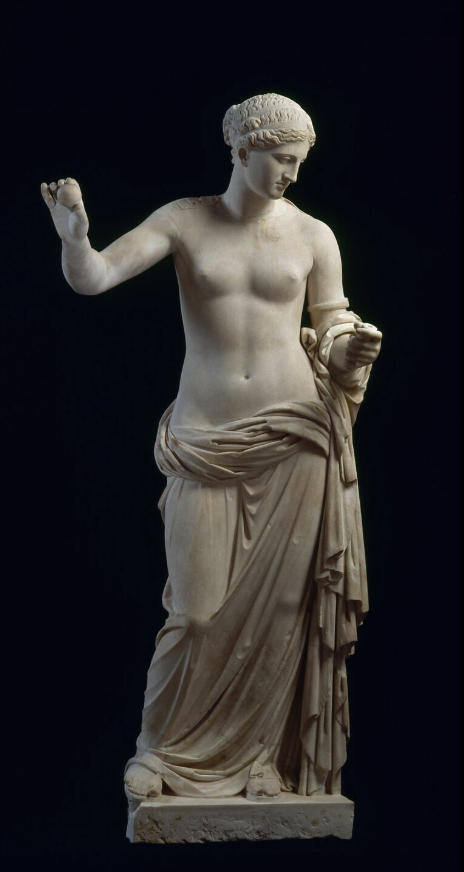
Vénus d’Arles, Inconnu (Sculpture antique romaine, Ier siècle av. J.-C., probablement d’après un original grec de Praxitèle) Musée du Louvre, Paris, Domaine Public
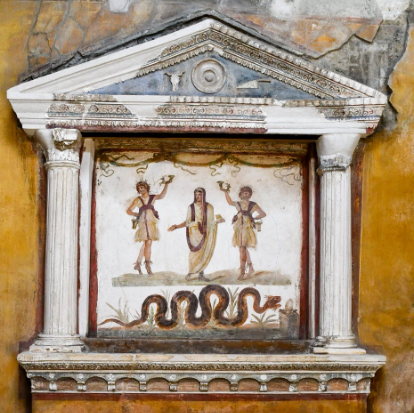
« Le Lararium de la Maison des Vettii« , Inconnu (Artiste romain, Ier siècle après J.-C.), Parc Archéologique de Pompéi, Domaine Public
In Greek and Roman antiquity, the relationship to the divine was above all visual. The gods were not abstract entities: they were recognizable, embodied, almost familiar. They shared the world of humans and reflected what we ourselves are our passions, our excesses, our desires. Painting and sculpture were not theological problems; they were cultural certainties, natural extensions of myth.
Figures such as Apollo, Aphrodite, or Zeus were not abstract symbols, but identifiable presences endowed with narratives, attributes, and specific functions. The image made it possible to recognize the god, to invoke them, and sometimes even to contain them symbolically. Mythological frescoes, far from being merely decorative, participated in a daily relationship with the sacred.
In Pompeii, the walls reveal a striking intimacy between humans and divinities. Gods appear in atriums, painted gardens, bedrooms, kitchens. They are not confined to temples; they coexist with domestic life. This proximity reflects a worldview in which the sacred is never radically separated from the profane.
Formally, this vision translates into a celebration of the body. The divine body is measured, balanced, ideal. It embodies a cosmic order as much as an aesthetic ideal. To represent a god is to affirm that the world is intelligible, that the divine accepts a human form. Here, to see is to believe.
The Emergence of the Invisible God
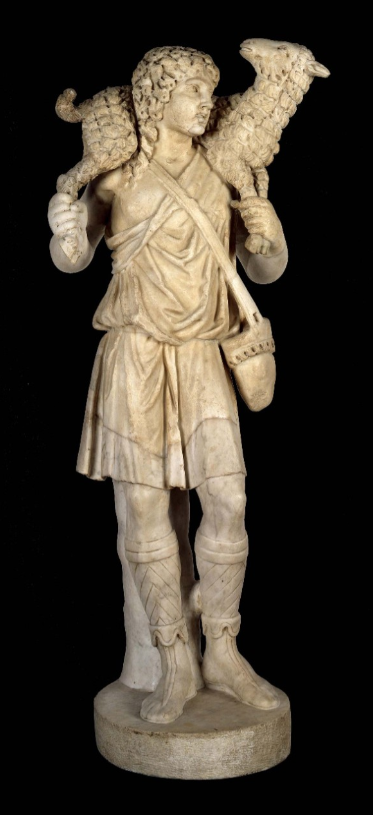
« Le Bon Pasteur« , Sculpteur Paléochrétien Inconnu (IVe siècle), Musée Pio Cristiano, Domaine Public
With the rise of Christianity, something fractures in the visual certainty inherited from Antiquity. This is not an immediate rupture, nor a brutal destruction of earlier images, but a long period of disturbance, doubt, and profound re-evaluation of the gaze. Where ancient gods offered themselves freely to sight, the Christian God introduces a radical distance. He is not one being among others: He is unique, absolute, transcendent. He cannot be circumscribed by form or enclosed within an image without the risk of betrayal.
This theological novelty gives rise to what might be called a foundational crisis of the image in European culture. For the first time, seeing becomes a problem. Looking can become a fault. The image once a site of the sacred’s presence suddenly becomes ambiguous.
Christianity inherits an ancient suspicion toward figurative representation, rooted in the biblical prohibition of idols. “You shall not make for yourself a graven image”: this commandment weighs heavily on the early centuries of Christianity. The issue is not merely to avoid certain images, but to rethink their legitimacy altogether. The image becomes a dangerous, unstable territory, poised between permission and prohibition. It can divert faith, fix the invisible, replace God with His appearance. It can become an object of worship in itself precisely what Christianity seeks to prevent.
In this context, painting is no longer an obvious or decorative act. It becomes an act laden with spiritual responsibility, almost a risk. Every form, every figure, every iconographic choice implies a theological position. The artist or more often the anonymous artisan no longer invents freely; they search, hesitate, and proceed with caution.
The earliest Christian images bear witness to this profound hesitation. They often seem to speak in a whisper. In the Roman catacombs, Christ is rarely represented directly. When He does appear, it is not as a glorious god or an idealized body, but through indirect, metaphorical, almost effaced forms. The Good Shepherd borrowed from rural imagery and late antiquity suggests a presence without fixing it. The fish, the vine, the anchor function as discreet signs, intelligible only to the initiated.
This symbolic language is not merely an aesthetic choice; it is a strategy for the survival of the image. It allows a message to be transmitted, teaching to occur, a community to be formed, while respecting divine transcendence. The image becomes allusive, fragmentary, deliberately incomplete. It does not show Christ; it allows Him to be inferred.
This period is therefore marked by an almost insoluble tension. On the one hand, Christianity needs images in order to spread, to teach a largely illiterate population, to render visible a history founded on incarnation. On the other hand, it must prevent these images from becoming idols. It must show without showing, represent without fixing, make the divine perceptible without betraying it.
This contradiction lies at the heart of the Christian image crisis. The image ceases to be a site of direct incarnation of the sacred and becomes a space of translation, subject to constant vigilance. It is never fully legitimate, never entirely rejected. It exists conditionally watched over by dogma, tolerated more than embraced.
Yet it is precisely in this fragility that the Christian image finds its strength. By renouncing full visibility, it gains new depth. It no longer offers God to sight; it opens a space for reflection, interpretation, and faith. This crisis is therefore not a negative episode in the history of European art, but a foundational moment. It forces the image to rethink itself, to become charged with meaning, to exist as a site of tension between the visible and the invisible.
From this initial hesitation, from this slow search for a possible effigy, the Byzantine icon and later all Western Christian imagery will emerge. Before becoming a stable form, the image of Christ was first an open question.
The Icon: Seeing Without Seeing
“Le Christ Pantocrator du Sinaï”, Anonyme (Style encauste, VIe siècle), Icône du Sinaï – Monastère Sainte-Catherine, Domaine Public
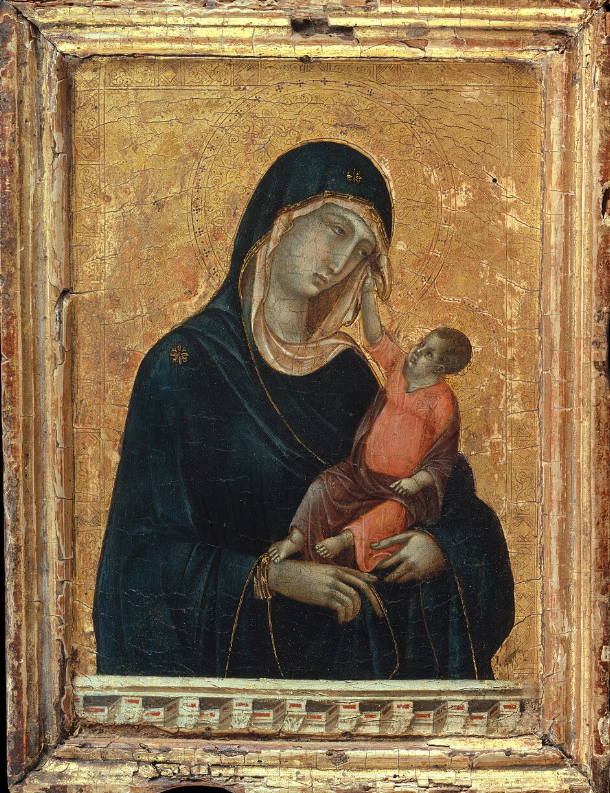
“Vierge à l’Enfant” (dite Madone Stoclet), Duccio di Buoninsegna, The Metropolitan Museum of Art (Met), New York, Domaine Public / OASC
“Le Christ” (Détail de la Mosaïque de la Déisis), Mosaïste Byzantin Anonyme (XIIIe siècle), Hagia Sophia – Sainte-Sophie, Istanbul, Domaine Public
It is in the Byzantine world that this tension between visibility and prohibition finds its most stable and enduring form and also its most decisive one for the history of European art: the icon. Far from definitively resolving the problem of divine representation, the icon organizes it, channels it, and above all makes it transmissible. It accepts the image, but at the cost of a radical transformation of its function, status, and language.
The Byzantine period is crucial because it establishes the first coherent system of representing Christ in European history. Before it, Christian imagery hesitated, circumvented, suggested. With the icon, Christ acquires a stable, reproducible, immediately recognizable face. This face no longer stems from the artist’s free invention; it follows precise canons, transmitted, repeated, almost immutable. For the first time, Europe possesses a standardized image of the divine.
Christ Pantocrator is not a narrative or emotional figure. He tells no story, performs no action. He asserts Himself. His frontal face, fixed gaze, and near-abstract immobility create a radical distance from the viewer. There is no realistic décor, no landscape, no horizon. The gold background abolishes illusionistic depth: there is neither heaven nor earth, only eternity. Christ is not situated within the world; He stands above it.
This choice is not aesthetic in the modern sense it is theological. The icon does not seek to move or seduce. It rejects pathos and direct identification. Where ancient art glorified bodily beauty, Byzantine art sacralizes fixity, frontality, and repetition. Christ’s face becomes a surface for spiritual projection, not an object of sensual fascination.
This discipline of the gaze is essential. The icon does not represent God as He is, which would be impossible but as He can be contemplated and understood without being possessed. It establishes an asymmetrical relationship: it is not the viewer who masters the image, but the image that sustains and returns the gaze. To look at an icon is not to consume an image; it is to accept being looked at in return.
This new visual regime durably grounds Christian iconography. Even when medieval and later Renaissance Western art distances itself from Byzantine style, Christ’s face remains deeply marked by this legacy: persistent frontality, meaningful gaze, spiritual function of the image. Even the Renaissance, despite its naturalism, never fully erases this Byzantine matrix.
Thus, the icon is not a frozen episode in art history; it is a visual infrastructure, a foundation upon which all European Christian imagery is built. It allows the image to survive prohibition, to remain at the heart of worship without becoming an idol, and above all to anchor Christ’s figure permanently in collective memory.
Christian imagery therefore does not disappear; it changes regime. It ceases to be a direct incarnation and becomes a codified mediation. It becomes at once a pedagogical, liturgical, and theological tool. It does not show the divine; it points toward it, tracing a narrow path between the visible and the invisible, between the necessity of the image and the danger of its power.
The Return of the Body: The Renaissance as Compromise
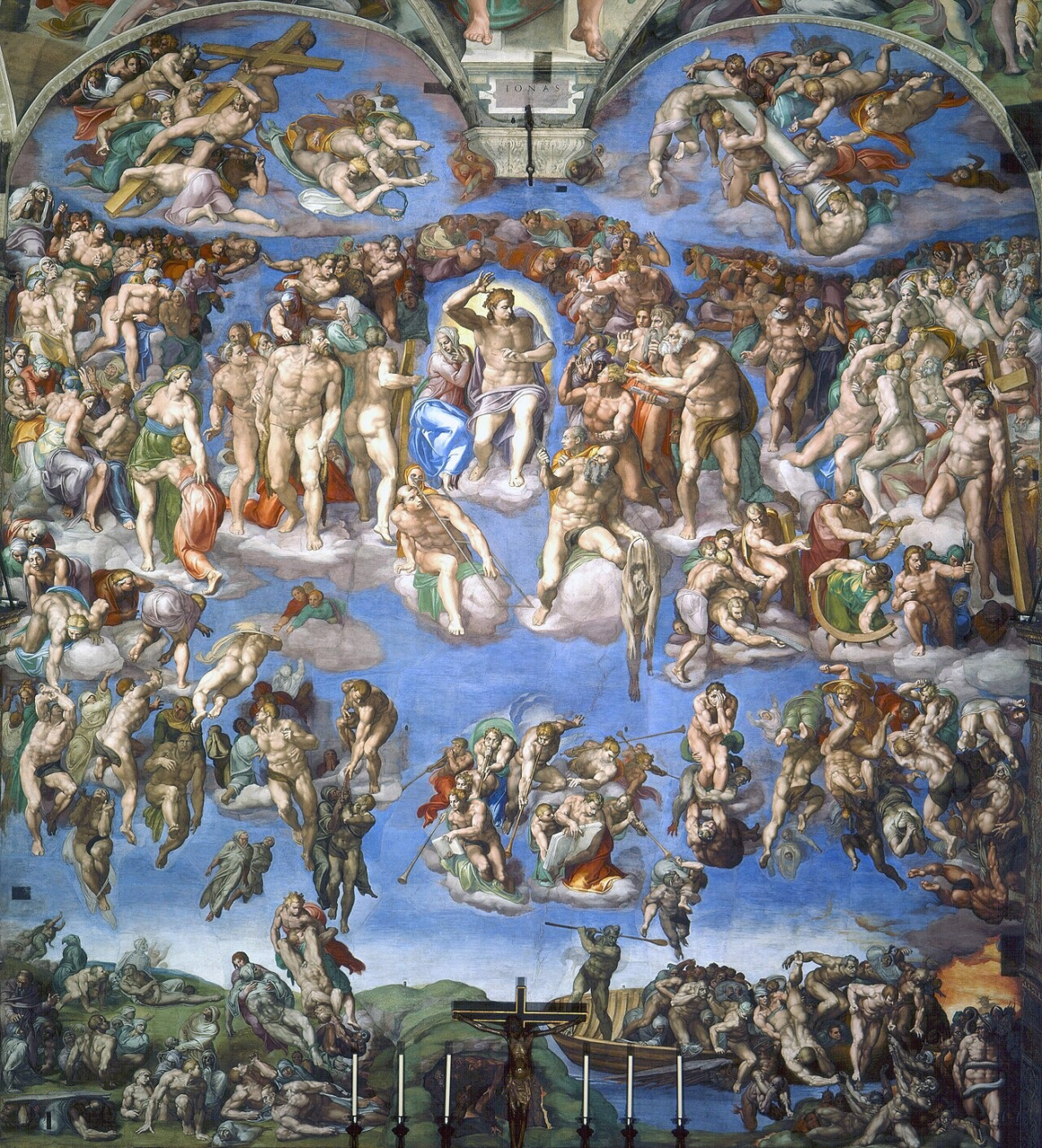
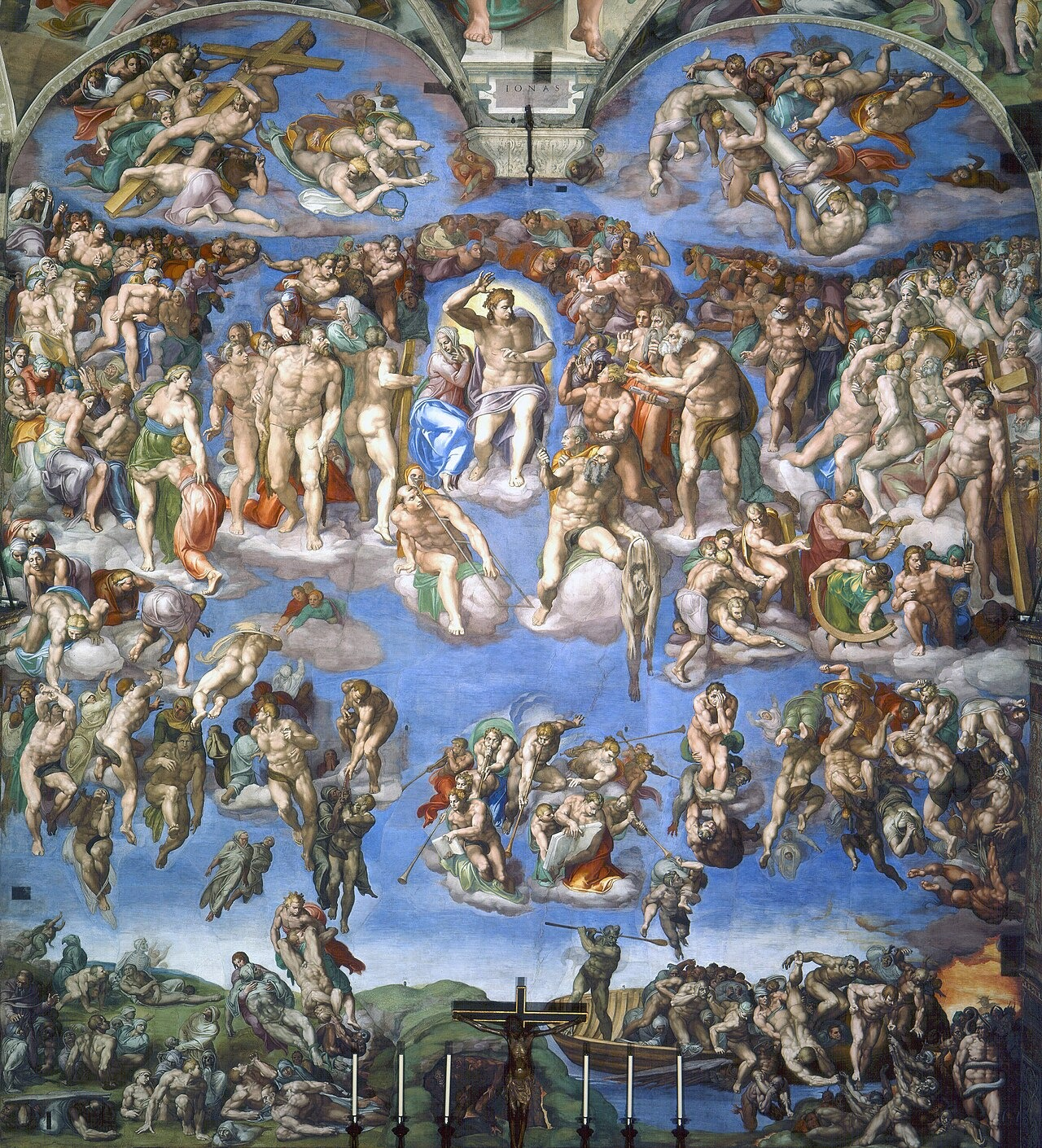
“Le Jugement Dernier”, Michel-Ange, Chapelle Sixtine – Musées du Vatican, Domaine Public
“Vierge à l’Enfant” (ou La Madone Campana), Sandro Botticelli, Musée du Petit Palais (Avignon), Domaine Public
The Renaissance marks a subtle turning point. By rediscovering antiquity, Europe reactivates an ancient visual language based on the body, perspective, and harmony. This return does not occur against Christianity, but within it.
With Michelangelo, the body becomes central once more. Christ regains a physical power reminiscent of ancient heroes. Muscles, torsions, expansive gestures reintroduce a pagan energy within a Christian theological framework.
The Virgin Mary also transforms. She becomes mother, protector, a figure of embodied tenderness. Her representations sometimes borrow from ancient mother-goddess archetypes, without ever explicitly claiming them. Monotheism thus reinvests archaic forms in order to make the sacred once again perceptible.
The Renaissance does not abolish Christian distance; it negotiates it. It accepts that the body can once again become a language of the divine, provided it serves a spiritual purpose.
A Pagan Memory Beneath the Christian Surface
What this long history reveals is that the transition from polytheism to monotheism was never a visual tabula rasa. Forms survive, shift, transform. The image preserves what theology rejects.
Even when religious discourse becomes iconophobic, painting continues to work through the memory of ancient gods. It absorbs their gestures, proportions, and narratives, redistributing them through new figures.
Thus, the history of European painting is not merely that of a change in belief. It is the story of a displacement of the sacred, of a constant effort to make visible what must no longer be shown.
What the Image Still Tells Us Today
When we observe these works, one thing becomes clear: the image never ceases to be a field of tension between faith, power, and the desire to see. Monotheism did not suppress the need for images; it made that need more complex, more ambiguous, more symbolically charged.
Perhaps this is why European art has never stopped dialoguing with the sacred, even when it moves away from it. Behind every Christ, every Virgin, every icon, the faint silhouettes of ancient gods persist.
Painting, in this sense, is less a mirror of faith than a site of cultural memory. It remembers what texts forget. It tells us that gods never disappear entirely, they simply change their faces.
From Speculation to Infrastructure: The Genesis of a Regulated Cultural Web 3.0
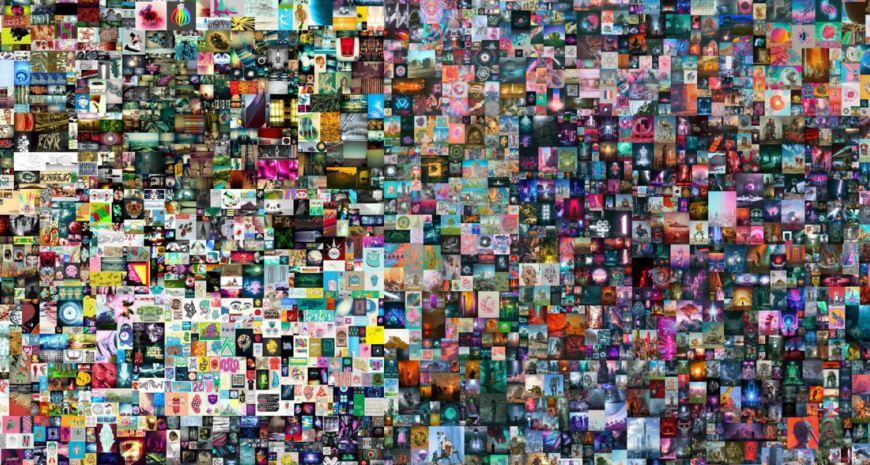
The year 2021 was marked by a sudden and unprecedented explosion in the field of Non-Fungible Tokens (NFTs). This period was characterized by a level of speculative euphoria that remains difficult to fully comprehend today, highlighted by extraordinary records in the world of public auctions. One cannot discuss this era without mentioning the seminal work of the artist known as Beeple, which was successfully transacted for a sum exceeding 69 million dollars through the auction house Christie’s. However, when we look at the current landscape, a fundamental question arises : how many individuals within our contemporary society remain truly informed about the nature and purpose of NFTs today ?
The reason for this collective distancing is that, starting in 2022, this technology underwent what appeared to be a total and absolute collapse. Transaction volumes did not merely decline; they decreased by more than 90%, a downturn so severe that it led many observers to contemplate the fundamental incompatibility of the cultural and artistic sectors with the technological framework of Web 3.0.
Nevertheless, with several years of hindsight and perspective, we are now in a position to assert that this volatile phase was, in fact, a strategic necessity. It served as a critical testing ground to probe the ultimate limits of the technology and to act as a filtering mechanism designed to maximize its eventual utility. Projects that were fundamentally devoid of intrinsic meaning or long-term value were systematically discarded. This process made way for what major industry reports now describe as a state of “irreversible institutionalization.” We have moved past the era of speculating on digital images; the current focus has shifted toward utilizing blockchain technology for tangible assets. This shift allows for the construction of the legal and technological foundations that are essential for the establishment of a market that is both stable and fundamentally healthy.
For those individuals who may not be entirely familiar with the intricacies of blockchain technology, one can simply visualize it as a vast, decentralized ledger. This ledger systematically catalogs all information in a manner that is entirely transparent, accessible to every participant, and characterized by the absolute impossibility of modification or alteration. Within the specific confines of the cultural world, blockchain provides several critical utilities:
Total Traceability: It enables a system of comprehensive traceability that functions as an immutable digital certificate of authenticity. Every time a specific work of art undergoes a change in ownership, this information is indelibly recorded within the blockchain.
Automated Procedures: It facilitates the implementation of automated procedures, which effectively eliminates the burden of administrative complications and removes the necessity for various intermediaries.
Tokenization of Rights: It allows for the transformation of a specific right (here, for instance, we can utilize the ownership right of a physical painting as an example) into a digital asset known as a token. It is specifically through this process of tokenization that a single work of art can be subdivided into thousands of distinct shares, all while providing a guarantee that each individual share remains unique and entirely secure.
Since the beginning of the current year, the global regulatory environment appears to be shifting strongly in favor of digital frameworks, thereby ensuring the existence of a healthy market, even for the cultural sphere. Within the European context, the official entry into force of MiCAR (Markets in Crypto-Assets Regulation) has fundamentally altered the entire operational system for cultural entrepreneurs. Whereas there was a profound sense of mistrust regarding tokens, viewing them as potential « scams » (an opinion I myself held only a few months ago), the new cultural projects being launched in nations such as France or Belgium can now be disseminated across the European Union with a robust sense of legal security.
Furthermore, companies are now mandated to demonstrate a high degree of transparent marketing, a requirement that effectively marginalizes and discards surrealistic promises of profit. Consequently, those individuals who choose to provide financing for cultural projects are fully aware that they are engaging in a long-term investment. This type of investment closely resembles traditional patronage, even though it retains the potential to generate a financial capital gain. Finally, the implementation of the DORA (Digital Operational Resilience Act) imposes strict requirements on financial institutions and their various partners to guarantee a high level of resistance against cyberattacks. This factor, while complex, addresses what was previously a significant deterrent for those wishing to enter this innovative space.
Currently, however, what appears to be capturing the attention of the most serious investors is no longer merely the digital realm in isolation, but rather the tokenization of Real World Assets (RWA). This specific phenomenon seems to carry significant and far-reaching strategic opportunities for both commercial enterprises and public cultural institutions by digitally fragmenting the legal ownership of physical cultural works.
We are therefore justified in questioning why this particular subject is so inherently interesting and why it represents such a critical strategic stake. A work of art, regardless of its specific nature or medium, can now be subdivided into several thousand digital shares. In an era marked by a significant and persistent decline in public subsidies, cultural institutions are no longer forced into a position where they must separate themselves from their heritage or struggle to find a single, massive donor. Instead, they have the capability to tokenize their real assets by offering fractional investment opportunities to the general public. This development implies several transformative consequences:
A significantly larger number of individuals can now choose to participate in the financing of a work of art, which serves to diversify the available sources of funding.
The art market, which has historically been characterized by its difficulty in sales and the resulting liquidity problems for cultural enterprises, can now benefit from transactions that are nearly instantaneous. This allows for the maintenance of a more robust and substantial cash flow.
As previously established, the blockchain remains accessible to all participants. Once information has been entered into the system, it cannot be modified. It thus becomes an indispensable tool for ensuring the absolute traceability of artworks and for guaranteeing a high level of ethical standards.
Nevertheless, the successful democratization of this model presupposes a majority adoption by the community of collectors, who are often perceived as being detached from new technological developments. However, while it is true that senior collectors demonstrate an interest in digital assets of only approximately 14%, we are on the precipice of an immense transfer of wealth toward the younger generations. Approximately 50% of these new, incoming collectors are deeply interested in fractional investment models. They have understood that blockchain is not merely a technological artifact, but rather the essential machinery of a new cultural market that is inherently more equitable and transparent.
From Patronage to Investment
The fundamental landscape of cultural financing is currently undergoing a complete and total transformation. We have all been educated under the premise that the support for culture rested upon two essential pillars: public subsidies and traditional philanthropy. In both of these historical cases, the underlying assumption was that one had to accept « losing » money for a symbolic purpose or a fiscal benefit. This is no longer the reality of the situation, thanks to the emerging possibility of realizing fractional cultural investments.
One might be inclined to think that this specific approach bears a resemblance to crowdfunding. Indeed, crowdfunding effectively initiated the concept of public participation in specific projects. However, it presents clear limitations insofar as there is generally no financial return on investment for the participant, despite the presence of various symbolic rewards. The tokenization of real-world assets fundamentally changes this equation. This is because the holder of a token possesses a genuine financial share of the underlying asset. This reality is significantly more interesting for professional investors and allows for a substantial increase in market liquidity. If an investor chooses to purchase a token at the start of a week and subsequently wishes to resell it by the end of that same week, this is entirely possible. It is a financial placement in the truest sense.
This democratization of financing does not concern art alone; it also encompasses high-value assets across various sectors. Nonetheless, for cultural organizations, this represents a strategic stake in governance, particularly regarding the reduction of their long-standing dependence on public subsidies.
Furthermore, the sheer magnitude of the change that is currently unfolding is projected to be immense. The market for the tokenization of illiquid assets is expected to reach a value of 16 trillion dollars by the year 2030. According to the Boston Consulting Group, this would represent approximately 10% of the total global GDP. These projections serve to confirm that the cultural sector is simply aligning itself with the broader movement of the global economy. The historical barriers to blockchain accessibility are currently falling away due to the implementation of new regulations. Consequently, what was previously reserved for a narrow financial elite (such as the ownership of masterpieces) is simply becoming an accessible savings product. These products may very well offer a financial yield that is superior to the historically low rates currently provided by traditional banks. This does not, by any means, signify the end of philanthropy or human generosity; rather, it signifies that we are arriving in an era where culture, which was previously perceived merely as an expense or a deficit, can now generate true financial value.
Case Study: From Pioneer Project Towards a New Standardization?
Now that the theoretical foundations of this evolution have been established, we can turn our attention to a concrete case study: that of the Royal Museum of Fine Arts Antwerp (KMSKA). This model is widely considered to be a pioneer in the field, although it must be noted that it remains an exceptional case within an environment that is currently in a state of profound mutation.
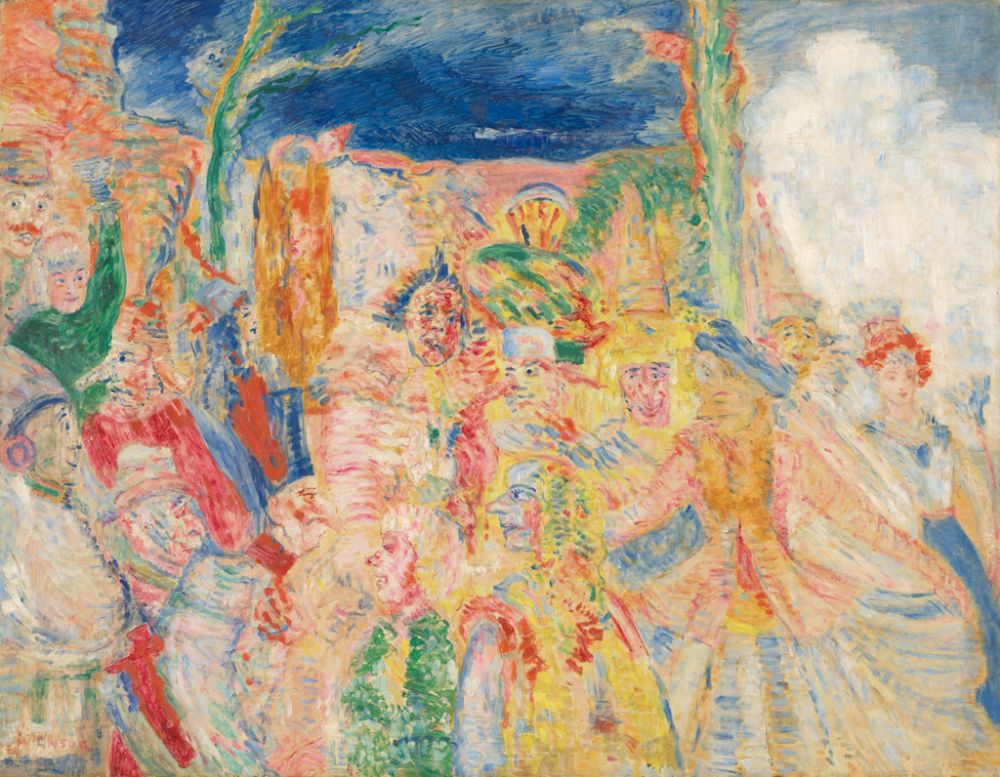
In the year 2022, the KMSKA became the first major museum in Europe to financially fragment a work of art: The Carnival of Binche by James Ensor. This operation was conducted with the specialized assistance of the Rubey platform. Through this mechanism, investors were able to purchase Art Security Tokens, which successfully raised 1.4 million euros from 250 interested participants. The entry price, or « ticket, » was set at 150 euros, making the investment significantly more affordable for the general public. This allowed for the creation of a dedicated community of partners. Consequently, the museum was able to secure a long-term loan of the work, which had previously belonged to private collections — an achievement that would undoubtedly have been difficult, if not impossible, through traditional financing channels.
However, it is critically important to observe that the Antwerp model does not yet represent the industry norm due to several persistent hurdles:
The Principle of Inalienability: This legal principle governing public collections asserts that works acquired by the State belong to the public domain. The State is not the « owner » in a private sense, but rather the custodian, and therefore cannot sell or give away these artworks.
Implementation of Regulations: Policies and regulations are only just beginning to be implemented, which leaves a perception of greater risk for those cultural institutions that are not yet prepared to take this technological leap.
DORA Act Constraints: The requirements of the DORA Act imply the need for massive financial investments to protect against cyberattacks, an expense that the majority of cultural institutions cannot currently afford.
While the tokenization of tangible assets remains complex, institutions are nonetheless attempting to implement strategic technological measures. One notable example is the Musée d’Orsay, which, since 2024, has utilized blockchain technology to generate “Digital Souvenirs.” This specific initiative allows for the identification of the visitor as a member of a community rather than an anonymous passerby, with the ultimate goal of fostering long-term loyalty.
Cultural institutions are beginning to understand that blockchain is not merely a simple experiment, but rather the essential infrastructure for the projects of tomorrow. It is a core component of a new global financial standard that is both transparent and highly regulated. Evolving alongside technology is not merely a question of image for cultural organizations that are generally perceived as being archaic; it is a genuine necessity for ensuring their long-term sovereignty. The tokenization of real-world assets is a vital tool for achieving financial independence by transforming traditional donations into structured investments. It also allows for the attraction of a new demographic of young investors who are deeply interested in transparency and the fractional nature of financing.
The transition is certainly complex, and perhaps even impossible to implement for smaller organizations, at least for the time being. The challenges regarding widespread adoption are numerous and span legal, technical, and cultural dimensions. Accepting the idea that our collective heritage can be fractioned or managed as a financial asset necessitates a profound change in mentality within the very heart of museum directorates. Nevertheless, profound changes always require time and a strong collective will.
The goal is certainly not to replace the profound emotion we experience when standing before works of art with cold algorithms, but rather to utilize these algorithms to facilitate the meeting between the public and the works themselves. In a world where the art market is often polarized and reserved for a narrow elite, despite various attempts at democratization, it is fundamentally important to make our collections accessible to the greatest number of people. If the situation appears somewhat unclear today, I am firmly persuaded that the cultural institutions that will survive future budget cuts and political shifts will be those that have successfully managed to diversify their operations through the strategic use of technology.
Written by Léana Seguin
Glossary:
Blockchain: A secure, decentralized technology for storing and transmitting information. It operates as a shared digital database where content is verified and secured through cryptographic methods. Once validated by network users, the information becomes permanent, transparent, and immutable. DORA (Digital Operational Resilience Act): An EU regulation imposing strict digital resilience standards on financial institutions and their partners to ensure systems remain secure against cyberattacks. Inalienability: A legal principle stating that works in public collections belong to the public domain. They cannot be transferred, sold, or donated by the State, which serves as their custodian. MiCAR (Markets in Crypto-Assets Regulation): The European Union’s legislative framework designed to regulate digital asset markets, providing legal certainty for issuers and enhanced protection for investors. NFT (Non-Fungible Token): A unique, non-interchangeable digital token issued on a blockchain, used to certify the ownership and authenticity of a digital or physical asset. RWA (Real World Assets): Physical assets (such as real estate or artwork) that are digitized on the blockchain to facilitate exchange, management, and fractional ownership. Tokenization: The process of converting real-world rights (such as ownership) into digital tokens on a blockchain, enabling an asset to be split into multiple financial shares.
Bibliography:
Boston Consulting Group. (2022). Relevance of on-chain asset tokenization in ‘crypto winter’. BCG Global. https://www.bcg.com/publications/2022/relevance-of-on-chain-asset-tokenization Deloitte, & ArtTactic. (2023). Art & Finance Report 2023 (8ème éd.). Deloitte Tax & Consulting SARL. Musée d’Orsay. (2023, 19 septembre). Le musée d’Orsay s’allie à la Fondation Tezos pour explorer les applications de la blockchain. Communiqué de presse. https://www.musee-orsay.fr/fr/actualites/le-musee-dorsay-sallie-la-fondation-tezos Musée Royal des Beaux-Arts d’Anvers (KMSKA). (2022). Become a co-owner of a Masterpiece: James Ensor – Le Carnaval de Binche. https://kmska.be/en/become-co-owner-masterpiece PricewaterhouseCoopers (PwC). (2026). PwC Global Crypto Regulation Report 2026: Navigating the Global Landscape (4ème éd.). PwC LLP. https://www.pwc.de/de/unterlagen/pwc-global-crypto-regulation-report-2026.pdf Rubey. (2022). Case Study: Art Security Tokens for the Royal Museum of Fine Arts Antwerp. https://www.rubey.be/casestudies
In this era dominated by big data recommendations and fragmented information, finding a carefree and unrestrained bout of laughter seems extremely easy, yet it is also incredibly precious. The punchlines are mass-produced, and jokes are quickly forgotten. Amidst the noisy wave of entertainment, have we ever felt a sense of emptiness at a moment when laughter ceased? Against this backdrop, a Chinese online comedy variety show called « Amazing Night 2 » has unexpectedly entered the public’s view with a weighty presence. It is not a traditional star competition or topic hype; instead, a group of actors and screenwriters from « Single Independent Comedy » and other production houses, using sketch comedy as the main form, engage in collective creation under a limited theme. Here, comedy is no longer a simple pastime floating above life; instead, it is a delicate scalpel sinking into the texture of life. It has dissected the shared yet silent « invisible pain points » of our era – those about workplace alienation, social performance, generational gaps, and identity anxiety, which are difficult to express but understood tacitly by all.
Workplace Internal Competition and « Mental Strain »
The core theme of the work « The Mansion with a Strong Wind » is that bad people are frightened by other bad people. This is a haunted mansion where three « parasites » who live off the food and resources of others are regarded as ghosts by the owner. So, a master and his master’s teacher are invited to drive out the ghosts. The so-called owner is also a parasite. Until the end, the real owner returns home.
This mansion is like a miniature society or workplace. Everyone inside is « rolling » for their own interests: the parasites want to move into the mansion, the family members have their own anxieties, and the master uses a materialistic approach to « transform » Wang. They are all competing for resources and living space in their own ways. The family and various things inside the mansion are actually the projection of his inner anxiety and inner demons. He is trapped in this mansion, just like we sometimes get trapped by the pressure of work and life and cannot extricate ourselves. And the last sentence from the master, « Wang, you shouldn’t keep going like this, » can be regarded as a call to break free from « internal competition » and find oneself.
The term « internal competition » is no longer merely about intense competition; it is more like a « gyroscopic vicious cycle ». The more you strive, the more others strive as well, but ultimately, everyone’s gains do not increase; instead, they all fall into an endless cycle of depletion. Just like the « parasites » in « The Mansion with a Strong Wind » who resort to any means to survive, they seem to be striving to make money, but in fact, they are mutually vying in a dead end with no way out, ending up in a miserable situation. This is the most suffocating aspect of internal competition. You cannot easily give up because once you quit, you will be labeled as a « loser » and face huge pressure from society and family. This pressure makes everyone feel like being tied to a spinning top, unable to let go and having to spin faster and faster. The definition of success in society has become narrower and narrower, as if only « upward mobility » counts. This leads everyone to be confined to the same race track, lacking personalized choice space and blindly following the trend, constantly comparing and constantly feeling anxious.
« Amazing Night 2 » performance work « The Mansion with a Strong Wind » still image. From left to right in the picture are the actors: Jixu WANG, Jiye LIXIN. Jointly produced by Tencent Video and Mi Wei Media
The Dilemma of Idealists
« The Old Police vs. the Enemy » is actually a story about an inner struggle between « idealism and compromise », and how a police officer maintains his original principles in a black-and-white world. The story is set in Hong Kong in the 1980s, where the police force colluded with the underworld and corruption was rampant. When Detective Li and his partner Zhang Cheng were investigating the corruption case of the bureau chief, they found themselves in a huge moral dilemma. After Li was promoted to the position of captain, he seemed to start compromising with corruption, going against his partner Zhang Cheng’s righteous stance. Their relationship became tense.
The plot keeps reversing. First, it reveals that the heroic police officer who was hospitalized with serious injuries (played by Yang Zuofu) is actually the bigger villain. He colluded with the underworld to « gain more power to change everything ». Then, a bigger twist comes – partner Zhang Cheng actually died two years ago. All his words and deeds were the embodiment of Li’s inner conscience, a fierce struggle between Li and his own inner « compromise » and « desire ».
After going through a series of struggles, Li finally chose to uphold justice and personally shot dead Captain Wang, fulfilling the unfinished wish of his deceased partner. At the end, Li salutes « Zhang Cheng » in front of the mirror, symbolizing that he finally made a firm choice, keeping his original principles eternal.
« Amazing Night 2 » performance piece « The Old Police vs. the Enemy » still image. From left to right in the picture are the actors: Cheng ZHANG, Songran LEI, Jointly produced by Tencent Video and Mi Wei Media
This story does not have a simple dichotomy of « good guys » and « bad guys ». It presents a more complex social reality:
The grey areas of the system: In the play, the chief, Captain Wang, even the gangsters, may all have their own calculations and helplessness. The chief colludes with the gangsters to maintain the survival of the police station, and Captain Wang’s « black eating black » is also for the power struggle. This reflects that in the real society, good and evil are not black and white; often, the people involved are making « suboptimal choices ».
The disappearance and rebirth of « old police »: The « old » in the story refers to a kind of uncompromising and reckless police spirit that is fading away. We miss « old police » not because of poverty, but because of that purity that was not contaminated by the mundane world. At the end of the story, Lei Zi chooses to inherit Zhang Cheng’s will and becomes that « old police », which means after recognizing the complexity of the world, still choosing to hold on to that part of one’s inner self.
The police character in the play who advocated for whistleblowing and ultimately sacrificed himself represents the « unbreakable » and uncorrupted original intention in our hearts. His sacrifice has forever captured the « passion » and « honesty » at that youthful moment, becoming the embodiment of conscience in the hearts of those who are still alive. The living police: The protagonist Lei’s pain is precisely the portrayal of the lives of most of us. He had to struggle between ideals and survival, his heart filled with exhaustion and struggle. This huge gap between « spiritual wealth » and « realistic poverty » made countless viewers feel deeply empathetic. The reason why the story is tear-jerking is that it awakens our nostalgia for « the old times ». What we remember is not the poverty of the past, but that pure state of mind that has not been consumed or weighed in terms of gains and losses.
Why is « comedy » an excellent medium for reflection?
The reason why comedy can become the sharpest and most acceptable surgical tool for dissecting the « invisible pain points » of society lies in the fact that it creates a psychological safe distance. When heavy and real social issues – such as « The Mansion with a Strong Wind » – where « internal competition » and « mental tension » consume meaning, the audience can view those anxieties that might directly trigger defense mechanisms in reality from a safe position as an observer or appreciator.
This « safe distance » effect enables comedy to go beyond mere satire and becomes a gentle form of social dialogue and a collective psychological stress reliever. It allows us to replace sighs with laughter and dissolve loneliness through resonance. Just as in « The Old Police vs. the Enemy », we don’t have to personally confront the rigidity of the system, but through the characters’ predicaments and struggles, we can release the sense of powerlessness accumulated in similar situations within ourselves. Comedy publicizes personal pain points and lightens heavy topics, enabling us to accept a profound understanding of our own situation at the moments when our psychological defenses are weakest and when we can laugh.
The Value and Limitations of Reflection
The profound comedic reflection practiced in « Amazing Night 2 » holds the primary value of achieving a crucial « collective affirmation ». When there is a burst of heartfelt and prolonged laughter in the theater for a certain work, it is not merely an expression of appreciation for the performance; it is also an unspoken cry: « It’s not just me who feels this way! » This sense of affirmation, in an atomized society, counters loneliness and dispels the self-doubt of « Is it only me who is abnormal? « , and has fundamental psychological healing significance.
Secondly, it provides a healthy channel for emotional release. By observing the exaggerated and extreme responses (or breakdowns) of the characters in the works in similar predicaments, the accumulated anxiety, anger and helplessness of the audience can be symbolically released. This is a low-cost and harmless social psychological safety valve.
However, this kind of comedic reflection also has its inherent boundaries and limitations. On one hand, in order to achieve comedic effect and wide dissemination, the presentation of issues must undergo simplification, exaggeration, and typification, which may blur the more complex structural causes behind social problems. On the other hand, the instantaneous catharsis and resonance brought by laughter, if not leading to deeper individual reflection or public discussion, may also slide towards the shallow and simplistic « storytelling » of pain, thereby gradually undermining the motivation to change the current situation. Excellent comedy is like a precise mirror, clearly reflecting our « pain points », but how to heal these pain points still requires each person looking into the mirror and the entire society to, after the laughter subsides, take the courage to face the truth directly and the wisdom to take action.
This is precisely the most valuable lesson that « Amazing Night 2 » has imparted to us: The highest form of comedy is not merely an art that makes people laugh, but also an invitation for the audience to gaze together, in the midst of laughter, at the complex and real reflection of the era in which we exist.
We often come across the expression male gaze on the internet and in the media. It refers to the act, in arts, of depicting women and the world from a heterosexual male perspective. This perspective represents women as sexual objects, for the pleasure of the heterosexual male audience. The concept of male gaze was first articulated by the British feminist film theorist Laura Mulvey in her 1975 essay, « Visual Pleasure and Narrative Cinema ». This theory also refers to historical precedents. For example, in the European oil paintings from the Renaissance period, the female body was, most of the time, idealized and presented from a voyeuristic male perspective. However, the concept of male perspective had already been studied a long time before 1975.
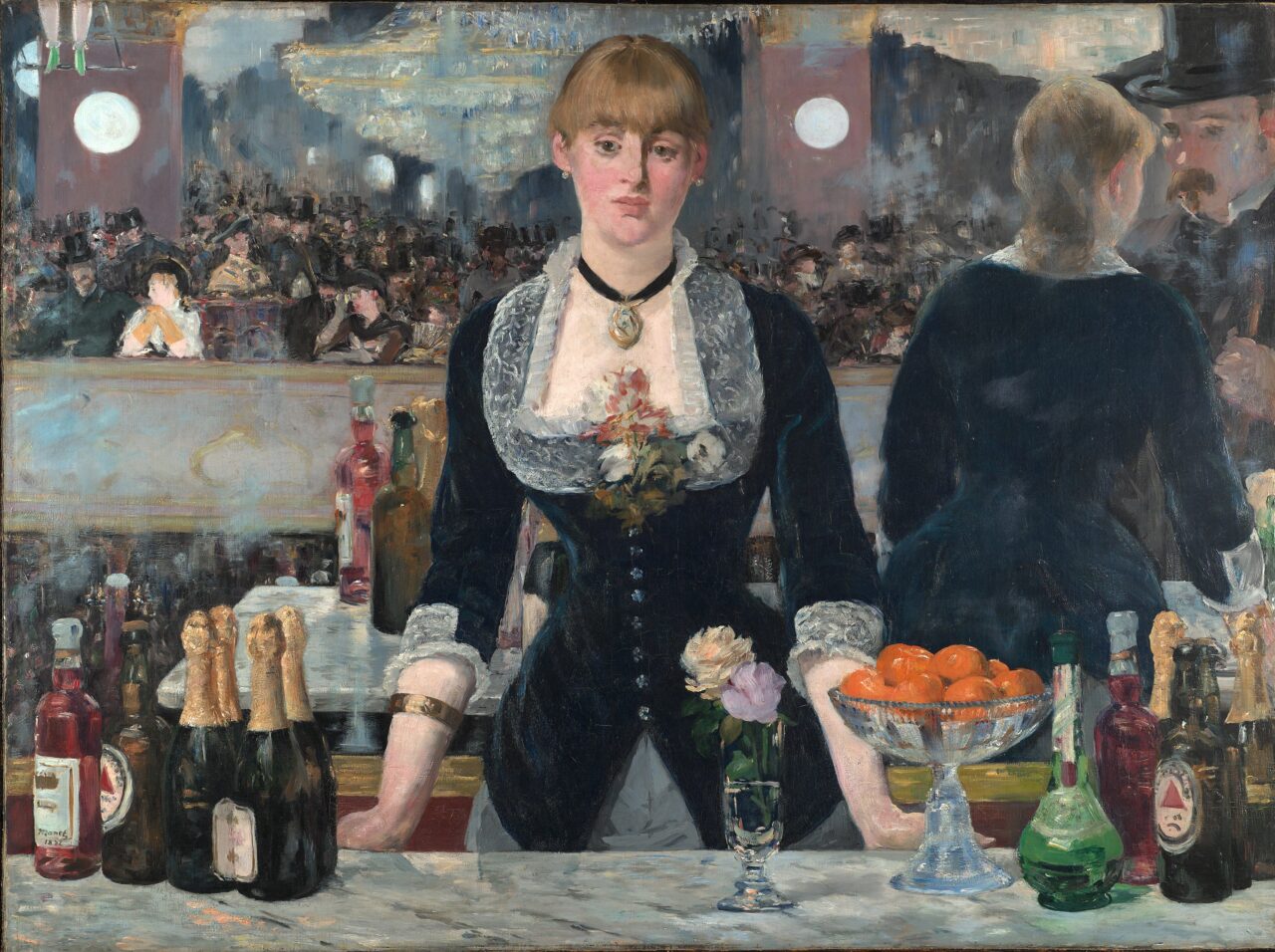
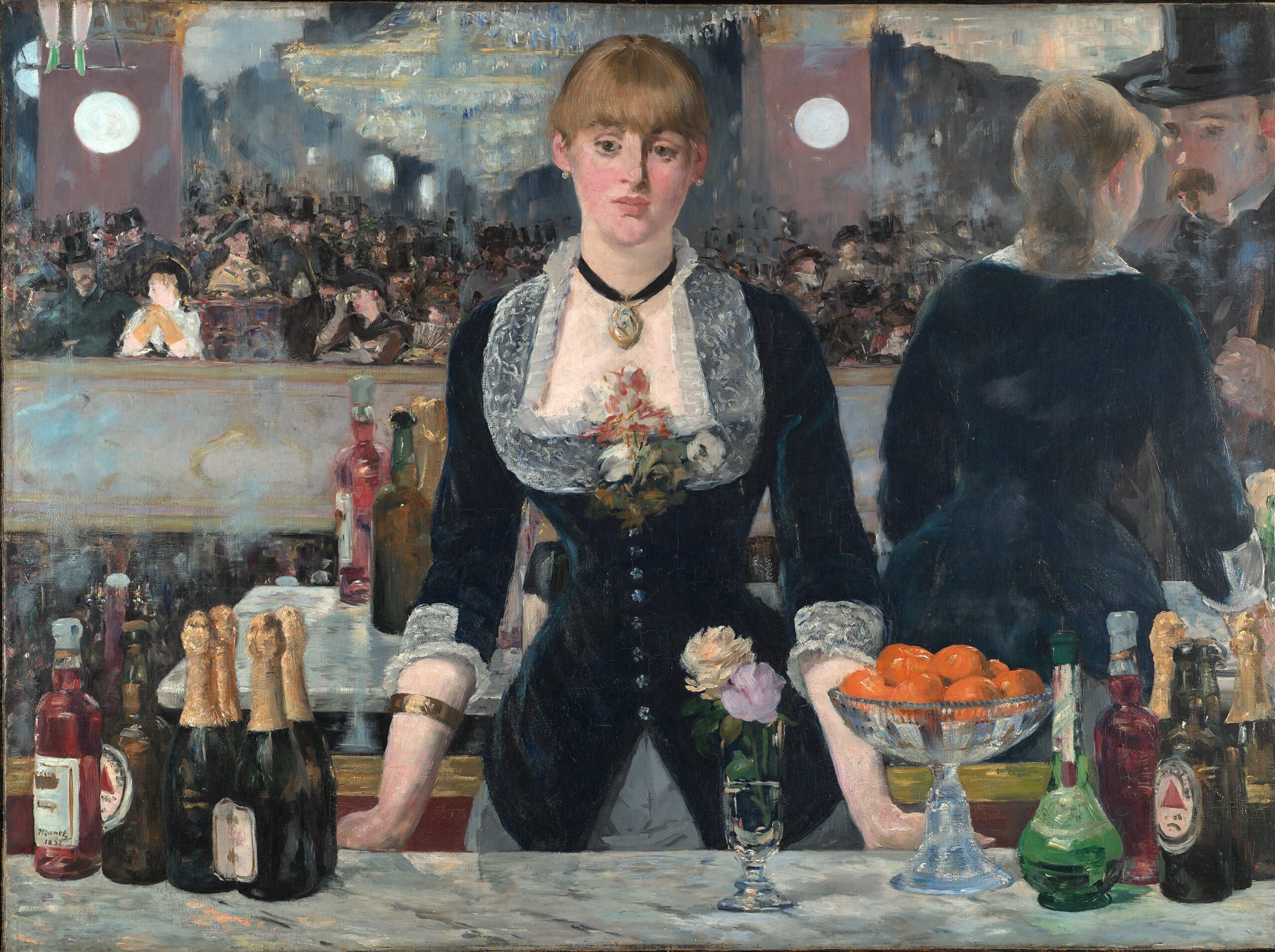
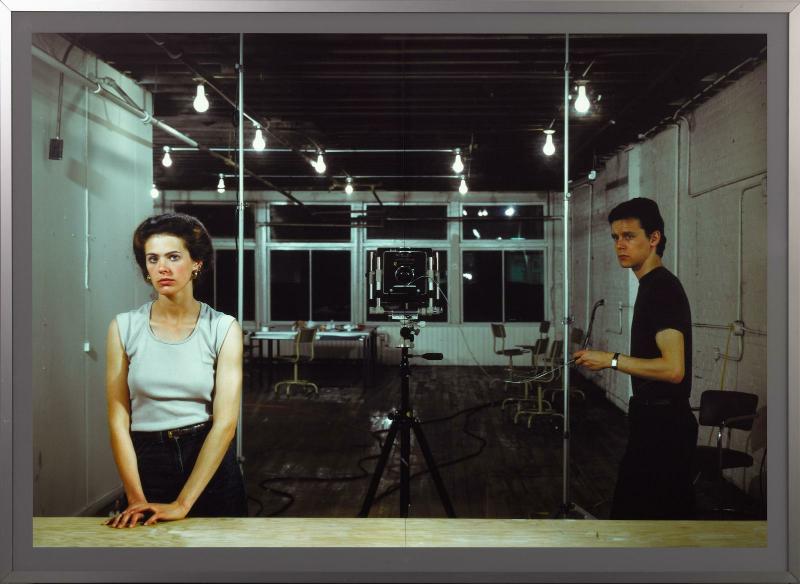
In fact, in 1882, the impressionist painter Édouard Manet presented his new painting Un bar aux Folies Bergère (in English: Bar at the Folies Bergère), which is an analysis of male perspective in arts, and more generally, in society. In 1979, the photographer Jeff Wall creates the picture Picture for Women as an answer to Manet’s painting. This conversation between Manet’s work and Jeff Wall’s one shows us how male perspective has been discussed through the last centuries.
Presentation of A bar at the Folies Bergère
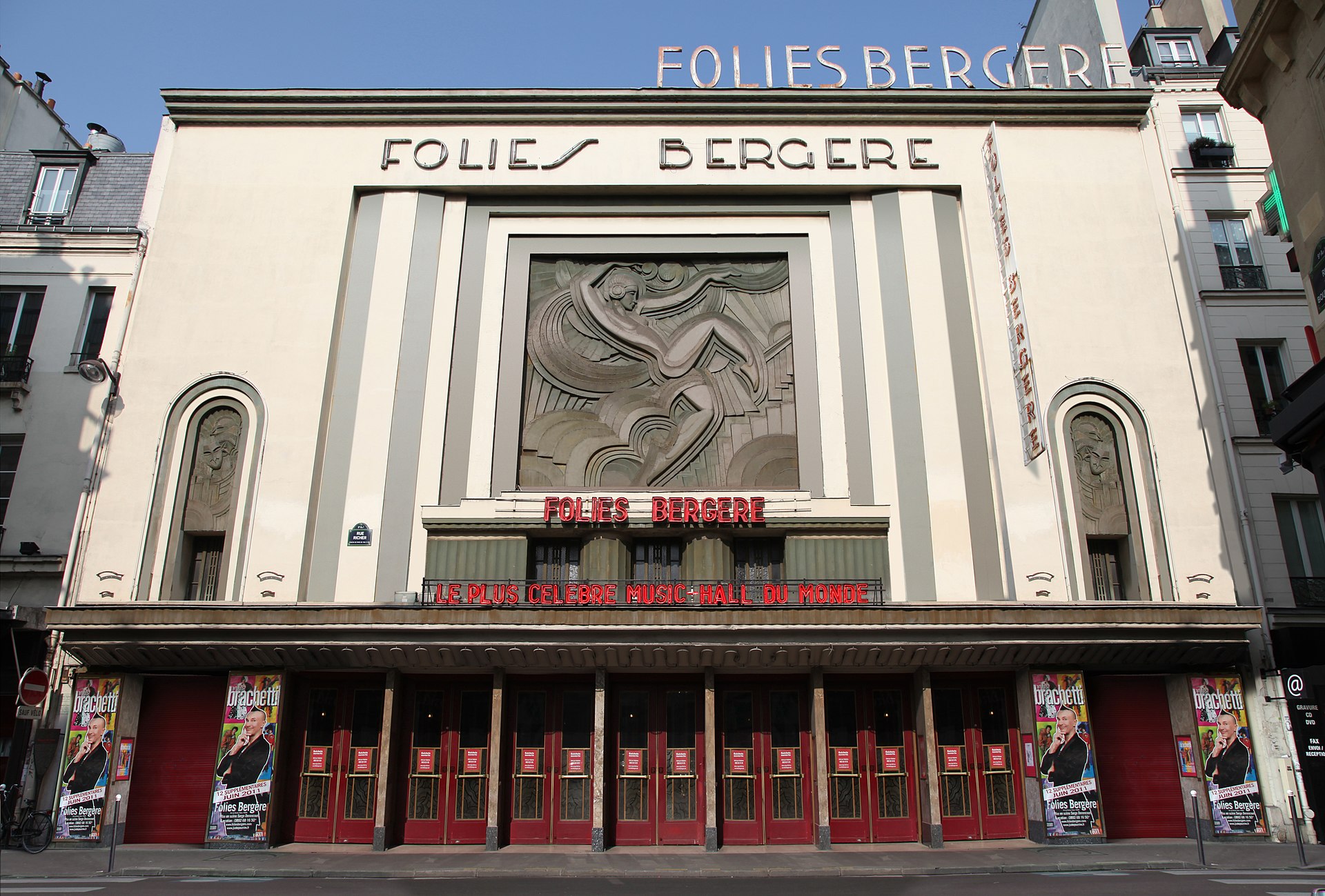
The Un bar aux Folies Bergère painting represents the Folies Bergère concert hall, an iconic place of leisure in Paris that has always been famous for its shows and parties. At the center of the picture we can see a woman behind a bar, who is clearly the bartender. We can easily notice her absent and suffering stare, which can be surprising for a barmaid. She is surrounded by alcohol, drinks and other leisure objects such as fruits and flowers. Behind the barmaid is a mirror. The particularity of this painting is that, except for the forefront – which are the barmaid and the bar – the rest of the painting is the mirror. Which means that most of what we see is a reflection of what is actually in front of the barmaid.
The purpose of the mirror is to give us depth and context about the passive and jaded attitude of the barmaid. In the reflection, we can see a typical scene of a party. In fact, the room is really crowded, everyone is well-dressed and some people are drinking. We can even see the feet of an acrobat. But the most important thing is the reflection of the barmaid’s back, and we can notice that she is actually talking to a man standing in front of her. The mirror allows us to understand that the barmaid has this attitude because of the man she is talking to. She is looking at him. This makes us – the viewer – as if we were this man. Who is he? What is going on?
The purpose of the painting is to see the party, and more specifically, the barmaid, from the man’s point of view. At this point, we can realize that, even if she is working, she is completely passive. She is clearly suffering but she has to stay neutral. If we look at her outfit, we can notice symbols of erotism, like the flower on her chest. She is a product, like the drink she sells. Being a product is part of her job, and maybe, being the product is the main part of her job. In this big party, there are plenty of entertaining elements, like the drinks and the acrobat. But the most important element is actually the barmaid’s body. And even if she doesn’t want to, she has no choice. The barmaid must stay silent and play this entertaining role. The Un bar aux Folies Bergère painting is a reflection about male’s perspective in society. More specifically, it makes the viewer think about how the female body is used as a product in so many sectors, and how women are forced to silently accept it.
Presentation of Picture for Women
Picture for Women is a photographic work by the artist Jeff Wall made in 1979. Jeff Wall is a Canadian artist born on September 29th of 1946. He has been a key figure in Vancouver’s art scene since the early 1970s.
Picture for Women is a key early work in Wall’s career. One edition of this picture is in the collection of Centre Georges Pompidou in Paris. When the Centre will re-open, do not hesitate to go there and see it! There is also an artist’s proof in Wall’s personal collection.
This picture, as many others, is staged. It was photographed in a borrowed studio in Vancouver in winter 1979 and printed on two separate pieces of film which are joined using clear tape. We can notice a cinematic dimension, due to the choice of lights and colors.
On the left slide of the foreground, we can see a woman laying her hands on a table. She has the same blue eyes as the barmaid in Manet’s painting. Her outfit also reminds us of the protagonist of Manet’s painting because of the grey/purple color of her shirt. On the right side of the middle ground, there is Jeff Wall himself. But this is actually a mirror reflection of him taking a picture of her. In fact, like in Manet’s work, there is a mirror behind the woman.
Jeff Wall, indeed, used the same mechanism chosen by Manet. In fact, except the woman and the table, everything that is shown in the picture is a reflection given by the mirror. As Édouard Manet did, Jeff Wall used the mirror to give depth and context to his painting. What is reflected here is Wall’s studio. The scene is surprisingly empty, except for the big camera in the middle of the room, taking the picture of the woman. We can assume that Jeff Wall and the woman are looking at each other, but through the mirror.
Everything except the woman and the table is quite dark and a little blurred. The only sources of light are the lamps and the woman. This also reminds us of the Un bar aux Folies-Bergère painting. Another mechanism that reminds us of Manet’s painting is the fact that the first thing that we notice is the female character, while the male character is darker and blurred.
Analysis of Picture for Women
This picture can firstly be seen as a representation of Jeff Wall’s process in creating his pictures. This would explain why the camera is in the middle, meaning that the camera symbolizes the photographer’s process. In this case, Wall would give us here an occasion to look at what is “behind the scenes”. There is a voyeuristic dimension here, as if we weren’t supposed to see what is going on. Furthermore, the light shed on the woman can be interpreted as if she was the future work of art. The question suggested is, what is behind a work of art?
But let’s go more in depth of what is going on in this picture. It is made by a complex web of viewpoints. Jeff Wall has realized, with his work, a sort of deconstruction of Manet’s painting. The quest of male pleasure here is shown in its whole process.
The point of view in Manet’s picture is a male one, such as in Wall’s picture. Jeff Wall is clearly revealing to us that artists actually choose, most of the time, to take the male’s point of view. And it is not just about taking heterosexual male’s point of view, but also about pleasing them by sexualising women’s bodies. Picture for Women comes as a sort of confirmation: yes, the point of view of Manet’s picture – and most of artworks – is a male’s one, there is indeed a male behind the camera, or holding the brush.
The power relationship between the male artist and the female model is particularly shown by the passivity of the woman. This confirms us that the barmaid was passive. The staging dimension of Wall’s picture suggests that women are often forced to play a role to please heterosexual men’s perspectives. In his empty studio, Wall takes away all the party scenography. The people, the acrobats, the alcohol, are all out. The fake happiness is gone and everything is quiet. We can also notice the quietness by the fact that the woman is holding her hands. This quietness and emptiness permits us to reveal completely the mechanism of how a work of art is made.
Tate Modern exhibited Picture for Women during the Jeff Wall Photographs 1978-2004 exhibition, from 2005 to 2006. As the exhibition’s text explained, the issues of the male gaze, and more specifically the power relationship between the male artist and the female model, such as the viewer’s role, are implicit in Manet’s painting ; but Jeff Wall chose to update the theme by positioning the camera at the center of the work. In this way, he captures the act of grasping the image, through the scene reflected in the mirror, and, at the same time, looks straight at us.
Jeff Wall invites us to find out the creation process in every artwork that we see. He suggests asking ourselves “What is the point of view here?”, “Is there a male gaze?”. Most of the time, the answer is, yes. Édouard Manet and Jeff Wall show us that the male gaze is the most common point of view of what we see, and most of the time we aren’t even aware of it. Male gaze is an unconscious norm. To conclude, I would like to invite you to go further and ask yourself how the male gaze in arts influences our way of behaving in society. Do we dress, talk, act as we want to, or as we are told to ?
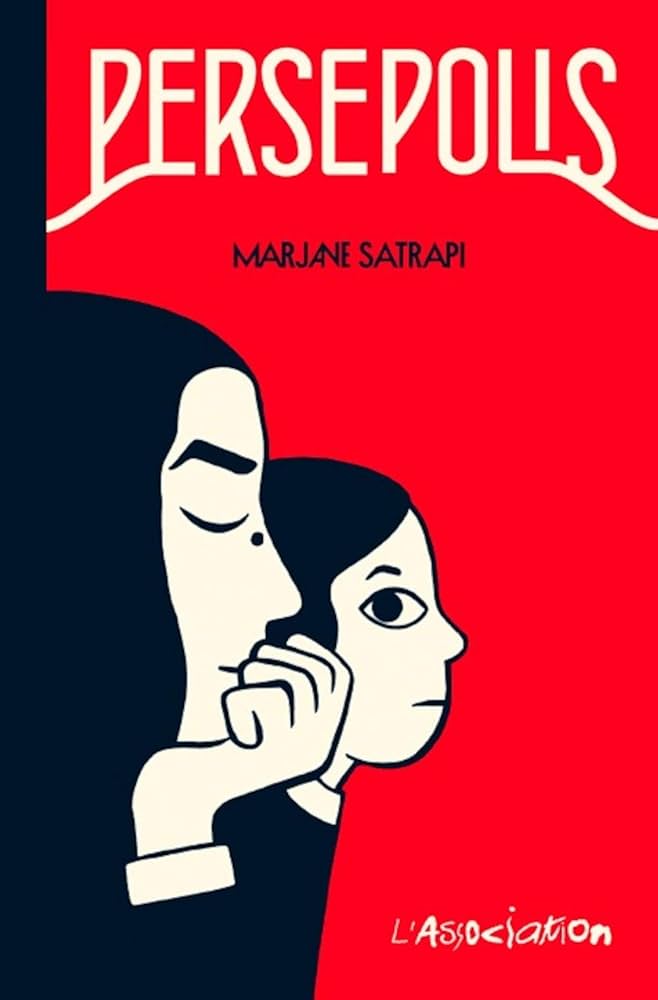
When Art Spiegelman’s Maus received the Pulitzer Prize in 1992, the work was presented as a ‘graphic novel’. The term is once again imposed in traditional media when Persepolis by Marjane Satrapi meets with major critical and institutional success. These works are rarely described as comic strips (“Bandes Dessinées” in French, often abbreviated as BD), even though they fully share their language and narrative codes.
This choice of vocabulary is not anecdotal. Through him, part of the comic strip seems to change its status: it leaves the field of popular entertainment to enter that of recognized literature, exhibited, awarded, taught. The ‘graphic novel’ then appears as a new way of naming certain comics, giving them a more important place and legitimacy.
This recognition is accompanied by a rapid editorial development of the graphic novel, which in a few years has become an integral segment of the comic book market in France. Understanding this rise in power involves observing how the market has been moving out of the Franco-Belgian format, and what this evolution reveals about the broader transformations of the ninth art.
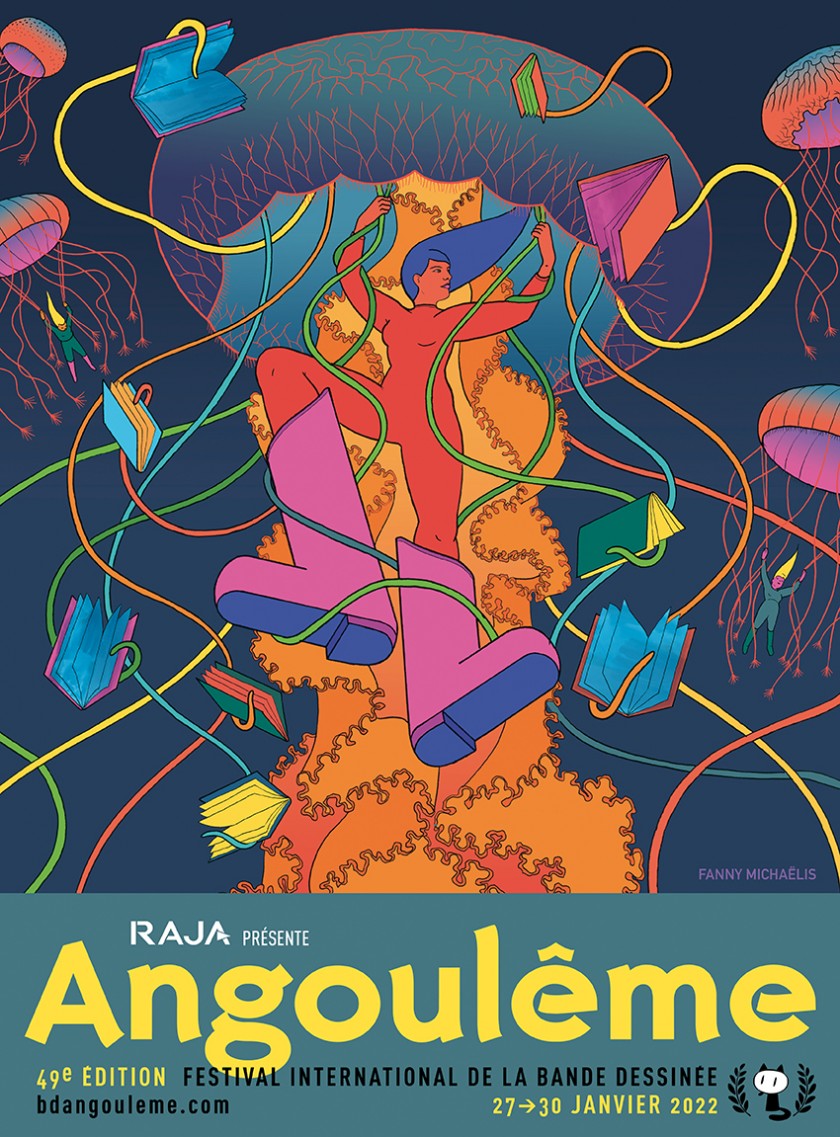
The traditional format of Franco-Belgian comics: a hard cover, a number of pages not going beyond 50 and a price around 10-15 euros, still occupies an important place in the French edition. Each year, between 5,000 and 6,000 new products are published, making France one of the most productive countries in the world in this field. This editorial abundance is accompanied by a strong cultural presence, illustrated in particular by events such as the Angoulême International Comic Strip Festival, which continues to attract several hundred thousand visitors and benefit from extensive media coverage.
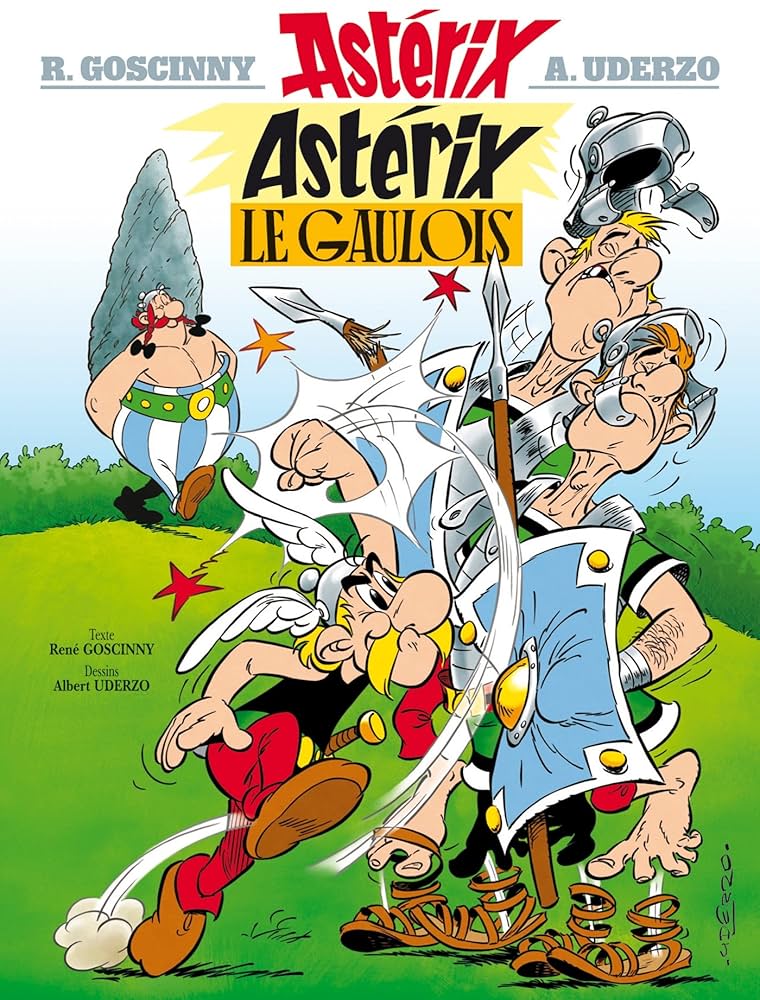
However, this strong production does not necessarily translate into an equivalent consumption dynamic. For a few years, sales figures have shown a gradual slowdown in Franco-Belgian comics. If the installed series are doing well, like Lucky Luke or Asterix, albums outside these series struggle to sell. The classic format, a hardcover album of about fifty pages, cannot maintain its level of distribution.
The multiplication of new releases has visible effects in bookstores. Albums have less shelf exposure time, sometimes only a few weeks, before being replaced by new releases. Many titles thus struggle to meet their audience, not for lack of quality, but due to a lack of sufficient visibility. The market seems saturated, and traditional comic book consumption is no longer growing at the same pace as production.
In this context of slowdown, one segment is an exception: that of the graphic novel. While overall sales of classic comics are stagnating, this format is experiencing better resistance, or even relative growth, driven by another editorial logic and a distinct readership.
To understand the success of the graphic novel and its impact on the market, it is necessary to go back to the origin of this term and what it actually covers.
The term graphic novel appeared in the United States in the 1960s-1970s, championed by authors like Will Eisner with A Contract with God (1978). The objective was not to create a new genre, but to distinguish from popular comics certain longer, autonomous narratives intended for an adult audience. This lexical shift makes it possible to present these works as books in their own right, and not as simple fascicules intended for children.
In France, the term began to spread from the 1990s, with works such as Maus by Art Spiegelman, Persepolis by Marjane Satrapi or L’Arabe du futur by Riad Sattouf. Economically, the graphic novel is based on a different model from that of traditional comics. The prints are generally more modest, but the books benefit from a higher selling price, often between 20 and 30 euros, and a longer shelf life in bookstores. Unlike many classic comic books, these books are not immediately subject to the logic of permanent novelty and can be part of a more spread-out time.
Although they fully use the language of comics, they are systematically referred to as graphic novels in the press, bookstores and cultural institutions. This distinction is based less on form than on reception and cultural valorisation: the graphic novel becomes a label of legitimacy, capable of crossing the boundaries between popular culture and recognized literature.
Beyond the symbolic recognition, this positioning has concrete effects on the market. Graphic novels benefit from better visibility, a longer exhibition in bookstores and a wider audience, often adults and less familiar with traditional comics. Their economic success, illustrated by the hundreds of thousands of copies sold of Persepolis or The Arab of the Future, shows that this symbolic repositioning is also commercially promising.
Thus, the graphic novel functions both as a tool of cultural legitimation and as a new editorial dynamic, offering the comic book market a segment that is both recognized and profitable, distinct from traditional comics. But if the traditional comic strip is being challenged in terms of legitimacy by graphic novels, it also loses ground in terms of its popularity compared to another competitor, more economical and more practical, the manga.
Indeed, in France, manga today represents more than half of the volumes of comics sold, with certain series reaching several million copies. Titles like One Piece, Naruto or Demon Slayer illustrate this domination, attracting a large readership, mainly young, but increasingly adult.
Several factors explain this success. The pocket-sized, lightweight and easily transportable format is ideal for children and teenagers who read in class, on public transport or at home. This portability contrasts with the traditional cardboard album, heavier and bulky, and makes manga particularly suitable for a nomadic and regular consumption.
Seriality is another major asset. Long series retain readers over several years, while successive volumes stimulate recurring purchases. This logic of loyalty, combined with regular publication and media circulation (animated adaptations, social networks, applications), creates a mass effect that greatly exceeds what traditional comics can generate.
Finally, the rise of manga contributes to reconfiguring the audience for comics. Young readers, attracted by this practical and accessible format, today consume much less classic Franco-Belgian comics. While the graphic novel occupies the legitimate and cultural space, manga has established itself in the popular segment, accentuating the movement of the reader away from traditional albums.
This dual dynamic, graphic novel on the legitimate market and manga on the popular market, shows how much the landscape of comics in France has changed: classic, traditional comics, once at the centre of the market, must now find their place between these two poles, facing formats better suited to their respective audiences.
Traditional comics are confronted with new logics of valorisation and dissemination. The ‘classic’ series that continue to meet with widespread success, such as Asterix, Tintin, Lucky Luke or Blake and Mortimer, are no longer just works of authorship: they have become real cultural franchises.
These franchises largely exceed the framework of the comic strip. They give rise to film adaptations, animated series, merchandise, exhibitions and even theme parks. The ownership of these universes often passes from the hands of authors to those of publishers or large groups, such as Média-Participations or Hachette, which today manage the marketing, communication and circulation of licenses.
This transformation has a direct impact on the authors themselves. Where the creator could once exercise control over his work, today he often becomes a performer or contributor in an already industrialized universe, sometimes replaced by other artists or screenwriters. The commercial success is intact, but the artistic and individual dimension is largely framed by the logic of openness and economic imperatives.
At the same time, this concentration of success and visibility contributes to accentuating the gentrification of comics. Prestigious and heritage works are valued and distributed in media and institutional channels, while traditional comics, excluding franchises or established successes, struggle to occupy the same space, both commercially and symbolically. The market is thus polarized between ultra-industrialized formats, culturally legitimate segments like the graphic novel, and a set of more fragile traditional productions, often relegated to a niche or to a loyal but restricted audience.
Between the massive franchises that structure traditional comics and the economic and cultural successes of the graphic novel and manga, the landscape of French comic strips today appears highly segmented, and classic albums seem to have an increasingly fragile place there.
The graphic novel established itself as a segment that is both economically viable and culturally legitimate, capable of reaching an adult readership and crossing the boundaries between popular culture and literature. On the other hand, manga dominates the popular market, thanks to its practical format, addictive seriality and its ability to massively attract a young audience.
Between these two poles, the traditional Franco-Belgian comic strip is now in an intermediate position. Heritage series, transformed into industrial franchises, are experiencing significant commercial success, but at the cost of a gradual dispossession of authors and standardization of universes. Albums without franchises and without a label of cultural legitimacy must, for their part, contend with a saturated market and distribution channels favouring spectacular or already valued novelties.
This double polarization, graphic novel for legitimacy, manga for volume and popular consumption, raises a central question for the future of the medium: can traditional comic strips still exist as both a popular and creative form, or will it be forced to reposition itself on one of these two segments? More broadly, it invites reflection on how editorial and symbolic categories influence not only commercial success but also the perception and cultural value of an art.
In sum, the current French comic is no longer a homogeneous block: it has become a segmented market, where each format, graphic novel, manga or classic album, must find its place in a fragile balance between innovation, recognition and popularity.
While music has never been easier to access, vinyl records continue to stand out as something special. More vinyl were sold than CDs in 2024 in France, a situation that would have been unthinkable twenty years earlier. According to the 2025 Global Music Report published by the IFPI (International Federation of the Phonographic Industry), revenues from CDs and music videos fell by 6.1% and 15.5% respectively in 2024, while those from vinyl increased by 4.6%, marking its remarkable 18th consecutive year of growth. Despite the arrival of CDs in the 1980s and more recently streaming platforms, many people remain loyal to this medium. How can this phenomenon be explained?
Long relegated to the status of a technological relic, vinyl is now at the heart of a growing market, driven by a cultural, aesthetic, and symbolic demand. But behind this popularity lie complex industrial, economic, and environmental realities. To understand this phenomenon, we need to look back at the history of vinyl, analyze its technology, its current place in the music industry, and the challenges it poses in terms of sustainable development.
The origins of vinyl: History and evolution of music media
The history of vinyl is part of the broader history of sound recording, which is closely linked to the history of motion pictures and the revolution in communication. Music, which had long been reserved for the wealthy, gradually became a mass-produced, affordable sound recording. Recorded music democratized access to entertainment and turned good music into an accessible consumer good.
It all started with the phonograph invented by Thomas Edison in 1877, marking the start of the revolution of recorded sound technology. Edison knew how to turn sound waves into mechanical movement and proved that the storage and recovery of sound could be done without electricity.
Emile Berliner then disclosed the mechanical « gramophone » in 1888. Where before him, Edison and Tainter had employed a vertical (up and down) cut in recording sound waves onto a cylinder, Berliner used a lateral cut onto a disc, where the stylus moved from side to side. This was the era of the 78-rpm shellac (a resin) disc. RPM means Revolutions Per Minute, indicating the speed at which the record rotates on a turntable. But shellac discs were fragile and their duration varied between three to five minutes per side, depending on the disc size. From the 1920s onwards, 78-rpm records became more widespread as they were played on jukeboxes (in bars, restaurants, hotels, shops, etc.) and on the radio. The gramophone was gradually replaced by the record player.
But shellac supplies became extremely limited during and after World War II, so records started to be pressed in polyvinyl chloride (PVC), commonly named vinyl. This material is more flexible, more resistant, and allows for finer grooves to be engraved. In 1948, Columbia Records launched the first vinyl record in 33 ⅓ rpm format, which would revolutionize the music industry. Vinyl came in several different types (45 or 33 rpm) and formats (18, 25, and 30 cm), and stood out for its better, more detailed sound and longer track length. It could now record up to 22 minutes of music per side, surpassing 78-rpm shellac records by far. The 33 RPM vinyl, often called an “LP” (Long Play), quickly became the standard for albums, and the 45-rpm vinyl the standard for singles. They both enjoyed their golden age from the 1950s to the 1980s. In 1978, vinyl records accounted for over 70% of global music industry revenues. Far from being just a dominant format, vinyl structured the entire ecosystem of music production, distribution and listening practices.
The PVC that will become a record (credit: Arthurious)
The album then emerges as a coherent artistic statement, designed to be experienced as a whole. Track sequencing, side length and even the pauses between songs play a role in shaping the listener’s experience. Album covers become iconic and are often created by well-known artists. Covers from Pink Floyd’s album The Dark Side of the Moon or The Beatles’ Abbey Road have become cultural landmarks, marking whole generations visually and musically.
However, playing vinyl has its flaws. Playback problems causing distortion, friction noise and tracking errors are fairly common.
A cassette and a CD (credit: Mike van Schoonderwalt)
The 1970s marked a turning point, as magnetic tape began to displace the revolving disc as the standard recording medium. The cassette tape was invented by Philips in 1963 and appealed thanks to its portability and recording capacity. It foreshadowed the end of the vinyl’s hegemony.
A decade later came the digital era with the commercial arrival of the compact disc (CD) in 1982, also introduced by Philips. Vinyl was rapidly losing market share, and by the early 1990s the CD had established itself as the dominant format. In the 1990s and the 2000s, vinyl were not as produced anymore. It became a niche object aimed at audiophiles. But some people thought the CD sounded « robotic » because it erased the imperfections that could be heard with vinyl.
Vinyl seemed to have been buried by the arrival of the MP3 format, followed by music streaming platforms in the 2000s. Music became intangible, instantly accessible, detached from any physical medium. By the end of the 2000s, some major retailers had stopped selling vinyl altogether. Yet, there is an important revival of vinyl today. But how does this technology work exactly?
A simple yet precise technology
A vinyl operates through the mechanical reading of sound. Sound information is engraved on the surface of the record in the form of microscopic variations, which correspond to the sound waves of the music, spiraling from the outside to the inside of the record. The irregularities in the grooves are reproduced in the form of an electrical signal and transmitted to an amplification system for our ears to hear. There is therefore no digital conversion, which gives it its distinctive sound, often described as “warmer” and richer than digital sound.
To play it, you need a record player. The vinyl record is placed on a turntable that spins at a constant speed: the famous 33 or 45 rpm. The tonearm, equipped with a stylus (a needle), is placed on the vinyl record. As the record spins, the stylus moves through the grooves of the vinyl and guides the tonearm.
A modern record player (credit: pickpik.com)
Now let’s see how a vinyl is produced: It is a long industrial process.
A specific mastering is needed in order to adapt the music to the constraints of the medium. A master disc is then engraved onto a medium called “lacquer.”. It is then coated with metal by electrolysis to create a negative form, from which molds are produced. To create a vinyl, heated PVC is pressed between two molds, forming the disc. After cooling, the edges are cut, the disc is checked and assembled with its sleeve.
A vinyl that has just been pressed and which edges have not been cut yet (credit: Arthurious)
What’s so special about vinyl compared to other media?
Listening to vinyl offers a unique experience that sets it apart from other formats. Its superior audio quality is often highlighted, and its sound is perceived as « warmer » and more profound than digital, with slightly more nuance (if you can hear it).
But vinyl isn’t just about sound; It imposes a radically different relationship with time and listening. You choose a record, handle it with care, listen to an entire side before turning it over. It requires attentive and immersive listening, two things we lack with modern ways of listening to music.
The experience is indeed extremely different on streaming platforms, where we listen to the same music everybody listens to. Algorithms always push the same songs or types of song forward, and more often than not AI generated music or already established artists. By going to your local record store, you regain control over what you listen to.
And looking through vinyl still allows for exploration: It is the occasion to listen to a whole album from start to finish and discover new songs from a known artist for example. Songs you would never have found on streaming platforms because they don’t suggest them. Browsing through a record store is also a way to spark curiosity and discover new genres — especially by asking for advice to the salesperson — something algorithms don’t dare to do.
In an era dominated by streaming, which favors playlists and algorithms, vinyl puts the album back at the center. It encourages you to slow down and fully engage with listening to a work from start to finish.
The most aesthetic vinyl are exposed on the wall and never touched (credit: Record Props)
A special relationship to the object: A work of art
Vinyl’s attraction lies not only in the sound quality, but in how it exists as an object. The oversized sleeve allows artwork to be experienced fully and liner notes, often detailed, further enhance the listening experience by providing context for the music.
The record becomes a true collectible more than something you listen to. Some people only buy them for their color or for the cover art and not to use them for their main purpose. Vinyl has become a design object, a decoration that one displays in their living room on a trendy stand or on the wall to showcase their best finds.
According to an ICM study commissioned by the BBC, 7% of the vinyl buyers surveyed say they do not even own a turntable. Student Jordan Katende told BBC News: « I have vinyl in my room but it’s more for decor. I don’t actually play them. It gives me the old-school vibe. That’s what vinyl’s all about ». The « old-school vibe » described here perfectly illustrates one of the reasons why people buy vinyl today: it brings back nostalgia for older days.
The second-hand market is indeed booming. Specialist record stores, flea markets and online platforms allow enthusiasts to find hidden gems. This “vinyl hunt” is a true pleasure in itself for collectors. Labels have understood this and now offer higher-quality pressings: 180-gram vinyl, remastered editions, limited editions, special packaging, etc. These premium editions meet a growing demand for quality and exclusivity.
Some vinyl buyers don’t even own a turntable (credit: ICM Unlimited, BBC)
A strong emotional dimension is thus at play when enthusiasts collect records. They spend time looking for them, keep them for a while, pass them on to future generations and collectors sometimes. None of that is as strong with other media.
Listening to a vinyl also involves a whole ritual: looking through one’s collection and carefully choosing which record to play, taking the record out of its sleeve, cleaning it gently, positioning the tone arm… This series of gestures creates a special moment, a pause in our hyperconnected daily lives, far from the constant change of song encouraged by streaming. Some people feel more connected to the music when handling a vinyl for that reason.
A market that has been revived in recent years
Since the 2010s, vinyl has been enjoying a resurgence in popularity among the public, conquering a new younger audience. Well-known groups and artists like Pharrell Williams and the Daft Punk release their music on both CD and vinyl, while some vinyl re-editions spark strong excitement and interest.
The vinyl market is knowing today its second most important dynamic since its popularization in the 1950s. The French vinyl market has reached 98 million euros of revenues in 2024 according to the 2025 Report on French recorded music market of the SNEP (Syndicat National de l’Édition Phonographique, the French National Union of Phonographic Publishing), versus only 91 million for CDs. This represents a 9.4% growth for vinyl turnover, where CD regresses by 1.5%. It is the first time vinyl outperforms CD since 1987. CDs stay nonetheless the most sold physical medium in terms of units. But vinyl now represents 45% of physical sales, versus only 1% ten years ago, meaning the market is growing rapidly and will continue to do so in the upcoming years, potentially soon exceeding CD in units sold.
The tendency is confirmed in other parts of the world as well, including the US: according to the RIAA (Recording Industry Association of America) 2024 Year-end Revenue Report, revenues from vinyl records grew 7% to $1.4 billion in the US in 2024 — the 18th consecutive year of growth — and accounted for nearly 3/4 of physical format revenues. And for the third year in a row, vinyl outsold CDs in units (44 million vs 33 million).
US physical music revenues (credit: RIAA)
In France, rap seems to have played a major role in reintroducing vinyl culture, introducing this format to a new generation of consumers. In 2023, major artists such as Nekfeu, Damso, PNL, and Orelsan are among the best-selling vinyl artists, proving that the medium is no longer restricted to collectors. Nekfeu, for example, sold 23,000 vinyl copies of his album Feu. To buy a vinyl is now a common way of supporting your favorite artists.
This partly explains why the primary buyers of vinyl today are people under 35 years old, accounting for 54% of the French market in 2023 according to the SNEP. Vinyl is no longer only the preferred medium of collectors, audiophiles and DJs. It is owned by everyone and has once again become a common consumer product.
Far from being mutually exclusive, vinyl and streaming operate side by side. Most vinyl buyers also use streaming services for discovery and everyday mobile listening, while vinyl remains associated with an immersive at-home experience. Edgar Berger, chairman at Sony Music International, told BBC: « You will find people that are having a paid streaming subscription and at the same time buying vinyl and I do believe that’s not an uncommon pattern. I think streaming is for the convenience and, for some music fans, vinyl is for the experience. » According to the same ICM study, 45% of vinyl buyers have heard the EP or album on streaming platforms first (but still buy the vinyl).
This complementarity reflects a broader shift in music consumption. Vinyl allows listeners to give a physical form to the music they discover online, while offering a tangible way to support the artists they value. In an increasingly dematerialized musical world, it provides a return to something more concrete.
More than that: The dematerialization of music is fueling this desire for and return to materiality. Beside everyday online listening, there is the pleasure of owning the object. Plus, a record is highly aesthetic and looks better than a CD, especially in the era of social media. It is even the ideal medium for showcasing music listening. Paradoxically, digital natives are looking for a more tangible and authentic listening experience.
Going for the treasure hunt in a record store (credit: pixabay.com)
Nevertheless, this resurgence of the vinyl industry has not been anticipated, resulting in economic and logistic issues.
The resulting economic and industrial issues
To begin with, production costs have strongly risen due to a spike in energy, raw material and transportation costs in recent years. For independent artists, pressing vinyl is moreover a great financial risk and they often find themselves dependent on the success of pre-orders.
Another factor was the Covid crisis. The cost of raw materials rose by 30 to 40% during Covid, as suppliers were unable to keep up with the demand. However, this does not justify the exorbitant price of certain records after the pandemic. The biggest labels indeed took advantage of the situation to excessively raise prices, sometimes turning vinyl into a luxury product.
Factories and their capacity are another limiting factor: The number of pressing plants worldwide is very limited today due to the sharp decline of vinyl in the 1990s and the 2000s, and many of the remaining ones use old machines, some dating back to the 1970s. Production times can thus be several months or even a year for small labels.
The Covid-19 pandemic also delayed the production in pressing factories, which were already operating at maximum capacity before the crisis. These delays impact the smaller artists the most once more, as majors become the main priority. Some independent record stores have not survived these crises and have had to close down.
As always, some are more impacted than others, and the metal band Metallica has for instance bought a pressing factory in Virginia called Furnace Record Pressing. This allows them to avoid delays in the production and delivery of their records.
The final major economic factor affecting vinyl prices is rarity. Some labels try to create scarcity around certain vinyl by producing them in limited quantities and expanded editions. Some records sell for a fortune on platforms such as Discogs and are resold for even more. Version 1 of The Beatles’ White Album released in 1968 was sold by Ringo Starr in 2015 for $790,000.
But the second-hand vinyl market can also be very lucrative, through platforms such as Vinted. First pressings, limited editions and promotional versions are particularly sought by collectors. Given importance of the second-hand market in vinyl sales, we could think that it is a better alternative for the environment than listening to music on streaming platforms, but it is not necessarily the case.
A composition with a great impact on the environment
The revival of the vinyl industry also has an important environmental cost. Producing one 135g vinyl issues 0.5 kg of CO2, and the 5 million units sold in France in 2024 is equivalent to the annual CO2 emissions of five hundred people. This is due to the plastic material used to make the records, PVC, which is one of the most polluting materials, produced from petrochemistry.
Moreover, old pressing machines consume a lot of energy and water to function, and inks used to print the covers contribute to ozone depletion. So vinyl is everything but environment-friendly. According to Marie Pieprzownik, sound engineer and vinyl engraver, the engraving process itself requires a very special material that is only produced in Japan since the other factory located in the US closed. This dependence lengthens the production process even more and increases carbon footprint due to transportation.
On the other hand, streaming services also pollute very much with servers running 24/7 storing millions of songs and consuming an astonishing amount of energy. Greenhouse gas emissions from music streaming in the United States were estimated to be between 200,000 and 350,000 tons of CO2 in 2016, compared to the 157,000 tons emitted by the whole music industry in 1977 during the vinyl’s Golden Age. Listening to an album on a streaming platform consumes 27 times more energy than producing a CD or a vinyl according to a study published the British NGO MusicTank in 2012. So none of these solutions seem to work if we want to listen to music without contributing to the climate crisis.
As we saw, vinyl is an old industry that has known little change over the decades and so the concept of recycling only emerged recently and is not widely spread yet. Some companies like MPO in France try to develop this alternative: They retrieve faulty and obsolete records, purify them and give them a new life by re-pressing them into new vinyl. Artists need to give more visibility to this option, like Billie Eilish did for her new album Hit Me Hard And Soft released on May 17, 2024, by choosing recycled vinyl.
Recycling vinyl can give the final record unexpected colors (credit: Optimal : Media)
Other alternatives are slowly being explored, but only a fraction of them meet the durability requirements to make long-lasting records. The French factory M Com’ Musique has launched the « Vinylgue » in 2016, a bio-based and biodegradable disc made from brown algae. Its sound quality was good, but the main issue was their fragility. Others tried to create records from sugar canes or plastic waste retrieved from British beaches.
One promising lead is the « biovinyl », a bio-based PVC made from calcium-zinc. It is recyclable and way less polluting than classical PVC. It is a solid competitor to classical vinyl sound and durability-wise but the issue is its production price. A real commitment from artists and labels is therefore needed to initiate this procedure and democratize the use of this new material, making it more affordable in the future. This solution could reduce CO2 emissions by 90% compared to standard vinyl, which is non negligeable.
However, more progress is to be made if we want a true durable vinyl market, as the whole production process needs to be rethinked and redesigned. Bio-vinyl could be the solution, but it will take some time and effort before it becomes mass-produced and cost-effective. For now, the best option could be to listen to less music but better and more carefully chosen. In a society where Spotify’s CEO Daniel Ek states that silence is the biggest competitor of the streaming platform, we need to listen with attention and not put music as a background noise for our life. Vinyl thus continues to write its history.
Written by Laura Vurpillot
Sources:
BBC, Music streaming boosts sales of vinyl (April 14th 2016)
For more than two decades, Nantes has established itself as one of the most dynamic cultural cities in France. Here, culture is not confined to a few key dates or venues reserved for insiders: it flows through the urban space throughout the year and reaches all audiences. Nantes’s cultural calendar is punctuated by events that have become unmissable. Each summer, Le Voyage à Nantes turns the city into an open-air museum, blending contemporary art, heritage, and urban strolls. Les Rendez-vous de l’Erdre bring the summer season to a close in a friendly atmosphere driven by jazz and nautical music. The Festival des 3 Continents, meanwhile, opens a window onto cinema from Africa, Asia, and Latin America. And when winter sets in, one event manages to warm both hearts and ears: La Folle Journée de Nantes.
Poster of La Folle Journée, Cité des congrès
Created more than thirty years ago, La Folle Journée set itself an ambitious mission from the outset: to make classical music accessible to as many people as possible. Long perceived as an elitist art form, reserved for informed audiences and prestigious venues, classical music sometimes seemed far removed from everyday life. It is precisely this image that the festival set out to challenge. This year, the music festival took place from Wednesday, January 28 to Sunday, February 1.
At the origin of this project is René Martin, former artistic director of the festival until 2025. His conviction is simple: classical music must be demystified without betraying its artistic standards. To achieve this, La Folle Journée breaks with traditional concert codes. Concerts are short, around forty-five minutes to encourage discovery. Ticket prices are deliberately affordable, capped at 25 euros, allowing a wide audience to step through the doors. Finally, concerts are offered in a variety of styles and formats, from intimate recitals to large orchestral performances.
The expansion of the festival
Over the years, La Folle Journée has established itself as a major event on Nantes’s cultural scene. Today, the festival spans five intense days, brings together more than 200 concerts, and attracts tens of thousands of spectators. Around 140,000 tickets are sold each year, a figure that testifies to the public’s enthusiasm and the loyalty of festivalgoers. But the influence of La Folle Journée extends far beyond the walls of the Cité des Congrès. Music spills into the city: its streets, squares, and even its public transport. This outreach beyond traditional venues is an integral part of the festival’s identity and contributes to its unique atmosphere.
For several years now, La Folle Journée has developed partnerships with the city of Nantes and its stakeholders, notably Semitan. For the sixth consecutive year, “musical moments” have been offered to travelers. On Wednesday, users of tram line 1 were surprised to witness a performance by pianist and improviser Benjamin Kahn, seated behind an upright piano in the very heart of a tram carriage. At the same time, the Azalaïs clarinet quartet, made up of students from the Nantes Conservatory, performed aboard the Navibus on line N1, linking the Maritime Station to Trentemoult-Sablières.
Concert in the hall of the Cité des Congrès
These suspended moments transform an everyday journey into an artistic experience. They perfectly illustrate the festival’s philosophy: to meet residents where they are, to surprise them, and to remind them that music can appear where it is least expected. One of La Folle Journée’s great strengths lies in its deep integration into the urban space. By occupying public transport, public places, and various neighborhoods, the festival makes music omnipresent and familiar. This closeness strengthens the bond between the cultural event and the daily lives of the people of Nantes. For a few days, the entire city becomes a musical stage, where the boundary between artists and audience fades.
Shifts in the festival
In its early days, La Folle Journée was built around a single composer. The first edition, in 1995, was devoted to Mozart, followed the next year by Beethoven. This approach allowed for total immersion in the world of a major figure of classical music. However, the festival soon evolved. Over the years, the themes broadened, becoming more complex and more cross-cutting. The goal was twofold: to renew the interest of regular attendees and to attract new audiences, sometimes newcomers to classical music. In the 2010s, La Folle Journée moved beyond individual composers to explore more original themes: nature, the rhythms of peoples, travel diaries, or the origins of music. This year’s edition continues this dynamic, with a guiding thread that is both poetic and universal: the rivers of the world.
Concert during the Folle Journée, P. Minier – Ouest Médias – Région Pays de la Loire
Each year, La Folle Journée takes up residence at the Cité des Congrès in Nantes. This emblematic venue is perfectly suited to the diversity of concerts on offer. It provides several halls of very different capacities, ranging from large auditoriums with nearly 2,000 seats to more intimate spaces reminiscent of chamber music concerts. This flexibility makes it possible to host both large orchestral ensembles and smaller groups under appropriate acoustic conditions.
While La Folle Journée is inseparable from Nantes, its influence extends far beyond the city’s borders. The festival first developed in the Pays de la Loire region, reaching cities such as La Roche-sur-Yon, La Flèche, Laval, and Saint-Nazaire. The concept was later exported internationally. In Europe, La Folle Journée found resonance in Portugal, Spain, and Poland. The model then took root in Asia, particularly in Tokyo and several Japanese cities, where audiences enthusiastically embraced this accessible approach to classical music. The festival also ventured into South America, in Rio de Janeiro, between 2007 and 2010. This international spread testifies to the strength of the concept and its ability to reach very different audiences.
Rivers of the world
For this edition, La Folle Journée invites the public to rediscover music through the prism of rivers. Sources of life, routes of circulation, natural or symbolic borders, rivers occupy a central place in the history of civilizations. They have naturally inspired many composers across all eras and styles.
Present since the festival’s beginnings in 1995, music historian and writer Patrick Barbier once again takes part this year as a lecturer. He reminds us that each river carries its own identity, shaped by the territories it crosses and the peoples who live along its banks. Some rivers become national symbols; others feed myths, stories, and legends, while many musical works are born directly from river landscapes or riverside cities.
Among the most famous examples, it is impossible not to mention The Blue Danube by Johann Strauss II, a true musical anthem associated with the Austrian river. But the Danube is not the only river to have inspired composers. The Seine, majestic and deeply linked to the history of Paris, appears in many French works. The Loire, an emblematic river of the Nantes region, also holds a strong symbolic place in this edition.
Other rivers, real or mythological, are also invoked. The Styx, the river of the Underworld in Greek mythology, reminds us that the riverine imagination goes beyond simple geography to touch on the spiritual and the symbolic.
The program highlights major figures of classical music. Antonín Dvořák and his Slavonic Dances evoke Central and Eastern Europe, while Schubert and Strauss enter into dialogue around the Danube. Vienna, a city intimately linked to its river, is represented by Mozart, Brahms, Offenbach, Wagner, and Debussy, each bringing their own sensibility and era.
The journey does not stop in Europe. The Mississippi, the mythical river of the United States, is celebrated through jazz, recalling the importance of this river in African American musical history. Artists from all over the world, both local and international, take part in this musical exploration, such as pianist Sophia Lu, whose interpretations create a dialogue between cultures and traditions.
Orchestre Paimboeuf, Folle Journée de Nantes, Public domain
As the concerts unfold, one thing becomes clear: the river acts as a powerful factor of universality. Whatever the civilization, it is both a source of life, a place of passage and exchange, and a space for contemplation. This image speaks to everyone, as each of us has, in one way or another, grown up near a river or been shaped by one.
By choosing this theme, La Folle Journée highlights what unites composers beyond styles, eras, and borders. The river becomes a metaphor: it connects peoples, crosses centuries, and nourishes the collective imagination. Like music, it flows, transforms, and grows richer through contact with what it encounters.
More than just a festival, La Folle Journée de Nantes is a cultural and human experience. It invites curiosity, listening, and sharing. By making classical music accessible, anchoring it in everyday life, and linking it to universal themes, it proves that this art form is neither static nor reserved for a select few.
Each winter, Nantes thus becomes a musical crossroads where rivers from all over the world seem to converge. And for a few days, to the rhythm of concerts and encounters, the city reminds us that music, like water, is a common good, capable of bringing people together and making them resonate far beyond borders.
The years 2024 and 2025 have served as a harsh wake-up call for the global luxury industry. What was once dismissed as a « creative oversight » has evolved into a full-blown legitimacy crisis. When Prada debuted « leather sandals » in its Spring/Summer 2026 collection — priced at a staggering $1,200 — the internet’s « digital tribe » quickly identified them as nearly identical copies of the traditional Indian Kolhapuri chappal. While authentic versions handcrafted in Maharashtra retail for as little as five dollars, the luxury iteration carried no credit to the original artisans and a markup of over 20,000%. This follows a pattern of increasingly tone-deaf releases, such as Louis Vuitton’s $39,000 « Auto Bag, » a miniature auto-rickshaw that many argued blurred the line between high-fashion tribute and the commodification of street culture.
These incidents are not merely accidental aesthetic blunders. They are the inevitable result of a luxury system that remains structurally dependent on « exoticism » as a form of decorative capital. This report argues that systemic cultural appropriation in fashion is a modern manifestation of a colonial mindset — one that views the heritage of the Global South as a library of « free » raw materials to be extracted, polished, and sold back to an elite audience without compensation or acknowledgment.
The Battlefield of Definition: Appropriation vs. Appreciation
In the high-stakes world of fashion marketing, the word « inspiration » acts as a convenient shield. To understand why certain collections trigger global protests while others are celebrated, we must look at the power dynamics involved. Cultural appropriation occurs when a dominant culture adopts elements from a marginalized community without permission or a deep understanding of the original context. It is a process of « decontextualization, » where symbols of sacred or historical significance are stripped of their meaning and reduced to mere ornaments.
The distinction lies in respect and reciprocity. Cultural appreciation involves an active effort to learn, honor, and engage with a culture through legitimate channels. When a brand simply takes a pattern, it is theft; when a brand partners with the community to ensure they control the narrative and receive a fair share of the profits, it becomes collaboration. As scholar Agnès Rocamora suggests, fashion is not just a commercial industry but a symbolic system where the production of value is a collective process, often influenced by social and economic forces far beyond the designer’s solo imagination.
Historical Echoes: The Legacy of Aesthetic Extraction
The luxury industry’s habit of cultural « borrowing » is a legacy of 19th-century colonial expansion. This era established a fascination with « Orientalism, » a term popularized by Edward Said to describe a Western system of cultural dominance that reduced the « East » to a series of exotic stereotypes.
One of the most telling examples is the work of Paul Poiret, the early 20th-century « King of Fashion. » Poiret is often celebrated for freeing women from the corset, but historical analysis reveals a darker side to his genius. His 1907 « Ispahan » coat, long considered a masterpiece of innovative construction, has been identified by fashion historians as an exact replica of the choga, a traditional coat worn by Muslim men in the Punjab region. Poiret’s « innovations » were often sourced from the Expositions Universelles in Paris, which functioned as « theatres of empire » where colonized people were displayed in « human zoos » for the entertainment of Europeans. In 1903, he even incorporated Chinese kanjian vests into his collections without modification, simply adding his own label to the collar.
This historical framework explains the contemporary industry’s comfort with « extracting » beauty from marginalized groups. It treats the heritage of the « Other » as a limitless, ownerless repository, while Western designers claim the exclusive power to « enhance » these designs with what Poiret called a « dreamlike quality », as if the original was somehow incomplete.
Case Studies in Symbolic Erasure
Dior and the Mamian Skirt Controversy
In 2022, Dior released a $3,800 pleated skirt that it marketed as a « hallmark Dior silhouette » and a « new elegant and modern variation » of its own house codes. However, the design — with its four panels, flat « horse face » (Ma Mian) center, and side pleats — was identical to a Chinese garment worn as far back as the Song and Ming dynasties.
The outrage was not just about the design but the erasure of history. By claiming the silhouette was a brand original, Dior was effectively overwriting centuries of Chinese cultural heritage. This sparked the « Guochao » movement, with Chinese students protesting in Paris and London. Their fear was legal as well as cultural: if a luxury giant like Dior « patents » a traditional design, local Chinese brands using their own heritage could theoretically be sued for copyright infringement in international markets.
Valentino and the « Wild » Archetype
Valentino’s Spring 2016 « Wild Africa » collection serves as another cautionary tale. The show featured tribal motifs, Masai beading, and bone necklaces, yet only 8 of the 87 models on the runway were Black. The ad campaign, shot by Steve McCurry, placed white models in the foreground while Maasai people were used as literal « props » or « background » to add a resemblance of authenticity.
More recently, the brand faced criticism from Indigenous artist Lily Gladstone regarding a pre-fall 2025 bag that closely resembled Métis and Dene beadwork. Critics argued that luxury houses often choose to copy these labor-intensive designs rather than hiring the Indigenous artisans themselves, who are the true owners of that intellectual property.
The Legal Stand in India: Prada and the GI Violation
The 2025 Prada sandal scandal led to more than just social media « trolling ». For the first time, legal avenues were being aggressively pursued. A group of advocates in India filed a Public Interest Litigation (PIL) in the Bombay High Court, arguing that Prada’s design violated the Geographical Indication (GI) status granted to Kolhapuri chappals in 2019. Under Indian law, the GI tag protects products whose quality and reputation are linked to their place of origin. While the current law primarily protects the name rather than the look, this case has pushed for legal reforms that would prevent global brands from escaping liability by simply renaming a stolen design.
Systemic Roots: The Homogeneity of the Creative Class
If the luxury industry keeps « accidentally » appropriating cultures, it is because the people in the room making the decisions are almost entirely from the same background. Reports from 2025 and 2026 reveal a staggering lack of diversity at the top of the major fashion conglomerates.
At Kering, which owns Gucci, Balenciaga, and Saint Laurent, the creative directors are exclusively white men. While the group’s overall workforce is 63% women, female creative leaders remain a rare exception, representing only about 17% of historical appointments. This structural homogeneity creates a blind spot where « internal audits » fail. Without diverse voices in leadership, there is no one to point out that a « Scandinavian scarf » is actually a South Asian dupatta, or that a « boho gladiator sandal » is a sacred Indian craft.
Furthermore, the pressure of the modern fashion cycle contributes to creative exhaustion. Global luxury growth is predicted to slow to 2-4% through 2027. To combat this, brands are stuck on a « creative treadmill, » pumping out multiple interim collections that rely on visual shortcuts, often « borrowing » from cultures that the design teams do not understand.
The Pivot to Ethics: A New Model for Luxury
A few brands are beginning to realize that the old « extract and sell » model is no longer sustainable. Real luxury in the 21st century is defined by transparency and the integrity of the supply chain.
Chloé and the B Corp Standard
Chloé, which became a certified B Corp in 2021, has moved toward a « fair trade » model. Their partnership with « Made For A Woman, » a social enterprise in Madagascar, empowers over 350 women from vulnerable backgrounds. These artisans provide handcrafted raffia elements for Chloé bags, receiving not just fair wages but social support and medical care. Crucially, Chloé uses a « Digital ID » or « Product Passport » that allows consumers to scan a tag and learn the exact story of the artisan who made their product, ensuring that the credit, and the humanity, remains intact.
Christian Louboutin and the Mexicaba
Christian Louboutin’s Mexicaba tote offers another roadmap for collaboration. The brand worked directly with the Taller Maya foundation in the Yucatán Peninsula. Artisans were paid equitable wages, and 10% of all profits were donated directly back to the foundation to help preserve Mayan craft techniques. By featuring the artisans in the marketing and giving them explicit credit, the brand shifted the narrative from « extraction » to a « benevolent partnership ».
Pharrell Williams and the Native American Dialogue
In his January 2024 menswear show for Louis Vuitton, Pharrell Williams attempted a « 360-degree approach » to collaboration with the Dakota and Lakota Nations. Rather than simply using motifs, he involved four Native American designers in the actual creation of hand-painted bags and embroidered apparel. He also included Native artists in the soundtrack and staging, ensuring that marginalized voices were the ones telling their own story on the Paris runway.
The Era of Cultural Accountability
As we move into 2026, the « inspiration » mask has become too thin to hide the colonial history behind it. The global community is no longer asking for permission to be heard; they are demanding it through boycotts, lawsuits, and a refusal to be treated as a « background prop. »
For luxury brands to survive the next decade, they must undergo a fundamental shift in their value proposition. True luxury is no longer just about the craftsmanship of the object, but the ethics of the relationship that created it. This requires moving from extraction to dialogue, where economic benefits flow back to the source communities. It requires structural diversity, ensuring that boardrooms and design studios reflect the multifaceted world they sell to. Finally, it requires transparency, where the « ghosts » in the fashion machine are replaced by the names and faces of the people whose culture the world so admires. Culture is not a trend, it is a living story, and it deserves nothing less than total respect.