A paradoxe of writing : it disappears when we can understand it, and only appears once we face an unknown one

Writing, when it works, disappears into reading. — paraphrasing Roland Barthes thesis in The Degree zero of writing, 1953. 

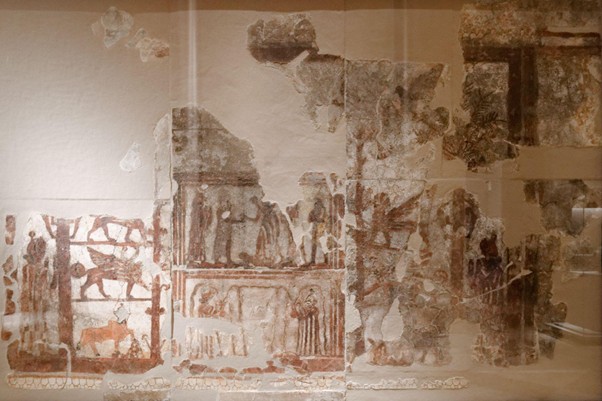
When faced with a stele covered in hieroglyphs, an ancient Chinese manuscript, or a Linear A tablet, something happens. Writing lies before us, familiar in its materiality : lines, strokes, columns, engravings, yet utterly foreign. We read shapes without reading meaning. It is in this suspended moment, between the legible and the illegible, that writing reveals its mystery: it ceases to be a simple instrument of communication and becomes an object of art, a pure sign, a calligraphy. Paradoxically, writing becomes calligraphy only when we no longer understand it, when it loses the very reason for its existence; only then does it reveal itself. 

This seemingly minor shift poses a profound question: how do we understand the changing status of writing depending on whether we comprehend it or not? And above all, what does writing become when the key to it is lost? This article explores that border between meaning and appearance, between code and art: navigating through the mystery of the sign, the great adventures of decipherment from Champollion to artificial intelligence, the contemporary extensions of this fascination, from cryptography to artificial intelligence and the Art of Sign.  

Writing and its shadow : semiology analysis of the duality of signs  

In everyday use, writing appears transparent i.e.we move through it without seeing it. It serves meaning and erases itself behind the message it conveys (c.f. Roland Barthes’ quote above). To read is to forget that one is reading. But once the key is lost, a kind of magic occurs: writing becomes visible again, pure image. We have all experienced this : facing the calligraphy of an unfamiliar language, we no longer see words but forms. Curves, thicknesses, contrasts of ink become visual composition. The beauty takes over from the intelligible. 

This paradox is illuminated by Roland Barthes’s semiology. Building on Saussure, Barthes recalls that every linguistic sign consists of two inseparable faces: 

  • the signifier (the sensory form: sounds, letters, strokes) 
  • the signified (the concept, the meaning the sign refers to). 

The link between the two is arbitrary: nothing in the sequence of letters t-r-e-e naturally evokes the object it denotes. Writing functions only because of a shared convention that unites them. 

Barthes extends this logic to all of culture (clothing, images, gestures, artworks) everything becomes potentially readable as a system of signs. In daily life, we no longer see writing; we read it. We pass instantly from signifier to signified, ignoring form. But before an unknown script, hieroglyphs before Champollion, Linear A, or Chinese oracle bones, that relationship breaks. 

When convention collapses, when faced with a dead language or unknown symbols, the link dissolves. The signifier detaches from the signified. The sign becomes pure drawing. Writing ceases to be language: it becomes image, aesthetic object, mystery; a calligraphy.  

In Mythologies (1957), Barthes shows that when sens is lost, a sign can become the sign of another sign : what he calls myth. For instance, Cleopatra in popular culture is no longer the historical queen (the first signified), but a symbol of another meaning: the fatal woman, exotic beauty, feminine power. This is exactly what happens with mysterious scripts: they cease to transmit a message and instead signify mystery itself, a visual myth of lost knowledge. They are not langage anymore but a symbol of langage. 

Barthes helps us understand that when the link between signifier and signified breaks, writing returns to the realm of image. It ceases to be an instrument of sense and becomes a symbolic and aesthetic object, a mystery to contemplate before it is a message to decipher. 

There are exceptions: in civilizations where writing is sacred, it can be both language and image. In ancient Egypt, the word hieroglyph (from hieros, “sacred,” and glyphē, “engraving”) already contains this duality. These signs were not meant for all: they were the language of the gods, reserved for priests and initiates. Writing was not a means but a rite. To write was to participate in divine creation. This sacred dimension arises precisely because the sign is incomprehensible to the many. Mystery protects, fascinates, elevates. The opacity of language becomes both power and art. 

The great enigmas of decipherment : from Champollion to AI intervention

The moment a mysterious sign recovers its meaning marks a triumph of reason, but also the end of enchantment: art becomes text. Three examples illustrate this transformation. 

When Champollion deciphered hieroglyphs in 1822 through the Rosetta Stone, he gave back its voice to ancient Egypt. The sacred figures, long seen as religious ornaments, suddenly revealed their linguistic nature. Image became speech. That shift was foundational; what had been mysterious art returned to language. And ancient Egypt could finally be understood, as hieroglyphs are engraved everywhere. 

The same happened with Linear B, deciphered in 1952 by Michael Ventris and John Chadwick. Long undeciphered, it turned out to be an early form of Mycenaean Greek. The mystery closed: beneath the signs were inventories, accounts, lists of oxen and offerings. Writing, once a calligraphy (beautiful engraving), fell back into the prose of administration. Its elder sibling, Linear A, however, remains silent. Discovered in Crete and used by the Minoan civilization, it remains undeciphered to this day. Here, writing remains pure art, visible yet unreadable. Each sign, each stroke, becomes a work of visual composition: an alphabet of mystery. 

Similarly, Maya script, long regarded as decorative, was reinterpreted in the 20th century as a complex logo-syllabic system. Decipherment transformed perception once again: from aesthetic motif to narrative text. Yet some inscriptions still resist. The ambiguity endures: art or language? image or word? Raising a question : can we completely understand a writing system and its meaning without knowing the culture that used it ?  

If some writings became enigmatic through oblivion, others were made so by design. A quick comeback on the invention of cryptography. 

As early as the 5th century BCE, the Spartans used the scytale, a simple yet ingenious military device. A strip of leather was wrapped around a rod of a precise diameter, the message written across it, then unrolled: the letters appeared meaningless. Only one with an identical rod could read the message. The first known method of transposition, the scytale already embodies the essence of cryptography, concealing meaning within form. 

Centuries later, Julius Caesar refined the art of secrecy with his famous substitution cipher: each letter replaced by another, typically shifted three places along the alphabet. Thus VENI becomes YHQL. Simple yet conceptually revolutionary, the visible text was no longer the message. Writing became a mask, a deliberate mystery. 

These two principles (transposition and substitution) would remain the twin pillars of cryptography until the 20th century. 

With Enigma, writing entered the mechanical era. Combining both methods, each keystroke turned a set of rotors, changing letter correspondences. Millions of possible combinations, all betrayed by the routine of signing messages “Heil Hitler.” Its decryption by Alan Turing and his team at Bletchley Park (famously dramatized in The Imitation Game, 2014) was both a mathematical triumph and a metaphor: the struggle between transparency and opacity, between the will to read and the will to conceal. 

Today the mystery persists, no longer in temples, but in data laboratories. Since the Spartans scytale, cryptography evolved and artificial intelligence has now entered the field of decipherment. Here are three examples.

Researchers such as Manoj and Perono Cacciafoco (2023) explore machine-learning approaches to identify correspondences between Linear A and Linear B. Neural networks compare sign frequencies, word structures, and phonetic analogies. The Melbourne Data Analytics Platform even trains deep learning models on Linear B to test hypotheses about Linear A. The results? Emerging patterns, possible links, but no definitive translation. AI does not explain; it proposes. It reveals form, not yet meaning.

In China, the Oracle Bone Script, more than 4,500 characters engraved on turtle shells and ox bones from the Shang dynasty, is the subject of joint research combining computer vision and generative modeling. Scholars (Guan et al., ACL 2024) use diffusion models to generate visual correspondences between these ancient symbols and modern characters. Of 4,500 signs, only about 1,600 are understood. AI classifies, compares, suggests, but the human eye still interprets. 

The same applies to Maya writing. Now about 80% deciphered, it continues to be studied through image datasets (Maya Glyphs Image Dataset). Vision algorithms (CNNs, transformers) learn to recognize and cluster variants of signs. AI assists the human gaze, accelerating analysis without replacing interpretation. 

In all these cases, artificial intelligence does not dissolve mystery, it maps it. It navigates the realm of the signifier (the visible form) without fully penetrating the signified (the meaning). It explores that liminal space where writing is no longer merely language but aesthetic structure.  

Our computers, phones, and daily communications are themselves saturated with secret writing. Every message, every bank transaction, every password depends on encryption. The mystery has simply changed scale: from clay tablets to quantum algorithms, humanity continues to write in order to conceal. Facing lines of code, most of us would see it as calligraphies, unable to understand to signified behind them. Ironically, AI, which key we do not possess, helps us deciffer writing we do not understand based on a writing we do not understand.Writing again becomes double: visible and invisible, text and code, communication and enigma. 

Amid this proliferation of coded systems, certain artists reclaim writing as pure form. Among the Lettrists, writing became abstraction. In Cy Twombly’s scribbles, traces recall fragments of lost language; in Xu Bing’s Book from the Sky, thousands of imaginary Chinese characters are invented, perfectly plausible, yet utterly meaningless. These works replay the paradox: they look like writing but say nothing. They remind us that before being a tool of communication, writing is a form: a trace, an energy, a presence. When meaning vanishes, the eye takes over. 

This article has sought to show that writing is never neutral. Transparent for some, opaque for others, it oscillates endlessly between tool and mystery, between language and art. When we understand it, it disappears; when we lose it, it reveals itself. 

From sacred hieroglyphs to World War II ciphers, from Cretan tablets to modern algorithms, writing persists through time as both instrument and enigma. Artificial intelligence today continues that quest, striving to pass from sign to sense, from visible to intelligible; while itself being made of coded language. 

Perhaps the true power of writing lies precisely in this duality: to be both message and mystery. It is in this interval, between signifier and signified, between form and meaning, that its beauty resides. Writing fascinates because it reminds us that understanding is not always seeing, and that sometimes, simply seeing is enough to inspire wonder. 

Author: Nine LETOURMY

Music streaming: innovation, cultural monitoring, and human-driven solutions

Digital Communities and the Birth of Streaming

At the end of the 1990s and the dawn of the 2000s, music became one of the first fields to experiment with digital culture. Whether on forums, sharing sites, or peer-to-peer (P2P) platforms, self-organized and self-regulated communities emerged: uploaders, curators, collectors, and enthusiasts. Even today, these communities persist, particularly in electronic music niches through open and collaborative platforms like Soulseek.
Sharing music evolved into a cultural act, recommending, cataloging, circulating music. Genres were being redefined via these new circuits (electronic underground, mashups, netlabels…). This embodied what Jonathan Zittrain described as the first web’s generativity: the power of the internet to generate unexpected uses through user freedom and contribution.
Such times brought with them dreams of a world without intermediaries, the utopia of an open, horizontal culture within reach: anyone could create, publish, or discover. Yet, beyond this emancipatory promise, another reality set in—an industry now saturated, where visibility is the new form of scarcity and “the winner takes all” has become the rule.

Napster revolutionised the music industry and was the first P2P music-sharing service of its kind. (Image source: r/Xennials on Reddit)

The idea of “free discovery” has turned into an endless stream: although anything is available, emerging artists struggle to be noticed. Today’s streaming models—built around retention, prediction, and automated recommendations—claim neutrality and openness, but are in fact highly opaque, as clearly shown in the book Spotify Teardown: Inside the Black Box of Streaming Music. Far from the original web’s open, interoperable spirit, these platforms now act as closed ecosystems, governed by proprietary logic: controlled access to data, inaccessible algorithms, and asymmetric value distribution.

And yet, as Pierre Bourdieu reminded us, the value of a work relies not only on its creator but also on those who make it exist—the mediators, facilitators, and cultural intermediaries. Contrary to what some technophile narratives predicted, these figures did not disappear; they simply transformed. Today, a new generation is reinventing how music circulates and is discovered: Groover, Deezer, Bandcamp, and Foreplai are returning meaning to listening and placing human engagement at the heart of platforms.

Let’s briefly revisit streaming’s rise and some striking figures, based on Pierre Le Baud’s recent study for Datagora. When CDs reached their peak in the late ‘90s, everything seemed possible, until the MP3 and piracy wave dealt a blow: within fifteen years, the music industry lost more than half its value. Free access became the norm, undermining scarcity, once the bedrock of the record economy. By 2014, the market hit bottom. Streaming then took over, starting a steady comeback: according to compiled data, streaming now accounts for nearly 70% of the world’s recorded music revenue. However, not everyone has benefited equally. Of a €9.99 subscription, €6.54 goes to platforms and labels, €1.99 to the State (VAT), €1 to songwriters… and only €0.46 to performing artists. Built on abundance, the economic model of streaming depends on fundamentally unequal distribution.
In France, rap dominates listening stats: 15-to 34-year-olds, overrepresented on platforms, shape the scene, while 20th-century music is left to scraps. Nearly 80% of streams are for titles released after 2010. But the most striking injustice is elsewhere: only 2.6 million tracks surpass 100,000 streams, while 93 million remain nearly invisible—with under ten plays. The promise of “equal access to distribution” has morphed into another winner-takes-all system. Streaming saved the industry, but not the artists.

Playlist Diversity and Algorithmic Discovery :

Confronted with overwhelming abundance, platforms found their countermeasure in algorithmic discovery. Every week, millions let Spotify or Deezer recommendations guide their ears, convinced the algorithms “know” them. Playlists like Discover Weekly have become taste-substitutes, acting as automated filters meant to steer our desires.

Currently, three main types of playlists coexist on streaming platforms:

  • Algorithmic playlists, such as “Discover Weekly,” “Release Radar,” or artist radios, generated automatically according to listening habits.
  • Collaborative playlists and those made by users, probably the best suited for curated content and true musical diversity.
  • Editorial playlists, created by each platform’s internal team, typically shaped by business logics and big major labels interests—seeking both visibility and monetization. Because majors negotiate the most favourable licensing terms with Spotify, they are structurally positioned to benefit the most from editorial playlist.

Spotify’s latest innovation is direct integration with ChatGPT. Now, you just ask: “Make me a playlist for a fireside evening of German love songs,” and the AI produces a personalized selection. The experience feels seamless, conversational, almost intimate.

However, this promise is misleading. Discovery should mean searching, comparing, allowing oneself to be surprised; here, it’s reduced to navigating within a predefined frame: click, listen, continue chatting. Conversational discovery induces not curiosity but apathy. Algorithms replicate our tastes more than they push them; they reinforce rather than unsettle our habits. As Jérémy Vachet observed, “digitalisation does not erase social or geographic hierarchies, it multiplies them and consolidates those already in place.” The algorithm discovers nothing—it sorts, ranks, and perpetuates the very inequalities it claims to overcome.

The Resurgence of Human Curation

The comeback of cultural intermediaries and ongoing positive innovation in the sector: Press officers, programmers, curators, independent labels, webradio staff or record store owners: so many cultural intermediaries once pegged for extinction by technology, now reinventing themselves at the heart of the system itself.
Groover, for instance, has built a model centered on human intermediation: connecting artists and media via a simple interface that foregrounds subjective musical taste. Groover guarantees every track sent to a professional receives at least one piece of feedback—and sometimes the start of a lasting partnership.

Deezer, for its part, introduced in 2025 an artist-centric model: a recalibrated algorithm designed to give better compensation to genuinely listened-to creators, limiting money siphoned off by “fake plays” or AI-generated tracks. In practical terms, a user’s subscription goes directly to the artists they actually listen to, unlike Spotify’s “pro-rata” system where all revenue goes into a common pot, largely favoring the already-dominant artists.

Over at SoundCloud, long considered a haven for emerging producers—the company announced it would stop taking commissions from premium users for distribution revenue: a rare move, following Deezer’s lead in an environment dominated by value extraction.

Emerging Revenue Models and Transparency

And already, a new crop of platforms is emerging. London startup Foreplai (set for 2025) is proposing a “pay-for-play” model: users add £10, and pay £0.04 per stream—half of which goes directly to artists and labels, making for remuneration up to twenty times higher than with traditional streaming. Foreplai’s ambition isn’t purely economic: it aims to make independent artists the true “influencers” of the platform, supported by a social system where fans follow and back their favorite creators. Discovery becomes a conscious, almost political act.

In an ocean of interchangeable tracks, value now lies not in quantity but in selection. Curating in the sence of choosing, editing, providing context, becomes paramount. Playlists emerge as a new kind of creative writing. In Berlin, Hör now monetizes the tracklists of its DJs: four euros a month for access. Musical knowledge itself becomes product; discovery is commodified. Groover understands this: getting into playlists is now both a career lever and a badge of legitimacy. In a saturated world, scarcity moves: it’s no longer about access, but about the ability to make meaning.
A possible path to better recognize the chain of value would be maybe to envisioning copyright or royalties shared between curators and producers, acknowledging the cultural contribution of selectors and transmitters.

Beyond the debate on fairness, the next frontier for streaming lies in transparency and ethics. As AI-generated music floods catalogs and “fake artists” populate playlists, the question is no longer only who gets paid, but who gets heard—and why. Several European initiatives are now calling for algorithmic accountability and metadata traceability: the ability to audit how songs are recommended and to ensure that human-made work is properly identified. Blockchain-based tools such as Resonate or Audius explore decentralized remuneration, where artists collectively own the platform. Others, like MusicBrainz or Utopia, aim to clean and standardize rights data to make royalty chains verifiable. These efforts point to a deeper shift: from a logic of extraction to one of transparency, trust, and shared governance. In this context, human curators are not nostalgic figures—they are ethical anchors, ensuring that technology remains a medium for culture, not the other way around.

Rethinking listening, from background noise to meaningful experience: automatic playlists have turned music into a mere sonic backdrop—fueling commutes, study sessions, and workouts, a continuous stream where attention dissolves. Daniel Ek’s famous line, “Our only competitor is silence,” captures this industrial vision of music as uninterrupted output. Yet precisely because listening has been flattened into ambient noise, a counter-movement is emerging: the revival of vinyl, artisan labels, independent collectives, and community radios. Listening is becoming a conscious act again. Choosing where and how to listen is also about choosing which model to support. The difference between Spotify, infused with AI, and Bandcamp, which pays artists directly, isn’t just economic, it’s deeply symbolic. Tools like Soundizz now let users transfer their playlists from one service to another: not a mere technical detail, but an act of cultural autonomy. We, as students, have the power to consume our treasured music more equitably, shaping a fairer musical ecosystem by choosing the right support. At a time when algorithms build our playlists and social media reduces each track to thirty seconds, our relationship to music has been radically transformed. We drift from song to song, stacking up “liked” tracks without truly listening.
And yet, another way persists, slower, quieter, more attentive.
It whispers in an audiophile café in Nantes, in a thirty-copy CD of baile funk brought back from Japan, in an improvised jam at a local bar. This discreet community resists the current, countering it with patience and presence. It reminds us that in a world saturated with sound, the simplest gesture remains the most beautiful—true listening.

Towards a More Human Future for Music

Music reveals our era’s paradox: hyper-connected and yet always craving humanity. Technology has multiplied the channels but not the meaning; democratized diffusion but not recognition. The vinyl revival for example, with its grain and imperfections, symbolizes the search for authenticity: a return to gesture, touch, substance.
Thus, intermediaries, curators, programmers, press agents, or passionate enthusiasts, regain centrality. They embody what algorithms cannot generate: intuition, surprise, encounter. The most promising platforms won’t be those automating discovery, but those reinventing it. Music isn’t just a flow; it is a relationship, a fragile link between creator, connector, and listener. In the end, everything is analog.
Behind every click, there is an ear. Behind every algorithm, a touch of humanity. Behind every sound, an original vibration, tapping into that fragile, essential bond that still makes us human.

Leopold, store manager at Yoyaku, presenting his staff pick of the week: Sonidos y Modulaciones de la Selva by Marco Shuttle. (Image source : Instagram / yoyakurecordstore)

Author : Samuel Kauffmann

How Brands Use TikTok and Instagram to Build Cultural Identity

I was scrolling through TikTok one night — just mindlessly switching from one short video to another — when a Gucci post suddenly stopped me. It wasn’t a typical luxury-brand ad: no polished studio light, no model’s perfect smile, just a quick, messy, almost spontaneous clip. But somehow, it felt intentional. That raw, unfiltered energy made me wonder — why would Gucci, a symbol of perfection and elegance, choose this kind of expression?

That moment made me realize something important: TikTok and Instagram are no longer just places for fun or self-expression. They’ve become powerful storytelling arenas where brands build personalities and shape cultural meanings. Some brands have mastered this narrative art — they plan their stories, spark conversations, and even create culture around themselves. By fully using the distinct language of each platform — from TikTok’s playful, viral rawness to Instagram’s refined visual storytelling — brands can form a more intimate bond with their audiences.

In this article, I’ll take three global brands — Gucci, Nike, and L’Oréal — as examples to explore how they adapt their social media presence to new marketing trends, construct brand ecosystems, and communicate cultural identity through their posts and videos.

From Ads to Stories: The Rise of Platform-Based Storytelling

Social media marketing has shifted from showing polished ads to telling stories that feel personal and human. Instead of simply displaying perfect visuals, brands now create content that matches the tone and rhythm of each platform. TikTok, for example, thrives on authenticity — short clips that look spontaneous but still carry meaning. Instagram, on the other hand, is more like a curated gallery, where visual harmony and storytelling aesthetics are everything.

This shift didn’t happen overnight. Brands realized that to connect with younger audiences, they had to live inside social media culture, not just advertise in it. Today’s branding isn’t a one-way broadcast anymore; it’s a dialogue, a space where stories are co-created with followers. Some brands even invite users to remix or reinterpret their campaigns, turning marketing into a shared experience.

As a result, selling products is no longer enough. Brands are selling a sense of belonging — a cultural identity that welcomes people into their world of values, aesthetics, and community.

Gucci: Fusing High Fashion with Digital Culture

Gucci has turned its marketing into something closer to cultural performance than traditional advertising. Each campaign feels like an event — immersive, experimental, and deeply aware of the platforms it lives on.

On Instagram, Gucci doesn’t just post products; it tells stories. The feed unfolds like a visual diary — part art exhibition, part fashion dreamscape. Campaign photos, surreal short films, and artist collaborations blend together to build a world that feels both luxurious and alive. Even the Stories section acts like a mini fashion film, mixing polls, behind-the-scenes moments, and teaser clips that make followers feel personally included in the creative process. Through Reels, Gucci captures Instagram’s fast rhythm with short, high-energy edits, showcasing new collections while keeping its poetic, offbeat tone. Every frame strengthens the brand’s cultural narrative — a modern mix of elegance, irony, and digital-era authenticity.

And that same spirit flows seamlessly onto TikTok, where Gucci reimagines what luxury looks like in an age of memes and viral trends. Once viewed as distant and exclusive, the brand now experiments with humor and community-driven creativity. The viral #GucciModelChallenge, started by a fan, invited people to create extravagant Gucci-style outfits from their own wardrobes. Rather than staying silent, Gucci embraced it — reposting fan videos and joining the trend itself. That move didn’t just earn over 230 million views; it showed a rare openness, making Gucci feel playful, self-aware, and surprisingly human.

Building on that success, Gucci launched its own TikTok-native campaigns, like #AccidentalInfluencer, filled with quick cuts, quirky dances, and ironic humor that perfectly fit the platform’s tone. By using trending sounds and spontaneous storytelling, Gucci made its content feel native to TikTok — yet still unmistakably Gucci. It’s not just adapting to digital culture; it’s helping define it.

Nike: Inspiring a Global Community Through Storytelling

Nike is not just a company that sells shoes, at least I don’t think so. Belief is often the core of what they sell. Over time, Nike’s voice on social media has gradually built a cultural circle that combines ambition and a sense of mission. Each post adds another brick to that circle, reminding people that the goal of sports is not only to win, but also about everything one feels in the process of trying and breaking limits. Nike’s stories don’t feel like advertisements — they express the willingness and courage to pursue something that seems distant, a belief that has built the community around Nike.

On Instagram, the ecosystem Nike creates feels more like a living museum than a product showcase. The page includes both panoramic shots of athletes in action and quiet, real moments — like failure and fatigue, or victory and celebration. Even a simple line like “Just Do It” placed on these images can strike a chord with people. Every element — the visuals, the captions — reflects Nike’s thought process: whether it’s short videos focusing on unknown athletes, IGTV clips digging into the stories behind individuals, or interactive stories showing close-up training sessions that let fans learn something. Together, these pieces form Nike’s portrait — persistence and action. This is the emotional core that people associate with the Nike brand.

The same rhythm extends to TikTok, though in a looser, more natural, and more casual way. On TikTok, Nike appears within people’s living spaces — in unfiltered, energetic, and sometimes chaotic scenes. Here, Nike launches challenges, encourages users to edit videos, or makes small calls to action — in short, inviting anyone, anywhere, to show what they can do. It all feels far from advertising, more like a lively group of people, a community chasing their goals together. When users post their own victories under Nike’s hashtags, the message shifts from “You can do it” to “We’re all doing it.”

One campaign captured this spirit perfectly: an experimental challenge called “Breaking2,” aimed at breaking the human limit of running a marathon in under two hours. Nike didn’t choose to wrap it up as a flashy ad; instead, it presented it as a global live event — every tweet, every data update, tied directly to the viewers’ heartbeat. People followed not because of brand promotion, but because they were genuinely moved by the human effort to push beyond limits. This is exactly the narrative Nike chose to tell. In the end, people could hardly tell whether they were cheering for the brand or for humanity’s breakthrough — and perhaps that is the purest idea Nike has always tried to express.

L’Oréal: Blending Beauty, Tech, and Community Narratives

For a company that’s over a century old, L’Oréal has managed to stay remarkably young — not by chasing trends, but by shaping them. The brand’s strength lies in how it turns beauty into a story of science, inclusion, and empowerment. On social media, L’Oréal doesn’t hide behind glossy perfection; it opens the lab doors and invites everyone in to see how beauty is made.

On TikTok, L’Oréal has reinvented itself as a pioneer of transparent storytelling. Its official group account skips traditional ads altogether and instead spotlights the science behind its products. The tone is casual and curious: quick cuts, catchy sounds, and cheerful explanations make even complex chemistry feel simple and fun. In these videos, employees appear not as corporate representatives but as creative makers, showing how innovation happens from the inside out. It’s a smart move — one that humanizes the brand and gives it the energy of a digital-native creator community.

That openness extends to L’Oréal’s collaborations with platform trends. A standout example was its partnership with the viral #TikTokMadeMeBuyIt movement. Recognizing that many of its products were already trending, the brand teamed up with 27 influencers across the Middle East for a 2024 campaign. Each creator received a customized box and complete creative freedom to film unboxing or tutorial-style videos. The result felt less like advertising and more like a collective discovery moment — generating a 9–10% engagement rate, nearly ten times higher than the industry average. It was both marketing and community-building, seamlessly merging L’Oréal into TikTok’s social-commerce culture.

Meanwhile, on Instagram, L’Oréal tells a complementary story — one centered on diversity and empowerment. True to its iconic slogan “Because you’re worth it,” the brand shares transformation stories of real people and highlights collaborations with influencers from different cultural backgrounds. Posts often pair minimalist visuals with strong messages about confidence, sustainability, or AI-driven innovation. Each one reinforces the idea that beauty isn’t about one standard — it’s about inclusion, technology, and self-expression. In doing so, L’Oréal positions itself not only as a beauty leader but as a curator of the future of beauty itself.

The New Playbook: Cultural Identity as a Marketing Strategy

The stories of Gucci, Nike, and L’Oréal all point to the same truth: in today’s world, the real currency of marketing is culture. And that currency is minted through stories — short videos, reels, posts — that make people feel, laugh, and participate. What once looked like advertising now feels like cultural creation. When content becomes entertaining, shareable, and full of personality, audiences no longer just consume a brand; they start to belong to it.

A decade ago, marketing meant consistency and control — crafting one perfect message and pushing it everywhere. Today, it’s about agility and connection. Brands interact in real time, join trends, and sometimes even start them. They act like social personalities, switching tones and aesthetics depending on where they speak. This isn’t just a strategy shift — it’s a creative revolution where marketing overlaps with art, storytelling, and community building.

Each of the three brands shows a different side of this transformation. Nike turns storytelling into belief — transforming fans into believers. Gucci plays with internet humor to keep luxury playful and alive. L’Oréal opens its lab doors, using transparency and science to make beauty feel human. Together, they illustrate how brand storytelling has evolved from broadcasting identity to creating cultural ecosystems.

For marketers and cultural creators alike, innovation today isn’t about chasing new tools — it’s about adopting a new mindset. The challenge is to build spaces where audiences want to take part, not just watch. Whether you’re a fashion house, a museum, or a startup, the rule is the same: speak to meaning, not just to market.

Ultimately, this shift shows that great storytelling isn’t a side act — it’s the stage itself. On platforms like TikTok and Instagram, the most successful brands are those that blend creativity with authenticity, influence with empathy. They don’t just reflect culture anymore; they co-author it. And in this endless scroll of content, the brands that keep winning are the ones whose stories people want to return to — one post, one reel, one TikTok at a time.

And maybe that’s where it all comes full circle — back to that night when I was scrolling aimlessly and stumbled upon Gucci’s video. It wasn’t an ad trying to sell me something; it was a glimpse into a world. That moment of surprise — of seeing creativity and culture collide — is exactly what modern storytelling aims for. The kind of story that doesn’t just catch your eye, but quietly changes the way you see a brand, and maybe even yourself.

Discover “Sous la pluie” — When Art Meets Rain in Nantes

“Sous la pluie. Peindre, vivre et rêver” — When Art Meets Rain in Nantes

I really like rain. When I was a child, I always enjoyed sitting in the classroom watching the raindrops fall on the leaves outside the window, often getting distracted during lessons. I loved sharing an umbrella with classmates to walk to the cafeteria on rainy days, and sitting with them in the garden pavilion while chatting and appreciating the rain together. That’s probably why I went to this exhibition.When I visited the Musée d’Arts de Nantes in October, it was raining outside. The sky was grey, the streets were wet, and the sound of raindrops followed me all the way to the museum’s entrance. It somehow felt like the perfect day to see an exhibition called “Sous la pluie. Peindre, vivre et rêver” — which means “Under the rain. To paint, to live, to dream.”

At first, I didn’t expect much from the exhibition. Rain seems so ordinary—it falls everywhere, almost every day. But as I walked through the misty rain, my mind wandered to the role of rain in Chinese culture and how beautifully it has been portrayed in our literature.In poetry, rain accompanied Su Shi as he chanted poems, walking through bamboo forests in straw sandals. And in Yu Guangzhong’s « Cold Rain, » it became a longing for homeland that lingered for fifty years.

When I was young, rain felt soft and persistent, often mixed with the disappointment of being kept indoors. Every July, Shanghai’s plum rain season would arrive—days of endless drizzle, moist air hanging over the city like a thin veil. A breeze would carry rain through the trees, leaves trembling gently as if swaying to time’s quiet footsteps. Year after year, I grew up slowly through Shanghai’s rainy seasons—until this moment, when my thoughts finally return to those memories.

But the exhibition made me realize that something as simple as rain can inspire deep emotions, beautiful artworks, and completely different interpretations. The artists in this show used rain not just as a subject but as a way to talk about life, memory, and human feelings.

Photo of Sous la pluie from the official website of the Musée d’Arts de Nantes

Discovering the Musée d’Arts de Nantes

The museum is located at 10 rue Georges-Clemenceau, right in the center of Nantes, France. From Audencia’s Atlantic Campus, the museum is easily accessible by public transportation. The journey takes approximately 25–30 minutes by tram. Take Line 2 to “Commerce,” then transfer to Line 1 and get off at “Duchesse Anne – Château des Ducs de Bretagne.” From there, it is a short 3-minute walk to the museum entrance.

At the Nantes Museum of Fine Arts, nine centuries of Western art history, from the Middle Ages to the present day, unfold and interact throughout its exhibition spaces. Its collections comprise over 14,000 works, nearly half of which are modern and contemporary art. Approximately 900 pieces are on display, and the arrangement of the collections is regularly redesigned to offer visitors a unique and ever-evolving experience. Come and discover masterpieces from around the world and internationally renowned artists at the museum!The museum is a place that blends architecture of the past with that of today to offer visitors a comprehensive journey, a unique perspective on nine centuries of visual arts . With three bold temporary exhibitions a year , visitors can discover other works of art from around the world.

Musée d’Arts de Nantes Ⓒ Chloe DESCAMPS

The Idea Behind the Exhibition

The Musée d’Arts de Nantes is known for mixing classical and modern art in creative ways. This exhibition fits perfectly into that tradition. Sous la pluie brings together paintings, photographs, and installations from the late 19th century to today. It includes famous names like Turner, Monet, and Caillebotte, as well as contemporary artists who use sound, video, and light to represent rain in new forms.

The exhibition is divided into several parts, each exploring a different perspective on rain. One section shows how artists study rain as a natural phenomenon — the movement of water, reflections, and light. Another focuses on city life in the rain, with people walking under umbrellas or reflections shining on wet streets. The last section invites visitors into a more poetic space, where rain becomes a dreamlike experience rather than a realistic scene.

What impressed me most was how the museum created a calm and immersive atmosphere. The rooms were dimly lit, and the air felt slightly cool, as if you could almost smell the rain. In some areas, the sound of falling water played softly in the background. It made me forget I was indoors; it felt like walking through the middle of a rainy afternoon.

What I Saw and Felt Inside

One of the first artworks that caught my attention was Turner’s Pont de Pirmil, Nantes (1830). The painting doesn’t show rain directly — there are no raindrops or umbrellas — but you can sense the humidity in the air. The bridge fades into fog, the colors blend together, and the whole scene feels peaceful but slightly melancholic. Turner painted what rain feels like, not what it looks like.

Later, I saw a photo series by Anne-Catherine Becker-Echivard that made many visitors smile. It showed small toy fish standing under tiny umbrellas. It looked funny at first, but after a while, I realized it was also a comment on how people try to protect themselves from nature, even when it’s harmless.
Another memorable piece was an installation by Laurent Grasso. The room was dark, and speakers around the space played recordings of rain from different countries: the heavy monsoon from India, the quiet drizzle from Normandy, and the stormy downpour from Brazil. Standing there, I closed my eyes and felt as if I had traveled through all these places in a few minutes. The artist showed that even though rain is everywhere, it never feels the same.

Visitors reacted differently to the sound. Some kids lay on the floor listening, while older visitors slowly walked through the room. It was a rare moment in a museum where everyone was quiet and focused. It felt like the exhibition was reminding us to slow down and pay attention to small things.

Another section displayed Caillebotte’s famous Rue de Paris, temps de pluie next to an abstract painting by a young artist from Nantes. Caillebotte’s work shows elegant Parisians walking with umbrellas on wet streets, while the new painting used only grey and blue shapes with no figures at all. The two works side by side made me think about how our relationship with rain has changed — from avoiding it to accepting it as part of the experience.

The Musée d’Arts de Nantes advertisement for the « Sous la pluie » exhibition Ⓒ Chloe DESCAMPS

Analysis: Why Rain Inspires Artists

So, why does rain appear in art so often? Maybe because it connects both nature and emotion. It can be peaceful or sad, cleansing or nostalgic. Artists use it to talk about how we experience time, memory, and change.

In the 19th century, painters like Turner and Caillebotte used rain to show the new modern world — cities growing, streets shining after storms, people hurrying under umbrellas. It was a symbol of change and movement.

Today, artists use rain differently. They see it as a way to express emotions, to talk about the environment, or to show how fragile human life is. The exhibition’s mix of old and new artworks makes it easy to see this evolution. From classical landscapes to sound installations, Sous la pluie shows how one simple theme can inspire so many interpretations.

What I also liked is how the exhibition doesn’t treat rain as something dramatic. It’s not a disaster or tragedy — it’s gentle and thoughtful. The French approach to art often values subtle emotions, and this show really reflects that. It reminded me of how rain in films or novels can represent calmness, reflection, or even hope.

The exhibition also connects to something more universal — our relationship with nature. The rain is so ordinary – whether I see it in my hometown or anywhere else, it’s always the same. We usually think of weather as background, but here it becomes the main character. The curators make you realize that weather is not just a scene we live in; it’s part of how we feel and remember our lives.

The entrance of the Nantes Museum of Art Ⓒ Chloe DESCAMPS

Reflection and Conclusion

At the end of the exhibition, there was a large video projection showing rain in slow motion. The droplets hit glass, fabric, and stone. The sound of each drop was so clear that it started to sound like a rhythm, almost like a heartbeat. Everyone in the room stood still. Some people closed their eyes, and others whispered softly. It was one of those moments when you forget where you are — when art and life suddenly feel the same.

For me, the message of Sous la pluie was simple but powerful: sometimes beauty is in small things we don’t notice. Rain is something ordinary, but when you stop and really look at it, it becomes meaningful. The exhibition reminded me that art can change the way we see everyday life — not by showing something new, but by helping us look again.

When I left the museum, it was still raining. The city of Nantes looked shiny and peaceful. The cobblestones reflected the streetlights, and people walked quietly under umbrellas. I didn’t open mine. I wanted to feel part of the scene I had just spent hours exploring. And through all those rainy years, I’ve become the person my younger self hoped to be. From Shanghai’s rain to France’s rain, I’ve learned that art and life are never separate. Art comes from life, and it helps us feel life more deeply.

The rain no longer felt annoying. It felt alive. I realized that the museum had changed the way I saw it — not as something that interrupts our day, but as something that belongs to it. Sous la pluie taught me that art doesn’t always need to be loud or complicated to be meaningful. Sometimes, it can be as quiet and steady as rain falling on the streets.

La Haine: what happens when an emblematic movie of the French social divide becomes a musical?

Ⓒ Caroline Jabre

Everyone knows La Haine, Mathieu Kassovitz’s emblematic movie released in 1995, which has become a work of art at the heart of French cultural heritage and the cult reference of French urban culture.

The film follows a day in the life of three young men from the suburbs the day after riots, inspired by a real event: the death of Makomé M’Bowolé in 1993, killed by a police officer while in custody. Kassovitz wanted to show on screen what most French people did not see or refused to see: life in the suburbs, the anger following police blunders, and ordinary violence. Upon its release, La Haine was an immense success: millions of admissions and numerous awards, accompanied by a strong resonance beyond France’s borders: the United Kingdom, the United States, and even Japan. Thirty years later, the film continues to be present in the collective imagination, a shared point of reference.

Bringing together La Haine and the genre of the musical appears, at first glance, as a paradoxical gamble. It means bringing together Kassovitz’s raw black and white movie with Demy’s multitude of choreographed colors. Indeed, the musical genre is spontaneously associated with a completely different imaginary world: we think of Broadway, a form of naivety, optimism, a perpetual fiction where everything is resolved through music.
Unsurprisingly, the announcement of this project first provoked distrust and incomprehension. One of the show’s songs even raises the question with irony: “How can you sing la vie en rose when you see it in black and white?” (“How can you sing life through rose-colored glasses when you see it in black and white?”). 

What was criticized was not so much the fact of adapting a film into a musical on stage, which is very common: The Lion KingGhostAnastasiaFlashdance, or Les Demoiselles de Rochefort to cite a more French example, the reverse is also true: Les MisérablesChicagoWest Side Story, or more recently Wicked.

But what was criticized is that La Haine, which deals with themes rarely associated with this format: riots, police blunders, social fracture, the relationship between the suburbs and the State, should be adapted as a musical. Indeed, we are far from the pastel romanticism of musical by Jacques Demy and Michel Legrand and their quest for love through music.

La Haine (film, 1995) © Les Productions Lazennec / Canal+, extrait du film de Mathieu Kassovitz
Les Demoiselles de Rochefort (film, 1967) © Parc Film / Madeleine Films, extrait du film de Jacques Demy

However, to reduce the musical genre to a light or naive genre is to miss what it has always been. Before filming Les Demoiselles de Rochefort, Demy had made Les Parapluies de Cherbourg, a reflection of a post-war generation facing the disillusionment of the world, the musical addresses the Algerian war, social conditions, and family expectations.

More broadly, the musical genre has always been a political medium, because it addresses and stages major societal issues, as shown by three examples we can develop: West Side StoryStarmania, and Hamilton.

West Side Story is one of the most famous musicals of the 20th century and deals with subjects deeper than a simple love story. Created on Broadway in 1957, then adapted for cinema in 1961 and again in 2021, it reinvents Romeo and Juliet in New York. Two rival gangs fight for territory: the Jets, white Americans of European immigrant descent (Polish, Italian, Irish), and the Sharks, Puerto Rican immigrants who recently arrived. In the middle of this racial and social tension, an impossible love is born between Tony and Maria.

West Side Story portrays a fractured America: one of inequality, racism, urban segregation, and issues of integration. The show is rooted in the reality of the 1950s, marked by rising street violence and gang wars, particularly in the Upper West Side neighborhood. Indeed, the creators of the musical were inspired by real-life events reported by the press, exactly as Kassovitz was when creating the film La Haine. Both works of art explore the same mechanics of ordinary hatred: the kind born from rejection, exclusion, and the feeling of injustice.

Starmania, for its part, is above all known for its legendary songs that everyone knows without necessarily realizing they come from a musical: “Le Blues du Businessman,” “SOS d’un terrien en détresse,” “Le Monde est stone,” or “Quand on arrive en ville.” But behind these songs lies a much darker work, created in the late 1970s by Michel Berger and Luc Plamondon. The show was born in a context of social disillusionment, political crisis, and a rise in terrorism.
It takes place in a futuristic city, Monopolis, “capital of the reunified West,” following the fate of eight characters. In this ultra-urbanized society, the rich live in towers while the poor live underground. Three forces face off against the backdrop of a presidential election: Zéro Janvier, an authoritarian billionaire living in a golden tower, the Gourou Marabout, a utopian environmentalist advocating a return to nature and moral freedom, and les Étoiles Noires, a revolutionary group. Starmania depicts a society falling apart, marked by loneliness, the quest for fame, and disillusionment. It addresses the themes that marked the end of the 1970s: violence, anxiety, existential emptiness, ecological crisis, social inequality, the rise of post-fascism, economic supremacy, political demagogy, work servitude, mental health, and media excess. In 2022, the revival directed by Thomas Jolly at the Seine Musicale confirmed just how powerfully Starmania still reflects our times. 

Finally, Hamilton is an American musical created in 2015 by Lin-Manuel Miranda, inspired by the biography of Alexander Hamilton, an orphan from the Caribbean who became one of the Founding Fathers of the United States. It tells the story of the American Revolution and the birth of the Constitution. Created at the end of Obama’s presidency, at the dawn of the Trump era, Hamilton is much more than a Broadway success: it is a political statement. Lin-Manuel Miranda sums up his project himself in an interview with The Atlantic: “This is a story about America then, told by America now”.

The show breaks with Broadway’s codes, long dominated by white faces, by casting African-American, Latino, and Asian actors in the historical roles of Washington, Jefferson, or Hamilton. Hamilton also brings rap and hip-hop into the musical, a genre until then reserved for pop, jazz, and classical singing. Throughout the show, collective memory is reimagined: “Immigrants, we get the job done!” the characters proudly proclaim, reminding us that immigrants built the United States. Hamilton is political both in content and in form: a work that subverts the codes of musical theatre. The parallel with La Haine is obvious: the same desire to give a voice to those who are not seen, the same way of reclaiming dominant codes to tell the history.

West Side Story © Johan Persson 
Starmania © Anthony Dorfmann
Hamilton © Disney / Lin-Manuel Miranda, film capture (Disney+, 2020)

After everything that’s been said, we might think that the musical La Haine fits into the continuity of a genre long political and brings nothing new to the landscape of musical. And yet, that is not quite the case: what makes the project unique is the fact of representing a French suburb on stage and the way the codes of cinema and musical theatre are intertwined: an immersive musical, conceived as an extension of the film.

What makes La Haine as a unique musical is the choice of subject: showing the French suburb on stage. While West Side Story evoked the ethnic tensions of another era (the 1950s) and another country (the United States), and Starmania presented a dystopia, La Haine is a testimony and speaks of a contemporary French reality, the audience is directly concerned and not a distant spectator. The project resonates all the more with current events as its announcement coincided with the death of Nahel (June 2023), bringing the issue of police violence back to the center of public debate. Thirty years after the movie, the sentence “jusqu’ici tout va bien” (“so far, so good”) takes on a bitter resonance: “jusqu’ici rien n’a changé” (“so far, nothing has changed”) the show’s subtitle.

Furthermore, as mentioned, adapting a film into a musical is nothing unusual. But here, the approach is different: it is not about making the movie forgotten but about reactivating it differently, reviving it on stage by transposing the language of movie to the theatre stage. The musical claims the dual identity of film and show through the vision of filmmaker Mathieu Kassovitz and theatre director Serge Denoncourt. The spectator is not facing a static stage but becomes the camera: the sets move, images shift around him, thanks to an unprecedented stage device: an LED wall, digital frescoes, turntables, and treadmills to recreate the sense of movement at the heart of the movie, the city of Chanteloup-les-Vignes is reborn through 3D projections.

Finally, what truly distinguishes La Haine is the way it revisits the codes of the genre. While dance is often used decoratively in traditional productions, here it tells a story: confrontations become choreographies, clashes become danced dialogues, and tensions are expressed through movement. Hip-hop, breakdance, and urban dance replace the uniform bodies of traditional ballet, as explained by Emilie Capel and Yaman Okur, the musical’s choreographers. It is also through music that the show breaks conventions. La Haine draws on urban music, rap, hip-hop, and their legacies. The compositions are signed both by emblematic figures (such as Oxmo Puccino, Mathieu Chedid or Médine) and by the new generation (coming from Netflix’s show Nouvelle École). The idea, as explained by Proof, the show’s musical director, is to trace a sound journey of sound from 1995 to 2024: each piece conceived as an extension of the film, a way for the characters to speak differently. Youssoupha with Proof, for example, composed a song that plays on sound symmetry: the same track, listened to one way, expresses the voice of the brother; listened to the other, that of the policeman.

The riot scene is the perfect example of this originality. It is a choreographed riot scene that expresses the power of the musical genre. Inspired by different sources: Prokofiev, Le Chant des partisans, and JR’s frescoes, on stage the frozen dancers blend into a video projection filmed beforehand: a living fresco where tear gas, flashes of light, flames, and motionless bodies intertwine. For three suspended minutes: the music rises, the voices resonate, and the audience finds itself immersed in a moving image, between art and reality: then the riot begins, taking the form of a choreography.

The best way to form an opinion is to go see it, the show returns to the Seine Musicale starting November 7, 2025.

Ⓒ Caroline Jabre

Author: Caroline Jabre

Sources: 

  • Meeting with Proof, Émilie Capel, Yaman Okur and Farid Benlagha Le Hazif at La Seine Musicale during the open days on September 21, 2025.
  • La Haine: La scène est à nous, documentary directed by Anthony Igoulen and Adrien Benoliel (Canal+).

Univerciné German Festival – Celebrating German Cinema in Nantes

As autumn fully embraces Nantes, you might be searching for a cultural event that matches the cozy atmosphere of the season. Look no further! During the first week of November, the Univerciné German Film Festival invites you to the Katorza cinema to explore the rich and often overlooked German-speaking film scene. Throughout the week, enjoy a curated selection of subtitled films, attend screenings and Q&A sessions with directors and actors, and take part in cinematic discussions, and encounters celebrating contemporary European cinema.

Univerciné – who are they?

Univerciné is an association that organizes four distinct film festivals throughout the academic year, each dedicated to a specific region of Europe. Its core mission is to introduce lesser-known European cinema to French audiences. By showcasing films in their original versions with French subtitles, Univerciné promotes immersion, diversity, and cultural exchange, celebrating the richness and openness of the European film landscape.

Originally, these four festivals were independent events, created at the end of the 1990s. They decided in 2007 to merge them under the Univerciné banner to offer a shared intercultural program to their public, sharing the same jury and selection criteria making Univerciné a unique model within the French cultural landscape.

The academic year unfolds to the rhythm of four festivals, each celebrating a different facet of European cinema. The season opens with the German Festival, running from November 4th to 9th, followed by the W.I.S.E Festival fromDecember 9th to 14th, showcasing films from the United Kingdom and Ireland. From February 3rd to 8th, the spotlight shifts to the Festival à l’Est, featuring works from the Caucasus, the Baltic States, Central Asia, and Eastern Europe. The Univerciné cycle concludes with the Italian Festival held from March 3rd to 8th, offering audiences a vibrant closing chapter to this cinematic journey across Europe.

The first Univerciné rendezvous is just around the corner! During the first week of November, the German Festival will present films from German-speaking countries, such as Germany, Switzerland and Austria at the iconic movie theater le Katorza, right in the heart of Nantes. A must for film enthusiasts, this event is the perfect opportunity to discover new cinematic voices, engage with European film culture, and share a moment of pure cinema magic.

Audience waiting in front of the Katorza – photo by Klara BENARD / Univerciné

Univerciné German Festival

The German festival was first created in 1998 by the Centre Culturel Franco-Allemand (CCFA) of Nantes. Its distinctive approach lies in its focus on contemporary trends in German-speaking cinema, carefully curating films that reflect the vitality and creativity of today’s filmmakers. The selection committee draws inspiration from major German festivals such as the Berlinale, the Max Ophüls Preis Film Festival in Saarbrücken, and Filmfest München in Munich. 

The festival aims to present exclusive screenings, featuring films never before shown in France, often in collaboration with distributors to offer special previews. To ensure a diverse and meaningful program, the lineup also includes a socially and politically engaged documentary, shedding light on current issues in German-speaking countries, as well as a classic film from the region’s cinematic heritage — a way to trace the roots and evolution of its film culture.

Univerciné Allemand 2024 – closing ceremony, photo by Benjamin Caramatie

Mission and values of the festivals

What makes this association unique is its academic origin: it was founded through the initiative of university scholars, and has kept a strong connection with the student community ever since. One of its core values is to involve students at every stage of the festival process — from film selection and competition programming to communication, interviews, and fundraising. Each festival works closely with students from Nantes University and other local schools, offering them an active role and valuable hands-on experience.

The jury, which remains the same throughout the year, is composed of students specializing in film criticism, allowing them to gain professional insight into the cultural and cinematic sectors. To encourage participation, Univerciné offers the “Tarif Super Offert,” providing free admission for students. The association also pays special attention to younger audiences, organizing school screenings for children and teenagers, from primary to high school level.

This year, Univerciné is furthering its commitment to accessibility, diversity, and inclusion — a mission made even more urgent by recent political developments in Germany. In 2024, anti-LGBTQIA+ hate crimes rose sharply, while decisions by political leaders, such as limiting the display of the rainbow flag in public spaces and restricting the use of inclusive language, have sparked debates about equality and representation. Against this backdrop, the festival emphasizes the importance of creating safe, open, and inclusive cultural spaces.

The team collaborates with local organizations such as Handisup, T’Cap, and Les Eaux Vives to ensure that events are accessible to all audiences, particularly people with disabilities or those facing social challenges. In this spirit, the special “all-inklusiv” screening designed to be fully accessible will welcome guests with reduced mobility and deaf or hard-of-hearing attendees, with on-stage talks interpreted in French Sign Language.

Univerciné also strives to ensure diverse representation on screen, highlighting minority voices through a dedicated queer selection, with two of these films competing for the Univerciné Award, reflecting both artistic excellence and the festival’s commitment to inclusion.

The 2025 program of Univerciné Allemand

For this year’s edition, Univerciné presents a diverse and compelling selection of films, offering audiences a journey through the latest trends and voices in German-speaking cinema.

Let’s start with the four films in competition for the Univerciné Award:

Bagger Drama, a powerful drama directed by Piet Baumgartner from Switzerland, follows Paul, whose family business of excavator sales is shattered after the tragic death of his daughter. As his family struggles to rebuild, the film explores themes of grief, resilience, and reconciliation. It won the Best Director Award at the San Sebastián International Film Festival and the Best Staging Award at the Max Ophüls Preis Film Festival (2024), and was nominated for Best Film at the Solothurn Film Festival (2025).

Vena, directed by Chiara Fleischhacker (Germany), tells the moving story of Jenny, a young woman battling drug addiction who has lost custody of her child. Pregnant and reluctant to seek help, she meets a compassionate midwife, and an unexpected bond forms between the two women — offering Jenny a glimmer of hope. The film tackles sensitive issues such as addiction, motherhood, and recovery, elevated by extraordinary performances. Vena received nominations for Best Picture, Best Cinematography, and Best Actress at the German Film Awards (2025), and won Best German Film at the Hamburg Film Festival.

Janine zieht aufs Land (Janine Moves to the Countryside), written, directed, and performed by Jan.ine Eilhardt, is part of the Queer Selection. The film follows Janine, who returns with their partner Pierre to the rural village where they grew up, confronting prejudice and hostility. There, they meet Peter, a neighbor hiding behind toxic masculinity, and a complex relationship unfolds. Deeply personal and semi-autobiographical, the film offers an intimate look at the challenges still faced by queer individuals in conservative environments. Nominated for Best Picture at the Teddy Awards at the Berlinale 2025, the director will attend the screenings to meet the audience and discuss the film.

Scham, directed by Lukas Röder (Germany), explores the fractured bond between a mother and her son. After four years away, Aaron returns home to confront his mother about the trauma and abuse that marked his childhood. Addressing the difficult themes of domestic violence and silence within families, this raw and emotional film seeks to spark dialogue around painful but essential topics. Scham received the Ecumenical Jury Prize at the Max Ophüls Preis Film Festival (2025), and the director will also be a guest at the festival to meet the audience.

These four movies will compete for the Univerciné Award, and the winner will later vie for the Grand Prix Univerciné  against the winning film of each festival, honoring the best film across all four festivals at the end of the season.

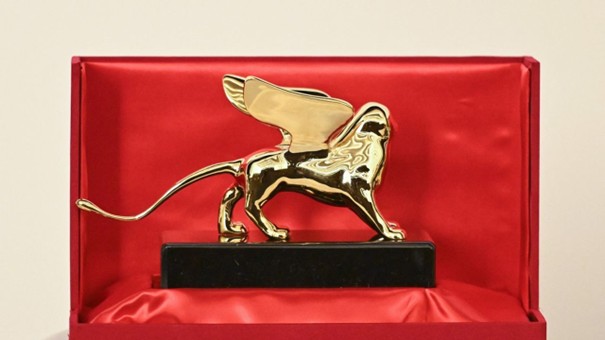
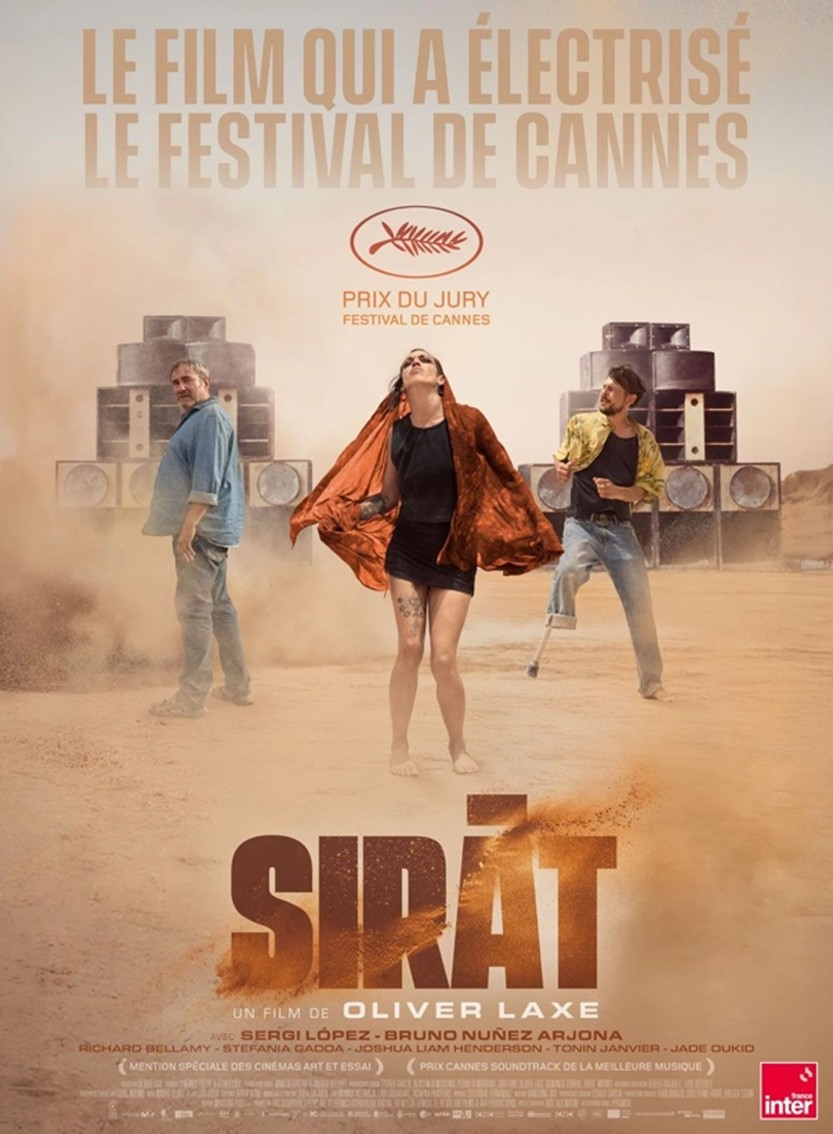
But the competition is only part of the experience — the festival lineup offers much more! Throughout the week, audiences can discover a wide range of additional screenings and three special previews. Highlights include In die Sonne schauen (Sound of Falling) by Mascha Schilinski, winner of the Jury Award at the Cannes Film Festival, andAmrum by Fatih Akin, part of the Cannes Première official selection. The program also features a retrospective of classic films, a collection of short films, and a special section for young audiences, with daytime screenings designed for students and teachers, offering them an exclusive introduction to the world of European cinema.

Activities around the festival

Between screenings, the festival offers a variety of activities and events designed to engage audiences of all ages. Among them is a children’s animation workshop (5/11),  where young participants can explore the art of filmmaking using a Mash Up Table — mixing images and sounds to create their very own short films.

The program also includes a special evening dedicated to student cinema (5/11) featuring short films created by students from the Hamburg Media School and the University of Television and Film Munich (HFF München). The screenings will be followed by a Q&A session with the directors, offering valuable insight into the next generation of German filmmakers.

As part of the Nantado initiative supported by the city of Nantes, Univerciné will host a special screening of Sieger sein (Winners) for middle school students (6ème and 5ème), with the guest appearance of a professional women’s football player from Nantes — a perfect opportunity to combine sport, culture, and cinema.

On the second-to-last evening, the festival spirit continues with a lively DJ set and closing party at the iconic Café Landru, one of Nantes’ most popular venues. Finally, on the last morning, audiences are invited to enjoy a traditional German breakfast, offering a delicious and convivial way to immerse themselves in German culture one last time.

Through these events, Univerciné continues to bring German-speaking culture to life in Nantes, fostering dialogue between professionals, students, and the public, and creating moments of genuine cultural exchange beyond the screen.

Next festivals

If you enjoy this year’s edition of the German Festival, be sure not to miss the upcoming Univerciné festivals later in the school year! From the W.I.S.E. Festival in December to the East Festival in February and the Italian Festival in March, there’s always something captivating to enjoy! 

Each festival is an opportunity not only to discover new European cinemas, but also to broaden your own cinematic horizons, meet passionate film lovers, participate in Q&A sessions with directors, and engage in cultural discussions. Whether you are a student, a cinephile, or simply curious about the world of European cinema, Univerciné offers an unforgettable experience — a chance to explore different cultures, share your enthusiasm, and enjoy the magic of the big screen.

Author: Satine Guitteny

The Nantes-Angers Opera in the face of budget cuts: what future for the performing arts?

An unprecedented fiscal shock

The 2025 school year was marked by the announcement of the 2025 budget, which shook more than one!  A rather austere budget in the face of an ever-growing deficit, it seems that culture has not escaped it. Once it has been put on a diet, it would be interesting to observe the economic consequences at the local level, focusing on the Angers-Nantes opera house. 

Photo of the Graslin Theatre, built in 1787–1788 by Mathurin Crucy © Selbymay

Even if the general budget of the Ministry of Culture remains at a high level, at 4.45 billion euros, and has increased by 30% since 2017, this is hardly enough to meet the many needs of the sector as well as the  important  increase of structural costs. 

And for the performing arts? 

Impacted by the 150 million euros in savings at the Ministry of Culture, the performing arts is facing a 7.8% drop in « Transmission of knowledge and democratisation of culture appropriations”. In addition, there are drastic cuts on the part of local authorities. According to Emmanuel Négrier, a researcher at the CNRS, speaking on Radio Classique, « This decline has very significant effects in terms of economic model but also in terms of employment. And we know to what extent employment in the performing arts is already in a precarious situation. The performing arts remains a structurally loss-making sector. That’s why he needs public money. »

Nearly 7500 jobs are at risk today for the live performance sector alone. We suspect that on a smaller scale, this has significant repercussions, particularly in terms of institutional programming. 

At the local level?

More than 82 million euros in subsidies have been eliminated at the regional level, putting more than 2400 direct cultural jobs in difficulty. 36% of structures fear layoffs, a freeze on recruitment and the end of intermittent contracts for artists and technicians. This weakening affects the entire sector: associations, companies, theatres, festivals and so on. We can only wonder about the change that local authorities will adopt in their relationship with culture. This situation illustrates a major change in the relationship between local authorities and culture. 

What are the concrete consequences for the 2025-2026 programme?

Rising fares coupled with a reduction in performances 

Due to this severe financial shock, the number of curtain levers decreases from 72 to 60, which corresponds to a decrease of 12 performances. At the same time, prices have increased by around 10%: a ticket at the normal rate will go from €75 to €80, while a reduced rate will go from €45 to €52. However, the Opera has insisted on remaining accessible with lower rates than elsewhere.

Some artistic adjustments

Unfortunately, the « Baroque en scène » season, initially planned and dedicated to baroque lyrical works, has been cancelled. In addition, the dance season and some of the choir’s projects have also had to be sacrificed. Behind these brutal decisions is the need to focus on sustainable and economically viable projects. However, the desire to maintain an ambitious and diversified program is reaffirmed: From Cinderella to Othman Louati’s contemporary creation, Solaris, via Offenbach’s Rubinson Crusoe, this season promises to be rich and challenging! Thus, financial precariousness does not necessarily mean a decline in artistic quality. The establishment is a perfect example of this! 

‘No culture, No future’ placard during the 5 December 2024 © ActuaLitté

What way out to maintain survival?

This budget cut sounds the alarm on a system that is not financially autonomous. Is such a dependence on public subsidies viable in the long term? Innovating the functioning of such a system is mandatory: New forms of co-production, pooling of resources, diversification of financing methods, partial digitization of shows? The key is certainly to be found in partnerships and sponsorship of operations, projects, etc. Thus, NAO retains its major partnerships with the Rennes Opera for co-production and with the Orchestre National des Pays de la Loire. A difficult balance to achieve, between financial restrictions and artistic demands. The Nantes-Angers Opera therefore maintains original creations and participatory formats despite the many constraints. 

But what does the future hold in the face of this social pressure, the precariousness of professionals and a scarcity of supply? 

Conclusion: what is the future of cultural policy ?

The crisis at the Nantes-Angers Opera highlights that the future of the performing arts rests on the creativity of the speakers, solid support from public administrations and also a national debate on the importance of culture in our society. A weakened but committed field questions our common ability to support creation, public access to the arts and the dynamism of cultural democracy. Whether in Nantes or Angers, « it is not simply a question of institutional viability, but rather the sustainable future of the performing arts in the regionThis context represents a major challenge for the political economy of the performing arts in the regions: how to balance a limited public budget with the imperative of preserving a diversified cultural proposal, open to all and innovative? The announced budget cuts have resurfaced debates similar to those that emerged during the closure of cultural venues in 2020 with the COVID-19 pandemic. Restricting creation calls into question its necessity for society. And on a larger scale, its usefulness to humans. Is a world without art possible, or even conceivable ? 

Written by Iris Convert

Bibliography:

https://www.radiofrance.fr/franceculture/podcasts/le-point-culture/coupes-budgetaires-des-consequences-catastrophiques-pour-la-culture-6507590
https://www.radiofrance.fr/franceculture/podcasts/le-journal-de-l-eco/le-spectacle-vivant-au-defi-des-coupes-budgetaires-5983962
https://www.radiofrance.fr/franceculture/podcasts/le-point-culture/les-midis-de-culture-le-point-culture-emission-du-mercredi-20-novembre-2024-6156220
https://www.lascene.com/infoscenes/pays-loire-consequences-economiques-disparition-quasi-totale-subventions
https://www.angers.villactu.fr/angers-nantes-opera-devoile-une-programmation-2025-2026-audacieuse-malgre-les-contraintes/


French rap and techno music – Cultural interactions leading to a new sub-genre ?

40 years ago, French rap was an emerging and very underground genre. Today, it  has been dominating the French music scene since the last decade. Indeed, in 2024, the rapper Werenoi – who passed away last May – was the biggest seller of the year, with 276,900 albums sold. Appeared in the 1980s by mimicking the United States, French hip-hop is now one of the most popular music genres in France. Rap music went from an underground to a mainstream genre in about 30 years. Moreover, French rappers can fill in the Stade de France for a concert, as for example Ninho, Jul or PLK recently. 

A man standing on a stage with a microphone © Unsplash

From underground to mainstream

Long viewed as a subculture, French rap is now a genre in its own right. The 2000s were marked by the emergence of gangsta rap, a deliberately brutal genre that often recounts the difficult daily lives of rappers, many of whom come from disadvantaged backgrounds. This image has long been associated with rap and is one of the clichés associated with this musical genre. However, it has been diversifying in recent years. Rap is expanding and diversifying through interaction with other musical genres, particularly techno.

Techno is a genre of electronic music that emerged in the mid-1980s in the United States, around the same time as hip-hop. Originally from Chicago, this genre has spread worldwide and is now very popular. We could even say that techno is the symbol of a certain type of nightlife, such as club nights and wild raves, and nowadays the number of DJs mixing techno is considerable.

Night techno party, dancing, Koh Chang © Thailand, Wikimedia

Two opposite worlds

Thus, this mix of rap and techno may seem strange, even unnatural. Indeed, the two genres have very often been opposed and confronted. These two styles of music do not have much in common, and their audiences are very different. Historically, techno listeners have been a well-off, educated audience, often white. In contrast, rap was initially seen as a socially conscious genre, describing the poverty in suburbs and neighbourhoods, which attracted a more disadvantaged audience, originally from minority groups (African, Arab, etc.). In the 2000s, it would have seemed unthinkable that rap and techno could collaborate and create new sounds. One example is the rapper Rohff, who in 2004, in his song 94, said: ‘Fuck techno, it’s music for drug addicts’ (“Fuck la Techno, c’est de la musique de drogués”).

Rohff Goat © Wikimedia

The emergence of techno rap and frapcore

Twenty years later, the French music scene has changed. Several French rappers now assert their affinity with techno by rapping mainly, if not exclusively, to techno beats. One example is the rapper Winnterzuko, one of the pioneers of this genre in France. This rapper offers rap tracks, but with much more digital sounds that are unique to him, all with a particular techno kick. We can also mention Selug, web7 and Luther, rappers who are emerging at the moment but are starting to gain some notoriety. In these tracks, coupled with techno instrumentals, we also very often find effects on the voice. One example is autotune, a plug-in that allows rappers to sing without hitting any wrong notes, but which gives a slightly ‘robotic’ sound. Autotune needs no introduction and is now mainly used by the most mainstream rappers.

IBM 5100 Winnterzuko:
https://www.youtube.com/watch?v=pBSpAPi5KlE

We have seen that French rap now draws its inspiration from techno styles. On the other hand, techno is seeing the development of a new musical genre, frapcore, a contraction of French rap and hardcore. This genre consists of remixing rap sounds over techno instrumentals. It is a genre much closer to techno, as the main creators of this genre are DJs. This musical trend originated with the Casual Gabberz collective. Created in 2013, this collective made a name for itself on the Parisian club scene by remixing French rap over Gabber-style productions, a subgenre of the hardcore techno movement. Artists such as DJ Von Bikrav and Evil Grimace made a name for themselves with the help of this collective. However, most of these artists have remained on the underground scene. But recently, other French DJs have taken up the frapcore mantle. Indeed, Parisian DJ Urumi has been making a name for herself lately. She has produced two EPs called Rap to Rave, featuring samples from rappers such as Gazo, Aya Nakamura and Ateyaba, all set to hardcore techno instrumentals. Urumi is also a producer but remains within the frapcore genre. She has already collaborated with several rap artists and is planning further collaborations. The DJ has recently gained notoriety and mixes regularly in Paris. Thus, the mix between rap and techno also works the other way around. It is interesting to note that these two movements developed at around the same time. We can also deduce that the phenomenon of these two styles of music coming together is common and reciprocal.

Toki (Gazo Techno Cover) Urumi:
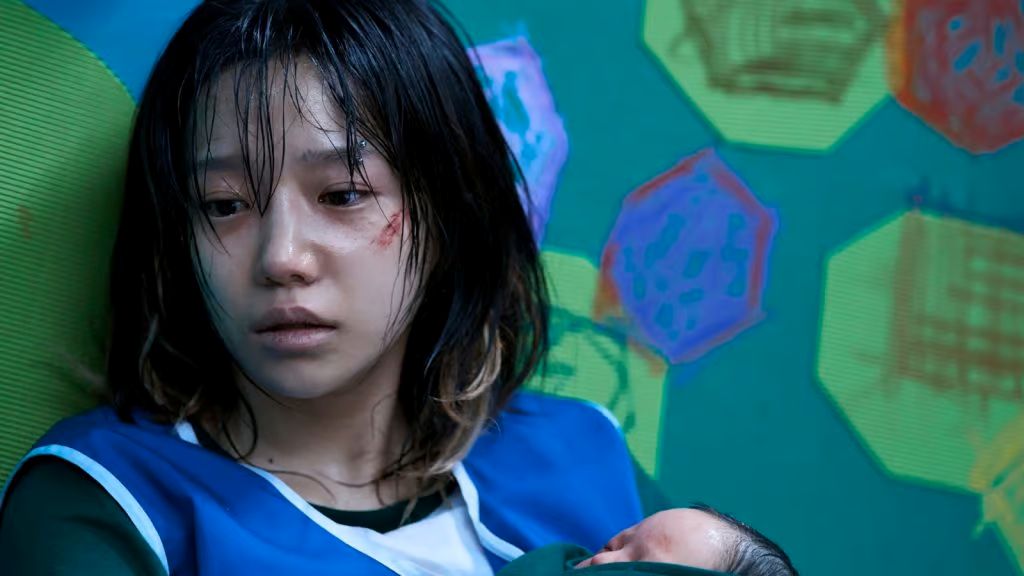
https://www.youtube.com/watch?v=Rll0odr5Ftc&list=RDEM9cUfc5F0hSXAdmskJWVucQ&index=4 

To continue, some rappers have pushed the boundaries even further in terms of blending genres. This is the case, for example, with rapper Zissou, who performs exclusively to hardcore techno beats. Together with his friend Coulure, a producer, he got his start at techno parties. Zissou used to rap his lyrics in his head at these kinds of events. He then realized and decided that he should record his own music by rapping over hardcore techno instrumentals. This results in very fast tracks, so it’s a difficult exercise. For now, Zissou is quite unique in the French rap scene, but we can assume that other artists will follow his example. It is therefore difficult to categorise the rapper’s fans: are they more techno or rap listeners? Here, the boundary is very blurred. This example shows that the interactions between these two genres are multiple and take various, sometimes complex forms. This seems normal to me, as these different genres and sub-genres are relatively young.

A l’abordage Zissou:
https://www.youtube.com/watch?v=RuU5zZZ-wXQ

Towards a mainstream recognition?

So far, the artists we have mentioned are not (yet) mainstream. So we might wonder whether this child of French rap and techno is legitimate and has a future. This year, one event proved that this sub-genre does indeed have a future, as it was brought to the forefront. Last May, rapper Vald released a ‘reloaded’ version of his album Pandemonium, released earlier this year, in collaboration with the producers Todiefor and Vladimir Cauchemar. The artist offered a brand new interpretation of his album, which originally had rap sounds. The tracks were remixed into techno versions, with some even becoming hardcore techno (for example, ‘PROZACZOPIXAN Reloaded’). Such a reinterpretation of an album by a French rap artist is completely unprecedented, even risky. Vald is a rapper who has been well established on the French scene for about 10 years, and suddenly the artist is offering a rewriting of his album that has nothing to do with rap. Personally, I think Vald has delivered an unprecedented performance in the history of French rap. We don’t yet have the perspective to really see how the project has been received, but this promotion of frapcore will most likely help to democratise the genre.

La musique, Dj, Célébration © Rohatsevci Pixabay

Vald was able to test his project this summer during his tour of French-speaking festivals, and reactions were very mixed. Some fans fully embraced this shift to techno for the duration of the project, while others, more critical, fear that the artist is distancing himself from his original genre, French rap. Nevertheless, the artist stated in an interview that he was trying to find a balance between the two versions of his latest project. Vald reassured his fans and did not announce that he was switching to techno music, far from it. The artist is right to try and reinterpret his album with sounds that are foreign to rap. For example, the rapper released a videoclip of his song PROZACZOPIXAN, with one verse from the original song and the other from the “reloaded” version. The duality of the song is perfectly depicted in this clip. On 29 November, the artist will perform at La Défense Arena in Paris, and the concert is already shaping up to be unprecedented. The artist will perform his albums, even the oldest ones, but he will also most certainly play his ‘reloaded’ tracks. The idea of seeing 45,000 people dancing to both rap and hardcore techno while listening to one of the most important rappers of the 2010s would have been unthinkable twenty years ago. This shows that the genre is very rich, constantly evolving, and becoming increasingly diverse.

PROZACZOPIXAN Vald:
https://www.youtube.com/watch?v=qjzD3LkrDSQ

A cultural fusion shaping the future of French music

Thus, to conclude, the mix and the interactions with the other music genres make the rap broader and richer. There are already some rap subgenres such as drill, jersey, new bouyon or new jazz. Maybe some subgenres, as for example frapcore, could one day become a brand new music genre. This is a question of taste and audiences. Today, rap and techno auditors have more in common than they think, as we discussed above. These interactions tend to make French rap even more mainstream. Because it is still a genre mostly listened to by young people. Due to the stereotypes rap carries for 30 years, some people refuse to interest themselves in this rich genre. I know after all, it is a question of personal taste. But these subgenres should be more known. In my opinion, rap music is for everyone, you sometimes just need to dig a little bit to find the genre corresponding to your taste. French rap and techno music keeps being distinct music genres, because they have their own habits, codes and audiences. But I am pretty sure that frapcore will still develop and grow in the coming years. As an opening, rap music also interacts with other music genres such as rock music. The current ambassador of this movement is Post Malone in the United States, but some French rappers (see Youv Dee for example) tend to rap on rock instrumentals. As you probably understood, I really love French rap because of its diversity. Seeing some subgenres like frapcore emerging makes me really enthusiastic about the future evolutions of French rap. I think that the interactions between genres (musically speaking or not) can only make those genres richer. Because after all, culture is always a question of interactions between several points of views.

If you are curious to discover more about frapcore or rap with techno inspiration, here is a short recommendation of songs I like.

  • Web7 – Visages
  • Luther – uSquad
  • Selug – Jdevrais être fier
  • Winnterzuko – IBM500
  • Winnterzuko – Wannacry2
  • Urumi – Toki (Gazo Techno Cover)
  • Zissou – A l’abordage
  • Casual Gabberz – F le 17
  • Vald – RAP RIP (RELOADED)
  • Vald – PROZACZOPIXAN (RELOADED)

Written by Noé Delhommeau

Sources:
https://www.radiofrance.fr/mouv/techno-et-rap-francais-deux-genres-incompatibles-7610976 https://www.youtube.com/watch?v=qqNfk_xR1I0&t=2s

Comu 2025: The Virginian sails into the Graslin Theater

On October 24 and 25, the Graslin Theatre will host, for the very first time, the legendary Comu, Audencia’s annual student musical. This is a huge milestone for the school, as students leave the familiar Theatre of Orvault behind to bring their play 1911 ou La tragédie du Ruban bleu (1911 or The Tragedy of the Blue Ribbon) to one of Nantes’ most iconic stages. For many, it’s not just a show, it is the moment where months of late-night rehearsals, endless brainstorming sessions, and creative chaos finally come to life in front of a real audience.

I had the chance to interview Clément Gourdain, the author and one of the head of the musical, who opened up about what goes into making this ambitious student project a reality. From scriptwriting and choreography to set design and costume planning, Clément shared how much teamwork, creativity, and sheer passion fuel the Comu.

This year, performing at the Graslin Theatre adds an extra layer of excitement and pride. The stage itself feels legendary, and for the students, stepping onto it is both nerve-wracking and thrilling. This year’s Comu promises to be an unforgettable celebration of talent, creativity, and the magic of student life.

Inside and outside of the Graslin Theater in Nantes

The Origin of the project

The project began to take shape last December when Clément and his friend Hugo Foulquier were appointed as the heads and writers of the Comu (musical). Both having acted and sung in the previous year’s production, they drew on their firsthand experience as first-year performers to pinpoint areas that could be improved this time around. The two friends took on this role with seriousness and a desire to create an ambitious project, devoting part of their summer to writing the play and the songs that accompany it. Their prior experience on stage proved invaluable, allowing them to refine the story, enhance the performances, and elevate the overall production for this year’s Comu.

It has now been almost a year since the two friends embarked on this creative project, joined along the way by a third writer, Antoine Royer, who brought a fresh perspective to the development of a second and final version. The writing of the play was also intended to be collaborative, relying in particular on the help of its many coaches to provide feedback and improve the project as it was being written.

The theme was officially unveiled on  October 5th with an exciting & vibrant trailer designed to captivate us with its air of mystery. On the program: a love story, vengeance and a quest for the truth, guaranteed to pique our interest. For context, the play will take place in 1911 on the Virginian, a luxurious ship of an wealthy heir, sailing across the Atlantic. My source revealed that during an intense, closed-door encounter, the audience will meet eight characters with distinct personalities and from different social classes. The encounter and mix of all these different backgrounds and stories will take place against a backdrop of mystery and tragedy, enough to keep us on the edge of our seats for an entire evening. Clément shared that he drew inspiration from the story of the Titanic, as well as from Novecento by Alessandro Baricco, the tragic story of a pianist who had never set foot on land, promising an intense and emotionally charged plot.

2025 edition poster of the Comu
Credit: Comu Audencia

A challenge to be met

This ambitious project is the result of an incredible collective effort,  not only from our talented writers but also from everyone who contributed to bringing this vision to life. In total, 90 students took part in its creation, including 30 coaches and 60 first-year students, all working hand in hand across both the artistic and logistical teams. From the choir and dancers to the set designers, makeup artists, musicians, and communication team, every division played a key role. It’s a true showcase of diverse talents united by the same passion and creativity.

Selecting first-year students is a major challenge because it takes place in early September, which is a really tricky time as you have to capture the attention of new students who are inundated with information. The Comu therefore had to put a lot of effort into communication in order to attract candidates and stand out from other student clubs. Nevertheless, many people took part in the auditions, and some technical departments attracted more people than in previous years, such as the set design department and the newly created production department. It seems that the Comu’s reputation precedes it and attracts more and more people every year.  

Now, whether it’s the second-year students, the coaches who have been with him since last May or the first-year students recruited in September, they have formed a united and motivated team around a common project, and nothing seems to be able to stop them.

Managing so many people under such intense pressure due to tight deadlines was no easy task. Nevertheless, Clément accepted the challenge with great optimism, confident in the passion and determination of his team. For him, communication is the key to successful teamwork. It was essential for him that the progress of each division be in line with the work of the other teams in order to achieve a consistent and uniform result. Although the technical and artistic divisions were very independent in their activities, regular meetings were held to assess the teams’ progress, and joint inter-team training sessions were organized frequently to maintain team spirit. These meetings helped avoid major problems and inconsistencies by redirecting the work of one of the teams when a set, visual identity, or music idea did not appeal to the others. The project was then rethought, and everyone could then go back to work on their own. There was no ego or misplaced pride; it was truly passion and goodwill that guided the project.

Today we are the day before the performance and the stress is mounting. Clément expects tensions to arise due to the pressure, but he is very confident in his team’s ability to resolve any conflicts peacefully and quickly. Everything seems  going smoothly for the teams, who are working harder and harder as the performance date approaches.

A project that brings people together

When I asked Clément what mattered most to him about this project, he immediately spoke about the human aspect, the idea of bringing together passionate and talented people around a shared artistic vision, a common goal. What really stood out from our conversation was the emphasis he placed on cohesion, kindness, and teamwork. For him, this project is not just about putting on a show; it’s about creating an experience by and for first-year students, who are, the beating heart of the production. He explained that the main objective was to offer these students the best possible experience, which he and the other coaches priorities above all else. This experience must blend learning, creativity, and enjoyment. It’s still a student-led project, so good vibes, enthusiasm, and passion are really what keep everything moving forward. That sense of community and shared energy seems to define the spirit of the entire production.

And indeed, the upcoming show promises to be spectacular. Each team has gone above and beyond, pushing their creativity and ingenuity to new heights. Clément told me how impressed and emotional he was when he first saw the set designed by the scenery team and heard the choir’s songs. It all started with a play that he wrote over the summer, and now everything is coming to life and taking shape, it is a real source of pride for him. Also, the communication team, whose work this year has been exceptional, from developing a sharp and thoughtful strategy to designing stunning visual posters, really impressed him. He also highlighted the production team, which is bringing an exciting new feature to the stage: 3D-modeled sets projected as immersive backgrounds, adding a modern, cinematic touch to the performance. Behind the scenes, it’s clear that the atmosphere is one of collaboration, innovation and pure passion. It’s the kind of environment where every participant feels they’re contributing to something meaningful.

Rehearsal of the comu 2025:
Crédit: Clément Gourdain

An ambitious project with a big vision

This year’s musical is shaping up to be nothing short of spectacular. The team is more motivated than ever and has poured heart and soul into bringing this ambitious project to life. From the outset, the goal under the direction of Clément and Hugo was clear, to dream big and push the boundaries of what the Comu has done before.  No more hours of travel to the Orvault theater, no more crowded shuttles with poor organization. This year, the Comu is taking place in the center of Nantes. For this edition, the team has chosen to perform on one of Nantes’ most prestigious stages: the legendary Théâtre Graslin. With 780 seats compared to 509 in previous years, this represents a significant leap forward and an exciting challenge. This isn’t just a student show anymore, it’s an event designed to reach beyond Audencia and invite the wider Nantes community to share in the experience. Thus this years the Comu marks a turning point, driven by a quest for prestige and recognition.

Nevertheless, a dream of such magnitude comes at a price, and so does the Graslin theater stage. It would be truly incredible for the school if this theater became Audencia’s new stronghold, but first this new edition would have to achieve the feat of selling all 700 seats. A bet that almost paid off, as Friday night is already a sell-out.

So don’t hesitate, get your tickets, there are still a few seats left on Saturday,  and come support and discover the passion and creativity of Audencia’s students. Board a ship bound for America and let yourself be swept away by the mystery and emotion of the story that will transport you back to 1911 and the heart of an unforgettable adventure.

Comu 2025 logo
credit Comu Audencia

Link to the comu trailer: https://www.facebook.com/share/v/1Fb6iHqqP4/

Buy your ticket: La Comu 2025 – BDA Audencia

Source: interview of Clément Gourdain, head and writer of the comu 2025

Author: Quiterie GALLIEN

Can raves be sustainable ? Green innovation and contradictions in the electronic music scene

Picture Credit: Horst Arts & Music Festival

Electronic music has become one of the most influential cultural movements of our time. From massive festivals like Tomorrowland to small underground free parties, it brings together people from every background to share sound, energy, and freedom. But behind the lights, the bass, and the celebration, one question is becoming increasingly urgent: can this culture be sustainable?
The electronic scene covers very different realities. Large commercial events operate like full-scale entertainment industries, with sponsors, logistics, and huge energy demands. At the other end of the spectrum, independent collectives and free parties follow a DIY philosophy, often with limited means but stronger community values. Their approaches to environmental responsibility vary widely—and so do their possibilities for action.
As sustainability becomes a central topic in the cultural sector, the electronic world is starting to rethink its impact. Some actors experiment with green innovation, others focus on reducing waste or localizing their events. Together, they show that the question is not only about reducing carbon emissions but about reimagining how we experience music and community in a changing world.

Many realities : the complex ecosystem of electronic music

To speak of “the electronic scene” is to simplify a very fragmented world. On one end of the spectrum stand the giants: Tomorrowland in Belgium, Ultra in Miami or Creamfields in the UK massive productions with hundreds of thousands of visitors and budgets that rival those of major sporting events. These festivals rely on private sponsors, complex logistics, and staggering energy consumption. The average large European festival produces around 2.3 kg of waste per person per day and emits between 250 and 500 tons of CO₂ across a single weekend, according to the European Green Festival Report.
Behind the visual spectacle – laser shows, pyrotechnics and LED stages – the ecological footprint is enormous. Transport alone represents 60 to 80% of total emissions, as audiences fly in from around the world. While some festivals like Tomorrowland now offer “Global Journey” train packages to reduce air travel, such initiatives remain marginal compared to the scale of the event. At the opposite end free parties and independent collectives function with completely different values. These events are self-organized, often on borrowed land or in temporary urban spaces. They rely on volunteer labor, borrowed materials and local networks rather than corporate sponsors. In environmental terms, their impact is small – but not systematically sustainable. Lack of access to recycling, electricity and waste management can sometimes turn into logistical challenges. Yet these gatherings remain essential as spaces of autonomy where those ecological values are lived and not « branded ».
Between these poles lies a wide middle ground: small and mid-sized clubs, city festivals and community events that give to the European electronic culture its identity. In Nantes, the club Macadam has built a reputation not only for its adventurous programming but also for its community-driven ethics/values (care for the neighborhood, noise control and responsible energy use). In Brussels Horst Arts & Music Festival transforms a former military site into a temporary village mixing art, architecture and sound, while reusing materials from previous editions and promoting local transport. In Lyon, Nuits Sonores collaborates with the city’s transit system to encourage public transport, limits disposable materials and tries to implement low-energy lighting setups.
This diversity makes clear that there is no single model for a “green rave.” What counts as sustainability depends on context : namely the financial capacity, local regulations and cultural values. A self organized free party in the woods and a city festival like Nuits Sonores face completely different constraints. Understanding sustainability in electronic culture means accepting this plurality of realities.

Picture Credit: Le Sucre Club (Lyon)

Green innovation across contrasting worlds

If sustainability is now a popular expression in the cultural sector, the electronic scene is learning to translate it into action with important results. Some festivals adopt ambitious green programs ; others use it as a marketing tool. Between sincere commitment and greenwashing, the « dancefloor » becomes kind of a laboratory for testing what ecological responsibility can mean in practice.
Big events like Horst and DGTL (in Amsterdam) are often presented as pioneers of sustainable festival design. DGTL aims to become the world’s first fully circular festival : it recycles 100% of its waste, bans single-use plastic and powers stages with biofuel generators. In 2022, it claimed to have achieved “climate neutrality” by offsetting 241 tons of CO₂ through verified local projects. Similarly, Nuits Sonores reduces energy consumption and collaborates with local suppliers, setting this way an example for urban festivals.
Yet the contradiction remains. These large events still depend on mass tourism and consumption : air travel, hotel stays, food trucks and branded merchandise. Sustainability initiatives, while real, exist within an industrial model that promotes growth and expansion. Critics question whether such festivals can ever be truly “green” without rethinking the logic of scale itself.
Some, like Tomorrowland, have begun investing in solar energy and water recycling, but the festival still gathers 400,000 people annually – a number inherently contradictory with sustainability goals. Here, ecological measures often serve as symbolic gestures, meant to reassure sponsors and audiences rather than transform the model.
Smaller clubs and independent collectives, meanwhile, often pursue ecological responsibility in quieter and more practical ways. At Macadam in Nantes, sustainability means moderation : energy-efficient sound systems, reduced lighting, bike-friendly access. In Belgium, Abrupt Festival and Horst emphasize short supply chains and local engagement, using art installations built from reclaimed materials. In Berlin, collectives such as About Blank and ://about party experiment with permaculture gardens, recycling workshops, and collaborations with green NGOs.
These efforts rarely appear in glossy sustainability reports. They stem instead from shared values such as solidarity and respect for the environment. Their approach is less about offsetting carbon and more about creating community resilience. Yet financial limitations remain a major barrier : renewable energy setups and proper waste management are expensive, and small venues often lack institutional support.
Despite their fragility, these independent initiatives represent the most authentic expression of sustainable culture in electronic music, because they connect ecology with social values rather than treating it as a marketing advantage.

The contrast between the mega-festival model and the local & independent scene highlights the paradox: the events that most need sustainability are those least capable of achieving it. Large festivals can afford technical solutions but struggle to reduce their scale. Small collectives embody low-impact ideals but lack the means to measure or formalize their efforts. Yet these two worlds are not completely opposed and could even be seen as complementary. Big festivals can develop new technologies and influence behavior on a massive scale / while smaller ones preserve authenticity and demonstrate what community-based sustainability can look like. The challenge could lie in building bridges between them ?

Challenges and perspectives of a sustainable scene

For all the progress made, sustainability in electronic music still faces deep structural barriers. Large festivals depend on international tourism and sponsorship. Smaller collectives lack stable funding and infrastructure. Many venues rent spaces that don’t allow long-term ecological investments.
Beyond logistics we could consider that there is also a cultural tension. And thus because the spirit of electronic music has always been about freedom, spontaneity (and sometimes excess) – values that can seem incompatible with moderation or regulation. Meanwhile not all actors make an effort. Some commercial « mega-events » continue to prioritize spectacle and profit, producing mountains of waste and consuming enormous amounts of energy. Others engage in symbolic greenwashing : planting a few trees while flying in dozens of headliners by private jet. The disparity between those who innovate and those who ignore the issue remains striking.
The most promising path forward lies in collaboration. Partnerships between cities, festivals and collectives could help share resources and share best practices. Amsterdam’s Green Deal for Circular Festivals (which unites 20 major European events including DGTL and Roskilde for example) shows how collective frameworks can push the whole sector toward measurable goals.
Technology also offers new tools : digital ticketing systems that calculate carbon footprints, energy monitoring apps or transport solutions that encourage train travel. Public institutions can play a key role by offering grants and expertise to smaller clubs experimenting with sustainable practices.
Sustainability in electronic music is not just about reducing emissions – it’s really about redefining what celebration means in the 21st century. The dancefloor can be more than a space of escape ; it can be a space of awareness, where joy and responsibility coexist. The electronic scene as a laboratory for change
Electronic music is one of the most powerful cultural forces today, capable of uniting millions under the same rhythm. Yet it is also a fragmented world, from the mainstages of Tomorrowland to the fields of free parties. Sustainability in this context cannot follow a single model. What works for DGTL or Horst will never be the same for a collective in Nantes or a warehouse rave in Berlin. The diversity of the scene is both its challenge and its strength. It forces us to accept that there is no one solution, only a diversity of approaches influenced by local realities. The future of « green raving » will depend on cooperation : between institutions and collectives, between artists and audiences, between ideals and practical limits.
If the culture that once revolutionized nightlife can now reinvent the way we think about sustainability, then perhaps the electronic scene can do more than just make us dance and perhaps help us imagine new ways of living together on a fragile planet.

Sources :

  • European Green Festival Report. (2022). Environmental Impact of Festivals in Europe.
    https://yourope.org/know-how/agf-report-new-insight-into-festival-carbon-footprint
  • Green Deal Circular Festivals. (2023). European Commission Report.
    https://circulareconomy.europa.eu/platform/en/good-practices/green-deal-circular-festivalsstriving-
    circular-and-climate-neutral-festival-industry
  • DGTL Circular Report. (2023). DGTL Amsterdam Official Sustainability Report.
    https://dgtl-festival.com/en/sustainability-resources
  • Nuits Sonores. (2024). Our Commitments to Sustainability.
    https://nuits-sonores.com/en/nuits-sonores-durables-et-solidaire
  • Horst Arts & Music Festival. (2024). Festival Sustainability Overview.
    https://www.horstartsandmusic.com
  • The Ransom Note. (2024). Horst 2025: Leading the Way for Sustainable Festivals.
    https://www.theransomnote.com/music/reviews/horst-2025-leading-the-way-for-newsustainable-
    independent-festivals
  • We Are Europe. (2023). Club Stories: Macadam, Nantes.
    https://weare-europe.eu/stories/macadam-nantes
  • Resident Advisor. (2019). What can dance music do about the climate crisis?
    https://fr.ra.co/features/3476

Author : Louise DOYEN