Back in 2020, David Fincher released Mank, a black-and-white film about the screenwriter behind Citizen Kane. At a time when Marvel movies were dominating the bow-office, it was the kind of project that Hollywood had increasingly become reluctant to finance: expensive, unconventional… It is made by an acclaimed director, but unlikely to appeal equally to every segment of the audience. Netflix still provided the resources to bring it to life. Yet, despite its ten Oscar nominations, the film received only a release in a limited amount of US theaters before becoming available to subscribers on their TV, laptops and phones.
For some, this was a reasonable compromise. Without Netflix, Mank might never have existed. For others, it illustrated a growing contradiction in the entertainment industry. Streaming platforms are increasingly willing to finance ambitious films, work with some of the world’s greatest directors and compete for the most prestigiousawards. But when it comes to releasing these films in cinemas, their enthusiasm often seems considerably more limited.

Netflix’s Mank by David Fincher
The question is not whether streaming platforms can produce great cinema. They clearly can, and they already did. Nor is it whether audiences should be allowed to watch films at home. Of course they should. The real question is why companies that invest millions in filmmaking are so reluctant to let their films experience the place for which cinema was originally designed: the cinema itself.
From the cinema to the subscription
Founded in 1997, Netflix began as a DVD-rental business before becoming one of the world’s most influential streaming services. Its push into original programming began in earnest with House of Cards in 2013. Instead of depending on Hollywood studios for content, Netflix could now invest directly in its own productions, control their distribution and release them to subscribers in numerous countries at once. Netflix, Amazon and Apple have since become major producers, attracting established filmmakers and challenging the traditional studio system.
But their economic logic is fundamentally different from a studio’s. A traditional studio finances a film, releases it in cinemas, collects a share of ticket revenue, then exploits it through digital rentals, television licensing and streaming. Each window is a source of income, and a successful theatrical release also generates publicity, awards recognition and demand for its distribution afterwards. The studio seeks to maximise the value of each film across several channels.
Netflix’s most important commercial relationship is the one with its subscribers. An original film can be valuable even if it sells no cinema tickets, provided it attracts new subscribers, reduces cancellations or keeps existing customers engaged. Netflix seeks to maximise the value of the subscription itself.
Everything that follows derives from this distinction. The two models are not mutually exclusive: Netflix can release a film in cinemas and then make it available to subscribers. But a theatrical release means negotiating with exhibitors and creating a period during which the film is unavailable to the platform’s own customers. For a business whose main product is immediate access, that delay looks like a cost. The cinema is not Netflix’s natural first market. It is one channel among several, and sometimes one that competes with the platform’s own model.
When great directors become streaming assets
David Fincher is a revealing example. After directing House of Cards and Mindhunter for Netflix, he made Mank and then The Killer. He is now directing The Further miss-adventures of Cliff Booth, written by Quentin Tarantino himself, and starring none other than Brad Pitt. The movie will only receive a theatrical release in US IMAX rooms before arriving on the platform. Compared with the wide rollout a major studio would seek for a film with such renowned casting and production, the cinema release remains really modest.
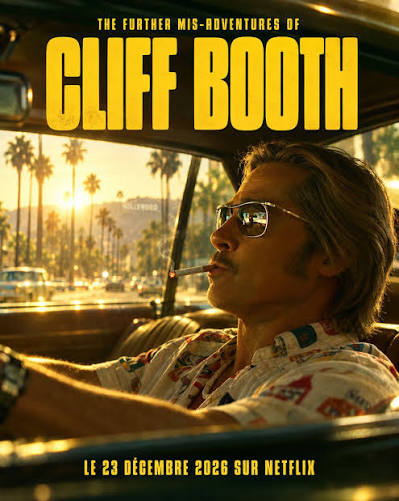
French poster for Netflix’s The further mis-adventures of Cliff Booth by David Fincher
The arrangement suits Netflix. A filmmaker of Fincher’s stature brings prestige, awards attention and another reason to subscribe.
His reputation becomes an asset of the platform itself.
Fincher is not alone. Alfonso Cuarón’s Roma, Martin Scorsese’s The Irishman, Jane Campion’s The Power of the Dog and Guillermo del Toro’s Pinocchio all show Netflix’s willingness to finance ambitious filmmaking, and several received theatrical screenings and major awards recognition. So the issue is not that Netflix absolutely refuses cinemas. It is that theatrical distribution is treated as a selective prestige and promotional opportunity, not as an essential part of a film’s commercial life.
The economics of keeping films at home
At first glance, a limited theatrical release looks irrational. Why spend tens or hundreds of millions on a film and then restrict how many people can see it on the big screen?
Because a studio spending $80 million on production and $30 million on marketing needs ticket sales, premium video-on-demand and licensing to recover its investment, whereas streaming platforms do not need each film to pay for itself at the box office. A production contributes to the perceived value of an entire catalogue.
The difficulty is that this contribution is hard to isolate. If a subscriber watches The Irishman, is it because of Scorsese’s huge reputation, the marketing, the convenience, or simply because they already pay for Netflix? Would they have cancelled without it? Netflix knows how many people watched a film and for how long, but not how many subscriptions it independently created or retained. That makes the value of a single production far less transparent than a box-office result.
This matters because streaming companies must allocate enormous budgets efficiently. If a film attracts attention but does little for retention, executives have reason not to repeat it. And skipping a wide theatrical release removes a visible commercial signal: whether audiences will pay, individually, to see the film. Box office is not a measure of artistic quality, but it shows that people valued a film enough to make a separate purchase.
The criteria change accordingly. Instead of asking whether a film can sustain a theatrical career, executives ask whether it can justify its place in the catalogue. That is not necessarily a bad business decision. It is simply a different one, with different consequences for cinema.
A theatrical release creates value that goes beyond ticket sales
It builds an audience. A cinema launch generates reviews, interviews, press coverage and word of mouth, and can turn a film into a cultural event instead of a title on a streaming homepage. On a platform, thousands of titles compete on one screen, ranked by algorithms and commercial priorities, and a new release can disappear beneath the next wave within days. A film can be technically available to millions of subscribers and still be invisible: it can win awards, accumulate viewing hours and vanish from public conversation within weeks. Cinemas do not guarantee an audience but they give every movie an additional chance to find one gradually, through a visibility that does not depend on a private company’s recommendation system.
It sustains an ecosystem. Cinemas employ staff, bring audiences into city centres and support surrounding businesses. Independent cinemas depend on a varied program of smaller productions, international films, documentaries and first features. Not every film needs a nationwide release; some suit a handful of specialist cinemas or begin at festivals. If theatrical releases concentrate on a few blockbusters while ambitious mid-budget productions go almost exclusively to streaming, the industry loses part of the infrastructure that lets different kinds of films coexist.
It offers an experience. A large screen, a carefully designed sound environment and a shared audience change how a film is felt: a comedy is funnier when a room reacts together, a suspense sequence more intense when strangers share the same uncertainty. Watching at home has its own advantages: it is cheaper, more convenient and accessible to people far from cinemas, and it is not inherently inferior. The problem arises when skipping cinemas is driven less by audience preference than by the commercial priorities of the company controlling distribution. Audiences then never get to choose, and convenience becomes the framework in which every other option is judged.
This is where the word content matters. It describes whatever fills a catalogue, holds attention and can be optimized against commercial objectives. Cinema has always been both an industry and an art form. Hollywood has always pursued profit, and a streaming exclusive is not automatically lesser art. The risk is that the objectives of distribution come to outweigh the conditions that let cinema flourish, and that the theatrical experience becomes a privilege reserved for franchises and directors whose names guarantee a return.
The Warner Bros. Discovery example
Netflix’s acquisition of Warner Bros. threatens Paramount
The debate became a hot button issue during Netflix’s pursuit of Warner Bros. Discovery. In late 2025 and early 2026, Netflix pursued a transaction involving Warner Bros. Discovery’s film and television studios and streaming operations, raising an immediate question: what would happen to one of Hollywood’s most prominent and historical theatrical distributors if it was bought by a company whose core business was streaming?
Netflix argued the deal could create value for audiences, creators and the wider industry, and sought to address concerns about cinemas. In early 2026, co-CEO Ted Sarandos indicated that Netflix would commit to a 45-day theatrical window for Warner Bros. films. A window sets how long a film remains exclusive to cinemas before reaching other channels, and 45 days would have been a clearer commitment than the limited releases associated with many Netflix originals.
Yet a promise about windows does not settle everything. How many films would get wide releases? How much would be spent on theatrical marketing? Would smaller productions receive the same support as franchises? The concern was not that Netflix would close cinemas overnight, but that the priorities of a subscription platform might gradually reshape the decisions of a major studio.
In the end, the deal never became that test. In February 2026, Warner Bros. Discovery determined that Paramount Skydance’s revised proposal was superior. Yet the episode remains revealing. For decades, the theatrical release was the foundation of the Hollywood business model. Today its place is uncertain enough that it can become a negotiating point in a multibillion-dollar transaction.
The consequences for filmmakers and cinema workers
For established filmmakers, platforms offer financing, creative freedom and access to international audiences. A director whocannot secure a traditional studio deal may find a platform willing to back a project conventional executives consider too risky, or not worthy of a theatrical release. Streaming has helped finance films that might otherwise never have been made.
But financing is not the same as a sustainable theatrical career. A film can be completed, released worldwide and well reviewed without creating meaningful work across the distribution and exhibition network, from cinemas and independent distributors to specialist publicists. The effect is also uneven. Del Toro and Scorsese can attract attention wherever their next film appear, but less established directors depend far more on theatrical reviews, festival screenings and box-office results to show that their work finds an audience, and to secure the next project.
When access to financing and access to audiences are controlled by the same few companies, bargaining power shifts away from filmmakers. The problem is not that platforms will deliberately suppress diversity, but that their commercial incentives favor certain kinds of content and make others harder to justify.
Conclusion : a film deserves more than a place on a homepage
Streaming has opened opportunities for filmmakers and given audiences access to works that might otherwise have remained out of reach. The old system was never free of commercial pressure either. The answer is neither to force every production into a nationwide release nor to demand that platforms abandon the business models that made their investments possible. It is to keep several ways for films to find audiences and for filmmakers to build careers.
A 45-day window, like the one Netflix discussed for Warner Bros., could help. But it is only part of the answer: the number of films released, the marketing behind them and the diversity of what reaches cinemas matter just as much. Success should not bejudged only by tickets sold, hours viewed or subscribers retained. Those figures describe commercial performance, not cultural value. Platforms can finance films, own their rights and decide how prominently they appear. What they cannot guarantee is that a film will mean something to an audience. That is why the cinema still matters: some films are worth leaving the house for.
Written by Thomas