While music has never been easier to access, vinyl records continue to stand out as something special. More vinyl were sold than CDs in 2024 in France, a situation that would have been unthinkable twenty years earlier. According to the 2025 Global Music Report published by the IFPI (International Federation of the Phonographic Industry), revenues from CDs and music videos fell by 6.1% and 15.5% respectively in 2024, while those from vinyl increased by 4.6%, marking its remarkable 18th consecutive year of growth. Despite the arrival of CDs in the 1980s and more recently streaming platforms, many people remain loyal to this medium. How can this phenomenon be explained?
Long relegated to the status of a technological relic, vinyl is now at the heart of a growing market, driven by a cultural, aesthetic, and symbolic demand. But behind this popularity lie complex industrial, economic, and environmental realities. To understand this phenomenon, we need to look back at the history of vinyl, analyze its technology, its current place in the music industry, and the challenges it poses in terms of sustainable development.
The origins of vinyl: History and evolution of music media
The history of vinyl is part of the broader history of sound recording, which is closely linked to the history of motion pictures and the revolution in communication. Music, which had long been reserved for the wealthy, gradually became a mass-produced, affordable sound recording. Recorded music democratized access to entertainment and turned good music into an accessible consumer good.
It all started with the phonograph invented by Thomas Edison in 1877, marking the start of the revolution of recorded sound technology. Edison knew how to turn sound waves into mechanical movement and proved that the storage and recovery of sound could be done without electricity.
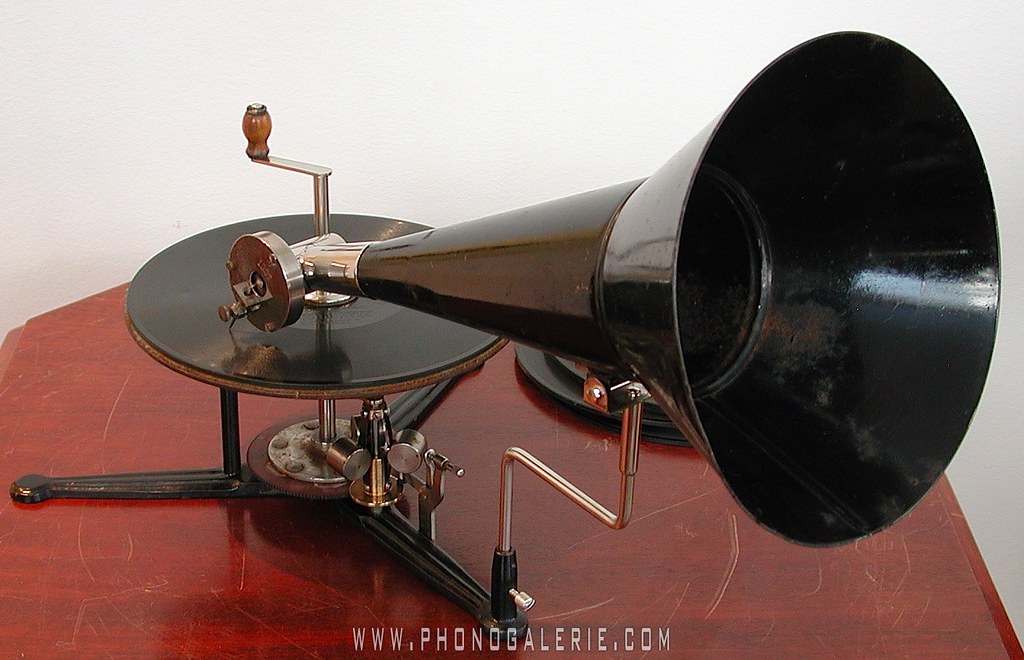
Emile Berliner then disclosed the mechanical « gramophone » in 1888. Where before him, Edison and Tainter had employed a vertical (up and down) cut in recording sound waves onto a cylinder, Berliner used a lateral cut onto a disc, where the stylus moved from side to side. This was the era of the 78-rpm shellac (a resin) disc. RPM means Revolutions Per Minute, indicating the speed at which the record rotates on a turntable. But shellac discs were fragile and their duration varied between three to five minutes per side, depending on the disc size. From the 1920s onwards, 78-rpm records became more widespread as they were played on jukeboxes (in bars, restaurants, hotels, shops, etc.) and on the radio. The gramophone was gradually replaced by the record player.
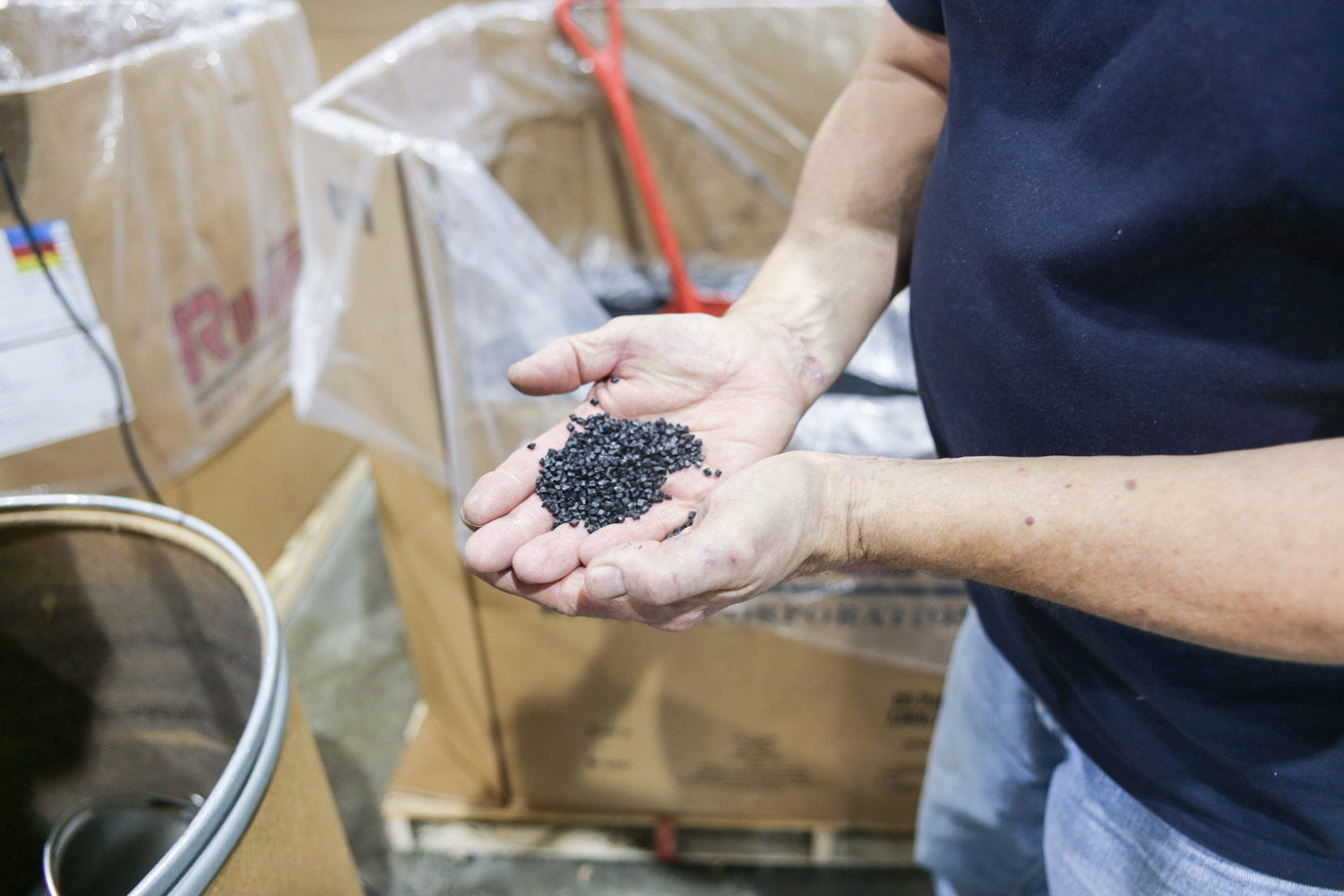
But shellac supplies became extremely limited during and after World War II, so records started to be pressed in polyvinyl chloride (PVC), commonly named vinyl. This material is more flexible, more resistant, and allows for finer grooves to be engraved. In 1948, Columbia Records launched the first vinyl record in 33 ⅓ rpm format, which would revolutionize the music industry. Vinyl came in several different types (45 or 33 rpm) and formats (18, 25, and 30 cm), and stood out for its better, more detailed sound and longer track length. It could now record up to 22 minutes of music per side, surpassing 78-rpm shellac records by far. The 33 RPM vinyl, often called an “LP” (Long Play), quickly became the standard for albums, and the 45-rpm vinyl the standard for singles. They both enjoyed their golden age from the 1950s to the 1980s. In 1978, vinyl records accounted for over 70% of global music industry revenues. Far from being just a dominant format, vinyl structured the entire ecosystem of music production, distribution and listening practices.
The album then emerges as a coherent artistic statement, designed to be experienced as a whole. Track sequencing, side length and even the pauses between songs play a role in shaping the listener’s experience. Album covers become iconic and are often created by well-known artists. Covers from Pink Floyd’s album The Dark Side of the Moon or The Beatles’ Abbey Road have become cultural landmarks, marking whole generations visually and musically.
However, playing vinyl has its flaws. Playback problems causing distortion, friction noise and tracking errors are fairly common.
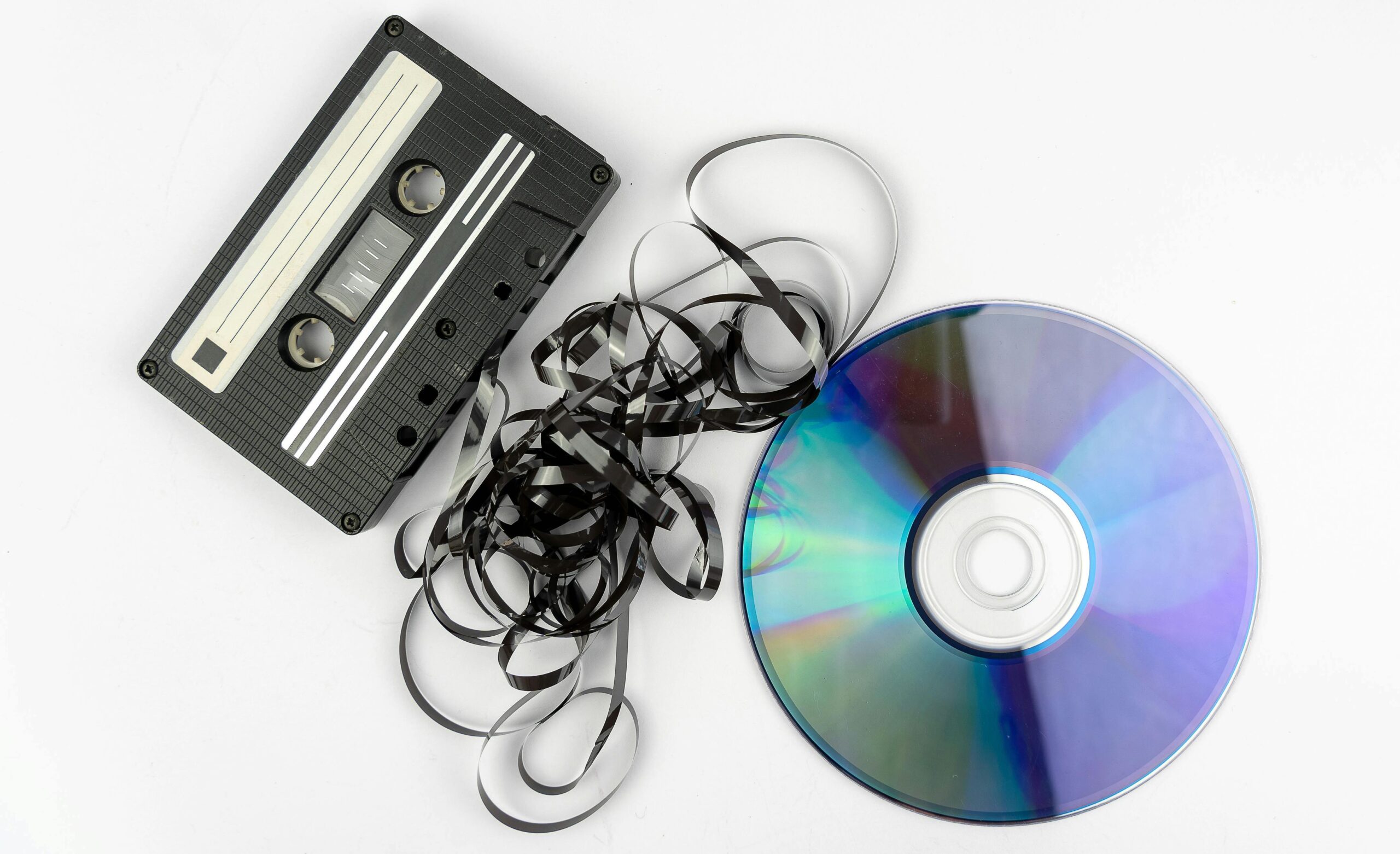
The 1970s marked a turning point, as magnetic tape began to displace the revolving disc as the standard recording medium. The cassette tape was invented by Philips in 1963 and appealed thanks to its portability and recording capacity. It foreshadowed the end of the vinyl’s hegemony.
A decade later came the digital era with the commercial arrival of the compact disc (CD) in 1982, also introduced by Philips. Vinyl was rapidly losing market share, and by the early 1990s the CD had established itself as the dominant format. In the 1990s and the 2000s, vinyl were not as produced anymore. It became a niche object aimed at audiophiles. But some people thought the CD sounded « robotic » because it erased the imperfections that could be heard with vinyl.
Vinyl seemed to have been buried by the arrival of the MP3 format, followed by music streaming platforms in the 2000s. Music became intangible, instantly accessible, detached from any physical medium. By the end of the 2000s, some major retailers had stopped selling vinyl altogether. Yet, there is an important revival of vinyl today. But how does this technology work exactly?
A simple yet precise technology
A vinyl operates through the mechanical reading of sound. Sound information is engraved on the surface of the record in the form of microscopic variations, which correspond to the sound waves of the music, spiraling from the outside to the inside of the record. The irregularities in the grooves are reproduced in the form of an electrical signal and transmitted to an amplification system for our ears to hear. There is therefore no digital conversion, which gives it its distinctive sound, often described as “warmer” and richer than digital sound.
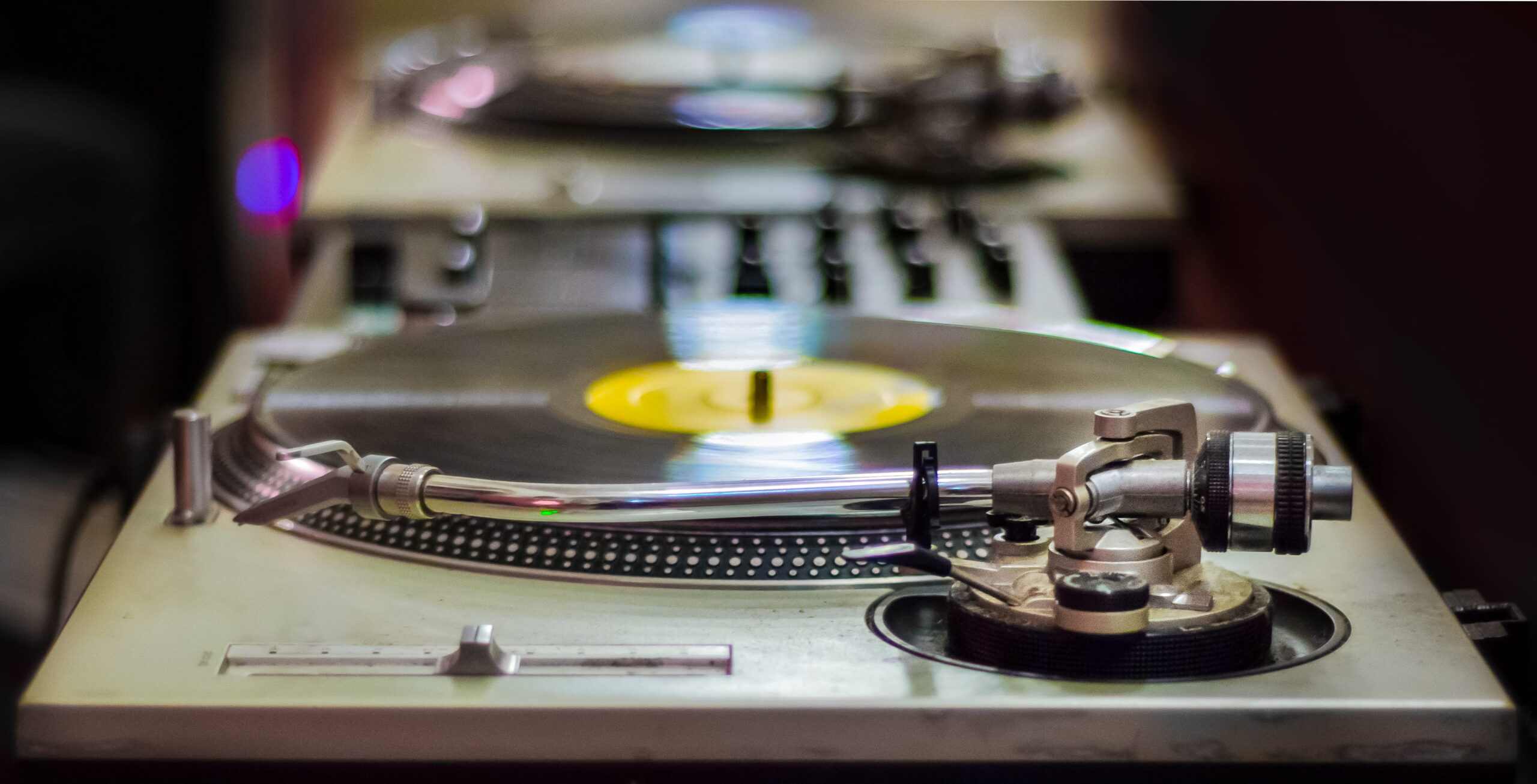
To play it, you need a record player. The vinyl record is placed on a turntable that spins at a constant speed: the famous 33 or 45 rpm. The tonearm, equipped with a stylus (a needle), is placed on the vinyl record. As the record spins, the stylus moves through the grooves of the vinyl and guides the tonearm.
Now let’s see how a vinyl is produced: It is a long industrial process.
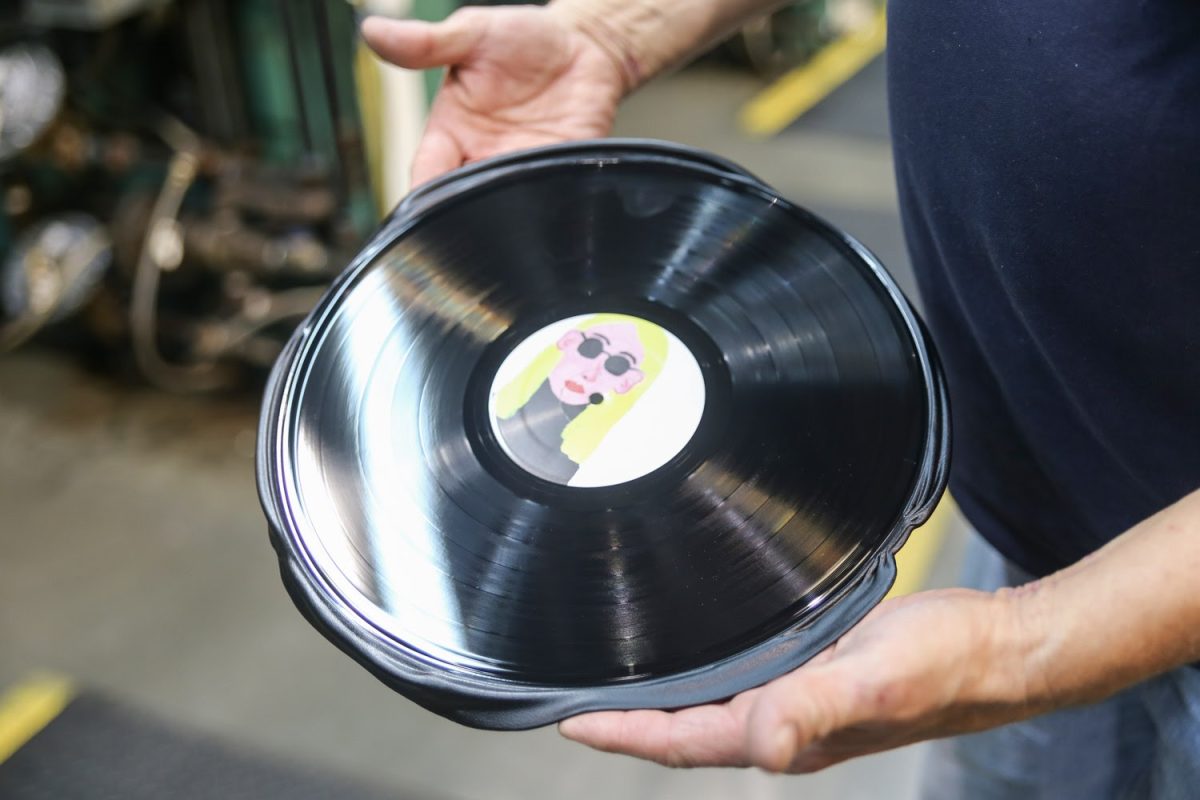
A specific mastering is needed in order to adapt the music to the constraints of the medium. A master disc is then engraved onto a medium called “lacquer.”. It is then coated with metal by electrolysis to create a negative form, from which molds are produced. To create a vinyl, heated PVC is pressed between two molds, forming the disc. After cooling, the edges are cut, the disc is checked and assembled with its sleeve.
What’s so special about vinyl compared to other media?
Listening to vinyl offers a unique experience that sets it apart from other formats. Its superior audio quality is often highlighted, and its sound is perceived as « warmer » and more profound than digital, with slightly more nuance (if you can hear it).
But vinyl isn’t just about sound; It imposes a radically different relationship with time and listening. You choose a record, handle it with care, listen to an entire side before turning it over. It requires attentive and immersive listening, two things we lack with modern ways of listening to music.
The experience is indeed extremely different on streaming platforms, where we listen to the same music everybody listens to. Algorithms always push the same songs or types of song forward, and more often than not AI generated music or already established artists. By going to your local record store, you regain control over what you listen to.
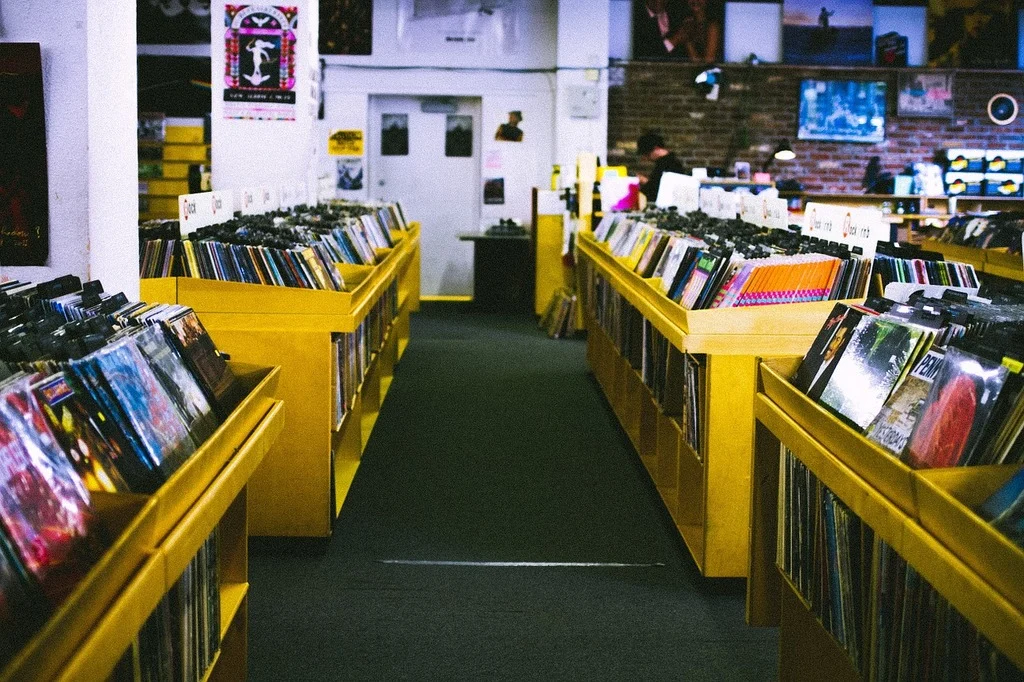
And looking through vinyl still allows for exploration: It is the occasion to listen to a whole album from start to finish and discover new songs from a known artist for example. Songs you would never have found on streaming platforms because they don’t suggest them. Browsing through a record store is also a way to spark curiosity and discover new genres — especially by asking for advice to the salesperson — something algorithms don’t dare to do.
In an era dominated by streaming, which favors playlists and algorithms, vinyl puts the album back at the center. It encourages you to slow down and fully engage with listening to a work from start to finish.
A special relationship to the object: A work of art
Vinyl’s attraction lies not only in the sound quality, but in how it exists as an object. The oversized sleeve allows artwork to be experienced fully and liner notes, often detailed, further enhance the listening experience by providing context for the music.
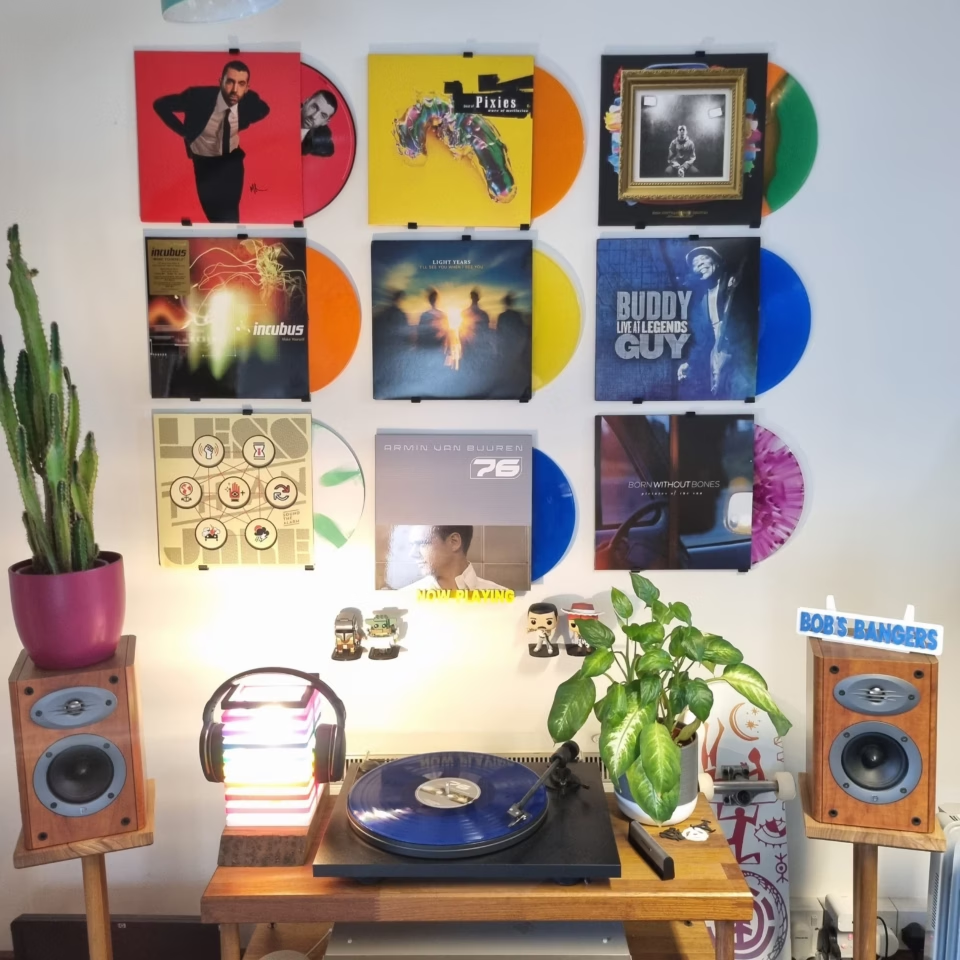
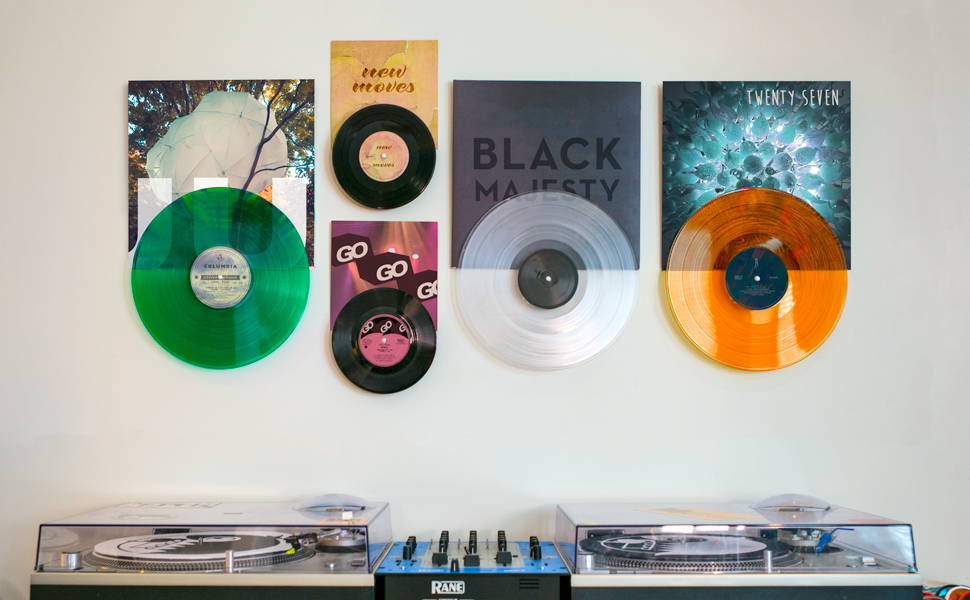
The record becomes a true collectible more than something you listen to. Some people only buy them for their color or for the cover art and not to use them for their main purpose. Vinyl has become a design object, a decoration that one displays in their living room on a trendy stand or on the wall to showcase their best finds.
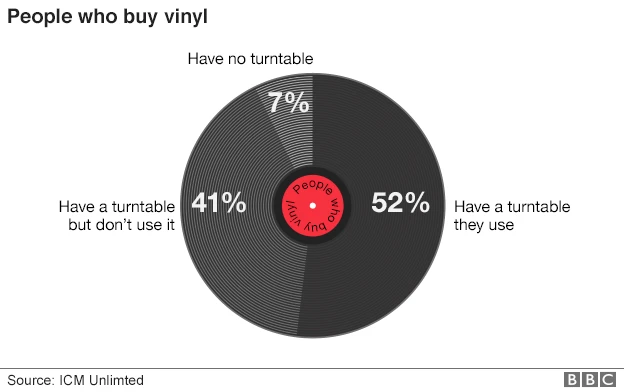
According to an ICM study commissioned by the BBC, 7% of the vinyl buyers surveyed say they do not even own a turntable. Student Jordan Katende told BBC News: « I have vinyl in my room but it’s more for decor. I don’t actually play them. It gives me the old-school vibe. That’s what vinyl’s all about ». The « old-school vibe » described here perfectly illustrates one of the reasons why people buy vinyl today: it brings back nostalgia for older days.
The second-hand market is indeed booming. Specialist record stores, flea markets and online platforms allow enthusiasts to find hidden gems. This “vinyl hunt” is a true pleasure in itself for collectors. Labels have understood this and now offer higher-quality pressings: 180-gram vinyl, remastered editions, limited editions, special packaging, etc. These premium editions meet a growing demand for quality and exclusivity.
A strong emotional dimension is thus at play when enthusiasts collect records. They spend time looking for them, keep them for a while, pass them on to future generations and collectors sometimes. None of that is as strong with other media.
Listening to a vinyl also involves a whole ritual: looking through one’s collection and carefully choosing which record to play, taking the record out of its sleeve, cleaning it gently, positioning the tone arm… This series of gestures creates a special moment, a pause in our hyperconnected daily lives, far from the constant change of song encouraged by streaming. Some people feel more connected to the music when handling a vinyl for that reason.
A market that has been revived in recent years
Since the 2010s, vinyl has been enjoying a resurgence in popularity among the public, conquering a new younger audience. Well-known groups and artists like Pharrell Williams and the Daft Punk release their music on both CD and vinyl, while some vinyl re-editions spark strong excitement and interest.
The vinyl market is knowing today its second most important dynamic since its popularization in the 1950s. The French vinyl market has reached 98 million euros of revenues in 2024 according to the 2025 Report on French recorded music market of the SNEP (Syndicat National de l’Édition Phonographique, the French National Union of Phonographic Publishing), versus only 91 million for CDs. This represents a 9.4% growth for vinyl turnover, where CD regresses by 1.5%. It is the first time vinyl outperforms CD since 1987. CDs stay nonetheless the most sold physical medium in terms of units. But vinyl now represents 45% of physical sales, versus only 1% ten years ago, meaning the market is growing rapidly and will continue to do so in the upcoming years, potentially soon exceeding CD in units sold.
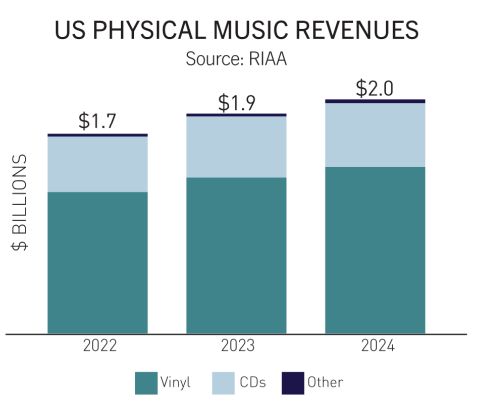
The tendency is confirmed in other parts of the world as well, including the US: according to the RIAA (Recording Industry Association of America) 2024 Year-end Revenue Report, revenues from vinyl records grew 7% to $1.4 billion in the US in 2024 — the 18th consecutive year of growth — and accounted for nearly 3/4 of physical format revenues. And for the third year in a row, vinyl outsold CDs in units (44 million vs 33 million).
In France, rap seems to have played a major role in reintroducing vinyl culture, introducing this format to a new generation of consumers. In 2023, major artists such as Nekfeu, Damso, PNL, and Orelsan are among the best-selling vinyl artists, proving that the medium is no longer restricted to collectors. Nekfeu, for example, sold 23,000 vinyl copies of his album Feu. To buy a vinyl is now a common way of supporting your favorite artists.
This partly explains why the primary buyers of vinyl today are people under 35 years old, accounting for 54% of the French market in 2023 according to the SNEP. Vinyl is no longer only the preferred medium of collectors, audiophiles and DJs. It is owned by everyone and has once again become a common consumer product.
Far from being mutually exclusive, vinyl and streaming operate side by side. Most vinyl buyers also use streaming services for discovery and everyday mobile listening, while vinyl remains associated with an immersive at-home experience. Edgar Berger, chairman at Sony Music International, told BBC: « You will find people that are having a paid streaming subscription and at the same time buying vinyl and I do believe that’s not an uncommon pattern. I think streaming is for the convenience and, for some music fans, vinyl is for the experience. » According to the same ICM study, 45% of vinyl buyers have heard the EP or album on streaming platforms first (but still buy the vinyl).
This complementarity reflects a broader shift in music consumption. Vinyl allows listeners to give a physical form to the music they discover online, while offering a tangible way to support the artists they value. In an increasingly dematerialized musical world, it provides a return to something more concrete.
More than that: The dematerialization of music is fueling this desire for and return to materiality. Beside everyday online listening, there is the pleasure of owning the object. Plus, a record is highly aesthetic and looks better than a CD, especially in the era of social media. It is even the ideal medium for showcasing music listening. Paradoxically, digital natives are looking for a more tangible and authentic listening experience.
Nevertheless, this resurgence of the vinyl industry has not been anticipated, resulting in economic and logistic issues.
The resulting economic and industrial issues
To begin with, production costs have strongly risen due to a spike in energy, raw material and transportation costs in recent years. For independent artists, pressing vinyl is moreover a great financial risk and they often find themselves dependent on the success of pre-orders.
Another factor was the Covid crisis. The cost of raw materials rose by 30 to 40% during Covid, as suppliers were unable to keep up with the demand. However, this does not justify the exorbitant price of certain records after the pandemic. The biggest labels indeed took advantage of the situation to excessively raise prices, sometimes turning vinyl into a luxury product.
Factories and their capacity are another limiting factor: The number of pressing plants worldwide is very limited today due to the sharp decline of vinyl in the 1990s and the 2000s, and many of the remaining ones use old machines, some dating back to the 1970s. Production times can thus be several months or even a year for small labels.
The Covid-19 pandemic also delayed the production in pressing factories, which were already operating at maximum capacity before the crisis. These delays impact the smaller artists the most once more, as majors become the main priority. Some independent record stores have not survived these crises and have had to close down.
As always, some are more impacted than others, and the metal band Metallica has for instance bought a pressing factory in Virginia called Furnace Record Pressing. This allows them to avoid delays in the production and delivery of their records.
The final major economic factor affecting vinyl prices is rarity. Some labels try to create scarcity around certain vinyl by producing them in limited quantities and expanded editions. Some records sell for a fortune on platforms such as Discogs and are resold for even more. Version 1 of The Beatles’ White Album released in 1968 was sold by Ringo Starr in 2015 for $790,000.
But the second-hand vinyl market can also be very lucrative, through platforms such as Vinted. First pressings, limited editions and promotional versions are particularly sought by collectors. Given importance of the second-hand market in vinyl sales, we could think that it is a better alternative for the environment than listening to music on streaming platforms, but it is not necessarily the case.
A composition with a great impact on the environment
The revival of the vinyl industry also has an important environmental cost. Producing one 135g vinyl issues 0.5 kg of CO2, and the 5 million units sold in France in 2024 is equivalent to the annual CO2 emissions of five hundred people. This is due to the plastic material used to make the records, PVC, which is one of the most polluting materials, produced from petrochemistry.
Moreover, old pressing machines consume a lot of energy and water to function, and inks used to print the covers contribute to ozone depletion. So vinyl is everything but environment-friendly. According to Marie Pieprzownik, sound engineer and vinyl engraver, the engraving process itself requires a very special material that is only produced in Japan since the other factory located in the US closed. This dependence lengthens the production process even more and increases carbon footprint due to transportation.
On the other hand, streaming services also pollute very much with servers running 24/7 storing millions of songs and consuming an astonishing amount of energy. Greenhouse gas emissions from music streaming in the United States were estimated to be between 200,000 and 350,000 tons of CO2 in 2016, compared to the 157,000 tons emitted by the whole music industry in 1977 during the vinyl’s Golden Age. Listening to an album on a streaming platform consumes 27 times more energy than producing a CD or a vinyl according to a study published the British NGO MusicTank in 2012. So none of these solutions seem to work if we want to listen to music without contributing to the climate crisis.
As we saw, vinyl is an old industry that has known little change over the decades and so the concept of recycling only emerged recently and is not widely spread yet. Some companies like MPO in France try to develop this alternative: They retrieve faulty and obsolete records, purify them and give them a new life by re-pressing them into new vinyl. Artists need to give more visibility to this option, like Billie Eilish did for her new album Hit Me Hard And Soft released on May 17, 2024, by choosing recycled vinyl.
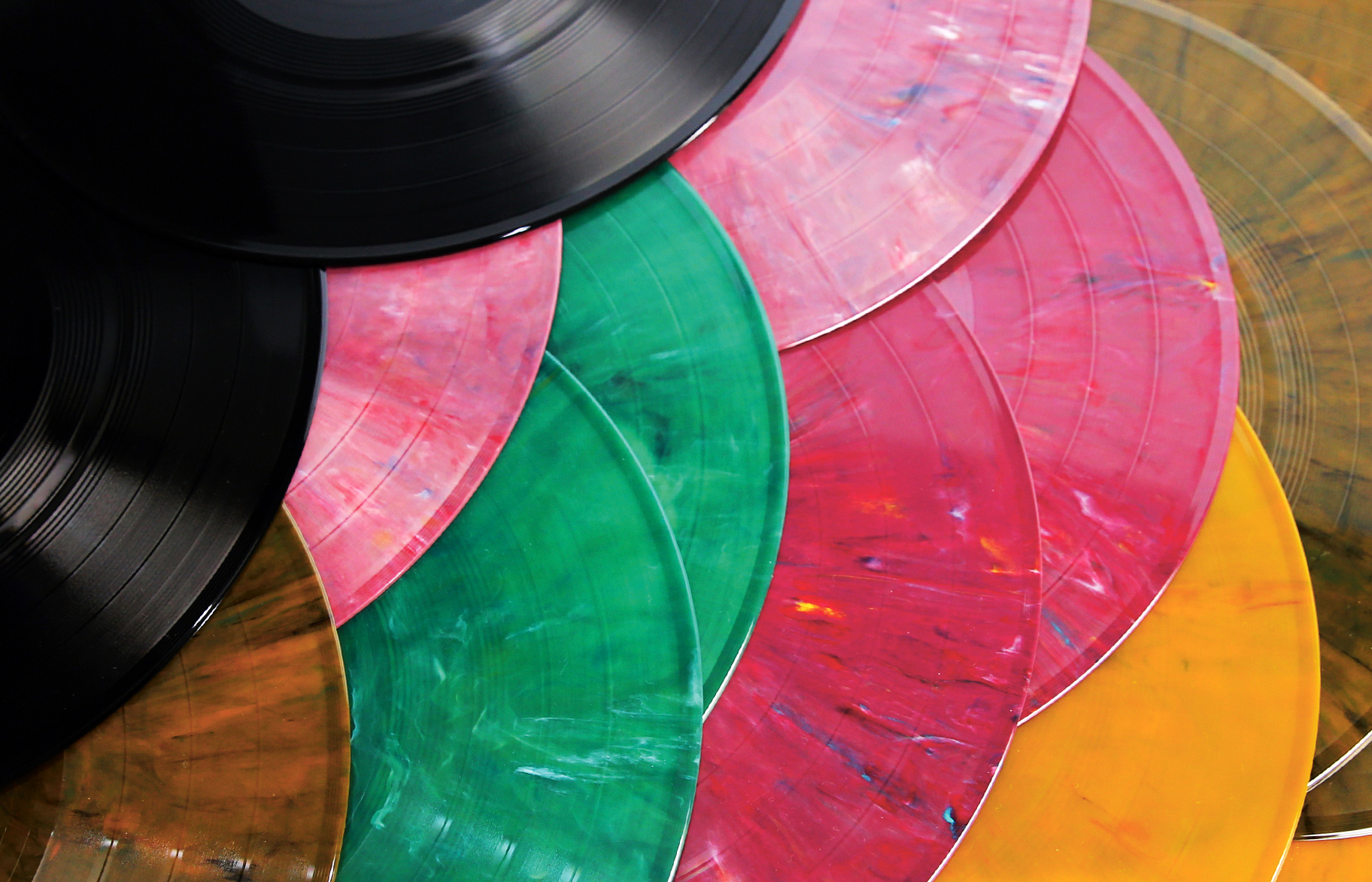
Other alternatives are slowly being explored, but only a fraction of them meet the durability requirements to make long-lasting records. The French factory M Com’ Musique has launched the « Vinylgue » in 2016, a bio-based and biodegradable disc made from brown algae. Its sound quality was good, but the main issue was their fragility. Others tried to create records from sugar canes or plastic waste retrieved from British beaches.
One promising lead is the « biovinyl », a bio-based PVC made from calcium-zinc. It is recyclable and way less polluting than classical PVC. It is a solid competitor to classical vinyl sound and durability-wise but the issue is its production price. A real commitment from artists and labels is therefore needed to initiate this procedure and democratize the use of this new material, making it more affordable in the future. This solution could reduce CO2 emissions by 90% compared to standard vinyl, which is non negligeable.
However, more progress is to be made if we want a true durable vinyl market, as the whole production process needs to be rethinked and redesigned. Bio-vinyl could be the solution, but it will take some time and effort before it becomes mass-produced and cost-effective. For now, the best option could be to listen to less music but better and more carefully chosen. In a society where Spotify’s CEO Daniel Ek states that silence is the biggest competitor of the streaming platform, we need to listen with attention and not put music as a background noise for our life. Vinyl thus continues to write its history.
Written by Laura Vurpillot
Sources:
BBC, Music streaming boosts sales of vinyl (April 14th 2016)
https://www.bbc.com/news/entertainment-arts-36027867
Ça m’intéresse, Comment fonctionne un vinyle ? (October 23rd 2024)
https://www.caminteresse.fr/culture/comment-fonctionne-un-vinyle-11197865
Ça m’intéresse, Reportage : qui achète encore des vinyles en 2025, et pourquoi ? (April 23rd 2025)
Ça m’intéresse, Vinyle vs Streaming : quel est le vrai coût écologique de la musique ? (December 26th 2024)
Distrolution Merch, Le vinyle, pourquoi est-il toujours populaire en 2025 ? (March 13th 2025)
France Inter, Le retour historique du vinyle grâce aux jeunes (March 16th 2023)
Gimenez-Fauvety A., Vinyle, l’amour vache. Section 26 (July 5th 2021)
GM Éditions, La naissance des vinyles : l’histoire d’une révolution musicale ! (August 28th 2024)
IFPI, Global Music Report 2025 (March 24th 2025)
Irving S. Gilmore Music Library, The history of 78 RPM recordings. Yale University Library.
La Presse, Metallica achète sa propre usine de pressage de vinyles (February 3rd 2026)
L’éclaireur Fnac, L’histoire du vinyle, de sa création à nos jours (August 12th 2020)
https://leclaireur.fnac.com/article/cp48650-lhistoire-du-vinyle-de-sa-creation-a-nos-jours
Millard A., America on Record: A History of Recorded Sound, Second Edition (December 5th 2005)
https://api.pageplace.de/preview/DT0400.9780511137983_A23569041/preview-9780511137983_A23569041.pdf
Tsugi, Retour en force du vinyle en France : un succès du rap français ? (July 3rd 2024)
RIAA, 2024 Year-End Revenue Report (2025)
https://www.riaa.com/wp-content/uploads/2025/03/RIAA-2024Year-End-Revenue-Report.pdf
SNEP, Bilan du marché de la musique enregistrée en 2024 (March 11th 2025)
https://snepmusique.com/wp-content/uploads/2025/03/DP-SNEP-2025-conf-presse-1003-16H.pdf
SNEP, Bilan du marché de la musique enregistrée 1er semestre 2025 (September 9th 2025)