Talent has long been at the heart of how we imagine artistic success. Whether in dance, theatre, music or visual arts, we like to believe that dedication, creativity and hard work are what ultimately determine who succeeds.
Yet for many aspiring artists, talent is only part of the equation.
Before stepping onto a stage, performing in an orchestra or joining a theatre company, artists often spend years investing in training, equipment, healthcare, auditions and travel. A dancer may need to buy pointe shoes every few weeks, pay for regular classes to maintain their level, travel across the country for auditions and cover the costs of physiotherapy or osteopathy after injuries. These expenses accumulate long before stable employment becomes a reality.
Unlike many professions, these costs are usually borne by individuals long before they can expect a stable income. In a sector that frequently celebrates meritocracy, an uncomfortable question emerges:
Who can actually afford to become an artist today ?
This is not an argument that talent no longer matters. Rather, it is an invitation to examine how the financial realities of artistic careers shape who is able to stay in the profession long enough for that talent to be recognised.
The hidden cost of becoming an artist
For many people, the cost of an artistic career begins long before the first professional contract.
A young dancer may spend years attending conservatories, intensive workshops or pre-professional programmes. An aspiring actor might invest in acting classes, coaching sessions and showcase performances. Musicians often face years of private lessons alongside formal education.
And graduation rarely marks the end of these expenses.
Professional dancers continue taking classes several times a week to maintain their technical level. Singers work with vocal coaches. Actors attend workshops and masterclasses. In many artistic fields, continuous training is not a choice but a professional necessity.
The paradox is striking: artists are expected to constantly improve and stay employable, yet much of this professional development must be financed personally.
This observation echoes the work of Angela McRobbie in Be Creative: Making a Living in the New Culture Industries. McRobbie argues that creative professions are often driven by passion, self-investment and project-based work, encouraging individuals to accept significant uncertainty in pursuit of artistic fulfilment. In this context, continuous investment in one’s career can become an implicit requirement of creative work itself.
For many performers, professional training itself can represent a significant financial investment. Beyond public conservatories, many aspiring dancers and actors enrol in specialised programmes, junior companies, intensive workshops or international training schemes. While these opportunities can provide valuable experience and networks, they also create barriers for those who cannot afford the associated costs.
In other words, artistic careers often require substantial investment before they generate consistent income.
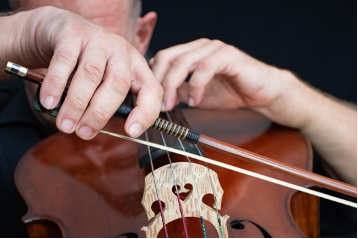
Violinist playing their instrument
When the body becomes the tool
Artists do not only invest in skills. They also invest in their tools.
For dancers, the body itself is the primary instrument of work.
Maintaining that instrument comes at a cost:
- physiotherapy;
- osteopathy;
- injury prevention;
- strength training;
- recovery sessions;
- specialised nutrition (sometimes)
These expenses are rarely visible to audiences, yet they are fundamental to a dancer’s ability to work.
Other disciplines face similar challenges. Musicians must maintain and insure instruments. Actors often need professional headshots, showreels and self-taping equipment. Singers may invest in recording sessions and coaching.
Unlike many traditional workplaces where employers provide equipment, artists frequently bear these costs themselves.
The result is a professional environment where remaining ready for opportunities requires continuous financial investment.

Close-up of manual back therapy, featuring myofascial treatment and pain relief.
Why location and mobility shape artistic careers
Financial barriers are not only linked to training or equipment.
They are also geographical.
In France, many artistic opportunities remain concentrated in Paris. Auditions, agencies, production companies, major theatres and professional networks are often located in the capital.
For an artist living elsewhere, this creates additional challenges.
A dancer based in Nantes may need to travel to Paris multiple times for auditions. A singer from Toulouse may have to pay for transportation, accommodation and meals simply to attend a casting that lasts a few minutes.
Relocation is often presented as the obvious solution. Yet moving to Paris without stable employment is increasingly difficult given housing costs and rental requirements.
This creates a paradox.
Artists are encouraged to be geographically close to opportunities while simultaneously working in one of the most financially unstable sectors of the economy.
Talent may be distributed across the country, but opportunities are not.
Eiffel Tower from a low-angle perspective, in black and white, captured on film by Blanche Le Chauff de Kerguenec
Who can afford to stay?
Perhaps the most overlooked aspect of artistic careers is not the cost of training or mobility.
It is the cost of waiting.
Artistic success rarely happens immediately.
Many performers spend years navigating temporary contracts, occasional opportunities and periods of unemployment before achieving stability. During this time, they must continue paying rent, maintaining their skills and financing their professional activity.
Imagine two dancers graduating from the same school with comparable technical abilities.
The first has access to family support and can afford several years of uncertainty.
The second must quickly secure a stable income to cover living expenses.
Both may have the same talent.
Yet only one may be able to remain available for auditions, unpaid rehearsals or short-term contracts over an extended period.
This raises an important question.
Are artistic careers selecting only the most talented individuals, or are they also selecting those who can financially withstand years of uncertainty?
The issue is not that success can be bought. Rather, economic stability can influence how long an individual remains in the competition.
At this point, the debate moves beyond personal choices and into broader questions of inequality. Sociologist Pierre Bourdieu’s theory of cultural capital offers a useful framework for understanding why some individuals are better positioned than others to pursue artistic careers over the long term. According to Bourdieu, individuals do not enter professional life with the same resources. Beyond economic means, access to cultural knowledge, networks and educational opportunities can significantly shape life trajectories. Two artists may possess the same talent, yet not the same capacity to transform that talent into a sustainable career because they do not start with the same forms of capital.
And in a profession where persistence is often crucial, that matters.
What does this mean for diversity in the arts?
At first glance, the financial realities of artistic careers may seem like an individual problem.
In reality, they have broader implications for the cultural sector.
If pursuing an artistic career requires significant financial resources, some talented individuals may leave the profession earlier than others. This means that certain social backgrounds, regions or communities may become underrepresented within artistic institutions.
The consequences extend beyond individual careers.
They affect whose stories are told.
Whose perspectives are represented.
Whose voices reach audiences.
In recent years, cultural organisations have increasingly committed themselves to diversity and inclusion. Yet discussions often focus on representation once artists have already entered the sector.
Perhaps we should also examine the barriers that exist before artists ever reach the stage.
This question also resonates with discussions around so-called “industry plants”. As explored in Audencia Culture’s article The Problem with the Industry Plant: Why We Hate Curated Success audiences are often uncomfortable when hidden advantages behind artistic success become visible. Yet financial inequalities may shape careers much earlier, long before audiences even discover those artists. Rather than focusing solely on who succeeds, we should also ask who gets the chance to remain in the industry in the first place.
Because diversity is not only about who gets hired.
It is also about who can afford to stay long enough to be hired.
A challenge for cultural management
For students and professionals in cultural management, these questions should not be viewed as external to the sector.
They are management issues.
How accessible are recruitment processes?
Are there ways to better support emerging artists from outside major cultural centres?
Can organisations reduce some of the hidden costs associated with entering the profession?
These questions are increasingly relevant as cultural and creative industries face major workforce challenges. According to UNESCO, cultural and creative industries are among the world’s largest employers of young people, yet many cultural workers continue to face unequal access to training opportunities, skills development and decent working conditions. Supporting artistic careers is therefore not only a question of fairness, but also of sustaining the future creative workforce.
There are no simple answers, even less so with the budget cuts to culture.
Cultural organisations cannot solve every social inequality.
However, recognising that economic barriers shape artistic careers is an important first step.
If the sector genuinely values diversity, inclusion and equal opportunity, then access to artistic careers deserves as much attention as artistic outcomes themselves.
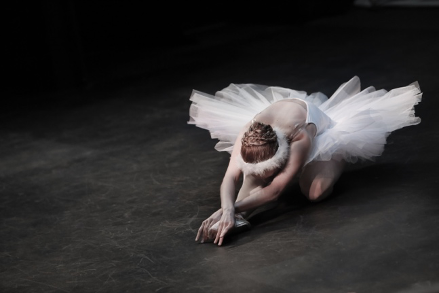
Graceful ballerina in a white tutu stretching on a dark stage.
Conclusion
Because when becoming an artist increasingly depends on financial endurance, the issue is no longer individual. It becomes a question about the future diversity, accessibility and sustainability of the cultural sector itself.
At the same time, it would be unrealistic to place the responsibility entirely on cultural organisations. Across Europe, and particularly in France, many cultural institutions are themselves facing growing financial pressures and public funding cuts. Their ability to provide additional support is therefore often limited.
Nevertheless, the first step may simply be recognising these realities. Understanding the hidden costs of artistic careers, acknowledging the sacrifices they require, and ensuring that artists are treated with dignity and respect are essential if the sector wishes to remain both sustainable and inclusive.
As cultural economist David Throsby argues, culture creates value far beyond its economic impact. If artists generate a cultural value that benefits society as a whole, then perhaps the question is not only who can afford to become an artist, but also how society chooses to value those who do.
If the cultural sector wishes to reflect the diversity of the society it serves, the question is not only how we support artistic creation, but also who has the means to become a creator in the first place.
Written by Blanche Le Chauff de Kerguenec
