Beneath the dome painted by Chagall, countless stories have been written and told almost every evening for nearly 150 years. Yet on this Thursday, October 15, 2026, the story being told is one that is coming to an end. This story is that of Dorothée Gilbert, one of the greatest étoiles this institution has ever known. It is the kind of description easily handed out in haste. Yet there is nothing exaggerated in the legend of Dorothée. A look back at the making of a myth.
The French School, Technique & Repertoire
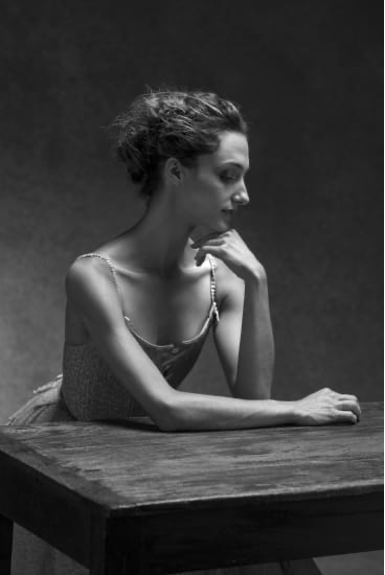
Dorothée Gilbert posant pour son portrait officiel en tant que danseuse de l’Opéra de Paris. Crédit photo : © James Bort / OnP.
The most obvious answer regarding the French school is the practice of the repertoire. Every school has its priorities, and for the French school, it is the repertoire, and the repertoire once again. No one can claim to possess flawless technique without having tested it against the iconic variations of our repertoire.
Dorothée Gilbert is no exception. In 2005, she was promoted to Première Danseuse at the Paris Opera and had to take on the most demanding roles.
In 2008, she landed the title role in Giselle by Jean Coralli and Jules Perrot. This ballet is particularly famous for Giselle’s Act I variation. Characterized entirely by lightness and poise, this variation is a remarkable showcase of technical skill. Between balances, a flurry of small jumps infuses energy into this airy variation. But if this variation is so renowned, it is above all for its famous diagonal of ballonnés on pointe. This unique movement, found nowhere else, demands specialized training and the technical virtuosity that defines this variation. Mastering this step and having the honor of performing it is the preserve of the greatest dancers.
She went on to shine in the greatest roles of the French repertoire, such as Kitri in Don Quixote (Rudolf Nureyev, after Marius Petipa) in 2004, the title role in Paquita (Pierre Lacotte) in 2006, Nikiya in La Bayadère(Rudolf Nureyev, after Marius Petipa) in 2010, Juliet in Romeo and Juliet (Rudolf Nureyev, after Marius Petipa) in 2011, Odette and Odile in Swan Lake (Rudolf Nureyev, after Pyotr Ilyich Tchaikovsky) in 2013, as well as the title role in La Sylphide (Pierre Lacotte) in 2013. The list is so long that it would take forever to mention all of her iconic roles. Let us nevertheless dwell on her interpretation of Clara in Rudolf Nureyev’s The Nutcracker (after Marius Petipa) in 2007. While the most demanding variation in this ballet is undoubtedly that of the Sugar Plum Fairy with its celebrated pas de deux, Dorothée Gilbert distinguished herself by portraying Clara, the young heroine who receives a nutcracker on Christmas Eve and dreams that it comes to life. This role, full of candor and lightness, does not appear at first glance to present a genuine technical challenge. Yet following the performance on November 19, 2007, Dorothée Gilbert, in the role of Clara, was named Danseuse Étoile of the Paris Opera. The greatest honor imaginable for anyone who has graced the stage of the Palais Garnier—could there be another ace up Dorothée’s sleeve that we have not yet mentioned?
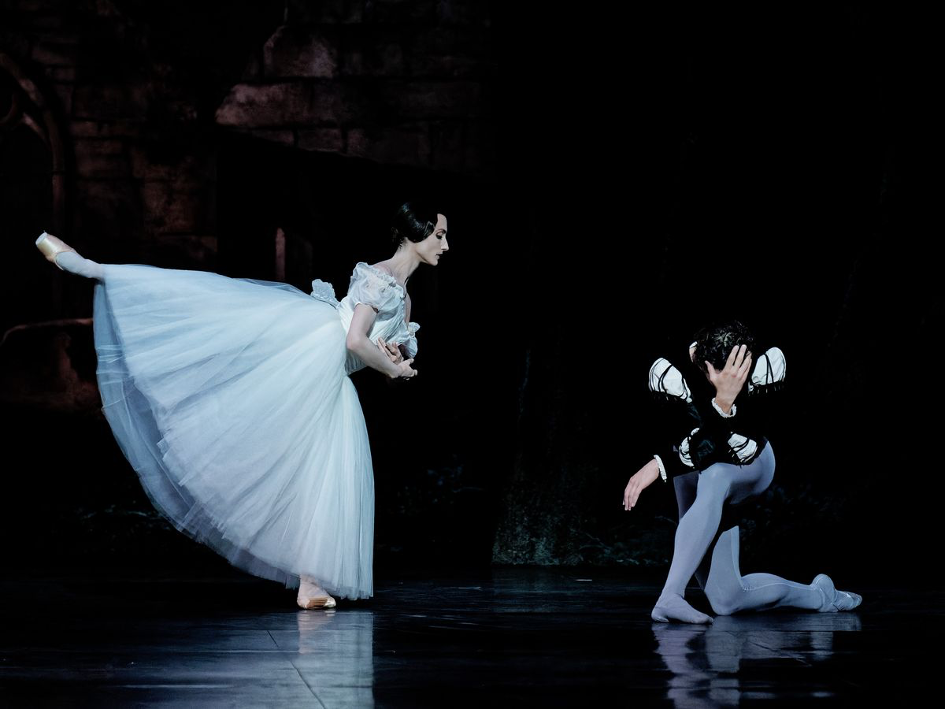
Dorothée Gilbert in “Giselle”, a romantic ballet by Jean Coralli and Jules Perrot, on 23 June 2022. (AGATHE POUPENEY / DIVERGENCE).
The Art of Interpretation
Any student of the French school will defend the importance of rigorous technical work tooth and nail. Nevertheless, that is not what makes great dancers. Let us never forget that great technicians are nothing without that « certain something extra »—that spark that brings a role to life before our very eyes. Above all else, Dorothée Gilbert is a gifted artist who delivers a breathtaking performance of artistic interpretation with every appearance.
First, let us revisit her performance as Clara in The Nutcracker. What an achievement at 24 years old to embody a very young girl filled with wonder before her toy on Christmas Eve! What talent it takes to use the utmost command of one’s body and movement to appear ten years younger! Interpreting a role is never merely a matter of technique; it is above all about a breath of life, a spark that makes Dorothée Gilbert an Étoile, certainly, but also and above all an artist.
This talent was honed throughout her career by working on original creations. By exploring diverse roles and styles, she perfected her craft—notably during her participation in 2008 in Maurice Béjart’s ballet Serait-ce la mort? / Ist dies etwa der Tod?, a neoclassical work set to Richard Strauss’s Vier letzte Lieder. A powerful piece whose meaning emerges solely through the expressive power of the dancers’ performance. It serves as the perfect example of technique and staging stepping into the background to serve the interpretation.
At the crossroads of different worlds, certain works in the repertoire seem to demand every dimension of these extraordinary artists. Among them is Kenneth MacMillan’s Manon, a classic of opera and ballet. This narrative has fueled imaginations and passions since 1974. But this year, performed by Dorothée Gilbert and Hugo Marchand, it became a subtle blend of extraordinary technique and palpable tension between the soloists. The Bedroom pas de deux in Act I takes on an otherworldly dimension. What a perfect final curtain for such a magnificent career. Thank you, Madame Dorothée Gilbert.
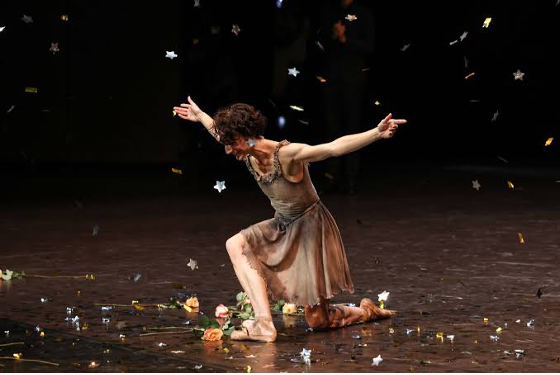
Amid applause, prima ballerina Dorothée Gilbert bid farewell on stage at the Paris Opera on Thursday 15 October 2026. Maria Helena Buckley / Paris National Opera.

