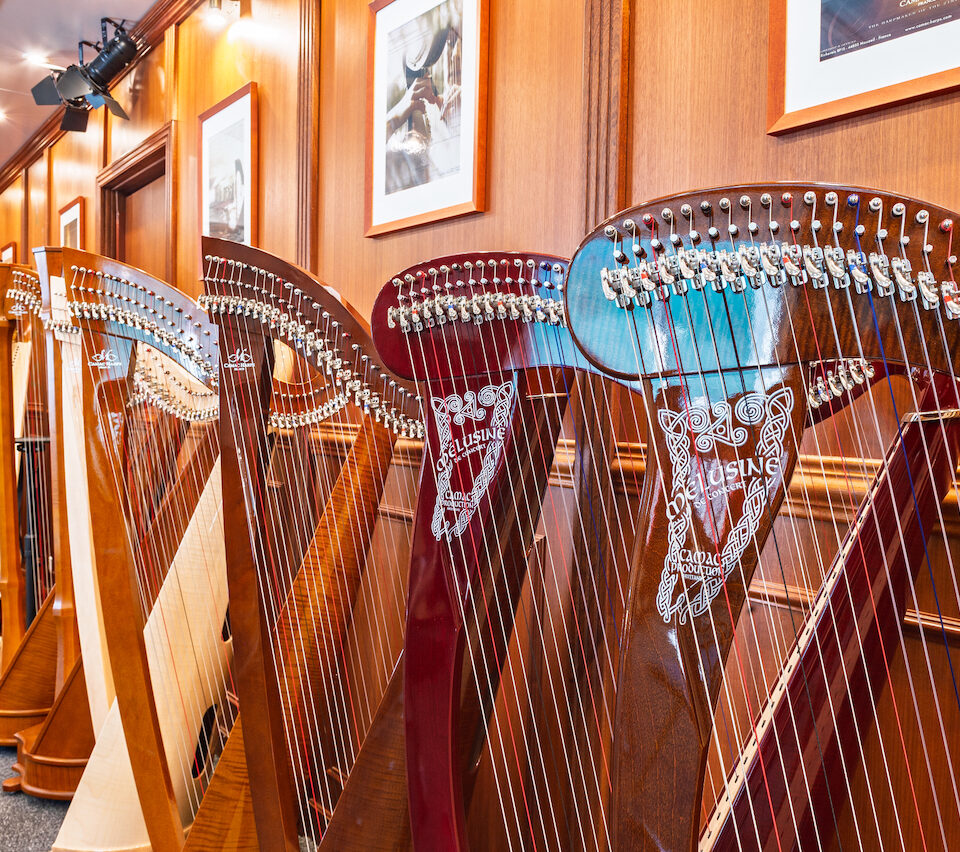
Imagine yourself seated in a vast concert hall. You have long anticipated this event, and you join in a warm round of applause as some thirty musicians take their places. Before you, the stage is a tapestry of instruments, such as the familiar silhouettes of violins and cellos, the gleam of brass, woodwinds, or percussion. Yet, positioned to the left in the background, one instrument commands your attention with its sheer majesty: a harp, its column adorned with intricate gold leaf and floral patterns.
As the performance unfolds, you notice that although the harp may play less frequently than its orchestral counterparts, its sound, warm, resonant, and almost ethereal, stirs deep emotions and sparks the imagination. You find yourself wonderstruck: surely such a grand instrument must be a challenge to master? What is its history? What is the cost of such craftsmanship? And how on earth does one transport it?
These are precisely the questions that may have crossed the minds of those attending the remarkable concerts of La Folle Journée in 2026. « Rivers » was the theme of that year’s edition of this world-renowned classical music festival, which has been a staple of the Nantes cultural scene since 1995. As an instrument uniquely suited to evoking the fluidity of water and the grace of a flowing stream, the harp was a natural centrepiece. It featured prominently in masterpieces such as Claude Debussy’s Dances for Harp and String Orchestra (1904), beautifully performed by the ensemble Les Apaches!, and a creative arrangement of Mussorgsky’s Pictures at an Exhibition (1874) for orchestra, harp, and accordion by the Symphonie de Poche.
Now, let me endeavour to answer these questions and pay tribute to the harp, an instrument that, in my view, remains unfairly shrouded in mystery. To explore its secrets, I will briefly trace the history of the instrument before turning to two leading professionals that I interviewed for the very purpose of unveiling the mystery of harp: Jakez François, harpist and President of Camac Harps, and Nathalie Henriet, harp professor at the Conservatoire de Nantes.
Defining a harp, an instrument that sparks the imagination
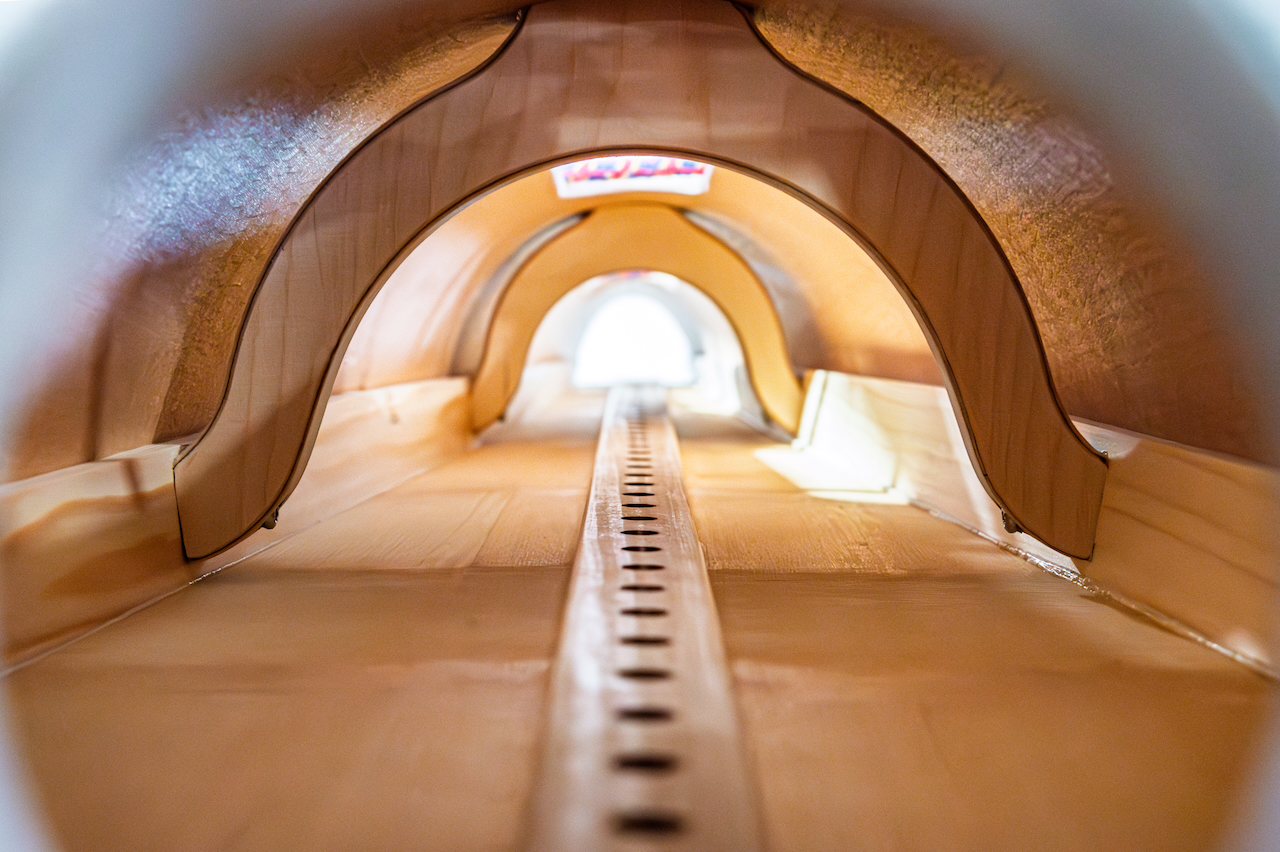
At its core, the harp is a plucked string instrument where the strings, of decreasing length, are stretched between a neck (the console) and a resonator (the soundboard). This soundboard typically takes the form of a truncated cone and sits nearly perpendicular to the plane of the strings. This unique orientation distinguishes the harp from the lute or zither families, where strings run parallel to the resonator.
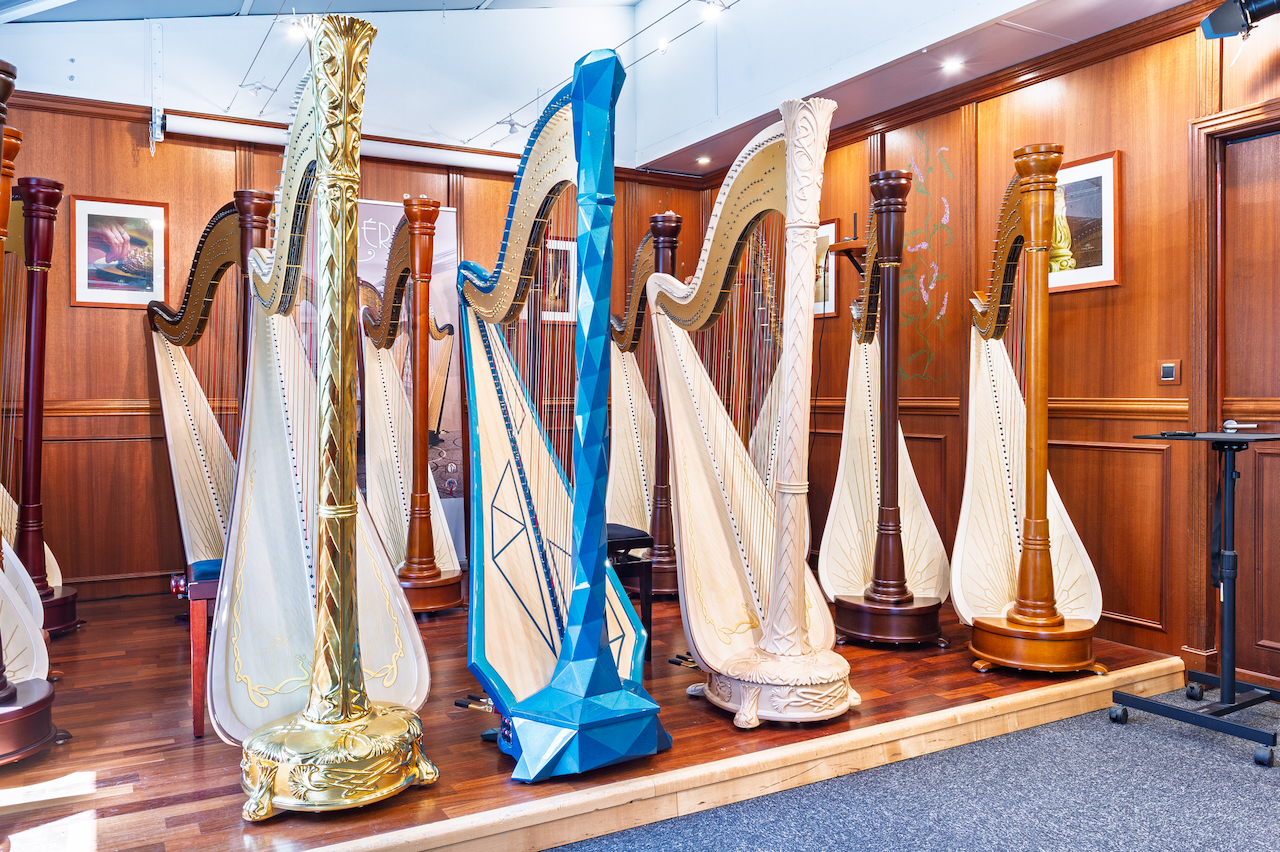
Today, a modern concert harp is a feat of engineering, boasting over 1,400 precision parts and a structure often compared to a grand piano to withstand the immense tension of its fourty-seven strings. This complexity is a relatively recent development in a history that spans millennia.Two main types of harp are distinguished today: the Celtic harp, with levers and no pedals and around 30 strings ; and the classical harp or pedal harp, with seven pedals and 47 strings.
An history in three main steps
From Antiquity to the medieval pillar
The principle of the harp has been whispered through the ages since high antiquity. Archaeological records confirm that the Sumerians and Egyptians were already masters of the instrument around 2700 BC. These early iterations were primarily « arched » or « bow » harps, where the neck extends from the body in a continuous curve.
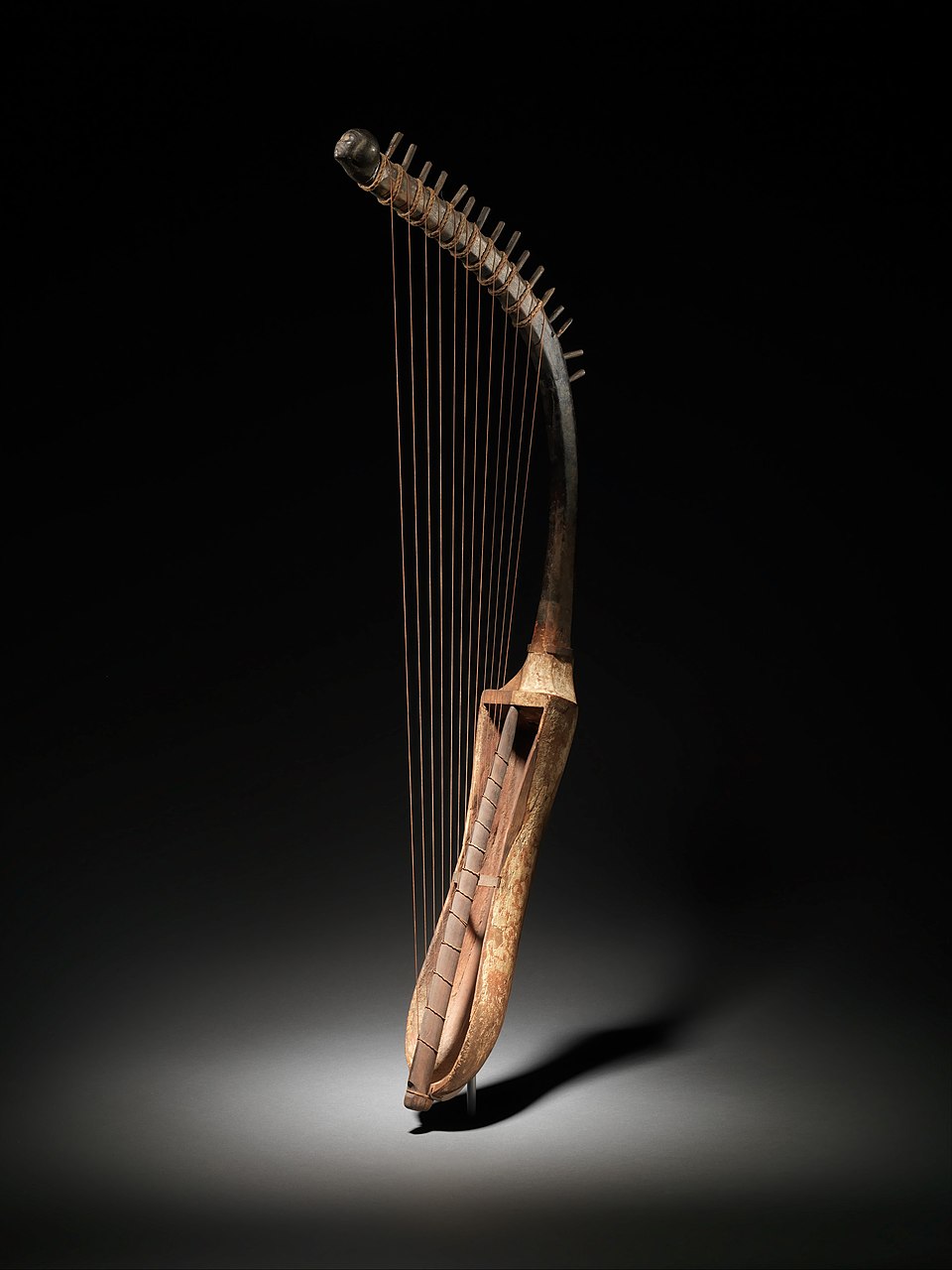
By 1100 BC, the Phoenicians began spreading the instrument toward the Western edges of Europe, but it was not until the 8th century AD that it became a cultural staple, particularly in Nordic and Celtic lands. It was here that the « triangular » harp emerged. By introducing a pillar – called “the column – to connect the neck and the body, harpers could significantly increase string tension. This structural evolution led to the medieval « Gothic » harp, a diatonic instrument that served as the direct ancestor of our modern orchestral giant.
The birth for the chromatic harp
The 16th century saw the birth of the chromatic harp. Irish luthiers experimented by adding a second row of strings, a design famously documented by Vincenzo Galilei in 1581, which featured 58 strings across two rows. However, managing such a forest of strings was cumbersome!
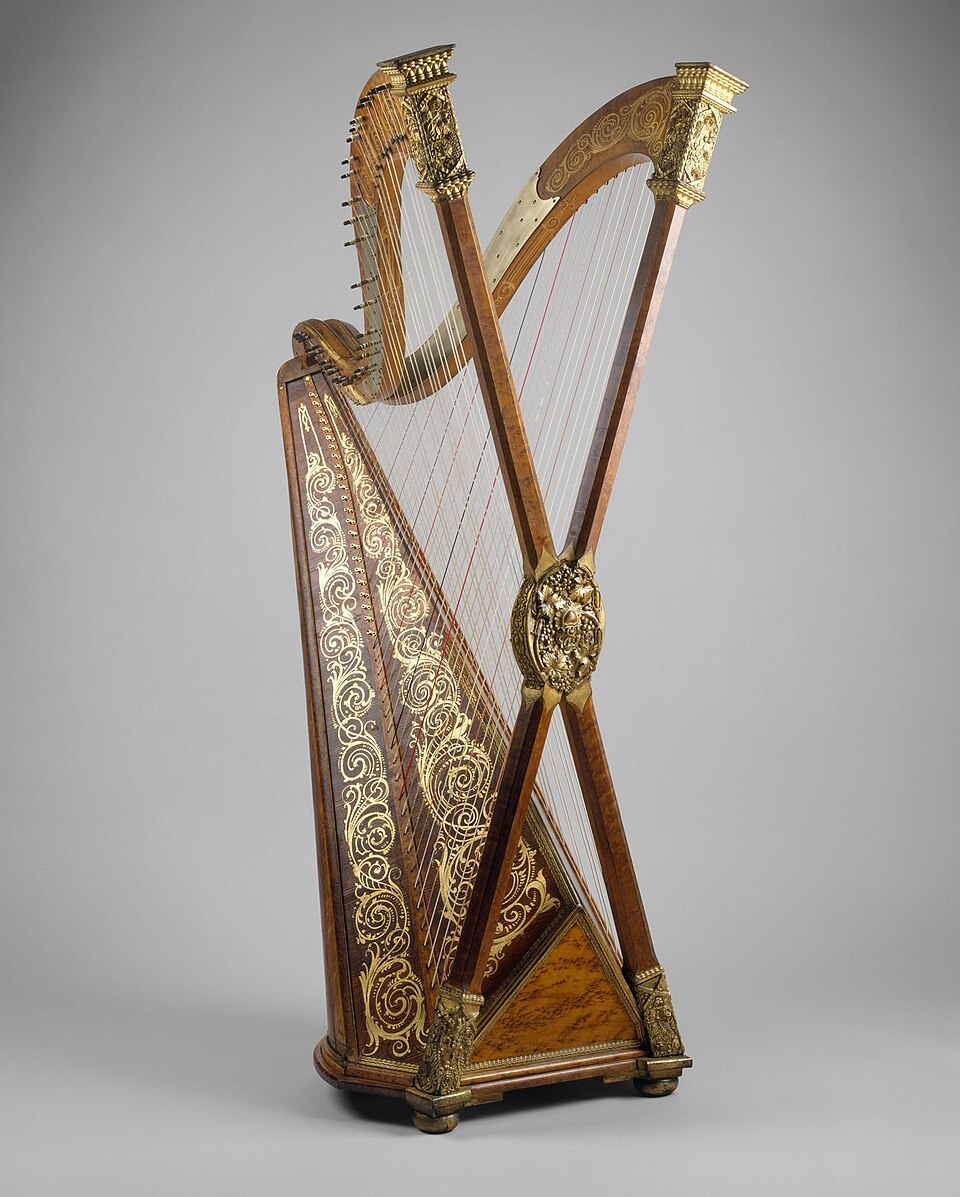
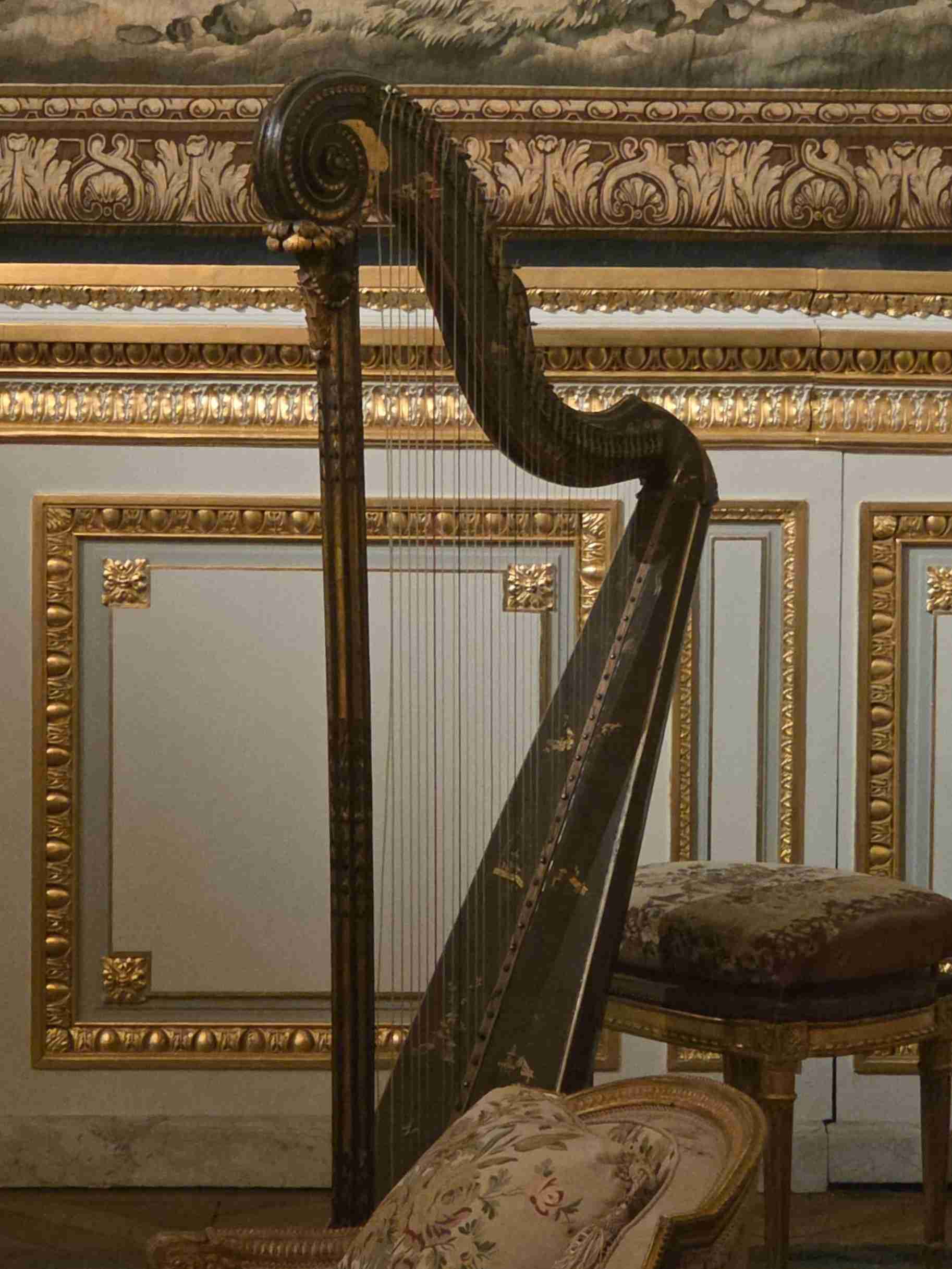
The breakthrough came from Bavaria in 1697, when Jakob Hochbrucker designed a system of pedals at the base of the instrument. These pedals were linked to hooks that shortened the strings by a semitone. This « single-action » harp became the toast of 18th-century salons, beloved by the likes of Marie Antoinette.
The Erard revolution
The final metamorphosis occurred in 1811. The legendary luthier Sébastien Érard perfected the « double-action » mechanism, a masterpiece of horological precision. By allowing each of the seven pedals to move into three distinct positions (flat, natural, and sharp), Érard granted the harpist total chromatic freedom across its massive range (the largest of any instrument save the organ and piano).While the harp had made cameo appearances in the works of Mozart and Handel, it was the Romantic era that truly embraced its evocative power. Hector Berlioz famously paid tribute to the instrument in his Symphonie Fantastique (1830). From the sweeping glissandos of Claude Debussy and the lush harmonies of Richard Wagner to the avant-garde virtuosity of Luciano Berio’s Sequenza II, the harp has moved from the background to the front of the stage.
Listen to “Danses sacrée et danse profane” by Debussy by clicking on the following link: https://youtu.be/7pIFmoyt9EM?list=RD7pIFmoyt9EM
An instrument with a hidden obstacle
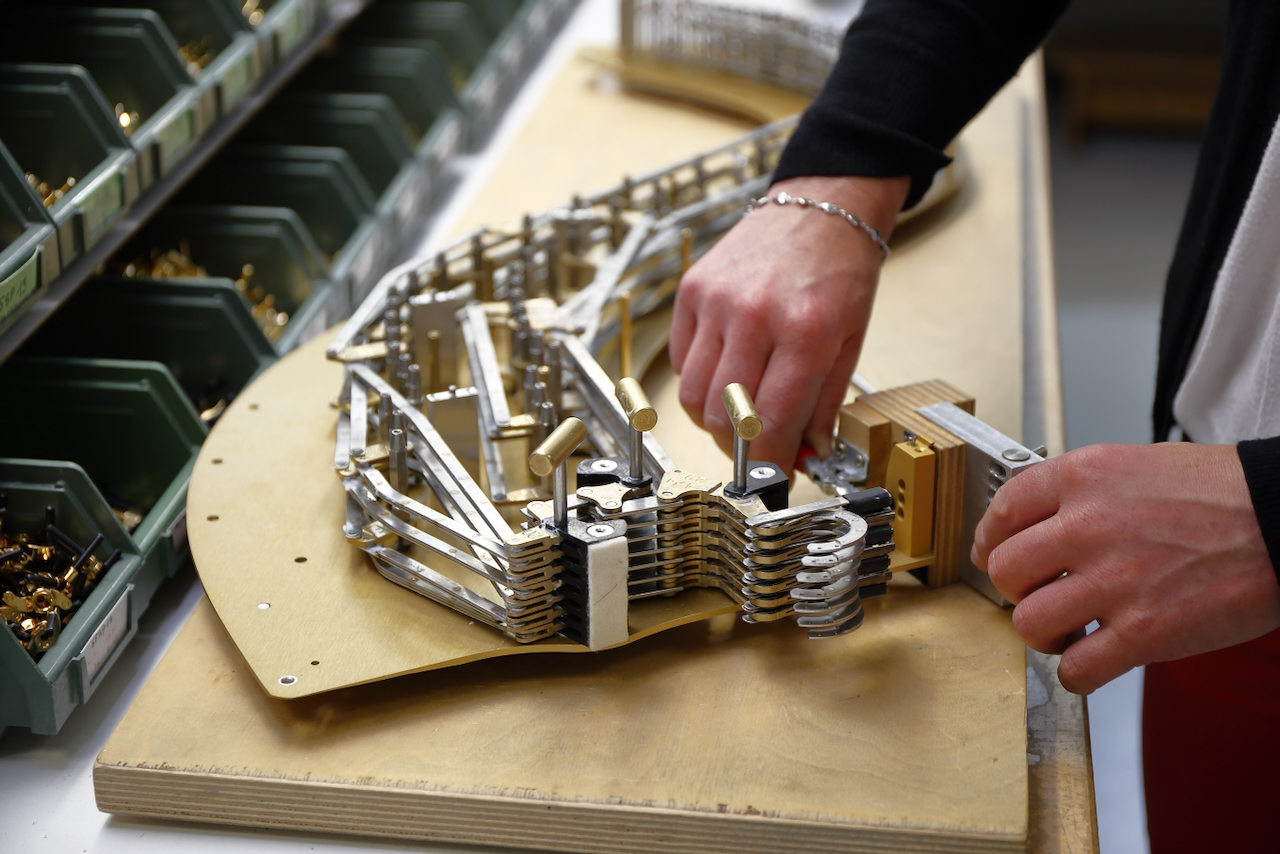
One might assume, gazing upon this labyrinth of strings, that to play the harp is to wrestle with an impossible puzzle. Allow me to let you in on a secret: the underlying logic is far more intuitive than it first appears. In many ways, the harp shares a profound kinship with the piano. Imagine the strings as the white keys of the keyboard, laid bare before the musician. The challenge, however, lies in those elusive black keys (the sharps and flats).
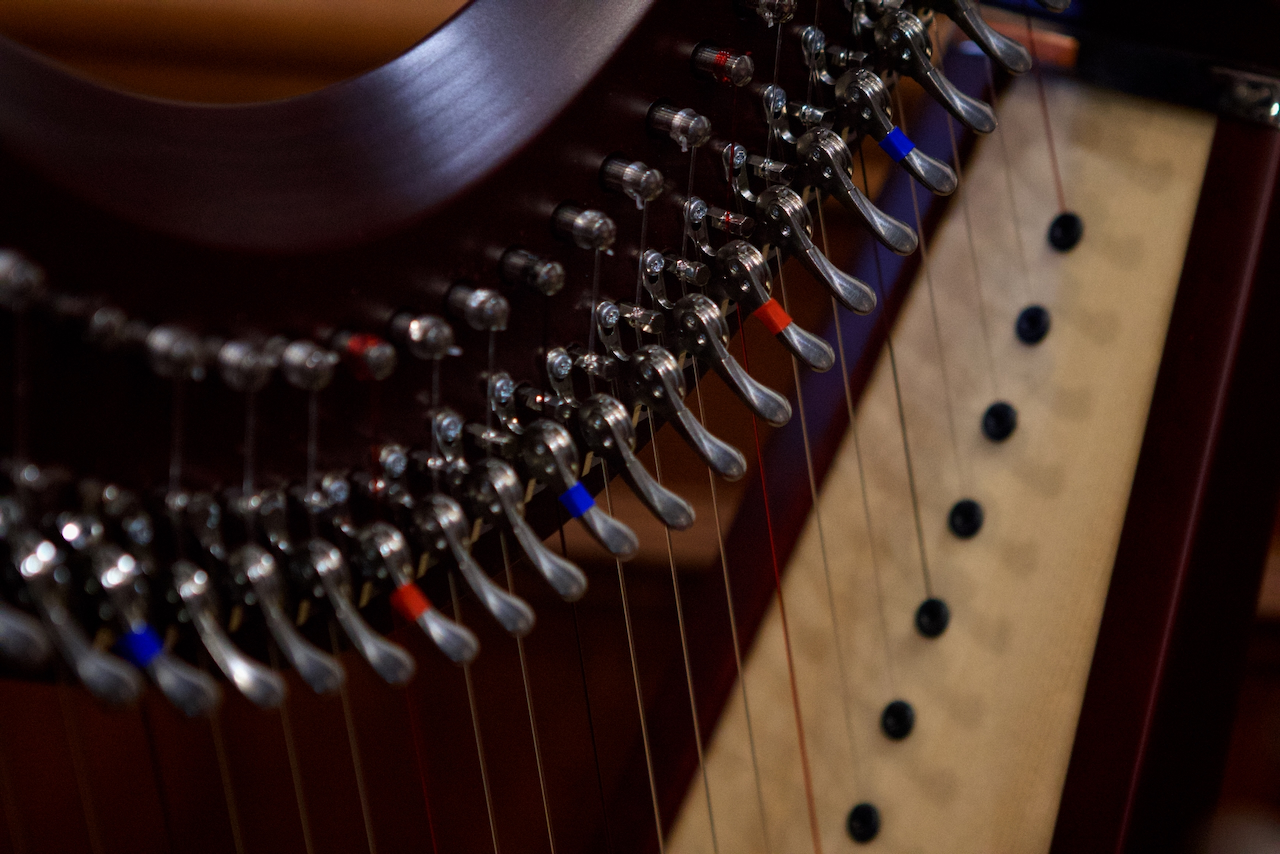
To navigate these chromatic shifts, the harpist must physically alter the tension of the strings, a technique that varies with the instrument’s lineage. On a Celtic harp, this is a manual affair, requiring the player to flick small levers at the top of the strings with the left hand. On the grand pedal harp, however, the task moves to the feet. It is here that the instrument demands a unique kind of choreography. Each of the seven pedals governs all the strings of a specific note – one for every ‘C’, one for every ‘F’, and so on. But herein lies the paradox: while we have seven pedals to manage, we are equipped with only two feet. For a beginner, a piece that might be elementary on a piano can become a formidable technical hurdle on the harp, requiring the musician to anticipate tension changes with the precision of a dancer.
Concrete aspect of a harp today: from transporting to pricing
Transporting a harp: a real challenge !
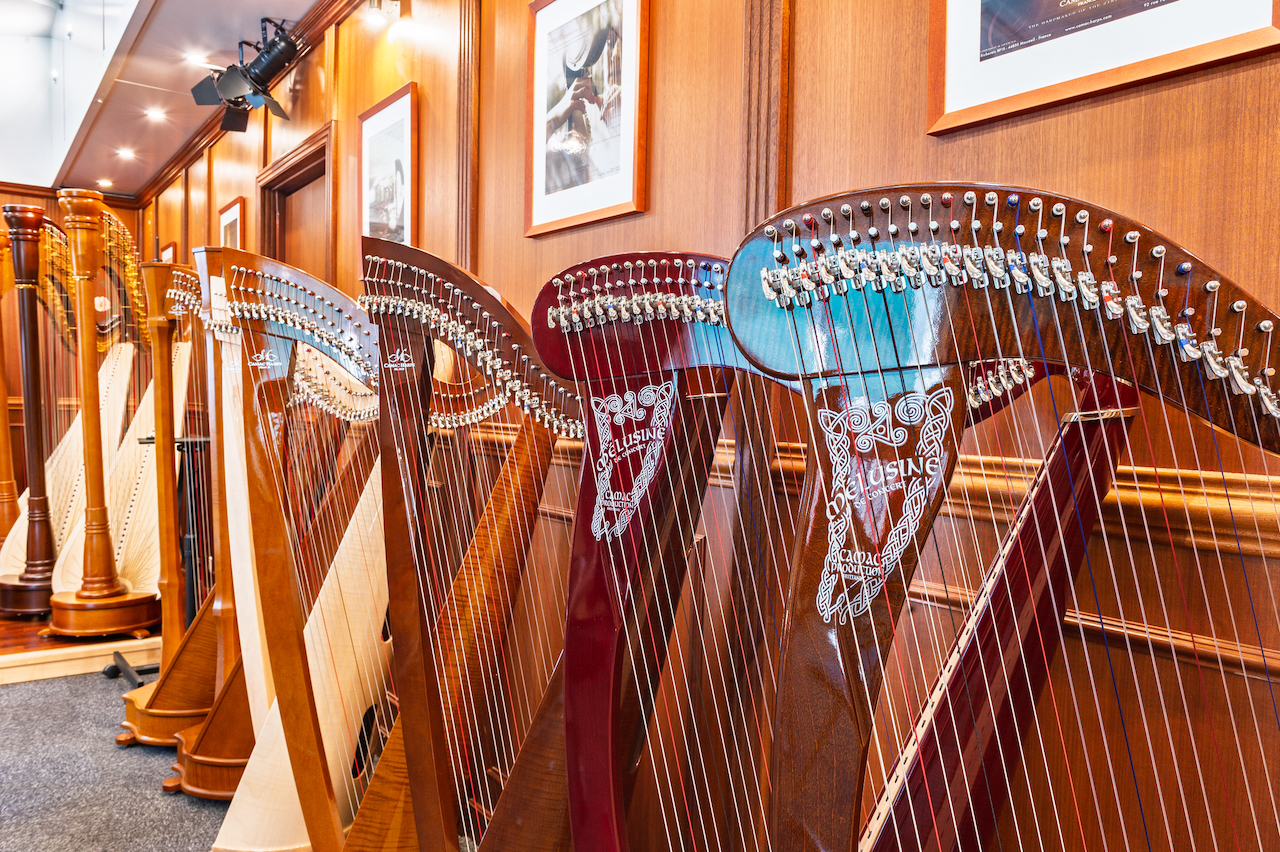
To behold a concert harp is to admire a monument, but for the harpist, it is a monument that must be moved. Like any master-crafted instrument, the harp is notoriously fragile, demanding a level of care akin to transporting fine crystal. There is even a specific way to its repose: should the instrument need to be laid down, it must always rest on its right side. This is a technical necessity to protect the intricate mechanical linkages from the immense pressure of the strings. To grasp the physical commitment required, one need only look at the sheer scale of these instruments:
- a celtic harp (reference: Mélusine, Camac harp): 14,5 kg, the weight of a 4 year-old child), 137cm
- a classical harp for study (reference: Clio straight, Camac harp): 30 kg, 172cm, almost the height of Rhihanna!
- a professional concert harp (reference: Atlantide prestige, Camac harp): 38kg (the weight of a 12 year-old child!), 188cm
A string instrument… with all the associated difficulties
The physical toll extends beyond the heavy lifting. A harp’s voice depends entirely on the composition of its strings, typically a blend of nylon, carbon, or, most traditionally, animal gut. For the classical purist, gut strings are the gold standard; they offer a warmth and roundness of tone that is, in my view, unparalleled. This beauty comes at a price. These strings are unforgiving on the hands, and a dedicated harpist must be prepared to endure the inevitable blisters that are the « scars of the trade » before callouses finally grant relief.
Listen to “La source” by Hasselmans, played by Isabelle Moretti, to embrace the beauty and velocity of some masterpieces: https://youtu.be/eAfLvTJr4PQ?list=RDeAfLvTJr4PQ
A price that discourages many
Let’s be honest: the harp is an instrument that demands a significant financial commitment. Here are the average price for the three categories of harp I detailed earlier :
- a celtic harp: around 8 000€
- a classical harp for study : around 12 000€ (7 000€ if second-hand)
- a professional concert harp (reference: Atlantide prestige, Camac harp): from 22 000€ to… 50 000€ or more!
Harp creation, a story of patience, care and… after-sale service!
Now, let’s hear from the leader of harp manufacturing, Camac Harps, by the president of the company itself: Jakez François.
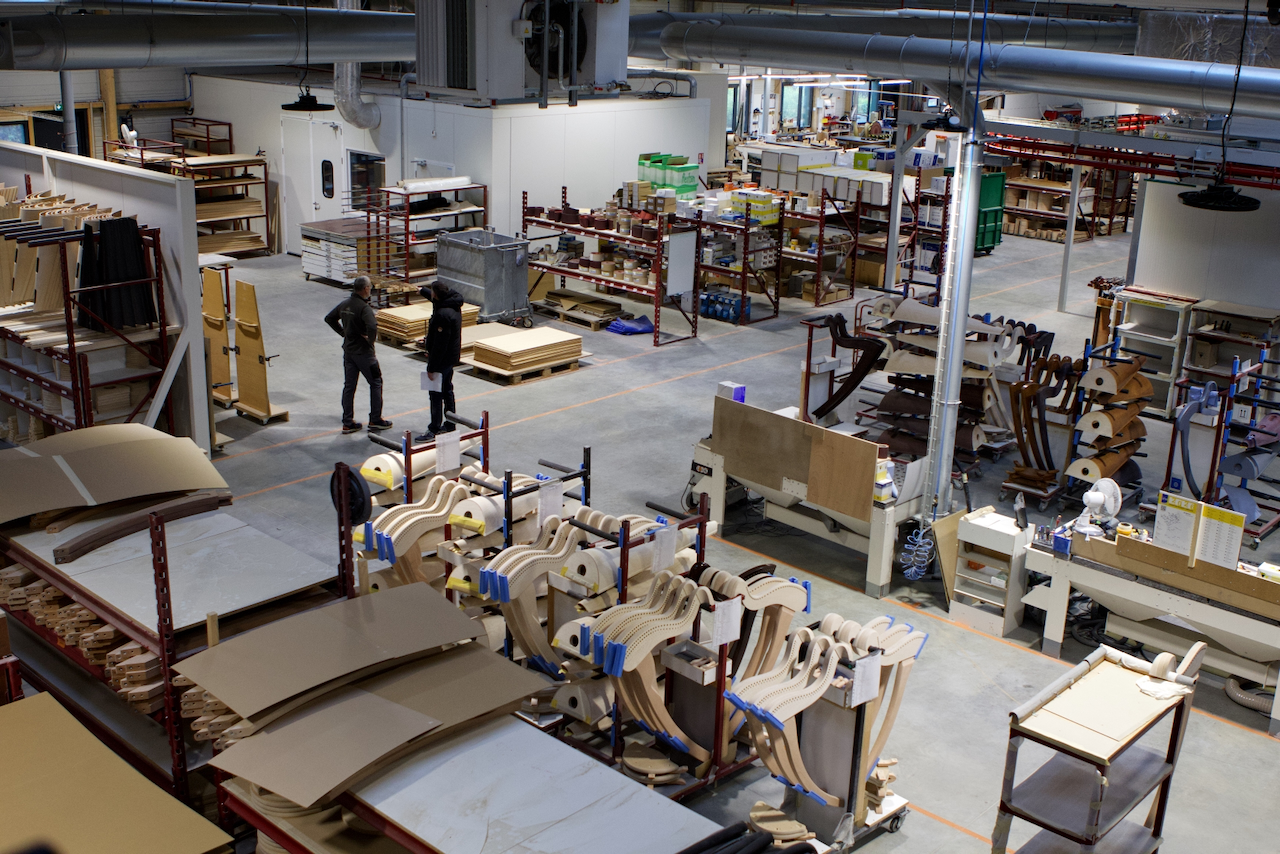
1) You are both a harpist and the president of Camac Harps. How did you move from being a musician to working in instrument making?
It was not planned at all. It really happened through circumstances. My original training was as a classical harpist: I followed the usual conservatoire path and began my career as a freelance musician. However, I had known the founder of Camac Harps since childhood because we lived in the same region. When I finished my studies, he asked whether I would occasionally come and help develop the company’s classical harps. At that time the company mainly produced Celtic harps.
As I had a classical harp background, the proposal interested me immediately. After a few months, he invited me to join the company full-time, working on technical adjustments, maintenance, and after-sales service. Gradually I also became involved in the commercial side and in representing the instruments around the world.
Looking back, I think he quickly realised that we might one day become partners and that I might eventually take over the company. During the twelve years we worked together, I learned every aspect of the profession. When he passed away unexpectedly, I was ready to continue the work.
2) Do you remember the moment when you decided to become a professional harpist?
In truth, there was no single defining moment. As a child I performed well in competitions, which naturally encouraged me to continue. After finishing school, I began studying musicology at university. Very quickly I realised that this was not the right path for me. I loved music, but I preferred performing it rather than studying it academically.
I therefore decided to focus entirely on the harp and pursued professional training. But shortly afterwards the opportunity to join Camac arose, and my career took an unexpected direction.
3) Does your experience as a harpist influence the decisions you make within the company?
Absolutely. Being a harpist influences every decision I make, from the choice of materials to instrument design, as well as our relationship with musicians and the artistic projects we support. One area that is particularly important to me is after-sales service. Building a harp is extremely complex and involves many different crafts, and the work does not end once the instrument is delivered.
A harpist depends heavily on their instrument and on the manufacturer for maintenance. Unlike the piano, there are very few specialised harp technicians in the world. In some countries there are none at all. For that reason, after-sales service is essential. There have been occasions when I have taken a plane myself to repair an instrument when a musician urgently needed help.
I remember travelling to Sydney, for instance, to solve a technical issue before an important event. I landed, fixed the harp with my tool box in ten minutes, and then flew straight back. For me, this is simply part of honouring the trust musicians place in us.
4) How do you see the future of the harp market?
The harp will probably remain a relatively specialised instrument. It is demanding both technically and financially, and it is very complex to manufacture. However, since the 1970s the demand has grown steadily. The growth is not dramatic, but it is stable.
The development of the instrument largely depends on teachers. They are the ones who introduce the harp to students and create new classes in conservatoires and music schools. Unlike other instruments, the harp does not grow through trends driven by pop culture or film.
There are still many places where the harp is not taught, so the potential for development remains significant, even if progress will continue to be gradual.
5) Looking back over your years at Camac Harps, what have been some of the company’s defining moments?
The past thirty or forty years have been full of significant milestones. One early example dates back to 1990, when we launched our first electric harp, which we called the “Blue Harp.”
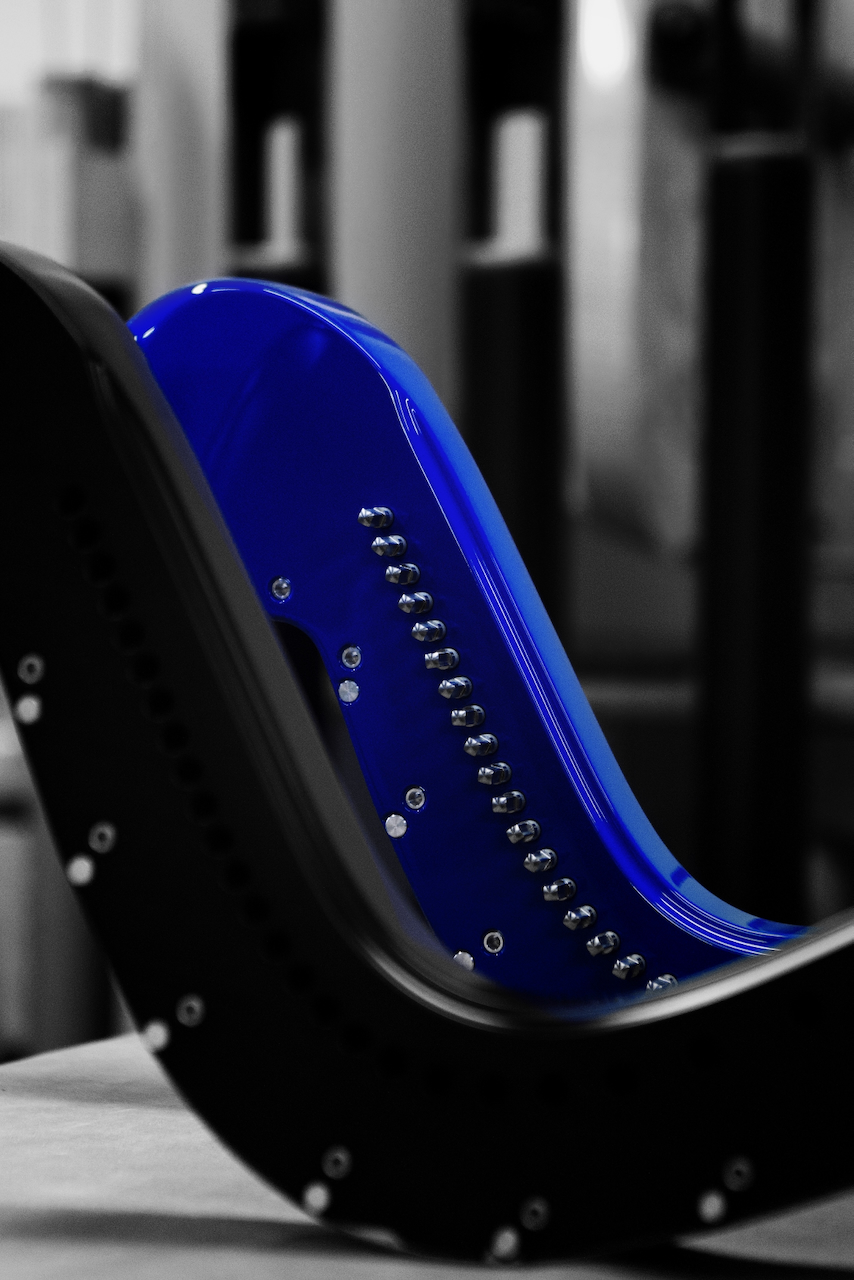
It was both a technical innovation and an unexpected marketing success. The instrument was simply named after its colour – it happened to be blue – but the term eventually became so widely used that it turned into a generic expression. Even today, some competitors refer to their own electric harps as “blue harps,” even though they are neither blue nor made by Camac. It is quite amusing to see how a simple name can become a common language, and it is the proof of the success of our innovation.
Another major milestone was the redesign of our concert harps. In the early 2000s, I began an extensive programme of acoustic research with the aim of rediscovering the sound of the great French harps of the nineteenth century.
This research lasted no less than fourteen years and required twenty-two prototypes! The difficulty with such work is the time involved. If you change something, for example the thickness of the soundboard in a particular octave, it can take three to six months before you hear the result on a new prototype. By the time it arrives, you have often almost forgotten what you wanted to test.
Eventually, in 2017, we introduced this new acoustic design. It marked a real turning point for Camac. Musicians responded with remarkable enthusiasm.
One moment in particular remains unforgettable. The Vienna Philharmonic Orchestra, often regarded as one of the finest orchestras in the world, chose one of these harps. The first time I saw it on television during the New Year’s Concert in Vienna, broadcast worldwide, I felt an immense sense of achievement. Seeing an instrument that represented fifteen years of research played by such an orchestra was truly extraordinary.
6) How long does it take to build a harp, from the first piece of wood to the finished instrument?
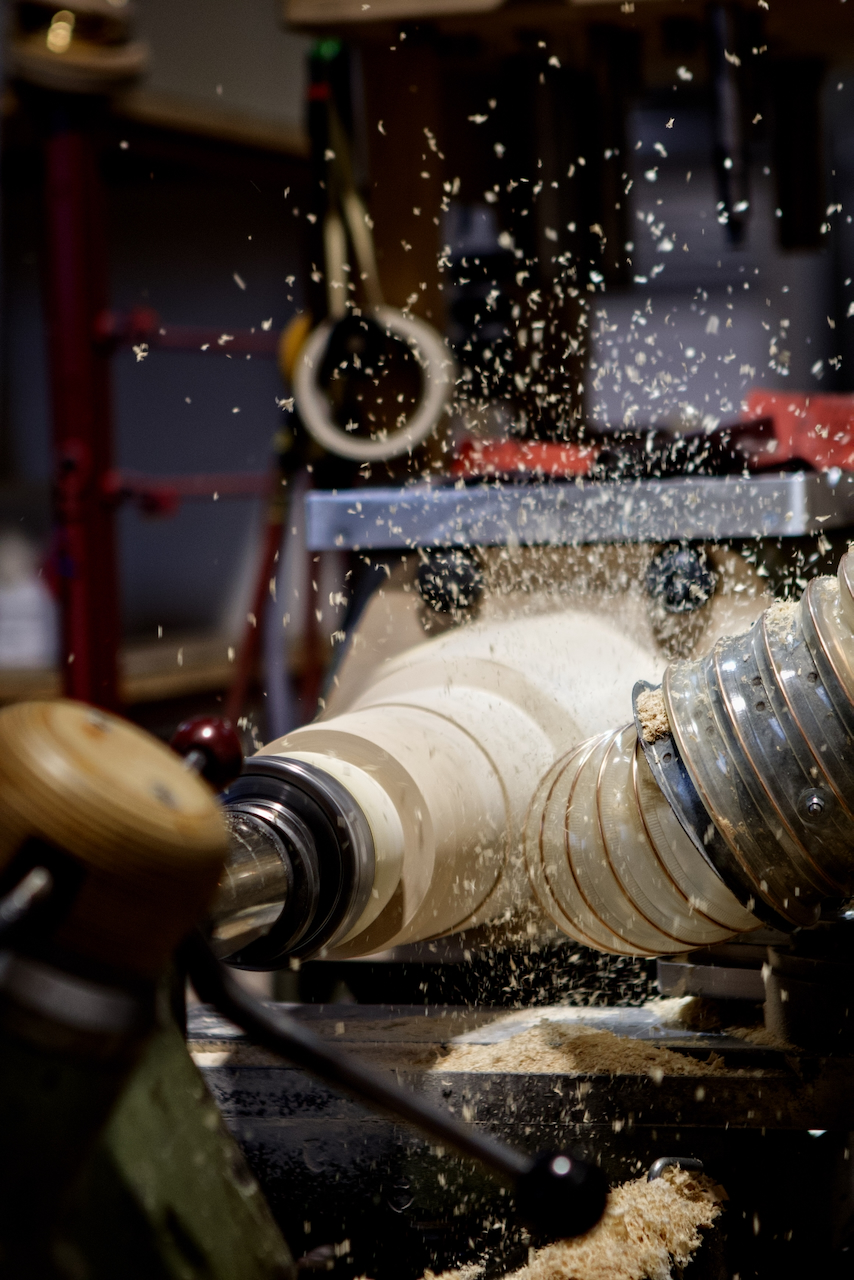
For a Celtic harp, once the wood is cut, the finished instrument is ready in about two months. Of course, we do not build them one at a time. Production takes place in batches. We usually prepare between fifteen and thirty pieces of each component and then assemble the instruments in smaller series. After all the stages (shaping, assembling, adjusting, gluing, varnishing and stringing), the harp can be played roughly two months after the process begins.For a pedal harp, however, the timeframe is much longer: at least six months, and sometimes more than a year are needed. There are far more components, a sophisticated mechanical system, and a much more elaborate aesthetic finish.
7) What would you recommend to someone who wants to discover the harp today?
Today it is easier than ever to discover the harp. Thanks to digital platforms such as YouTube or Instagram, anyone can instantly access an extraordinary variety of styles and performances. Simply typing “harp” into a search engine reveals an immense musical universe: classical repertoire, traditional music, pop, experimental projects…However, I would still recommend starting with the great classics. For example, Ravel’s Introduction and Allegro or Debussy’s Dances are two jewels of the chamber repertoire with harp. For Celtic harp, the range is even wider, from Alan Stivell to the younger Breton musicians of today, through Irish tradition or even pop artists such as Björk, who have collaborated with harpists.
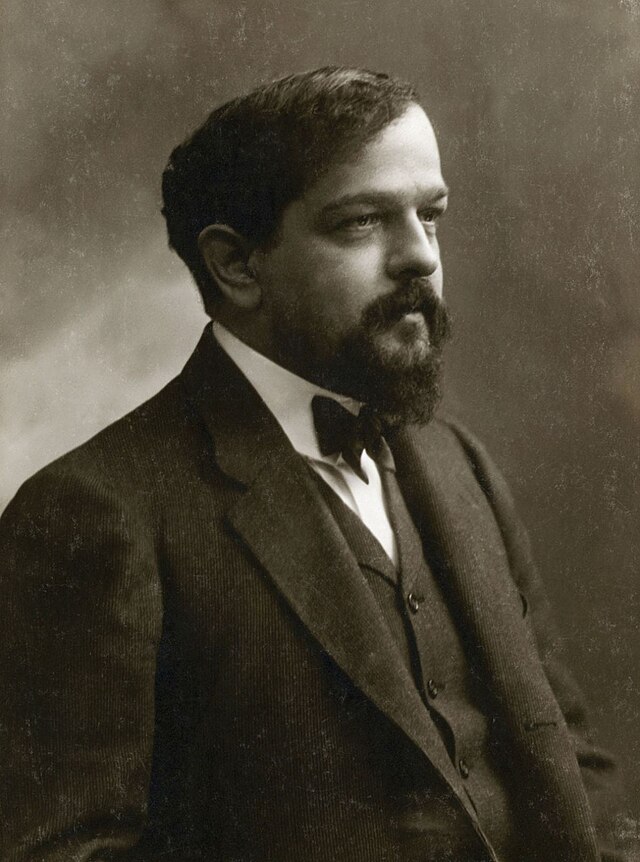
I also enjoy hearing pop artists working with harpists. These collaborations often produce fascinating results.
During the Covid period we also recorded about forty concerts that are still available on the Camac YouTube channel. They offer a wonderful overview of everything that can be done with the harp.
8) If you were a piece of music, which one would you be?
Without hesitation, Ravel’s Introduction and Allegro for harp and chamber ensemble.
For me, it perfectly represents the essence of French music, with an extraordinary palette of colours, and great elegance. It also has an interesting historical dimension. The work was commissioned by the harp maker Érard, inventor of the modern pedal harp, who wanted to demonstrate the musical possibilities of the pedal harp. In a sense, it was also a sort of marketing project.
I find it fascinating that a commission with such a practical objective ultimately produced one of the greatest masterpieces of the harp repertoire. It brings together two worlds that are very close to me: art and enterprise.
9) If you could live in any period of music history, which would you choose?
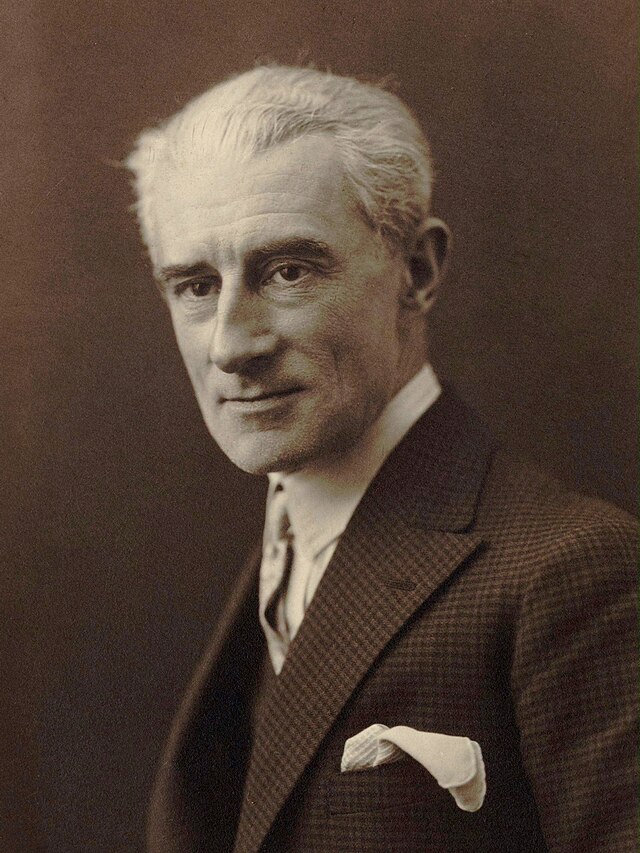
I would choose the early twentieth century without hesitation. It is what we now call the golden age of French music, with composers such as Saint-Saëns, Fauré, Debussy and Ravel. The company was actively involved in developing the repertoire and commissioned works from composers. Ravel’s piece is a perfect example. Setting aside the difficult historical context of the time, particularly the war, artistically it was an incredibly fertile and creative moment.
Harp teachers: the profession that has kept the harp alive
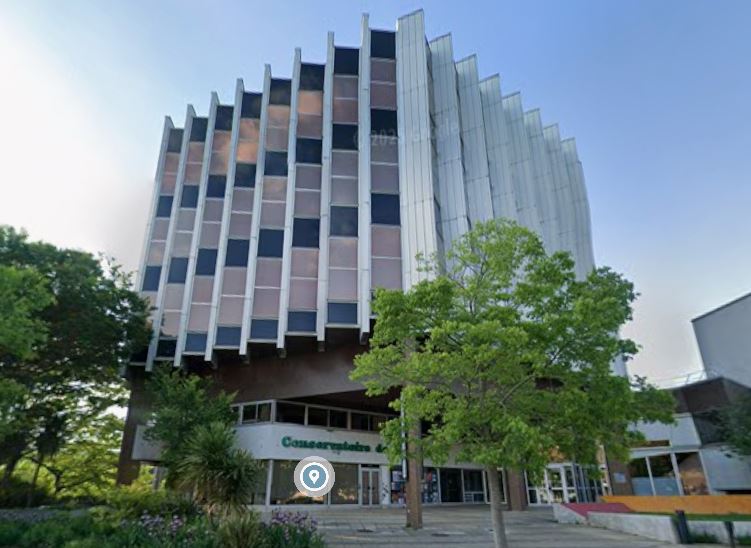
Harp teachers are crucial in the transmission of the practice of such an instrument. In order to discover more about harp teachers and musicians, I would now like to give the floor to Nathalie Henriet, professor at the Conservatoire of Nantes.
1) Could you introduce yourself in a few words?
I am a harpist, a graduate of the Lyon National Superior Conservatoire of Music (CNSM), and a prizewinner of several international competitions. I have largely devoted my career to teaching, particularly at the Nantes Conservatoire, while continuing to perform in concerts, both in chamber music and in the classical repertoire.
My first harp teacher was Odette Le Dentu. She was the person who truly instilled in me a love for the instrument. The first teacher one encounters is often decisive: they can spark a passion that stays for life. She showed remarkable patience and played a crucial role in my early development. After she passed away, I continued my studies with Berthile Fournier, a highly respected teacher in the Paris region. I was later admitted to the Lyon National Conservatoire in the class of Fabrice Pierre. That encounter was particularly important: he truly taught me the demands and techniques of professional harp playing.
Over the past few years, I have also developed another aspect of my work: therapeutic harp practice. I trained through the International Program of Harp Therapy, an American programme that has existed for over thirty years and has only recently begun to develop in France. This approach uses the musical qualities of the harp such as its modes, intervals, and above all its rich resonance to support people on an emotional and physical level. It is sometimes referred to as sound therapy, although in this case the focus is musical: the instrument itself and the music become the therapeutic medium.
2) When did you first encounter the harp?
My first encounter with the harp was at a concert. My mother is a pianist, so I grew up in a musical environment. At home, I was constantly exposed to different instruments, and I regularly attended chamber music concerts with her. I began with the piano, but I never felt particularly drawn to it. I considered learning the cello, then the oboe… and one day I heard the harp. At that moment, I simply knew that harp was the instrument I wanted to play.
3) What happened after your studies?
I first spent five years teaching at the Angers Conservatoire. I later obtained a position at the Nantes Conservatoire, where I still teach today. In our field there are relatively few teaching positions, so career paths often depend on the opportunities that arise. My first position in Angers came about because the director of the conservatoire had been on the jury for my final examination in Lyon. He encouraged me to apply for the post, and I eventually won the competition.
4) Which harps do you play?
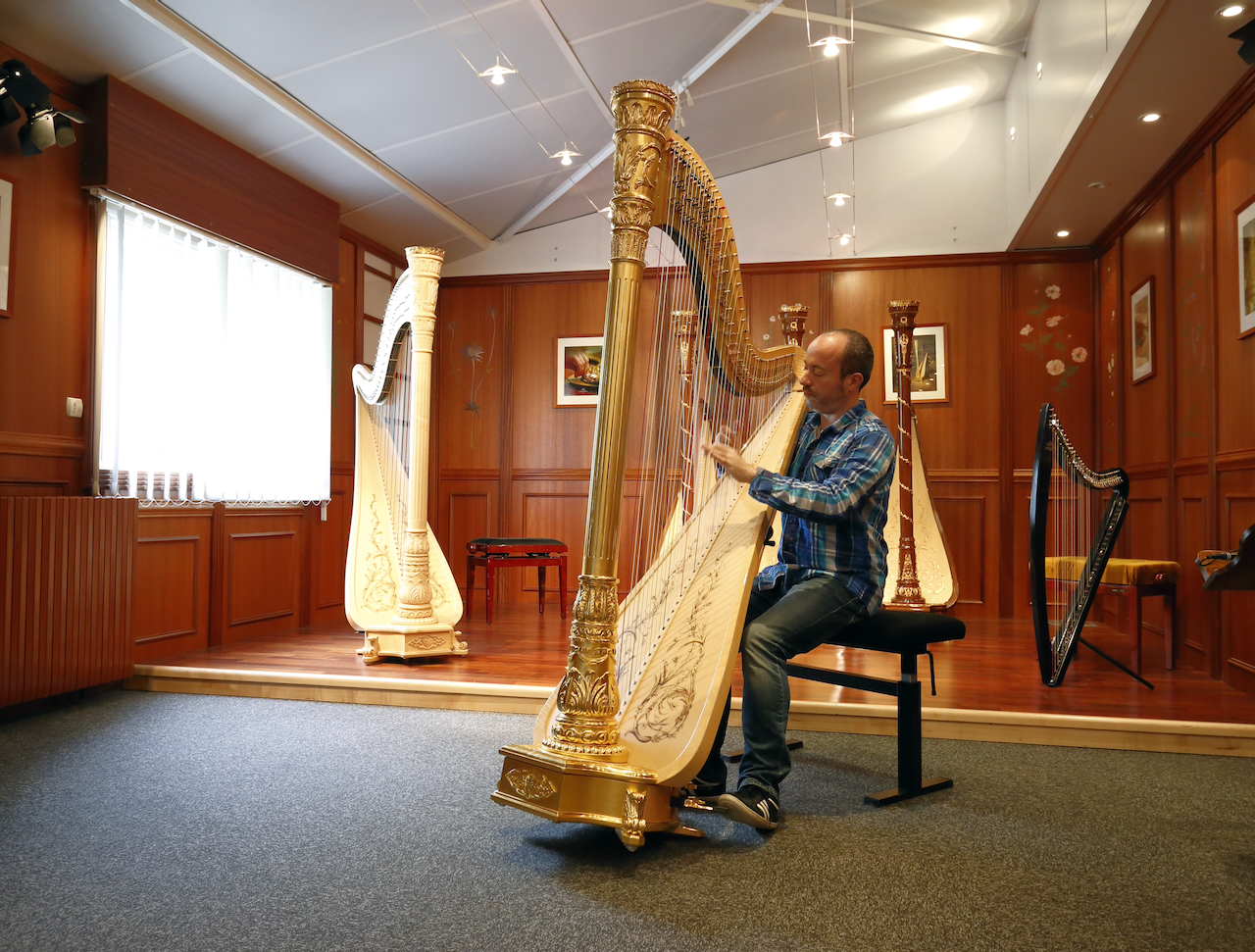
I mainly play a Camac classical harp with 47 strings. For therapeutic contexts I often use a Camac Isolde Celtic harp, which is lighter and easier to transport, with 38 strings. In some situations, particularly in hospitals, even smaller harps are used. These are designed to be easily carried from one room to another, which is very practical when working in that type of environment.
5) The harp is often associated with something magical or even divine. Is that an image you relate to?
That almost mythical image of the harp does resonate with me, especially in the context of therapeutic harp practice. Historically and symbolically, the harp has often been associated with the sacred. In many cultures it was linked to divine or spiritual practices, for example in ancient Egypt, where it was played in religious contexts.
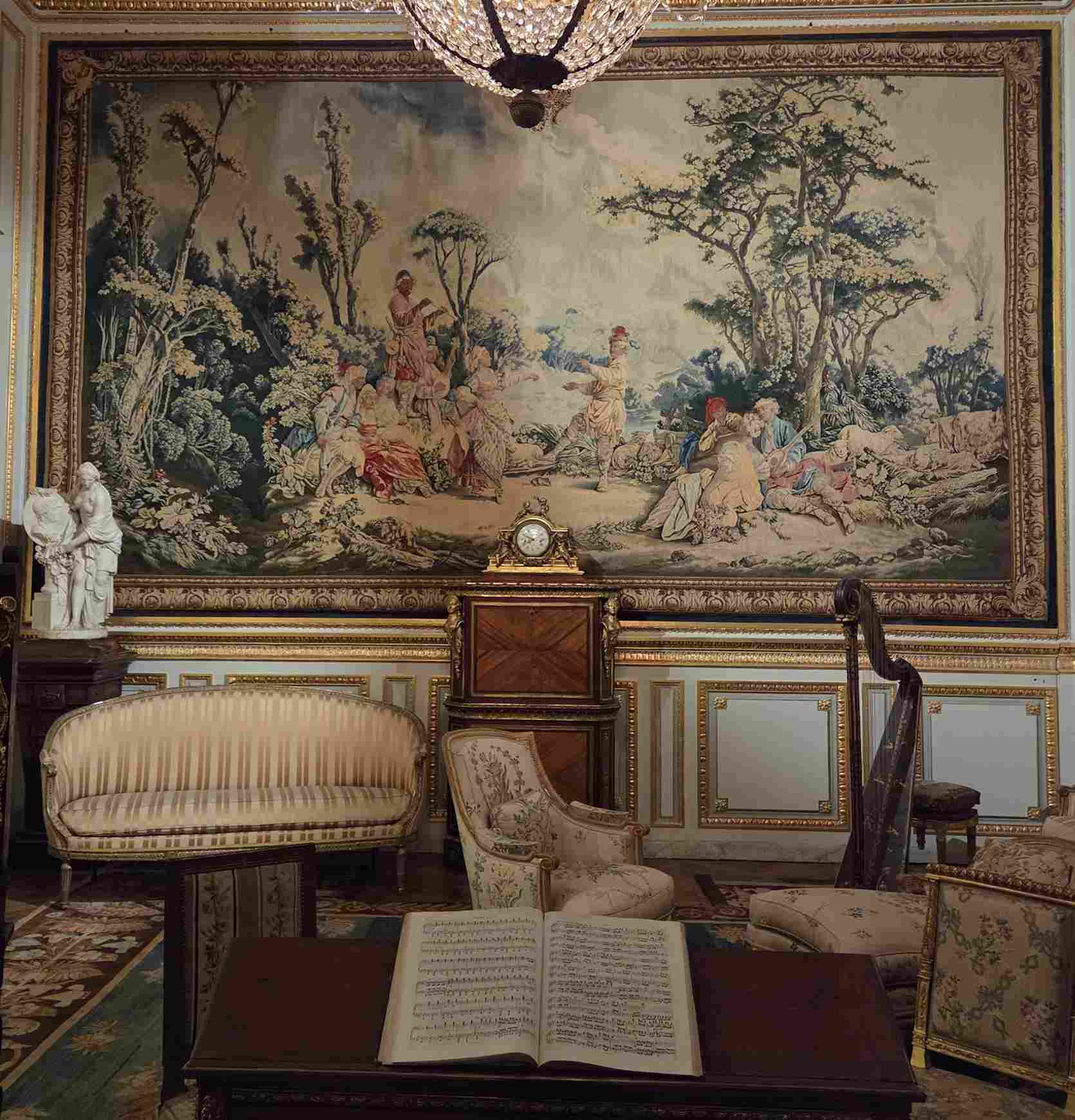
However, I identify less with another image sometimes attached to the harp: that of a decorative salon instrument linked to aristocratic refinement. This perception developed particularly towards the end of the eighteenth century, when Marie Antoinette herself played the harp. Let’s note that she was a remarkable harp player. At that time the instrument became fashionable in Parisian salons, and there were dozens of harp teachers in the city. This contributed to the idea of the harp as a rather feminine instrument and decorative object. During the nineteenth century, numerous virtuoso harpists, especially men, developed international careers and significantly expanded the instrument’s repertoire.
6) According to you, what makes the harp unique compared to other instruments?
The harp is a very distinctive instrument, both visually and acoustically. Even its shape carries symbolic meaning: seen from the side, it can resemble a heart, and when two harps are side by side, one can see a pair of wings.
Despite that, what truly sets it apart is its resonance. When you play a note on the harp, all the other strings tuned to the same pitch begin to vibrate sympathetically. The vibration continues long after the string has been plucked, which is not the case with many other instruments such as violin – the sound stops when the violin bow does not rub the strings anymore -, or flutes – the sound disappears when the breath stops. In addition, when the harp rests against the player’s body, those vibrations can be physically felt and help to diminish stress. This vibrational richness is precisely why harps are interesting in therapeutic contexts.
7) In what contexts do you use therapeutic harp practice?
Therapeutic harp practice can be used in a wide range of settings. In the United States, for instance, it is widely used in palliative care, where it accompanies people at the end of life and can also provide comfort for their families.
It is also used in hospitals, for example in neonatal units with premature babies, or in intensive care environments. In places filled with technical equipment and constant mechanical sounds, music can help create a more calming sonic environment.
The work relies heavily on adaptation and resonance: the musician responds to the person’s breathing, heart rate, or emotional state. It is especially useful to help people – suffering from addictions, cancer, Parkinson or any disease that fosters stress – to relax.
Therapeutic harp can also be used in wellbeing contexts: individual sessions for stress or sleep difficulties, guided meditation accompanied by the harp, or sound relaxation workshops.
In every case, the aim is to restore a sense of harmony through sound and vibration.
8) Have you noticed any changes in the profile of your students at the conservatoire in the last decade?
The profile of students has evolved quite a lot in recent years, although this applies to conservatoires in general rather than specifically to the harp. Today, lots of students come for a period of discovery. they complete a cycle and then move on to something else, instead of building a musical career eventually. Personally, I believe that it is a positive change. I would like the harp to be more accessible to a wider range of people, particularly adults who might wish to learn the instrument for enjoyment or wellbeing rather than with professional ambitions.
Conservatoires are also gradually developing projects aimed at reaching prevented audiences, such as people from underrepresented communities, those with disabilities, or individuals who might not otherwise have access to artistic education. These initiatives are still relatively modest, but they are important.
For example, I took part in a project with a medical-educational institute where small groups of children come to the conservatoire to discover different instruments. The aim is not formal training but simply an encounter with music. In that context, the harp can become a form of non-verbal communication, which is particularly interesting.
9) Is there a student who has particularly stayed with you?
I once taught a student who seemed to have difficulty concentrating during lessons. Occasionally she would suddenly lose track of what we were doing, as if something had briefly interrupted her attention.
Eventually it turned out that she was suffering from a disease. Once the condition was diagnosed, it could be properly treated. It reminded me that music teachers can sometimes be among the first to notice certain signs, simply because musical practice requires such a high level of focus and awareness.
The harp, an instrument that no longer holds any secrets for you!
From Apollo’s lyre to Érard’s modern masterpiece, the harp has acted as a bridge between the mundane and the mythical, a vessel for our imagination that has sparked magic in every era it has touched. Its silhouette have been endlessly refined by the passage of time.
It is true that harp concertos may not grace every concert programme, and the instrument itself often remains a silent sentinel in the back of the orchestra. However, no other instrument can truly replicate its presence. No electronically generated sound can ever hope to mimic the organic tranquility of the harp’s wooden soul resonating in a concert hall. Even from an economic perspective, the harp world remains a fascinating niche, a testament to a level of craftsmanship and tradition that is rare in our modern age.Writing this has been my own small tribute to an instrument I hold dear, and one I continue to play whenever time allows, and perhaps, one day, I shall finally fulfil my dream of owning a Clio Straight in that luminous natural maple. For those who wish to hear its wonders for themselves, I can think of no better introduction than the performances found on the Camac Harps YouTube channel, a recommendation shared by both Nathalie Henriet and Jakez François, whom I thank most sincerely for their invaluable time and expertise.
https://www.youtube.com/@CamacHarpsOfficial
Bibliography:
Articles:
Encyclopédia Universalis, article “Harpe, en bref “: https://www-universalis-edu-com.audenciagroup.idm.oclc.org/encyclopedie/harpe-en-bref
Encyclopédia Universalis, article “Harpe”: https://www-universalis-edu-com.audenciagroup.idm.oclc.org/encyclopedie/harpe
Encyclopédia Universalis, article “Instruments de musique”: https://www-universalis-edu-com.audenciagroup.idm.oclc.org/encyclopedie/instruments-de-musique-facture-instrumentale#c14899
Websites:
Definition of “harp” by CNRTL: https://www.cnrtl.fr/definition/harpe
Melusine harp: https://www.camac-harps.com/en/harps-en/lever/melusine/
Atlantide prestige harp: https://www.camac-harps.com/en/harps-en/pedal/atlantide-prestige/
Clio straight harp: https://www.camac-harps.com/en/harps-en/pedal/clio-straight/
Recommended articles on the blog to delve into classical music:
Videos:
https://www.youtube.com/@CamacHarpsOfficial
Written by Soraya