In only a few years, artificial intelligence has moved from the margins of music production to the center of one of the industry’s biggest controversies. Tools such as Suno now let users generate complete songs from simple natural-language prompts, with vocals, instrumentation, structure, and style produced in minutes. At the same time, streaming platforms are being flooded with synthetic content. Deezer said in January 2026 that it was receiving more than 60,000 fully AI-generated tracks per day, representing roughly 39% of all daily uploads on the platform. This is no longer a niche experiment. It is a structural transformation that raises difficult questions about authorship, artist remuneration, copyright, transparency, and even the meaning of art itself.
What makes this moment especially disruptive is not just that AI can assist musicians, but that it can imitate a whole production chain that used to require writers, composers, singers, instrumentalists, engineers, and studios. Suno openly markets the fact that users can describe a genre, mood, lyrics, instrumentation, tempo, and structure, and receive a finished track in return. In advanced modes, users can refine sections, create variations, extract stems, and edit outputs further. The technological barrier to producing a polished song has therefore fallen dramatically. That can be empowering for amateurs, content creators, and independent artists with limited resources. But it also means that the supply of “music” can now expand at industrial scale, much faster than human demand, attention, or curation can keep up.
This has immediate consequences for artist remuneration. Music streaming already operates in a crowded attention economy where visibility is scarce and royalty pools are finite. Deezer’s data suggests the problem is not merely aesthetic saturation but economic manipulation: although AI-generated tracks accounted for only a small share of total platform streams, up to 85% of streams on AI-generated music were detected as fraudulent in 2025 and removed from the royalty pool. In other words, AI music is not only competing with human artists for audience attention; in many cases it is being mass-uploaded and artificially streamed to siphon money away from real creators. That makes the debate over AI in music not just a cultural issue, but a distribution-of-income issue.
The broader financial outlook is also worrying for creators. A 2024 CISAC study projected that by 2028 music creators could have 24% of their revenues at risk, with generative AI music expected to capture around 20% of traditional streaming revenues and about 60% of music library revenues. CISAC’s argument is that creators face a double loss: first, their works may be used without authorization to train models; second, AI-generated outputs may then substitute for human-made works in the market. Even if some of these projections prove too pessimistic, the direction is clear. If AI systems can produce cheap, endless, “good enough” music for background playlists, ads, creator videos, and stock libraries, the sectors most dependent on volume rather than superstar identity are especially exposed.
That leads to the next crucial question: how are these systems trained? The answer is still partly opaque, and that opacity is one of the industry’s core complaints. The European Commission has acknowledged that general-purpose AI models are trained on large quantities of data while there is still limited information available about the origin of that data. WIPO has similarly noted that AI datasets are often assembled from publicly available internet sources, which can include copyright-protected works such as music. In June 2024, major record companies sued Suno and Udio, alleging that the services copied vast quantities of copyrighted recordings without permission in order to build systems capable of generating convincing imitations of human recordings. These are allegations, not final court findings, but they show why training data has become the legal fault line of the entire debate.
Once a song is generated, another question appears: can it be protected? In the United States, current guidance is relatively clear on one point: purely AI-generated output does not receive copyright protection simply because a user typed a prompt. The U.S. Copyright Office’s 2025 report states that prompts alone do not provide sufficient control under current technology, and that simple prompting is generally insufficient to make the user the author of the generated result. However, the Office also explains that copyright can subsist in the human parts of an AI-assisted work: for example, when a creator contributes original expressive material, or creatively selects, arranges, edits, or modifies AI-generated content. The practical consequence is that AI can be a tool inside a protected work, but a fully machine-generated song with no meaningful human authorship is on much shakier ground.
In Europe, the situation is less settled. A 2025 study commissioned by the European Parliament described the status of AI-generated content in EU copyright law as uncertain and argued that the current legal framework was not designed for the expressive and synthetic nature of generative AI training. The same study emphasized the EU’s human-centered conception of authorship and recommended clear rules on transparency, opt-outs, fair remuneration, and licensing. Separately, the EU AI Act has already begun imposing transparency and copyright-related obligations on providers of general-purpose AI models, including requirements connected to summarizing training content. That does not solve the ownership question of every AI-generated song, but it marks a shift: regulators are increasingly focusing not only on outputs, but also on the data pipelines and business models behind them.
The hardest question may be the least legal one: is AI-generated music still art? The answer depends on what one thinks art is. If art is simply the production of pleasant patterns of sound, then AI can certainly produce something art-like. But if art involves intention, lived experience, vulnerability, interpretation, and the expression of a consciousness situated in the world, then AI-generated music remains derivative rather than fully artistic. It may simulate style, but it does not experience heartbreak, faith, grief, political anger, or joy. That does not mean AI has no place in artistic practice. It means the human role becomes decisive. Significantly, music fans themselves still place high value on that human role: IFPI’s global consumer research found strong support for restrictions on AI cloning and for requiring permission before artists’ music or vocals are used by AI systems.
That said, treating AI only as a threat would be too simplistic. AI can also function as an assistive technology. The U.S. Copyright Office explicitly states that using AI as a tool does not by itself eliminate copyright protection for a larger human-authored work. In practice, musicians may use AI to prototype melodies, generate demo arrangements, test genres, separate stems, brainstorm lyrics, or overcome technical and financial constraints. For independent creators, that can mean faster iteration and lower production costs. For disabled artists or creators without formal training, it can increase access to musical expression. The real divide, then, may not be between “AI music” and “real music,” but between AI used as a creative instrument under human direction and AI used as an automated substitute for creative labor.
Looking ahead, the most likely future for the sector is not total prohibition, but segmentation. One part of the market will keep pushing low-cost, mass-produced synthetic content, especially where music serves as functional background rather than authored expression. Another part will move toward licensing, filtering, attribution, and controlled commercial ecosystems. Deezer is already tagging and excluding AI-generated music from recommendations while selling detection technology to the broader industry. Universal Music Group, meanwhile, announced in late 2025 that it had settled litigation with Udio and would collaborate on a licensed AI music creation platform trained on authorized music. These developments suggest that the music business is slowly moving from a simple “AI yes or no” debate toward a more concrete model: licensed inputs, transparent systems, filtered outputs, and clearer revenue-sharing mechanisms.
This shift is happening inside a music industry that is still growing. IFPI reported that global recorded music revenues reached $31.7 billion in 2025, the eleventh consecutive year of growth. That matters because AI is not entering a collapsing market with nothing left to defend; it is entering a successful, streaming-led ecosystem in which rights, catalogues, recommendation systems, and audience trust already carry enormous value. The central question is therefore not whether AI will be part of music’s future. It already is. The question is whether that future will be organized around extraction or around consent. If the rules remain weak, AI may devalue music by overwhelming platforms with cheap supply and undermining creator income. If the rules become clearer, AI could remain a powerful tool without destroying the economic and moral foundations of musical creation.
In the end, AI forces the music industry to confront what it truly wants to protect. If music is treated only as content, then automated generation will always look like efficient progress. But if music is understood as culture, labor, identity, and human expression, then the industry cannot accept a model in which machines are trained on creators’ works without permission and then used to outcompete them. The future of the sector will likely depend on four pillars: transparency about training data, enforceable authorization rules, protection for genuine human authorship, and remuneration systems that prevent value from being transferred wholesale from artists to AI firms. The debate is therefore not really about whether AI can make music. It is about whether the industry can build a future in which technology serves creativity instead of replacing it.
Every summer, the ancient city of Arles becomes the international epicenter of photography. Founded in 1970 by Lucien Clergue, Michel Tournier, and Jean-Maurice Rouquette, the Rencontres take over various venues throughout the city.
Balancing exhibitions by the most prestigious photographers with the discovery of emerging artists, the festival aims to provide the general public with access to the « Image. » However, it also serves as a witness to shifts in how images are processed, new usages, and the integration of emerging technologies.
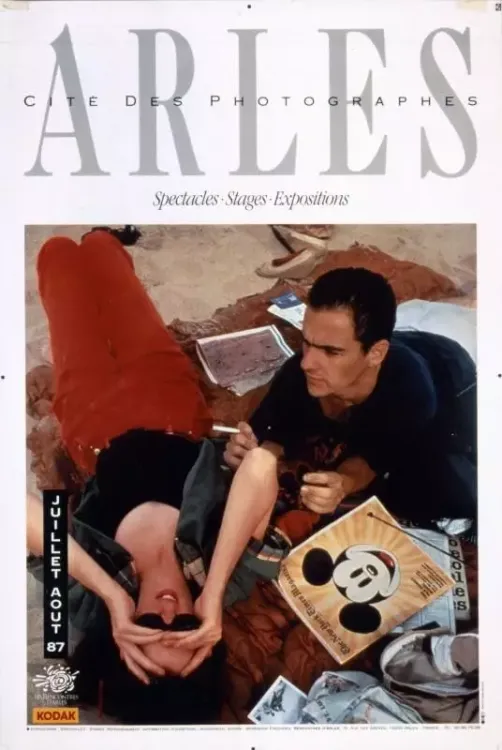
The festival’s evolution has been marked by several key milestones. In 1987, a partnership with Kodak introduced a diversity of contemporary photography through moving images, large formats, and various printing supports (canvas, plexiglass, etc.). This period also marked a departure from classic black-and-white artistic photography toward a greater emphasis on color works. In 2019, the festival celebrated its 50th anniversary, and by 2023, an agreement with the municipality allowed it to occupy a dozen exhibition sites, such as the Espace Van Gogh and the Cryptoportiques.
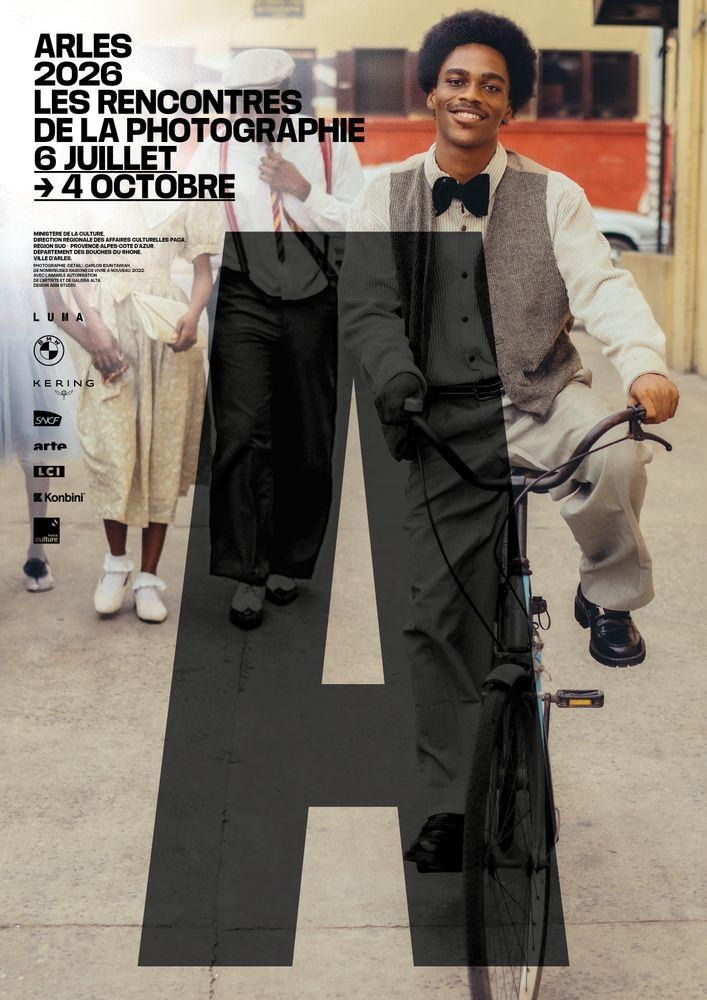
Regarding its economic model, the Rencontres stands apart from other summer festivals: co-productions and self-financing (at 58%) are its major levers. Public subsidies account for only 27%, a stark contrast to the Festival d’Avignon, for example, which counts only 38% in own-source revenue. Another specificity is its list of high-profile financial partners such as Kering, Louis Roederer, and the BMW Group, alongside numerous institutions. Today, the festival is no longer just a summer event but has acquired the status of a player in « cultural permanence » through the acquisition of year-round venues.In 2026, under the title « Worlds to Reread » (Des mondes à relire), the festival engages in an almost archaeological process: using photography to « reread the complexity of the world through side roads. »
II. The Legacy of 2025: Photography as an Act of Resistance
The year 2025 had already introduced the notion of rereading dominant narratives through the prism of identity, memory, and representation. Under the theme « Unruly Images » (Images Indociles), the festival took on a radically political dimension. The focus on Brazil and indigenous struggles left a lasting impression, positioned as a bulwark against cultural invisibilization.
These « dominant narratives » are rooted in rising nationalism, a surge in nihilism, and increased global warming. The festival sought to respond through a celebration of revolt and insubordination, spanning from Australia to Brazil, via North America and the Caribbean.
Several exhibitions were dedicated to Brazil, including « To Ancestral Futures, » which questioned colonial heritage and the struggles of Afro-Brazilian, Indigenous, and LGBT communities. A second exhibition celebrated modernist photography, featuring works by Claudia Andujar for her efforts with the Yanomami people. Feminism was also at the forefront in 2025 within the « Family Histories » section, notably featuring Camille Lévêque and Diana Markosian. Markosian’s series Santa Barbara (Le Découpage) revealed themes of fatherly absence, mystery, and the notion of lost time.
« Unruly Images » was a success; the festival’s professional week welcomed 23,000 spectators, a 15% increase in one year. The choice to blend arts, incorporating acrobats, literature, and journalism with guests like Édouard Louis and Wajdi Mouawad, gave the festival newfound depth and legitimacy.
This « unruliness » acted as a catharsis, paving the way for 2026. While 2025 showcased those who struggle, 2026 focuses on the « decolonization of the gaze. » It analyzes the mechanisms, via archives and textbooks, that erased those struggles. The objective of the new edition is to establish a visual archaeology to relearn how to view hegemonic narratives.
III. 2026: The Archaeology of the Gaze and « Worlds to Reread »
The central thread of this year rests on a powerful idea: our family albums, colonial archives, and image banks are not neutral. They tell a story written by the victors or the dominant classes. This 57th edition anchors itself in various territories, particularly the African continent and the Mediterranean.
The colonial dimension is paramount for this edition. The flagship exhibition dedicated to Paul Strand (1890–1976) and James Barnor in Ghana perfectly illustrates this intent. By revisiting shots from the late 1950s, the festival does more than offer a simple retrospective; it confronts these images with contemporary Ghanaian photographers to analyze how the Western eye constructed a specific mythology of Africa.
The emphasis on Africa and the Mediterranean is not merely a thematic trend; it is a response to the urgent need to decenter the gaze. For decades, Arles was a bastion of European humanist or American documentary photography. By inviting figures like James Barnor or the heirs of the Maison Khadda studio, the festival operates as a form of « cultural diplomacy. » It recognizes that photographic modernity is not an Western monopoly.
This 57th edition explores what theorists call « post-colonial visuality. » How did a Ghanaian photographer in the 60s appropriate portrait codes to assert a nascent national identity? How does today’s Algerian youth use family archives to fill the silences of official history? By asking these questions, the Rencontres d’Arles moves beyond aesthetics to become a geopolitical forum. Photography is treated as a « counter-archive », a peaceful weapon used to contest reductive narratives and restore visual sovereignty to territories long left in the blind spot of major news agencies. Here, photography becomes a tool for reparation, breathing new life and historical sovereignty into the intimate and the private.Another vital focus is the living world: the « Animal Model » exhibition takes on scientific, poetic, and documentary dimensions. Flora is also honored through artists like Michel Poivert and his Flower Power project, which occupies the Summer Garden with five other artists. This prism of the living world raises major questions regarding the rights of non-humans and the sensitivity of the living. This « archaeological » approach to nature seeks to deconstruct the public’s perception of the boundary between the human and the non-human.µ
IV. Scenography at the Service of the 57th Edition
The densification of the festival is played out not only in the choice of works but in the intelligence of their spatial arrangement. In Arles, the city itself becomes a curatorial material. Exhibiting in the underground Cryptoportiques or the Church of the Frères Prêcheurs imposes physical constraints that transform how images are received. In 2026, the scenography leans toward an « ecology of attention. » Facing digital saturation, the festival proposes paths that force a slowdown: dimmed lighting, immersive yet low-tech installations, and a predominant role for silence.
This scenographic approach responds to a desire to move from the « consumption » of images to a « communion » with the works. One no longer skims an exhibition; one inhabits it. By reusing structures from previous years, Arles does more than practice a circular economy; it creates a physical memory of the sites. Regular visitors recognize the pedestals, partitions, and pathways, creating a reassuring familiarity in a constantly mutating visual world. This material permanence becomes the bedrock upon which the ephemeral nature of photography rests.
V. The Rencontres d’Arles: Between Prestige and Paradoxes
The unique economic model of the Rencontres, which relies heavily on self-generated income and co-productions rather than public subsidies, raises questions about the role of culture within local territories.
Arles is currently the stage for a spectacular urban transformation. The patronage of the LUMA Foundation, embodied by Frank Gehry’s tower, has propelled the city into a new economic dimension. This foundation acts as a « starchitect » force: its international reach is a tourist windfall that sustains the city year-round. Conversely, this phenomenon has led to skyrocketing real estate prices and a sense of exclusion for many locals. The festival must navigate the tension between being an elite intellectual event and remaining anchored in its home territory.
The second inevitable question for 2026 is that of AI. Facing the proliferation of synthetic images, the Rencontres has chosen materiality. The festival acts as the « guardian of the real, » prioritizing silver gelatin prints, the grain of paper, and historical evidence. For a photography festival, AI is a civilizational challenge: how can we maintain trust in the image when it can be generated by an algorithm?Finally, the Rencontres are tightening their protocols regarding the festival’s carbon footprint year after year. While the art world is often criticized for its ecological impact (flying artworks, air-conditioning venues), the Arlesian festival is implementing new levers to reduce its impact. The first is circular scenography, reusing almost all supports from one year to the next. The second is the encouragement of « slow tourism, » promoting long stays over express round-trips.
Conclusion: Photography as Political and Social Language
After vividly demonstrating it during the 2025 edition focused on revolt and the visibility of minorities, the Rencontres d’Arles promises for 2026 a form of photography that transcends fine art to reread the world and history. It proves that photography is a way to help us see better, showing us that our vision is always partial and incomplete.
In a century saturated by immediacy, Arles offers a rare luxury: the time for analysis. The 2026 edition is a life-sized lesson in semiology for the public: to look at an image is always, in a way, an act upon the world.
When discussing the icons of modern video games, one name almost invariably sparks heated debate: Bayonetta. Born in 2009 from the boundless imagination of Japanese studio PlatinumGames, this witch of the Umbra with her endless legs and gun-heels is not merely the heroine of a fast-paced, flamboyant beat them all (a genre of video game involving defeating hordes of enemies in successive waves). Over the course of three opus, she has become a veritable case study in sociology and marketing.
The embodiment of “deadly chic”, Bayonetta moves through a baroque universe where she battles angelic and demonic forces with rare audacity. But beyond her devastating combos and her hair-based magic, it is her portrayal that raises questions. Is she a relic of outdated sexism or the figurehead of a new wave of gaming feminism?This character, who seems to have been designed for visual appeal, nevertheless constantly overturns the balance of power, leaving no one indifferent.It is precisely this paradox that I intend to analyse in the first part. Beyond my personal affinity for this franchise, which has shaped my journey as a gamer, the aim is to examine how Bayonetta emerges as a groundbreaking figure. This case study will serve as a foundation for us to put things into perspective, in the second part, by comparing it with two other iconic franchises. This comparison will help us understand how the industry juggles, depending on the era and the audience, between different models of female empowerment.
Part 1: The Bayonetta Paradox: “Male Gaze” or “Female Agency”?
The “Male Gaze” theory: An initial perspective that is (too) narrow?
To fully understand why Bayonetta pushes the boundaries so much, we must first face the obvious: at first glance, she appears to be the ultimate fantasy of a video game industry still deeply steeped in heteronormative codes. To analyze this, one cannot overlook the concept of the “Male Gaze”, theorized by film critic Laura Mulvey in her seminal essay Visual Pleasure and Narrative Cinema (1975). In it, Mulvey explains that, in visual culture, women are often relegated to the status of passive objects, whose primary function is to satisfy the male viewer’s scopic/visual pleasure (the pleasure of looking).
In the case of our Witch of Umbra, there is no shortage of grounds for such criticism. The game, directed by Hideki Kamiya, pulls out all the stops: persistent camera angles focusing on the heroine’s anatomy, pin-up poses in the midst of combat and, above all, that iconic yet controversial gameplay mechanic where her clothes (made from her own hair) vanish to summon demons: to make full use of her powers, she needs to be naked. One might think we are witnessing the height of fetishization here, where the heroine is nothing more than a pixelated doll designed by and for a male gaze in search of excitement. This is, in fact, the main line of attack taken by critics such as Anita Sarkeesian in her Feminist Frequency project, who sees Bayonetta as a typical example of gratuitous “sexification” that undermines the legitimacy of female characters.However, to stop at this superficial interpretation would be a mistake, as Bayonetta is far from being a lifeless wax doll. Whilst the male gaze is certainly present in technical terms (the camera is a tool), the heroine seems to find it amusing, or even to subvert it. She regularly breaks the fourth wall, engaging the player/spectator with winks or sharp remarks, transforming what should be a moment of vulnerability (nudity) into a display of absolute power. She does not submit to the gaze: she captures it, dominates it and turns it into a mockery. As a player, you soon realize that you don’t own Bayonetta ; it is she who grants us, with regal condescension, permission to witness her spectacle. This is where the paradox arises: can we still speak of an object when the subject is so outrageously in control?
“Female Agency”: Empowerment through performance
If we are willing to look beyond the lens of the Male Gaze, we discover that Bayonetta is not the product of passivity, but rather the embodiment of “Female Agency” (the capacity to act). Agency refers to an individual’s ability to make autonomous choices and to exert power over their environment. For our witch, this involves a radical reappropriation of the codes of femininity: she does not dress or move to please, but to perform her own power. She fits perfectly into what third-wave feminist theorists call empowermentthrough self-reclamation.
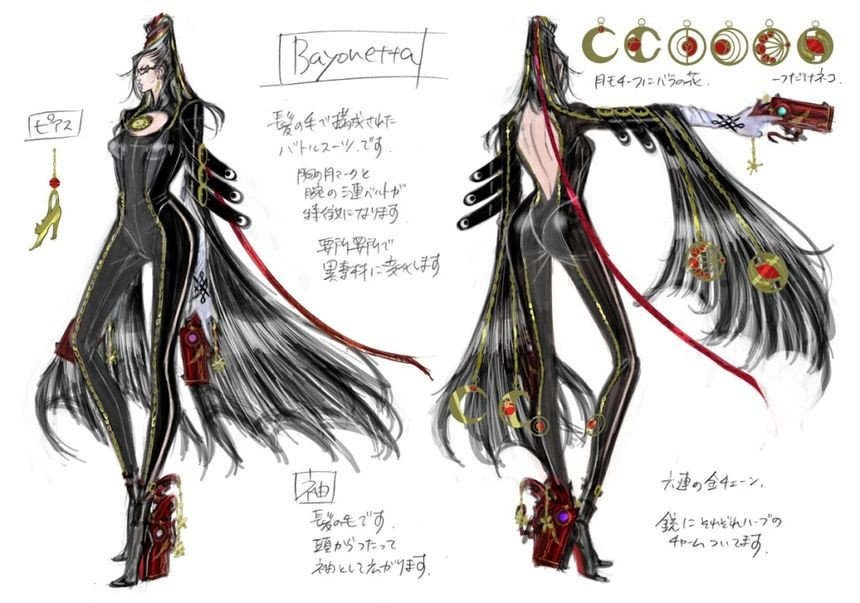
This power manifests itself first and foremost through absolute mastery of the body. Her movements, inspired by voguing and cabaret dance, are not mere aesthetic displays ; they are the language of a character who occupies the space with imperial authority. In every battle, Bayonetta transforms violence into an elegant choreography, reminding us that femininity, even when pushed to its artificial extreme, can be a vehicle for raw power. This is what is known as gender performance: she uses “clichés” (high heels, lace, lipstick, lascivious poses) to subvert them. By turning her heels into guns and her lipstick into bullets, she literally transforms a symbol of sartorial constraint into an instrument of death.But Bayonetta’s agency is also evident in her relationships with others, particularly in her deconstruction of the maternal role through the child character of Cereza in the first game. Far from the image of the “sacrificial mother” or damsel in distress all too often found in video games, she protects the child with a detached, ironic air, without ever sacrificing her own identity or her own pleasure. She proves that a woman can be protective without being defined solely by her maternal instinct. She remains the protagonist of her own story, a woman who chooses her battles, her alliances and her behaviors. Also, almost all men characters of the franchise are categorized either as antagonist (Balder), or caricature (Luka), or even dumb and clumsy (Enzo). In the opposite, women are the true powerful and main characters of the games (Bayonetta, Jeanne, Viola). For us, players, empowerment does not come from the fact that she is “properly dressed” or “respectable”, but from the fact that she is invincible and free. She embodies the figure of the “Femme Fatale” who, instead of leading men to their doom in a dark tale, leads the forces of hell and heaven to their own destruction, all with a smirk.
Mari Shimazaki: The role of the designer and the management of artistic intent
In analyses of the cultural industries, it is often overlooked that the “product” is the result of a human vision. In the case of Bayonetta, the key argument against accusations of sexism lies in its creative origins: whilst the game is directed by Hideki Kamiya, the heroine was designed by a woman, Mari Shimazaki. This detail radically changes the game in cultural management, as it shifts the focus from an object of fantasy to a form of idealized female independence.
Mari Shimazaki has often explained in interviews (notably in the Eyes of Bayonetta artbook) that she was not seeking to fulfil a “sexy character” brief designed to please men. Her intention was to create a woman “whom other women would want to emulate”. This known as mastering brand identity through aesthetics. She imbued the character with a haute couture wardrobe and accessories (such as her famous glasses) that lend her an air of intellectual authority and self-control. By insisting on these glasses against the advice of some team members, Shimazaki created an anchor point: Bayonetta is not just a body; she is a mind, a style, an attitude. Need I even mention that she is a witch, a figure who has been so terribly persecuted throughout centuries of patriarchy, yet who symbolizes the woman who possesses knowledge, power and freedom: Bayonetta embodies all of this, the embodiment of a woman liberated from all gender-based constraints, revolutionary, beautiful and a warrior.From a production perspective, this decision is a stroke of strategic genius. By entrusting the design to a woman, PlatinumGames has created a character that resonates with the aesthetics of fashion and luxury, capturing an audience that extends far beyond the typical “beat them all” gamer, reaching women and queers audiences. It is this artistic direction that allows the character to become a virtual fashion icon, capable of being adapted for other media. The empowerment here stems not only from the scriptwriting, but from the thoughtful visual design: every detail, from the 1960s beehive-inspired hairstyle to the catwalk stride, screams confidence and a refusal to compromise. The Shimazaki case proves that diversity in creative teams does not merely serve a social cause ; it enriches the artistic vision and transforms a simple “action game” into a cult classic with an unshakeable visual identity.
Part 2: Further examples of strategic shifts: Lara Croft and Aloy – moving away from the fetish towards a new cultural standard
If there is one figure who single-handedly embodies the industry’s transformations and the dilemmas of cultural management, it is Lara Croft. To understand the contrast with Bayonetta, you must analyze Tomb Raider not merely as a series of games, but as a brand lifecycle management strategy. In 1996, Lara was born into a unique context, caught between a technological revolution and aggressive, exaggerated marketing aimed at capturing the attention of a teenage male audience.
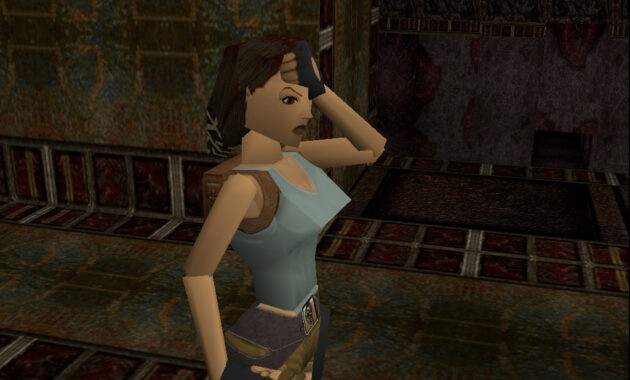
Indeed, the PlayStation 1 was a technical revolution, and to sell this console, Sony and the publisher Eidos needed a living “technical demo”. Lara Croft was conceived as an assembly of polygons designed to showcase the power of 3D. Her measurements (the famous exaggerated conical bust, which was initially a developer’s cursor error but retained for marketing purposes) were used as a technological selling point. She was a demonstration “object”, a glossy icon whose empowerment is paradoxical: she is certainly a solitary, fabulously wealthy adventurer, but she remains a prisoner of a pin-up image over which she does not seem to have full control. The marketing wasn’t selling Tomb Raider (the exploration game); it was selling Lara (the sexy icon).
However, by the early 2010s, this strategy had run its course. The image of “Lara the bimbo” had become a hindrance to the franchise’s growth, as the player base diversified and narrative expectations evolved. This is where one of the most famous rebranding campaigns in the history of video games came into play, with the 2013 reboot orchestrated by Crystal Dynamics. To save the intellectual property, a strategic shift was needed: the heroine had to be “de-fetishized” in order to humanize her.The design of the new Lara Croft marks a radical break with the past: realistic body measurements, functional survival gear and, above all, an emphasis on her psychological vulnerability. We are no longer being sold a fantasy of power, but a story of resilience. This choice is not merely moral or political; it is eminently economic. By transforming Lara into a survivor with whom players can finally identify emotionally, the studio has opened the brand up to a much wider audience. This rebranding has enabled a shift from a model based on visual appeal (the pure Male Gaze) to one based on narrative engagement. Unlike Bayonetta, who embraces her hyper-femininity to turn it into a subversive performance, the new Lara Croft chooses to distance herself from it in order to gain legitimacy as a “serious” character within the contemporary cultural landscape.
Aloy and the “Neutral” heroine: Efficiency as the new standard
Whilst Bayonetta embodies hyper-femininity and Lara Croft represents a transition, Aloy (from the Horizon series) epitomizes the culmination of a new paradigm: the functional heroine. Aloy is a fascinating case study because she embodies the neutralization of gender in favor of competence. Here, empowerment no longer comes through seduction or the reappropriation of sexual codes, but through raw efficiency that renders the character’s gender almost secondary to the narrative.
Aloy’s design, created by Guerrilla Games, is a marketing statement in itself. Her appearance is dictated by her environment and her function: her clothing is a patchwork of hides and mechanical parts, her hair is practical, and her round face (deliberately less “glamorous” than usual standards) has even sparked absurd debates on social media. These reactions precisely highlight the project’s success: Aloy is not there to please the viewer ; she is there to survive and solve an age-old mystery. She embodies what might be called technocratic empowerment: her power stems from her ability to understand and manipulate technologies that no one else has mastered.From a strategic perspective, Sony’s choice of Aloy reflects a commitment to inclusive universality. By creating a character whose femininity is “neutral” (neither denied nor emphasized), the studio breaks down gender barriers for the audience. This is an extremely effective brand management strategy for a big-budget franchise: Aloy becomes a universally accepted icon, capable of representing the PlayStation brand without bearing the burden of controversies linked to sexualization. Aloy proves that video games have reached a level of maturity where a woman can finally be defined by her actions and technical intelligence, establishing efficiency as the new standard of female strength.
Conclusion
On reflection, it becomes clear that the evolution of female characters in video games is not simply a reflection of our societal progress, but also the result of increasingly sophisticated strategic management within the creative industries. Whether we look at Bayonetta’s subversive performance or Lara Croft’s humanistic rebranding, the conclusion is the same: the heroine is no longer a mere avatar ; she is a cultural asset whose identity must be managed with the precision of a master craftsman.
The Bayonetta case study teaches us that a strong, divisive brand identity can be a powerful driver of loyalty, provided that it is underpinned by a clear artistic vision, such as that of Mari Shimazaki, capable of transforming the “gaze” into “power”. Conversely, the emergence of characters such as Aloy demonstrates the industry’s desire to standardize inclusivity, transforming effectiveness into a new form of liberating neutrality.The future of video games probably does not lie in the choice of a single model, but in this cohabitation of diversity. By mastering these new codes of empowerment, studios are not just selling games, they participate in the construction of a collective imagination where genre becomes a storytelling tool rather than a marketing constraint. As future cultural professionals, our role will be to continue to navigate this paradox: that of reconciling the imperatives of the market with the need to offer ever more complex, autonomous and, ultimately, human representations.
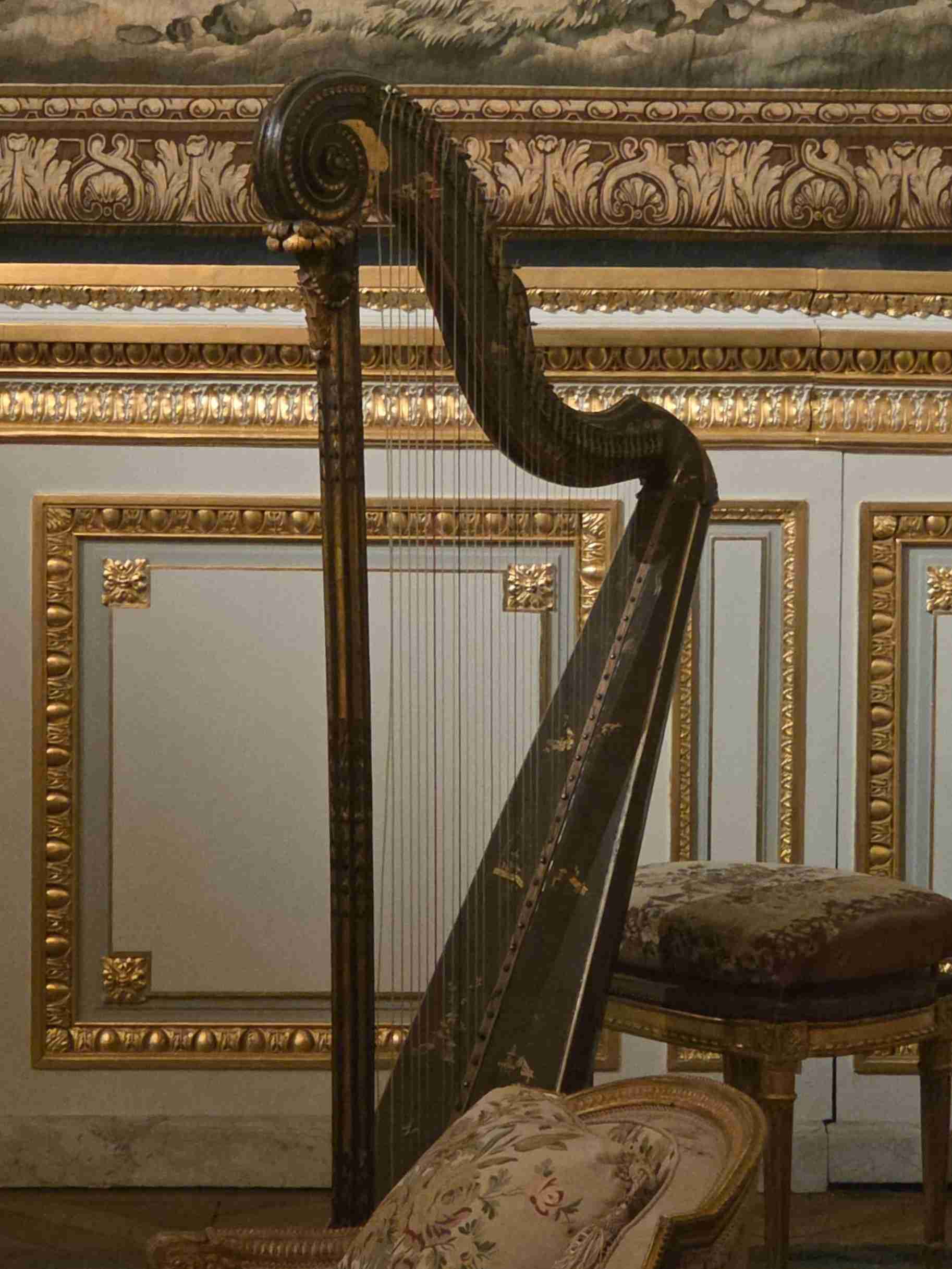
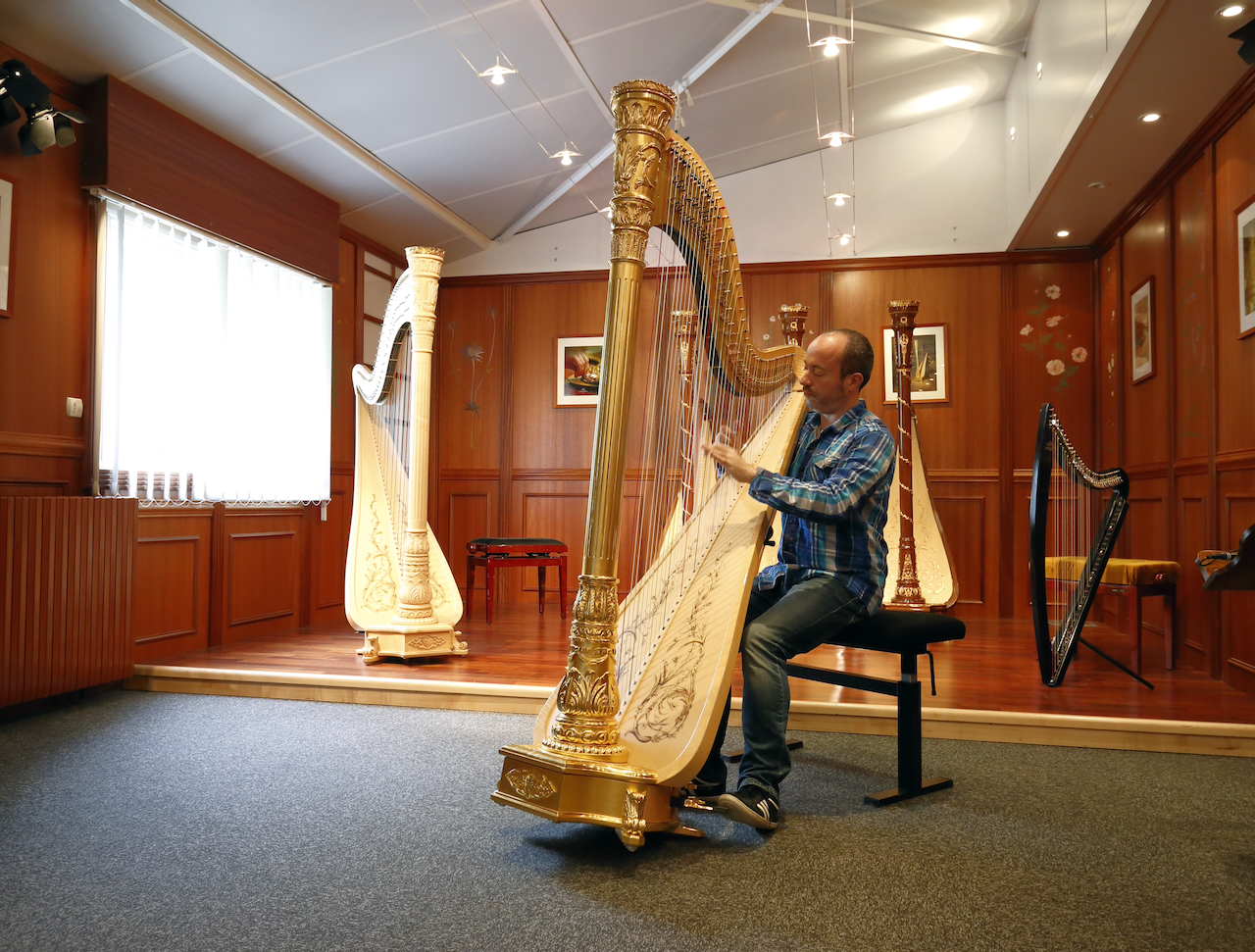
Imagine yourself seated in a vast concert hall. You have long anticipated this event, and you join in a warm round of applause as some thirty musicians take their places. Before you, the stage is a tapestry of instruments, such as the familiar silhouettes of violins and cellos, the gleam of brass, woodwinds, or percussion. Yet, positioned to the left in the background, one instrument commands your attention with its sheer majesty: a harp, its column adorned with intricate gold leaf and floral patterns.
As the performance unfolds, you notice that although the harp may play less frequently than its orchestral counterparts, its sound, warm, resonant, and almost ethereal, stirs deep emotions and sparks the imagination. You find yourself wonderstruck: surely such a grand instrument must be a challenge to master? What is its history? What is the cost of such craftsmanship? And how on earth does one transport it?
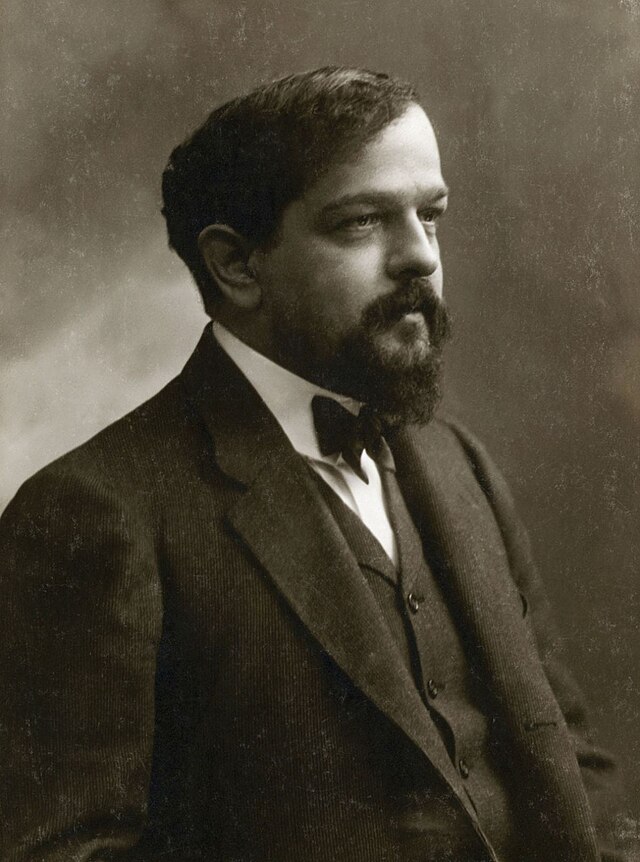
These are precisely the questions that may have crossed the minds of those attending the remarkable concerts of La Folle Journée in 2026. « Rivers » was the theme of that year’s edition of this world-renowned classical music festival, which has been a staple of the Nantes cultural scene since 1995. As an instrument uniquely suited to evoking the fluidity of water and the grace of a flowing stream, the harp was a natural centrepiece. It featured prominently in masterpieces such as Claude Debussy’s Dances for Harp and String Orchestra (1904), beautifully performed by the ensemble Les Apaches!, and a creative arrangement of Mussorgsky’s Pictures at an Exhibition (1874) for orchestra, harp, and accordion by the Symphonie de Poche.
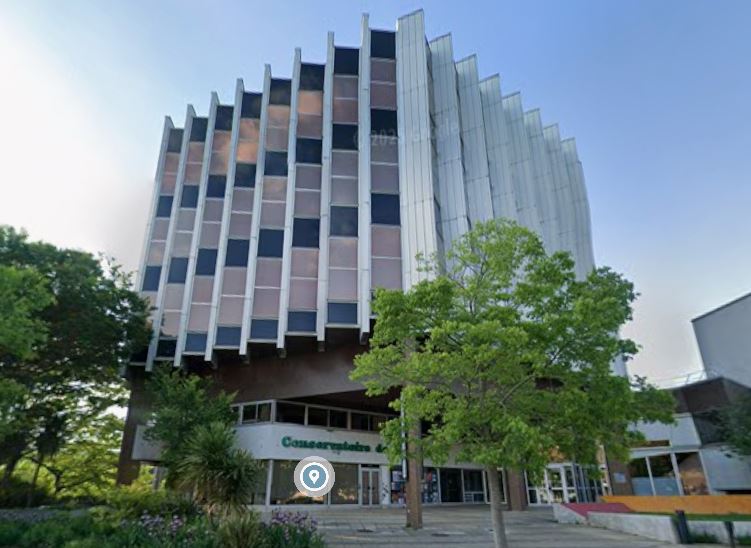
Now, let me endeavour to answer these questions and pay tribute to the harp, an instrument that, in my view, remains unfairly shrouded in mystery. To explore its secrets, I will briefly trace the history of the instrument before turning to two leading professionals that I interviewed for the very purpose of unveiling the mystery of harp: Jakez François, harpist and President of Camac Harps, and Nathalie Henriet, harp professor at the Conservatoire de Nantes.
Defining a harp, an instrument that sparks the imagination
At its core, the harp is a plucked string instrument where the strings, of decreasing length, are stretched between a neck (the console) and a resonator (the soundboard). This soundboard typically takes the form of a truncated cone and sits nearly perpendicular to the plane of the strings. This unique orientation distinguishes the harp from the lute or zither families, where strings run parallel to the resonator.
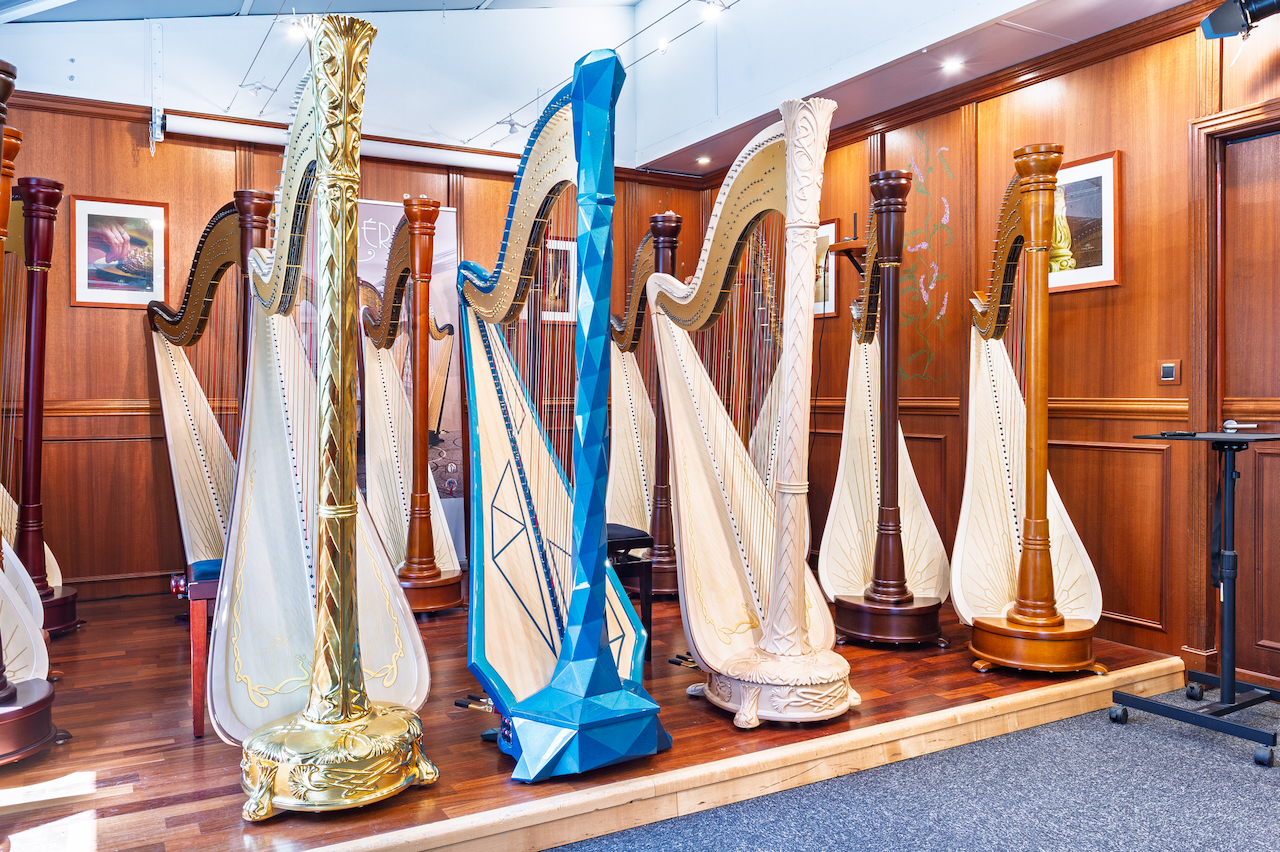
Today, a modern concert harp is a feat of engineering, boasting over 1,400 precision parts and a structure often compared to a grand piano to withstand the immense tension of its fourty-seven strings. This complexity is a relatively recent development in a history that spans millennia.Two main types of harp are distinguished today: the Celtic harp, with levers and no pedals and around 30 strings ; and the classical harp or pedal harp, with seven pedals and 47 strings.
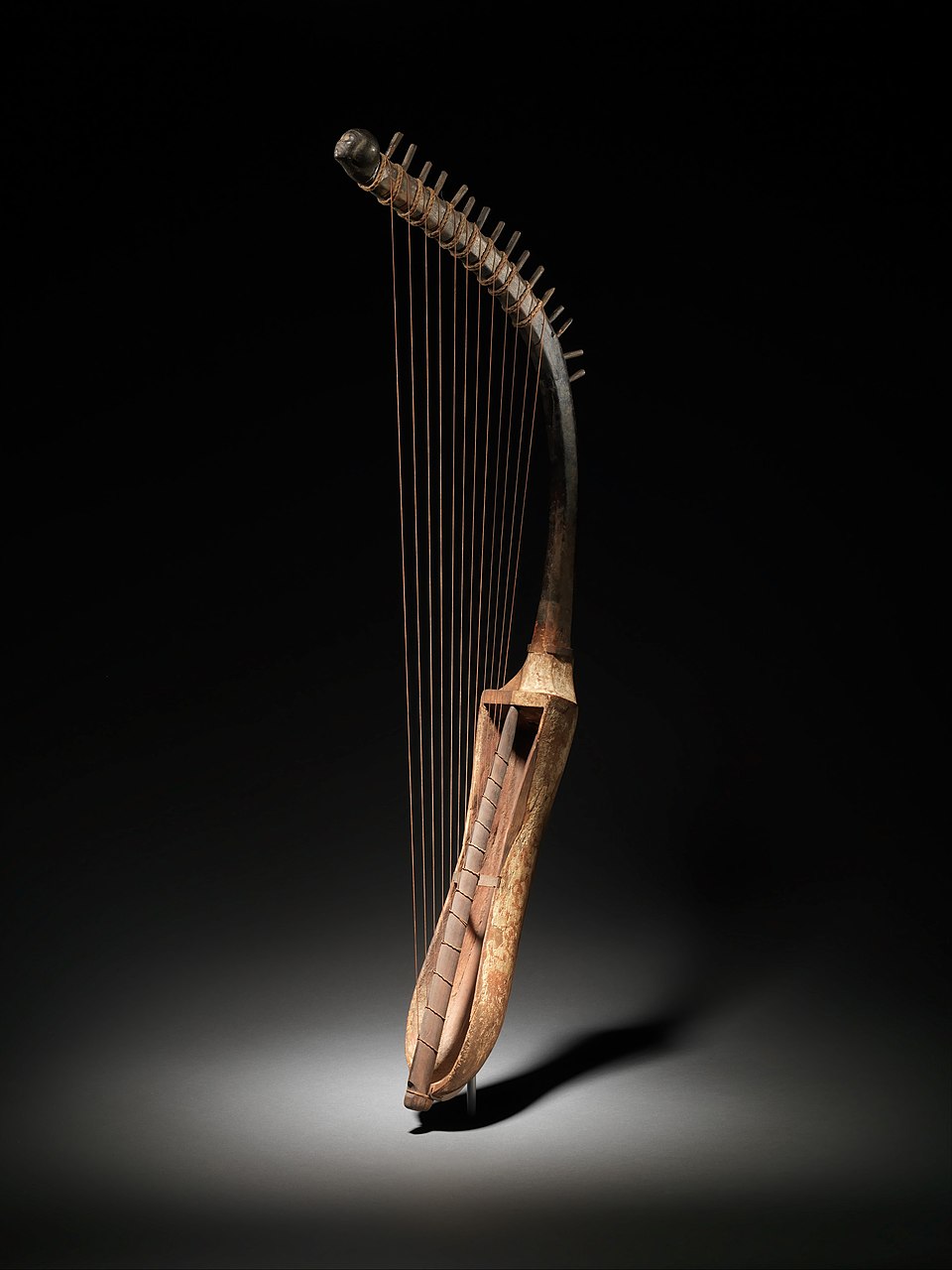
The principle of the harp has been whispered through the ages since high antiquity. Archaeological records confirm that the Sumerians and Egyptians were already masters of the instrument around 2700 BC. These early iterations were primarily « arched » or « bow » harps, where the neck extends from the body in a continuous curve.
By 1100 BC, the Phoenicians began spreading the instrument toward the Western edges of Europe, but it was not until the 8th century AD that it became a cultural staple, particularly in Nordic and Celtic lands. It was here that the « triangular » harp emerged. By introducing a pillar – called “the column – to connect the neck and the body, harpers could significantly increase string tension. This structural evolution led to the medieval « Gothic » harp, a diatonic instrument that served as the direct ancestor of our modern orchestral giant.
The birth for the chromatic harp
The 16th century saw the birth of the chromatic harp. Irish luthiers experimented by adding a second row of strings, a design famously documented by Vincenzo Galilei in 1581, which featured 58 strings across two rows. However, managing such a forest of strings was cumbersome!
The breakthrough came from Bavaria in 1697, when Jakob Hochbrucker designed a system of pedals at the base of the instrument. These pedals were linked to hooks that shortened the strings by a semitone. This « single-action » harp became the toast of 18th-century salons, beloved by the likes of Marie Antoinette.
The Erard revolution
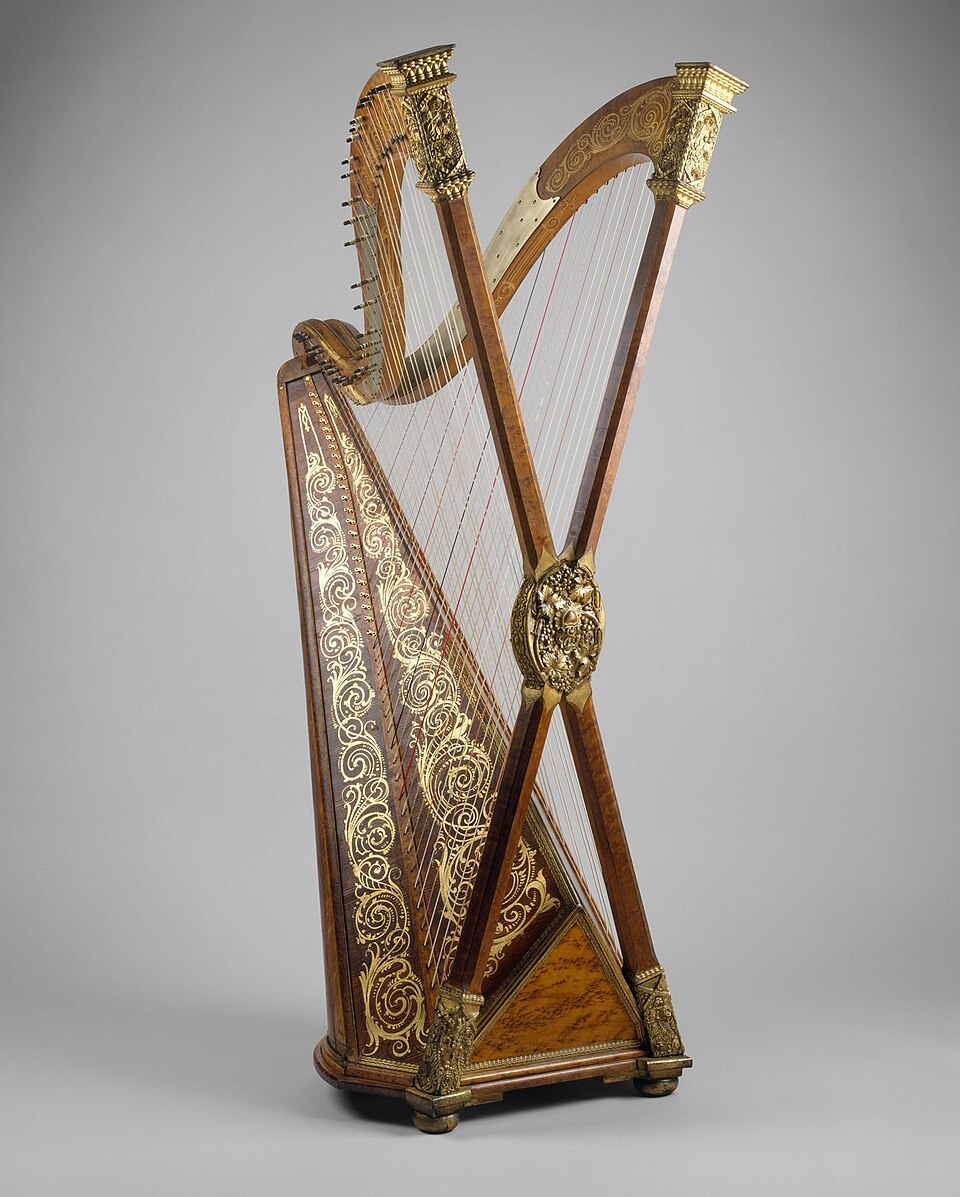
The final metamorphosis occurred in 1811. The legendary luthier Sébastien Érard perfected the « double-action » mechanism, a masterpiece of horological precision. By allowing each of the seven pedals to move into three distinct positions (flat, natural, and sharp), Érard granted the harpist total chromatic freedom across its massive range (the largest of any instrument save the organ and piano).While the harp had made cameo appearances in the works of Mozart and Handel, it was the Romantic era that truly embraced its evocative power. Hector Berlioz famously paid tribute to the instrument in his Symphonie Fantastique (1830). From the sweeping glissandos of Claude Debussy and the lush harmonies of Richard Wagner to the avant-garde virtuosity of Luciano Berio’s Sequenza II, the harp has moved from the background to the front of the stage.
One might assume, gazing upon this labyrinth of strings, that to play the harp is to wrestle with an impossible puzzle. Allow me to let you in on a secret: the underlying logic is far more intuitive than it first appears. In many ways, the harp shares a profound kinship with the piano. Imagine the strings as the white keys of the keyboard, laid bare before the musician. The challenge, however, lies in those elusive black keys (the sharps and flats).
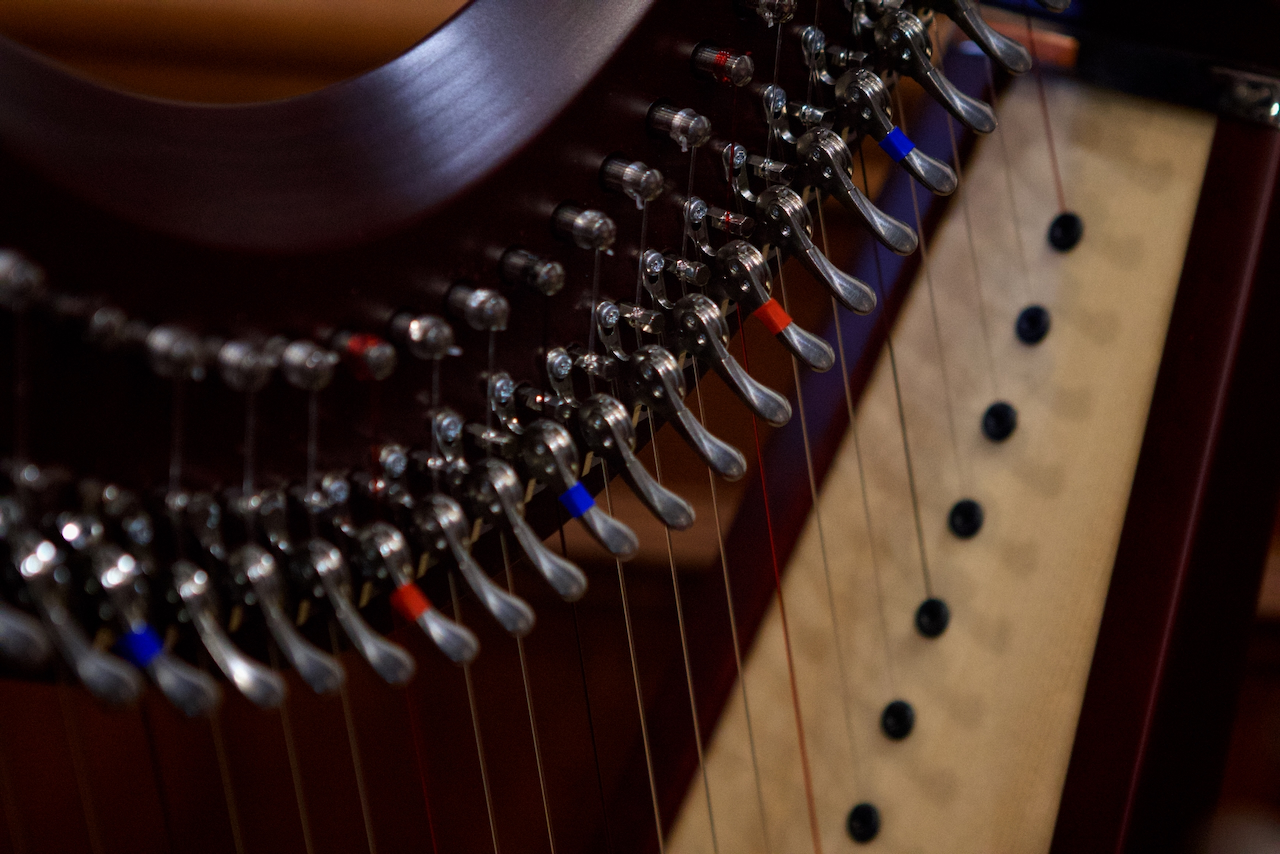
To navigate these chromatic shifts, the harpist must physically alter the tension of the strings, a technique that varies with the instrument’s lineage. On a Celtic harp, this is a manual affair, requiring the player to flick small levers at the top of the strings with the left hand. On the grand pedal harp, however, the task moves to the feet. It is here that the instrument demands a unique kind of choreography. Each of the seven pedals governs all the strings of a specific note – one for every ‘C’, one for every ‘F’, and so on. But herein lies the paradox: while we have seven pedals to manage, we are equipped with only two feet. For a beginner, a piece that might be elementary on a piano can become a formidable technical hurdle on the harp, requiring the musician to anticipate tension changes with the precision of a dancer.
Concrete aspect of a harp today: from transporting to pricing
Transporting a harp: a real challenge !
To behold a concert harp is to admire a monument, but for the harpist, it is a monument that must be moved. Like any master-crafted instrument, the harp is notoriously fragile, demanding a level of care akin to transporting fine crystal. There is even a specific way to its repose: should the instrument need to be laid down, it must always rest on its right side. This is a technical necessity to protect the intricate mechanical linkages from the immense pressure of the strings. To grasp the physical commitment required, one need only look at the sheer scale of these instruments:
a celtic harp (reference: Mélusine, Camac harp): 14,5 kg, the weight of a 4 year-old child), 137cm
a classical harp for study (reference: Clio straight, Camac harp): 30 kg, 172cm, almost the height of Rhihanna!
a professional concert harp (reference: Atlantide prestige, Camac harp): 38kg (the weight of a 12 year-old child!), 188cm
A string instrument… with all the associated difficulties
The physical toll extends beyond the heavy lifting. A harp’s voice depends entirely on the composition of its strings, typically a blend of nylon, carbon, or, most traditionally, animal gut. For the classical purist, gut strings are the gold standard; they offer a warmth and roundness of tone that is, in my view, unparalleled. This beauty comes at a price. These strings are unforgiving on the hands, and a dedicated harpist must be prepared to endure the inevitable blisters that are the « scars of the trade » before callouses finally grant relief. Listen to “La source” by Hasselmans, played by Isabelle Moretti, to embrace the beauty and velocity of some masterpieces: https://youtu.be/eAfLvTJr4PQ?list=RDeAfLvTJr4PQ
A price that discourages many
Let’s be honest: the harp is an instrument that demands a significant financial commitment. Here are the average price for the three categories of harp I detailed earlier :
a celtic harp: around 8 000€
a classical harp for study : around 12 000€ (7 000€ if second-hand)
a professional concert harp (reference: Atlantide prestige, Camac harp): from 22 000€ to… 50 000€ or more!
Harp creation, a story of patience, care and… after-sale service!
Now, let’s hear from the leader of harp manufacturing, Camac Harps, by the president of the company itself: Jakez François.
1) You are both a harpist and the president of Camac Harps. How did you move from being a musician to working in instrument making?
It was not planned at all. It really happened through circumstances. My original training was as a classical harpist: I followed the usual conservatoire path and began my career as a freelance musician. However, I had known the founder of Camac Harps since childhood because we lived in the same region. When I finished my studies, he asked whether I would occasionally come and help develop the company’s classical harps. At that time the company mainly produced Celtic harps.
As I had a classical harp background, the proposal interested me immediately. After a few months, he invited me to join the company full-time, working on technical adjustments, maintenance, and after-sales service. Gradually I also became involved in the commercial side and in representing the instruments around the world.
Looking back, I think he quickly realised that we might one day become partners and that I might eventually take over the company. During the twelve years we worked together, I learned every aspect of the profession. When he passed away unexpectedly, I was ready to continue the work.
2) Do you remember the moment when you decided to become a professional harpist?
In truth, there was no single defining moment. As a child I performed well in competitions, which naturally encouraged me to continue. After finishing school, I began studying musicology at university. Very quickly I realised that this was not the right path for me. I loved music, but I preferred performing it rather than studying it academically.
I therefore decided to focus entirely on the harp and pursued professional training. But shortly afterwards the opportunity to join Camac arose, and my career took an unexpected direction.
3) Does your experience as a harpist influence the decisions you make within the company?
Absolutely. Being a harpist influences every decision I make, from the choice of materials to instrument design, as well as our relationship with musicians and the artistic projects we support. One area that is particularly important to me is after-sales service. Building a harp is extremely complex and involves many different crafts, and the work does not end once the instrument is delivered.
A harpist depends heavily on their instrument and on the manufacturer for maintenance. Unlike the piano, there are very few specialised harp technicians in the world. In some countries there are none at all. For that reason, after-sales service is essential. There have been occasions when I have taken a plane myself to repair an instrument when a musician urgently needed help.
I remember travelling to Sydney, for instance, to solve a technical issue before an important event. I landed, fixed the harp with my tool box in ten minutes, and then flew straight back. For me, this is simply part of honouring the trust musicians place in us.
4) How do you see the future of the harp market?
The harp will probably remain a relatively specialised instrument. It is demanding both technically and financially, and it is very complex to manufacture. However, since the 1970s the demand has grown steadily. The growth is not dramatic, but it is stable.
The development of the instrument largely depends on teachers. They are the ones who introduce the harp to students and create new classes in conservatoires and music schools. Unlike other instruments, the harp does not grow through trends driven by pop culture or film.
There are still many places where the harp is not taught, so the potential for development remains significant, even if progress will continue to be gradual.
5)Looking back over your years at Camac Harps, what have been some of the company’s defining moments?
The past thirty or forty years have been full of significant milestones. One early example dates back to 1990, when we launched our first electric harp, which we called the “Blue Harp.”
It was both a technical innovation and an unexpected marketing success. The instrument was simply named after its colour – it happened to be blue – but the term eventually became so widely used that it turned into a generic expression. Even today, some competitors refer to their own electric harps as “blue harps,” even though they are neither blue nor made by Camac. It is quite amusing to see how a simple name can become a common language, and it is the proof of the success of our innovation.
Another major milestone was the redesign of our concert harps. In the early 2000s, I began an extensive programme of acoustic research with the aim of rediscovering the sound of the great French harps of the nineteenth century.
This research lasted no less than fourteen years and required twenty-two prototypes! The difficulty with such work is the time involved. If you change something, for example the thickness of the soundboard in a particular octave, it can take three to six months before you hear the result on a new prototype. By the time it arrives, you have often almost forgotten what you wanted to test.
Eventually, in 2017, we introduced this new acoustic design. It marked a real turning point for Camac. Musicians responded with remarkable enthusiasm.
One moment in particular remains unforgettable. The Vienna Philharmonic Orchestra, often regarded as one of the finest orchestras in the world, chose one of these harps. The first time I saw it on television during the New Year’s Concert in Vienna, broadcast worldwide, I felt an immense sense of achievement. Seeing an instrument that represented fifteen years of research played by such an orchestra was truly extraordinary.
6) How long does it take to build a harp, from the first piece of wood to the finished instrument?
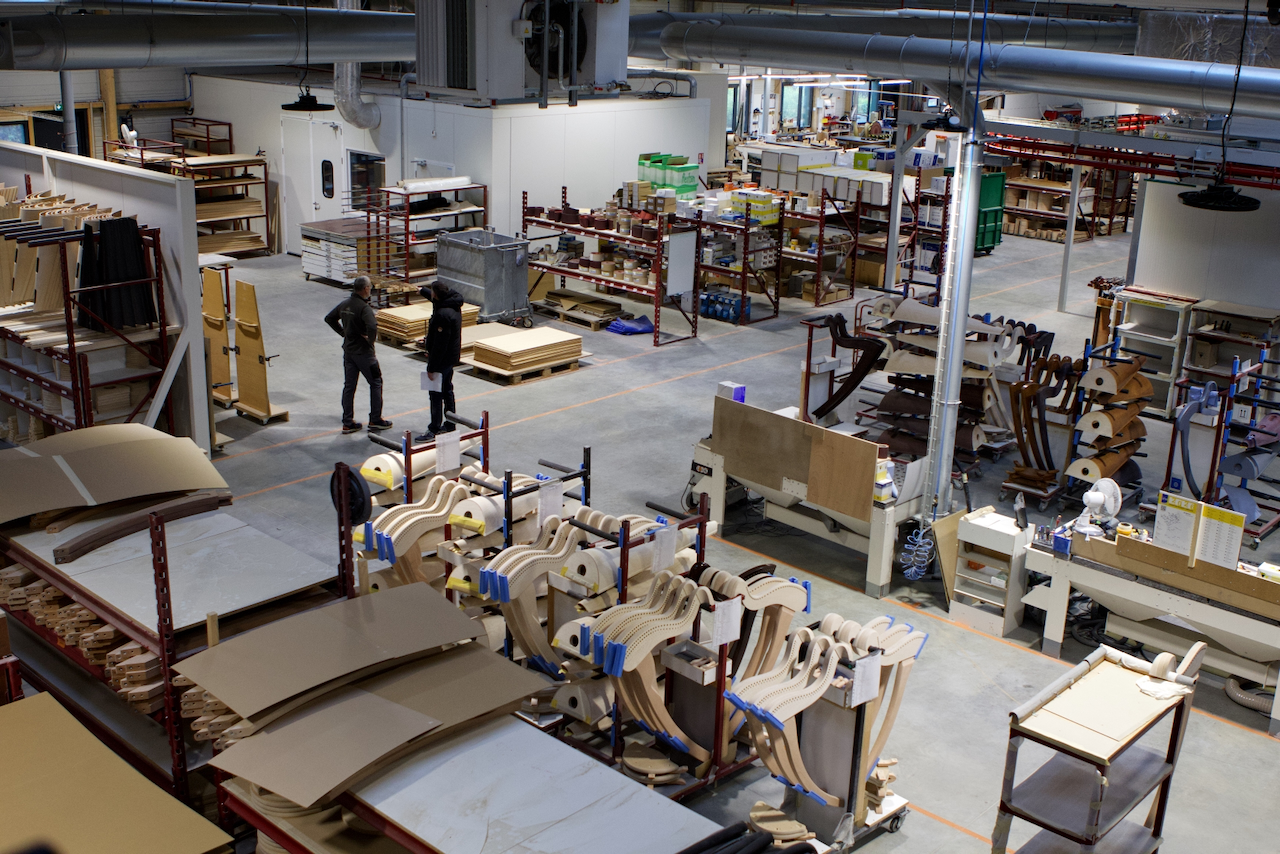
For a Celtic harp, once the wood is cut, the finished instrument is ready in about two months. Of course, we do not build them one at a time. Production takes place in batches. We usually prepare between fifteen and thirty pieces of each component and then assemble the instruments in smaller series. After all the stages (shaping, assembling, adjusting, gluing, varnishing and stringing), the harp can be played roughly two months after the process begins.For a pedal harp, however, the timeframe is much longer: at least six months, and sometimes more than a year are needed. There are far more components, a sophisticated mechanical system, and a much more elaborate aesthetic finish.
7) What would you recommend to someone who wants to discover the harp today?
Today it is easier than ever to discover the harp. Thanks to digital platforms such as YouTube or Instagram, anyone can instantly access an extraordinary variety of styles and performances. Simply typing “harp” into a search engine reveals an immense musical universe: classical repertoire, traditional music, pop, experimental projects…However, I would still recommend starting with the great classics. For example, Ravel’s Introduction and Allegro or Debussy’s Dances are two jewels of the chamber repertoire with harp. For Celtic harp, the range is even wider, from Alan Stivell to the younger Breton musicians of today, through Irish tradition or even pop artists such as Björk, who have collaborated with harpists.
I also enjoy hearing pop artists working with harpists. These collaborations often produce fascinating results.
During the Covid period we also recorded about forty concerts that are still available on the Camac YouTube channel. They offer a wonderful overview of everything that can be done with the harp.
8) If you were a piece of music, which one would you be?
Without hesitation, Ravel’s Introduction and Allegro for harp and chamber ensemble.
For me, it perfectly represents the essence of French music, with an extraordinary palette of colours, and great elegance. It also has an interesting historical dimension. The work was commissioned by the harp maker Érard, inventor of the modern pedal harp, who wanted to demonstrate the musical possibilities of the pedal harp. In a sense, it was also a sort of marketing project.
I find it fascinating that a commission with such a practical objective ultimately produced one of the greatest masterpieces of the harp repertoire. It brings together two worlds that are very close to me: art and enterprise.
9) If you could live in any period of music history, which would you choose?
I would choose the early twentieth century without hesitation. It is what we now call the golden age of French music, with composers such as Saint-Saëns, Fauré, Debussy and Ravel. The company was actively involved in developing the repertoire and commissioned works from composers. Ravel’s piece is a perfect example. Setting aside the difficult historical context of the time, particularly the war, artistically it was an incredibly fertile and creative moment.
Harp teachers: the profession that has kept the harp alive
Harp teachers are crucial in the transmission of the practice of such an instrument. In order to discover more about harp teachers and musicians, I would now like to give the floor to Nathalie Henriet, professor at the Conservatoire of Nantes.
1) Could you introduce yourself in a few words?
I am a harpist, a graduate of the Lyon National Superior Conservatoire of Music (CNSM), and a prizewinner of several international competitions. I have largely devoted my career to teaching, particularly at the Nantes Conservatoire, while continuing to perform in concerts, both in chamber music and in the classical repertoire.
My first harp teacher was Odette Le Dentu. She was the person who truly instilled in me a love for the instrument. The first teacher one encounters is often decisive: they can spark a passion that stays for life. She showed remarkable patience and played a crucial role in my early development. After she passed away, I continued my studies with Berthile Fournier, a highly respected teacher in the Paris region. I was later admitted to the Lyon National Conservatoire in the class of Fabrice Pierre. That encounter was particularly important: he truly taught me the demands and techniques of professional harp playing.
Over the past few years, I have also developed another aspect of my work: therapeutic harp practice. I trained through the International Program of Harp Therapy, an American programme that has existed for over thirty years and has only recently begun to develop in France. This approach uses the musical qualities of the harp such as its modes, intervals, and above all its rich resonance to support people on an emotional and physical level. It is sometimes referred to as sound therapy, although in this case the focus is musical: the instrument itself and the music become the therapeutic medium.
2) When did you first encounter the harp?
My first encounter with the harp was at a concert. My mother is a pianist, so I grew up in a musical environment. At home, I was constantly exposed to different instruments, and I regularly attended chamber music concerts with her. I began with the piano, but I never felt particularly drawn to it. I considered learning the cello, then the oboe… and one day I heard the harp. At that moment, I simply knew that harp was the instrument I wanted to play.
3) What happened after your studies?
I first spent five years teaching at the Angers Conservatoire. I later obtained a position at the Nantes Conservatoire, where I still teach today. In our field there are relatively few teaching positions, so career paths often depend on the opportunities that arise. My first position in Angers came about because the director of the conservatoire had been on the jury for my final examination in Lyon. He encouraged me to apply for the post, and I eventually won the competition.
I mainly play a Camac classical harp with 47 strings. For therapeutic contexts I often use a Camac Isolde Celtic harp, which is lighter and easier to transport, with 38 strings. In some situations, particularly in hospitals, even smaller harps are used. These are designed to be easily carried from one room to another, which is very practical when working in that type of environment.
5) The harp is often associated with something magical or even divine. Is that an image you relate to?
That almost mythical image of the harp does resonate with me, especially in the context of therapeutic harp practice. Historically and symbolically, the harp has often been associated with the sacred. In many cultures it was linked to divine or spiritual practices, for example in ancient Egypt, where it was played in religious contexts.
However, I identify less with another image sometimes attached to the harp: that of a decorative salon instrument linked to aristocratic refinement. This perception developed particularly towards the end of the eighteenth century, when Marie Antoinette herself played the harp. Let’s note that she was a remarkable harp player. At that time the instrument became fashionable in Parisian salons, and there were dozens of harp teachers in the city. This contributed to the idea of the harp as a rather feminine instrument and decorative object. During the nineteenth century, numerous virtuoso harpists, especially men, developed international careers and significantly expanded the instrument’s repertoire.
6) According to you, what makes the harp unique compared to other instruments?
The harp is a very distinctive instrument, both visually and acoustically. Even its shape carries symbolic meaning: seen from the side, it can resemble a heart, and when two harps are side by side, one can see a pair of wings.
Despite that, what truly sets it apart is its resonance. When you play a note on the harp, all the other strings tuned to the same pitch begin to vibrate sympathetically. The vibration continues long after the string has been plucked, which is not the case with many other instruments such as violin – the sound stops when the violin bow does not rub the strings anymore -, or flutes – the sound disappears when the breath stops. In addition, when the harp rests against the player’s body, those vibrations can be physically felt and help to diminish stress. This vibrational richness is precisely why harps are interesting in therapeutic contexts.
7) In what contexts do you use therapeutic harp practice?
Therapeutic harp practice can be used in a wide range of settings. In the United States, for instance, it is widely used in palliative care, where it accompanies people at the end of life and can also provide comfort for their families.
It is also used in hospitals, for example in neonatal units with premature babies, or in intensive care environments. In places filled with technical equipment and constant mechanical sounds, music can help create a more calming sonic environment.
The work relies heavily on adaptation and resonance: the musician responds to the person’s breathing, heart rate, or emotional state. It is especially useful to help people – suffering from addictions, cancer, Parkinson or any disease that fosters stress – to relax.
Therapeutic harp can also be used in wellbeing contexts: individual sessions for stress or sleep difficulties, guided meditation accompanied by the harp, or sound relaxation workshops.
In every case, the aim is to restore a sense of harmony through sound and vibration.
8) Have you noticed any changes in the profile of your students at the conservatoire in the last decade?
The profile of students has evolved quite a lot in recent years, although this applies to conservatoires in general rather than specifically to the harp. Today, lots of students come for a period of discovery. they complete a cycle and then move on to something else, instead of building a musical career eventually. Personally, I believe that it is a positive change. I would like the harp to be more accessible to a wider range of people, particularly adults who might wish to learn the instrument for enjoyment or wellbeing rather than with professional ambitions.
Conservatoires are also gradually developing projects aimed at reaching prevented audiences, such as people from underrepresented communities, those with disabilities, or individuals who might not otherwise have access to artistic education. These initiatives are still relatively modest, but they are important.
For example, I took part in a project with a medical-educational institute where small groups of children come to the conservatoire to discover different instruments. The aim is not formal training but simply an encounter with music. In that context, the harp can become a form of non-verbal communication, which is particularly interesting.
9) Is there a student who has particularly stayed with you?
I once taught a student who seemed to have difficulty concentrating during lessons. Occasionally she would suddenly lose track of what we were doing, as if something had briefly interrupted her attention.
Eventually it turned out that she was suffering from a disease. Once the condition was diagnosed, it could be properly treated. It reminded me that music teachers can sometimes be among the first to notice certain signs, simply because musical practice requires such a high level of focus and awareness.
The harp, an instrument that no longer holds any secrets for you!
From Apollo’s lyre to Érard’s modern masterpiece, the harp has acted as a bridge between the mundane and the mythical, a vessel for our imagination that has sparked magic in every era it has touched. Its silhouette have been endlessly refined by the passage of time.
It is true that harp concertos may not grace every concert programme, and the instrument itself often remains a silent sentinel in the back of the orchestra. However, no other instrument can truly replicate its presence. No electronically generated sound can ever hope to mimic the organic tranquility of the harp’s wooden soul resonating in a concert hall. Even from an economic perspective, the harp world remains a fascinating niche, a testament to a level of craftsmanship and tradition that is rare in our modern age.Writing this has been my own small tribute to an instrument I hold dear, and one I continue to play whenever time allows, and perhaps, one day, I shall finally fulfil my dream of owning a Clio Straight in that luminous natural maple. For those who wish to hear its wonders for themselves, I can think of no better introduction than the performances found on the Camac Harps YouTube channel, a recommendation shared by both Nathalie Henriet and Jakez François, whom I thank most sincerely for their invaluable time and expertise.
Tuesday, March 17, and Wednesday, March 18, 2026: the Zénith de Nantes is set to shake. The impact is too massive, the fire too bright. The walls, inevitably, will be pushed.At just 22 years old, Theodora is taking the stage for one of the first dates of her debut Zénith tour. This tour will be a milestone in the same way that Theodora herself is currently impacting the French-speaking music industry by her presence. To find a true artist driven by a true will for the expansion of ideas and art is rare in the 2020s. Yet, against the odds of a standardized market, it is working.
The end of the aseptized pop star.
Theodora is not the “storytelling” singer-songwriter France has been conditioned to consume for decades. While she has never spoken bluntly about, she seems to be conscious of her OVNI status in the French market where the dominant mold for female artists is often encouraged by major labels seeking safe investments and where everything mainly revolves around ultra-relatability of the audience. This would be the aseptized pop stars: figures designed to be neutral, pleasing, and emotionally legible. The marketing strategy for these artists usually follows a script: 1) literal narratives in their songs, designed like diary entries, leaving zero room for interpretation ; 2) the non-threatening persona curated to be the ideal friend ; 3) a radio-friendly production without harsh, distorted or aggressive musical texture.
We can have in mind some Star Academy candidates, often cited as examples of this formatted rise. But the issue goes deeper than the TV shows. It’s an economic philosophy. According to SNEP (Syndicat National de l’Édition Phonographique) data, the “Variété Française” and “Pop” segments still rely heavily on physical sales from older demographics who prefer cleanness and narrative clarity. Labels often push artists into this pleasing corner because it minimizes financial risk. They want lyrics that are inclusive in the most neutral, almost corporate sense of the word.
Theodora, however, is the antithesis of this neutrality.
A nomad heritage.
What do we know about her? Lili Théodora Mbangayo Mujinga is born in Lucerne (Switzerland) in a family of Congolese immigrants working in the medical field. In her early years, she moved a lot: Greece (she used to speak fluent Greek), Congo, La Réunion, Bordeaux, Brittany, Seine-et-Marne and lastly Seine-Saint-Denis. Her big brother, producer known as Jeez Suave, is her composer and manager.
This multi-cultural background places her in a lineage of some global pop architects. Think of M.I.A. (moving from Sri Lanka, India and the UK), Freddie Mercury (born in Zanzibar, then moved to India, before landing in London) or even Manu Chao (born in France, travelled a lot in his youth from Spain, Senegal and Latin America) … artists who didn’t fit into a single box because their very existence was an intersection of cultures and who became spearhead of musical movements. In a country like France, which often struggles with its own plural identity, Theodora represents this very-human fluidity.
However, taking such a stance as a Black woman in the French music industry can be tough, and we must acknowledge the hostile environment she has navigated in. Maybe the judo she practiced in her early years helped her to fight.
Art is a combat sport.
The French industry has a documented history of “misogynoire”: a word coined by the Afro-American feminist Moya Bailey in her essay “Ils ne parlent pas de moi” (2010) that describes the specific intersection of racism and sexism. We’ve seen it in the disproportionate vitriol directed at Aya Nakamura during the 2024 Olympics discourse, the constant policing of Yseult’s body and tone, or the barriers faced by artists like Ebony in the Star Academy (whose production company even filed a complaint for, alongside with SOS Racisme). Statistics from the Centre National de la Musique (CNM) and various industry watchdogs consistently show that while Black women dominate the “urban” charts, they are frequently excluded more prestigious categories, the rotation on mainstream pop radio, luxury brand partnerships, or headline slots at festivals.
Moya Bailey, the feminist who coined the word “Mysogynoire”
For a long time, the French pop star archetype was white, fragile, and melancholic. When a Black woman entered that space, she was expected to be either the diva or urban (or both). Theodora bypassed both. She is reclaiming the alternative space, while this has been a space historically guarded by white indie-rock gatekeepers.
From TikTok to the grand piano.
Her ascent started with the “BBL” era, inspired by the surgical procedure, but here it’s the state of mind which is transformed. Following her early EPs Neptune (2021) and the UK garage-influenced “Lili aux paradis artificiels” (2023), “Kongolese sous BBL”, released in September 2024, was not her first song, but her first success. It was fresh, it was cheeky, playful, with a slightly mischievous energy. She used TikTok and Instagram as PR tools to convey a digital stage for her personality, blending high-fashion aesthetics with a very real sense of humor.
Then came the pivot: the acoustic version of “Ils me rient tous au nez” performed during the HyperFestival at the Maison de la Radio (January 2025). Invited by Chilly Gonzales for his “Rap de Chambre” project, she reinterpreted her repertoire with a grand piano. This was the moment everyone stopped looking at her as the viral sensation and started looking at her as a Vocalist with a capital V. Stripped of the club production, her voice revealed a vulnerability that echoed the greats, a touch of Lana Del Rey’s cinematic sorrow mixed with the rhythmics of a jazz singer.
This led us to the “Mega BBL” era (reedition released in May 30, 2025). Its stats are huge: millions of streams (54,000 equivalent sales), gold certifications achieved in less than a month (June 12, 2025), and a clear dominance on the charts. The project expanded her universe with collaborations ranging from the street-king Jul to the melodic Luidji. But more importantly, she did this without losing her weirdness: receiving the award for Female Revelation of the Year at Les Flammes ceremony on May 14, 2025, she says “this award is for all the little black girls who are weirdos”. Maybe being weird is how you can be avant-garde. She proved that around the “Fashion Designa” aesthetic: hyper-conceptual, almost alien, and still have the whole of France singing along. By 2026, her legitimacy was cemented by multiple victories at the Victoires de la Musique and her new role as a judge on Netflix’s Nouvelle École (Season 5).
A cultural curator.
Theodora’s music is a no-man’s-land of genres. She blends Baile Funk, Jersey Club, and Afro-beat with the dark textures of Cold Wave. It’s music for the club, but also music for the bedroom. Perfect to fit in every situation us youngsters live through.
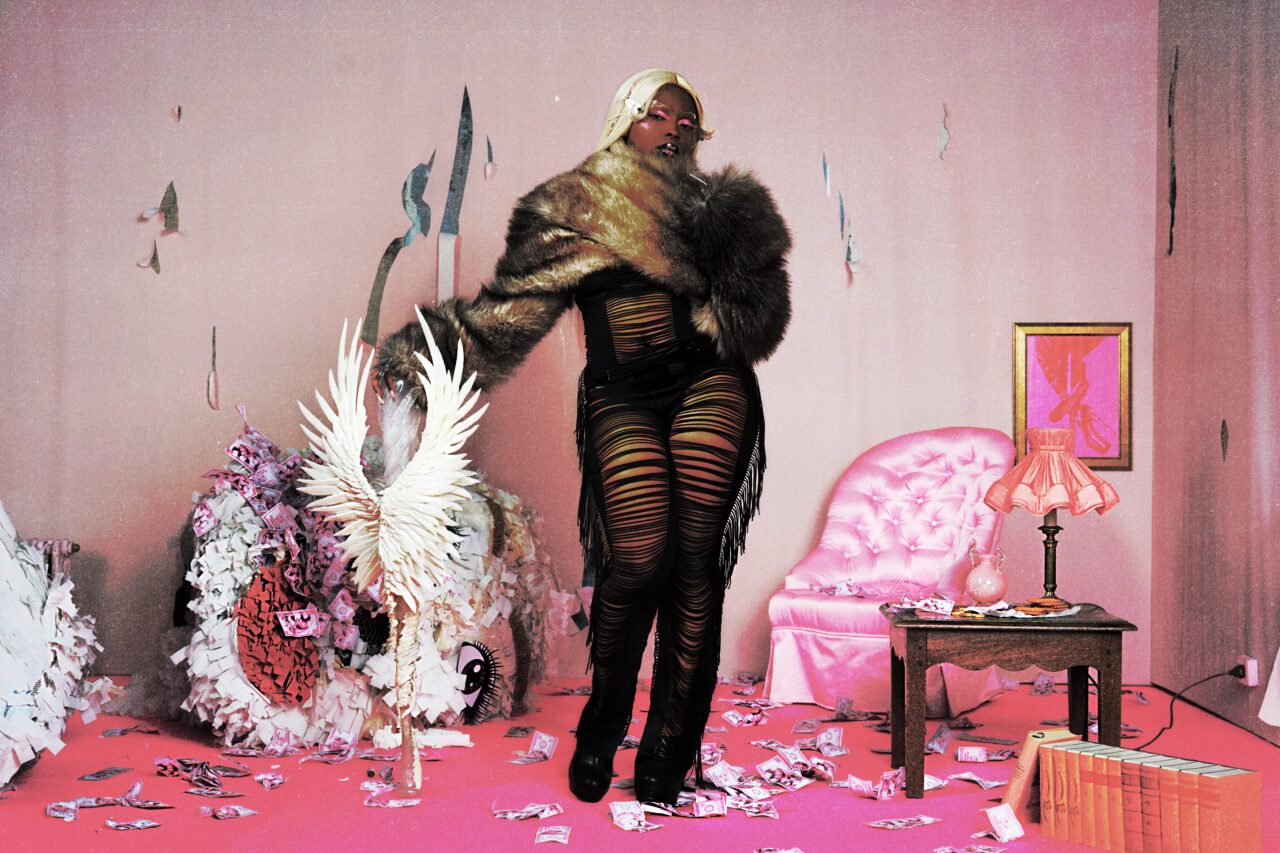
And her marketing around her music is clearly part of her art direction. Whether it’s the Fashion Designa music video or her tour posters, there is a commitment to a high art aesthetic that we usually only see from the big stars like Beyoncé or FKA Twigs. She understands that in the age of the image, the pop star must be a visual icon.
[image: Theodora-fashion-designa // legend: Image from the “Fashion Designa” music video.]
Perhaps her most impressive trait is how she uses her platform. Theodora does collaborate with big names for clout, but not only. She pulls up artists from the underground, people from genres that are often ignored or deemed “not mainstream enough”. One can think of her invite to Brazy to sing on “Mon Bébé” (20 million streams on Spotify). Brazy is a Nigerian, exploring her own genre (“Afro-Sexy Afro Future”), performing worldwide but quite unknown in France. She’s entered the French market thanks to Theodora, along other artists discovered by her featuring: BB Trickz, ThisizLondon, Brazy, Meryl, HollyG or Len Lucci. By doing this, she acts as a cultural curator, expanding the boundaries of what pop can actually sound like. She is creating an ecosystem around her, and that is how artists build the bases for a long career…
A symbol of resistance.
A last explanation of her success lies in the global context; the dark political times we live in. As the shadows of exclusion, fascism, and social division grow longer across the Western world (and particularly in France), the role of the artist changes. We don’t just need entertainers anymore: we need symbols of resistance! Theodora is that symbol. She is a woman of the Left, not necessarily through slogans (though she is vocal), but through her very existence and the way she occupies space. As a bisexual Black female artist, she represents a France that is plural, queer, brilliant, and moving forward.
She reminds me of Josephine Baker. Not just because of the Parisian icon status, but because of the defiance she faces. Baker used her body and her art to fight the fascism of her time, proving that beauty and rhythm could be forms of sabotage against hate. Theodora does the same for 2026. In a world that wants to close borders and minds, her music is an open door. She paves the way for other Black female artists and for a whole generation of listeners who feel like they don’t fit into the narrow definitions of identity being pushed by the headlines.
Theodora is a chance for us. She is a reminder that the future doesn’t have to be grey and monolithic. It can be loud, it can be bass-heavy, and it can be beautifully, radically human.
Sexy Music 4 Life.
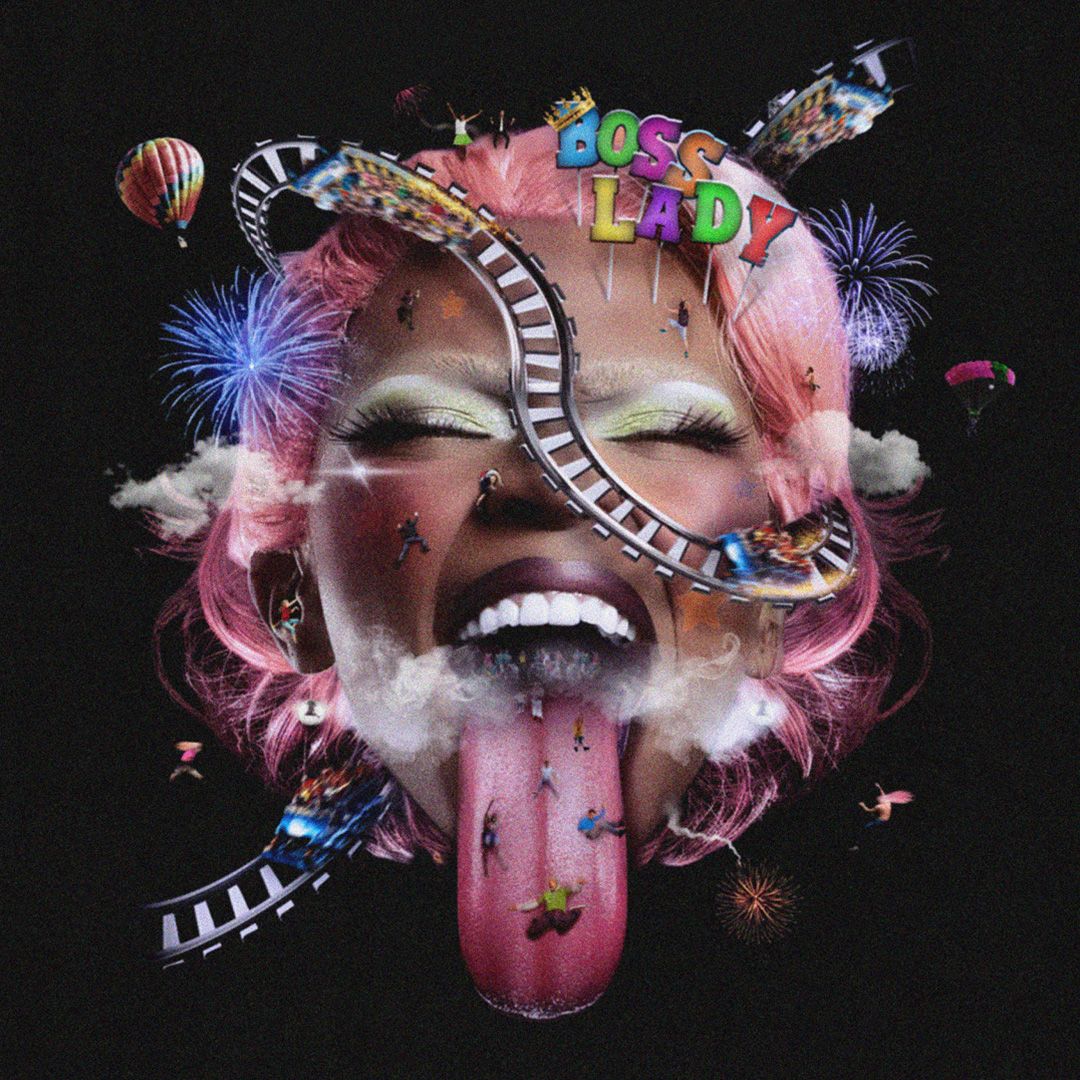
The poster for her upcoming Zenith tour
As we stand on the precipice of this new tour, the question is: what’s next? On Friday 13March, she released “Miss KITOKO”, first single for her new era “Sexy Music 4 Life”. I bet on a sound that is even more expansive, perhaps leaning further into the experimental electronics she teased during her festival run last summer. The Zénith tour is the final test. Transitioning from the intimacy of clubs and young people’s bedrooms or the controlled chaos of a 45-minute festival set to a two-hour arena show requires a level of stamina and stardom that few possess…
When the first notes hit the Zénith de Nantes on Tuesday, it won’t just be the floor trembling. It will be the sound of an old world cracking, and a new one, Theodora’s world, taking its place.
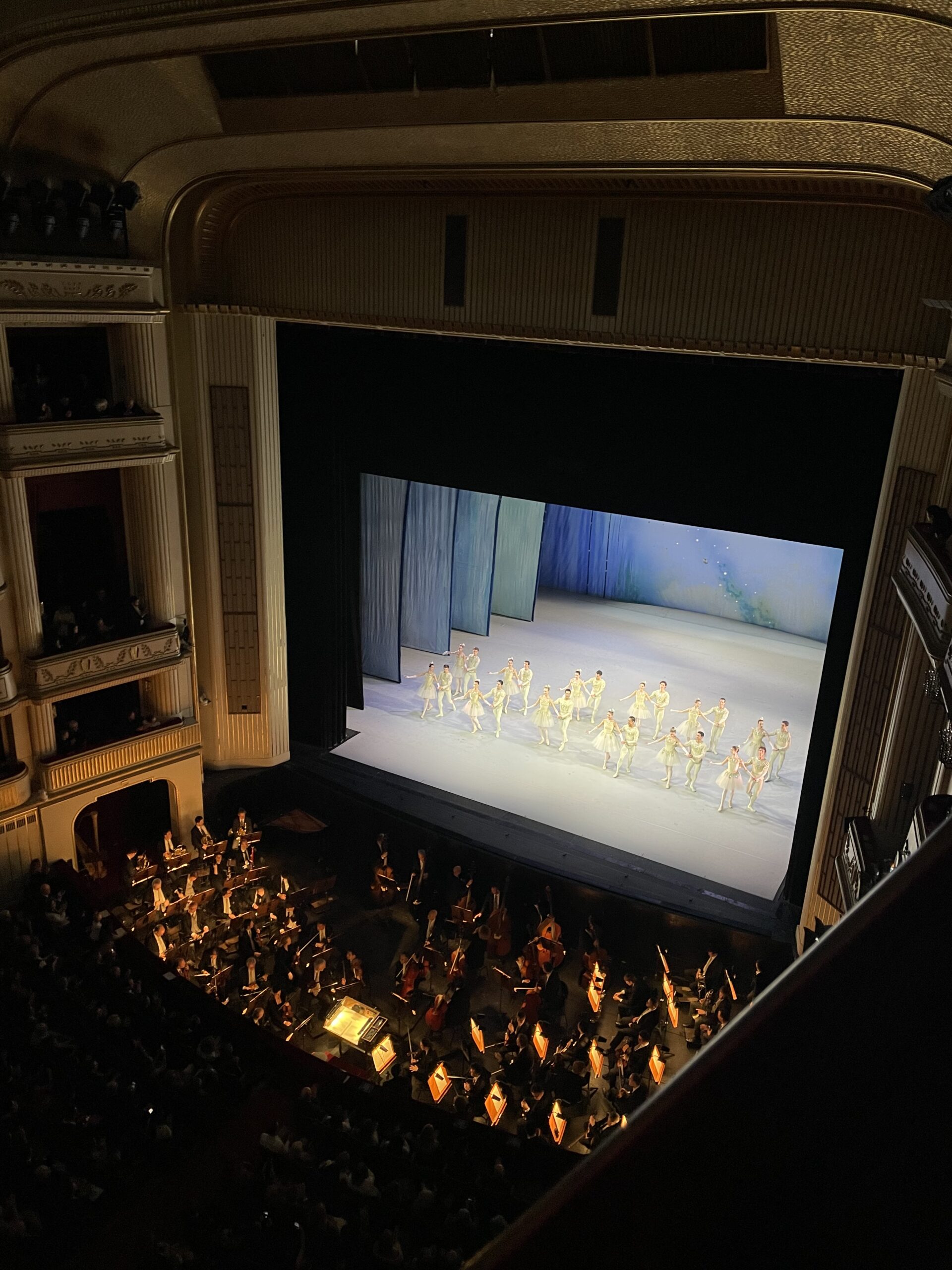
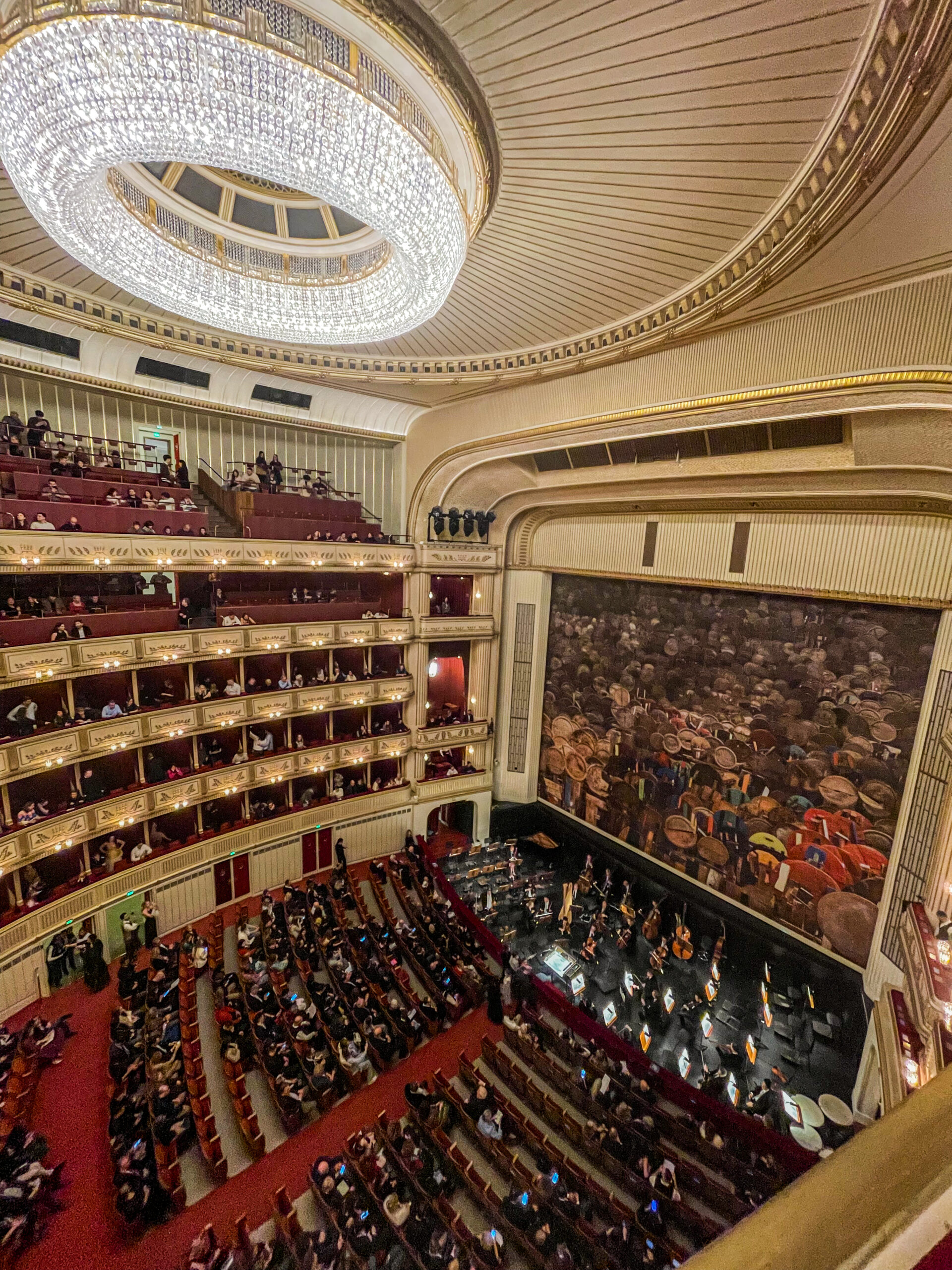
Back in February, I managed to get a seat at the Vienna State Opera. If you’ve never been, it’s exactly the kind of overwhelming, gold-leafed room that makes you sit a little straighter. We were waiting for George Balanchine’s Jewels to start. When the curtain actually went up on the « Emeralds » segment, the stage was drowning in deep green light while Fauré played in the pit. I took a second to just watch the crowd.
There wasn’t an empty chair in the house. And it wasn’t just the stereotypical sea of white hair, either. College kids, couples on dates… Everyone was just totally focused. During the jump from the slow romance of « Emeralds » into the jagged, aggressive jazz of « Rubies, » nobody looked at a phone. Nobody coughed. You could literally hear the dancers breathing. I remember catching the sound of pointe shoes hitting the floor, and the weirdly loud sound of velvet shifting as the guy next to me leaned forward. It was a massive room full of people sharing the exact same wavelength. Calling ballet a « dying art » in that room would have sounded like a joke.
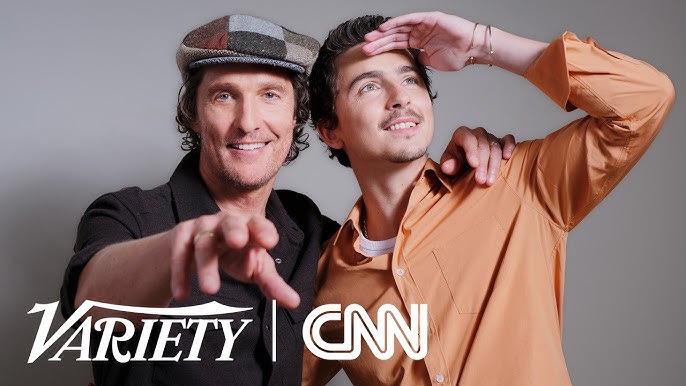
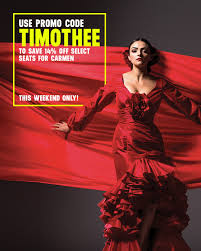
Fast forward a few weeks. Timothée Chalamet is sitting at a CNN/Variety town hall event alongside Matthew McConaughey, and he casually drops a comment that basically made the entire performing arts world choke on its collective coffee. He was trying to make a point about saving movie theaters and fighting our rotting attention spans. Totally fair. But to prop up his own industry, he decided to just take a baseball bat to the classical arts.
It happened on stage at UT Austin. He and McConaughey were hashing out the whole shrinking attention span problem. Chalamet was pointing to the insane box office numbers of Barbie and Oppenheimer as proof that people actually still want to sit in a dark room and watch a movie. Great argument, right? Except he couldn’t just leave it at that. For some reason, he felt the need to drag down an entirely different medium to make cinema look better.« I don’t want to be working in ballet or opera, or things where it’s like, ‘Hey, keep this thing alive,’ even though like no one cares about this anymore, » he declared. Realizing he had just stepped on a cultural landmine, he awkwardly added, « All respect to the ballet and opera people out there. I just lost 14 cents in viewership. I’m taking shots for no reason. »
The backlash was almost immediate, and honestly, pretty swift to watch unfold. But the whole messy situation really got under my skin. It made me start questioning how on earth we’re supposed to measure whether a piece of art is actually « relevant » anymore, especially right now in 2026.
The backlash
What makes the whole thing so incredibly strange is Chalamet’s own background. We’re talking about a guy who practically grew up in the wings of the New York City Ballet. His mom, his sister, his grandmother… they were all dancers. His mother, Nicole Flender, went to Yale on a ballet scholarship before turning pro. It wasn’t just some after-school hobby; it was the family business.
It stung so badly that the principal of his old high school, the famous LaGuardia arts school, actually penned an open letter. They essentially had to scold their most famous graduate, dropping a very polite but firm « we do not rank art forms, » before adding, « We know your heart, and we know you know better. » To the classical world, this wasn’t just a clueless movie star talking. It felt like one of their own taking a cheap shot from the penthouse.
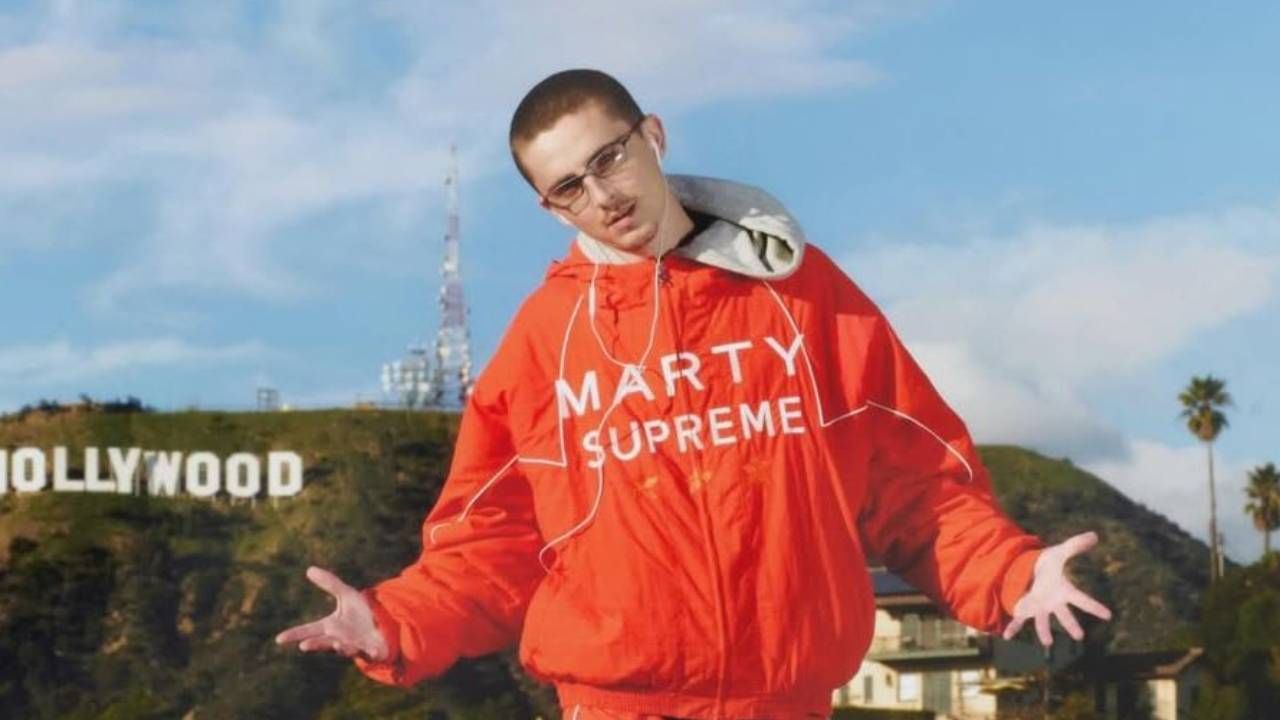
And the timing? Literally the worst. He dropped this bomb right at the peak of his Oscar run for Marty Supreme.
The backlash was immediate, and it wasn’t just angry people on Twitter. Industry heavyweights refused to let it slide. Misty Copeland called out the absolute nerve of his comments, which was especially awkward since she’d actually helped him promote Marty Supreme not long before. Steven Spielberg seemed to throw some subtle shade during a SXSW keynote, going entirely out of his way to praise the profound value of live performance. Jamie Lee Curtis just started hitting the share button on a bunch of angry posts from European opera houses, and even went as far as hyping up Chalamet’s main Oscar rival.
Tiler Peck over at the New York City Ballet wrote a fired-up response about the literal blood, sweat, and tears dancers pour into their craft every single day to create something beautiful. Andrea Bocelli took the high road, dropping a incredibly classy statement about how opera and ballet feed the human need for truth and emotion, ending with an open invitation for Chalamet to actually come to a show. Whoopi Goldberg and Juliette Binoche voiced their frustrations, and even Doja Cat hopped online (before quickly hitting delete) to point out that these art forms have survived for half a millennium.
Online, people started connecting the dots on how badly he’d shot himself in the foot. Up until that point, Chalamet was the locked-in Best Actor favorite for his ping-pong biopic. His whole brand this season was the humble, artsy indie darling. In ten seconds, he completely shattered that image and painted himself as an out-of-touch Hollywood snob. With Michael B. Jordan picking up massive, undeniable buzz for Sinners, dropping a joke about losing « 14 cents in viewership » right as Academy voters were filling out their ballots was a historically bad move.
We all saw how that played out last night at the 2026 Oscars. He didn’t just lose Best Actor, a defeat plenty of insiders are quietly pinning on this exact PR mess, he became the opening monologue’s main target. Conan O’Brien joked to millions of viewers that the Dolby Theatre had beefed up security because of « threats from the opera and ballet communities. » Ouch. Then, to really twist the knife, the Academy brought out Misty Copeland to perform. Chalamet had to sit there in his tuxedo, forcing a polite smile for the cameras, while the exact art form he called irrelevant literally danced all over his Oscar dreams.
Honestly, though, the arts institutions themselves had the best reactions. The Met Opera started dropping viral behind-the-scenes TikToks showing off the legions of crew members it takes to pull off a show, cheekily dedicating the videos to him. And the Seattle Opera? They just weaponized his exact quote, launching a promo code : TIMOTHEE that gave buyers 14% off tickets to Carmen. It was the perfect flex. They proved they aren’t some dusty, forgotten relic; they are digitally fluent, sharp as hell, and totally capable of out-maneuvering an A-lister’s PR machine.
Is it really a dying art ?
The wild thing is, this wasn’t even a one-off slip of the tongue. Internet sleuths wasted zero time digging up old interviews from back in 2019 where Chalamet was already throwing around the phrase « dying art forms » to describe opera and ballet. Which really begs the question: is the data actually backing him up?
Well, yes and no. The classical arts are definitely facing some brutal headwinds right now. Between the long hangover of the pandemic, crazy inflation, drying up corporate sponsorships, and whatever AI is about to do to the industry, budgets are incredibly tight. A lot of companies have been forced to scale back the number of shows they put on each season. But mixing up a temporary cash flow problem with a total lack of cultural relevance is a massive mistake.
We’re talking about art forms that have survived for over four centuries. They aren’t just barely hanging on; they’re the actual foundation of modern entertainment. The very cinema Chalamet is out there trying to save? It completely relies on the dramatic pacing, sweeping musical scores, and visual choreography that the stage figured out hundreds of years ago.
Even the idea that these theaters are just irrelevant money pits falls apart the second you look at the bigger picture. The legendary choreographer Sir Matthew Bourne made an incredible point during all the online chaos. He basically asked: if no one cares about the classical stage anymore, why is one of the most famous theatrical shows in history literally aboutit? The Phantom of the Opera has raked in over $6 billion globally. Just to put that in perspective, that’s more than double the lifetime box office of Avatar, the biggest movie ever made. People clearly care, and they’re definitely willing to pay. They just don’t operate on Hollywood’s frantic, opening-weekend schedule.
And that whole argument about opera and ballet being too expensive and exclusive is shifting, too. Sure, opening night box seats will still cost you a small fortune. But almost every major opera house in the world is pushing these aggressive « 30 under 30 » style deals—slashing ticket prices for younger crowds to make sure those auditoriums stay packed. These institutions aren’t just sitting around in velvet chairs waiting to fade into obscurity. They are actively fighting for their audience.
What is relevancy
Looking back at that night in Vienna, the gap between Chalamet’s Hollywood mindset and what’s actually happening in theaters is just massive. His biggest misstep was treating the arts like some kind of zero-sum game. He basically decided that for movie theaters to win, an older art form had to lose. He confused going viral with actual, lasting value.
But if you take a breath and look past the immediate outrage, there’s a much darker, sadder truth hiding in his bad joke. He wasn’t just taking a swing at dancers and singers; he was quietly pointing the finger at all of us in the audience. He was letting slip a very real, deep panic that theatrical movies are heading straight for the exact same cliff. He is terrified that in a few years, cinema is going to need the same kind of wealthy donors and philanthropic life support that keeps opera houses open. He desperately doesn’t want his industry to become a museum exhibit. But in his rush to save his own medium from the TikTok generation’s rotting attention spans, he threw his artistic ancestors right under the bus.
We’re living in a time where absolutely everything is fighting for a split-second of our dopamine. Cinema is sweating right now because it’s competing directly with the smartphone in your pocket. It relies on those same fast-twitch engagement metrics. Ballet and opera, though? They operate on a completely different frequency. They aren’t trying to beat TikTok; they are the antidote to it. Chalamet’s frustration comes from an industry that’s desperately shouting to prove it’s still relevant, while the classical arts are just sitting there with the quiet confidence of surviving for half a millennium.
Sitting in that Austrian theater, watching the dancers tear through the sharp, intense choreography of « Rubies » and the massive, imperial sweep of « Diamonds, » it hit me. Real art doesn’t exist to chase whatever trend is happening this week. It exists to reflect who we are, century after century.
Movies are undeniably vital. But the movie theater experience as we know it is barely a hundred years old. Ballet and opera have literally outlived empires, economic collapses, and actual plagues. They ask something completely different of us… a slower, more willing surrender.
By trying to write the obituary for ballet and opera, Timothée Chalamet accidentally sparked a massive, global reminder of exactly why they are still breathing. He forced everyone to look up from their screens and back at the stage. Because honestly, when a live orchestra swells and you watch a human being defy gravity in total silence, you don’t need a viral soundbite to tell you it matters. You just feel it in your bones.
In the modern music world, we often discuss how simple it has become to find new talent. We spend hours scrolling through social media and suddenly we encounter a singer who appears to be creating music in their bedroom. They look like us, they dress like us and they seem to be managing their career without any help. This feeling of discovery is very powerful because it makes us feel like we are part of a secret community. We want to support these artists because we believe they are the underdogs fighting against a big, corporate system. However, there is a term that often surfaces to ruin this dream: the industry plant.
An industry plant is essentially a musician who presents themselves as a self-made artist when they actually have the full support of a major record label or a wealthy background. They adopt a « do it yourself » aesthetic to gain the trust of their audience. This topic has become a massive debate in the music industry because it touches on our deep need for honesty. If we find out that a natural success was actually a calculated marketing plan, we feel betrayed. To understand why this is such a significant issue, we need to examine how the industry operates, why we care so much about the idea of the struggle and how certain artists became the face of this controversy.
To begin, we should define what an industry plant represents in the current landscape. Usually, it is someone who appears out of nowhere with a very high quality image and thousands of followers. They might claim they just started making songs in their room, yet their first music video looks like a professional film. They have access to the best producers, the most talented stylists and they land on major playlists immediately. The problem is not that they have assistance, because every artist needs help at some point. The problem is the lack of transparency. In the past, labels like Universal or Sony were proud to display their power. Today, they know that young people do not trust big corporations. Consequently, they hide behind a « fake indie » look. They want the artist to appear like a lucky amateur because that is what sells in 2026.
This brings us to the specific case of Miki, the French-Swiss artist who has been at the center of many discussions recently. Miki is a perfect example of why this debate is so complicated. Her music is catchy, her aesthetic is very cool and she has a very strong visual identity. She looks like the ultimate « cool girl » who just happens to be gifted. But very quickly, people on the internet started to ask questions. Her videos were far too perfect for someone who was supposedly just starting out. When people found out about her connections to the fashion world and the professional creative industry, the accusations started.
For many critics, Miki represents a new type of artist where the branding is more important than the music itself. It is not necessarily that she has no talent, but that her image was built to look like a spontaneous discovery. When you see her on social media, everything looks accidental and natural. However, in reality, every photo and every clip is part of a very clever strategy to make her look like an independent darling. This gap between the independent image and the professional reality is exactly what makes people angry. We feel like we are being manipulated by a marketing team that is pretending to be our friend.
One of the main reasons why industry plants bother us so much is related to our belief in the discovery myth. We want to believe that the music industry is a place where talent is the only thing that matters. We love the story of the artist who started with nothing, played in small empty bars and finally became famous because of their hard work. This is the classic story of the self-made star. When an industry plant arrives, they destroy this myth. They show us that money and connections are still the most important tools. If a big label can just buy a viral moment for an artist, then the real independent artists who are actually struggling have no chance. It feels like the game is rigged and that makes the fans feel very cynical about the music they hear.
Furthermore, there is a psychological element called the contract of authenticity. When we listen to a song, we are not just buying a product like a coffee or a pair of shoes. We are connecting with another person’s emotions. We want to believe that the singer really felt the things they are singing about. If we find out that the artist is a project created by executives in a meeting room, that connection is broken. It feels like a lie. We do not mind if a pop star like Dua Lipa or Taylor Swift has a big team because they are open about it. But when an artist tries to act like they are one of us while having a massive budget, it feels like they are stealing our culture and our emotions for profit.
Another very interesting and problematic part of this debate is what some people call poverty cosplay. This is a very common trend among industry plants who come from wealthy backgrounds. They often dress in old clothes, film their videos in messy apartments or laundromats and talk about how they are just trying to survive. They adopt the look of the working class because it is trendy or looks good on camera. This is very offensive to people who actually have to struggle to pay their rent every month. It turns poverty into a fashion statement. When a rich artist pretends to be a struggling indie musician to get more followers, they are using the real problems of others to make themselves look more interesting.
However, we must also be honest about the fact that the industry plant label is often used in an unfair way. If you look at the history of these accusations, they are almost always directed at young women. Artists like Billie Eilish, Clairo and Olivia Rodrigo were all called plants when they first started. There is a sexist idea in the music world that a young woman cannot be successful, creative and smart at the same time. People often assume that if a girl is successful, there must be a man in a suit making all the decisions for her. We rarely see young male artists being attacked with the same energy for having rich parents or good managers. So, while the plant strategy is real, the label is also used as a tool to hate on successful women. It is a way of saying she did not earn this without having any real proof.
We also have to ask ourselves if it is even possible to be a real independent artist in the modern world. In 2026, the music industry is dominated by algorithms and big tech companies. Even if you are truly independent, you still have to use Instagram, TikTok and Spotify to be heard. All these platforms are designed to favor people who have money for ads or professional teams. The organic success that we dream about is becoming more and more rare. In a way, almost every artist who becomes famous today has to use some industry methods. Perhaps our definition of an independent artist is too old-fashioned for the digital age. We are still using ideas from the 1990s in a world where everything is for sale.
The case of Miki and other similar artists also shows how the look of an artist has become more important than the sound. In the age of social media, we see music before we hear it. An artist needs to have a perfect aesthetic to stop us from scrolling. This means that labels are now looking for content creators who can sing, rather than just singers. This shift is what makes the industry plant phenomenon so visible. Because the image is so polished and so perfect, it feels artificial. We miss the days when artists were allowed to be messy or confusing. Now, everything has to be beautiful and that perfection is what makes us suspicious.
The real problem might not be the artists themselves, but the way we consume music. We are the ones who want our artists to be perfect, relatable and cool all at the same time. The labels are just giving us what the data says we want. If we stop rewarding fake viral moments and start looking for music in places that are not controlled by algorithms, the industry plant strategy might stop working. But as long as we keep clicking on the cool girl in the perfectly messy bedroom, the labels will keep creating them. We are part of the system that we claim to hate.
In conclusion, the reason why industry plants bother us so much is because they represent the end of a certain kind of honesty in art. They remind us that our discoveries are often just products that were placed in front of us by a computer. They make us question if anything we see online is real. The anger towards those artists is not just about their music or their money; it is about our fear of being manipulated. We want to believe that there is still a place for real human connection that cannot be bought or sold.
Even if the industry plant is a strategy that will probably continue to grow, it is important to keep talking about it. It forces us to think about what we value in an artist. Is it just the melody, or is it the story behind the melody? If we want an industry that is more fair and more diverse, we have to look past the aesthetic and support the people who are actually doing the work without a safety net. The debate about authenticity is not going away because, at the end of the day, we do not just want to hear a good song; we want to believe in the person who is singing it. Without that trust, music just becomes another noise in our social media feeds. We need to remember that while an industry can plant a star, only the public can decide if that star actually shines with a real light.
To finish, we should reflect on our own role as listeners. We have more power than we think. If we start valuing the art more than the image, the industry will have to change. Authenticity cannot be manufactured forever. It is something that is earned through time, honesty and a real connection with the audience. As long as we keep searching for that truth, there will always be a place for artists who are genuinely independent.
Whether you liked it or not, 2025 was definitely a productive year for Vald. Between ‘Pandemonium’, its hardcore techno reloaded version, and ‘Magnificat’, a mixtape compiling pop, techno and rock tracks, the French rapper never stopped to surprise his fans, for the better or for the worse. Today, we’re going to analyse this project and show how the artist contributes to the expansion and richness of French rap.
Valentin Le Du was born on 15 July 1992 in Le Blanc-Mesnil in Seine-Saint Denis. The rapper, often known for his provocative songs and interviews, remains one of the most mainstream rappers of the last ten years. With a triple platinum album (‘Xeu’, over 300,000 sales) and numerous diamond singles, ‘Désaccordé’ being probably the most famous, Vald no longer really has anything to prove to the public. The year 2025 was clearly one of renewal. Firstly, his album Pandemonium was appreciated by critics and listeners alike as a very good album, better than the previous one (‘V’). But the artist really surprised everyone with a hardcore techno ‘reloaded’ version of his album, with producers Vladimir Cauchemar and Todiefor. If you’re interested in the subject, I invite you to read my article on the emergence of ‘frapcore’.
What interests us here is the latest surprise project he released during his concert at Paris La Défense Arena on November 29th 2025. ‘Magnificat’, a project unveiled on this occasion and teased by numerous excerpts on social media, caused quite reactions with its style. Once again, Valentin has surprised us. The sounds are very varied and, at first glance, quite different from the rap we are used to hearing from him. What’s more, in interviews, Vald revealed that he recorded these ten tracks the previous summer, with no specific goal in mind, just for fun. I think it’s quite healthy that an artist who is already well established in the French music scene can decide to release such an eclectic project that is so far removed from current listening standards, just for fun.
I now invite you to dissect this project and analyse its originality through the different tracks.
The project opens with ‘Blauwburgwal’, a direct reference to the address of the Airbnb where Vald and his girlfriend stayed in the Netherlands. It is a very factual piece, almost a logbook of his holidays, carried by French chanson sounds. The humour remains present, particularly when Valentin expresses his surprise at the omnipresence of bicycles, transforming a simple anecdote into a refreshing track. In the same vein, ‘Dans la rue’ uses electro influences to describe very simple everyday scenes. It’s a fairly original track and, honestly, difficult to classify as it strays so far from the usual standards.
The eponymous track, ‘Magnificat’, offers a particularly positive ‘techno parade’ vibe. It’s rare to hear Vald sound so serene. This is the opposite of the deep melancholy of previous tracks like ‘Journal Perso II’ or ‘Roche noire’. One gets the feeling that he has dealt with his old demons (family, money, love) to make way for a sense of fulfilment. This positive mood continues on ‘Retomber amoureux’, a true pop song. The rapper himself seems surprised by his ability to experience such feelings, and this sincerity is refreshing to hear.
With ‘Dimension parallèle’, we find a techno production that could have featured on Pandemonium Reloaded. He talks about his partner but takes the opportunity to take a dig at those who seek only recognition in the music industry. On ‘Jolie fleur’, he uses a sample from Brassens to confess his past lies and false promises to his audience. The techno bridge in the middle of the track creates a surprising but effective break.
The album takes a darker turn with ‘Abysses’, a rock-inspired track that is closer to Vald’s usual style, while relying on a highly unusual instrumental for French rap. The social criticism continues with ‘Décadence’, a simple but powerful track about the excesses of society, and ‘Strass & paillettes’, a rock track that denounces the emptiness of the image-conscious industry. Here, Valentin seems to be searching for a truth deeper than superficial success.
At the end of the project, ‘Changer d’air’ fully embraces the shift to pop and the desire to try out all styles. It is a manifesto in which he explains that pleasure should be the only driving force behind creation, despite the doubts of record labels. ‘Toujours pareil’ revisits the classic tensions of a couple, once again with an effective techno bridge. Finally, ‘Mamacita’ perfectly illustrates the spirit of the project : no reflection or calculation. He raps in English with a deliberately exaggerated French accent over a very dancing beat, proving that he no longer imposes any limits on himself.
In Magnificat, Vald has retained the techno touch he brought to Pandemonium Reloaded, but he has gone further by also creating tracks inspired by pop, rock and French chanson. Recurring themes are love and criticism of the industry. This is the first time Vald has talked so much about love in a project, or at least in such a positive way. The strength of this album is that there are no limits in terms of artistic creation. Pleasure and freedom from constraints dictate the creative process, and you can really feel it. The Vald of Magnificat is very different from the Vald of Xeu. You can sense that Valentin has grown and matured. He is freer to do what he wants and is no longer bound by the profit-driven logic of labels and record companies. This independence is not only an artistic choice, it is also an economic reality made possible by his Echelon Records structure. By being his own producer, Vald frees himself from the pressures made by traditional major labels, which often demand immediate profitability and hits formatted for radio or streaming playlists. Where a traditional artistic director would probably have refused to release an album such as Magnificat or Pandemonium Reloaded for fear of losing musical identity, independence allows Valentin to use his financial capital to buy his creative freedom. This is a rare luxury in the industry : turning a mainstream success (such as Xeu) into a shield that allows for pure experimentation, without having to answer to a hierarchy. We can also talk about artistic renewal, even if, as the artist has stated, he will continue to rap.
As a listener, I really enjoyed this project. I think it brings a lot to the current rap scene, which sometimes struggles to renew itself at the mainstream level. I hope other rappers will follow this initiative. Recently, in an interview, rapper SCH said that he might release songs in the style of French chanson in the near future. At a time when most rappers are looking to produce a hit and make a name for themselves on social media (especially TikTok), the creative process can be called into question. Indeed, it is often the same formulas that are popular, and this encourages other rappers to conform to trends. Fortunately, the French rap scene is very rich, and some artists are pushing things forward. One example is the artist Théodora, who exploded onto the scene last year. Previously, she was considered an underground artist with a rather hyperpop style. Today, we can talk about new pop mixed with rap. Her sounds are completely original, and she has attracted the public’s attention by breaking the rap codes. A less mainstream example is the album PRETTY DOLLCORPSE, a project bringing together beatmaker Neophron and rappers Femtogo and Ptite sœur. This project also marked a turning point in French rap, with artist Ptite sœur being transgender and Femtogo openly declaring himself homosexual. The subjects addressed are pain, lack of recognition, childhood and current traumas. Never before has a rap album addressed these subjects as clearly and sincerely as Pretty Dollcorpse.Ten years ago, at the domination of the trap genre, it would have been impossible for such artists to be listened to as rappers. I am convinced that this project has opened doors for many future rappers who will continue to address and democratise these topics, which are still under-represented in rap. Whether in terms of sound or themes, artistic freedom continues to push the boundaries of this musical genre at the crossroads of others.
(It is important to note that this section was written prior to the public allegations concerning Femtogo. While these events fall outside the initial scope of this analysis, they cannot be ignored. The author stands with and supports those who have come forward, and recognizes the importance of listening to and believing victims. These revelations also highlight the structural issues of power, accountability, and gender-based violence that persist within music scenes, including those that position themselves as alternative or progressive.)
However, this freedom comes at a cost : destabilising or even losing part of their original fan base. For many purists, rap is a genre based on street codes and a certain form of ‘kicking’. Seeing their favourite artist switching into pop or techno is sometimes perceived as a betrayal. Yet Vald’s success of his concert at La Défense Arena proves that the audience of 2026 is undergoing a major transformation. Bringing together 45,000 people capable of switching from hardcore pogo dancing to an acoustic ballad shows that the barriers between genres are breaking down. It is no longer a question of ‘betraying rap’, but of offering a hybrid cultural experience that reflects the complexity of our current tastes. Vald no longer seeks to please everyone, he seeks to remain authentic to his own evolution, even if it means his audience has to make the effort to follow him in his various musical explorations.
It is interesting to note that the audacity of a mainstream artist like Vald creates a breath of fresh air for the entire underground scene. By breaking musical taboos at the top of the charts, he indirectly legitimises much more radical projects such as those of Ptite Sœur and Femtogo. If one of the greatest French rappers of today allows himself to sing about his love for his partner in French songs or to experiment with frapcore, this opens the door for themes related to gender identity, sexuality and personal trauma to no longer be excluded from the field of rap. It’s a virtuous circle : the experimentation of the headliners makes the audacity of the next generation more acceptable and audible to the general public.
I strongly encourage you to listen to Magnificat, especially if you don’t like rap. For me, it could be a new gateway to rap, and especially to the world of rapper Vald. Many listeners have been disappointed and no longer identify with this universe, which is less close to rap. Sure, it doesn’t sound like it, but Vald is a rapper and will remain so. So, in my opinion, Magnificat can be classified as a rap album, less for its sound than for the current state of rap, which is increasingly inspired by different styles, contributing to the diversification of the genre.
Hey! Before this article begins, let me ask you a question. Imagine you are scrolling through short videos when suddenly an option appears on the screen. The platform asks you to choose one of two videos to watch.
The two videos present the same theme (the game Valorant).
Which one would you choose?
I asked several people around me, and I received answers from several of them without any hesitation: the one below.
After all, we have been trained since childhood with this kind of aesthetic logic — polish means effort and professionalism, and naturally it also means that it deserves to be seen more.
However, the data reflected by the platform shows the exact opposite. The video on the left, as a rough secondary creation, received nearly six million likes, while the polished CG on the right, which invested a large amount of personnel, money, and time, only received nearly eight hundred thousand likes.
A similar phenomenon that is more widely known can be seen in the two accounts zachking and khaby00. One is full of creativity and technique, with every work being an edited piece that looks like a work of art; the other simply shows silent reactions to certain videos, and the production cost of each video may not exceed a few dozen dollars.
(Although the first three viral videos of the two accounts gained roughly similar view counts, starting from the fourth most viewed video, the gap in view counts between the two accounts begins to appear, and the further down the ranking, the larger the gap becomes.)
This made me think of videos whose creative materials are extremely simple and highly homogeneous:
Content that uses mellstory and various cat memes as vehicles of expression. These also receive very high view counts and interaction data on short-video platforms.
Perhaps you have also noticed this phenomenon: a rough model, a simple meme voiceover, a video that appears to have almost no editing and no technical complexity, can outperform those works that were carefully crafted over several days, weeks, or even months in terms of circulation data.
Why?
In an era where tools are becoming increasingly powerful and the threshold for production is getting lower and lower, the once scarce “polish” is now easier to produce and consume. Why do low-cost productions instead become more likely to go viral?
1. From Perfection to Participation
In the era of traditional media, the spread of content almost completely depended on the quality of production. Television advertisements required professional teams to film them, and movies required complex post-production. Even early creators on YouTube gradually formed a set of “polished” content standards: clear visuals, professional presentation, and video pacing that aligned with human viewing habits. In that era, production cost was almost deliberately equated with the ability to spread.
However, short-video platforms changed all of this. The core logic of TikTok and Instagram Reels, besides “watching,” also includes another layer — participation. Users are no longer just spectators sitting on the couch; they are also potential creators, imitators, and secondary distributors. In other words, whether a video succeeds no longer depends solely on whether it is polished. It is also given another switch: can others imitate it?
If a video requires complex lighting, advanced techniques, and expensive equipment, then most people are kept outside the walls of creation. But if a video only requires a simple expression, an exaggerated action, a repeated line, and a few easily available stickers, then most people are given the possibility to create. What best fits this logic are memes. They provide a template and give everyone the ability to create.
The logic of creation and dissemination of internet memes is not the same as traditional creation. In traditional art, originality is regarded as the highest value. But in meme culture, copying and adaptation instead occupy the core mechanism. What characteristics does a successful meme have? It is simple — one action, one expression, one character is enough to form a meme. It is flexible — different users can add their own text and situations to the same template, creating a completely new work.
It even encourages roughness. Excessively polished production actually reduces the spreadability of a meme, because the audience’s sense of participation is stripped away by the meticulously crafted polish. That is why many viral videos look as if they were casually filmed. This roughness is not a flaw. On the contrary, it constitutes a cultural signal — it tells the audience: you can do it too.—
2. The Beauty of Imperfection
If we observe the popular content on TikTok, we will find an aesthetic taste that is different from the polished style on Instagram. Especially in the early days of Instagram, the platform was almost dominated by a unified visual style: clean, symmetrical, bright, and refined. These kinds of content reflected people’s longing for an ideal life — I hope to become like this.
TikTok, however, moved in another direction. Here, the most popular videos often have a sense of being “unfinished.” The camera may shake slightly, the lighting may not be perfect, the sound may not be clear, and the editing may appear somewhat clumsy. Yet these imperfections make the content appear more real.
Lo-fi aesthetics — this is how the phenomenon is described in digital culture. Its lack of polish is less a sign of technical inability and more a deliberate stylistic choice. Just as early punk music intentionally kept a rough recording quality, many short-video creators also actively reject overly polished audiovisual language.
In the spread of content on social media, authenticity and accessibility appear to be more important than perfection.
3. 平台的算法
Of course, as works that exist on platforms, the platform’s recommendation mechanism cannot be ignored. The recommendation systems of short-video platforms mainly rely on three indicators: watch time, engagement rate, and secondary sharing rate. A polished video may leave a strong impression, but it does not necessarily generate a large amount of interaction. In contrast, rough and easily replicable content often stimulates a stronger desire for participation. Viewers comment, imitate, remix, and share. Sometimes they even form cultural communities based on this type of content.
As a result, these videos are recommended to more and more people. Under this mechanism, the spread of content is no longer determined by production cost, but by social energy. A simple joke, an absurd character, or a surprising moment often triggers collective resonance more easily than a complex narrative.
This leads to an interesting cultural paradox. In the real world, we often believe that effort should be rewarded. But on the internet, effort sometimes becomes invisible. A creator may spend dozens of hours producing a polished video, only to be overshadowed by a piece of content that appears to have almost no trace of production. This is not because audiences do not appreciate effort, but because internet culture operates according to a different logic.
On these platforms, what people are often looking for is not the most polished or perfect work, but the moments that are easiest to understand, easiest to share, and most capable of generating resonance.
In fact, this shift can also be described as a democratization of creation. In the past, only people with professional equipment and technical skills could produce content that was “worthy of being seen.” Today, an ordinary user with just a smartphone and an interesting idea may create something that influences people around the world.
This transformation has not eliminated polished production. Films, documentaries, and high-quality videos still have their own ecological niches and cannot be replaced. But on short-video platforms, the center of culture has shifted.
From quality to participation.
From perfection to authenticity.
From professionalism to creation.
4. The Shaping and Influence of the Environment
In such an environment, we may be witnessing the formation of a new cultural logic. In the past, people were accustomed to directly associating high-quality content with production quality. However, on short-video platforms, the evaluation criteria have changed. Simple, easy-to-understand, and easy-to-use content has gained the upper hand. The sense of closeness and resonance that these contents give to the audience — the feeling of “maybe I could do this too” — has become the winning card. In contrast, polished content appears more like a closed product: audiences can appreciate it, but it is difficult for them to participate in it.
This may also explain why many seemingly “low-cost” pieces of content actually have stronger vitality. When the threshold for creation is greatly lowered, the focus of the internet is no longer only on displaying finished works, but on stimulating more people’s resonance and desire to express themselves. The simpler the content is, the more easily it can become a shared resource; the more open the form is, the more easily it can be reinterpreted in different contexts. As a result, a short video of only a few seconds may be adapted and reused by countless people, while those polished works that require a great deal of effort to complete may quickly be submerged by new content in the endless flow of information.
Because of the emergence of the internet, the way cultural production happens has become more collective. When creation no longer belongs only to a small group of professionals but becomes a mass activity, our understanding of “high-quality content” naturally begins to change as well. So when rough, simple, and even somewhat clumsy forms of expression increasingly occupy the mainstream, are we witnessing the popularization of creativity, or are we gradually losing our patience for complexity and refinement? Perhaps, in today’s era, this is exactly a question worth thinking deeply about.
Nantes continues to assert itself as a vibrant hub for queer arts and performance. In recent weeks, two major drag and ballroom events exemplified the city’s dynamic cultural landscape. On February 14, 2026, the eighth edition of DRAG.MAA took place at the Magmaa Food Hall, bringing together eight performers and a packed crowd for an evening celebrating performance, creativity, and community.
One week later, on February 21, 2026, the Ball Voguing with Vinii Revlon energized Nantes’ Le Lieu Unique, inviting dancers from various backgrounds to express themselves on the runway, compete in categories, and immerse in the global ballroom tradition.
The Significance of DRAG.MAA in Nantes
DRAG.MAA began as a collaboration between the collective House of Drama and Magmaa, a culturally rich food hall in the heart of Île de Nantes. Over the years, it has become one of the city’s most anticipated drag nights, inviting both local and touring performers to share the stage in a celebration of drag art.
The format combines theatrical drag shows, lipsync battles, fashion, and community participation, creating an atmosphere where both seasoned queens and emerging talents can shine. Performers at the DRAG.MAA #8 edition included local favorites like L’impératrice, Vajinette, Oona, Dommage, and Minima Gesté, along with the guest of honor and winner of Drag Race France All Stars, Mami Watta.
DRAG.MAA is more than entertainment; it’s a cultural ritual where identity, expression, and solidarity intersect. Each edition often draws a diverse audience, regularly filling the Magmaa venue with both locals and visitors interested in the power of drag as performance art.
As the event series has evolved, so has a wider drag community. Local artists and collectives such as Divine and The Queens continue to organize performances, workshops, and meetings that extend beyond nightlife into cultural activism, reinforcing drag culture as a tool for visibility and social change. Many performers have roots in Nantes’ LGBTQ+ nightlife, connecting drag to broader issues of inclusion, identity, and belonging.
Ball Voguing with Vinii Revlon: A Ballroom Tradition in Nantes
One week after DRAG.MAA, the city welcomed Ball Voguing with Vinii Revlon at Le Lieu Unique, an event rooted in the historic ballroom culture that emerged in the United States among Black and Latino LGBTQ+ communities. Voguing combines dance, fashion, and performance into a competitive art form that symbolizes empowerment, expression, and resistance.
Legendary voguer and host Vinii Revlon invited participants to compete in runway categories where movement, aesthetics, and storytelling are judged by a panel. Before the main event, attendees could attend workshops to learn voguing categories and styles, reflecting how this culture educates as well as entertains.
Ball events like this not only showcase impressive talent but also serve as safe spaces where queer culture is celebrated without compromise. For many in Nantes, this ballroom gathering was more than a single night — it was an affirmation of identity and community that resonates throughout the city’s LGBTQ+ cultural calendar.
NAO QUEER: When Drag Takes Over Public Space
Beyond nightlife venues, the Nantes drag scene increasingly occupies public and institutional spaces. One of the strongest examples is NAO QUEER, an event organized by the local collective Divine and The Queens in the courtyard of the historic Château des Ducs de Bretagne.
Designed as the official opening of Nantes’ Pride Month, NAO QUEER transforms a heritage site into a queer celebration space. The event combines drag performances by queens, kings and queer artists, DJ sets, local creators’ markets, and community gathering areas, creating what organizers describe as a “queer guinguette ball.”
More than a party, NAO QUEER carries a strong political and social dimension. Part of the event’s profits are donated to NOSIG, Nantes’ LGBTQIA+ community center, reinforcing the link between celebration and activism. By bringing drag into a symbolic public monument, the event highlights how queer culture increasingly claims visibility within the urban and cultural landscape.
This initiative reflects the broader mission of Divine and The Queens, a Nantes-based collective founded in 2017 to promote LGBTQIA+ visibility, fight discrimination, and transmit drag culture through performance and community engagement. Through events like NAO QUEER, drag becomes not only entertainment but also a civic and cultural statement.
Analyzing the Impact of Drag and Ballroom on Local Culture
Combining DRAG.MAA and the ballroom ball into the cultural timeline of Nantes shows how drag expression moves beyond nightlife entertainment into broader community significance. These events provide space for performance artists to engage with audiences, challenge norms, and create new traditions that reflect both local identities and global queer influences.
Importantly, the rising visibility of drag culture in Nantes ties into wider cultural shifts in France, where drag performance has gained media attention, public conversations, and artistic recognition. Local nights, community shows, and thematic events contribute to a broader acceptance and celebration of drag as a legitimate and rich art form.
Conclusion: A Scene in Flourish
From DRAG.MAA #8 to the Ballroom culture of Vinii Revlon’s ball, Nantes is a city where performance, community, and identity converge in vibrant and meaningful ways. These events not only highlight artistic excellence but also reinforce the importance of queer spaces where expression and belonging can flourish.